


Search results
Search for "peptide amphiphiles" in Full Text gives 6 result(s) in Beilstein Journal of Organic Chemistry.
The role of spacer length and flexibility in peptide self-assembly
Beilstein J. Org. Chem. 2026, 22, 986–996, doi:10.3762/bjoc.22.77
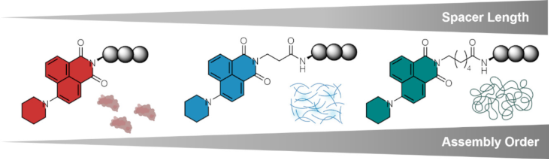
- (C3), whereas peptides containing the rigid C0-spacer fail to develop ordered nanostructures. These findings identify spacer length as a powerful design parameter for tuning peptide self-assembly across multiple length scales. Keywords: nanostructures; peptide amphiphiles; peptide nanofibers; self
- modulate the self-assembling properties of short peptides through directional and cooperative non-covalent forces [25][26]. Coupling these to the N-terminus of the peptide sequence leads to the formation of peptide amphiphiles with a general architecture of a hydrophobic tail attached to a hydrophilic
- peptide domain [27][28]. Such peptide amphiphiles have emerged as powerful building blocks to engineer highly-ordered nanostructures in biomedicine [29], nanoscience [30], and cosmetics [31]. While extensive efforts have focused on varying peptide sequences [32] and hydrophobic motifs [33], the role of


Applications of microscopy and small angle scattering techniques for the characterisation of supramolecular gels
Beilstein J. Org. Chem. 2024, 20, 2608–2634, doi:10.3762/bjoc.20.220

- show that the self-assembly occurred on these length scales [85]. This data was used to show that hydrophobicity was a key factor in controlling the self-assembly of these compounds. The work by Greenfield et al. shows the advantageous tuneability of peptide amphiphiles and their ability to form gels


Supramolecular polymerization of sulfated dendritic peptide amphiphiles into multivalent L-selectin binders
Beilstein J. Org. Chem. 2021, 17, 97–104, doi:10.3762/bjoc.17.10
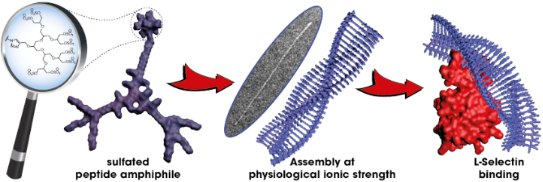
- self-assembly turns out to be crucial in obtaining supramolecular polymers suitable for interactions with biological targets [16]. Peptide amphiphiles provide access to supramolecular structures in this competitive environment by taking advantage of nature’s versatile toolbox of noncovalent
- achieved. As specific biological interactions strongly rely on the receptor–ligand interplays, we are interested in investigating the targeting of isolated receptors by supramolecular polymers built from peptide amphiphiles decorated with suitable ligand structures. The well-known L-selectin described
- above represents an excellent target that can be addressed by the multivalent presentation of sulfate groups. We therefore aim for the synthesis of sulfate-modified peptide amphiphiles to gain access to sulfated supramolecular polymers via self-assembly in water. The versatility of supramolecular



Selected peptide-based fluorescent probes for biological applications
Beilstein J. Org. Chem. 2020, 16, 2971–2982, doi:10.3762/bjoc.16.247

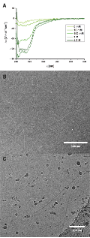
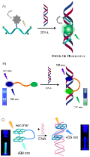
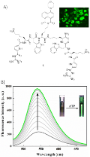
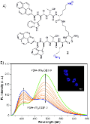
- [56], Maity, D.; and Schmuck, C., “Fluorescent peptide beacons for the selective ratiometric detection of heparin”, Chem. – Eur. J. © 2016 Wiley‐VCH Verlag GmbH & Co. KGaA, Weinheim. A) Structure of two peptide amphiphiles 12 and 13; B) fluorescent spectra (λex = 400 nm) from a titration of the PDA



Enzyme-instructed morphological transition of the supramolecular assemblies of branched peptides
Beilstein J. Org. Chem. 2020, 16, 2709–2718, doi:10.3762/bjoc.16.221
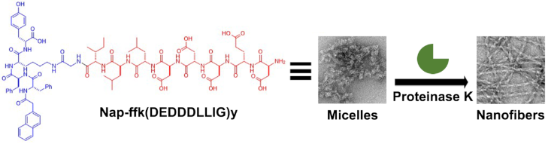
- ][20][21][22][23][24][25][26], as mimicry of amyloids [27], in the context of intracellular phase transition [28], and in molecular imaging [29][30]. Most of these studies are centered on peptide amphiphiles or amphiphilic peptides that are linear in geometry. Nature, however, also produces and
- peptides has received limited attention [2][32][33][34][35][36][37]. For example, Stupp et al. reported that a cell adhesion epitope, RGDS, acts as a branch to peptide amphiphiles for making hydrogels via self-assembly [34][36]. Ulijn et al. connected Fmoc-DAARRGG to a lysine side chain for incorporation

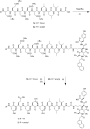

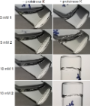


Amphiphilic dendritic peptides: Synthesis and behavior as an organogelator and liquid crystal
Beilstein J. Org. Chem. 2011, 7, 198–203, doi:10.3762/bjoc.7.26
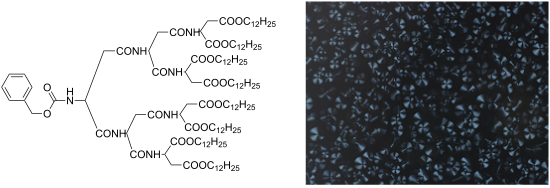
- display a wide range of physical properties often exceeding those of synthetic polymers [4][5]. Peptide-amphiphiles (PAs) represent an attractive class of bioactive molecules as they self-assemble into a variety of nanostructures, many of which have promising biological activity due to the exposed peptide

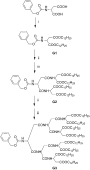




Other Beilstein-Institut Open Science Activities



