


Search results
Search for "survivin" in Full Text gives 6 result(s) in Beilstein Journal of Organic Chemistry.
Novel macrocycles: from synthesis to supramolecular function
Beilstein J. Org. Chem. 2026, 22, 982–985, doi:10.3762/bjoc.22.76
- peptide-functionalized supramolecular tweezers was developed by Schrader and Vetter [42] to target survivin, a key component of the chromosomal passenger complex (CPC). These receptors were designed to interfere with the recognition of phosphorylated histone H3 by the survivin BIR domain, displaying high
- findings provided valuable insights into the molecular basis of survivin recognition and guided the design of second-generation peptide tweezers capable of simultaneously engaging multiple binding regions of the protein. The study highlights the potential of peptide-modified supramolecular tweezers as
Molecular tweezer–peptide conjugates disrupt the protein–protein interaction between survivin and histone H3 essential in mitosis
Beilstein J. Org. Chem. 2026, 22, 557–567, doi:10.3762/bjoc.22.41
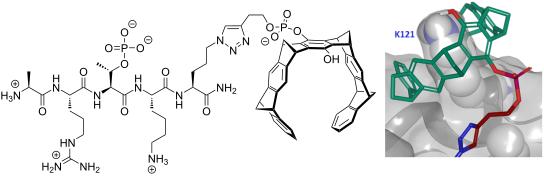
- , Otto-Hahn-Straße 11, 44227 Dortmund, Germany 10.3762/bjoc.22.41 Abstract Peptide-modified supramolecular tweezers, a promising new class of chemical tools, were designed and employed to inhibit the interaction of the BIR domain of human survivin, a member of the chromosomal passenger complex (CPC
- ), with the phosphorylated histone H3 N-terminal peptide. Fluorescence polarization measurements revealed a nanomolar affinity of the BIR domain for the peptide-tweezer, depending on the presence of lysine residue 121, as proven by the K121A mutant of survivin. Two crystal structures of C-terminally
- truncated human survivin with the peptide-tweezer molecules demonstrated that the peptide moiety binds the BIR domain as expected from the well-known published crystal structures of survivin with various peptides, but the tweezer itself, surprisingly, was bound to a putative Ca2+ ion and the side chain of




Computational model predicts protein binding sites of a luminescent ligand equipped with guanidiniocarbonyl-pyrrole groups
Beilstein J. Org. Chem. 2022, 18, 1322–1331, doi:10.3762/bjoc.18.137
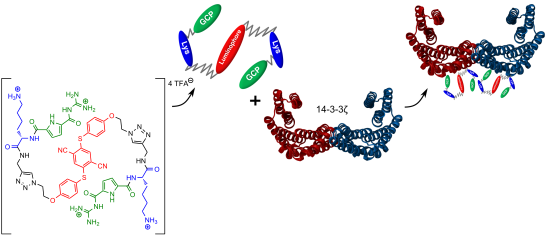
- -3-3ζ homodimer [14]. Very recently the survivin–histone H3 interaction was disrupted using a GCP dimer, which led to decreased cancer cell proliferation [8]. A major problem in this context is the readout of binding events, which is currently mainly achieved by indirect measurements. One approach to




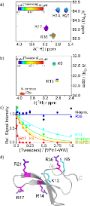
NMR Spectroscopy of supramolecular chemistry on protein surfaces
Beilstein J. Org. Chem. 2020, 16, 2505–2522, doi:10.3762/bjoc.16.203
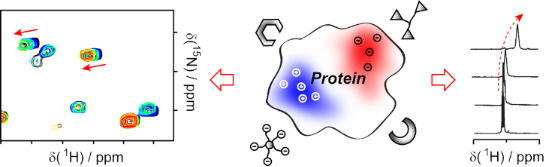
- Survivin – Histone H3 interaction by a GCP ligand has been shown to inhibit tumor proliferation in cell culture [46]. Porphyrins, either with or without a complexed metal ion in the center, have been used as planar hydrophobic scaffolds where either negatively charged carboxylate or positively charged
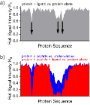
- . If a signal broadens beyond detection and thus disappears from the spectrum, be it due to aggregation or intermediate exchange kinetics, it is also impossible to trace its trajectory and determine the chemical shift perturbation. In the case of a bifunctional GCP ligand binding to survivin [46], the
- 1H,15N-BEST-TROSY titration of a truncated survivin (residues 1–120) construct revealed one distinct interaction at the Asp and Glu-rich histone H3 binding site. This ligand was also able to inhibit the survivin-H3 interaction, which is important for cell division, in vitro and in vivo and reduce



Nanangenines: drimane sesquiterpenoids as the dominant metabolite cohort of a novel Australian fungus, Aspergillus nanangensis
Beilstein J. Org. Chem. 2019, 15, 2631–2643, doi:10.3762/bjoc.15.256
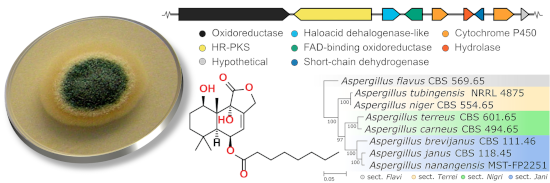
- activity against human and murine tumour cell lines. This suggests that the regioisomeric lactone moiety could play an important role in the observed cytotoxicity. Interestingly, 3 (SF002-96-1 [4]) was previously shown to inhibit survivin, which is a member of the inhibitor of apoptosis (IAP) family and a


SF002-96-1, a new drimane sesquiterpene lactone from an Aspergillus species, inhibits survivin expression
Beilstein J. Org. Chem. 2013, 9, 2866–2876, doi:10.3762/bjoc.9.323
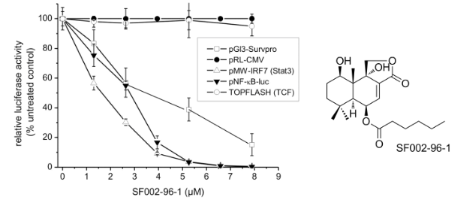
- Biotechnology and Systems Biology, University of Kaiserslautern, Paul-Ehrlich-Straße 23, D-67663 Kaiserslautern, Germany 10.3762/bjoc.9.323 Abstract Survivin, a member of the IAP (inhibitor of apoptosis) gene family, is overexpressed in virtually all human cancers and is functionally involved in the inhibition
- of apoptosis, regulation of cell proliferation, metastasis and resistance to therapy. Because of its upregulation in malignancy, survivin has currently attracting considerable interest as a new target for anticancer therapy. In a screening of approximately 200 strains of imperfect fungi for the
- production of inhibitors of survivin promoter activity, a new drimane sesquiterpene lactone, SF002-96-1, was isolated from fermentations of an Aspergillus species. The compound inhibited survivin promoter activity in transiently transfected Colo 320 cells in a dose dependent manner with IC50 values of 3.42




Other Beilstein-Institut Open Science Activities



