Search results
Search for "2D materials" in Full Text gives 107 result(s) in Beilstein Journal of Nanotechnology.
Materials challenges in solid-state sensors for continuous monitoring of ions in water
Beilstein J. Nanotechnol. 2026, 17, 935–973, doi:10.3762/bjnano.17.66
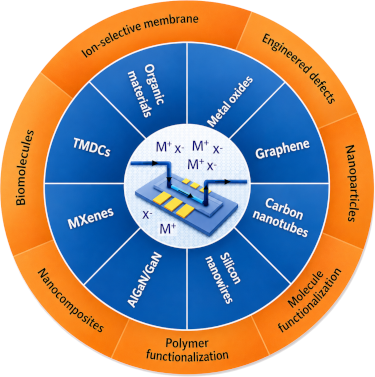
- capacitance for electrostatic control of the channel. Due to their large EDL capacitance, these devices work well with 2D materials and show ultrahigh sensitivity; they are therefore suitable for determining trace concentrations of heavy metals. The drawback of this device geometry is its susceptibility to
- regulatory limits [110]. Because metal-oxide thin films typically exhibit lower conductivity, carrier mobility, and surface area than 2D materials such as graphene or CNTs, integrating them with a highly conductive 2D component allows the hybrid structure to leverage the superior electronic and interfacial



Sustainable fabrication of 2D-based devices through reuse of substrates with microfabricated electrodes
Beilstein J. Nanotechnol. 2026, 17, 818–827, doi:10.3762/bjnano.17.58
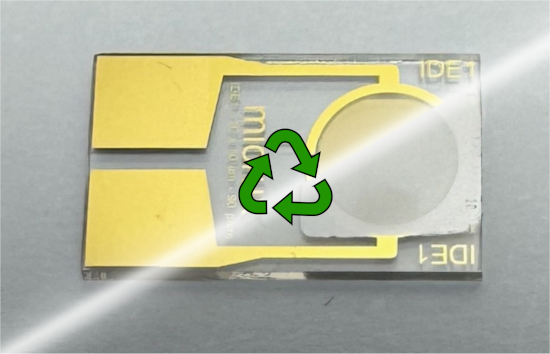
- , Spain Department of Inorganic Chemistry, University of Chemistry and Technology, Prague, Prague, Czech Republic School of Advanced Materials and Nanotechnology, Xidian University, 710071 Xi’an, China 10.3762/bjnano.17.58 Abstract Fabricating microelectronic devices for two-dimensional (2D) materials
- ), enabling the removal of 2D materials without damaging the electrodes. Electrical measurements, Raman analysis, and Kelvin probe force microscopy measurements collectively confirm the feasibility of repeatedly reusing the same pre-patterned chip, showing that the cleaned regions exhibit no detectable Raman
- strategy, transferring two-dimensional (2D) materials onto pre-patterned electrodes to create devices such as transistors, photodetectors, and diodes [10][11][12][13][14][15]. However, this approach incurs significant costs, approximately 40–50 € per chip for custom-made electrodes. Therefore, developing a


Tuning the electronic properties of defect-rich MoS2
Beilstein J. Nanotechnol. 2026, 17, 796–805, doi:10.3762/bjnano.17.56
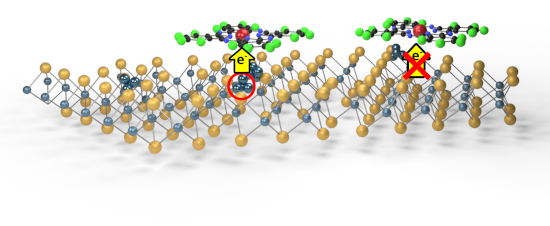
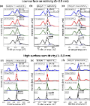
- disulfide (MoS2), has emerged as a promising candidate due to their distinctive properties as layered 2D materials with broadly tunable electronic structure [1][2][3]. While numerous studies have focused on single-layer MoS2 sheets, recent research has underscored the pivotal role of multilayer TMDCs in the


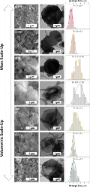
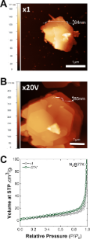
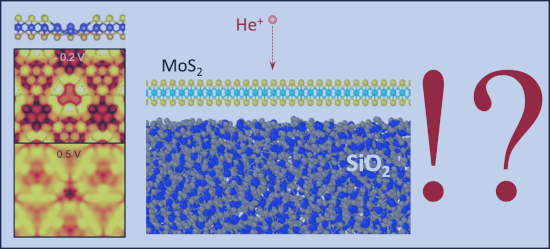
Substrate-dependent pore formation in molybdenum disulfide monolayers under ion irradiation
Beilstein J. Nanotechnol. 2026, 17, 769–780, doi:10.3762/bjnano.17.54
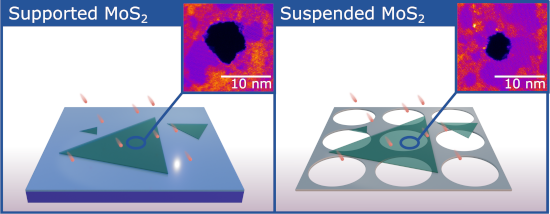
- ); Introduction Ion beams provide a controllable route to engineer defects in two-dimensional (2D) materials, enabling property tuning from doping to nanopore formation [1][2][3][4]. Because kinetic energy, charge state, and mass can be varied over wide ranges, ion irradiation offers a large parameter space for
- highly charged ions (HCIs) and swift heavy ions (SHIs), remains less complete. The emergence of 2D materials has intensified the interest in ion–surface interactions [9][10][11][12][13]. Owing to their atomic thickness, 2D materials combine outstanding mechanical properties with promising (opto
- formation have largely focused on suspended 2D materials [13][25][28][29], practical applications typically require the 2D material to be supported by a substrate. Direct investigation of ion-irradiated supported 2D materials, however, remains experimentally challenging for several reasons. For example


Recent progress in enhancing built-in electric fields of perovskite solar cells via junction engineering
Beilstein J. Nanotechnol. 2026, 17, 602–621, doi:10.3762/bjnano.17.42
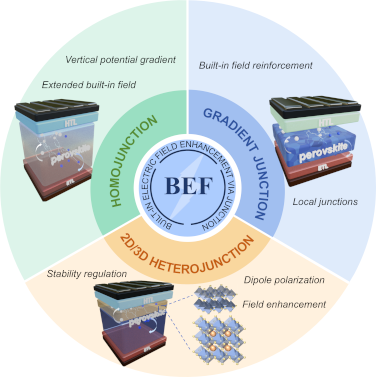
- polar molecules whose orientation can be controlled, introducing intrinsically polar low-dimensional perovskites or other 2D materials, and inducing bulk polarization through strain and symmetry breaking. All strategies aim to establish stable, persistent polarization potential profiles across the film




Probing tribological evolution in atomically thin MoS2 at different scales
Beilstein J. Nanotechnol. 2026, 17, 586–597, doi:10.3762/bjnano.17.40
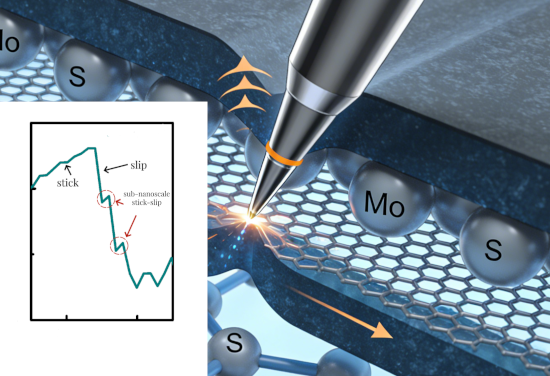
- foundational phenomena in the nanotribology of atomically thin two-dimensional (2D) materials, yet their sub-nanoscale origins and load-dependent evolution remain insufficiently characterized. Herein, we systematically investigate the sub-nanoscale friction behaviors of atomically thin molybdenum disulfide
- factor limiting the performance and reliability of nanotechnology-enabled devices, including magnetic storage systems and micro/nanoelectromechanical systems (MEMS/NEMS) [1][2]. Unlike macroscale friction, nanoscale friction of two-dimensional (2D) materials exhibits unique size-dependent and interface
- 2D materials remain elusive, primarily due to the need for high resolution and precise control of tip–sample interactions. Atomically thin 2D materials are ideal platforms for studying nanoscale and sub-nanoscale friction, owing to their atomic smoothness, well-defined crystal structure, and chemical


Defects and defect-mediated engineering of two-dimensional materials: challenges and open questions
Beilstein J. Nanotechnol. 2026, 17, 454–488, doi:10.3762/bjnano.17.31
- Abstract Compared to bulk solids, defects in low-dimensional materials and, specifically, 2D systems are expected to have a stronger effect, detrimental or beneficial, on their properties. Owing to their geometry, defects in 2D materials can easily be formed due to the interaction with the environment or
- under impacts of energetic particles, such as ions and electrons. At the same time, many concepts of defect production under irradiation in bulk systems are not applicable for 2D materials or require substantial modifications. Various aspects of the physics and chemistry of defects in 2D materials have
- -mediated engineering of nanomaterials for energy and quantum applications” organized by the Beilstein-Institut. Following the discussions at the symposium, here, we present the challenges and open questions in our understanding of the behavior of defective 2D materials, interaction of energetic particles





Advancing nanolithography: a comprehensive review of materials for local anodic oxidation with AFM
Beilstein J. Nanotechnol. 2026, 17, 275–291, doi:10.3762/bjnano.17.19
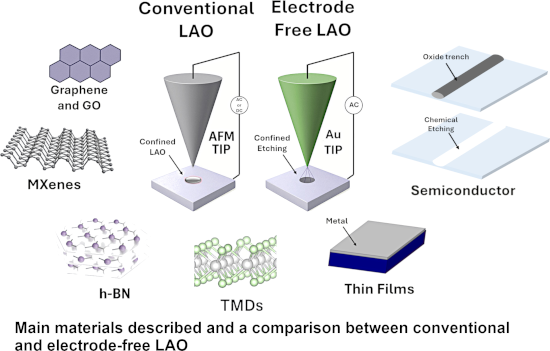
- technique for nanoscale patterning, leveraging the precision of scanning probe microscopy, relying specifically on atomic force microscopy. This review explores the materials utilized in LAO experiments, including semiconductors, metals, insulators, two-dimensional (2D) materials, and emerging
- heterostructures. Semiconductors such as silicon and silicon carbide remain foundational due to their controllable oxidation kinetics, while metals like titanium and aluminum offer opportunities for plasmonic and optical applications. 2D materials, including graphene, graphene oxide, and transition metal
- aims to highlight the capability of LAO to pattern two-dimensional (2D) materials such as graphene [20][21][22], hexagonal boron nitride [23] (hBN), transition metal dichalcogenides (TMDs) [21][24][25][26][27], metals [18][28][29], as well as traditional semiconductors such as silicon (Si) [6][10][30


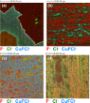
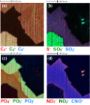
Time of flight secondary ion mass spectrometry imaging of contaminant species in chemical vapour deposited graphene on copper
Beilstein J. Nanotechnol. 2026, 17, 200–213, doi:10.3762/bjnano.17.13
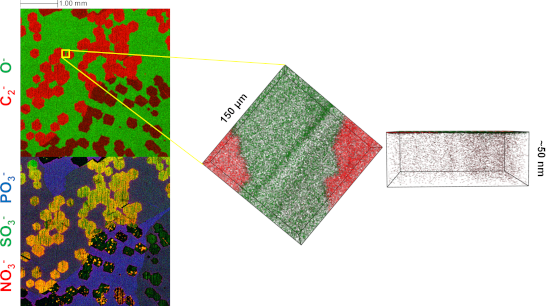
- & 2D Materials). SH, VV and PBW acknowledge funding from EPRSC (EP/K016636/1, EP/T001038/1).





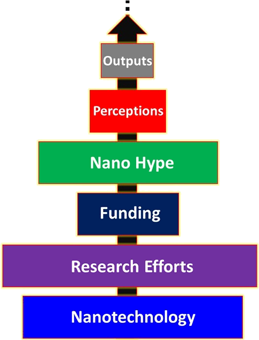
Missing links in nanomaterials research impacting productivity and perceptions
Beilstein J. Nanotechnol. 2025, 16, 2168–2176, doi:10.3762/bjnano.16.149
- , other 2D nanomaterials, such as elemental 2D materials (e.g., borophene, phosphorene, and silicene), transition metal dichalcogenides (e.g., MoS2, WS2, and NbSe2), transition metal oxides (e.g., MnO2, Fe2O3, and Ni(OH)2 nanosheets), MXenes (e.g., Ti3C2, Ti2C, and Ta4C3), 2D halides (e.g., CrI3, NiI2
Ambient pressure XPS at MAX IV
Beilstein J. Nanotechnol. 2025, 16, 1677–1694, doi:10.3762/bjnano.16.118
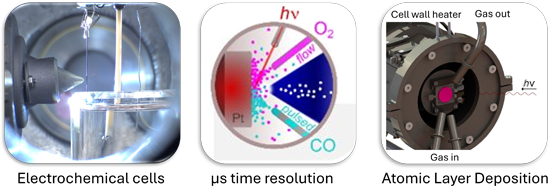
- representative studies at MAX IV, including investigations of single-atom catalysts, confined catalysis, time-resolved catalysis, atomic layer deposition, and electrochemical interfaces, showcasing the role of APXPS in advancing material and surface science. Keywords: 2D materials; atomic layer deposition
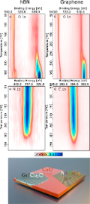
- and allows the CO to intercalate and then oxidize. Rather than studying the reaction below 2D materials, Scardamaglia et al. investigated graphene and hBN as protective layers for copper metal surfaces in a reactive environment [31]. In operando experiments with a linear temperature ramp in 2 mbar O2
- , bare copper rapidly oxidized to Cu2O at room temperature and further to CuO at ~200 °C. However, with hBN or graphene layers, oxidation was significantly delayed. Both 2D materials retard the oxidation of Cu by more than 120 °C, but with different kinetics. The behavior of hBN/Cu is relatively simple






Nanotechnology-based approaches for the removal of microplastics from wastewater: a comprehensive review
Beilstein J. Nanotechnol. 2025, 16, 1607–1632, doi:10.3762/bjnano.16.114
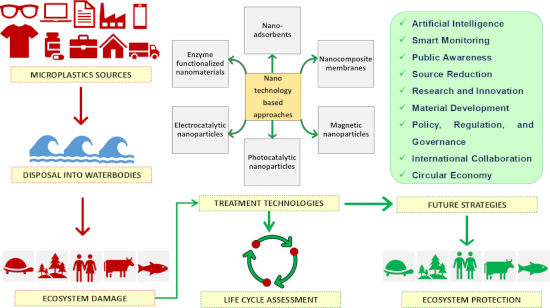
- area and layered, folded structures. These 2D materials are known for their chemical robustness, surface functionality, hydrophilicity, excellent electrical conductivity, and eco-friendly nature. Due to these properties, MXenes, particularly titanium carbide derivatives (Ti3C2Tx), have become widely



Transient electronics for sustainability: Emerging technologies and future directions
Beilstein J. Nanotechnol. 2025, 16, 1545–1556, doi:10.3762/bjnano.16.109

- unfolds on the brain cortex to enable neural signal monitoring following syringe-based implantation [27] (Figure 1d). The exploration of new materials and fabrication techniques has also enabled the realization of large-area transient devices. In particular, the large-area fabrication of 2D materials and


Laser processing in liquids: insights into nanocolloid generation and thin film integration for energy, photonic, and sensing applications
Beilstein J. Nanotechnol. 2025, 16, 1428–1498, doi:10.3762/bjnano.16.104






Thickness dependent oxidation in CrCl3: a scanning X-ray photoemission and Kelvin probe microscopies study
Beilstein J. Nanotechnol. 2025, 16, 749–761, doi:10.3762/bjnano.16.58
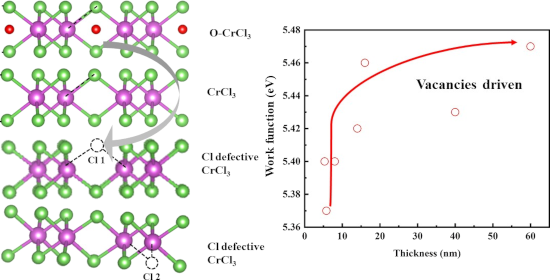
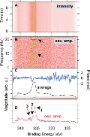
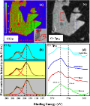
- ) provides an ideal spot size for the study of 2D materials, focusing on the character of the material in relation to its shape. Sample flakes in the range of 1–10 μm2, obtained by the exfoliation technique, can be analyzed by SPEM on such characteristic lengths by the precise control of the relative





Strain-induced bandgap engineering in 2D ψ-graphene materials: a first-principles study
Beilstein J. Nanotechnol. 2024, 15, 1440–1452, doi:10.3762/bjnano.15.116
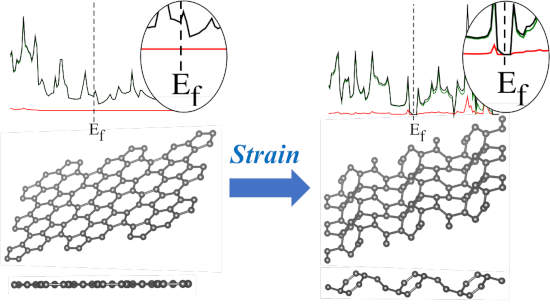
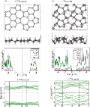
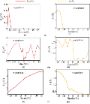
- Interdisciplinary Nanostructure Science and Technology, University of Kassel, Heinrich-Plett-Straße 40, 34132 Kassel, Germany 10.3762/bjnano.15.116 Abstract High mechanical strength, excellent thermal and electrical conductivity, and tunable properties make two-dimensional (2D) materials attractive for various
- . The mechanical strain tolerance of pristine and fully hydrogenated ψ-graphene is observed to be −17% to +17%, while for ψ-graphone, it lies within the strain span of −16% to +16%. Keywords: 2D materials; defects; DFT; graphene; ψ-graphene; strain; Introduction Graphene is the best-known zero-bandgap
- transition of graphene from a semimetal to an insulator after full hydrogenation [9]. After the discovery of graphene, other novel 2D materials, such as goldene [10], stanene [11], plumbene [12], antimonene [13], and arsenene [14], have been predicted and experimentally synthesized. Few of these materials


Out-of-plane polarization induces a picosecond photoresponse in rhombohedral stacked bilayer WSe2
Beilstein J. Nanotechnol. 2024, 15, 1362–1368, doi:10.3762/bjnano.15.109
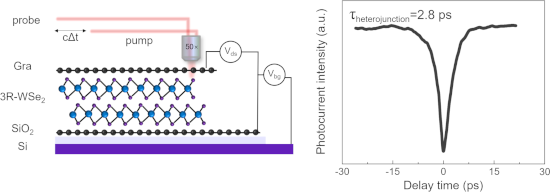
- photoelectric detection. Experimental Device fabrication The 2D materials, WSe2 and graphene, were obtained from high-quality bulk crystals using the mechanical exfoliation method. The monolayer WSe2 nanoflakes were exfoliated onto a transparent polydimethylsiloxane (PDMS) film, selected based on optical


Interaction of graphene oxide with tannic acid: computational modeling and toxicity mitigation in C. elegans
Beilstein J. Nanotechnol. 2024, 15, 1297–1311, doi:10.3762/bjnano.15.105
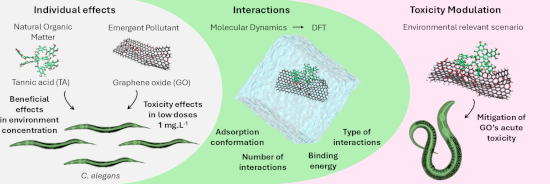
- Agency (EPA), herein named EPA medium, in absence and presence of TA. Atomic force microscopy AFM has been extensively used to characterize the distribution and morphology of biomolecules on the surface of nanomaterials, especially 2D materials [37]. Figure 1a and Figure 1b show AFM images of GO sheets


Quantum-to-classical modeling of monolayer Ge2Se2 and its application in photovoltaic devices
Beilstein J. Nanotechnol. 2024, 15, 1153–1169, doi:10.3762/bjnano.15.94
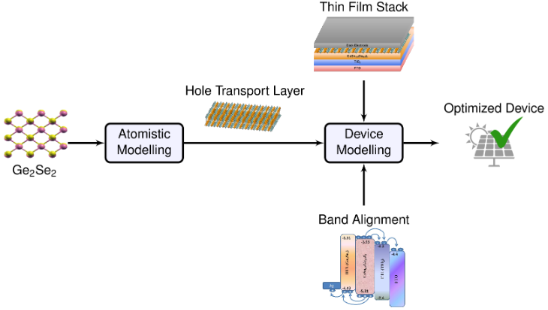
- optoelectronic devices, including next-generation solar cells. The hybrid quantum-to-macroscopic methodology presented here applies to broader classes of 2D and 3D materials and structures, showing a path to the computational design of future photovoltaic materials. Keywords: 2D materials; density functional
- -term instability, poor device scalability, and the use of toxic compounds, have yet to be resolved [6]. Recent advancements have seen the integration of two-dimensional (2D) materials with PSCs, opening new avenues for enhancing their performance and addressing current challenges with the PSCs [7][8
- ]. Integrating 2D materials in PSCs can improve their performance. The 2D materials can provide protective layers that work like a shield to the perovskite materials to protect them from environmental degradation caused by moisture and oxygen and provide better device scalability to the PSCs, which makes large




Exploring surface charge dynamics: implications for AFM height measurements in 2D materials
Beilstein J. Nanotechnol. 2024, 15, 767–780, doi:10.3762/bjnano.15.64
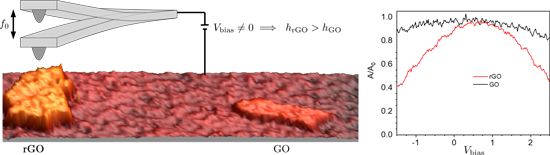
- monolayer flakes of 2D materials is the inaccurate height derived from topography images, often attributed to capillary or electrostatic forces. Here, we show the existence of a Joule dissipative mechanism related to charge dynamics and supplementing the dissipation due to capillary forces. This particular
- mechanism arises from the surface conductivity and assumes significance specially in the context of 2D materials on insulating supports. In such scenarios, the oscillating tip induces in-plane charge currents that in many circumstances constitute the main dissipative contribution to amplitude reduction and
- of surface charges and their intricate interaction with the tip. Keywords: 2D materials; incorrect height measurements; Joule dissipation; surface conductivity; tip influence; Introduction Two-dimensional (2D) materials have emerged as a promising platform for next-generation electronic devices [1


Level set simulation of focused ion beam sputtering of a multilayer substrate
Beilstein J. Nanotechnol. 2024, 15, 733–742, doi:10.3762/bjnano.15.61
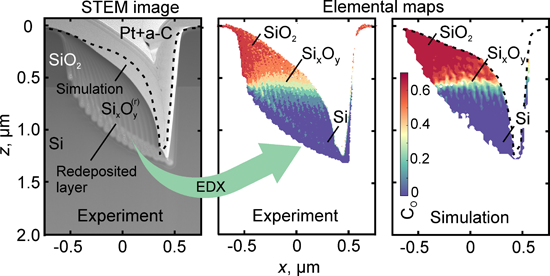
- multilayer films [8], the patterning of 2D materials [9], or the direct introduction of dopants into a solid-state host through recoil implantation [10]. Examples that rely on ion milling include patterning of magnetic multilayers [11], fabrication of optical metamaterials [12], and modification of
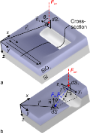

![[Graphic 55]](/bjnano/content/inline/2190-4286-15-61-i68.svg?max-width=637&scale=1.18182)


Exfoliation of titanium nitride using a non-thermal plasma process
Beilstein J. Nanotechnol. 2024, 15, 631–637, doi:10.3762/bjnano.15.53
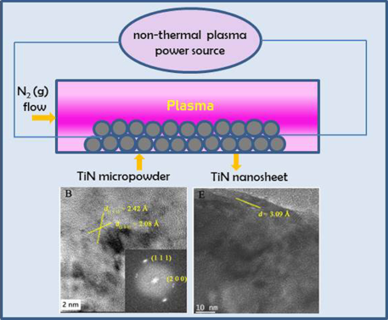
- -dimensional (2D) materials with exceptional physical and chemical properties. These materials are typically exfoliated from three-dimensional (3D) layered crystals characterized by atomically thin layers held together by strong in-plane covalent bonds and weak out-of-plane van der Waals (vdW) forces. Apart
- a distinct class of 2D materials. These novel materials consist of ultrathin nanosheets but are synthesized from non-van der Waals (n-vdW) bulk crystals featuring strong chemical bonds in all directions [5]. In general, n-vdW crystals combine the 2D structural characteristics with properties
- inherited from their parent crystals [6]. Their synthesis typically involves costly bottom-up processes. Some efforts have been successfully made to synthesize n-vdW 2D materials using liquid exfoliation techniques [7], albeit with relatively low yields. The first such material was obtained through



Unveiling the nature of atomic defects in graphene on a metal surface
Beilstein J. Nanotechnol. 2024, 15, 416–425, doi:10.3762/bjnano.15.37
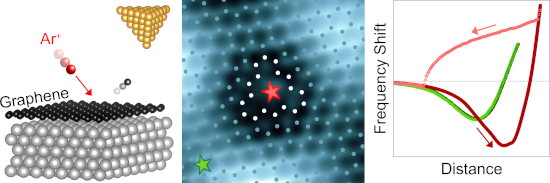
- ; scanning tunneling microscopy and spectroscopy; Introduction Defects in lattices of two-dimensional (2D) materials are considered as promising building blocks for tailoring electronic and phononic band structures, magnetic texture, photon emission, and charge carrier concentration [1]. In addition
- , defects profoundly impact, in a beneficial or detrimental manner, characteristic properties of 2D materials [2]. A prominent 2D material is graphene. Intact graphene, the 2D sp2 arrangement of C atoms in a honeycomb mesh, is well known for its appealing electronic and mechanical properties [3][4]. However


Graphene removal by water-assisted focused electron-beam-induced etching – unveiling the dose and dwell time impact on the etch profile and topographical changes in SiO2 substrates
Beilstein J. Nanotechnol. 2024, 15, 190–198, doi:10.3762/bjnano.15.18
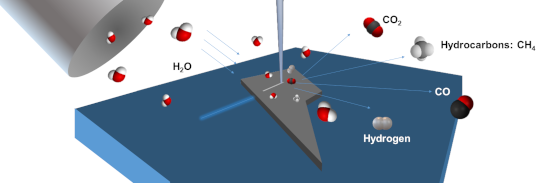
- , Poland Departamento de Física de la Materia Condensada, Universidad de Zaragoza, 50009 Zaragoza, Spain Laboratorio de Microscopías Avanzadas (LMA), Universidad de Zaragoza, E-50018 Zaragoza, Spain 10.3762/bjnano.15.18 Abstract Graphene is one of the most extensively studied 2D materials, exhibiting


Upscaling the urea method synthesis of CoAl layered double hydroxides
Beilstein J. Nanotechnol. 2023, 14, 927–938, doi:10.3762/bjnano.14.76
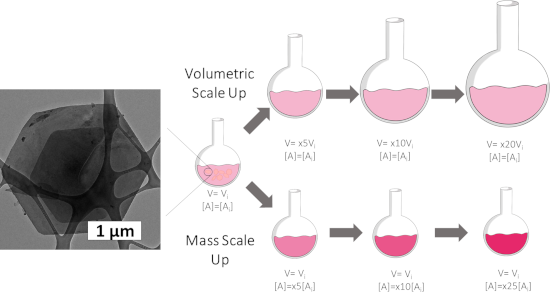
- hydroxides; layered double hydroxide; layered materials; scale-up process; synthesis; two-dimensional materials; Introduction Since the discovery of graphene [1], research on two-dimensional (2D) materials has become one of the most relevant topics in physics, chemistry, and (nano)materials science [2][3][4