Search results
Search for "absorption spectra" in Full Text gives 292 result(s) in Beilstein Journal of Nanotechnology. Showing first 200.
Supramolecular one-dimensional conducting nanofibers from a C3-symmetric tetrathiafulvalene derivative
Beilstein J. Nanotechnol. 2026, 17, 872–881, doi:10.3762/bjnano.17.63
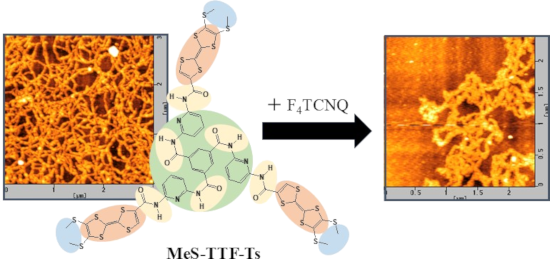
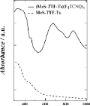
- measurements The structures formed on mica substrates were observed using an atomic force microscopy (AFM) system (Bruker Multi Mode 8). Measurements were performed in non-contact mode using a silicon cantilever with a spring constant of approximately 0.8 N·m−1. Optical spectra UV–vis absorption spectra were


Cross-scale design of chemosensor arrays: from molecular self-assembly in water to paper-based devices for metal ion detection
Beilstein J. Nanotechnol. 2026, 17, 828–838, doi:10.3762/bjnano.17.59
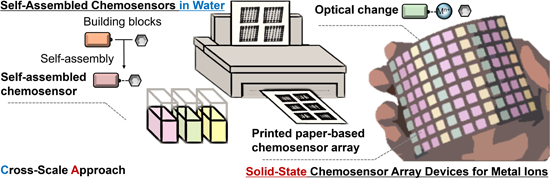
- , the catechol dye 1 showed blueshifts in the UV–vis absorption spectra with an increase in concentration of 5, which supported the spontaneous formation of a boronate ester (Figure 4A). The nitrophenyl moiety acting as an electron-withdrawing group of 5 increases the Lewis acidity of boronic acid and
- facilitates the formation of boronate esters [11]. Meanwhile, the colorimetric ensemble of 1 and 5 exhibited redshifts in the UV–vis absorption spectra in the presence of a target metal ion (Ni2+). The optical changes suggested the coordination between 1 and the metal ion, along with the release of 5
- ) (Figure 6B). In this assay, the input data for LDA were constructed using UV–vis absorption spectra of chemosensors upon analyte addition. The dimensionality of the input data depends on the number of chemosensors, analytes, and replicate measurements, which is decreased using LDA. Each axis (i.e., factor


Molecular engineering of individual dye-based nanoparticle photostability for ultrabright two-photon fluorescence
Beilstein J. Nanotechnol. 2026, 17, 688–696, doi:10.3762/bjnano.17.48
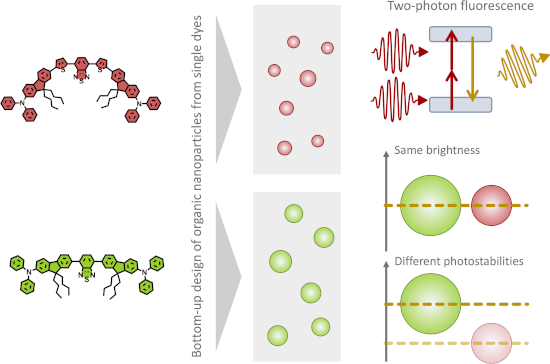
- ) Transmission electron microscopy (TEM) and size distribution of dFONs(1), data reused from [20]. (d) TEM and size distribution of dFONs(2). (e) Normalized absorption spectra of dFONs(1) (green) and dFONs(2) (red). (f) Normalized emission spectra of dFONs(1) (green) and dFONs(2) (red). (g) Two-photon absorption


Decontamination from water pollutants and pathogens by electrospun nanofibers doped with heavy-atom-free borafluorene-BODIPY photosensitizers
Beilstein J. Nanotechnol. 2026, 17, 668–682, doi:10.3762/bjnano.17.46
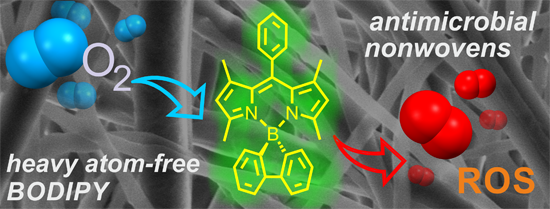
- absorption spectra of the ABDA solution with immersed 1(0.50 wt %)@PCL or 1(1.00 wt %)@PCL were recorded after irradiation with white light (40 mW·cm−2) at 10 min intervals. After 30 min of irradiation, the absorbance at 379 nm decreased by 60% for 1(0.50 wt %)@PCL and by 37% for 1(1.00 wt %)@PCL (Figure 9



Two-step laser synthesis of Ag@TiO2 nanomaterials for the photocatalytic degradation of rhodamine B
Beilstein J. Nanotechnol. 2026, 17, 622–634, doi:10.3762/bjnano.17.43
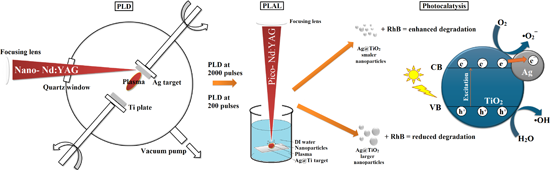
- a state of initial instability. Influence of Ag on the bandgap energy of TiO2 UV–vis spectroscopy was employed to investigate the effect of Ag doping on TiO2 and to determine the bandgaps of both TiO2 and Ag@TiO2 samples. Figure 7a displays the absorption spectra of TiO2 and Ag-modified TiO2 samples
- . These absorption spectra showed that, in contrast to TiO2, Ag@TiO2 samples showed broadening of the absorption peak due to the addition of Ag. The optical bandgap energy of the prepared samples was calculated with the Tauc model, according to Equation 1: where α is the absorption coefficient, hν is the
- the RhB concentrations at times t = 0 and t, respectively. UV–vis spectroscopy was employed to observe the photocatalytic degradation of RhB, scanned within the range of 300–700 nm. Figure 8a,b presents the UV–visible absorption spectra of RhB in the presence of the synthesized samples as functions of


Impacts of annealing on structural and photophysical properties of zinc phthalocyanine adsorbed on graphene
Beilstein J. Nanotechnol. 2026, 17, 576–585, doi:10.3762/bjnano.17.39
- resolved absorption Absorption spectra at various incidence angles were recorded on a QE-Pro Ocean Optics spectrophotometer. White light (MWWHL4, ThorLabs) was expanded and collimated using an achromatic doublet (AC254-100-A-ML, ThorLabs). Then, a diaphragm was used to obtain a beam size of 1 mm diameter
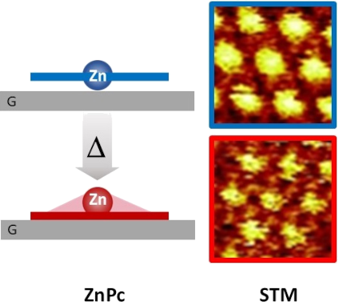
- each angle with the transmission of a reference neat cover plate. a) Micro-absorption spectra of a ZnPc:TSB35-C12 self-assembled monolayer on CVD graphene before (blue), and after 30 min annealing (purple) and 3 h annealing (red) at 80 °C. Baselines corresponding to the average graphene absorption were
- in the cited reference) [50]. Left: Micro-absorption spectra of an annealed (3 h at 80 °C, red line) or not annealed (blue line) ZnPc:TSB35-C12 self-assembled monolayer on CVD graphene after its exposition to a solution of BPDI4Py. The peak at 526 nm is assigned to BPDI4Py. The curves have been


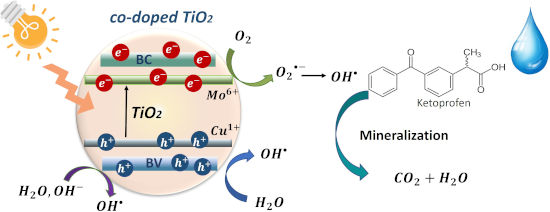
Synthesis of Cu–Mo/TiO2 and Co–Mo/TiO2 photocatalysts for the efficient degradation of organic pollutants in water
Beilstein J. Nanotechnol. 2026, 17, 559–570, doi:10.3762/bjnano.17.37
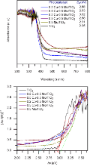
- the increase in specific surface area in these materials. Optical characterization The photocatalysts’ bandgap energy (Eg) was measured by UV–vis diffuse reflectance spectroscopy. Figure 3 shows the absorption spectra of all the materials. Pure TiO2 absorbs light in the UV range. With the



Upcycling agroindustrial waste into graphene oxide supports for gold nanoparticles: toward sustainable nanomaterials
Beilstein J. Nanotechnol. 2026, 17, 489–504, doi:10.3762/bjnano.17.32
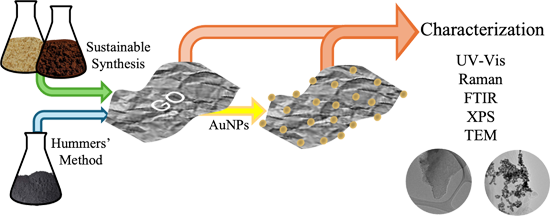
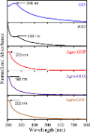
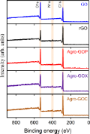
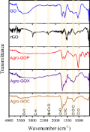
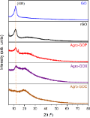
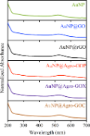
- = 1.5418 Å). The instrument was equipped with a high-speed silicon strip detector (D/teX Ultra). Diffraction patterns were recorded over a 2θ range of 5–80°. Results and Discussion Figure 1 shows the UV–vis absorption spectra of the Agro-GOP, Agro-GOX, and Agro-GOC samples compared with the reference
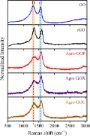
- . Overall, the ability to tailor GO properties by carefully selecting agricultural precursors provides a versatile pathway for designing application-specific carbon–metal hybrids within a circular-economy framework. UV–vis absorption spectra of GO samples (GO, rGO, Agro-GOP, Agro-GOX, and Agro-GOC). Raman



Structure-dependent thermochromism of PAZO thin films: theory and experiment
Beilstein J. Nanotechnol. 2026, 17, 186–199, doi:10.3762/bjnano.17.12
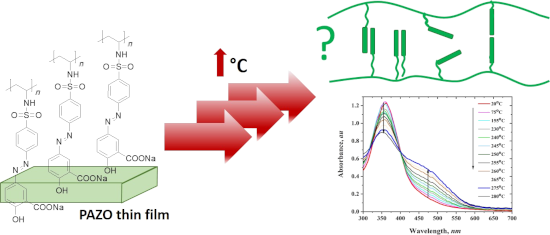
- ) calculations were employed to model possible supramolecular architectures, allowing us to explore the correlation between thermally induced optical responses and the underlying molecular-level organization. Results and Discussion Experimental results Temperature dependence of absorption spectra Absorption
- indication that the structural changes in PAZO thin film induced by heating are significant and stable over weeks and even months. These changes in the absorption spectra can be ascribed to the formation of aggregates between adjacent azochromophores – the so-called J-aggregates and H-aggregates, which will
- Experimental and Computational Details section, a CARY spectrophotometer was used to measure the absorption spectra under S- and P-polarized light (where P-polarized light has its electric field vector parallel to the plane of incidence, and S-polarized light is perpendicular to this plane). Four samples were


Improving magnetic properties of Mn- and Zn-doped core–shell iron oxide nanoparticles by tuning their size
Beilstein J. Nanotechnol. 2025, 16, 2285–2295, doi:10.3762/bjnano.16.157
- spectra were acquired from 400 to 4000 cm−1 with a spectral resolution of 4 cm−1. Reference spectra were acquired before each measurement to determine the absorption spectra under ambient conditions. Each measurement was averaged over 200 scans in continuous mode to improve the signal-to-noise ratio



Optical bio/chemical sensors for vitamin B12 analysis in food and pharmaceuticals: state of the art, challenges, and future outlooks
Beilstein J. Nanotechnol. 2025, 16, 2207–2244, doi:10.3762/bjnano.16.153
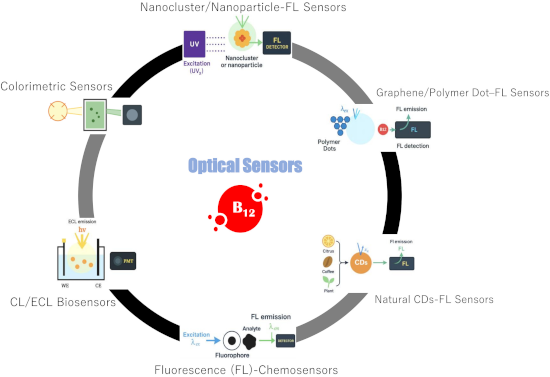
- functioned as both the recognition unit and the chromophoric indicator, while the sensing response was expressed through ratiometric spectral variation. Upon interacting with this cation, a significant 44 nm shift in its absorption spectra by altering color from yellow to red was recorded, which could be


Stereodiscrimination of guests in chiral organosilica aerogels studied by ESR spectroscopy
Beilstein J. Nanotechnol. 2025, 16, 2034–2054, doi:10.3762/bjnano.16.140
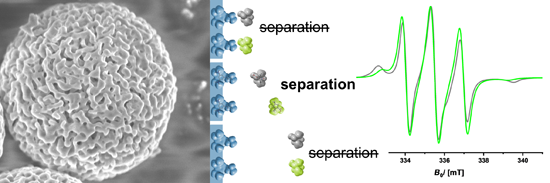
- solid-state situation of the spin probe. In ESR, one always plots the first derivative of absorption spectra, which means that the magnetic susceptibility χ is proportional to the second integral of the curves, that is, proportional to the area of absorption signals. No correlation exists between χ and




Electrical, photocatalytic, and sensory properties of graphene oxide and polyimide implanted with low- and medium-energy silver ions
Beilstein J. Nanotechnol. 2025, 16, 1794–1811, doi:10.3762/bjnano.16.123
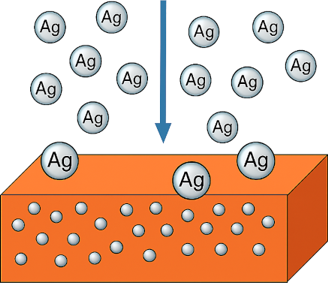
- and exposed to UV light (254 nm, 40 W) for 180 min. Subsequently, the rhodamine B concentration and disintegration were examined using absorption spectra via a UVISEL ellipsometer (75 W Xe lamp, Horiba, France) in the 450–650 nm wavelength range with a 1 nm step. The ellipsometer beam spot size was 1


Influence of laser beam profile on morphology and optical properties of silicon nanoparticles formed by laser ablation in liquid
Beilstein J. Nanotechnol. 2025, 16, 1533–1544, doi:10.3762/bjnano.16.108
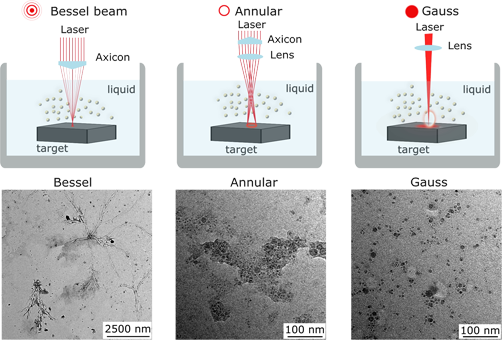
- absorption spectra of the prepared colloids were measured using a Cary 500 Scan spectrophotometer (Varian, USA) in the spectral range of 200–2000 nm in a 10 mm quartz cuvette. The measurements of the PL spectra were carried out at room temperature using a Fluorolog-3 spectrofluorometer (HORIBA Scientific
- laser beams also showed different optical properties, which were characterized using UV–vis absorption and PL spectroscopies. The absorption spectra of the Si colloids prepared using Gauss, Bessel, and annular profiles are shown in Figure 6. In all the spectra, absorption in the visible and near
- ethanol using Bessel, annular, and Gaussian laser beams. (a) UV–vis absorption spectra and (b) Tauc plots. Photoluminescence spectra of (a) Si NPs prepared by Bessel, Gaussian, and annular laser beam ablation under excitation at 265 nm and of (b) Si NPs prepared by Bessel laser beam ablation under


Cross-reactivities in conjugation reactions involving iron oxide nanoparticles
Beilstein J. Nanotechnol. 2025, 16, 1504–1521, doi:10.3762/bjnano.16.106







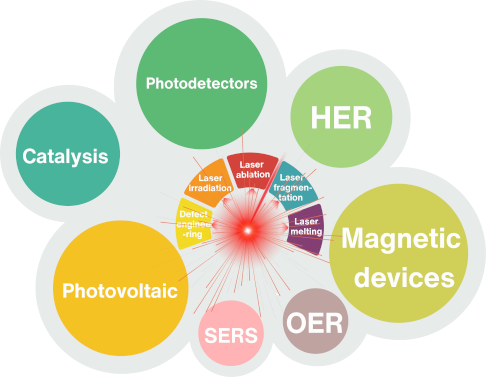
Laser processing in liquids: insights into nanocolloid generation and thin film integration for energy, photonic, and sensing applications
Beilstein J. Nanotechnol. 2025, 16, 1428–1498, doi:10.3762/bjnano.16.104






Photochemical synthesis of silver nanoprisms via green LED irradiation and evaluation of SERS activity
Beilstein J. Nanotechnol. 2025, 16, 1417–1427, doi:10.3762/bjnano.16.103
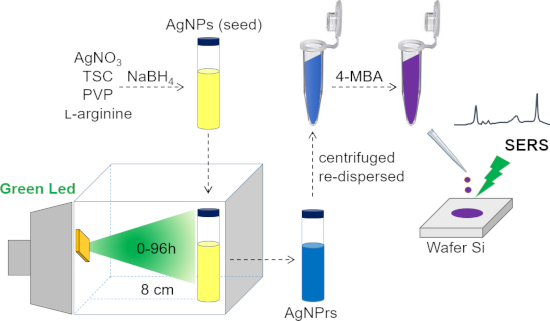
- ; and (iii) a strong in-plane dipole (IPD) peak at 654 nm, characteristic of silver nanoprisms. This observation is consistent with the characteristic UV–vis absorption spectra of AgNPrs reported in previous studies [2][4][7]. The simultaneous presence of these three plasmonic modes, along with the


Enhancing the photoelectrochemical performance of BiOI-derived BiVO4 films by controlled-intensity current electrodeposition
Beilstein J. Nanotechnol. 2025, 16, 1289–1301, doi:10.3762/bjnano.16.94
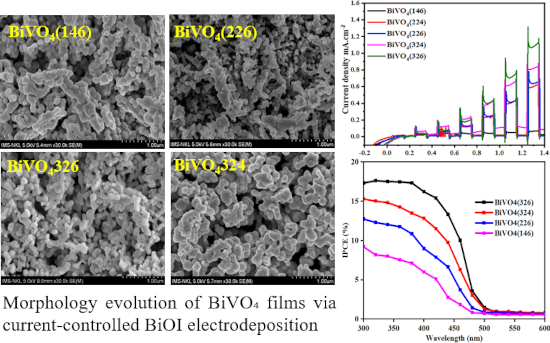
- . Characteristics of materials X-ray diffraction (XRD, Bruker D8 Advance) and Raman spectroscopy (LabRAM Odyssey Semiconductor) were used to analyze the crystal structures of photoanodes. UV–vis absorption spectra were obtained using a Cary 60 spectrophotometer. X-ray photoelectron spectroscopy (XPS, VG ESCALAB250



Electronic and optical properties of chloropicrin adsorbed ZnS nanotubes: first principle analysis
Beilstein J. Nanotechnol. 2025, 16, 1184–1196, doi:10.3762/bjnano.16.87
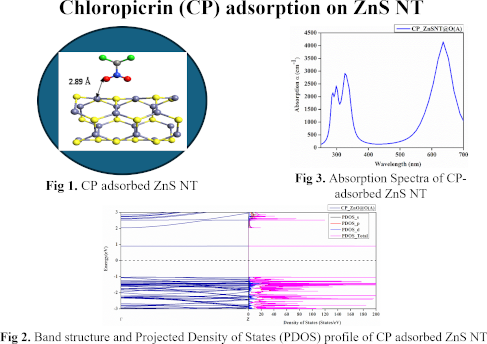
- . Notably, the recovery time of ZnS NT for orientation A is estimated as 3.5 μs at 300 K, the fastest among all previous works related to CP adsorption listed in Table 5, underscoring its exceptional potential for real-time sensing applications. Optical properties The absorption spectra shown in Figure 5 of
- highlighting the suitability of ZnS nanostructures for UV photodetectors, sensors, and photocatalytic applications, where high UV sensitivity is critical [69]. Upon CP molecule adsorption, significant redshifts in the absorption spectra are observed across all orientations, indicative of bandgap narrowing
- broader spectral sensitivity, making Orientation C a versatile configuration for applications requiring multi-wavelength optical detection. Orientation D, on the other hand, shows absorption spectra similar to that of pristine ZnS NT, with only a slight redshift and weak absorption in the visible range


Fabrication of metal complex phthalocyanine and porphyrin nanoparticle aqueous colloids by pulsed laser fragmentation in liquid and their potential application to a photosensitizer for photodynamic therapy
Beilstein J. Nanotechnol. 2025, 16, 1088–1096, doi:10.3762/bjnano.16.80
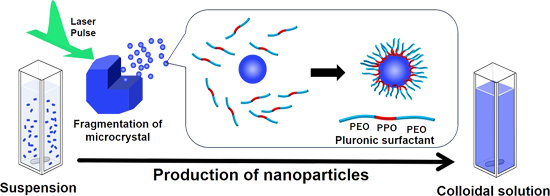
- in solution. Similar results were obtained for other MPcs and PtOEP prepared in 0.1 wt % F-127 aqueous solution (Figure S1, Supporting Information File 1). The absorption spectra of the nanoparticle colloids are shown in Figure 3, and some characteristics of the colloids are summarized in Table 1
- degradation may occur during nanoparticle fabrication via PLAL. To investigate molecular degradation, the prepared nanoparticles were dissolved in organic solvents and their visible to NIR absorption spectra were measured. The spectra agreed well with those of the raw material compounds, confirming that at
- dispersion stability in PBS, 0.2 mL of the prepared colloids was put in 1.8 mL of PBS, and then the absorption spectra were measured after one week. In the case of AlClPc, nanoparticle colloids were efficiently formed, even in pure water suspensions, and the absorption spectra of the prepared nanoparticle


A calix[4]arene-based supramolecular nanoassembly targeting cancer cells and triggering the release of nitric oxide with green light
Beilstein J. Nanotechnol. 2025, 16, 1003–1013, doi:10.3762/bjnano.16.75
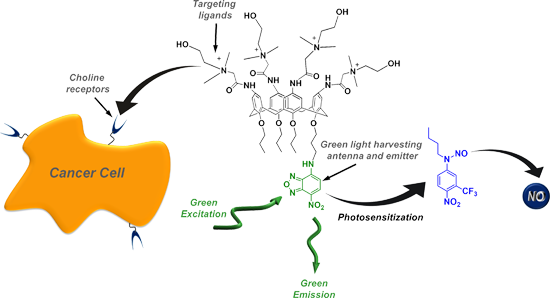
- involving this chromophore and the encapsulated 2. As far as the mechanism of this process is concerned, both singlet–singlet and triplet–triplet energy transfers are ruled out based on the following. Based on the absorption spectra of the ABF and 2, the lowest singlet state of ABF can be estimated to be
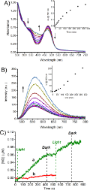
- effects and cellular uptake of the nanoassembly of 1 (0.5 μM) in HuDe cells (A, C) and MCF7 cells (B, D). Green: nanoassembly of 1; blue: DAPI stain to visualize nuclei. Scale bar = 50 µm. (A) Absorption spectra of NOPD 2 (a) and the non-nitrosated analogue 2b (b) in water. (B) Absorption spectral changes


Synthesis of biowaste-derived carbon-dot-mediated silver nanoparticles and the evaluation of electrochemical properties for supercapacitor electrodes
Beilstein J. Nanotechnol. 2025, 16, 933–943, doi:10.3762/bjnano.16.71
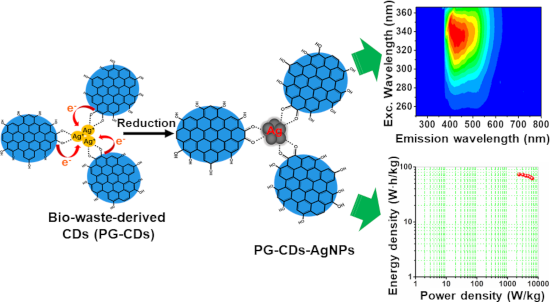
- absorption spectra of PG-CDs-AgNPs at different time intervals. (c) Excitation–emission PL spectra of PG-CDs-AgNPs. (d) Excitation–emission contour map of PG-CDs-AgNPs. (a) XRD patterns of PG-CDs-AgNPs; XPS analysis of PG-CDs-AgNPs: (b) XPS survey profile; deconvoluted XPS spectra of (c) Ag 3d and (d) C 1s


Ar+ implantation-induced tailoring of RF-sputtered ZnO films: structural, morphological, and optical properties
Beilstein J. Nanotechnol. 2025, 16, 872–886, doi:10.3762/bjnano.16.66
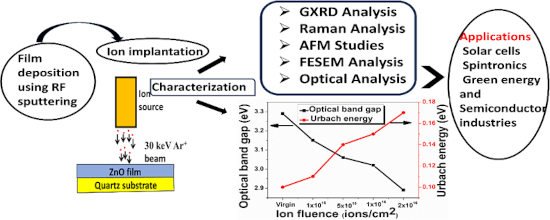
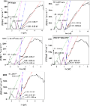
- ]. The diffuse reflectance of the films can be used to calculate the associated Kubelka–Munk function, which is equivalent to the absorption spectra [39][40]. This paves the way to calculate the optical bandgap of the implanted films. The Kubelka–Munk function F(R) is determined employing diffuse






Insights into the electronic and atomic structures of cerium oxide-based ultrathin films and nanostructures using high-brilliance light sources
Beilstein J. Nanotechnol. 2025, 16, 860–871, doi:10.3762/bjnano.16.65

- pressure. (d) Reference spectra measured for CeO2 and Ce2O3. Reprinted with permission from [58], Copyright 2024 American Chemical Society. This content is not subject to CC BY 4.0. Left: Ce N4,5 XAS absorption spectra measured in transmission mode for the CeO2 film with embedded Ag NPs (solid black line
- supporting oxide was found to decrease with decreasing NP size [53], possibly due to a stronger interaction between Ag and cerium oxide in smaller NPs, resulting from a greater charge transfer per atom [54]. A further possibility offered by synchrotrons is to measure spatially resolved Ce M-edge absorption
- spectra in photoemission electron microscopy (PEEM) mode, in which the photon energy is scanned across the XAS edge and the intensity of the secondary electrons is detected using a PEEM. This allowed to image the shape and size of ceria nanoislands on Ru(0001) and to probe and compare the oxidation state


Changes of structural, magnetic and spectroscopic properties of microencapsulated iron sucrose nanoparticles in saline
Beilstein J. Nanotechnol. 2025, 16, 762–784, doi:10.3762/bjnano.16.59