


Search results
Search for "adsorbate" in Full Text gives 133 result(s) in Beilstein Journal of Nanotechnology.
Laser ablation in liquids for shape-tailored synthesis of nanomaterials: status and challenges
Beilstein J. Nanotechnol. 2025, 16, 1963–1997, doi:10.3762/bjnano.16.137
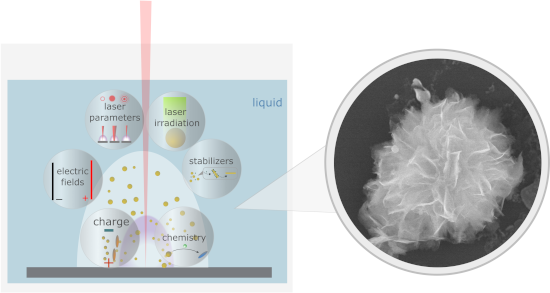
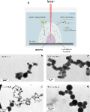
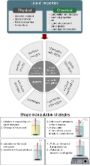
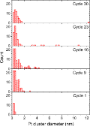
- ablation in a liquid can follow six mechanisms, as described by Zhang et al. in [14]: LaMer-like growth [15], coalescence [16], Ostwald ripening [17], particle (oriented) attachment [18][19][20][21], adsorbate-induced growth [18][22], and reaction-induced growth [23]. Even without applied external fields




Ambient pressure XPS at MAX IV
Beilstein J. Nanotechnol. 2025, 16, 1677–1694, doi:10.3762/bjnano.16.118
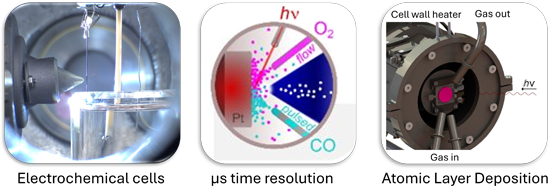
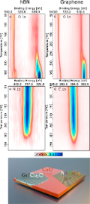
- surface composition and the catalyst selectivity by observing the gas phase (with a slightly retracted sample). The time evolution of NO and N2 taken from curve fits of the N 1s gas phase spectra (Figure 7D) is shown in (Figure 7F) while the evolution of the dominant surface adsorbate taken from curve





Parylene-coated platinum nanowire electrodes for biomolecular sensing applications
Beilstein J. Nanotechnol. 2025, 16, 1392–1400, doi:10.3762/bjnano.16.101
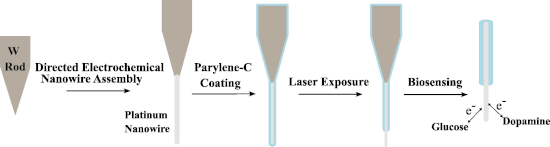
- , the first peak is around −300 mV, corresponding to the chemisorption onto the platinum surface and dehydrogenation of glucose. This indicates formation of intermediate adsorbate forms on the platinum surface. The second peak around 150 mV is due to the further oxidation of intermediate adsorbates with


Automated collection and categorisation of STM images and STS spectra with and without machine learning
Beilstein J. Nanotechnol. 2025, 16, 1367–1379, doi:10.3762/bjnano.16.99
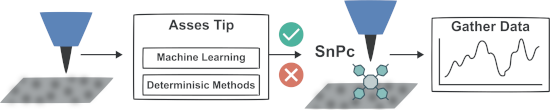
- collect a high number of spectra on multiple molecules without human intervention. The technique can be easily extended to most metal–adsorbate systems and is promising for the development of automated, high-throughput, STM characterisation of small adsorbate systems. Keywords: automated; machine
- different adsorbate/substrate systems without the need for extensive data collection to train ML models. This methodology can aid in the rapid characterisation of new materials via automated probing of different features in a system, taking numerous measurements over different areas, only requiring an




Electronic and optical properties of chloropicrin adsorbed ZnS nanotubes: first principle analysis
Beilstein J. Nanotechnol. 2025, 16, 1184–1196, doi:10.3762/bjnano.16.87
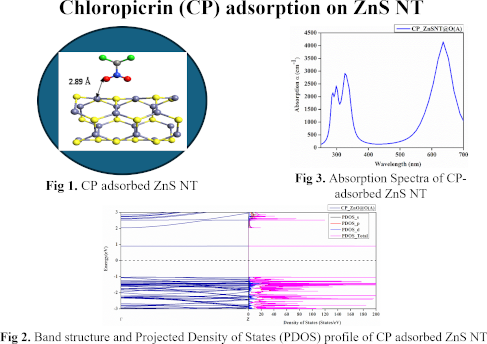
- the changes in Zn–S bond lengths near the CP adsorption site for different orientations before and after optimization, alongside the adsorption distance between the adsorbate and adsorbent. The most significant changes in bond length were observed near the atomic positions Zn(10)–S(13)–Zn(9), which


Electron beam-based direct writing of nanostructures using a palladium β-ketoesterate complex
Beilstein J. Nanotechnol. 2025, 16, 530–539, doi:10.3762/bjnano.16.41
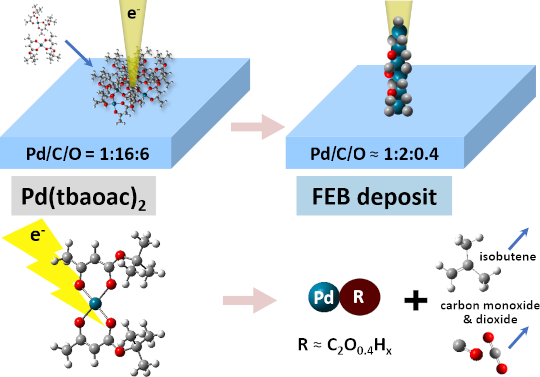
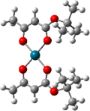
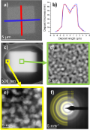
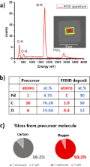
- topography and overall uniformity of the deposit (Figure 2a). The thickness profile extracted from the AFM data (Figure 2b) shows a dip at the center of the deposit. This shape is typical of the spiral scanning method when the rate of adsorbate dissociation exceeds the rate of adsorbate supply. The resulting


Impact of adsorbate–substrate interaction on nanostructured thin films growth during low-pressure condensation
Beilstein J. Nanotechnol. 2025, 16, 473–483, doi:10.3762/bjnano.16.36

- elastic adsorbate–substrate interactions in processes of nanostructuring of thin films during low-pressure condensation in the framework of theoretical approaches and numerical simulations. It will be shown that an increase in the elastic interaction strength induces first-order transitions and pattern
- formation. We simulate deposition on one- and multicomponent substrates with different strengths of adsorbate–substrate interactions. We will show that an increase in the strength of adsorbate–substrate interactions stimulates the formation of stable surface structures during deposition, which leads to an
- increase in its coverage and the formation of a smaller number of adsorbate islands of larger size. At elevated adsorption rates, an increase in adsorbate–substrate interactions results in the transformation of the surface morphology and the formation of percolating adsorbate structures. Deposition onto


A review of metal-organic frameworks and polymers in mixed matrix membranes for CO2 capture
Beilstein J. Nanotechnol. 2025, 16, 155–186, doi:10.3762/bjnano.16.14
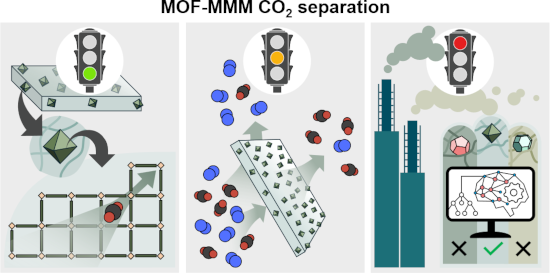
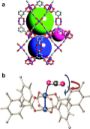
- framework and the CO2 adsorbate. A third strategy for obtaining high CO2 adsorption selectivity is to prepare MOFs from metal ion nodes that are uncoordinated, thus having accessible coordination vacancies known as open metal sites (OMSs). This strategy, illustrated in Figure 2c, is a prominent method for




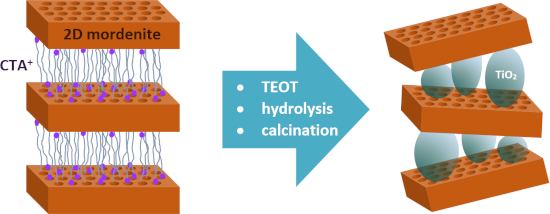
TiO2 immobilized on 2D mordenite: effect of hydrolysis conditions on structural, textural, and optical characteristics of the nanocomposites
Beilstein J. Nanotechnol. 2025, 16, 128–140, doi:10.3762/bjnano.16.12
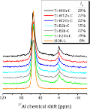
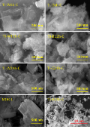
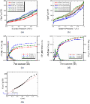
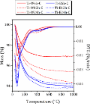
- . For a correct transformation of relative pressure (P/P0) to t, we used the formulas proposed in [38][39] for hierarchical microporous/mesoporous zeolites. In this method, a linear fit at low thickness of adsorbate film (low relative pressure) provides the micropore volume Vmicro (the intercept) and



Modeling and simulation of carbon-nanocomposite-based gas sensors
Beilstein J. Nanotechnol. 2025, 16, 90–96, doi:10.3762/bjnano.16.9
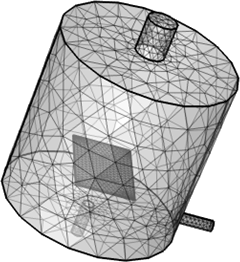
- remains constant; and (4) interactions between adsorbate molecules are insignificant [14]. Parameter estimation is typically conducted using linearization methods. This study evaluates the applicability and accuracy of different linearization approaches for the Langmuir isotherm [15]. There are some



Precursor sticking coefficient determination from indented deposits fabricated by electron beam induced deposition
Beilstein J. Nanotechnol. 2025, 16, 35–43, doi:10.3762/bjnano.16.4

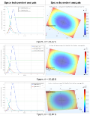
- saturation with an initial layer of adsorbate. Effectively, this means that the obtained sticking coefficients refer to “precursor-to-precursor” sticking rather than to “precursor-to-substrate” sticking. The investigations were also done for different kinetics energies of the impinging molecules revealing a


Ion-induced surface reactions and deposition from Pt(CO)2Cl2 and Pt(CO)2Br2
Beilstein J. Nanotechnol. 2024, 15, 1427–1439, doi:10.3762/bjnano.15.115

- transformations. Although these studies demonstrate that Pt(CO)2X2 films could be used to create pure Pt films during IBID, these assertions are based on data obtained under UHV conditions with a thin adsorbate film molecularly adsorbed onto an inert substrate and exposed to inert gas ions. To demonstrate that



Direct electron beam writing of silver using a β-diketonate precursor: first insights
Beilstein J. Nanotechnol. 2024, 15, 1117–1124, doi:10.3762/bjnano.15.90

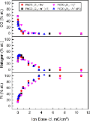
- reaction contribution is expected to occur [9]. For (hfac)AgPMe3, stage temperatures between 55 and 60 °C were safely suppressing condensation, which improved the adsorbate residence time and, in turn, the vertical growth rates. Figure 2a–c shows high-resolution scanning electron micrographs of a 60 min


Directed growth of quinacridone chains on the vicinal Ag(35 1 1) surface
Beilstein J. Nanotechnol. 2024, 15, 556–568, doi:10.3762/bjnano.15.48
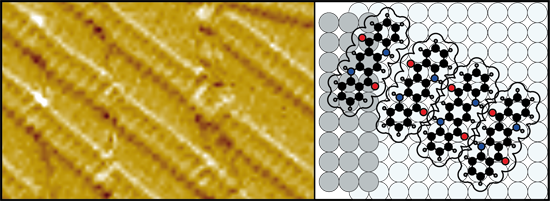
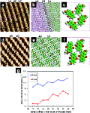
- . Here, the physical and chemical properties of the substrate and the adsorbate are the key that can be tuned to create nanostructures that fit specific needs [1][2][3][4]. A research focus over the recent years has been the self-assembly of molecules or atoms into one-dimensional (1D) linear aggregates
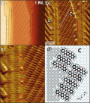
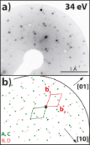
- , which can be used to direct the growth of nanostructures of adsorbates. The adsorption at step edges, as opposed to that on the terraces in between, is often favored because the additional interactions between the adsorbate and the atoms of the step edge contribute to the adsorption energy Eads. This


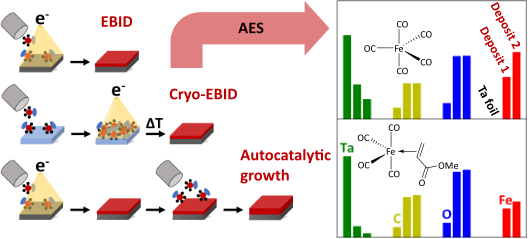
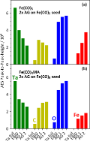
Electron-induced deposition using Fe(CO)4MA and Fe(CO)5 – effect of MA ligand and process conditions
Beilstein J. Nanotechnol. 2024, 15, 500–516, doi:10.3762/bjnano.15.45

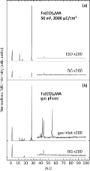
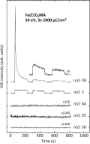
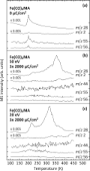

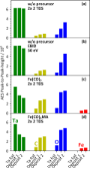
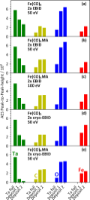

Multiscale modelling of biomolecular corona formation on metallic surfaces
Beilstein J. Nanotechnol. 2024, 15, 215–229, doi:10.3762/bjnano.15.21
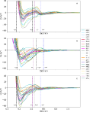
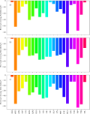
- orientations of each protein treated as different potential adsorbates to allow for a more physically realistic model of corona formation for anisotropic proteins. In brief, a standard kinetic Monte Carlo routine is used to advance the simulation from one event, collision of an incoming adsorbate with the NP
- place otherwise. We parameterize this model using adsorption and desorption rate constants extracted from UnitedAtom results as described previously [16][45]. In brief, each potential adsorbate (e.g., a small molecule or a particular orientation of a protein) is projected onto the surface of the NP and
- a convex hull procedure used to estimate the area of the NP occupied by that adsorbate, Ai. The adsorbate is then assigned an effective radius Ri such that a sphere projected onto the NP would produce the same radius [16]. The per-site adsorption rates are calculated using kinetic theory for the




Two-dimensional molecular networks at the solid/liquid interface and the role of alkyl chains in their building blocks
Beilstein J. Nanotechnol. 2023, 14, 872–892, doi:10.3762/bjnano.14.72
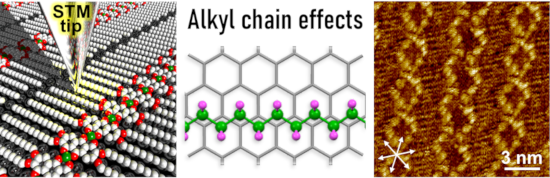
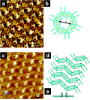
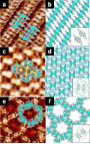
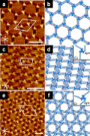
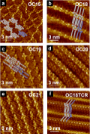
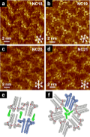
- alkyl chains contribute to the adsorption onto HOPG, in some cases, the number of adsorbed alkyl chains in 2D molecular networks is small compared to the number of alkyl chains originally present in the adsorbate molecule. This phenomenon has been explained by the dangling of alkyl chains toward the









The role of sulfonate groups and hydrogen bonding in the proton conductivity of two coordination networks
Beilstein J. Nanotechnol. 2022, 13, 437–443, doi:10.3762/bjnano.13.36
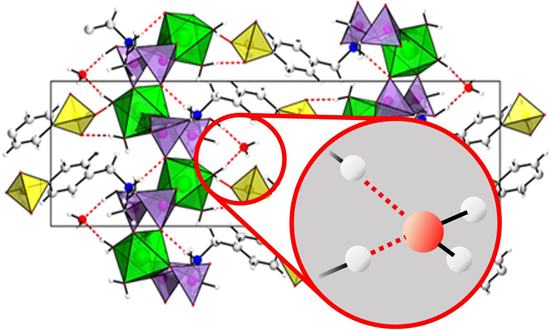
- maximum in the region from 103 to 104 Hz remains. The phase angle for the Pb-MOF sample shows only one maximum (at ca. 102 Hz) both before and after activation. We conclude that the second conductance mode in the non-activated Mg-CP material may be caused by interparticle water adsorbate layers that are
- successfully and irreversibly removed by activation. These findings are quite helpful, as they allow us to conversely conclude that the remaining mode of proton conductance is probably not caused by such adsorbate layers, but more likely occurs within the crystalline material, as will be elaborated in more
- with our above assumption that this additional conduction occurs within interparticle water adsorbate layers; these liquid-like layers may facilitate molecular diffusion to some extent. To explain the differences in proton conductivity between the (activated) Mg-CP and Pb-MOF materials, the respective


Low-energy electron interaction and focused electron beam-induced deposition of molybdenum hexacarbonyl (Mo(CO)6)
Beilstein J. Nanotechnol. 2022, 13, 182–191, doi:10.3762/bjnano.13.13
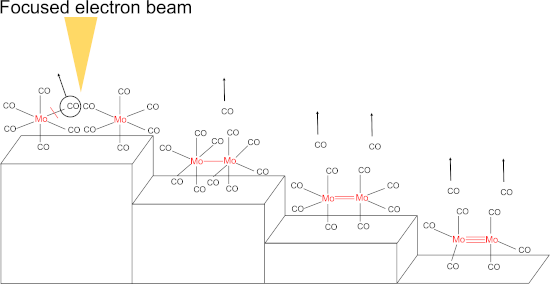
- rapidly with increased electron dose and was already insignificant above 1 × 10¹⁷ e−/cm2. An XPS analysis of the remaining deposit revealed an average loss of two CO groups from the W(CO)6 adsorbate at about 7 × 10¹⁶ e−/cm2, but above that dose the dominating pathway becomes electron-induced CO


A comprehensive review on electrospun nanohybrid membranes for wastewater treatment
Beilstein J. Nanotechnol. 2022, 13, 137–159, doi:10.3762/bjnano.13.10
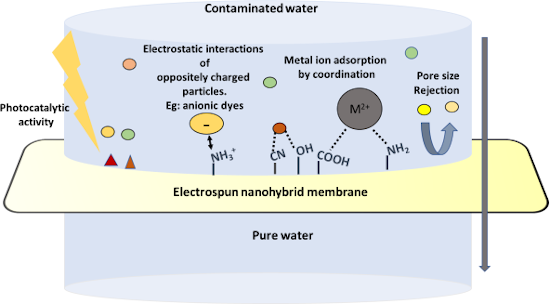
- . Adsorption membranes decontaminate wastewater by adsorbing the impurities via chemisorption or physisorption. Polymeric membranes have functional groups that can interact with the solutes. In chemisorption, an irreversible chemical bond is formed between the adsorbate and the adsorbent, whereas in
- physisorption, only a reversible physical bond due to electrostatic interactions or intermolecular interactions forms between adsorbate and the adsorbent. An ideal adsorption membrane should exhibit both high adsorption capacity and a high adsorption rate. ENH membranes have been widely used as adsorption




Two dynamic modes to streamline challenging atomic force microscopy measurements
Beilstein J. Nanotechnol. 2021, 12, 1226–1236, doi:10.3762/bjnano.12.90
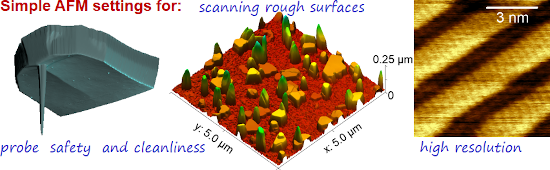
- [36], the lamellar structure was observed even when it was covered with a disordered adsorbate layer. The precise choice of the scanning parameters makes it possible to detect the presence of a lamellar structure with a period of 4–5 nm even with relatively blunt probes, for which a frequency curve


Irradiation-driven molecular dynamics simulation of the FEBID process for Pt(PF3)4
Beilstein J. Nanotechnol. 2021, 12, 1151–1172, doi:10.3762/bjnano.12.86
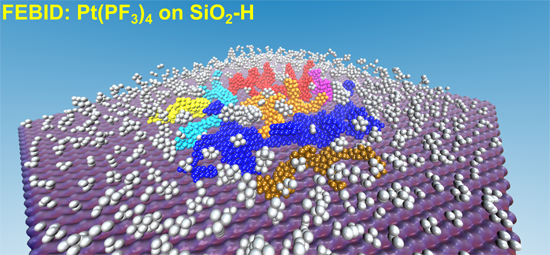
- , morphology, size, and metal content of the deposited Pt-containing material are quantitatively analyzed as functions of electron fluence and adsorbate concentration. Computational Methodology Computer simulations of the FEBID process of Pt(PF3)4 have been performed by means of the MBN Explorer software








Molecular assemblies on surfaces: towards physical and electronic decoupling of organic molecules
Beilstein J. Nanotechnol. 2021, 12, 950–956, doi:10.3762/bjnano.12.71

- ][30][31][32]. Additional concepts to weaken adsorbate–surface interactions involve the post-deposition intercalation of atomic species such as iodine [33]. For semiconductors, for example, bare silicon or germanium, electronic decoupling of molecules can be achieved by either the growth of ultrathin
Modification of a SERS-active Ag surface to promote adsorption of charged analytes: effect of Cu2+ ions
Beilstein J. Nanotechnol. 2021, 12, 902–912, doi:10.3762/bjnano.12.67
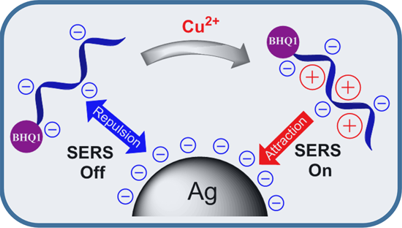
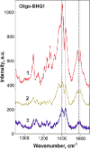
- introduces new states in the electronic structure of the metal–adsorbate complex leading to an increase in the Raman scattering cross section of the analyte [17]. Consequently, the CE mechanism should be accompanied by a change of spectral properties of the analyte, which was not observed in this study. Thus


Electromigration-induced formation of percolating adsorbate islands during condensation from the gaseous phase: a computational study
Beilstein J. Nanotechnol. 2021, 12, 694–703, doi:10.3762/bjnano.12.55
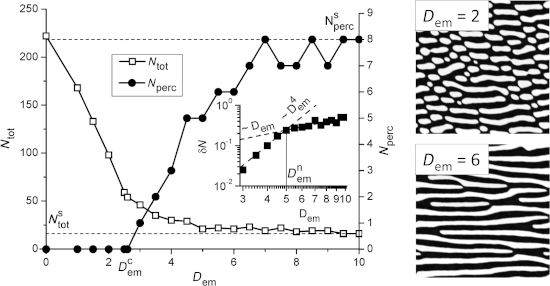
- computational study of a change in the morphology of a growing thin film during condensation caused by electromigration effects. It will be shown, that separated circular adsorbate islands, realized in an isotropic system, become elongated in the direction of the applied electrical field. We discuss the
- dependence of the critical value of the strength of the applied electrical field, responsible for the formation of percolating adsorbate islands, on main control parameters. This study provides insight into details of electromigration effects during the self-organization of adatoms into percolating adsorbate
- islands during condensation from the gaseous phase. We will show that the elongated morphology of adsorbate islands remains stable if the electric field is turned off. Keywords: adsorptive systems; electromigration; numerical simulations; pattern formation; thin films; Introduction The processes of


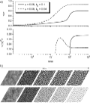


![[Graphic 29]](/bjnano/content/inline/2190-4286-12-55-i36.svg?max-width=637&scale=1.18182) on the adsorption coefficient α ...
on the adsorption coefficient α ...




