


Search results
Search for "antimicrobial activity" in Full Text gives 63 result(s) in Beilstein Journal of Nanotechnology.
Restorative potential of laser-synthesized silver nanoparticles with Salvia officinalis for periodontal disease treatment: an in vitro study
Beilstein J. Nanotechnol. 2026, 17, 781–795, doi:10.3762/bjnano.17.55
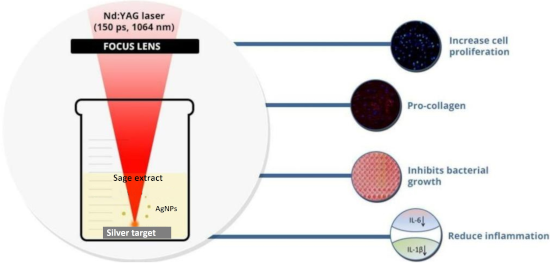
- , thereby contributing to their antimicrobial activity [37][38]. In contrast, both AgNP samples obtained with higher laser energy had higher concentrations and smaller particle sizes, and showed high inhibitory potential; SageAgNPs6mJ exhibited the highest antibacterial effects among all tested
- nanoparticles. The superior antibacterial efficacy of SageAgNPs6mJ against the tested bacterial strains can be attributed to several mechanisms. Sage’s phenolic compounds, especially rosmarinic and caffeic acids, increase the antimicrobial activity through bacterial cell membrane damage and interaction with



Environmental applications of silver nanoparticles: state-of-the-art review and emerging trends
Beilstein J. Nanotechnol. 2026, 17, 697–736, doi:10.3762/bjnano.17.49
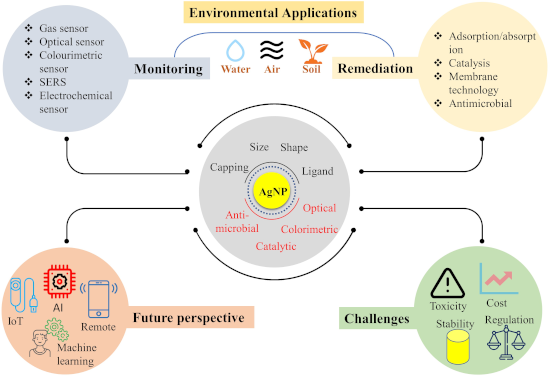
- , colourimetry, and fluorometry [18][19][20][21]. In addition, the enhanced antimicrobial activity of AgNPs can be used for water decontamination and is widely employed in membrane filtration technology [22]. AgNPs exhibited broad-spectrum antibacterial activity, encompassing both Gram-positive and Gram-negative
- highlighted capping agent-mediated size-controlled synthesis of nanoparticles for peroxide detection and antimicrobial activity [38]. PVA-AgNPs were the smallest and showed enhanced antibacterial activity and H2O2 sensing [38]. In addition, incorporating linker molecules enables selective and sensitive
- properties due to their higher surface-area-to-volume ratio [58]. A study reported that luteolin tetraphosphate-stabilised nanosilver exhibited size- and shape-dependent antimicrobial activity [59]. The study concluded that 100% bacterial and fungal growth was inhibited, indicating potential in water and air


Decontamination from water pollutants and pathogens by electrospun nanofibers doped with heavy-atom-free borafluorene-BODIPY photosensitizers
Beilstein J. Nanotechnol. 2026, 17, 668–682, doi:10.3762/bjnano.17.46
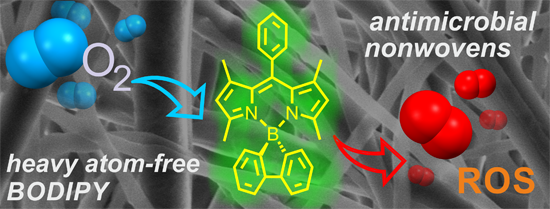
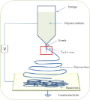
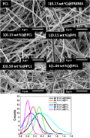
- excellent oxidation resistance without losing catalytic activity over 20 consecutive cycles. All tested PCL-based materials show high antimicrobial activity. Among them, 1(0.50 wt %)@PCL was chosen as the optimal formulation; it did not hinder the growth of S. aureus in the dark but triggered a substantial



Cellulose as a photocatalyst support material: extraction, structural features, and environmental applications
Beilstein J. Nanotechnol. 2026, 17, 635–652, doi:10.3762/bjnano.17.44
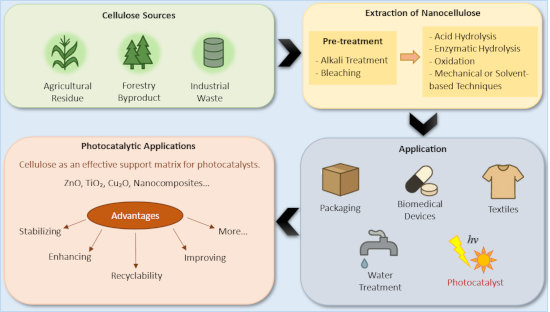
- modifications not only increase the drug loading capacity and extend the release time of therapeutic agents but also contribute to improved antimicrobial activity, biocompatibility, and mechanical strength, making cellulose a versatile platform for advanced delivery systems [69]. Depending on the processing


Polycatecholamine nanocoatings on stainless steel: the effect on attachment of human fibroblasts and platelets
Beilstein J. Nanotechnol. 2026, 17, 365–380, doi:10.3762/bjnano.17.25
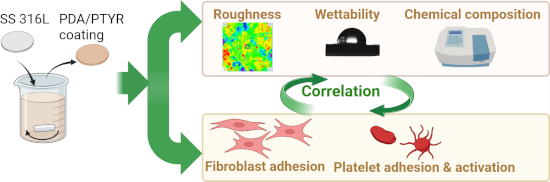
- several weeks and prolonged antimicrobial activity [21][22][23]. Beyond classical PDA films, broader catechol-based and PDA-inspired chemistries have been explored, including phenolic polymer systems, mussel-inspired adhesive interfaces and catechol-rich surface architectures, which have been shown to




Durable antimicrobial activity of fabrics functionalized with zeolite ion-exchanged nanomaterials against Staphylococcus aureus and Escherichia coli
Beilstein J. Nanotechnol. 2026, 17, 262–274, doi:10.3762/bjnano.17.18
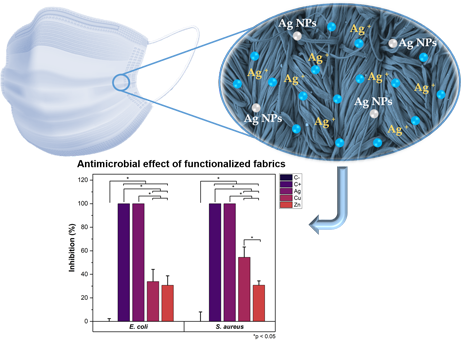
- atom % are evaluated regarding their antimicrobial activity against Staphylococcus aureus (Gram-positive) and Escherichia coli (Gram-negative), as well as regarding their physicochemical and mechanical properties. Scanning electron microscopy confirms the uniform distribution and successful
- functionalization. This method demonstrates a simple and industry-compatible approach for producing durable antimicrobial cotton fabrics. Keywords: antimicrobial activity; Escherichia coli; fabrics functionalization; ion exchange; nanomaterial; Staphylococcus aureus; zeolite; Introduction The development of
- inactivate a wide range of microorganisms. Today, both silver and copper are widely used in various medical and healthcare applications due to their effective antimicrobial activity. For example, copper was found to be 99.9% efficient in inactivating microorganisms within the first two hours of contact [13

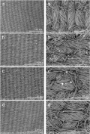

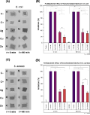


Functional surface engineering for cultural heritage protection: the role of superhydrophobic and superoleophobic coatings – a comprehensive review
Beilstein J. Nanotechnol. 2026, 17, 63–96, doi:10.3762/bjnano.17.6
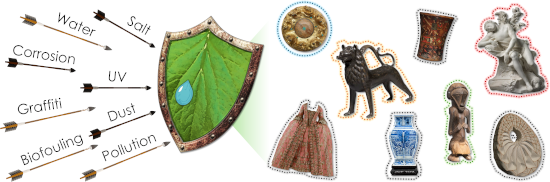
- ), to the initial mixture in order to reduce the wettability of the final coating. The formulation containing 2% of MCC enhanced with oregano essential oil (OEO) showed the lowest solubility, swelling, and wettability, along with strong antimicrobial activity against stone-deteriorating microorganisms


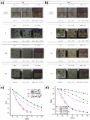


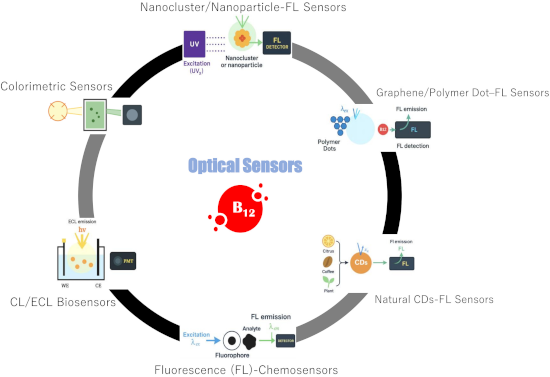
Optical bio/chemical sensors for vitamin B12 analysis in food and pharmaceuticals: state of the art, challenges, and future outlooks
Beilstein J. Nanotechnol. 2025, 16, 2207–2244, doi:10.3762/bjnano.16.153


Rapid synthesis of highly monodisperse AgSbS2 nanocrystals: unveiling multifaceted activities in cancer therapy, antibacterial strategies, and antioxidant defense
Beilstein J. Nanotechnol. 2025, 16, 2105–2115, doi:10.3762/bjnano.16.145
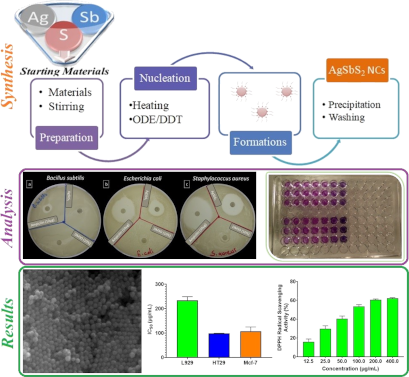
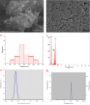
- inset in Figure 2c. The particle size distribution graphs in this image unequivocally affirmed the successful attainment of the desired homogeneity. Biological applications Antibacterial activity of AgSbS2 NCs Disc diffusion. The antimicrobial activity of AgSbS2 NCs at a concentration of 10 mg/mL


On the road to sustainability – application of metallic nanoparticles obtained by green synthesis in dentistry: a scoping review
Beilstein J. Nanotechnol. 2025, 16, 1851–1862, doi:10.3762/bjnano.16.128
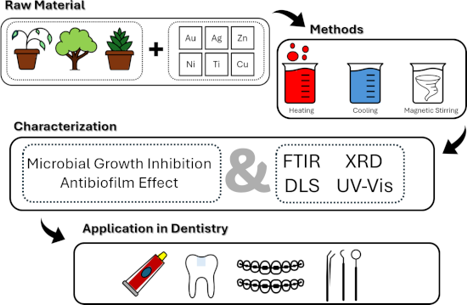
- , including cements, sealants, and mouthwashes [8][45]. CuNPs and nickel oxide nanoparticles, though less frequent, are also gaining attention for their antimicrobial activity, despite some concerns regarding cytotoxicity [46][47]. The presence AuNPs and titanium dioxide nanoparticles highlights an interest
- investigation of antimicrobial activity against these microorganisms indicates the potential dental applications of green-synthesized metallic nanoparticles. To characterize the green-synthesized metallic nanoparticles, the selected studies used mainly Fourier-transform infrared spectroscopy (FTIR, 36.73%; n
- , particularly in dentistry. This scoping review examines the rising focus on these nanoparticles regarding their antimicrobial, regenerative, and therapeutic potential in dental applications. Among the metals studied, silver and zinc oxide nanoparticles dominate because of their broad-spectrum antimicrobial


Synthesis and antibacterial properties of nanosilver-modified cellulose triacetate membranes for seawater desalination
Beilstein J. Nanotechnol. 2025, 16, 1380–1391, doi:10.3762/bjnano.16.100
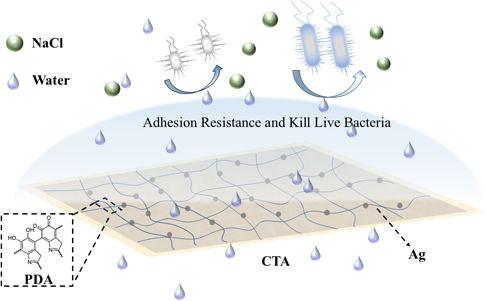
- nanomaterials can be engineered to optimize their antimicrobial activity, making them versatile tools in the development of advanced membrane technologies. Quantum effects, such as localized surface plasmon resonance in metallic nanoparticles, can further enhance antimicrobial properties by generating reactive


Enhancing the therapeutical potential of metalloantibiotics using nano-based delivery systems
Beilstein J. Nanotechnol. 2025, 16, 1350–1366, doi:10.3762/bjnano.16.98
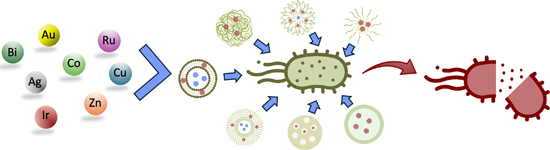
- antimicrobial agents since they usually exhibit superior antimicrobial activity compared to silver(I) alone [100]. The mechanism of action of most silver complexes is based on a slow release of the silver(I) ions, which react with the thiol groups of proteins or with key functional groups of enzymes; the
- cellulose-based dressings. The resulting formulation displayed improved antimicrobial activity and enhanced wound healing properties [105]. Additionally, in vitro assays revealed that encapsulating silver sulfadiazine in SLNs protected fibroblasts and keratinocytes from metal-induced toxicity. Finally, the
- , and the resulting formulation was evaluated regarding its antimicrobial activity against Gram-positive bacteria (e.g., S. aureus and B. subtilis) and Gram-negative strains (e.g., E. coli and P. aeruginosa) [121]. Unfortunately, encapsulation led to reduced immediate efficacy compared to the free Zn


Functional bio-packaging enhanced with nanocellulose from rice straw and cinnamon essential oil Pickering emulsion for fruit preservation
Beilstein J. Nanotechnol. 2025, 16, 1234–1245, doi:10.3762/bjnano.16.91
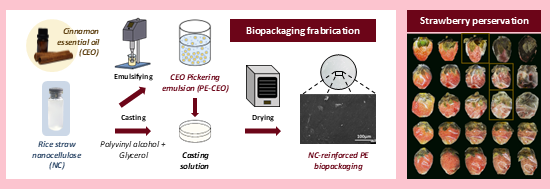
- 600 nm and its thickness as (Equation 4). where Ab600 represents the absorbance at 600 nm and t is the biopackaging thickness [49]. Antimicrobial properties. The antimicrobial activity of the films was evaluated using a time-kill method. Escherichia coli ATCC 25922 and Staphylococcus aureus ATCC 29213
- (CFU) were counted to determine the antimicrobial activity of the films. Inhibition rates were calculated according to where CCcontrol is the cell count of the control tube substance and CCsample is the cell count of the sample after 24 h. Antioxidation properties. The antioxidant capacity of the



Hydrogels and nanogels: effectiveness in dermal applications
Beilstein J. Nanotechnol. 2025, 16, 1216–1233, doi:10.3762/bjnano.16.90
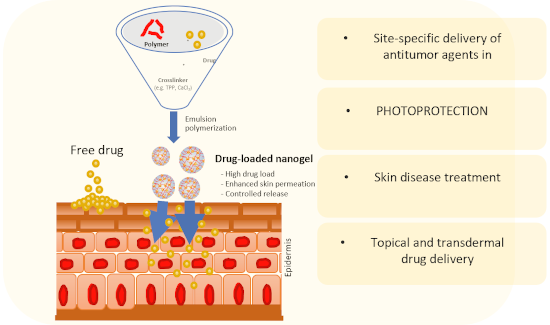
- through the oxidative coupling of catechol groups using a hydrogen peroxide/horseradish peroxidase (H2O2/HRP) catalytic system [41]. The addition of the antibiotic doxycycline provided the hydrogels with antimicrobial activity to treat infected full-thickness defect wounds. Flexible films composed of
- the extracellular matrix make them attractive drug delivery systems. Dermal applications include psoriasis treatment, antimicrobial activity, wound healing, and skin tumor remission. Understanding topical and transdermal drug delivery mechanisms is crucial. Hydrogels and nanogels, proven strategies to


Quantification of lead through rod-shaped silver-doped zinc oxide nanoparticles using an electrochemical approach
Beilstein J. Nanotechnol. 2025, 16, 422–434, doi:10.3762/bjnano.16.33
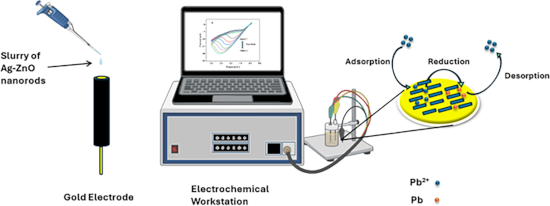
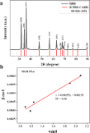
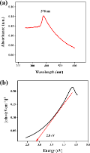
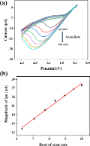
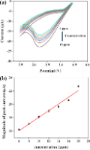
- , India Department of Physics, Punjab Engineering College (Deemed to be University), Chandigarh, 160012, India 10.3762/bjnano.16.33 Abstract Special features of zinc oxide nanoparticles have drawn a lot of interest due to their wide bandgap, high surface area, photocatalytic activity, antimicrobial
- activity, and semiconductor properties. By doping ZnO nanoparticles with transition metals, we can alter their electrical, optical, and magnetic properties by introducing new electronic states into the band structure. Herein, Ag is added to ZnO nanostructures to improve their optical properties to detect





Fabrication and evaluation of BerNPs regarding the growth and development of Streptococcus mutans
Beilstein J. Nanotechnol. 2025, 16, 308–315, doi:10.3762/bjnano.16.23
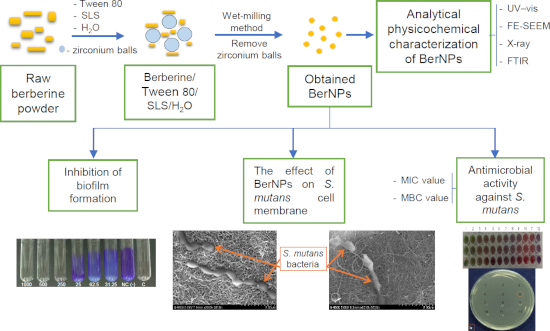
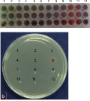
- -transform infrared spectroscopy. The broth dilution method was used to determine the antimicrobial activity of the BerNPs against Streptococcus mutans (S. mutans). The impact of the BerNPs on the cell surface of S. mutans was evaluated through FE-SEM analysis, focusing on its ability to inhibit biofilm
- is currently little information on its antimicrobial activity against S. mutans. Therefore, it is scientifically and economically important to clarify the mechanism and ability of BerNPs to inhibit the growth of S. mutans. The findings from such studies could serve as a foundation for developing




Enhancing mechanical properties of chitosan/PVA electrospun nanofibers: a comprehensive review
Beilstein J. Nanotechnol. 2025, 16, 286–307, doi:10.3762/bjnano.16.22

- improved the antimicrobial activity of the nanofibers against a wide range of bacteria [190]. In tissue engineering applications, aligned fibers are particularly effective as they better mimic the inductive environment, such as that of human tendon stem/progenitor cells, compared to random fibers [191


Clays enhanced with niobium: potential in wastewater treatment and reuse as pigment with antibacterial activity
Beilstein J. Nanotechnol. 2025, 16, 141–154, doi:10.3762/bjnano.16.13
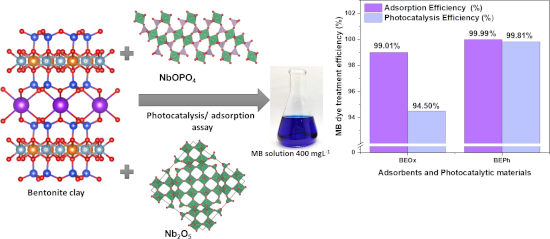
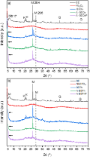
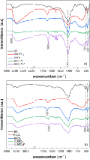
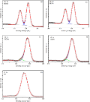
- characterized through colorimetric analysis (CIEL*a*b*) and UV–vis spectroscopy. Antimicrobial activity test The antimicrobial properties of the BEPh, BEOx, A-BEPh, A-BEOx, A-BEPhP, and A-BEOxP samples were investigated against the bacteria Bacillus cereus (ATCC 10876) (Gram-positive) and Proteus mirabilis



Characterization of ZnO nanoparticles synthesized using probiotic Lactiplantibacillus plantarum GP258
Beilstein J. Nanotechnol. 2025, 16, 78–89, doi:10.3762/bjnano.16.8
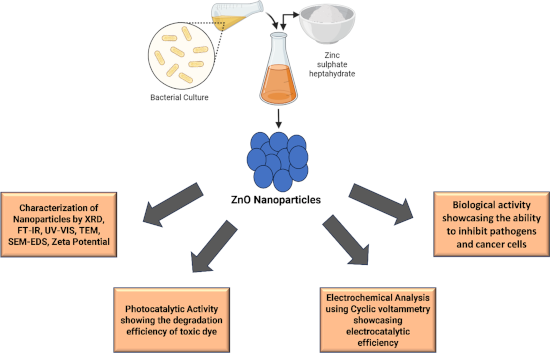
- semiconductors. Also, ZnO NPs exhibit antimicrobial activity, targeted drug delivery, catalytic activity, and antidiabetic, larvicidal, acaricidal and anticancer activity in addition to their usage in different medical devices and pharmaceuticals [11][12][13]. We report the ecologically safe production of ZnO



Natural nanofibers embedded in the seed mucilage envelope: composite hydrogels with specific adhesive and frictional properties
Beilstein J. Nanotechnol. 2024, 15, 1603–1618, doi:10.3762/bjnano.15.126
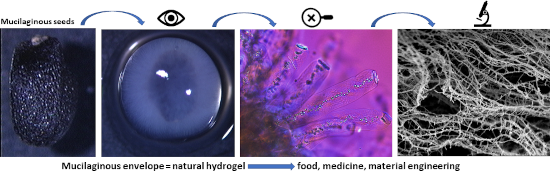
- friction better fulfil their biological role than mucilaginous seeds with just low friction, which was demonstrated in our experiment with pigeons (see below). Friction after chemical and thermal treatments The antimicrobial activity of seed mucilage was previously described for Linum usitatissimum [105
- as food, agriculture, and medicine [20][114][115]. Diverse other substances and systems with antimicrobial activity (antibiotics, essential oils, phenolics, and metal nanoparticles) can be incorporated into the mucilage hydrogels, which after some additional modifications can be used for the


Nanotechnological approaches in the treatment of schistosomiasis: an overview
Beilstein J. Nanotechnol. 2024, 15, 13–25, doi:10.3762/bjnano.15.2
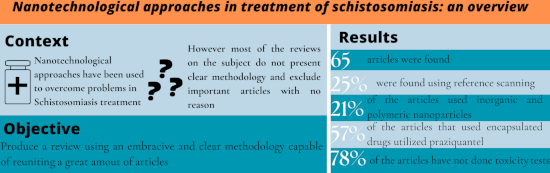
- drugs were able to cause alterations in parasite tegument [64]. Another work used carvacrol, a monoterpene present in essential oils derived from plants such as Origanum vulgare. Besides being commonly used as a flavoring agent in food and cosmetics, it shows antimicrobial activity. Xavier et al. [67
- mechanism by which the nanoemulsion could reduce the worm burden is its antimicrobial activity, connecting changes in microbiota with the response to parasites. However, the mechanism of action of carvacrol remains unknown [67]. Repositioned drugs Works utilizing compounds repositioned from other diseases


Quercetin- and caffeic acid-functionalized chitosan-capped colloidal silver nanoparticles: one-pot synthesis, characterization, and anticancer and antibacterial activities
Beilstein J. Nanotechnol. 2023, 14, 362–376, doi:10.3762/bjnano.14.31
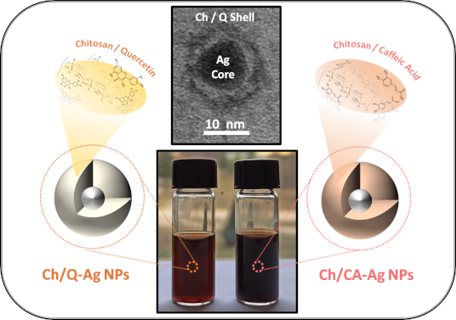
- as crabs, and shrimps. It is also found in the skeleton of insects and the structure of cell walls of fungi [11][12]. Chitosan, which was defined as an antimicrobial agent for the first time by Allan and Hadwiger, exhibits broad-spectrum antimicrobial activity [13][14]. In the last decade, chitosan


Antimicrobial and mechanical properties of functionalized textile by nanoarchitectured photoinduced Ag@polymer coating
Beilstein J. Nanotechnol. 2023, 14, 95–109, doi:10.3762/bjnano.14.11
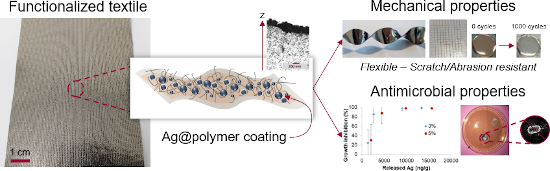
- forward. In the present study, the antimicrobial activity of E. coli and C. albicans is only due to the action of silver ions released by AgNPs [20]. Ionic silver first perforates the cell wall, enters the microorganism and eventually induces cell apoptosis. Indeed, once inside the cell, silver interacts
- , the same medium was chosen for both bacteria and fungus. M63G medium has been preferred since it does not reduce silver antimicrobial activity contrary to media containing components such as Cl− or other biomolecules, which interact with ionic silver [20]. In addition, it provides nutrient conditions
- demonstrates lower antimicrobial activity than the liquid diffusion tests. This can be first explained by silver’s limited diffusion through agar, compared to liquid media. In addition, the sample surface contribution is limited to its immediate vicinity in the case of the plate diffusion test, whereas the



In search of cytotoxic selectivity on cancer cells with biogenically synthesized Ag/AgCl nanoparticles
Beilstein J. Nanotechnol. 2022, 13, 1505–1519, doi:10.3762/bjnano.13.124
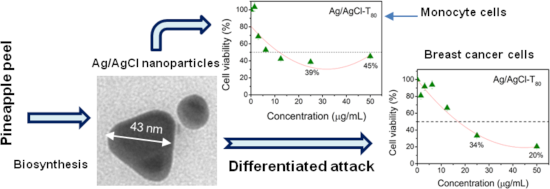
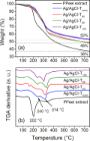
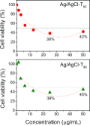
- and anticancer properties of AgNPs synthesized from pineapple peel. The authors reported a favorable antimicrobial activity at low concentrations of AgNPs. Das et al. [17] found that AgNPs synthesized in the same way have high antidiabetic potential and high cytotoxicity against HepG2 cancer cells in





Hydroxyapatite–bioglass nanocomposites: Structural, mechanical, and biological aspects
Beilstein J. Nanotechnol. 2022, 13, 1490–1504, doi:10.3762/bjnano.13.123
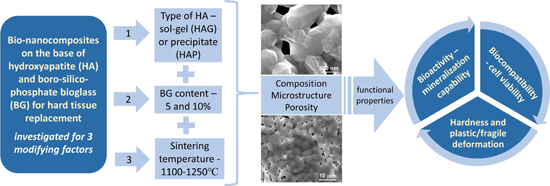
- addition of different dopants to the glass can enhance the osteogenesis (Mg, Sr, Fe, and Zr) or can yield particular properties such as angiogenesis (Cu and Co) and antimicrobial activity (Ag, Zn, Ce, Ga, and Cu). Also, dopants can change the glass solubility [13][15][16][17][18][19]. The presence of the



