Search results
Search for "carboxylates" in Full Text gives 29 result(s) in Beilstein Journal of Nanotechnology.
Cellulose as a photocatalyst support material: extraction, structural features, and environmental applications
Beilstein J. Nanotechnol. 2026, 17, 635–652, doi:10.3762/bjnano.17.44
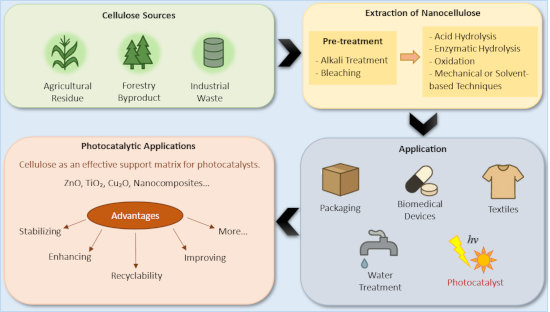
- (0.1 mmol) [61]. The oxidation reaction actively consumes base and produces acid, causing the pH to drop continuously. It must be maintained by adding NaOH dropwise. This is because NaClO is most active at pH 10, and the newly formed carboxyl groups are ionized into carboxylates, driving the reaction


Evaluating metal-organic precursors for focused ion beam-induced deposition through solid-layer decomposition analysis
Beilstein J. Nanotechnol. 2025, 16, 1942–1951, doi:10.3762/bjnano.16.135
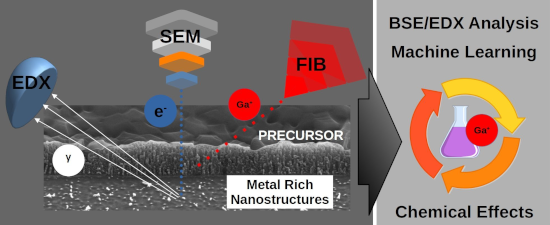
- irradiation differs from gas-phase deposition, we think that our method can be employed to optimize pre-screen and score new potential precursors for FIB applications by significantly reducing the time required and conserving valuable resources. Keywords: backscattered electrons (BSE); carboxylates; energy
- deposition (CVD), a thermally driven process. However, these kinds of precursors were not optimized for the electron- and ion-driven FEBID and FIBID processes [4][5][14]. Important classes of FEBID-tested compounds for group-11 elements have been β-diketonates and carboxylates. These compounds were used
- previously in CVD, and β-diketonates are the most common CVD precursors, yielding films of high purity up to 99 atom % [5][15][22][23][24][25][26]. In FEBID, silver(I) carboxylates, in contrast to β-diketonates, result in high metal content in the deposits. Recent research [5] using [Ag2(μ-O2CR)2], where R


Nanotechnology-based approaches for the removal of microplastics from wastewater: a comprehensive review
Beilstein J. Nanotechnol. 2025, 16, 1607–1632, doi:10.3762/bjnano.16.114
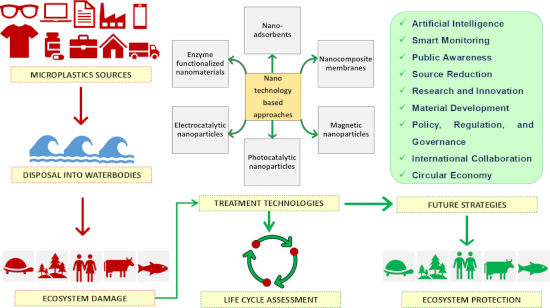
- , phosphonate, carboxylates, and heterocyclic compounds [114]. MOFs possess a combination of properties including as low density, large porous structure, and high adsorption capacity, which makes them suitable for wastewater treatment [115]. In addition, the strong coordination bonding within their framework


Cross-reactivities in conjugation reactions involving iron oxide nanoparticles
Beilstein J. Nanotechnol. 2025, 16, 1504–1521, doi:10.3762/bjnano.16.106
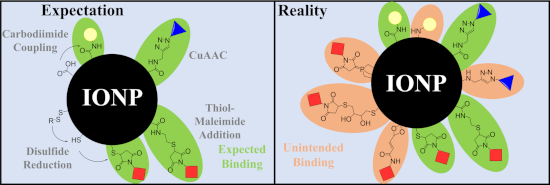
- -hydroxysuccinimide (NHS) to activate carboxylates produces NHS ester intermediates, which are excellent leaving groups and are also more stable than the O-acylisourea intermediates of the EDC-only activation [5]. The use of EDC and EDC/NHS coupling has been demonstrated in the literature to prepare functionalized







Green synthesis of silver nanoparticles derived from algae and their larvicidal properties to control Aedes aegypti
Beilstein J. Nanotechnol. 2024, 15, 1566–1575, doi:10.3762/bjnano.15.123
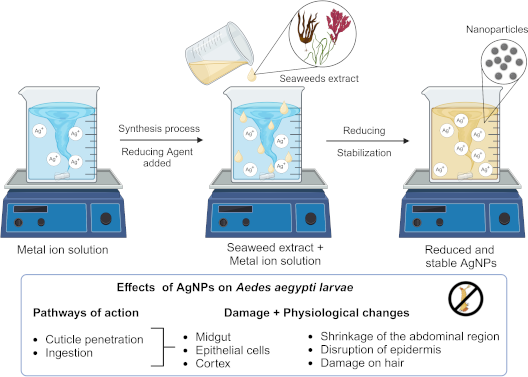
- evaluated as potential reducing agents in the biosynthesis of AgNPs were the secondary amines, aromatic primary amines, carboxylates, amides, alkenes, and aromatic compounds. Roni and collaborators prepared AgNPs from red algae [52]. An aqueous extract of H. musciformis was obtained (10 g of seaweed leaves


Direct electron beam writing of silver using a β-diketonate precursor: first insights
Beilstein J. Nanotechnol. 2024, 15, 1117–1124, doi:10.3762/bjnano.15.90

- compounds exist that feature sufficient vapor pressure and stability to be delivered into and used in a vacuum chamber. To date, only the class of carboxylates led to successful implementation, including both fluorinated and non-flourinated ligands [27]. The surprisingly high content of elemental silver
- that was found in the deposit, despite the large number of carbon atoms in the ligands, was attributed to the thermodynamically favorable release of CO2 upon ligand cleavage [31]. All successfully tested silver carboxylates exhibit a generally high reactivity and sensitivity upon electron beam impact


Carboxylic acids and light interact to affect nanoceria stability and dissolution in acidic aqueous environments
Beilstein J. Nanotechnol. 2023, 14, 762–780, doi:10.3762/bjnano.14.63
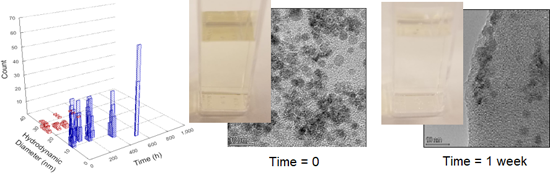
- carboxylates are found in underground and aerial plant parts. To further test nanoceria stability, suspensions were exposed to light and dark conditions, simulating plant environments and biological systems. Light induced nanoceria agglomeration in the presence of some carboxylic acids. Nanoceria agglomeration
- ]. Nanoceria was partially biotransformed in cucumber plants to cerium phosphate within the roots and to cerium carboxylates in the shoots, presumably aided by carboxylic acids excreted by the roots [17]. Ceria transformation within cucumber plants was also found to be affected by phosphate, with a higher
- percentage of cerium carboxylates in the shoots in the absence of added phosphate [18]. Nanoceria can be taken up by food crops; however, limited biotransformation was observed in soil cultivated soybeans [19]. Coated and uncoated ceria nanoparticles were found in the roots and shoots of corn plants. The
Two-step single-reactor synthesis of oleic acid- or undecylenic acid-stabilized magnetic nanoparticles by thermal decomposition
Beilstein J. Nanotechnol. 2023, 14, 11–22, doi:10.3762/bjnano.14.2
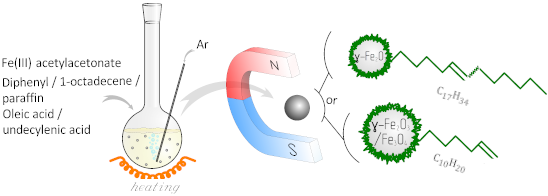
- disappears, which indicates that it has been correctly attributed to C–CH3 fragments [30]. The IR bands characteristic of metal carboxylates are in the range of 1650–1500 cm−1 for the asymmetrical vibrations and 1450–1300 cm−1 for the symmetrical vibrations. The difference between the bands ν(COO


Structural studies and selected physical investigations of LiCoO2 obtained by combustion synthesis
Beilstein J. Nanotechnol. 2022, 13, 1473–1482, doi:10.3762/bjnano.13.121
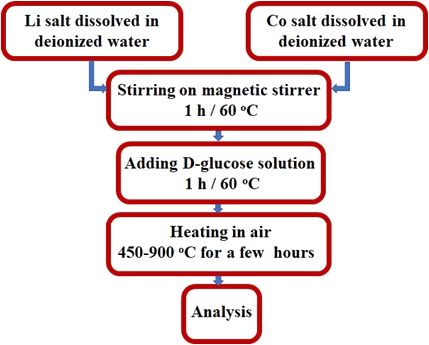
- carboxylates were investigated as fuels, including ammonium acetate, ammonium citrate, or ammonium tartarate [55], urea [56], starch [57], citric acid [58], and 1,2-diformylhydrazine [59]. The obtained LCO precursors were annealed in air between 300 and 850 °C [55][56][57][58][59]. Herein, we demonstrate a new




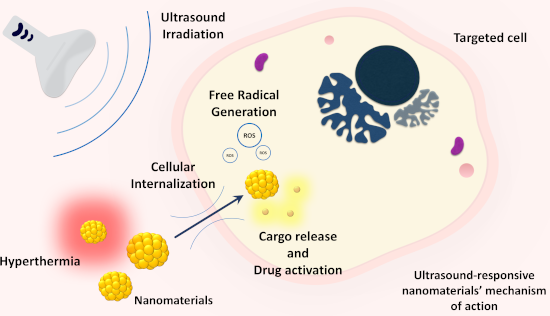
Comprehensive review on ultrasound-responsive theranostic nanomaterials: mechanisms, structures and medical applications
Beilstein J. Nanotechnol. 2021, 12, 808–862, doi:10.3762/bjnano.12.64


Gold(I) N-heterocyclic carbene precursors for focused electron beam-induced deposition
Beilstein J. Nanotechnol. 2021, 12, 257–269, doi:10.3762/bjnano.12.21
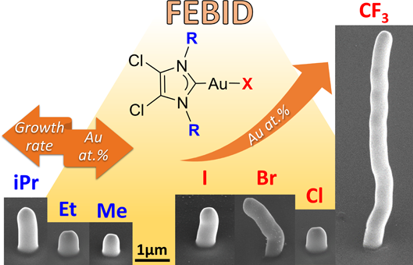
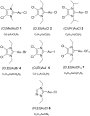
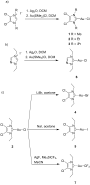
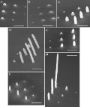
- under electron irradiation. However, this trend is not extended to the recently reported silver carboxylates [39][40]. In gold(I) complexes, only two ligands are present in the coordination sphere, a neutral ligand L and an anionic ligand X. Both ligands influence the complex stability, with an





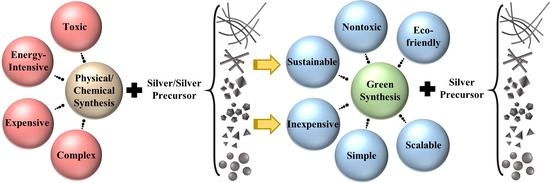
A review on the green and sustainable synthesis of silver nanoparticles and one-dimensional silver nanostructures
Beilstein J. Nanotechnol. 2021, 12, 102–136, doi:10.3762/bjnano.12.9


Nanocasting synthesis of BiFeO3 nanoparticles with enhanced visible-light photocatalytic activity
Beilstein J. Nanotechnol. 2020, 11, 1822–1833, doi:10.3762/bjnano.11.164
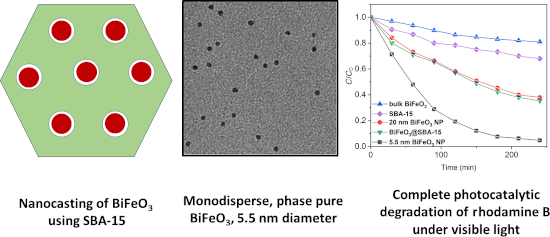
- -fabricated metal carboxylates as metal precursors. To the best of our knowledge, the synthesized particles are the smallest BiFeO3 particles ever prepared by any method. The samples were characterized by X-ray powder diffraction, transmission electron microscopy and UV–vis diffuse reflectance spectroscopy
- impregnation nanocasting technique using SBA-15 as the hard-template and in situ generated mixed metal carboxylates as precursors. Reaction optimization included the study of the influence of different organic ligands, solvents, molar ratio of the precursors, and calcination temperature. The techniques used to




The different ways to chitosan/hyaluronic acid nanoparticles: templated vs direct complexation. Influence of particle preparation on morphology, cell uptake and silencing efficiency
Beilstein J. Nanotechnol. 2019, 10, 2594–2608, doi:10.3762/bjnano.10.250
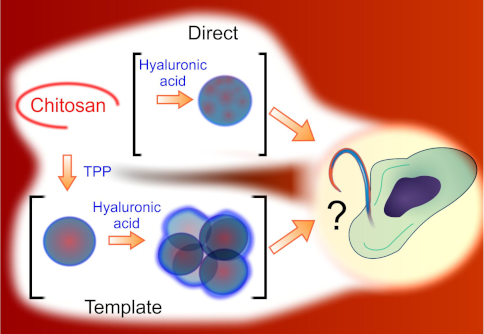
- two oxygens are still protonated); iii) HA is completely deprotonated and all its carboxylates are either complexed with chitosan or present as sodium salt. Hydrodynamic size and ζ-potential. Z-average hydrodynamic size, polydispersity index (PDI), and ζ-potential were measured on three independent



Tungsten disulfide-based nanocomposites for photothermal therapy
Beilstein J. Nanotechnol. 2019, 10, 811–822, doi:10.3762/bjnano.10.81
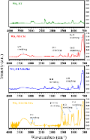
- through carboxylate groups. In the species –COO–Fe, these are shifted to slightly higher energies compared to non-attached carboxylates [57][58]. The peaks at 2850 cm−1, 2920 cm−1, and 2960 cm−1 are assigned to C–H stretching vibrations in the PAA chain. The broad peak at 3400 cm−1 is stronger compared to






A visible-light-controlled platform for prolonged drug release based on Ag-doped TiO2 nanotubes with a hydrophobic layer
Beilstein J. Nanotechnol. 2018, 9, 1793–1801, doi:10.3762/bjnano.9.170
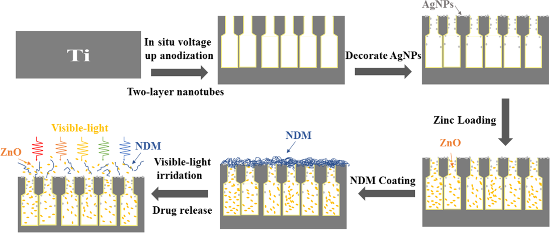
- (Figure 5c) show hydrophilicity as well. Meanwhile, the CAs of modified TNTs increased slightly by 19° after decoration with Ag and then decreased by 16° due to the loading of the Zn2+-based drug. Furthermore, organic mutilayers with functional groups, including carboxylates or silanes [32], can be used





Towards the third dimension in direct electron beam writing of silver
Beilstein J. Nanotechnol. 2018, 9, 842–849, doi:10.3762/bjnano.9.78
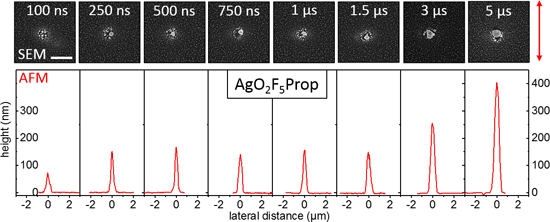
- , Nicolaus Copernicus University in Toruń, Gagarina 7, 87-100 Toruń, Poland 10.3762/bjnano.9.78 Abstract Carboxylates constitute an extremely promising class of precursor compounds for the electron beam induced deposition of silver. In this work both silver 2,2-dimethylbutyrate and silver
- in the planar deposits. Hence, we conclude that the actual silver content is higher and closer to that of the planar deposits. We attribute the observed high silver contents to the low precursor flux and the high reactivity of the used silver carboxylates. A recent study investigated the dependency


Electron interaction with copper(II) carboxylate compounds
Beilstein J. Nanotechnol. 2018, 9, 384–398, doi:10.3762/bjnano.9.38
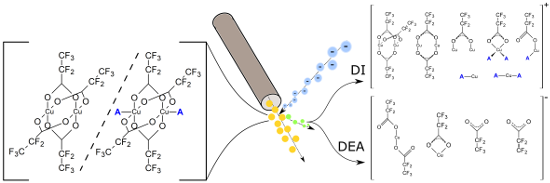
- still unresolved but the trinuclear (or more complicated) structures for copper(II) carboxylates were observed [39][40][41]. The presence of a ligand cation O2CC2F5+ (L+) has not been confirmed in the positive ion mass spectrum of [Cu2(µ-O2CC2F5)4], in contrast to the DEA spectra (see below) where L
- temperature but unfortunately suppressed the copper ion formation. On the other hand, this phenomenon can be useful for the “halo” effect limitation in FEBID processes. Regarding electron attachment, we have registered the first spectra of negative ions for copper carboxylates compounds. Comparable negative
- . Materials Copper(II) carboxylate compounds with tert-butylamine of the general formula [Cu2(t-BuNH2)2(µ-O2CR)4], where R = CnF2n+1, n = 1–6, were obtained in the reaction of copper(II) perfluorinated carboxylates with tert-butylamine, which was in situ generated from tert-butyl isocyanate [34]: The


Design of polar self-assembling lactic acid derivatives possessing submicrometre helical pitch
Beilstein J. Nanotechnol. 2018, 9, 333–341, doi:10.3762/bjnano.9.33
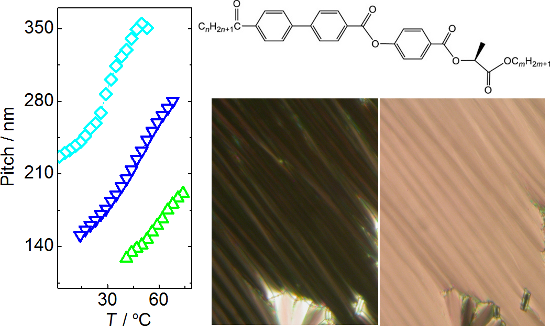
- self-assembling materials (denoted as KL n/m, where n is the number of carbon atoms in the non-chiral alkyl chain and m is the number of the carbon atoms in the chiral short alkyl unbranched chain, namely the (S)-4-((1-alkoxy-1-oxopropan-2-yloxy)carbonyl)phenyl 4'-alkyloylbiphenyl-4-carboxylates) were
- for KL 3/4 (a) and KL 4/4 (b) showing strong contributions of the Goldstone mode within the temperature range of the tilted ferroelectric SmC* phase. Reaction scheme for the synthesis of new (S)-4-((1-alkoxy-1-oxopropan-2-yloxy)carbonyl)phenyl 4'-alkyloylbiphenyl-4-carboxylates denoted as KL n/m


Response under low-energy electron irradiation of a thin film of a potential copper precursor for focused electron beam induced deposition (FEBID)
Beilstein J. Nanotechnol. 2018, 9, 57–65, doi:10.3762/bjnano.9.8
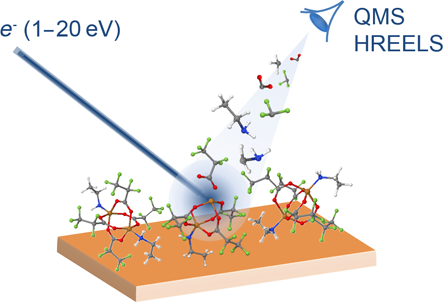
- for ligands fragmentation allow one to envisage the use of the two precursors for FEBID studies. Keywords: amines; copper(II); electron-stimulated desorption; FEBID precursors; HREELS; low-energy electrons; perfluorinated carboxylates; Introduction The high electrical conductivity of copper makes it
- ], observed also in the condensed phase [10][29]. It has been shown that carboxylic acid has a resonance for electron attachment centred at 1.5 eV, leading to atomic rearrangement and breaking of the R–COOH bond, visible by the formation of CO2 and H2O in the condensed phase. Here, the carboxylates are



Synthesis of [{AgO2CCH2OMe(PPh3)}n] and theoretical study of its use in focused electron beam induced deposition
Beilstein J. Nanotechnol. 2017, 8, 2615–2624, doi:10.3762/bjnano.8.262
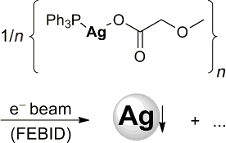
- was shown that coordination compounds, for example, silver(I) carboxylates can successfully be applied as single-source species for silver nanoparticle formation [6] and as gas-phase precursors in the deposition of pure, dense and conformal thin silver films [7][8][9]. This study aims for showing if
- (Experimental). An indication that in the silver(I) species 1 and 2 µ-bridging carboxylates are present can be deduced from the difference of the asymmetric and symmetric vibrations (∆υCO2 = 173 cm−1) (Experimental). This value is close to the one obtained for the appropriate sodium salt (∆υCO2 = 192 cm−1
- trigonal planar. Related coordination polymers of phosphane stabilized silver(I) carboxylates are scarcely reported, i.e., [AgOC(O)C2F5(PPh3)] [15] and [AgOAc(dppp)] [16] (dppp = diphenylphosphinopropane). In both of them the silver(I) ions form AgPO2 coordination units as described for 2, although short


Deposition of exchange-coupled dinickel complexes on gold substrates utilizing ambidentate mercapto-carboxylato ligands
Beilstein J. Nanotechnol. 2017, 8, 1375–1387, doi:10.3762/bjnano.8.139
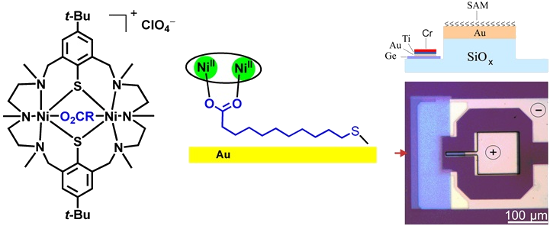
- complexes bearing ω-thiolalkane-carboxylates (H2L4, H2L5) are distinguished from the aromatic variants (H2L2, H2L6) by a bent conformation of the alkyl chain (alkyl chain perpendicular to the O2CC–C bond), such that the surface active thiol groups protrude laterally out of the cleft-like binding pocket of


The role of 2D/3D spin-polarization interactions in hybrid copper hydroxide acetate: new insights from first-principles molecular dynamics
Beilstein J. Nanotechnol. 2017, 8, 857–860, doi:10.3762/bjnano.8.86
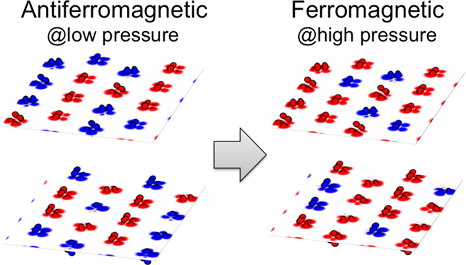
- ; pressure; spin polarization; Introduction Copper hydroxide acetate Cu2(OH)3CH3COO·H2O (CuOHAc) is the precursor of a whole class of hybrid organic–inorganic materials that are made of inorganic sheets separated by alkyl chains (such as alkyl sulfates and carboxylates) or conjugated molecules (such as


Investigation of the photocatalytic efficiency of tantalum alkoxy carboxylate-derived Ta2O5 nanoparticles in rhodamine B removal
Beilstein J. Nanotechnol. 2017, 8, 604–613, doi:10.3762/bjnano.8.65
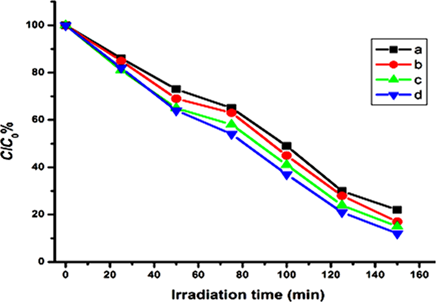
- Subia Ambreen Mohammad Danish Narendra D. Pandey Ashutosh Pandey Department of Chemistry, Motilal Nehru National Institute of Technology, Allahabad, 211004, India 10.3762/bjnano.8.65 Abstract Ta2O5 nanoparticles have been synthesized from alkoxy carboxylates of tantalum via the sol–gel route
- . Tantalum alkoxides were reacted with chlorocarboxylic acids in order to lower the susceptibility hydrolysis. When these modified alkoxy carboxylates were used in the sol–gel synthesis, they yielded Ta2O5 nanoparticles of better properties than those of the alkoxide-derived Ta2O5 nanoparticles. These
- nanoparticles efficiently removed rhodamine B under UV light irradiation. Keywords: alkoxy carboxylates; band gap; dynamic light scattering (DLS); rhodamine B; scanning electron microscopy (SEM); tantalum(V) oxide (Ta2O5) nanoparticles; TEM; X-ray diffraction (XRD); Introduction Nowadays, the purification of


Methods for preparing polymer-decorated single exchange-biased magnetic nanoparticles for application in flexible polymer-based films
Beilstein J. Nanotechnol. 2017, 8, 408–417, doi:10.3762/bjnano.8.43
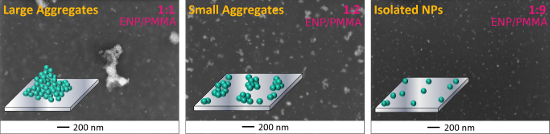
- molecules [26][27]. Organosilanes present the disadvantage of condensing after hydrolysis and leading to a thin shell of polysiloxane whose structure and thickness cannot be well controlled. Carboxylates can be degrafted in solution [28], and are, consequently, not the best candidates for the desired
- phosphonates are better grafted and in greater quantity to the surface of ENPs than carboxylates and organosilanes. Growth of PS chains Styrene polymerizes more slowly than methyl methacrylate. Yousi et al. [34] demonstrated that the propagation rate, for similar conversion yields, can be increased by