Search results
Search for "cavitation" in Full Text gives 49 result(s) in Beilstein Journal of Nanotechnology.
Ultrasonic irradiation in the synthesis of nanohydroxyapatite: a chemically friendly technique for improving hemocompatibility and antibiofilm applications
Beilstein J. Nanotechnol. 2026, 17, 991–1015, doi:10.3762/bjnano.17.68
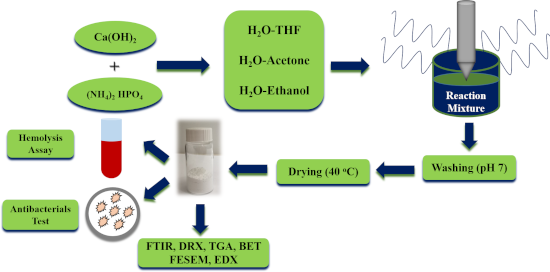
- ]. Sonochemistry shows great potential and has therefore aroused significant interest. This is because the chemical effects of ultrasound do not originate from a direct interaction between sound waves and the molecular species present in the medium. Rather, they derive mainly from acoustic cavitation, a physical
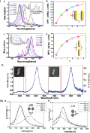
- those obtained via infrared spectroscopy, as shown in Figure 3C. The phenomenon of ultrasonic cavitation, within a polar medium such as a W/ETOH mixture, facilitates the formation of ionic species that are susceptible to rapid recombination processes, giving rise to a more stable crystalline phase
- conditions, sonochemical energy facilitates the pyrolysis and oxidation of ethanol molecules at the cavitation bubble interface; this provides an alternative source of inorganic carbon for the formation of carbonate groups, even under an inert atmosphere [60]. These extraordinary conditions provide the




Nanocarrier strategies to overcome P-glycoprotein-mediated drug resistance in cancer therapy
Beilstein J. Nanotechnol. 2026, 17, 882–921, doi:10.3762/bjnano.17.64


Sustainable fabrication of 2D-based devices through reuse of substrates with microfabricated electrodes
Beilstein J. Nanotechnol. 2026, 17, 818–827, doi:10.3762/bjnano.17.58
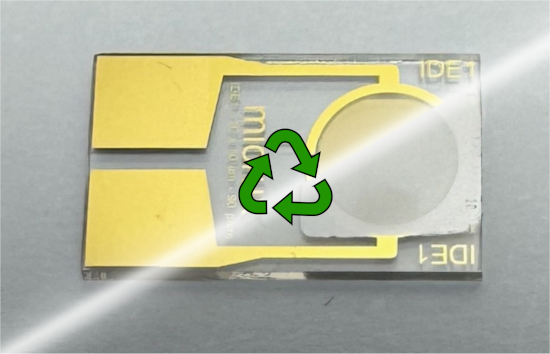
- its ability to penetrate microscopic gaps [24]. Heating to 50 °C can help weaken the van der Waals interactions between the 2D flakes and the substrate. Simultaneously, ultrasound agitation enhances molecular diffusion and promotes cavitation, generating localized pressure fluctuations that further


Laser–material interactions in liquids for the synthesis of nanomaterials: current status and perspectives
Beilstein J. Nanotechnol. 2026, 17, 571–575, doi:10.3762/bjnano.17.38

- the underlying processes, motivating computational and experimental studies focused on the mechanisms governing nanoparticle synthesis. Theoretical and computational studies of LSPC have provided important insights into the emergence of cavitation bubble and nanoparticle formation mechanisms in LAL
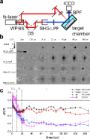
- longer-term cavitation bubble dynamics, remains challenging even for shadowgraphy employing ultrafast cameras [34]. Pump–probe reflectometry provides the required picosecond and even femtosecond resolution [35]. However, interpretation of the multi-stage reflectivity response is nontrivial and often
Beam shaping techniques for pulsed laser ablation in liquids: Unlocking tunable control of nanoparticle synthesis in liquids
Beilstein J. Nanotechnol. 2026, 17, 309–342, doi:10.3762/bjnano.17.22
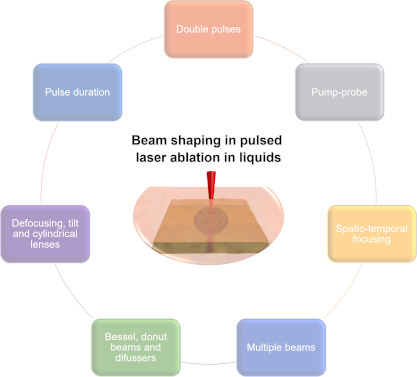
- , heating, and evaporation of the material, leading to plasma formation. The plasma cools down in the surrounding liquid releasing nanoparticles (NPs) into the liquid; the cooling process also generates gas bubbles from the liquid environment. These gas bubbles nucleate, forming a cavitation bubble (CB
- conditions [21]. The high pressures induce spallation of the target surface, while the plasma interacts with the liquid, vaporising it partially and forming a cavitation bubble (CB) on a nanosecond timescale [22][23][24][25]. Throughout microseconds, the CB grows and collapses, releasing NPs into the liquid
- efficiency, throughput, and colloid stability. Therefore, optimising ablation conditions (e.g., using high-repetition-rate lasers, flow-through cells, and improved cavitation management) will be critical for enabling commercially viable production [94]. One promising strategy to overcome these limitations







Gold nanoparticle-decorated reduced graphene oxide as a highly effective catalyst for the selective α,β-dehydrogenation of N-alkyl-4-piperidones
Beilstein J. Nanotechnol. 2026, 17, 218–238, doi:10.3762/bjnano.17.15
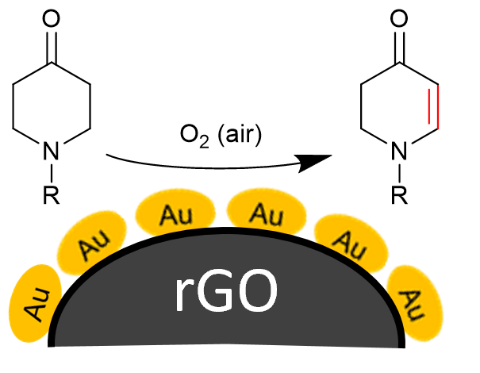
- loop is located at the cavitation-induced P/P0, which is at a high value of 0.9 in CB and at 0.45 in rGO [23]. Among the three carbon materials, activated carbon exhibited the highest BET surface area (751 m2·g−1, Table S1) and an intermediate total pore volume (0.81 cm3·g−1). Its pore diameters are


From shield to spear: Charge-reversible nanocarriers in overcoming cancer therapy barriers
Beilstein J. Nanotechnol. 2026, 17, 159–175, doi:10.3762/bjnano.17.10
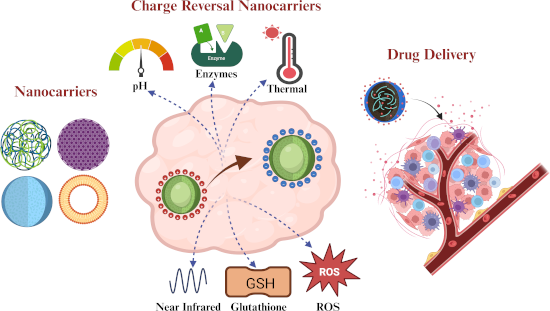
- ultrasound-responsive CRNs employing calcium-ion-crosslinked sodium-alginate coatings on mesoporous silica nanoparticles offer reversible, on-demand, and biocompatible drug release options. Such systems harness ultrasound-induced cavitation to disrupt and reform ionic bonds, showing considerable promise for


Laser ablation in liquids for shape-tailored synthesis of nanomaterials: status and challenges
Beilstein J. Nanotechnol. 2025, 16, 1963–1997, doi:10.3762/bjnano.16.137
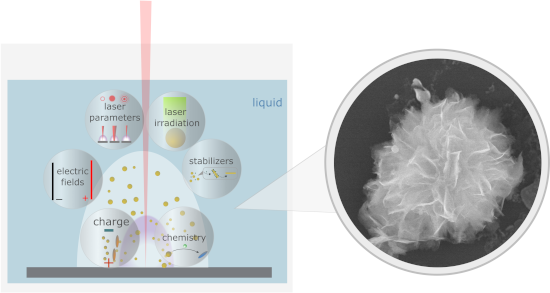
- manipulating the formed seed NPs to induce their anisotropic growth and assembly. 1.2 Cavitation bubble formation, expansion, and collapse Since plasma plume is confined by a liquid, the subsequent processes involve plasma rapid expansion and cooling by energy transfer to the surrounding liquid, resulting in
- generation of shockwaves and formation of cavitation bubbles, which typically have a lifetime of several microseconds. During its evolution, the cavitation bubble expands to reach the equilibrium with the confining liquid, after which the shrinking stage begins, which involves the ablated material moving
- closer to the target surface. It is typically accepted that release of NPs from the cavitation bubble into a liquid occurs during later stages of cavitation bubble collapse. The latest reports by Dell’Aglio et al. [7], however, demonstrate that particle ejection into a liquid occurs mainly in two steps


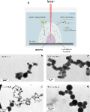
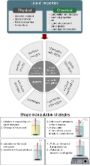


Influence of laser beam profile on morphology and optical properties of silicon nanoparticles formed by laser ablation in liquid
Beilstein J. Nanotechnol. 2025, 16, 1533–1544, doi:10.3762/bjnano.16.108
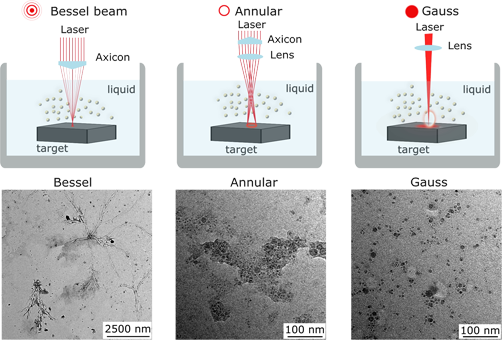
- -uniform energy distribution, which will affect plasma generation and confinement, the hydrodynamic trajectory of the ejected target material and pressure relaxation, as well as plasma and cavitation bubble propagation and temporal evolution. In the case of a Bessel beam, the focusing with an axicon
- surface [27] with different plasma parameters than in the plasma generated by a Gaussian beam. A change of the incident beam pattern will change the temperature and pressure inside cavitation bubbles (CBs) and influence CB oscillations. Furthermore, pressure variations at the target interface would be


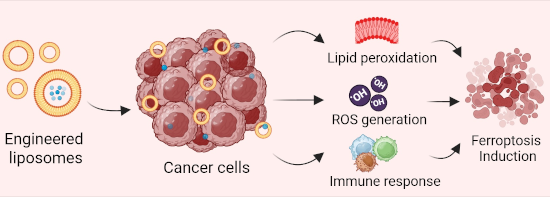
Ferroptosis induction by engineered liposomes for enhanced tumor therapy
Beilstein J. Nanotechnol. 2025, 16, 1325–1349, doi:10.3762/bjnano.16.97


Wavelength-dependent correlation of LIPSS periodicity and laser penetration depth in stainless steel
Beilstein J. Nanotechnol. 2025, 16, 1302–1315, doi:10.3762/bjnano.16.95
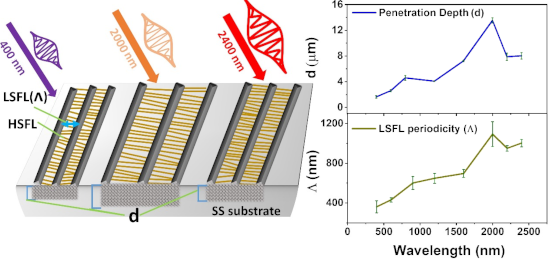
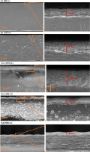
- -organization [33] to second harmonic generation [11] and cavitation instability [23][50][51]. Despite numerous studies, the formation mechanism of HSFL and the reason for their shorter periodicity compared to the laser wavelength remain elusive. Our previous work addressed this gap by patterning a single line




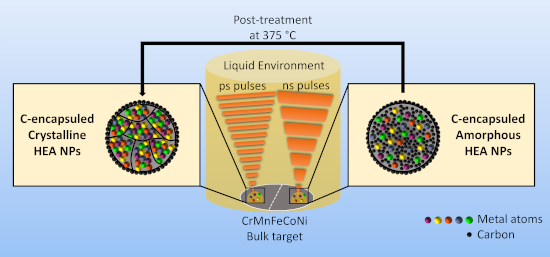
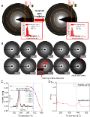
Crystalline and amorphous structure selectivity of ignoble high-entropy alloy nanoparticles during laser ablation in organic liquids is set by pulse duration
Beilstein J. Nanotechnol. 2025, 16, 1141–1159, doi:10.3762/bjnano.16.84




Piezoelectricity of hexagonal boron nitrides improves bone tissue generation as tested on osteoblasts
Beilstein J. Nanotechnol. 2025, 16, 1068–1081, doi:10.3762/bjnano.16.78
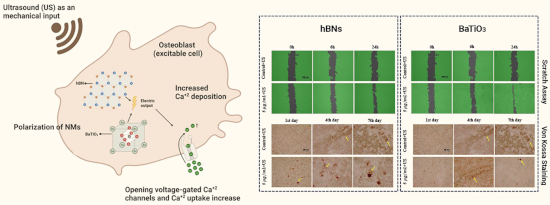
- . Although applying US to the environment is a noninvasive mechanical stimulation, it may still cause acoustic streaming, acoustic microstreaming, and cavitation. This mechanical effect may cause fluid flow in the extracellular environment, creating temporary membrane deformation and tension on osteoblasts


Time-resolved probing of laser-induced nanostructuring processes in liquids
Beilstein J. Nanotechnol. 2025, 16, 968–1002, doi:10.3762/bjnano.16.74
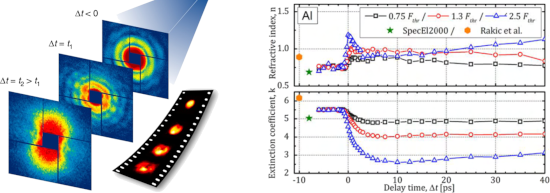
- to melting, reshaping (Figure 1B,C), evaporation, and phase explosion near the critical point (Figure 1H) [39][46][47][48]; (ii) stress-induced decompositions, where competition between heating and expansion leads to spallation or cavitation [36][49][50] (Figure 1I); (iii) non-thermal processes


Shape, membrane morphology, and morphodynamic response of metabolically active human mitochondria revealed by scanning ion conductance microscopy
Beilstein J. Nanotechnol. 2025, 16, 951–967, doi:10.3762/bjnano.16.73
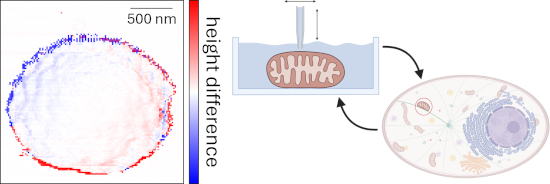
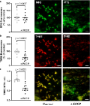
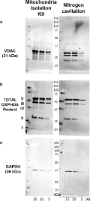
- investigated mitochondria was analysed by microscopy and oxygen consumption measurement. Figure 1 shows isolated mitochondria by nitrogen cavitation [34] and subsequently labelled by MitoTracker™ Green FM (MTG, Figure 1a) and tetramethylrhodamine ethyl ester perchlorate (TMRE, Figure 1b). TMRE accumulates only
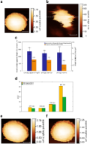
- via mechanochemical pathway (left bars) show no significant difference in average mitochondrial volume between metabolically active and fixed mitochondria at a 95% confidence level. In contrast, mitochondria isolated through nitrogen cavitation (right bars) demonstrated a statistically significant
- stability contrasts with the structural alterations reported with more violent techniques, such as deformability cytometry [37]. For mitochondria isolated using the nitrogen cavitation method, fixed mitochondria exhibit significantly smaller dimensions (Figure 4b). The reduction in size can be explained by



Supramolecular hydration structure of graphene-based hydrogels: density functional theory, green chemistry and interface application
Beilstein J. Nanotechnol. 2025, 16, 806–822, doi:10.3762/bjnano.16.61
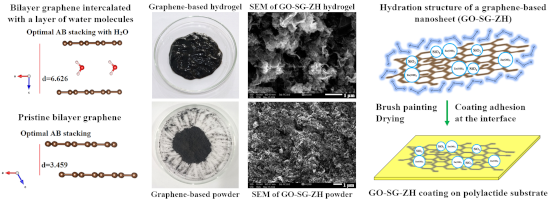
- exhibits the aqueous dispersions derived from the sonication of GO-SG-ZH hydrogel and powder in water (see Supporting Information File 1, Figure S3). Ultrasound waves vibrated water molecules and created cavitation in the hydrogel structure, leading to the exfoliation of graphene-based nanosheets in water


Morphology and properties of pyrite nanoparticles obtained by pulsed laser ablation in liquid and thin films for photodetection
Beilstein J. Nanotechnol. 2025, 16, 785–805, doi:10.3762/bjnano.16.60
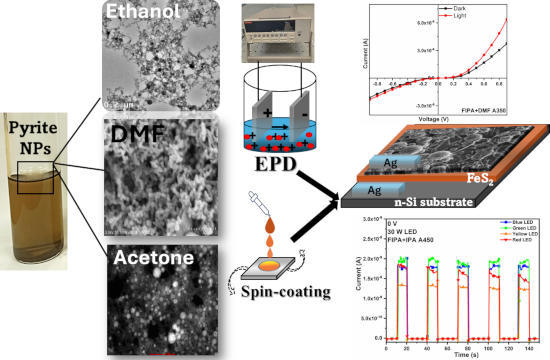
- surrounding liquid results in a cavitation bubble which is a thin layer of vapor of the surrounding liquid, as well as some material evaporating from the target. Some of the crucial elements influencing the formation of the cavitation bubble are the liquid environment, a stronger confinement of the plasma
- the release of a second shockwave, which causes the cavitation bubble to expand in the liquid before collapsing on a time period of hundreds of microseconds releasing NPs in the liquid resulting in stable colloidal solution [15][39]. Despite the proposed laser ablation mechanism, there are






Size control of nanoparticles synthesized by pulsed laser ablation in liquids using donut-shaped beams
Beilstein J. Nanotechnol. 2025, 16, 407–417, doi:10.3762/bjnano.16.31
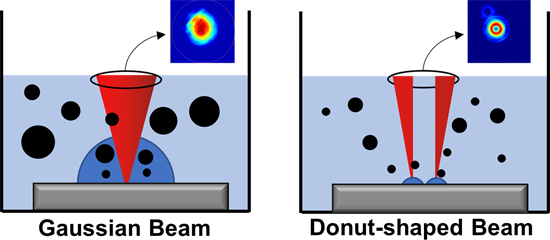
- the donut-shaped laser beam. We performed time-resolved shadowgraph imaging of the laser-induced cavitation bubble, revealing a toroidal structure that overruns the ring-shaped ablation site, compared to the quasi-hemispherical bubble covering the ablation spot produced by the Gaussian beam. Based on
- this pioneering study, further investigation with higher temporal and spatial resolution are warranted. Keywords: beam shaping; cavitation bubble; donut beam; gold nanoparticles; high-entropy alloy nanoparticles; nanoparticle size analysis; yttrium oxide nanoparticles; Introduction The demand for
- ). The plasma temperature and pressure determine the cavitation bubble and NP formation [40][41]. The plasma plume that heats up the liquid causes liquid vaporization and subsequent bubble nucleation. The initial pressure of the bubble is very high (higher than 1 GPa) allowing it to expand until it


Preferential enrichment and extraction of laser-synthesized nanoparticles in organic phases
Beilstein J. Nanotechnol. 2025, 16, 254–263, doi:10.3762/bjnano.16.20
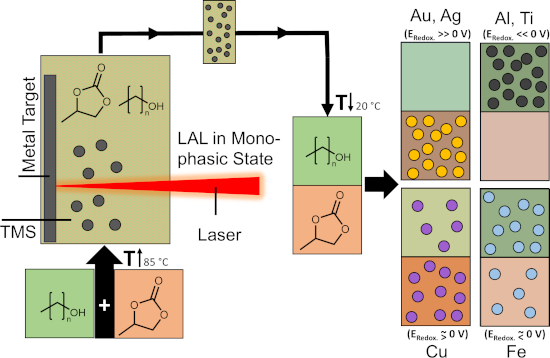
- that chemical reactions may also occur on longer timescales, during the cavitation bubble phase (microsecond time scale) [60]. The smaller iron nanoparticles are found in the alcohol phase, while the smaller copper nanoparticles prefer the propylene carbonate phase. Hence, another explanation for the




Recent advances in photothermal nanomaterials for ophthalmic applications
Beilstein J. Nanotechnol. 2025, 16, 195–215, doi:10.3762/bjnano.16.16
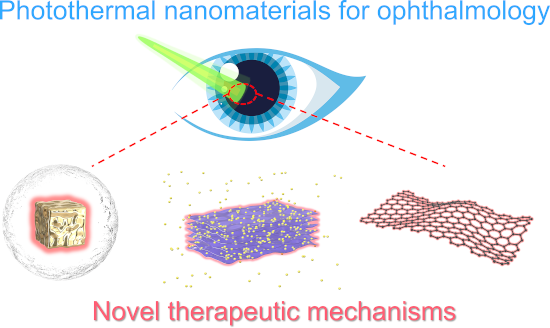
- , providing additional histological information. In addition to applying the photoacoustic effect to photoacoustic imaging, laser-induced focused ultrasound can also be used to perform high-precision cavitation ablation treatments of ocular tissues [208]. Conclusion Research on photothermal nanomaterials has


Fabrication of hafnium-based nanoparticles and nanostructures using picosecond laser ablation
Beilstein J. Nanotechnol. 2024, 15, 1639–1653, doi:10.3762/bjnano.15.129
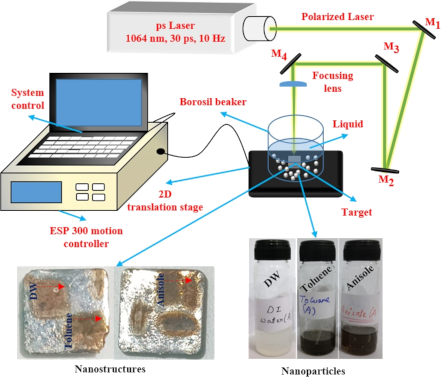
- liquid medium. The target material absorbs the pulse energy via the electrons. It transfers it to the lattice, which expulses the surface material as a plasma plume confined because of the pressure created by the surrounding liquid [16][20][23][24]. A cavitation bubble is formed as the energy is
- transferred to the surrounding liquid from the decaying plasma because of the existing temperature differences between the liquid and the plasma plume, leading to the emergence of a vapour layer with a volume equivalent to the plasma plume [16][20][23][24]. The cavitation bubble collapses because of cyclic
- liquid exceeds the vapour pressure exerted by HfO2, the cavitation bubble collapses, and the vapour rushes through the liquid in the form of a jet [23][24][41]. The lower temperature of the surrounding liquid leads to the formation of nuclei [23][42][43] with random crystallographic orientation, which




Biomimetic nanocarriers: integrating natural functions for advanced therapeutic applications
Beilstein J. Nanotechnol. 2024, 15, 1619–1626, doi:10.3762/bjnano.15.127

- membrane vesicles are prepared, fusion with the nanocarrier can be accomplished by several methods [20][42]. Bath sonication disrupts membranes by forming cavitation bubbles, allowing them to reassemble around the nanocarrier. Optimizing this process requires adjusting exposure time, wave frequency, and


Effect of wavelength and liquid on formation of Ag, Au, Ag/Au nanoparticles via picosecond laser ablation and SERS-based detection of DMMP
Beilstein J. Nanotechnol. 2024, 15, 1054–1069, doi:10.3762/bjnano.15.86

- with water. The expanding metal/water mixture promotes rapid nucleation and growth of small metal NPs and contributes to forming a cavitation bubble. The hot metal layer also breaks into larger droplets due to instabilities, creating NPs of different sizes within a few nanoseconds of laser exposure [6


Laser synthesis of nanoparticles in organic solvents – products, reactions, and perspectives
Beilstein J. Nanotechnol. 2024, 15, 638–663, doi:10.3762/bjnano.15.54
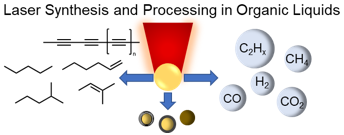
- synthesis of HCN [79]. The oxidation and phase change of the target surface during LAL was initially published by Ogale et al. [80] in 1987, and nanoparticle oxidation has been addressed in the literature frequently afterwards [53][54][68][69][70]. During the plasma and cavitation bubble phase, reactive
- efficiency and gas formation. Scaramuzza et al. found varying ablation rates and cavitation bubble sizes depending on the used additive–solvent combination [20], and Zhang et al. found higher yields of gases when working in ethanol–water mixtures [44]. This enhanced gas production can be used to alter the
- structure of the generated nanoparticles. Laser ablation in water–ethanol mixtures was reported to yield an increased amount of hollow nanoparticles compared to pure water, which was mainly attributed to an elongated lifetime of the cavitation bubble in the mixture [89][90]. It is further possible to form





Plasmonic nanotechnology for photothermal applications – an evaluation
Beilstein J. Nanotechnol. 2023, 14, 380–419, doi:10.3762/bjnano.14.33
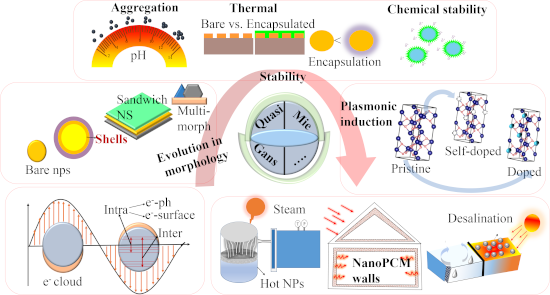
- [83]. Plasmonic nanobubbles (formed when the irradiation fluence exceeded a threshold value), although being excellent tunable scatterers themselves, did not result in thermal phenomena such as heating and only led to mechanical phenomena such as cavitation effects. Explosive boiling is of explicit