


Search results
Search for "current–voltage" in Full Text gives 161 result(s) in Beilstein Journal of Nanotechnology.
Fast vortex dynamics and relaxation times in NbRe-based heterostructures
Beilstein J. Nanotechnol. 2026, 17, 292–302, doi:10.3762/bjnano.17.20
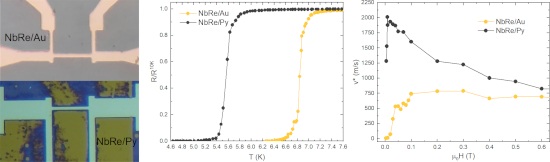
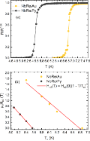
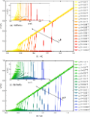
- derived for single-layer superconducting films, whereas, in the present study, the microbridges are bilayer structures. As a result, the calculated parameters do not fully account for proximity-induced modifications of the electronic properties. Current–voltage characteristics and critical currents Figure


Terahertz-range on-chip local oscillator based on Josephson junction arrays for superconducting quantum-limited receivers
Beilstein J. Nanotechnol. 2025, 16, 2296–2305, doi:10.3762/bjnano.16.158
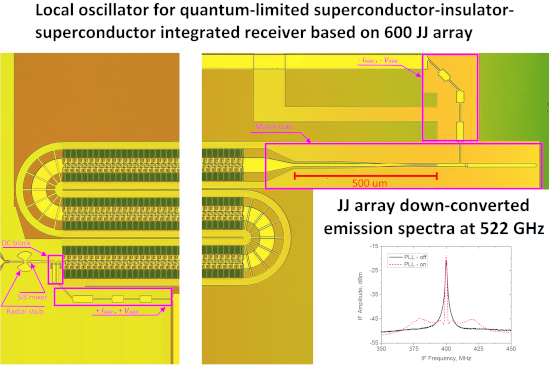
- junctions have ultimate characteristics unreachable to devices based on other principles [1][2][3]. The unique nonlinearity of the current–voltage characteristic (IVC) near the gap voltage of the junction enables the gain of the intermediate frequency (IF) signal after mixing with the radiation from the
- technological cycle, the molybdenum film with a thickness of 100 nm (surface resistance of approx. 1 Ω/square) is used. A shunt is crucial for reducing the McCumber parameter to the value of ≈0.3 in order to provide a hysteresis-free current–voltage characteristic (IVC) [3]. The parameters of the single


Electron transport through nanoscale multilayer graphene and hexagonal boron nitride junctions
Beilstein J. Nanotechnol. 2025, 16, 2132–2143, doi:10.3762/bjnano.16.147
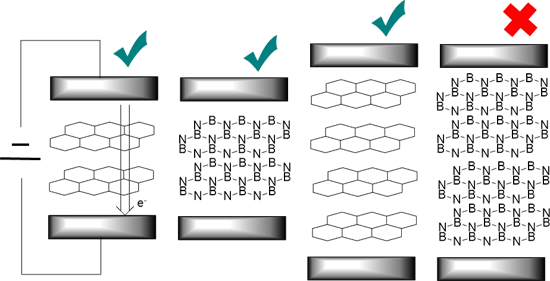
- . When the current is calculated for different applied biases, the current/voltage (I/V) curve is obtained. Results and Discussion We start our calculations with a comparison of the electronic properties of graphite, bulk h-BN, graphite with Stone–Wales defect, graphitic nitrogen-doped graphite, and bulk
- tunneling behavior. Current–voltage characteristics showed linear dependence at low bias and exponential growth at higher voltages. Conductive atomic force microscopy measurements revealed highly uniform, defect-free tunneling across atomically flat h-BN terraces, with breakdown fields near 1 GV·m−1. These
- current/voltage plots in Figure 4g and Figure 5g is the slight drop of current with applied bias for the graphene junctions with five and six layers, which is missing for h-BN junctions. We assign this result to the phenomenon of negative differential resistance (NDR), in which the electric current


Quantum circuits with SINIS structures
Beilstein J. Nanotechnol. 2025, 16, 1931–1941, doi:10.3762/bjnano.16.134
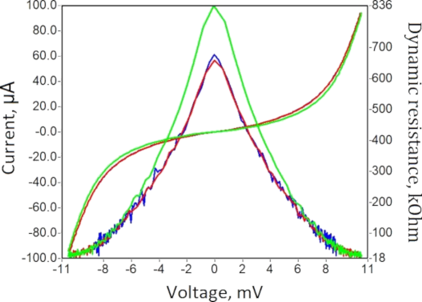
- current occurs when eV > Δ. In the case when T ≠ 0 the I–V curve will be smeared [22]. The current–voltage characteristic of a tunnel NIS junction is determined by the following formula [23]: where Rn is the asymptotic resistance of the tunnel junction, NS(E) is the density of states in the superconductor
- (IMPATT diode) of the detecting matrix in the 75–110 GHz range were carried out. Photos from the expedition are presented in Figure 8. The ratio of resistances on the presented current–voltage characteristic is about 30, which, according to Equation 3, corresponds to an electron temperature of 0.5 K with


Laser processing in liquids: insights into nanocolloid generation and thin film integration for energy, photonic, and sensing applications
Beilstein J. Nanotechnol. 2025, 16, 1428–1498, doi:10.3762/bjnano.16.104
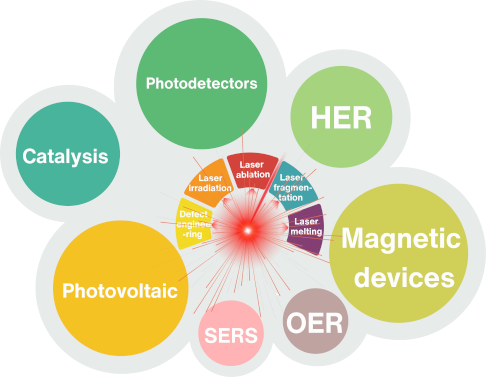
- careful control of several factors, such as particle surface charge, the electrical and fluid properties of the suspension, electrode material selection, and the current–voltage parameters. Additionally, it is a cost-effective, environmentally friendly method due to its low energy requirements and minimal






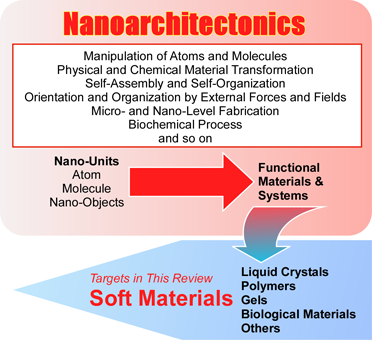
Soft materials nanoarchitectonics: liquid crystals, polymers, gels, biomaterials, and others
Beilstein J. Nanotechnol. 2025, 16, 1025–1067, doi:10.3762/bjnano.16.77






Morphology and properties of pyrite nanoparticles obtained by pulsed laser ablation in liquid and thin films for photodetection
Beilstein J. Nanotechnol. 2025, 16, 785–805, doi:10.3762/bjnano.16.60
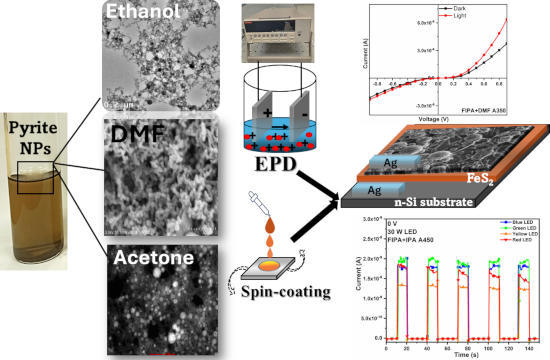
- analysis. A dual-beam UV–vis–NIR spectrophotometer was used to analyze the optical characteristics of the nanocolloids (Jasco V770). A Keithley 6487 picoammeter/voltage source was used to record the electrical properties of the films. The current–voltage (I–V) curves for the photodiodes were measured both






The impact of tris(pentafluorophenyl)borane hole transport layer doping on interfacial charge extraction and recombination
Beilstein J. Nanotechnol. 2025, 16, 678–689, doi:10.3762/bjnano.16.52

- smooth cross-section. This is useful for getting stable KPFM images, without electrostatic cross-talk. At every step of this procedure, the current–voltage characteristics were being monitored, as shown in Figure 2. By carefully selecting the parameters of the ion milling, we can ensure that the exposed
- devices. Conclusion In conclusion, we incorporated BCF, an electrophilic substance with passivating properties, in the two most popular HTL semiconductors for PSCs. Current–voltage characterization indicated that the inclusion of BCF had a beneficial effect on the performance of both spiro-OMeTAD and PTAA
- , respectively. The profiles were smoothed with a 30 point adjacent-averaging method, to get smooth derivative curves with negligible noise. The structures of (a) spiro-OMeTAD, (b) PTAA and (c) BCF. Current–voltage characteristics for the four solar cells that were chosen to be cleaved and polished for cross


N2+-implantation-induced tailoring of structural, morphological, optical, and electrical characteristics of sputtered molybdenum thin films
Beilstein J. Nanotechnol. 2025, 16, 495–509, doi:10.3762/bjnano.16.38
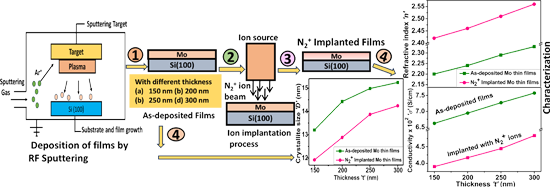
- and implanted Mo thin films increases with increasing film thickness. The increased refractive index suggests increased particle density and a better interaction between light and Mo thin films. Electrical properties Figure 10 shows the current–voltage (I–V) characteristics of the as-deposited and
- , (b, b′) 200 nm, (c, c′) 250 nm, and (d, d′) 300 nm. Current–voltage characteristics of as-deposited and N2+-implanted Mo thin films with thicknesses of (A) 150 nm, (B) 200 nm, (C) 250 nm, and (D) 300 nm. Resistivity of (A) as-deposited and (B) N2+-implanted Mo thin films as a function of the


Performance optimization of a microwave-coupled plasma-based ultralow-energy ECR ion source for silicon nanostructuring
Beilstein J. Nanotechnol. 2025, 16, 484–494, doi:10.3762/bjnano.16.37

- oxide on the nanopatterned silicon surface. Additionally, the post-bombardment growth of silicon oxide on nanopatterned silicon leads to site-dependent growth of native oxide, which is useful for producing hysteresis in surface current–voltage characteristic measurements [50][51]. The preferential


Tailoring of physical properties of RF-sputtered ZnTe films: role of substrate temperature
Beilstein J. Nanotechnol. 2025, 16, 333–348, doi:10.3762/bjnano.16.25
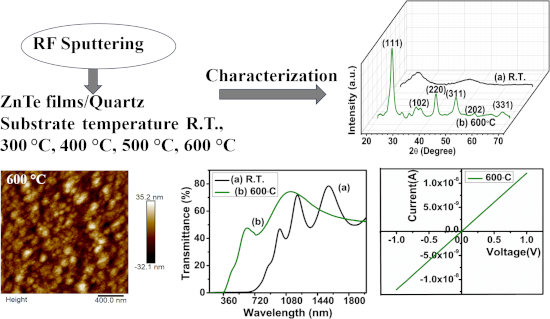
- , skewness, and kurtosis were determined. Current–voltage characteristics indicate that the conductivity of the films increased with substrate temperature. The observed variations in structural, morphological, and optical parameters have been discussed and correlated. The wide bandgap (3.11 eV), high
- energy-dispersive X-ray spectroscopy (EDS) operated at 10 keV. The current–voltage (I–V) characteristics of the films were measured in the voltage range from −1 V to 1 V using a two-probe Keithley 4200 A-SCS parametric analyser available at Ion Beam Centre, Kurukshetra University. Results and Discussion
- particle density decrease with increasing substrate temperature [40]. Electrical studies Figure 9 depicts the current–voltage (I–V) characteristics of ZnTe films deposited at different substrate temperatures. The I–V characteristics were recorded using a two-probe arrangement provided with a Keithley 4200




Green synthesis of carbon dot structures from Rheum Ribes and Schottky diode fabrication
Beilstein J. Nanotechnol. 2024, 15, 1369–1375, doi:10.3762/bjnano.15.110
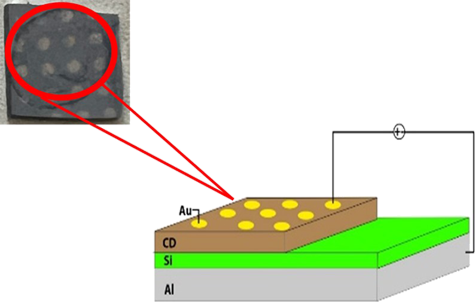
- steady-state fluorescence measurements. In the second part of the study, CDs were dripped onto silicon substrates, and a CDs thin film was formed by evaporation. A diode structure was obtained by evaporating gold with the shadow mask technique on the CDs film, and the current–voltage characteristics of
- bandgap value of the CDs layer was 5.25 eV (Figure 6b). The current–voltage (I–V) characteristics of the Si/CDs/Au-based Schottky diode were investigated. I–V measurements of the CDs-based thin film device were carried out using a semiconductor parameter analyzer between −2.5 V and +2.5 V at room




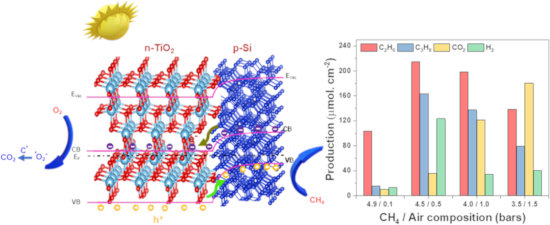
Photocatalytic methane oxidation over a TiO2/SiNWs p–n junction catalyst at room temperature
Beilstein J. Nanotechnol. 2024, 15, 1132–1141, doi:10.3762/bjnano.15.92
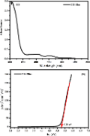
- TiO2/SiNWs catalyst may be attributed to the vertical wires, which enable strong light scattering leading to enhancement in light harvesting. The optical bandgap values of SiNWs and TiO2/SiNWs are estimated at around 3.8 and 3.3 eV, respectively. Figure 3b displays the current–voltage (I–V) curves of


Bolometric IR photoresponse based on a 3D micro-nano integrated CNT architecture
Beilstein J. Nanotechnol. 2024, 15, 1030–1040, doi:10.3762/bjnano.15.84
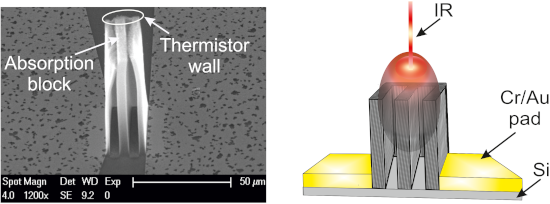
- , demonstrating its robustness in extreme environments. We achieved a current (voltage) responsivity of 2 mA/W (30 V/W) to the absorbed IR power, which is already comparable in the context of current CNT-based microbolometer technology with high potential for miniaturized design and responsivity optimization


CdSe/ZnS quantum dots as a booster in the active layer of distributed ternary organic photovoltaics
Beilstein J. Nanotechnol. 2024, 15, 144–156, doi:10.3762/bjnano.15.14
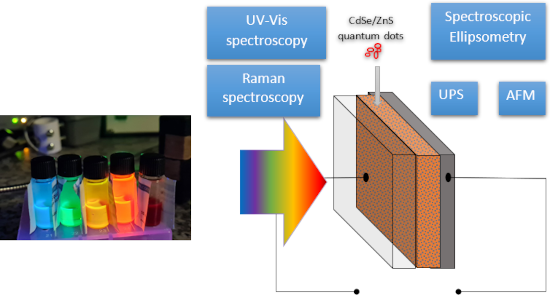
- obtained by conducting UPS analysis, and then the energy graph of the solar cell was built. Impedance spectroscopy results showed increased conductivity of the active layer upon doping with quantum dots. Current–voltage characteristics and standard parameters of photovoltaic cells were simulated for two
- solar cells. Current–voltage characteristics for (a) ITO/active layer/Al and (b) ITO/PEDOT:PSS/P3HT:PCBM:QD/aluminium bulk heterojunctions cells. Designations of the nanodots used in the system. Refractive indices and extinction coefficient parameters for investigated quantum dots thin films. Roughness




Measurements of dichroic bow-tie antenna arrays with integrated cold-electron bolometers using YBCO oscillators
Beilstein J. Nanotechnol. 2024, 15, 26–36, doi:10.3762/bjnano.15.3
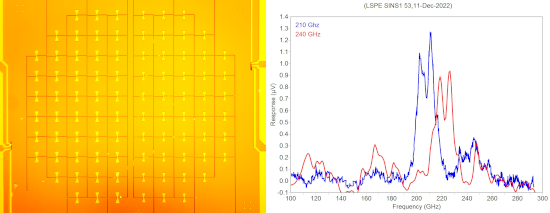
- results. Measurement results of samples of receiving systems with CEBs Measurements of samples from the LSPE VB 210/240 SINS1 series, deposited at NNSTU, were performed in a sorption 3He cryostat at a temperature of 300 mK. Current–voltage (I–V) characteristics (Figure 5), frequency response (Figure 6


Spatial variations of conductivity of self-assembled monolayers of dodecanethiol on Au/mica and Au/Si substrates
Beilstein J. Nanotechnol. 2023, 14, 1169–1177, doi:10.3762/bjnano.14.97
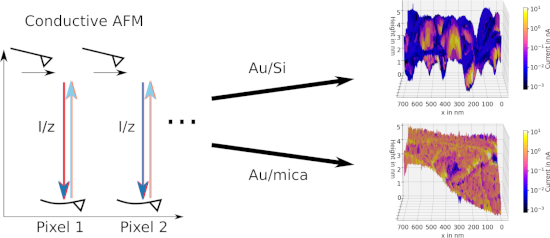
- SAM by the tip during imaging. Studies of the extent and type presented here can be used as the basis for well-founded statements concerning electronic properties such as the current–voltage characteristics of the molecular SAM. To this purpose, the characteristics should only be averaged over


A visible-light photodetector based on heterojunctions between CuO nanoparticles and ZnO nanorods
Beilstein J. Nanotechnol. 2023, 14, 1018–1027, doi:10.3762/bjnano.14.84
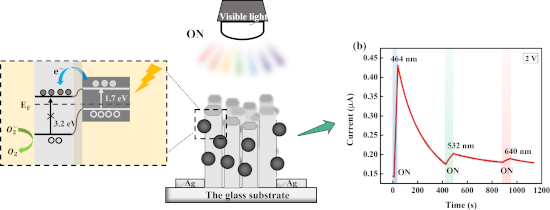
- composition of the materials. The morphology of pure CuO NPs and CuO NPs/ZnO NRs was examined by field-emission scanning electron microscopy. UV–vis absorption spectroscopy showed the optical properties of the materials. The photodetector performance was studied through the current–voltage (I–V


A distributed active patch antenna model of a Josephson oscillator
Beilstein J. Nanotechnol. 2023, 14, 151–164, doi:10.3762/bjnano.14.16
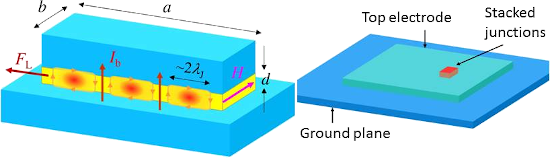
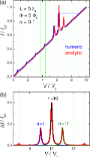
- emitted but mostly reflected backwards in the JJ. Propagation and reflection of FFO pulses in the transmission line (TL) formed by the JJ leads to the formation of standing waves. The corresponding cavity mode resonances are manifested by Fiske steps in the current–voltage (I–V) characteristics [16][28
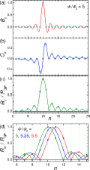
- , connected by the transmission line impedance ZTL. (a) Simulated current–voltage characteristics of a junction with L = 5λJ, Φ/Φ0 = 5 and α = 0.1. Blue symbols represent the full numeric solution of the sine-Gordon equation (up and down current sweep). The red line represents the approximate (perturbative


Frontiers of nanoelectronics: intrinsic Josephson effect and prospects of superconducting spintronics
Beilstein J. Nanotechnol. 2023, 14, 79–82, doi:10.3762/bjnano.14.9

- magnetic proximity effect at a ferromagnetic–insulator–superconductor (FIS) interface was investigated through combined experimental and theoretical work [25]. Manifestations of nonlinear features in magnetic dynamics and current–voltage characteristics of the 0 Josephson junction in superconductor
Observation of collective excitation of surface plasmon resonances in large Josephson junction arrays
Beilstein J. Nanotechnol. 2022, 13, 1578–1588, doi:10.3762/bjnano.13.132
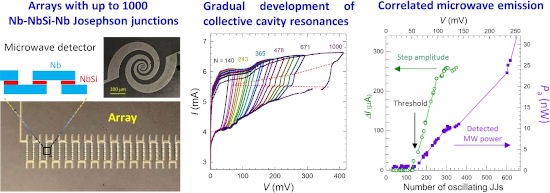
- formation of standing waves at the electrode/substrate interface. We observe that resonant steps in the current–voltage characteristics appear above some threshold number of junctions, Nth ≈ 100, and then progressively enhance in amplitude with further increment of the number of junctions in the resistive
- profound step structure in the current–voltage (I–V) characteristics. The resonances are caused by the formation of surface plasmon-type standing waves at the electrode–substrate interface [34]. Thus, the electrodes themselves act as a common external resonator, facilitating the effective indirect coupling




Induced electric conductivity in organic polymers
Beilstein J. Nanotechnol. 2022, 13, 1551–1557, doi:10.3762/bjnano.13.128
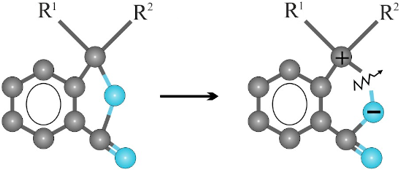
- mechanical stress is applied. In this work, the transport properties of thin-film layered lead–PDP–lead structures were experimentally studied in a wide temperature range. At sufficiently high temperatures, the current voltage characteristics are satisfactorily described in terms of the injection model of
- that in the measured Pb–PDP–Pb structure, the shape of the current–voltage characteristics strongly depends on temperature. At 300 K the I–V dependencies have a nonlinear character j ≈ kUn, typical for organic dielectrics. At temperatures ≈77 K and below, the dependence j = f(U) is also nonlinear, but
- described in terms of the injection current model limited by the space charge. At low temperatures, the tunneling mechanism is the predominant mechanism. Figure 3 shows the current–voltage characteristics of Pb–PDP–Pb structures with different PDP film thicknesses. With increase of the polymer film



Coherent amplification of radiation from two phase-locked Josephson junction arrays
Beilstein J. Nanotechnol. 2022, 13, 1445–1457, doi:10.3762/bjnano.13.119
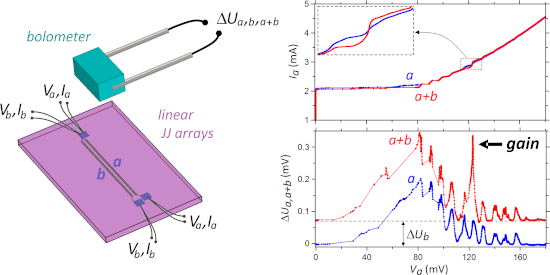
- measurement of current–voltage characteristic (IVC) and bolometric analysis of the emitted radiation. In all cases, we observe clear signatures of inter-array interaction. They occur when both arrays are biased at the same voltage and oscillate at the same frequency, coinciding with one of the cavity modes in


Density of states in the presence of spin-dependent scattering in SF bilayers: a numerical and analytical approach
Beilstein J. Nanotechnol. 2022, 13, 1418–1431, doi:10.3762/bjnano.13.117
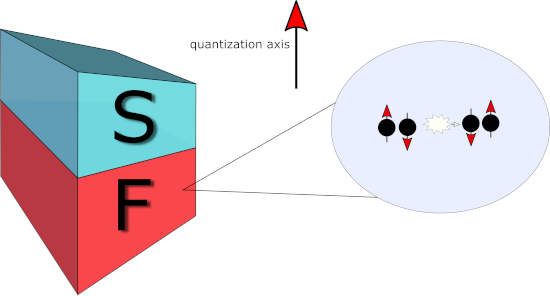
- spin–orbit scattering on the DOS behavior. Then, we provide a comparison with the exact numerical calculation using a self-consistent two-step iterative method. Furthermore, we briefly discuss the consequences of the different kinds of scattering on the current–voltage characteristics in SFIFS
- features is the examination of the current–voltage characteristics. Utilizing the Werthamer expression for the quasiparticle current in tunneling junctions, we can calculate the I–V curves for an SFIFS junction. The current then reads Here, Nf1,2(E) is the density of states (DOS) in the corresponding
- influence on the current. Figure 8 demonstrates the current–voltage characteristics of the SFIFS junction calculated in the presence of parallel magnetic (Figure 8a), spin–orbit (Figure 8b), and perpendicular magnetic scattering (Figure 8c). From the plots, we can notice that while a magnetic scattering


Nonlinear features of the superconductor–ferromagnet–superconductor φ0 Josephson junction in the ferromagnetic resonance region
Beilstein J. Nanotechnol. 2022, 13, 1155–1166, doi:10.3762/bjnano.13.97
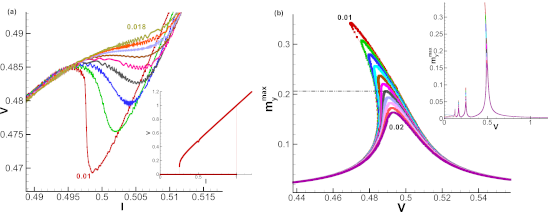
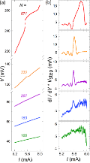
- difference with the magnetic moment of a ferromagnet in a φ0 junction leads to a number of unique features important for superconducting spintronics and modern information technology [1][2][3][4][5]. It allows one to control the magnetization precession by the superconducting current and affects the current
- –voltage (I–V) characteristics by magnetic dynamics in the ferromagnet, in particular, to create a DC component in the superconducting current [6][7][8]. A remarkable manifestation of this coupling is the possibility to stimulate a magnetization reversal in the ferromagnetic layer by applying a current


![[Graphic 14]](/bjnano/content/inline/2190-4286-13-97-i38.svg?max-width=637&scale=1.18182) at differ...
at differ...


![[Graphic 18]](/bjnano/content/inline/2190-4286-13-97-i42.svg?max-width=637&scale=1.18182) (V) on α in the damping parameter interval [0.001–0.12]....
(V) on α in the damping parameter interval [0.001–0.12]....




