


Search results
Search for "interfaces" in Full Text gives 471 result(s) in Beilstein Journal of Nanotechnology. Showing first 200.
Nanoglasses: a trail towards uncharted regions of vitreous materials and their properties?
Beilstein J. Nanotechnol. 2026, 17, 1047–1062, doi:10.3762/bjnano.17.72

- Way Tucson, AZ 85719, United States Institute of Nanotechnology, Karlsruhe Institute of Technology, Kaiserstr. 12, 76131 Karlsruhe, Germany 10.3762/bjnano.17.72 Abstract Nanoglasses are a class of non-crystalline materials composed of nanoscale glass regions separated by glass–glass interfaces that
- compared with conventional homogeneous glasses, giving rise to unique structural and functional properties. Additionally, the interfaces between the glass cores and the glass–glass interfaces need to be considered, as the specific interface areas are large. In this perspective paper, we discuss the
- structure, thermodynamics, and stability of glass–glass interfaces and examine their implications for the design and properties of nanoglasses, highlighting that this approach represents a novel pathway for modifying amorphous materials more broadly. Particular attention is given to columnar thin-film


Vibration-induced dynamic structural superlubricity on MoS2/Au(111) under ultrahigh vacuum
Beilstein J. Nanotechnol. 2026, 17, 1039–1046, doi:10.3762/bjnano.17.71
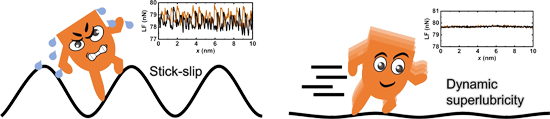
- , therefore, is not only to understand the origin of frictional forces at atomic interfaces but also to actively regulate them in a controllable and reversible manner. Over the past decades, a variety of strategies have been developed to manipulate frictional forces, ranging from mechanical regulation [5][6
- . Our findings contribute to bridging the gap between established mechanical control strategies in bulk materials and the emerging field of friction engineering in atomically thin interfaces, offering new insights into the design of tunable and energy-efficient nanoscale devices. Results The


Influence of an external electric field on the catalytic CO oxidation of nanoscaled CeO2 and its La3+ and Gd3+ congeners
Beilstein J. Nanotechnol. 2026, 17, 1028–1038, doi:10.3762/bjnano.17.70
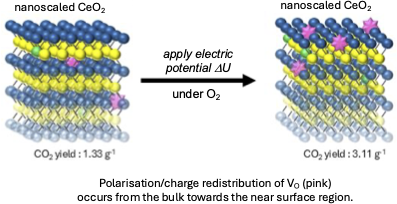
- , particularly near surfaces and electrode/oxide interfaces [16][27][28][29][30]. In ceria, these processes are closely connected to the Ce4+/Ce3+ redox couple and VO defect chemistry. A small polaron in nCeO2 can be described as a localized electron associated with a Ce3+ 4f state, and electronic charge


Materials challenges in solid-state sensors for continuous monitoring of ions in water
Beilstein J. Nanotechnol. 2026, 17, 935–973, doi:10.3762/bjnano.17.66
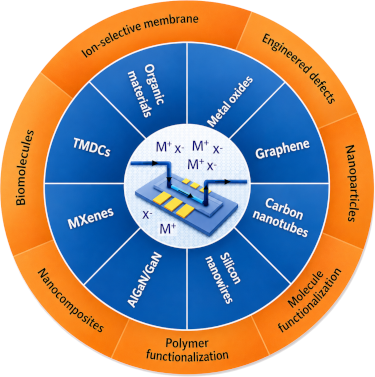
- voltammetric sensors deliver rapid kinetic responses for electroactive analytes [22]. Ongoing advancements in material science and studies on nanostructured interfaces significantly improved the quality of these electronic sensors, which will be discussed in detail in the following sections. Active layer
- noise and hysteresis through clean and defect-controlled interfaces, and must maintain stable electronic properties over time so that any electrical signal change reflects only the analyte concentration, not material instability. Third, the material’s surface must allow for functionalization, enabling



Light-driven ammonia electrooxidation via carbon nitride–ruthenium molecular interfaces
Beilstein J. Nanotechnol. 2026, 17, 854–862, doi:10.3762/bjnano.17.61
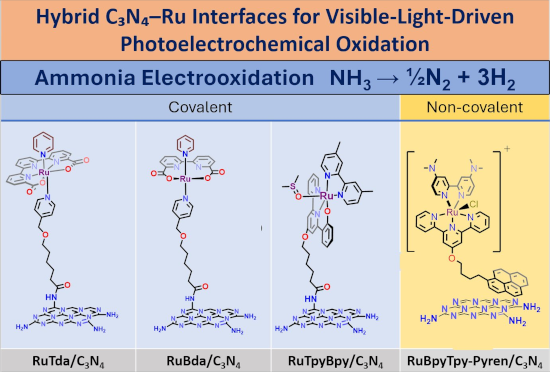
- Erlangen-Nürnberg, Cauerstraße 3, IZNF, Erlangen 91058, Germany Friedrich-Alexander-Universität Erlangen-Nürnberg, Profile Center Solar (FAU Solar), Freyeslebenstraße 1, 91058 Erlangen, Germany Department of Colloid Chemistry, Max-Planck-Institute of Colloids and Interfaces, Am Mühlenberg 1, 14476 Potsdam
- ; hybrid semiconductor–molecular interfaces; molecular ruthenium catalysts; photoelectrocatalysis; Perspective A) The energy challenge and the catalysis gap The global transition away from fossil fuels demands new paradigms for how chemical energy is stored and released. At the heart of this challenge


Glycerol photoelectrochemical oxidation reaction at carbon nitrides/BiVO4 materials
Beilstein J. Nanotechnol. 2026, 17, 806–817, doi:10.3762/bjnano.17.57
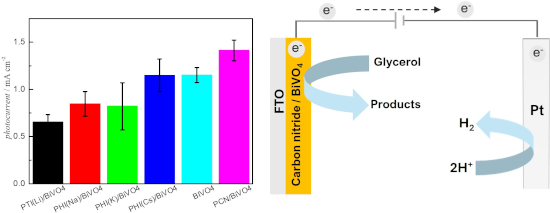
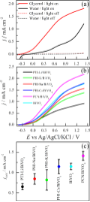
- [6]. These strategies include the synthesis of new photocatalysts, such as metal oxides, doped oxides, heterojunctions, and protective layers to enhance charge transfer at both interfaces and in the bulk, thereby lowering the activation energy barriers [7]. In this sense, bismuth vanadate (BiVO4) has




Tuning the electronic properties of defect-rich MoS2
Beilstein J. Nanotechnol. 2026, 17, 796–805, doi:10.3762/bjnano.17.56
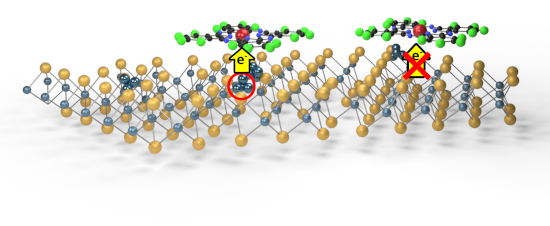
- structural defects significantly affect the electronic properties of the material. The present study utilizes angle-resolved photoelectron spectroscopy (ARPES) and surface-sensitive core-level spectroscopy (SXPS, XAS) with synchrotron radiation to investigate the interfaces between defect-rich MoS2 and
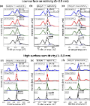
- (Figure 3c,d), corroborating that strong Co–MoS2 interactions require a high defect density. A similar peak for CoPcF16 at interfaces with metal substrates like Au and Cu and also WSe2 was found, which was ascribed to a reduced Co species resulting from the charge transfer from the substrate to the


Substrate-dependent pore formation in molybdenum disulfide monolayers under ion irradiation
Beilstein J. Nanotechnol. 2026, 17, 769–780, doi:10.3762/bjnano.17.54
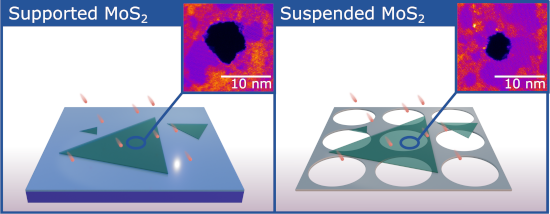
- in graphene/MoS2 heterostructures [59]. In contrast, coupling between 2D semiconductors and Au can be substantially stronger, which underlies the success of Au-assisted exfoliation and the formation of large-area, clean interfaces [60][61]. Motivated by this, we irradiated MoS2 exfoliated on Au to


Interface-engineered Caco-2 cell culture on a collagen-coated liquid–liquid interface in a microfluidic device
Beilstein J. Nanotechnol. 2026, 17, 760–768, doi:10.3762/bjnano.17.53
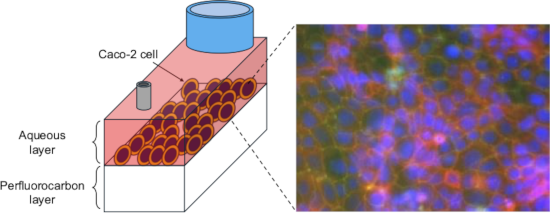
- enables the formation of stable liquid–liquid interfaces that serve as viable and flexible substrates for epithelial cell culture, offering new opportunities for multiphase microfluidic models of epithelial barriers. Keywords: Caco-2; collagen; FC-43; gut-on-a-chip; liquid–liquid interface; Introduction
- intestinal epithelial cells are cultured to establish a polarized epithelial barrier. Although porous membranes enable compartmentalization, they may also impose non-physiological diffusion barriers and mechanical constraints. Liquid–liquid interfaces provide a mechanically soft and dynamically
- reconfigurable environment that more closely mimics native cellular microenvironments than rigid solid substrates. Unlike conventional solid culture surfaces, liquid–liquid interfaces offer a distinct platform for cell culture, enabling a scaffold-free and mechanically tunable environment that eliminates the


afspm: A framework for manufacturer-agnostic automation in scanning probe microscopy
Beilstein J. Nanotechnol. 2026, 17, 653–667, doi:10.3762/bjnano.17.45
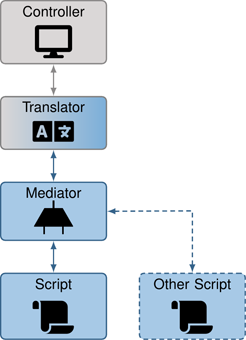
- interfaces types. An automated experiment was run to ensure overall running beyond integration testing. Keywords: atomic force microscopy; automation; manufacturer-agnostic; scanning probe microscopy; software framework; Introduction In scanning probe microscopy (SPM), an atomically sharp tip is scanned
- “Implementing Components in Other Languages” of Supporting Information File 1. Decoupling manufacturer specifics In practice, controller interfaces differ not just in the commands and data structures used, but also in the programming language supported and the interfacing mechanism itself. In this section, we
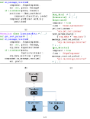
- implementations in Figure 4d–g. In Table 1, we list a sampling of controllers from various manufacturers and the scripting interfaces they expose. With inter-process communication (IPC) interfaces (Figure 4a), scripts are run as separate processes from the microscope controller. An IPC interface allows different




Recent progress in enhancing built-in electric fields of perovskite solar cells via junction engineering
Beilstein J. Nanotechnol. 2026, 17, 602–621, doi:10.3762/bjnano.17.42
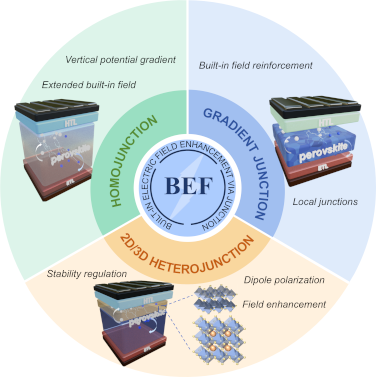
- advantages include a continuous potential distribution, fewer additional interfaces, and good compatibility with existing fabrication processes. In contrast, gradient junctions employ gradual variations in composition, ion concentration, dimensionality, or bandgap along the film thickness to create a
- , energy level or dimensionality, has recently emerged as a key strategy for strengthening the BEF. Such graded junctions establish sustained band bending aligned with the BEF through the film thickness and across interfaces, thereby markedly increasing the field strength and effective penetration depth
- of the multi-interface synergistic enhancement of Vbi, previous studies have simultaneously optimized the top and bottom 2D/3D interfaces and have incorporated structural confinement and dipole engineering to improve energy-level alignment and interfacial stability. Xiong et al. [78] proposed a



Advances in nanotechnology applied to natural products
Beilstein J. Nanotechnol. 2026, 17, 555–558, doi:10.3762/bjnano.17.36
- , underscoring the importance of physicochemical approaches in the development of nanostructured formulations [23][24]. More recently, hybrid nanosystems have emerged as promising strategies for natural product delivery and application. Structures that combine polymer–lipid interfaces, such as core–shell
First-principles study on elastic properties of Cu, (Cu1−x,Nix)3Sn and interfacial mechanical properties of (Cu1−x,Nix)3Sn/Cu in the lead-free solder joint
Beilstein J. Nanotechnol. 2026, 17, 428–439, doi:10.3762/bjnano.17.29
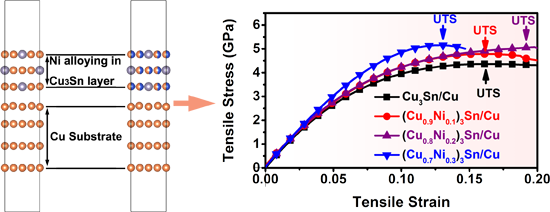
- orientation relationship of ε-Cu3Sn/Cu interfaces as (001)ε//(111)Cu and [100]ε//[−110]Cu [13], that is, the interface was constructed by attaching the (001) facet of ε-Cu3Sn to the (111) facet of the Cu substrate and making the [100] axis of ε-Cu3Sn parallel to the [−110] axis of Cu substrate. Based on the
- calculated. Based on the orientation relationship of Cu3Sn/Cu interfaces [13], namely, (001)ε//(111)Cu and [100]ε//[−110]Cu, the interface was constructed by adhering Cu and (CuxNi1−x)3Sn slabs. The Cu slab consisted of four atomic layers, the (CuxNi1−x)3Sn slab consisted of three atomic layers, and the
- thickness of the vacuum layer was 1 nm. Interfacial modulus, ultimate tensile stress, work of adhesion, and the interfacial toughness of (CuxNi1−x)3Sn /Cu interfaces were determined by a tensile test along the direction normal to the interface plane, that is, along the z-axis. During the tensile deformation


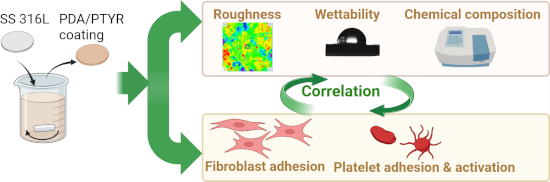
Polycatecholamine nanocoatings on stainless steel: the effect on attachment of human fibroblasts and platelets
Beilstein J. Nanotechnol. 2026, 17, 365–380, doi:10.3762/bjnano.17.25
- several weeks and prolonged antimicrobial activity [21][22][23]. Beyond classical PDA films, broader catechol-based and PDA-inspired chemistries have been explored, including phenolic polymer systems, mussel-inspired adhesive interfaces and catechol-rich surface architectures, which have been shown to




Ferroelectric nanodot reservoir for neuromorphic computing
Beilstein J. Nanotechnol. 2026, 17, 352–364, doi:10.3762/bjnano.17.24
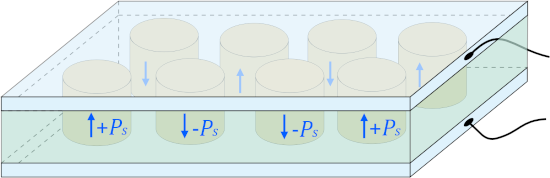
- implementations. Contactless interfaces Contactless input and output methods of data integration between the reservoir and external neuromorphic interfaces are of particular importance for the development of scalable, high-resolution, ultrafast, and non-invasive neuromorphic systems. They enable direct
- interfaces. An alternative configuration is shown in Figure 7b, where atomic force microscopy or piezoresponse force microscopy are used for both input and output operations. Here, the localized tip of the microscope is used to inject or sense charges at specific positions in the ferroelectric array


Gold nanoparticle-decorated reduced graphene oxide as a highly effective catalyst for the selective α,β-dehydrogenation of N-alkyl-4-piperidones
Beilstein J. Nanotechnol. 2026, 17, 218–238, doi:10.3762/bjnano.17.15
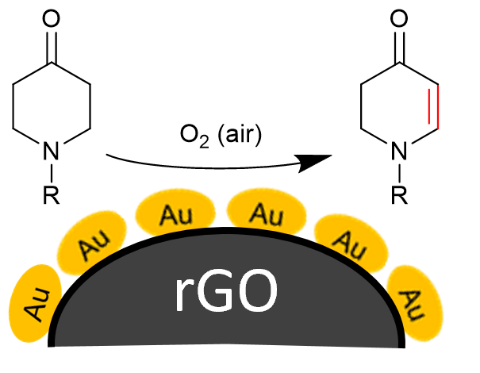
- heterogeneous catalysts. These findings identify mesoporosity and electron-rich interfaces as key factors driving enhanced catalytic performance and provide a framework for future applications in α,β-dehydrogenation of β-N-substituted saturated ketones. Experimental Catalyst’s preparation All chemicals used in


Micro- and nanoscale effects in biological and bioinspired materials and surfaces
Beilstein J. Nanotechnol. 2026, 17, 214–217, doi:10.3762/bjnano.17.14
- generalizing nanoscale properties and processes in biology to engineer functional surfaces and interfaces across different scales. In May 2023, the Beilstein Nanotechnology Symposium titled “Functional Micro- and Nanostructured Surfaces: from Biology to Biomimetics” brought together a diverse group of
Competitive helical bands and highly efficient diode effect in F/S/TI/S/F hybrid structures
Beilstein J. Nanotechnol. 2026, 17, 15–23, doi:10.3762/bjnano.17.2
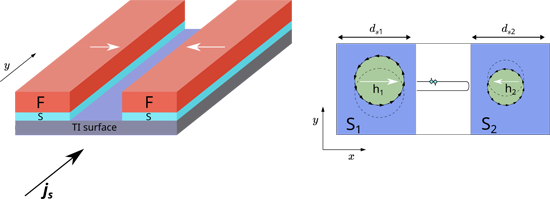
- second condition means that , and the transparency of the interfaces between the superconducting leads and the TI layer is rather high. In this case, it is energetically favorable to have the same phase gradient along the whole S1/TI/S2 Josephson junction and the key results are obtained within this
- comprises several equations, namely, the Usadel equations in the superconducting (S) and normal (N) parts (Equation 6 and Equation 7), two self-consistency equations (Equation 8) in each superconducting region S1 and S2, and the boundary conditions at the S1/N, N/S2 interfaces and at the free edges of the


![[Graphic 16]](/bjnano/content/inline/2190-4286-17-2-i31.svg?max-width=637&scale=1.18182)
![[Graphic 17]](/bjnano/content/inline/2190-4286-17-2-i32.svg?max-width=637&scale=1.18182)


Ultrathin water layers on mannosylated gold nanoparticles
Beilstein J. Nanotechnol. 2025, 16, 2183–2198, doi:10.3762/bjnano.16.151
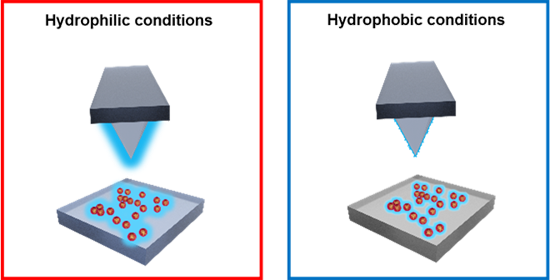
- properties on particle size and shape has been demonstrated for particle sizes in the 1–100 nm range and on biological interfaces [7]. Limited biocompatibility and high tendency to aggregate in solution inspired new mechanisms of particle biofunctionalization with proteins, lipids, or carbohydrates. Coupling
- vibrational bands are superimposed on a very broad signal from bulk gold, quasi-constant after normalization (like FTIR). In contrast to FTIR, the bands stem only from vibrations at interfaces, that is, from the NP surface in contact with air. Additionally, highly symmetric vibrations are forbidden (with very



Hartree–Fock interaction in superconducting condensate fractals
Beilstein J. Nanotechnol. 2025, 16, 2177–2182, doi:10.3762/bjnano.16.150
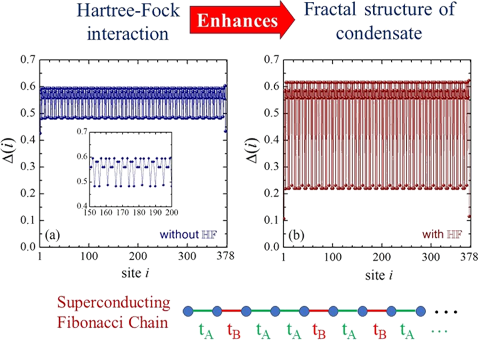
- ]. Nevertheless, the HF potential cannot be neglected in the presence of external fields [4], such as impurity potentials [5][6], quantum confinement in nanoscale superconductors [7], and potential barriers at interfaces [8]. Such external fields break the translational invariance, which is the condition for the


Molecular and mechanical insights into gecko seta adhesion: multiscale simulations combining molecular dynamics and the finite element method
Beilstein J. Nanotechnol. 2025, 16, 2055–2076, doi:10.3762/bjnano.16.141
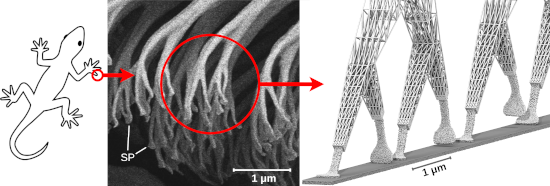
- while avoiding unnecessary computational cost. We note that the substrate model is an idealized approximation chosen for consistency with our prior work [10][12] and computational efficiency. Modeling biologically realistic interfaces will require extending the present model to include stratification







Beyond the shell: exploring polymer–lipid interfaces in core–shell nanofibers to carry hyaluronic acid and β-caryophyllene
Beilstein J. Nanotechnol. 2025, 16, 2015–2033, doi:10.3762/bjnano.16.139
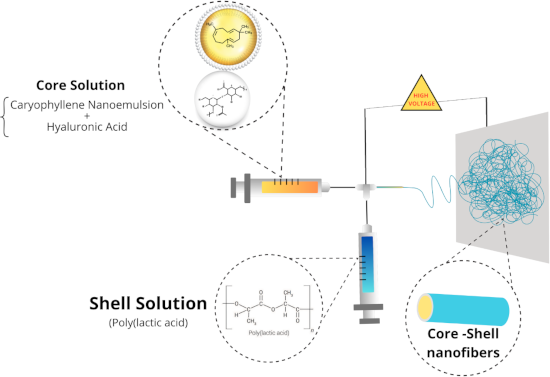
- nature can present formulation challenges, particularly when seeking integration into solid scaffolds like nanofibers. The strategic combination of polymers and lipids in hybrid systems has emerged as a promising approach to overcome these limitations. Incorporating polymer–lipid interfaces within core




Laser ablation in liquids for shape-tailored synthesis of nanomaterials: status and challenges
Beilstein J. Nanotechnol. 2025, 16, 1963–1997, doi:10.3762/bjnano.16.137
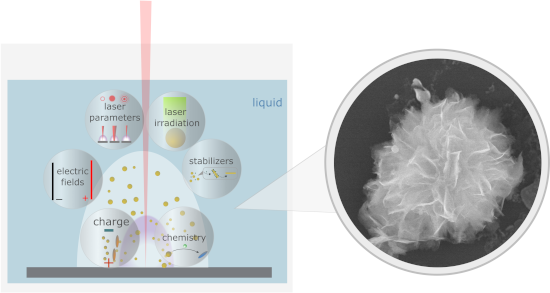
- laser ablation involving the species ejected from the target and liquid components (Figure 3a). Spatially, the chemical reactions occur in different reaction zones: inside the plasma, cavitation bubble, liquid, or at their interfaces. The reactions between the ejected target material and liquid




Self-assembly and adhesive properties of Pollicipes pollicipes barnacle cement protein cp19k: influence of pH and ionic strength
Beilstein J. Nanotechnol. 2025, 16, 1863–1872, doi:10.3762/bjnano.16.129
- crustaceans following molting [23]. This flexibility of the cuticle allows for attachment in environments where rigid adhesion would fail, such as on soft tissues, polymers, or dynamic interfaces [23][24]. Stalked barnacles exhibit significant evolutionary divergence (200–250 million years) from acorn


Advances of aptamers in esophageal cancer diagnosis, treatment and drug delivery
Beilstein J. Nanotechnol. 2025, 16, 1734–1750, doi:10.3762/bjnano.16.121
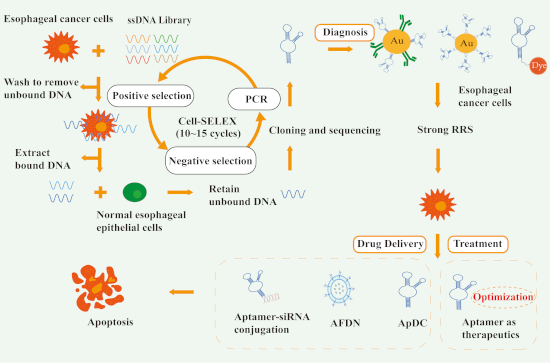
- resistance [73]. Notably, transcription factors like SOX2 are typically categorized as “non-druggable targets” due to three fundamental challenges: (1) their structurally flat DNA-binding domains, (2) extensive protein–protein interaction interfaces, and (3) the absence of well-defined binding pockets for
- aptamers, such as P42, P58, ZY3A and SPP1 aptamers, mostly exert pharmacological effects on the principle of target inhibition. ZY3A targets the membrane protein p37, and SPP1 belongs to secreted proteins. SOX2 and SOX2/CDP interfaces, the targets of P42 and P58, exist in cells, requiring aptamer





