


Search results
Search for "nanostructure" in Full Text gives 366 result(s) in Beilstein Journal of Nanotechnology. Showing first 200.
Tailoring Ag–Pt nanoalloys through solid-state dewetting: structural and optical insights
Beilstein J. Nanotechnol. 2026, 17, 748–759, doi:10.3762/bjnano.17.52

- essential to determine whether the atoms forming the nanoalloy mix to the same extent at the surface as within the entire volume of an individual nanostructure [25][26]. Whether a nanostructure forms a genuine atomic-scale nanoalloy or a nanocomposite has a major impact on its plasmonic and catalytic
- nanostructure. The estimated compositional ratio of Ag and Pt was approximately 48 atom % Ag and 52 atom % Pt, which perfectly matches the theoretical prediction presented below in Figure 10b. Measurements for other compositions are also consistent with the theoretical concentrations of Ag and Pt. The results
- determined the size distribution of the formed structures, which is presented in Figure 4. It can be observed that annealing the 4 nm Ag/4 nm Pt bilayer at 650 °C for 15 min results in the relatively small average nanostructure size and the well uniform size distribution. This observation prompted the


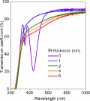


Two-step laser synthesis of Ag@TiO2 nanomaterials for the photocatalytic degradation of rhodamine B
Beilstein J. Nanotechnol. 2026, 17, 622–634, doi:10.3762/bjnano.17.43
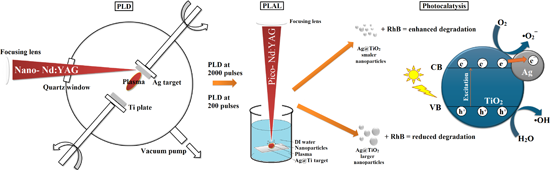
- characterization was performed using scanning electron microscopy (SEM) and transmission electron microscopy (TEM) with energy-dispersive spectroscopy (EDS), aiming to establish a clear correlation between synthesis parameters, nanostructure features, and photocatalytic activity. In our previous studies [6][7][21


Polycatecholamine nanocoatings on stainless steel: the effect on attachment of human fibroblasts and platelets
Beilstein J. Nanotechnol. 2026, 17, 365–380, doi:10.3762/bjnano.17.25
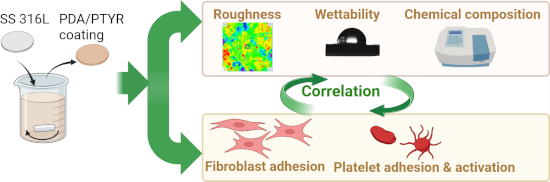
- ) are expected to influence the catechol/quinone balance, amine content, nanostructure and, consequently, the biological and hemocompatible properties of the resulting coatings. In this study, we applied a novel in situ oxidation process to obtain nanostructured PDA and PTYR coatings on SS 316L, using a
- less explored PTYR under identical conditions, we aim to elucidate how the differences in polycatecholamine chemistry and nanostructure translate into cell–surface interactions on stainless steel implants. Results Wettability of the coatings Polished SS 316L discs were coated with PDA (reaction times




Advancing nanolithography: a comprehensive review of materials for local anodic oxidation with AFM
Beilstein J. Nanotechnol. 2026, 17, 275–291, doi:10.3762/bjnano.17.19
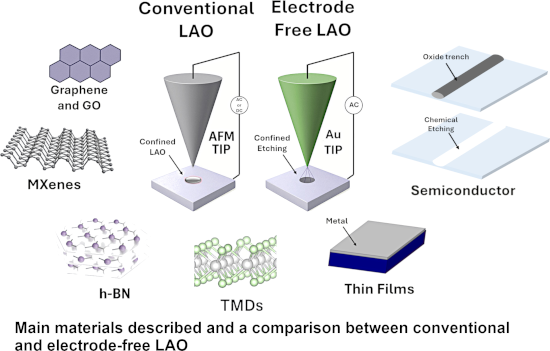
- [29]. A more recent study demonstrates the use of LAO to nanostructure thin amorphous vanadium oxide (VOx) films [97], converting them locally to vanadium pentoxide (V2O5) for selective removal. Achieving sub-50 nm lateral precision and sub-0.3 nm depths, the process is influenced by humidity, film


Safe and sustainable by design with ML/AI: A transformative approach to advancing nanotechnology
Beilstein J. Nanotechnol. 2026, 17, 176–185, doi:10.3762/bjnano.17.11
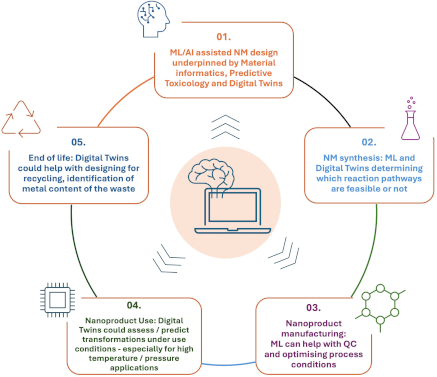
- vocabularies, and transparent data-sharing agreements, stakeholders can facilitate more seamless collaboration and unlock the full potential of AI-driven risk assessment. Progress is being made in this direction through application of big data curation and development of modelling friendly nanostructure


Functional surface engineering for cultural heritage protection: the role of superhydrophobic and superoleophobic coatings – a comprehensive review
Beilstein J. Nanotechnol. 2026, 17, 63–96, doi:10.3762/bjnano.17.6





Visualizing nanostructures in supramolecular hydrogels: a correlative study using confocal and cryogenic scanning electron microscopy
Beilstein J. Nanotechnol. 2025, 16, 2274–2284, doi:10.3762/bjnano.16.156
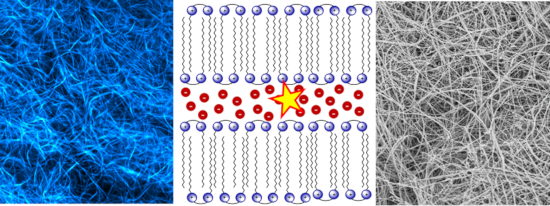
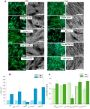
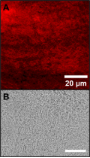
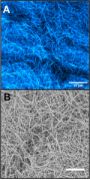
- ; microscopies; nanostructure; supramolecular hydrogel; Introduction Hydrogels, whether based on self-assembling molecules or cross-linked polymers, are useful in fields ranging from tissue engineering to drug delivery and biosensing [1][2][3][4][5]. Their high water content and soft, porous structure make them



Chiral plasmonic nanostructures fabricated with circularly polarized light
Beilstein J. Nanotechnol. 2025, 16, 2245–2264, doi:10.3762/bjnano.16.154
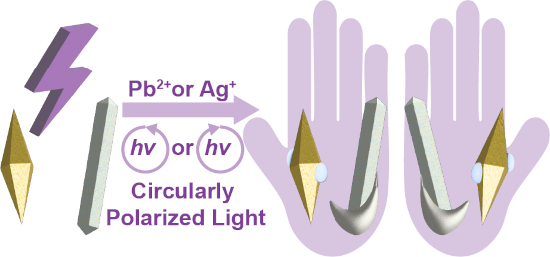
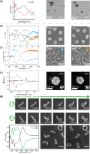
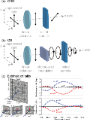
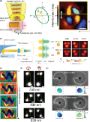
- detail due to the focus here on structurally intrinsic chiral plasmonic nanostructures (cPNSs). 2 Constructing chiral plasmonic nanostructures using CPL Light can drive the collective oscillation of the free electrons in metals, known as surface plasmons in a plasmonic metal nanostructure. Part of the
- vicinity of the Au nanostructures [56]. However, the drawback of the Au/PbO2 heterostructures is evident: PbO2 is an indirect-bandgap semiconductor and, therefore, does not significantly contribute to the total extinction cross section of the nanostructure compared to Ag and Au. It would be more beneficial
- photoreduction [103]. We found that the preferential stabilization of the lateral sides of Ag NRs by hexadecyltrimethylammonium bromide (CTAB) led to Ag reduction selectively on the two tips. Under CPL, this ligand passivation-mediated growth generated a “hook”-shaped nanostructure at an early stage of the





Laser ablation in liquids for shape-tailored synthesis of nanomaterials: status and challenges
Beilstein J. Nanotechnol. 2025, 16, 1963–1997, doi:10.3762/bjnano.16.137
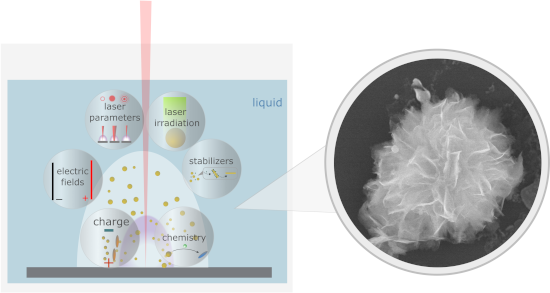
- formed at the interface of the plasma and surrounding liquid. Here, the plasma is subjected to fast cooling due to the energy exchange with the surrounding liquid, resulting in nonequilibrium conditions of particle nucleation and growth. This results in the formation of various nanostructure morphologies
- advances in the field of shape-tailored nanostructure synthesis by PLAL are discussed. 2 Current status of the shape-controlled synthesis of nonspherical NPs by PLAL In principle, the conditions at each stage of the ablation process might be changed to adjust the morphology of NPs. The attractive feature
- . Manipulation of the structure and concentration of surface groups influence coupling between the interacting nanocrystals and open the pathways for engineering nanostructure shape. As demonstrated in [40], the AgBr nanosheets were only formed if the CTAB concentration exceeds 0.001 M, while at lower





Quantum circuits with SINIS structures
Beilstein J. Nanotechnol. 2025, 16, 1931–1941, doi:10.3762/bjnano.16.134
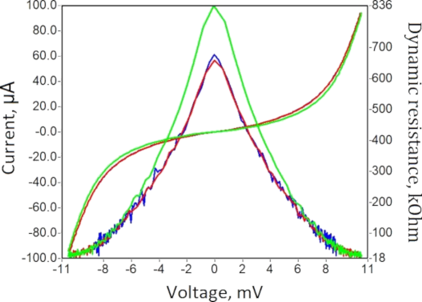
- nanostructure consisting of a T-shaped normal metal electrode (copper), an insulating tunnel layer (aluminum oxide), and a superconducting fork (aluminum), Figure 2a. Tunnel junction size is 0.2 × 0.2 µm, loop area 2, 4, 8, or 10 µm2. The transport characteristics of the fabricated interferometers were studied


Piezoelectricity of layered double hydroxides: perspectives regarding piezocatalysis and nanogenerators
Beilstein J. Nanotechnol. 2025, 16, 1812–1817, doi:10.3762/bjnano.16.124

- nanostructure itself demonstrated a piezoelectric charge coefficient of 274 pm·V−1. This work opens the door to future applications of LDHs in smart wearable electronic devices as both power generators and supercapacitors. In addition to the intrinsic piezoelectric properties of LDHs, it has been demonstrated
- that LDHs, as anionic clays, play a crucial role in enabling direct current output from piezoelectric nanogenerators [8]. In particular, the abundant anions (NO3−) incorporated within the Zn/Al-LDH layer of the two-dimensional ZnO nanostructure are key contributors to achieving piezoelectric direct

Exploring the potential of polymers: advancements in oral nanocarrier technology
Beilstein J. Nanotechnol. 2025, 16, 1751–1793, doi:10.3762/bjnano.16.122
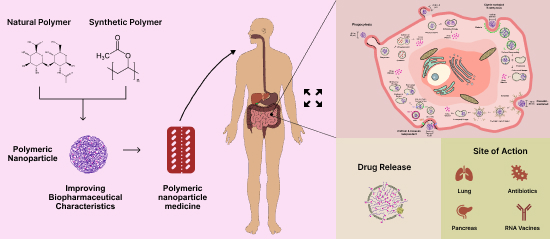
- remains constant and independent of concentration gradients [28]. In addition to diffusion, drug transport through water-filled pores may also occur by convection. The porosity of the nanostructure promotes water influx, which is induced by osmotic pressure, facilitating drug release via osmotic pumping
- . Diffusion-controlled release is directly influenced by the effective diffusion coefficient of the drug within the polymer matrix [10]. Erosion, as a release mechanism, involves the degradation of the polymer matrix, altering the nanostructure in two ways: surface and bulk erosion. In surface erosion, the


Advances of aptamers in esophageal cancer diagnosis, treatment and drug delivery
Beilstein J. Nanotechnol. 2025, 16, 1734–1750, doi:10.3762/bjnano.16.121
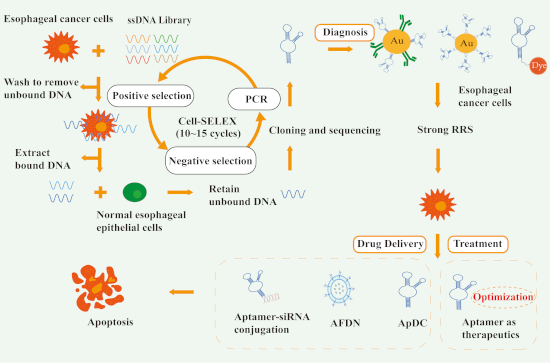
- nanostructure has also been verified by other researchers in the treatment of triple negative breast cancer [128]. Scientists are also interested in intelligent drug delivery systems that control drug release by using pH [129], enzymes [130], hypoxia [131], or ATP as triggers to achieve on-demand therapy. Wang


Ambient pressure XPS at MAX IV
Beilstein J. Nanotechnol. 2025, 16, 1677–1694, doi:10.3762/bjnano.16.118
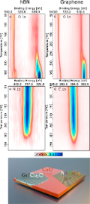
- simultaneously. This is summarized in Figure 5 where the 2D intensity plot vs temperature of O 1s and N 1s or C 1s, for hBN or graphene, respectively, are reported. Time-resolved catalysis Catalysts are inherently dynamic systems. The optimal catalyst should have a nanostructure that enhances activation kinetics





Modeling magnetic properties of cobalt nanofilms used as a component of spin hybrid superconductor–ferromagnetic structures
Beilstein J. Nanotechnol. 2025, 16, 1557–1566, doi:10.3762/bjnano.16.110
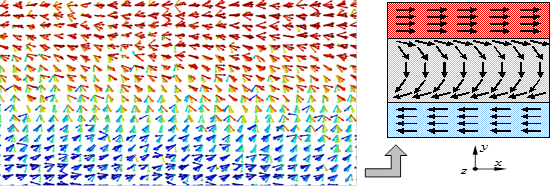
- contact from a multilayer nanostructure” (methodology for modeling magnetic properties) and with the financial support of the Russian Science Foundation (project No. 23-72-30004) (research at ultra-low temperatures) and the project No. 020201 of the Moldova State Program “Nanostructures and advanced


Laser processing in liquids: insights into nanocolloid generation and thin film integration for energy, photonic, and sensing applications
Beilstein J. Nanotechnol. 2025, 16, 1428–1498, doi:10.3762/bjnano.16.104






Better together: biomimetic nanomedicines for high performance tumor therapy
Beilstein J. Nanotechnol. 2025, 16, 1246–1276, doi:10.3762/bjnano.16.92
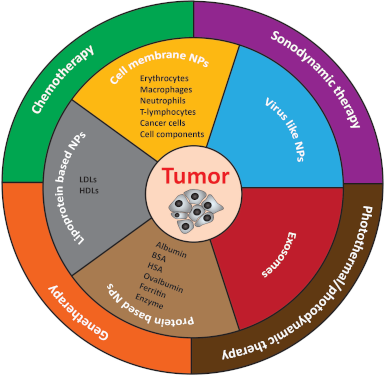
- new ways in the treatment of incurable diseases by effective gene regulation strategies, such as a three-layer core–shell biomimetic nanostructure fabricated to overcome limitations in siRNA delivery to glioblastoma (Figure 13). The three-layer shell consisted of polyethyleneimine (PEI)-siRNA complex
- -bearing animals. In one study, a worm-like nanostructure coated with RBC membrane for siRNA delivery has also been demonstrated. Herein, RBC membrane was modified with RGD peptide to achieve active targeting ability and a pH-dependent charge conversion strategy was involved to accomplish effective siRNA







Electronic and optical properties of chloropicrin adsorbed ZnS nanotubes: first principle analysis
Beilstein J. Nanotechnol. 2025, 16, 1184–1196, doi:10.3762/bjnano.16.87
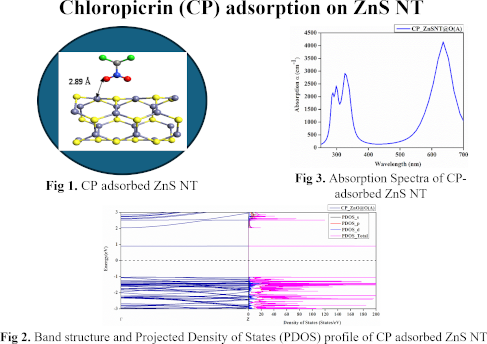
- from the adsorption of CP molecules at multiple active sites or a combination of adsorption geometries, as previously observed in DFT-based studies on nanostructure–molecule interactions [72]. The presence of multiple optical transitions suggests moderate bandgap narrowing and indicates potential for


Soft materials nanoarchitectonics: liquid crystals, polymers, gels, biomaterials, and others
Beilstein J. Nanotechnol. 2025, 16, 1025–1067, doi:10.3762/bjnano.16.77
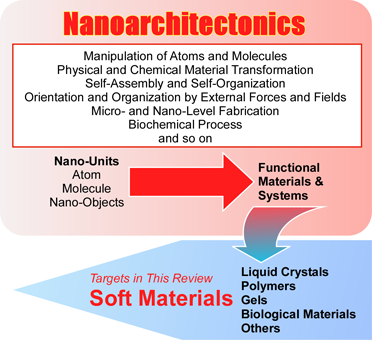
- such as quantum dots [95][96][97][98][99], the nanoscale of size and dimensions can result in properties that are not attainable with bulk materials. In other words, the key to developing functionality and improving properties lies in controlling the nanostructure in addition to the creation of the
- . Liquid crystal nanoarchitectonics is not merely concerned with the manipulation of liquid crystal structures; it also encompasses the transfer of such structures to alternative materials, thereby influencing their nanostructure [238][239][240]. Metal oxides of earth-abundant elements are of significant
- importance in the fabrication of active electrodes for a range of electrochemical applications. However, it is not always the case that these materials adopt the desired nanostructure. Dag and colleagues fabricated CaFe2O4 thin-film electrodes on graphite rods via a molten salt-assisted self-assembly process






Supramolecular hydration structure of graphene-based hydrogels: density functional theory, green chemistry and interface application
Beilstein J. Nanotechnol. 2025, 16, 806–822, doi:10.3762/bjnano.16.61
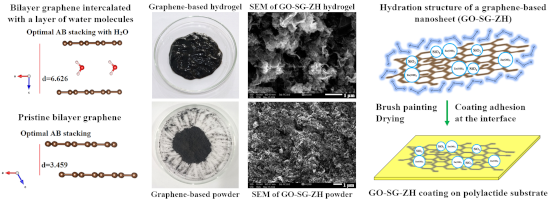
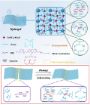
- elemental mapping of carbon atoms (green dots), oxygen atoms (red dots), silicon atoms (yellow dots), and zinc atoms (blue atoms) on the graphene-based nanostructure of GO-SG-ZH hydrogel after dehydration. Analysis of moisture content and water evaporation of GO-SG-ZH hydrogel. (a) Curves of changing


Nanostructured materials characterized by scanning photoelectron spectromicroscopy
Beilstein J. Nanotechnol. 2025, 16, 700–710, doi:10.3762/bjnano.16.54
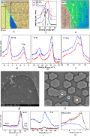
- technologically relevant nanostructure devices. The type and amount of surface oxide and defects can be obtained from XPS peak fitting, as presented in Figure 2c, assuming a Shirley background and Voigt doublet components (more fitting components can be found in [18]). Both the In 4d and P 2p spectra were fitted


Functionalized gold nanoflowers on carbon screen-printed electrodes: an electrochemical platform for biosensing hemagglutinin protein of influenza A H1N1 virus
Beilstein J. Nanotechnol. 2025, 16, 540–550, doi:10.3762/bjnano.16.42
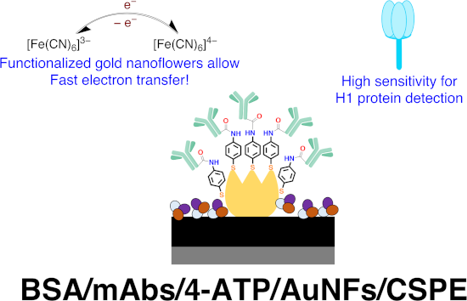
- nanohybrids of MoSe2−CsPbBr3 with a size range between 60 and 80 nm [38]. This effect has been relevant to enhance the Raman scattering vibrational modes in surface-enhanced Raman spectroscopy measurements. It has also been noticed that the shape of the nanostructure can be used to tune the magnitude of the


Electron beam-based direct writing of nanostructures using a palladium β-ketoesterate complex
Beilstein J. Nanotechnol. 2025, 16, 530–539, doi:10.3762/bjnano.16.41
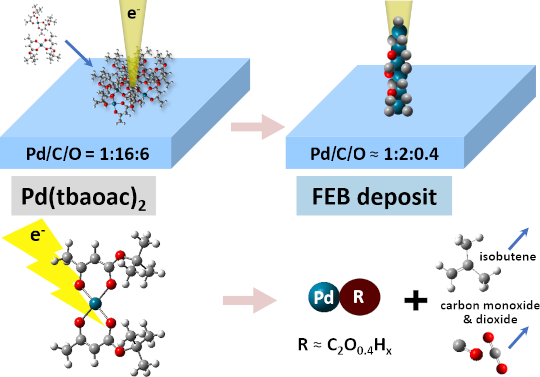
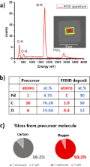
- nanostructure and composition of the deposits were determined, and possible volatile products produced under electron-induced dissociation, explaining the composition, are investigated. A method to eliminate the residual gas contamination during FEBID was implemented. [Pd(tbaoac)2] contains large organic
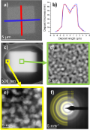
- prepared on an ultrathin carbon support film spanning a lacey carbon membrane (Figure 2c). The deposit appears smeared because of drift caused by charging effects during the deposition process. High-resolution STEM imaging (Figure 2d,e) revealed a granular nanostructure with nanograins of around 2 nm in
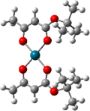
- of further studies of dissociation and desorption mechanisms involved in the removal of the carbon- and oxygen-rich ketoesterate ligands. The nanopillar formed from this precursor demonstrates its potential for 3D nanostructure fabrication using FEBID. The structure of bis(tert-butylacetoacetate


N2+-implantation-induced tailoring of structural, morphological, optical, and electrical characteristics of sputtered molybdenum thin films
Beilstein J. Nanotechnol. 2025, 16, 495–509, doi:10.3762/bjnano.16.38
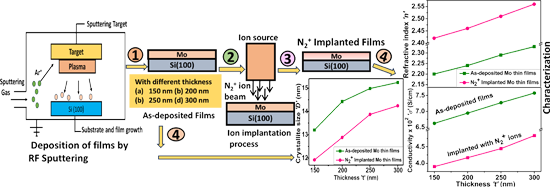
- polycrystalline Mo mirrors for plasma diagnostics when treated with low-energy He+ ion irradiation at ambient temperature and 400 °C. Takamura et al. [21] examined the effects of He plasma irradiation on Mo thin films. The temperature range for nanostructure growth was within a temperature range of 800 to 1050 K


Performance optimization of a microwave-coupled plasma-based ultralow-energy ECR ion source for silicon nanostructuring
Beilstein J. Nanotechnol. 2025, 16, 484–494, doi:10.3762/bjnano.16.37

- clear signature of ripple-like nanostructure formation. Figure 6a–c shows the variation of the surface profile of the AFM images shown in Figure 5. The height profile is direct evidence of the variation of ripple amplitude with irradiation time. The increase in ripple height with irradiation time is
- shown in Figure 6a–c. Further, the fluctuation in ripple height or amplitude, generally termed as rms roughness, is also investigated in Figure 6d. The rms roughness increases linearly with the irradiation time (i.e., fluence). Further, the ordering of the nanostructure with bombardment time, examined
- surface. Inert Ar causes no chemical modifications of the silicon surface. Also there are no implanted Ar ions on the silicon surface (Figure 5g), particularly in this lower-energy regime. Therefore, in the present case, the amorphization due to ion beam sputtering and the nanostructure formation change





