


Search results
Search for "polynomial" in Full Text gives 58 result(s) in Beilstein Journal of Nanotechnology.
Functional surface engineering for cultural heritage protection: the role of superhydrophobic and superoleophobic coatings – a comprehensive review
Beilstein J. Nanotechnol. 2026, 17, 63–96, doi:10.3762/bjnano.17.6





Improving magnetic properties of Mn- and Zn-doped core–shell iron oxide nanoparticles by tuning their size
Beilstein J. Nanotechnol. 2025, 16, 2285–2295, doi:10.3762/bjnano.16.157
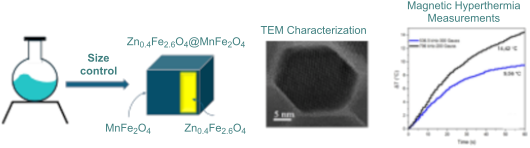
- 536.5 kHz/300 G or 796 kHz/200 G was applied. The increase of temperature was recorded over a period of 60 s. The SAR values were then calculated following the method described by Perigo and colleagues [16]. The curve ΔT = f(t) was fitted with a second-order polynomial function of the form y = a + b1·x



Quality by design optimization of microemulsions for topical delivery of Passiflora setacea seed oil
Beilstein J. Nanotechnol. 2025, 16, 2116–2131, doi:10.3762/bjnano.16.146

- models supports their use in optimizing the formulation through the DoE approach. The predictive models for hydrodynamic diameter, polydispersity index, and visual classification were expressed as a polynomial function of the encoded factor as follows: These equations were then used to generate 3D


Modeling magnetic properties of cobalt nanofilms used as a component of spin hybrid superconductor–ferromagnetic structures
Beilstein J. Nanotechnol. 2025, 16, 1557–1566, doi:10.3762/bjnano.16.110
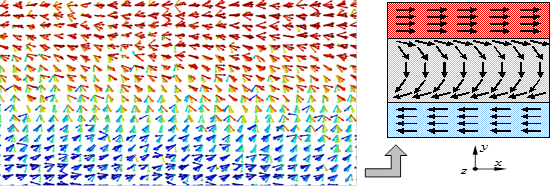
- in the fraction of surface atoms of the nanofilms as their thicknesses increase. The graph of calculated magnetic energy values is well approximated by a polynomial dependence of the fifth degree (the equation is shown in the frame in Figure 8). The value of reliability of the constructed trend line
- is 0.9997. Simplification of the approximating function to a polynomial of the third degree (the coefficients in front of the 4th and 5th order terms are quite small) also brings about good results of the trend line at the reliability level of 0.9978. Linear approximation gives a lower indicator of
- Neel domain walls. The dependence of the magnetic energy on the thickness of the modeled nanofilm has a nonlinear form and is well approximated by a polynomial of degree 5. Due to insignificant coefficients in front of the 4th and 5th order terms, the approximation function can be simplified to a 3rd


Tendency in tip polarity changes in non-contact atomic force microscopy imaging on a fluorite surface
Beilstein J. Nanotechnol. 2025, 16, 944–950, doi:10.3762/bjnano.16.72
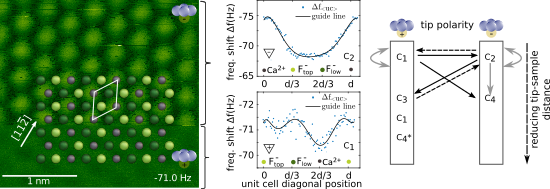
- ⟨11−2⟩ directions, where a0 is the bulk lattice constant of CaF2. Atomic assignment follows the model introduced in [10], with the solid line in panels (b, c, e, f) representing a polynomial fit of degree seven as a guide to the eye. Examples of polarity-changing tip changes on CaF2(111). (a) Δf data
- . represents the distance between equivalent atoms along ⟨11−2⟩ directions, where a0 is the bulk lattice constant of CaF2. Atomic assignment follows the model introduced in [10], with the solid line in panels (b, c, e, f) representing a polynomial fit of degree seven as a guide to the eye. Tip changes leading
- equivalent atoms along ⟨11−2⟩ directions, where a0 is the bulk lattice constant of CaF2. Atomic assignment follows the model introduced in [10], with the solid line in panels (d–f) and (j–l) representing a polynomial fit of degree seven as a guide to the eye. Acknowledgements P. R. gratefully acknowledges


Changes of structural, magnetic and spectroscopic properties of microencapsulated iron sucrose nanoparticles in saline
Beilstein J. Nanotechnol. 2025, 16, 762–784, doi:10.3762/bjnano.16.59





Local work function on graphene nanoribbons
Beilstein J. Nanotechnol. 2024, 15, 1125–1131, doi:10.3762/bjnano.15.91
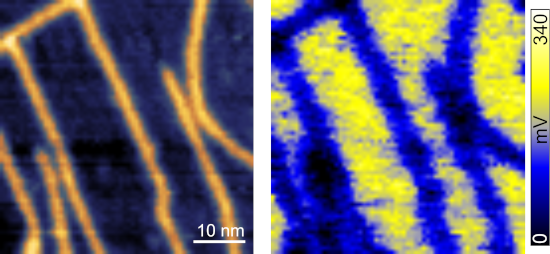
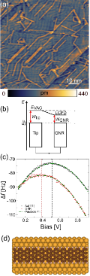
- electric field caused by the CPD is compensated. (c) Δf(V) measurements using a PtIr-coated tip along with their second-order polynomial fit measured on GNR and Au. The dashed vertical lines indicate the respective values of the CPD. (d) Scheme of the GNR on Au. (a) Topography of GNR’s and the Au(111

![[Graphic 1]](/bjnano/content/inline/2190-4286-15-91-i4.svg?max-width=637&scale=1.18182)
Can neutral clusters: a two-step G0W0 and DFT benchmark
Beilstein J. Nanotechnol. 2024, 15, 1010–1016, doi:10.3762/bjnano.15.82
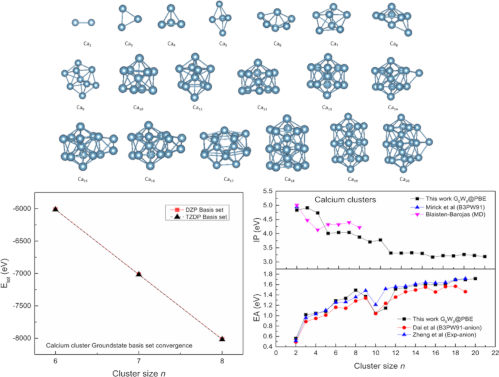
- -empirical corrections [25]. We have also drawn a polynomial fit to calculate the convergent value of binding energy; however, the resulting value is 1.35 eV for binding energy per atom in Ca. This obtained value is small, as compared to the bulk value, which is 1.825 eV. In addition to the binding energies


unDrift: A versatile software for fast offline SPM image drift correction
Beilstein J. Nanotechnol. 2023, 14, 1225–1237, doi:10.3762/bjnano.14.101
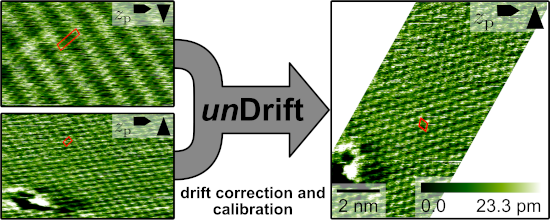
- import modules for a wide variety of scanning probe microscopes as well as tools for SPM data processing and analysis. This enables the user to chose between data processing in unDrift and Gwyddion. unDrift supports basic data processing methods such as leveling (mean plane, polynomial) and an automatic


Upscaling the urea method synthesis of CoAl layered double hydroxides
Beilstein J. Nanotechnol. 2023, 14, 927–938, doi:10.3762/bjnano.14.76
- . For each sample, six spectra were taken with exposure times of 4 min each to later be averaged. XANES data treatment was performed by subtracting the pre-edge background followed by normalization by extrapolation of a quadratic polynomial fitted at the post-edge region of the spectrum using the ATHENA


On the use of Raman spectroscopy to characterize mass-produced graphene nanoplatelets
Beilstein J. Nanotechnol. 2023, 14, 509–521, doi:10.3762/bjnano.14.42
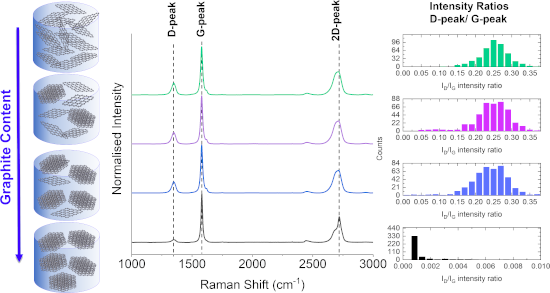
- in the Wire 5.4 software (Renishaw plc., UK) based on an 11-point polynomial. Each spectrum was then normalised to give intensities between 0 and 1, and the spectra from each map were averaged. D band, G band, D’ band, and 2D band of all spectra, either individual or averaged, were fitted using


Straight roads into nowhere – obvious and not-so-obvious biological models for ferrophobic surfaces
Beilstein J. Nanotechnol. 2022, 13, 1345–1360, doi:10.3762/bjnano.13.111
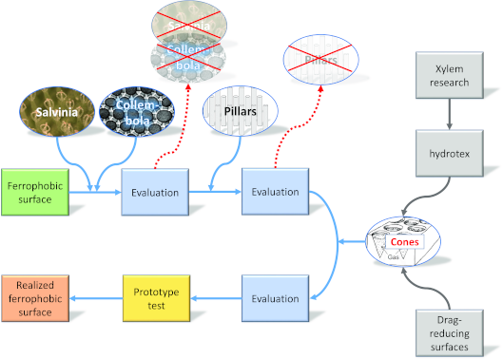
- Equation 6 into the gas equation (: gas constant, n: number of gas particles, T: temperature) results in a cubic polynomial for the radius s of the contact line (see Figure 5): This polynomial has exactly one real and positive solution, provided pl > 0, T > 0, 0 ≤ ε ≤ π/2 and 0 ≤ θ ≤ π. This implies that


A super-oscillatory step-zoom metalens for visible light
Beilstein J. Nanotechnol. 2022, 13, 1220–1227, doi:10.3762/bjnano.13.101
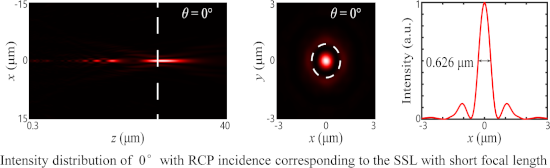
- , we use the even aspherical phase profile rather than the parabolic phase profile for the phase modulation in these two metasurfaces, which can be denoted as: where r is the radial coordinate, R is the normalized radius of the metasurface, n represents the number of polynomial coefficients, and ai is


Micro-structures, nanomechanical properties and flight performance of three beetles with different folding ratios
Beilstein J. Nanotechnol. 2022, 13, 845–856, doi:10.3762/bjnano.13.75
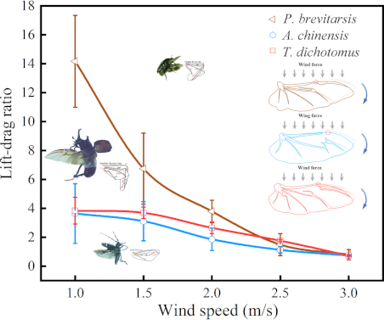
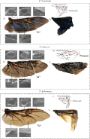
- nanomechanical characteristics were tested using a nanoindenter (TriboIndenter, Hysitron Inc., USA). The reduced Young’s modulus, Er, is calculated as where β is a constant related to the shape of the head (for a Berkovich indenter, the value is 1.034). Ac is contact the area and a polynomial function of




Design and characterization of polymeric microneedles containing extracts of Brazilian green propolis
Beilstein J. Nanotechnol. 2022, 13, 503–516, doi:10.3762/bjnano.13.42
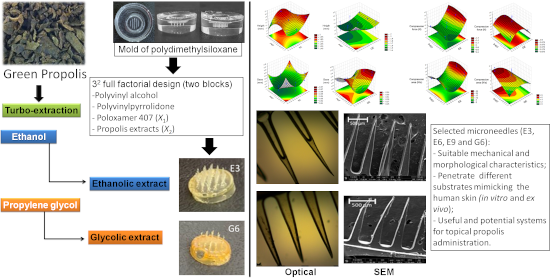
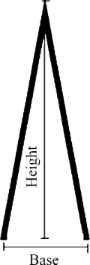
- show the interaction effects of the independent variables (P407 and EE or GE) on height and base measurements, strength, and printing area in the hard surface. To predict the optimal conditions, a polynomial equation was fitted correlating the relationship between the independent variables and the
- response: where Y is the response (the dependent variable) as function of X1 and X2, b0 is a constant term (the arithmetic mean response of nine batches), b1 and b2 are the estimated coefficients of linear terms, and b12 is the coefficient of the interaction effect. The polynomial terms X112 and X222


Theoretical understanding of electronic and mechanical properties of 1T′ transition metal dichalcogenide crystals
Beilstein J. Nanotechnol. 2022, 13, 160–171, doi:10.3762/bjnano.13.11
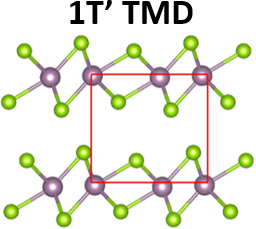
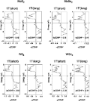
- fitting a second-order polynomial to the change on the total energy versus applied strain. The data are obtained from post-processing the VASP calculated results using the VASPKIT code [45]. The average values of G and B of bulk TMDs are obtained using the Voigt–Reuss–Hill average method [16]: The values



A photonic crystal material for the online detection of nonpolar hydrocarbon vapors
Beilstein J. Nanotechnol. 2022, 13, 127–136, doi:10.3762/bjnano.13.9
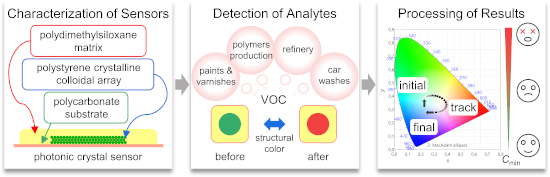
- objects. An example is the detection of toluene in the presence of xylenes. We discovered that the response rate of the composite sensor is affected by the p-xylene/toluene ratio in the analyzed mixture. The relationship shown in Figure 6, correlates well (R2 = 0.995) with a 3rd-degree polynomial curve: t


The role of convolutional neural networks in scanning probe microscopy: a review
Beilstein J. Nanotechnol. 2021, 12, 878–901, doi:10.3762/bjnano.12.66
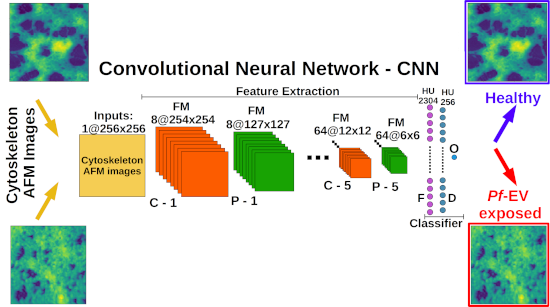
- linear decision boundary, that is, straight lines that can differentiate between samples from the different categories with respect to the given features (Figure 1). Higher-order polynomial degree decision boundaries are also used, but need to be set a priori and are limited only to the specific shape at







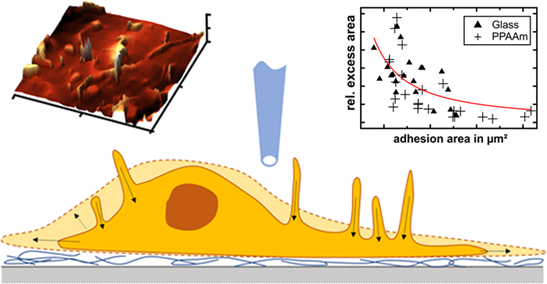
The nanomorphology of cell surfaces of adhered osteoblasts
Beilstein J. Nanotechnol. 2021, 12, 242–256, doi:10.3762/bjnano.12.20
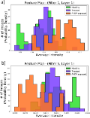
- different rows along the fast scan direction were aligned by adjusting the row offset such that the median value of the difference between two neighboring rows equaled zero. The images shown in Figure 2a and Figure 2e were further processed by subtracting 2D polynomial backgrounds using Igor Pro to


Understanding nanoparticle flow with a new in vitro experimental and computational approach using hydrogel channels
Beilstein J. Nanotechnol. 2020, 11, 296–309, doi:10.3762/bjnano.11.22
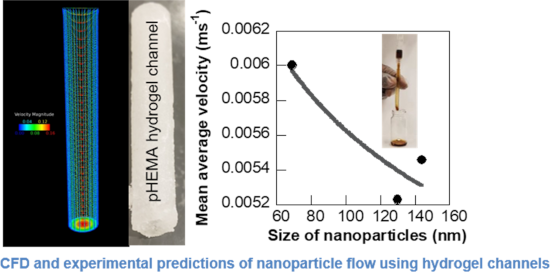
- polynomial variation with respect to NP mass during the transport through soft hydrogel channels (Figure 7a). The average velocity of 0.09 mmol PVP/0.0017 mmol PEI-coated NPs of size 130 nm ranged from 0.47 to 0.58 cm·s−1 and was a third-order polynomial function of the NP mass with an R value of 0.87. NPs
- coated with 0.07 mmol PVP/0.005 mmol PEI of size 144 nm exhibited a flow velocity ranging between 0.51 and 0.61 cm·s−1 with a cubic polynomial fit with respect to mass concentration of NPs (R = 0.76). The flow velocity of 0.06 mmol PVP/0.007 mmol PEI-coated iron oxide NPs of size 69 nm varied between
- 0.55 and 0.64 cm·s−1 while the 140 nm sized NPs with 0.05 mmol PVP/0.008 mmol PEI coating showed a velocity range of 0.48–0.6 cm·s−1. General cubic polynomial trends in velocity with respect to NP mass concentration were also observed for these two iron oxide NPs, but with higher deviations compared to


Nonequilibrium Kondo effect in a graphene-coupled quantum dot in the presence of a magnetic field
Beilstein J. Nanotechnol. 2020, 11, 225–239, doi:10.3762/bjnano.11.17
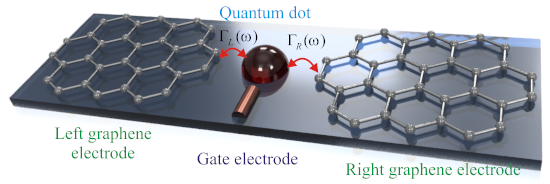
- shape of the Kondo peak strongly depends on the bias voltage. Its amplitude reaches a maximum at eV = 0 and quickly drops when eV increases. The variation of the differential conductance near eV = 0 can be described by a second-degree polynomial function. The dependence of the differential conductance
- approximated by a second-degree polynomial function as has already been proposed in the U → ∞ case. The μR dependence of the zero-bias peak shows the same behavior as observed for U → ∞. Conclusion We studied the Kondo effect of a QD connected to pure monolayer graphene electrodes arranged in an armchair


Phase inversion-based nanoemulsions of medium chain triglyceride as potential drug delivery system for parenteral applications
Beilstein J. Nanotechnol. 2020, 11, 213–224, doi:10.3762/bjnano.11.16

- solutions of such surfactants increases nonlinearly with the solute concentration due to increasing polymer–solvent hydrogen bonding at low temperatures, which prevents the flow of solvent molecules in the solution and thus affects osmosis. This phenomenon is described by a modified polynomial van’t Hoff
- equation of 4th degree introduced by Huggins and Flory with the association or interacting constants b1, b2 and b3: The experimental data corresponded well to the modified polynomial van’t Hoff equation of 4th degree with a coefficient of determination of 99.865%. Thus, the equation was used for the
- thermal cycling. Solutions of the nonionic surfactant Kolliphor HS 15 showed a nonlinear increase of osmolality with increasing Kolliphor HS 15 concentration, which corresponds well to the modified polynomial van’t Hoff equation of 4th degree introduced by Huggins and Flory. This led to the hypertonicity




A review of demodulation techniques for multifrequency atomic force microscopy
Beilstein J. Nanotechnol. 2020, 11, 76–91, doi:10.3762/bjnano.11.8

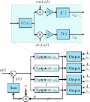
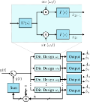
- -root and arctan functions are required. Typically the phase is calculated by using either a polynomial approximation [42] or the CORDIC algorithm [43]. Coherent demodulator The multifrequency coherent demodulator is a digital demodulation method based on mixing and precise integration over a fixed time
- the values of which are calculated based on the chosen filter order and bandwidth around the modeled frequency ωi. As the desired closed-loop polynomial has five coefficients, the coefficients of the pre-filter W(s) are of the form and are able to be obtained by solving Equation 21. The existing


A novel method to remove impulse noise from atomic force microscopy images based on Bayesian compressed sensing
Beilstein J. Nanotechnol. 2019, 10, 2346–2356, doi:10.3762/bjnano.10.225
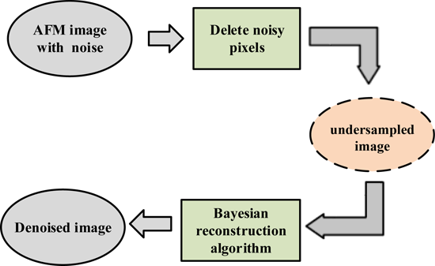
- problem where ε is the bound of the noise. The solution of Equation 3 is a non-deterministic polynomial problem (NP problem) [26]. When both the number of total elements of α and its non-zero elements are large, a solution of Equation 3 cannot be achieved in practice. Generally, the non-convex L0-norm can


In situ AFM visualization of Li–O2 battery discharge products during redox cycling in an atmospherically controlled sample cell
Beilstein J. Nanotechnol. 2019, 10, 930–940, doi:10.3762/bjnano.10.94
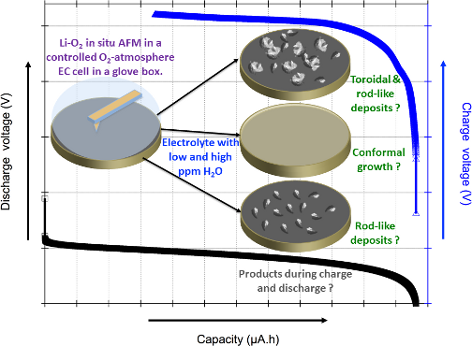
- . The graph reveals that during the initial stages, no discharge products appear in the images. At a discharge capacity of ≈4% the first deposits appear on the surface beyond which the measured volume of the precipitates can be fit to a second-order polynomial function of the cell discharge capacity. At





