


Search results
Search for "proliferation" in Full Text gives 176 result(s) in Beilstein Journal of Nanotechnology.
Restorative potential of laser-synthesized silver nanoparticles with Salvia officinalis for periodontal disease treatment: an in vitro study
Beilstein J. Nanotechnol. 2026, 17, 781–795, doi:10.3762/bjnano.17.55
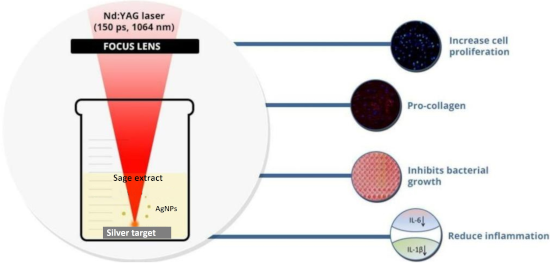
- antibacterial activity compared to 0.2% chlorhexidine. Importantly, at MIC concentration, SageAgNPs6mJ were non-cytotoxic to primary human gingival fibroblasts and enhanced their proliferation by approximately 50% after 24 h. This was shown by increased Ki-67 proliferation index, increased type-I and total
- inflammation. This dual antibacterial and regenerative action demonstrates the high potential of sage-assisted PLAL-synthesized AgNPs as a safe, sustainable strategy for periodontal disease treatment. Keywords: cell proliferation; periodontal disease; pulsed laser ablation in liquid (PLAL); Salvia officinalis
- and to evaluate their biological effects, including antibacterial activity against the key periodontal pathogens Porphyromonas gingivalis, Fusobacterium nucleatum, and Aggregatibacter actinomycetemcomitans, and modulatory effects on primary human gingival fibroblast cell (GFC) viability, proliferation



Polycatecholamine nanocoatings on stainless steel: the effect on attachment of human fibroblasts and platelets
Beilstein J. Nanotechnol. 2026, 17, 365–380, doi:10.3762/bjnano.17.25
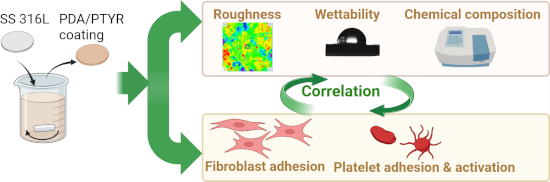
- oxide and forsterite nanoparticles, all of which were shown to enhance fibroblast adhesion, migration, or proliferation [2][3][4][5]. Beyond orthopedic and dental uses, SS 316L is a standard material for cardiovascular implants, particularly stents, due to its strength, ductility and ability to form
- coatings obtained by self-polymerization at mildly basic pH, or by oxidative routes, improve cell adhesion and proliferation [18], reduce bacterial adhesion by more than 90% [16][19], and markedly enhance hemocompatibility [20]. Long-term stability has been demonstrated through in vivo persistence over
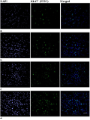
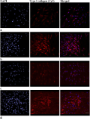
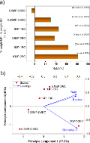
- , the total cell number and surface occupied by cells as a result of migration and proliferation increased with culture time for each coating variant, apart from SS-PDA 4 h, on the surface of which these values decreased significantly (from 83.42% to 22.45%). SS-PDA 4 h was also the variant




From shield to spear: Charge-reversible nanocarriers in overcoming cancer therapy barriers
Beilstein J. Nanotechnol. 2026, 17, 159–175, doi:10.3762/bjnano.17.10
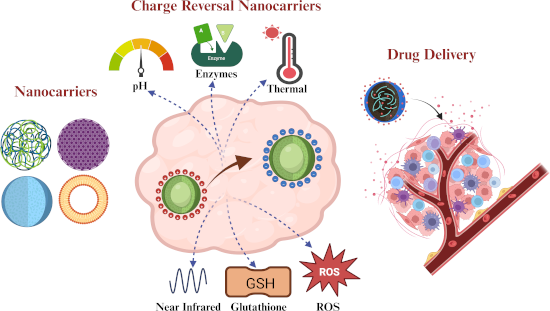
- Cancer remains a foremost global health challenge, characterized by uncontrolled cellular proliferation and the ability to invade and metastasize to distant sites. Unlike normal cells, cancer cells bypass regulatory mechanisms to form tumours and spread via lymphatic or circulatory systems, such as


Influence of surface characteristics on the in vitro stability and cell uptake of nanoliposomes for brain delivery
Beilstein J. Nanotechnol. 2026, 17, 139–158, doi:10.3762/bjnano.17.9
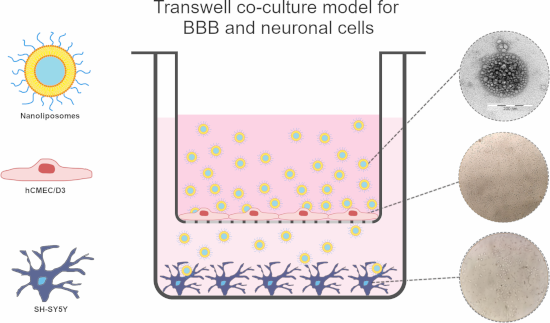
- (Merck Group, Germany). CellTiter 96 AQueous Non-Radioactive Cell Proliferation Assay (MTS) and CytoTox-ONETM Homogeneous Membrane Integrity Assay (CytoTox) were obtained from Promega (Wisconsin, USA). Alexa FluorTM Phalloidin 488, Hoechst fluorescent stain and Dil stain (1,1'-dioctadecyl-3,3,3',3




Functional surface engineering for cultural heritage protection: the role of superhydrophobic and superoleophobic coatings – a comprehensive review
Beilstein J. Nanotechnol. 2026, 17, 63–96, doi:10.3762/bjnano.17.6
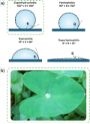
- (2W), an industrially manufactured white earthenware tile (3TS), and a contemporary mass-produced tile (4MW). As a result, the authors claimed that the technique was not suitable for such applications even if the proliferation of the chosen fungus (Cladosporium sp.) was slightly reduced upon the




Missing links in nanomaterials research impacting productivity and perceptions
Beilstein J. Nanotechnol. 2025, 16, 2168–2176, doi:10.3762/bjnano.16.149
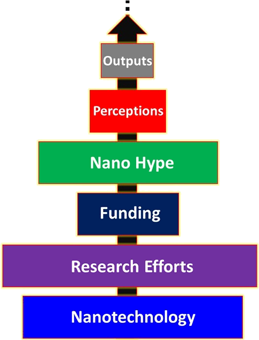
- proliferation. Otherwise, excessive production of nanomaterials for academic prestige and numerous hit-and-miss experimental works without delivering meaningful benefits may expose humanity to severe health risks, including cancer and other life-threatening diseases [24]. We are fully aware that enforcing such
Quality by design optimization of microemulsions for topical delivery of Passiflora setacea seed oil
Beilstein J. Nanotechnol. 2025, 16, 2116–2131, doi:10.3762/bjnano.16.146
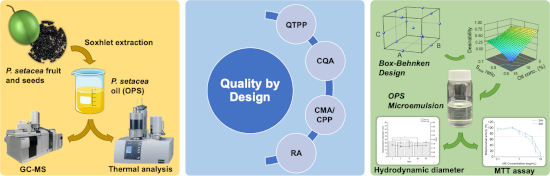
- keratinocyte and fibroblast proliferation [15][16]. Furthermore, linoleic acid and oleic acid serve as precursors to various lipid mediators, including prostaglandins, leukotrienes, and lipoxins, which are essential for modulating inflammatory responses and coordinating immune cell activity during wound
- the complex biological processes involved in wound healing. Specifically, it does not evaluate critical mechanisms such as cell migration, proliferation, extracellular matrix remodeling, or the modulation of inflammatory mediators. Therefore, future investigations should incorporate complementary


Targeting the vector of arboviruses Aedes aegypti with nanoemulsions based on essential oils: a review with focus on larvicidal and repellent properties
Beilstein J. Nanotechnol. 2025, 16, 1894–1913, doi:10.3762/bjnano.16.132
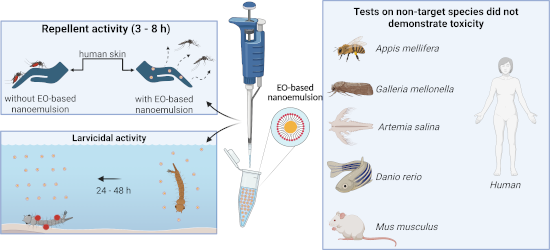
- subtropical regions, where climatic conditions favor the reproduction and proliferation of mosquitoes. Due to the growing threat posed by arboviruses, the Global Arbovirus Initiative [8] highlights integrated vector control as a critical pillar for reducing transmission risks worldwide, advocating for the use
- from their emergence site [49], although in less populated areas this range may extend up to 560 meters in rural or more open environments [45][48][50][51]. Environmental factors, such as improper water storage and climatic conditions, influence the proliferation of Ae. aegypti, increasing arbovirus
- decrease in cellular proliferation was evidenced. De Sousa dos Santos et al. (2024) investigated the larvicidal effects of a nanoemulsion containing essential oil from Ocimum basilicum [76]. This species is known as basil or alfavaca and it is native to tropical regions of Africa and Asia [110]. It


On the road to sustainability – application of metallic nanoparticles obtained by green synthesis in dentistry: a scoping review
Beilstein J. Nanotechnol. 2025, 16, 1851–1862, doi:10.3762/bjnano.16.128
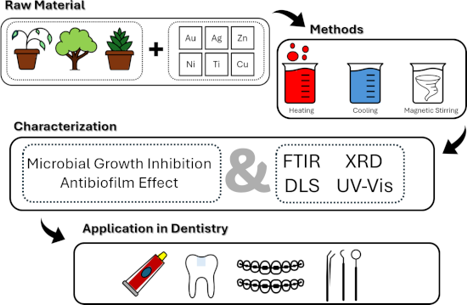
- into scaffolds and regenerative membranes designed to stimulate osteogenesis and promote periodontal tissue regeneration [16][17]. These nanoparticles not only provide antimicrobial protection but also actively modulate cellular behavior, such as proliferation and differentiation, thereby enhancing the


Exploring the potential of polymers: advancements in oral nanocarrier technology
Beilstein J. Nanotechnol. 2025, 16, 1751–1793, doi:10.3762/bjnano.16.122
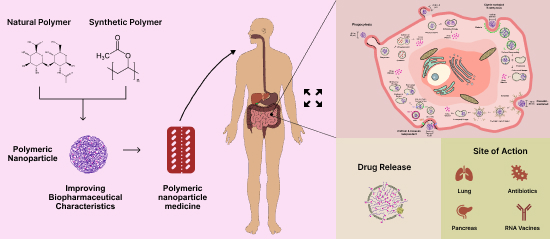
- genes respectively induce apoptosis and inhibit angiogenesis in cancer. Following oral PN administration in tumor-bearing mice, tumor regression was observed, attributed to the synergistic effects of the two RNAs in inhibiting cell proliferation in vitro and tumor growth in vivo. Since nucleic acids are


Advances of aptamers in esophageal cancer diagnosis, treatment and drug delivery
Beilstein J. Nanotechnol. 2025, 16, 1734–1750, doi:10.3762/bjnano.16.121
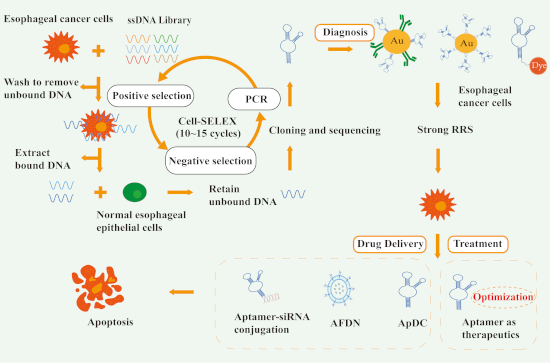
- survival oncogene of ESCC [72], can maintain the squamous characteristics of tumor cells and is essential for the proliferation and survival of esophageal cancer cell lines. Moreover, SOX2 and DMRTA1 (DMRT-like family A1) can promote the expression of each other, which may drive the occurrence of ESCC
- peptide aptamer p42, which can inhibit the proliferation, migration, and invasion of ESCC tissues. It was confirmed that synthetic peptide 42 similarly inhibits SOX2 in vitro and in vivo, which may overcome drug resistance to some extent. Proteomic analysis revealed significant changes in the levels of
- , which can specifically block CDP/SOX2 interaction, was screened by BiFc assay. The antitumor activity of p58 aptamer was further analyzed in vitro and in mouse xenograft and zebrafish models, suggesting that peptide 58 could significantly inhibit the proliferation, migration, and invasion of KYSE450


Multifunctional anionic nanoemulsion with linseed oil and lecithin: a preliminary approach for dry eye disease
Beilstein J. Nanotechnol. 2025, 16, 1711–1733, doi:10.3762/bjnano.16.120



Prospects of nanotechnology and natural products for cancer and immunotherapy
Beilstein J. Nanotechnol. 2025, 16, 1644–1667, doi:10.3762/bjnano.16.116
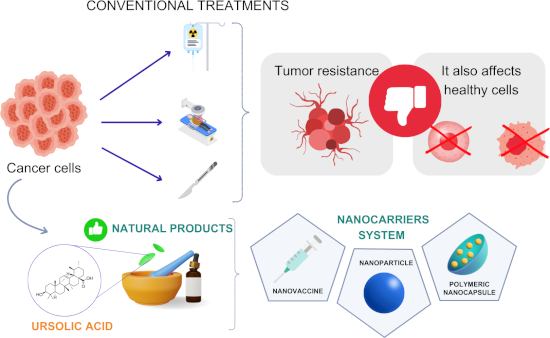
- agents. Consequently, the combination of natural products with nanotechnology holds significant therapeutic potential. Keywords: cancer; immunotherapy; nanotechnology; natural products; patent; review; Introduction Cancer is a disease characterized by the uncontrolled proliferation of abnormal cells
- potential effects include tumor cell death, inhibition of proliferation, increased autophagy, and enhanced immune system response [51]. Furthermore, natural products can also promote the regulation of immune cells and cytokines, increasing immunogenic cancer cell death, natural killer cell activity, and
- selective solvent [110]. Ursolic acid exhibits anti-inflammatory, antimicrobial, antiviral, antioxidant, and antiproliferative properties, making it a potential antitumor agent [111]. It inhibits tumor cell proliferation, prevents metastasis and angiogenesis, and induces cell death [112]. The therapeutic


Nanomaterials for biomedical applications
Beilstein J. Nanotechnol. 2025, 16, 1499–1503, doi:10.3762/bjnano.16.105

- diagnostics and medical imaging. Using these materials, physicians diagnose diseases earlier and more accurately than before [4]. In tissue engineering, nanofibers are being used to develop scaffolds to promote the proliferation of cells. These scaffolds aid patients suffering from chronic wounds as they
The role of biochar in combating microplastic pollution: a bibliometric analysis in environmental contexts
Beilstein J. Nanotechnol. 2025, 16, 1401–1416, doi:10.3762/bjnano.16.102
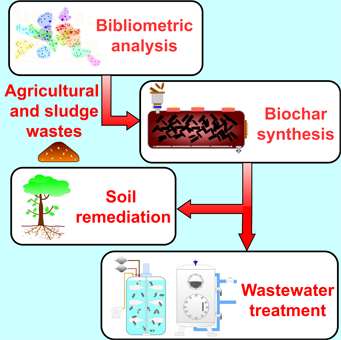
- copies per cell in control soil [64]. MPs also promote the proliferation of multihost bacterial populations such as Sphingomonas, Microvirga, Ilumatobacter, Skermanella, and Rubellimicrobium, which harbor diverse ARGs. Increased populations of Bacillus and Streptomyces have also been associated with PS



Synthesis and antibacterial properties of nanosilver-modified cellulose triacetate membranes for seawater desalination
Beilstein J. Nanotechnol. 2025, 16, 1380–1391, doi:10.3762/bjnano.16.100
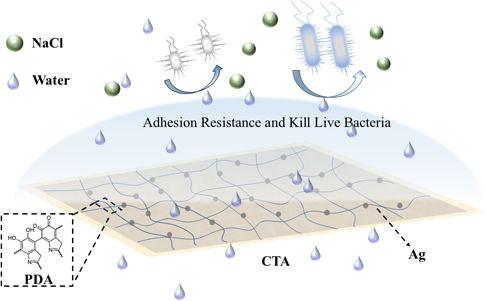
- water supply methods [13]. Additionally, traditional membranes face challenges such as the trade-off between permeability and selectivity, as well as susceptibility to biological pollution [14][15]. Biofouling, which involves attachment, growth, reproduction, and proliferation of microorganisms on the


Ferroptosis induction by engineered liposomes for enhanced tumor therapy
Beilstein J. Nanotechnol. 2025, 16, 1325–1349, doi:10.3762/bjnano.16.97
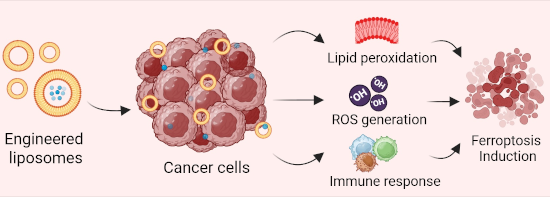
- proliferation of liver tumor cells. Cel can induce ferroptosis and cause cancer cell death through the generation of ROS, reduced GSH levels, and increased Fe2+/Fe3+ and LPO levels. Cel has also been shown to increase the expression ratio of Bax/Bcl-2 and facilitate cyto-C to trigger the caspase-3-related


Functional bio-packaging enhanced with nanocellulose from rice straw and cinnamon essential oil Pickering emulsion for fruit preservation
Beilstein J. Nanotechnol. 2025, 16, 1234–1245, doi:10.3762/bjnano.16.91
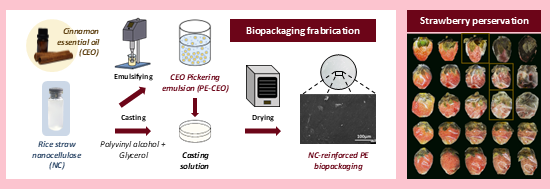
- moisture escape from the sample, making the sample wet and foggy at day 21. At higher CEO concentrations, the biopackaging enables moisture escape to further prevent the proliferation of fungi and contaminations. This led to slightly higher mass loss upon preservation in these samples. All in all, these



Hydrogels and nanogels: effectiveness in dermal applications
Beilstein J. Nanotechnol. 2025, 16, 1216–1233, doi:10.3762/bjnano.16.90
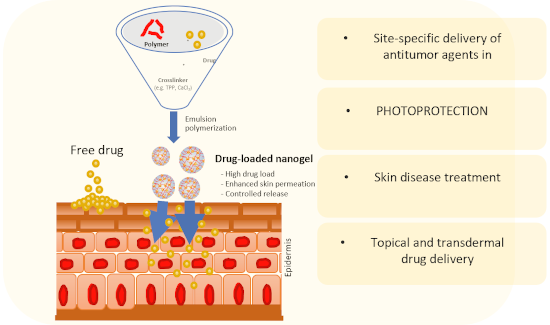
- guanosine quartet hydrogels loaded with recombinant human-sourced collagen can be wrapped onto the skin surface. These films can supply collagen deposition for the wound by recruiting macrophages and fibroblasts and eventually inducing their proliferation and migration [42]. In the study by Zhao et al


Chitosan nanocomposite containing rotenoids: an alternative bioinsecticidal approach for the management of Aedes aegypti
Beilstein J. Nanotechnol. 2025, 16, 1197–1208, doi:10.3762/bjnano.16.88
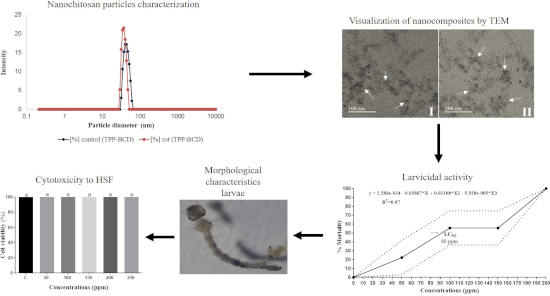
- Darcy Ribeiro, Campos dos Goytacazes/RJ, Brazil 10.3762/bjnano.16.88 Abstract Climate change has intensified the proliferation of disease vectors, such as Aedes aegypti, the primary transmitter of dengue, chikungunya, and zika viruses. Although the two recently licensed dengue vaccines represent a
- for vector control. Keywords: dengue; nanoparticle; pest management; phytochemicals; Introduction Climate change has significantly impacted public health, intensifying the proliferation of disease vectors such as those transmitted by the mosquito Aedes aegypti. Environmental conditions exacerbated



Fabrication of metal complex phthalocyanine and porphyrin nanoparticle aqueous colloids by pulsed laser fragmentation in liquid and their potential application to a photosensitizer for photodynamic therapy
Beilstein J. Nanotechnol. 2025, 16, 1088–1096, doi:10.3762/bjnano.16.80
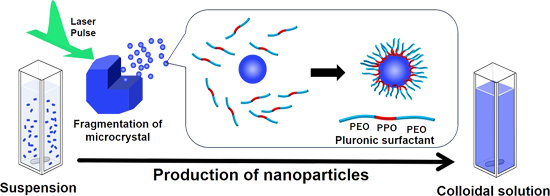
- employing MTT assays with PC12 and HeLa cells. Nanoparticle colloids diluted with PBS to various concentrations were added to the cell culture medium and incubated for 24 h; then, the cell viability was examined with and without light irradiation by using an MTT cell proliferation kit as described earlier
- with broadband (500–800 nm, Figure S6, Supporting Information File 1) visible-light source at 30 mW·cm−2 for 10 min. The cell viability after light irradiation was determined using a MTT cell proliferation kit (Roche) as described in [31][32]. 10 μL of the 3-(4,5-dimethylthiazol-2-yl)-2,5


Piezoelectricity of hexagonal boron nitrides improves bone tissue generation as tested on osteoblasts
Beilstein J. Nanotechnol. 2025, 16, 1068–1081, doi:10.3762/bjnano.16.78
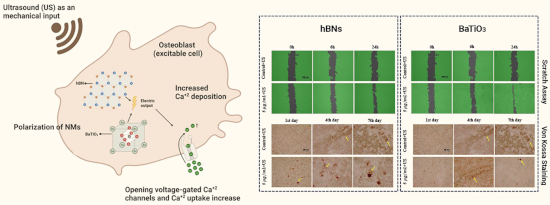
- influence on cell proliferation driven by its piezoelectric characteristics [17][24]. It is particularly suitable for tissue engineering applications, especially in promoting osteogenesis [25]. Furthermore, BaTiO3 can be combined with other materials to create composite scaffolds with osteoconductive
- hBN. The materials were characterized using spectroscopic, imaging, and thermal techniques, followed by assessment of their piezoelectric properties via piezoresponse force microscopy (PRFM). In vitro studies on human osteoblasts (HOb) under ultrasound (US) exposure examined proliferation, cellular
- investigate the migration ability of HOb cells exposed to US and NMs under reduced serum culture conditions to inhibit cell proliferation [40]. Firstly, HOb cells were seeded in 12-well plates at 105 cells/well and incubated for 24 h. Then, the cells adhered to the wells were vertically scratched using a 200


Colloidal few layered graphene–tannic acid preserves the biocompatibility of periodontal ligament cells
Beilstein J. Nanotechnol. 2025, 16, 664–677, doi:10.3762/bjnano.16.51
- microhardness without compromising biocompatibility [7]. In another work, the formulation of an injectable calcium phosphate cement–chitosan–graphene oxide (GO) composite was found to be effective. This composite fostered the proliferation of human dental pulp stem cells [8]. Despite these promising findings
- include superoxide radicals, hydroxyl radicals, and hydrogen peroxide, are natural byproducts of the oxidative metabolism. Mammalian cells maintain balanced ROS levels for homeostasis and cellular proliferation. However, excess ROS creates an electron imbalance that triggers continuous electron transfer
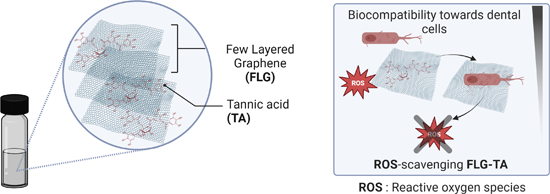
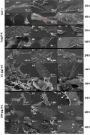
- 200 µg·mL−1 (Figure 6C). In addition, the lateral particle dimensions expanded from 2 to 15 µm as the FLG–TA concentration increased (Figure 6B). Based on this observation, we can confirm that FLG–TA enhanced cellular adhesion while promoting cell proliferation. This finding aligns with earlier




Polyurethane/silk fibroin-based electrospun membranes for wound healing and skin substitute applications
Beilstein J. Nanotechnol. 2025, 16, 591–612, doi:10.3762/bjnano.16.46
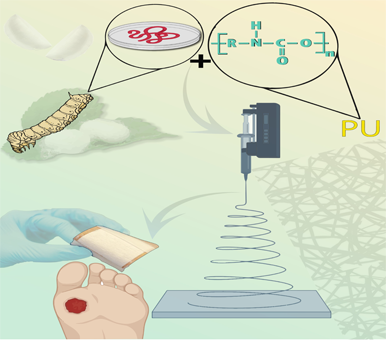
- transport and gas exchange, which supports tissue regeneration and cell proliferation [22]. Furthermore, they have mechanical qualities that are similar to those of natural tissues, promoting and protecting the healing process [23]. Review Wound healing and skin regeneration The skin is a vital, protective
- cells [29]. Multiple cell types including immune cells, fibroblasts, and keratinocytes work together to repair wounds [30]. Skin regeneration occurs mainly through the proliferation and differentiation of keratinocytes, the major cell type of the epidermis, that move to cover the wound and generate new
- are cleared by macrophage efferocytosis, apoptosis, or return to blood vessels [40]. Proliferation Granulation tissue development, re-epithelialization, and neovascularization are features of the proliferative phase. This period may last several weeks [41]. Fibroblasts, keratinocytes, macrophages, and



Synthetic-polymer-assisted antisense oligonucleotide delivery: targeted approaches for precision disease treatment
Beilstein J. Nanotechnol. 2025, 16, 435–463, doi:10.3762/bjnano.16.34

- significantly suppressed c-myc mRNA expression, reduced cell proliferation, and inhibited tumour growth both in vitro and in vivo, compared to other groups without Gal–PLL or SonoVue. This demonstrated the essential role of Gal–PLL in enhancing the specificity and efficiency of antisense delivery. In a separate
- both protein and gene expression, thereby inhibiting the proliferation of targeted colon cancer cells [147][148][149]. In another study, Venuganti et al. prepared hydrogels containing anti-Bcl-2-PAMAM G4 dendrimer complexes for topical targeted iontophoretic delivery of phosphorothioate





