Search results
Search for "thermal conductivity" in Full Text gives 132 result(s) in Beilstein Journal of Nanotechnology.
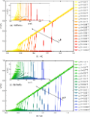
Fast vortex dynamics and relaxation times in NbRe-based heterostructures
Beilstein J. Nanotechnol. 2026, 17, 292–302, doi:10.3762/bjnano.17.20
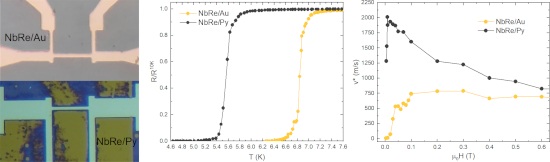
- different ways when considering thermal dissipation and phonon-mediated quasiparticle recombination. In fact, Au is a non-magnetic metal with high electronic and thermal conductivity, providing a more effective heat removal. This is confirmed from the analysis performed in the framework of Bezuglyj and


Advancing nanolithography: a comprehensive review of materials for local anodic oxidation with AFM
Beilstein J. Nanotechnol. 2026, 17, 275–291, doi:10.3762/bjnano.17.19
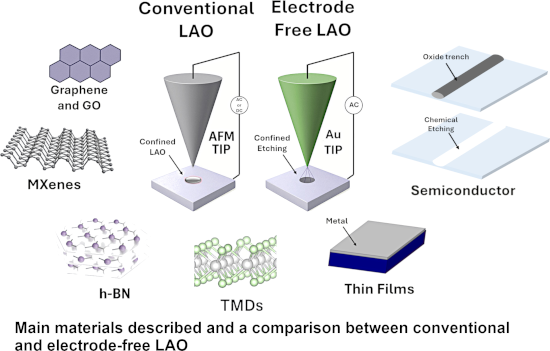
- notably GaAs and related heterostructures, where the patterned oxide lines were used as templates for nanoscale device fabrication [90]. Silicon carbide (SiC) is an interesting material for LAO, offering unique advantages over silicon due to its high thermal conductivity, chemical inertness, and
- features. Different materials exhibit varying oxidation kinetics, conductivity, and susceptibility to environmental conditions. For example, TMDs such as MoS2 and WSe2 are especially sensitive to phonon scattering, which significantly influences their thermal conductivity, electrical transport properties


Functional surface engineering for cultural heritage protection: the role of superhydrophobic and superoleophobic coatings – a comprehensive review
Beilstein J. Nanotechnol. 2026, 17, 63–96, doi:10.3762/bjnano.17.6
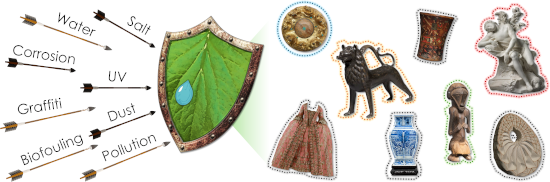
- ) layer. Subsequently, the authors incorporated the PCA-coated VCMs into a polydimethylsiloxane (PDMS) matrix, significantly reducing the thermal conductivity of the coatings and improving their surface hydrophobicity. The coating provided robust protection for concrete, enhancing abrasion resistance and




Chiral plasmonic nanostructures fabricated with circularly polarized light
Beilstein J. Nanotechnol. 2025, 16, 2245–2264, doi:10.3762/bjnano.16.154
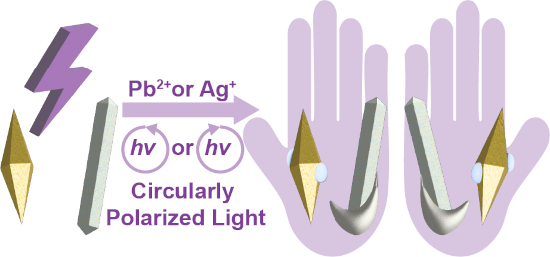
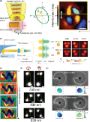
- with large g-factors. Section 2.3 will address this issue with the strategy of modifying the surface ligands on PNSs to create chiral PNSs. The non-radiative decay of hot carriers can heat the PNSs. Due to the high thermal conductivity of metals, isolated PNSs usually feature uniform temperature





Electron transport through nanoscale multilayer graphene and hexagonal boron nitride junctions
Beilstein J. Nanotechnol. 2025, 16, 2132–2143, doi:10.3762/bjnano.16.147
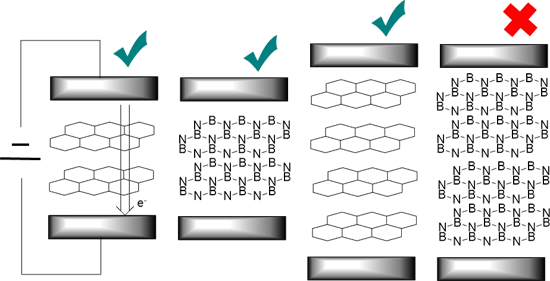
- graphene-based electronics and as a dielectric material in nanoelectronics devices. It finds application regarding corrosion resistance and antioxidation protective coatings [19]. Due to its high thermal conductivity and electrical insulation, h-BN is used in thermal management applications. h-BN is used


Laser ablation in liquids for shape-tailored synthesis of nanomaterials: status and challenges
Beilstein J. Nanotechnol. 2025, 16, 1963–1997, doi:10.3762/bjnano.16.137
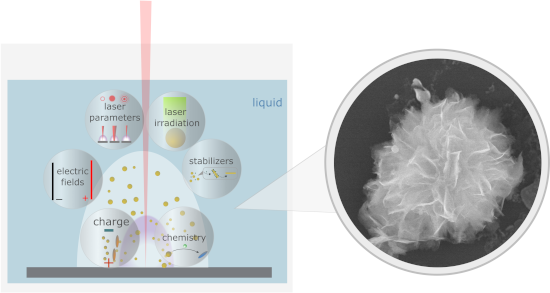
- heat transfer coefficient, Nu is the Nusselt number, k is thermal conductivity of the surrounding liquid, L is the characteristic length, and Tbl is the surrounding liquid boiling temperature. In order to analyse the reached temperatures and occurring thermal processes, the dissipated heat fluxes




Bioinspired polypropylene-based functionally graded materials and metamaterials modeling the mistletoe–host interface
Beilstein J. Nanotechnol. 2025, 16, 1592–1606, doi:10.3762/bjnano.16.113
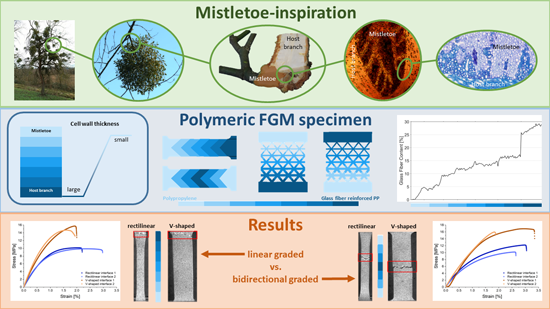
- pressure during hot pressing also play a crucial role in the development of stable materials. The thermal conductivity is reduced by increasing the glass fiber content; thus, the molecular movement of the polymer is reduced, which affects the tensile modulus and the maximal strength of the material [41


Dendrimer-modified carbon nanotubes for the removal and recovery of heavy metal ions from water
Beilstein J. Nanotechnol. 2025, 16, 1522–1532, doi:10.3762/bjnano.16.107

- application in numerous fields [18][19][20][21][22][23]. CNTs are particularly attractive as support materials due to their high specific surface area, mechanical strength, and excellent electrical and thermal conductivity [24][25][26][27]. CNTs themselves have been utilized as adsorbents for removing heavy


Laser processing in liquids: insights into nanocolloid generation and thin film integration for energy, photonic, and sensing applications
Beilstein J. Nanotechnol. 2025, 16, 1428–1498, doi:10.3762/bjnano.16.104
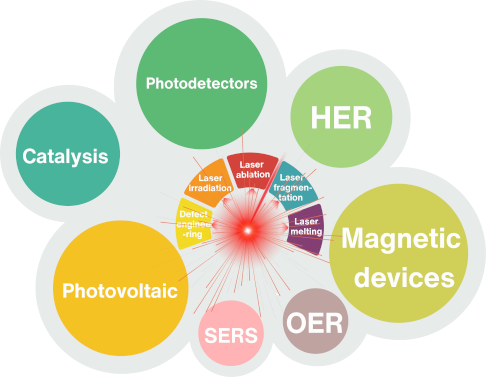
- illustrations of the pulsed laser heating mechanism are presented in Figure 7f,g. Factors such as laser fluence, irradiation time, and solvent properties, such as dielectric constant and thermal conductivity, must be carefully controlled to optimize nanoparticle formation [49][68][69][75]. Other factors like






Crystalline and amorphous structure selectivity of ignoble high-entropy alloy nanoparticles during laser ablation in organic liquids is set by pulse duration
Beilstein J. Nanotechnol. 2025, 16, 1141–1159, doi:10.3762/bjnano.16.84
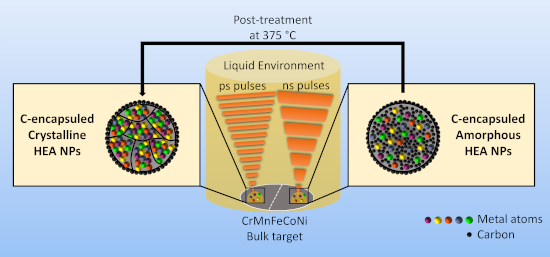
- ; therefore, the durations for the Cantor alloy may differ due to lower thermal conductivity [101][102] and different electron–phonon-coupling strength. Although statistical quantification of carbon content inside the core structures of HEA nanoparticles requires further in-depth analysis with specialized




Zeolite materials with Ni and Co: synthesis and catalytic potential in the selective hydrogenation of citral
Beilstein J. Nanotechnol. 2025, 16, 520–529, doi:10.3762/bjnano.16.40
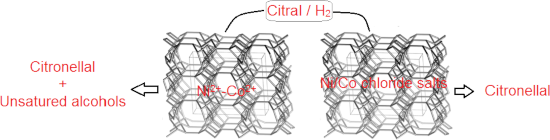
- reduction (TPR) analyses were performed on an AutoChem 2910 instrument (Micromeritics, USA) equipped with a thermal conductivity detector (TCD). The procedure for TPR involved heating the sample in a 1.0 vol % H2/Ar gas mixture at a flow rate of 30 mL/min, from room temperature to 600 °C, at a ramp rate of


Size control of nanoparticles synthesized by pulsed laser ablation in liquids using donut-shaped beams
Beilstein J. Nanotechnol. 2025, 16, 407–417, doi:10.3762/bjnano.16.31
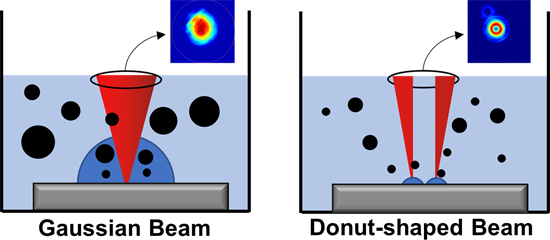
- top-view setup was applied to observe the bubble morphology evolution on a transparent yttrium aluminum garnet (YAG) target. The YAG crystal has a low thermal conductivity and a high laser-ablation threshold, minimizing the influence of the ablation products on cavitation bubble dynamics and, thus


Pulsed laser in liquid grafting of gold nanoparticle–carbon support composites
Beilstein J. Nanotechnol. 2025, 16, 349–361, doi:10.3762/bjnano.16.26
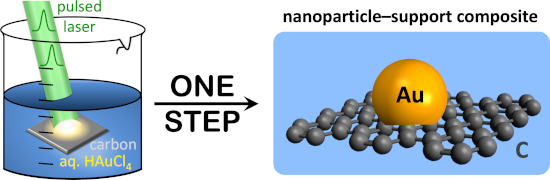
- headspace of the working electrode compartment of the electrochemical cell. Hydrogen was detected by a thermal conductivity detector, and a flame ionization detector equipped with a methanizer was used to detect all other gases. Following a published procedure [82], the gas chromatograph was programmed to


Recent advances in photothermal nanomaterials for ophthalmic applications
Beilstein J. Nanotechnol. 2025, 16, 195–215, doi:10.3762/bjnano.16.16
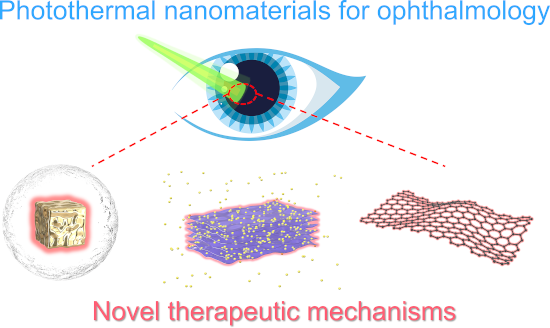
- the dielectric environment present during their synthesis (see below in Figure 2b) [48][49]. Because of the direct occurrence of photothermal conversion on the surfaces of LSPR metals and its rapid nature, combined with the metals’ inherent high thermal conductivity and strong hydrophilicity, LSPR


Integrating high-performance computing, machine learning, data management workflows, and infrastructures for multiscale simulations and nanomaterials technologies
Beilstein J. Nanotechnol. 2024, 15, 1498–1521, doi:10.3762/bjnano.15.119

- performance of materials before they are synthesized [1][2][3]. This approach enables the discovery of materials with, for example, improved mechanical strength, enhanced thermal conductivity, superior electrical properties, or other tailored characteristics. Simulations provide crucial insights at different


Strain-induced bandgap engineering in 2D ψ-graphene materials: a first-principles study
Beilstein J. Nanotechnol. 2024, 15, 1440–1452, doi:10.3762/bjnano.15.116
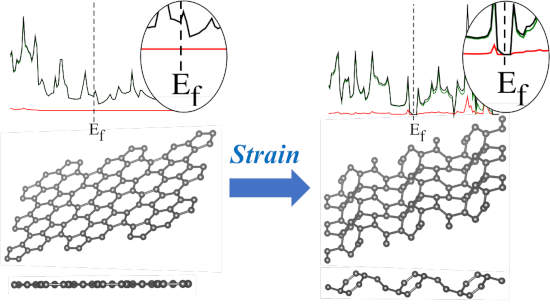
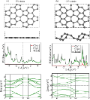
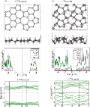
- two-dimensional (2D) material, consisting of a single layer of sp2-hybridized carbon atoms arranged together in a hexagonal lattice [1]. Because of its extraordinary electrical and thermal conductivity, large surface area, and easy chemical functionalization, it provides a variety of applications in


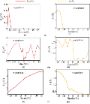
Investigation of Hf/Ti bilayers for the development of transition-edge sensor microcalorimeters
Beilstein J. Nanotechnol. 2024, 15, 1353–1361, doi:10.3762/bjnano.15.108

- clamp contacts as sample C1, but the measured area was further away from the contact points. This way, the current first flows through the superconducting electrodes with low thermal conductivity in the superconducting state, and only then goes to the bridge. Nevertheless, non-equilibrium heating


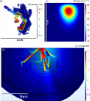
A low-kiloelectronvolt focused ion beam strategy for processing low-thermal-conductance materials with nanoampere currents
Beilstein J. Nanotechnol. 2024, 15, 1197–1207, doi:10.3762/bjnano.15.97

- acceleration voltage) directly allows the ion beam-induced temperature increases per scan point to be minimized. Materials with a low thermal conductivity such as polymers or biological samples, for example, skin with a thermal conductivity of 0.29 W·m−1·K−1 [21], will show excessive increases in temperature
- though this is not expected to be necessary in the case of processing collagen, further reducing the ion beam-induced heating by lowering the beam current and blurring the beam might be required for some polymers or biological samples that have a lower thermal conductivity than skin. Comparison of
- ion energies can be found throughout the literature [25][26]. Heating has not been observed when working with frozen hydrated samples. The thermal conductivity of ice is 2–3 W·m−1·K−1 [27]. FIB-induced heat damage would not be expected for cryo FIB processes, since the thermal conductivity of cryo



Photocatalytic methane oxidation over a TiO2/SiNWs p–n junction catalyst at room temperature
Beilstein J. Nanotechnol. 2024, 15, 1132–1141, doi:10.3762/bjnano.15.92
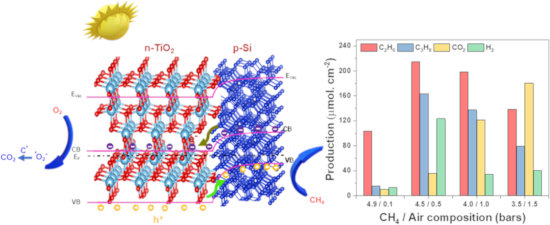
- experiments. Photocatalytic tests The as-synthesized catalyst was placed in a custom-made batch reactor with a small transparent quartz window, which was directly connected to a gas chromatograph (GC) with thermal conductivity and flame ionization detectors. A 300 W Xenon lamp was utilized as a light source


Direct electron beam writing of silver using a β-diketonate precursor: first insights
Beilstein J. Nanotechnol. 2024, 15, 1117–1124, doi:10.3762/bjnano.15.90

- energy for migration. The difference between planar and spot deposit is the thickness of the deposit itself. While the silicon substrate suppresses beam-induced heating because of its high thermal conductivity, the deposit itself is most probably a bad heat conductor [39]. Consequently, a temperature


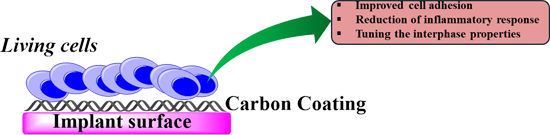
Interface properties of nanostructured carbon-coated biological implants: an overview
Beilstein J. Nanotechnol. 2024, 15, 1041–1053, doi:10.3762/bjnano.15.85
- rings, which prevents planar deformations [33]. The same phenomenon explains the high thermal conductivity of up to 3000 W·m−1·K−1 [34][35] and the outstanding electrical properties [36][37][38]. Compared to conventional 3D materials, the understanding of electronic transport and carrier dynamics in
- those of individual CNTs [71]. Nanodiamonds NDs are a carbon allotrope composed by sp3-hybridized carbon atoms arranged in a tetrahedral crystalline lattice structure [72]. The structure is accountable for the high thermal conductivity due to efficient heat conduction through phonon vibrations, which
- can reach 550 W·m−1·K−1 after sintering at high pressure [73]. Nevertheless, surface defects and the granular shape of the NDs represent boundaries for phonon transport reducing the thermal energy propagation [74]. Furthermore, the thermal conductivity of NDs increases with the increment of



Bolometric IR photoresponse based on a 3D micro-nano integrated CNT architecture
Beilstein J. Nanotechnol. 2024, 15, 1030–1040, doi:10.3762/bjnano.15.84
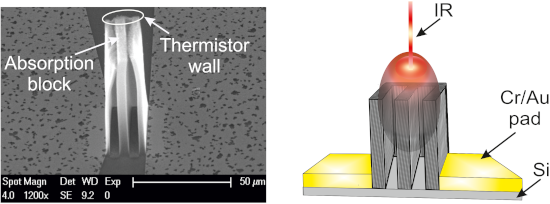
- thermistor region, can be fabricated in a single chemical vapor deposition process step. The thermistor resistance is mainly determined by the high junction resistances of the adjacent aligned CNTs. This configuration also provides low lateral thermal conductivity and a high temperature coefficient of
- for non-cryogenic IR microbolometer technology, carbon nanotubes (CNTs) have emerged as highly promising candidates [2] with broadband blackbody absorption [3], high resistance perpendicular to the CNT orientation [4], low lateral thermal conductivity [5], a high temperature coefficient of resistance
- applications [3]. The device resistance perpendicular to the CNT orientation is mainly determined by the high junction resistances of the neighboring aligned CNTs [4]. This configuration allows for high device resistance, low thermal conductivity, and high temperature coefficient of resistance, thus, enabling


Functional fibrillar interfaces: Biological hair as inspiration across scales
Beilstein J. Nanotechnol. 2024, 15, 664–677, doi:10.3762/bjnano.15.55
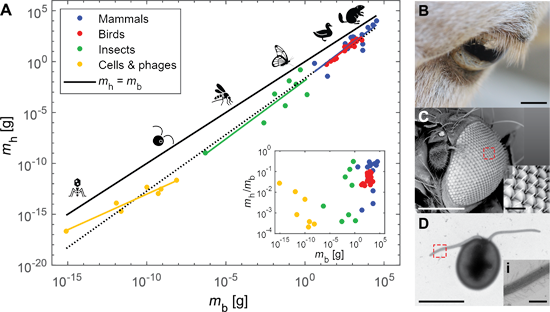
- experience is only ≈10−5 °C [37]. Additionally, even if a cell of the same size was capable of maintaining a 10-µm-thick air layer (with thermal conductivity of 3 × 10⁻³ W·m−1·K−1) along its surface, following steady-state one-dimensional heat conduction, it could still only experience a temperature


Modification of graphene oxide and its effect on properties of natural rubber/graphene oxide nanocomposites
Beilstein J. Nanotechnol. 2024, 15, 168–179, doi:10.3762/bjnano.15.16
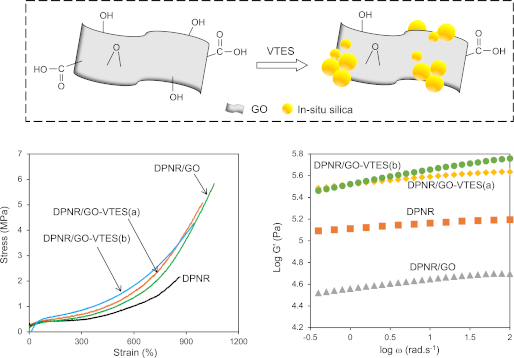
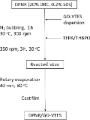
- also attracted significant interest. This material with exceptionally high specific surface area, high mechanical properties, and high thermal conductivity is expected to prepare high-performance rubber composites [21][22][23]. In our recent work [24], we successfully designed a DPNR/GO composite by






Experimental investigation of usage of POE lubricants with Al2O3, graphene or CNT nanoparticles in a refrigeration compressor
Beilstein J. Nanotechnol. 2023, 14, 1041–1058, doi:10.3762/bjnano.14.86
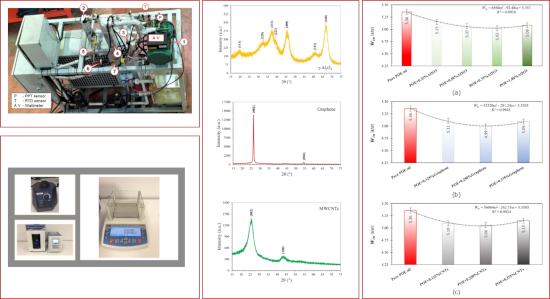
- nanoparticles at different concentrations. They found that the addition of nanoparticles enhanced the thermophysical properties and heat transfer characteristics of the lubricant. The researchers specified that nanolubricants typically provide greater thermal conductivity and viscosity in comparison to pure
- lubricants [2]. Sanukrishna and Prakash [3] experimentally investigated the thermophysical properties of a nanolubricant containing TiO2 nanoparticles for volume fractions of 0.07 to 0.8% in a temperature range of 20 to 90 °C. The results showed that the thermal conductivity and viscosity of the
- that the thermal conductivity and viscosity of the nanolubricant increased with the increase in mass fraction at a constant temperature. This capability in thermal conductivity enhancement can aid in addressing heat transfer issues within systems. Due to the fact that heat transfer takes place at the