Search results
Search for "thin film" in Full Text gives 521 result(s) in Beilstein Journal of Nanotechnology. Showing first 200.
Enhanced erosion resistance and radiation stability of WC–WO3 nanocomposite films under 100 keV Kr+ ion irradiation
Beilstein J. Nanotechnol. 2026, 17, 922–934, doi:10.3762/bjnano.17.65
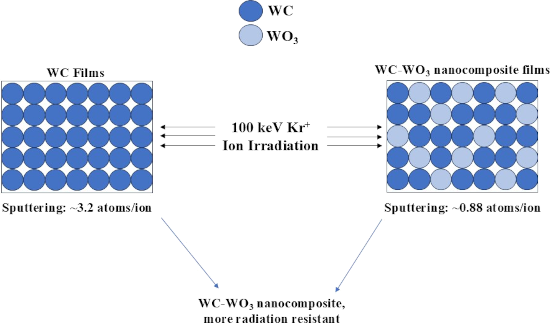
- studies, this is the first of its kind on a WC–WO3 nanocomposite thin film system, and also no previous study has systematically investigated the radiation damage and erosion in nanocomposite films under ion irradiation to the best of our knowledge. The findings of this study highlight the potential of
- in setting up the RF/DC magnetron sputtering and thin film XRD at the Central Instrumentation Centre (CIC). SB thanks UPES for her partial fellowship support. Funding The authors SB, RKP, and DKA express their gratitude to the Department of Atomic Energy, Board of Research in Nuclear Sciences (DAE



Supramolecular one-dimensional conducting nanofibers from a C3-symmetric tetrathiafulvalene derivative
Beilstein J. Nanotechnol. 2026, 17, 872–881, doi:10.3762/bjnano.17.63
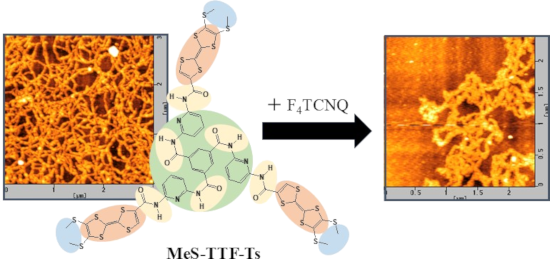
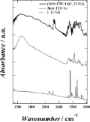
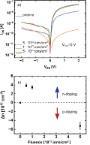
- F4TCNQ. Figure 5 shows the FTIR spectra of neutral F4TCNQ and the (MeS-TTF-Ts)(F4TCNQ)3 charge-transfer complex thin film deposited on a CaF2 substrate. The thin film was prepared by drop-casting a mixed solution of MeS-TTF-Ts in DMSO and F4TCNQ in acetonitrile onto a CaF2 substrate, followed by solvent
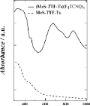
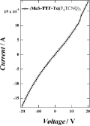
- μm. UV–vis spectra of nanofiber films on quartz substrates formed from MeS-TTF-Ts and the (MeS-TTF-Ts)(F4TCNQ)3 charge-transfer complex. FTIR spectra of neutral F4TCNQ and the (MeS-TTF-Ts)(F4TCNQ)3 charge-transfer complex thin film deposited on a CaF2 substrate. I–V curves of nanofibers composed of


Light-driven ammonia electrooxidation via carbon nitride–ruthenium molecular interfaces
Beilstein J. Nanotechnol. 2026, 17, 854–862, doi:10.3762/bjnano.17.61
- Jan Holub Pablo Jimenez-Calvo Group of Coordination Chemistry, University of Chemistry and Technology, Prague (UCT, Prague); Department of Inorganic Chemistry, Technická 5, 166 28, Prague, Czech Republic Chemistry of Thin Film Materials, Materials Chemistry Section, Friedrich-Alexander-Universität


Tailoring Ag–Pt nanoalloys through solid-state dewetting: structural and optical insights
Beilstein J. Nanotechnol. 2026, 17, 748–759, doi:10.3762/bjnano.17.52

- metallic layers is their thickness: the thinner the layer, the lower the temperature at which it transforms into isolated islands. It can be stated that the significant influence of surface energy in thin-film structures, phase separation boundaries (layer–substrate, layer–liquid phase), grain boundaries
- , an effect that becomes particularly pronounced at the nanoscale. Consequently, these factors create opportunities for thermal-kinetic control, enabling the manipulation of thin-film continuity and facilitating their disintegration. Our earlier studies have shown that thermally activated
- nanoscale thickness can be metastable or even intrinsically unstable. This instability leads to the gradual disintegration of the continuous film, and, consequently, the formation of isolated nanoscale islands [13][14][15][16]. This process occurs at temperatures lower than the melting point of the thin




Cellulose as a photocatalyst support material: extraction, structural features, and environmental applications
Beilstein J. Nanotechnol. 2026, 17, 635–652, doi:10.3762/bjnano.17.44
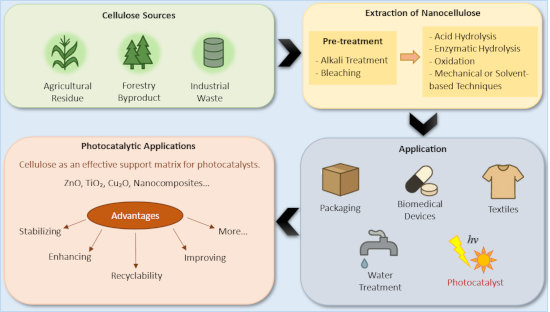
- biosensors using cellulose nanocrystals combined with magnetite to create (x-CNC)-Fe3O4 systems, which demonstrate excellent biocompatibility and are tailored for glucose detection. These biosensors are often fabricated as thin-film strips that can be applied directly onto the skin or tongue, where they
- inorganic phases such as TiO2 on its fibrous surface, allowing researchers to exploit its natural abundance and structural characteristics to develop sustainable photocatalytic composites [101]. Mohamad Azuwa Mohamed et al. prepared a regenerated cellulose (RC) thin film using recycled newspaper as the
- cellulose source, creating a sustainable and low-cost material designed for photocatalytic thin film applications. To evaluate its performance, they tested the photocatalytic activity of the RC/N-TiO2 composite by examining its ability to degrade methylene blue under both artificial UV and visible light


Impacts of annealing on structural and photophysical properties of zinc phthalocyanine adsorbed on graphene
Beilstein J. Nanotechnol. 2026, 17, 576–585, doi:10.3762/bjnano.17.39
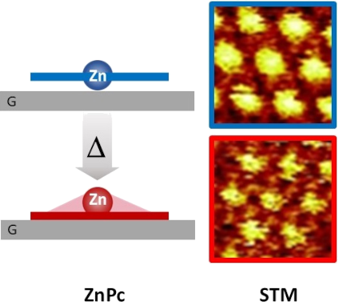
- a large background covering the 600–2500 cm−1 region (i.e., 660–750 nm in terms of emitted wavelength) with a quantum yield less than 10−6 as roughly estimated by comparison with the typical signal obtained from a reference standard composed of a rhodamine 6G doped PMMA thin film. This fluorescent


Defects and defect-mediated engineering of two-dimensional materials: challenges and open questions
Beilstein J. Nanotechnol. 2026, 17, 454–488, doi:10.3762/bjnano.17.31
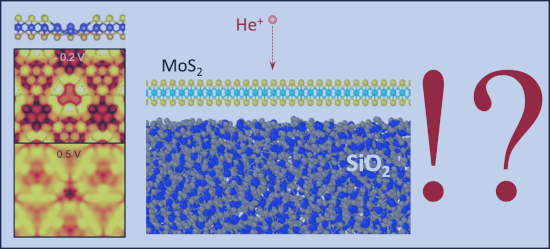
- difficult to obtain. Similarly, in thin film growth involving volatile components (e.g., chalcogens), the composition of the film is determined by the compound with the lowest formation enthalpy and not by the atom flux. For example, during molecular beam epitaxy (MBE) growth of chalcogenides, chalcogen
- atoms are generally supplied in excess, and the film will adopt the lowest-energy composition. In these cases, the stoichiometry of the film is not determined by the composition of the source materials but by the thermodynamic stability of the film. So again, in thin film growth, obtaining compositions





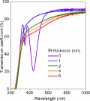
Multilayered hyperbolic Au/TiO2 nanostructures for enhancing the nonlinear response around the epsilon-near-zero point
Beilstein J. Nanotechnol. 2026, 17, 251–261, doi:10.3762/bjnano.17.17
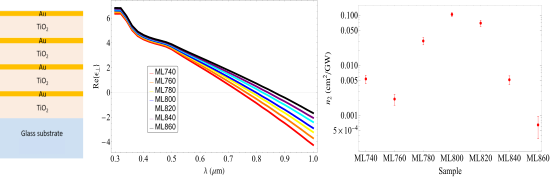
- only interested in the visible region because it is the region in which we are able to study the nonlinear response. Data analysis and multilayer modeling were performed using CompleteEASE software by J.A. Woollam. The optical constants were fitted using a B-splines layer with a Au thin film with KK


Structure-dependent thermochromism of PAZO thin films: theory and experiment
Beilstein J. Nanotechnol. 2026, 17, 186–199, doi:10.3762/bjnano.17.12
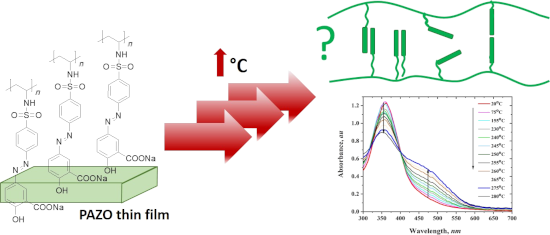
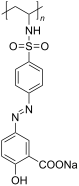
- polymers in thin films are known to markedly differ from those observed in the bulk, with significant differences in glass transition behavior, diffusion, and viscoelastic properties [4]. The assembly of polymer molecules from solution to solid state play a critical role in determining thin film morphology
- indication that the structural changes in PAZO thin film induced by heating are significant and stable over weeks and even months. These changes in the absorption spectra can be ascribed to the formation of aggregates between adjacent azochromophores – the so-called J-aggregates and H-aggregates, which will
- other molecules (the interactions between polymer chains can be considered as major factors in the case of a polymer thin film). Infrared (IR) spectroscopy is a powerful tool for understanding the effects of thermal treatment on polymers that can cause significant changes in their IR spectra, revealing


Reduced graphene oxide paper electrode for lithium-ion cells – towards optimized thermal reduction
Beilstein J. Nanotechnol. 2026, 17, 24–37, doi:10.3762/bjnano.17.3
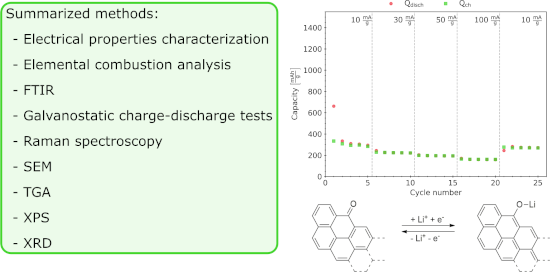
- ® graphene oxide paper was produced in the Flake Graphene Research Group in Łukasiewicz Research Network, Institute of Microelectronics and Photonics, Warsaw, Poland, according to a patented method [33], based solely on graphene oxide paste without any plasticizer. This method of thin film preparation is




Internal 3D temperature mapping in biological systems using ratiometric light-sheet imaging and lipid-coated upconversion nanothermometers
Beilstein J. Nanotechnol. 2025, 16, 2306–2316, doi:10.3762/bjnano.16.159
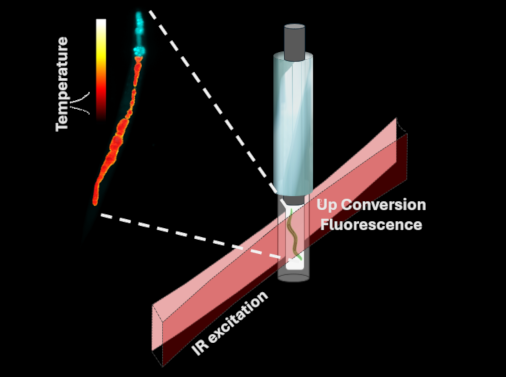
- thin-film hydration method based on Rojas-Gutierrez’s procedure [52]. Based on the size distribution and concentration of the nanoparticles (10 mg·mL−1), a lipid layer was formed with DOPS, cholesterol, and DMPC at a molar ratio of 64:29:7. The three lipids were dispersed in chloroform and mixed with


Terahertz-range on-chip local oscillator based on Josephson junction arrays for superconducting quantum-limited receivers
Beilstein J. Nanotechnol. 2025, 16, 2296–2305, doi:10.3762/bjnano.16.158
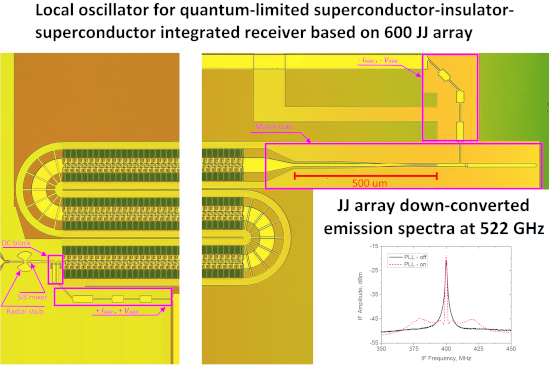
- matched load in the form of Klopfenstein tapering [44] is used. It is made up by a 5λ/4-long transition from CPW to the microstrip line with a normal top electrode that serves for attenuation of the reflected wave. Each JJ in the array is shunted by a thin-film resistor made of normal metal. In our
- central electrode of the CPW Wc = 38 μm is limited in the present design by the geometrical size of the junctions shunted by a thin-film resistor. As discussed in [54], for the CPW lines with a high Wc and small Wgap, the difference between the frequencies of the odd and even modes becomes smaller. The


Ultrathin water layers on mannosylated gold nanoparticles
Beilstein J. Nanotechnol. 2025, 16, 2183–2198, doi:10.3762/bjnano.16.151
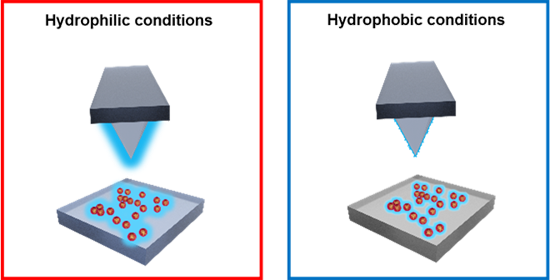
- there is a risk of over-interpreting height information. Indeed, experiments with soft matter in ambient humidity usually create a thin film of water covering the tip and the sample. A capillary water neck is formed in hydrophilic systems when the AFM tip comes close to the sample surface [22]. In




Quantum circuits with SINIS structures
Beilstein J. Nanotechnol. 2025, 16, 1931–1941, doi:10.3762/bjnano.16.134
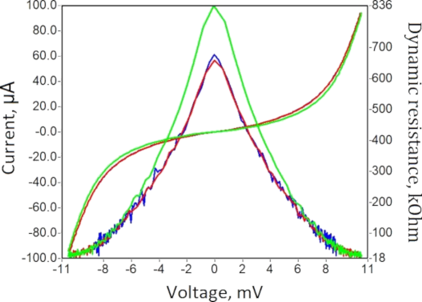
- thin film of normal metal (the absorber is an element sensitive to incoming radiation) and two NIS junctions that act as a thermometer. An SEM view of the SINIS detector was shown in Figure 1a–f. Often SINIS detectors are considered as classical devices with the optical response equivalent to the


Electrical, photocatalytic, and sensory properties of graphene oxide and polyimide implanted with low- and medium-energy silver ions
Beilstein J. Nanotechnol. 2025, 16, 1794–1811, doi:10.3762/bjnano.16.123
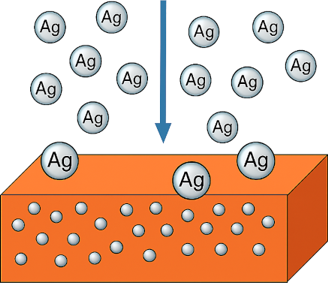
- carbonized matrix, conjugated bonds, and silver cluster structures exhibits dramatically higher conductivity than the unmodified material, which can be exploited, for example, for the fabrication of flexible optoelectronics, thin-film electrodes, or electroactive sensors [12]. In addition to the increase in
- humidity is altered, which is crucial for the design of thin-film humidity sensors [14]. In the case of both GO and PI, Ag ion implantation can cause partial deoxygenation and redistribution of functional groups (especially C–O, C=O, and N–H), thereby changing the hydrophilic character of the surface [15


Ambient pressure XPS at MAX IV
Beilstein J. Nanotechnol. 2025, 16, 1677–1694, doi:10.3762/bjnano.16.118

- studies across a broad pressure range, enabling research in catalysis, corrosion, energy storage, and thin film growth. The high brilliance and small beam size of MAX IV’s synchrotron light are essential for pushing the time-resolution boundaries of APXPS, especially in the soft X-ray regime. We discuss
- heterogeneous catalysis, corrosion, and thin film growth. Given that surfaces are heavily influenced by their surroundings, it is essential to study them in situ, while exposed to realistic reaction conditions, or operando, when producing reaction products under realistic conditions. X-ray photoelectron
- fields of, among others, catalysis research, material characterization, and thin film deposition, utilizing dedicated cells. HIPPIE, on the 3 GeV ring, covers a wider photon energy range than SPECIES (250 to 2500 eV), also with variable polarization [10]. It has two branches, each with its own






Photocatalytic degradation of ofloxacin in water assisted by TiO2 nanowires on carbon cloth: contributions of H2O2 addition and substrate absorbability
Beilstein J. Nanotechnol. 2025, 16, 1567–1579, doi:10.3762/bjnano.16.111
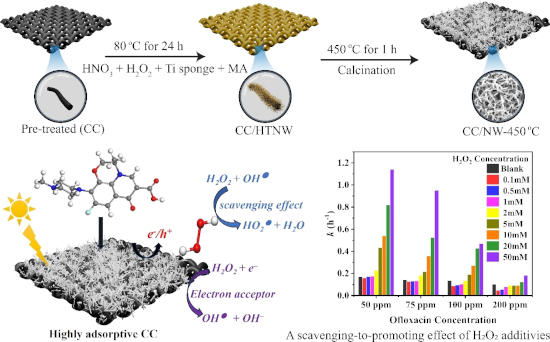
- concentration of 200 ppm, suggesting the high adsorption capacity and probably a deep mineralization capacity of the thin film photocatalyst developed in the current investigation. This work represents a new promising strategy to tackle emerging contaminants and could lead to the advancement of cutting-edge


Modeling magnetic properties of cobalt nanofilms used as a component of spin hybrid superconductor–ferromagnetic structures
Beilstein J. Nanotechnol. 2025, 16, 1557–1566, doi:10.3762/bjnano.16.110
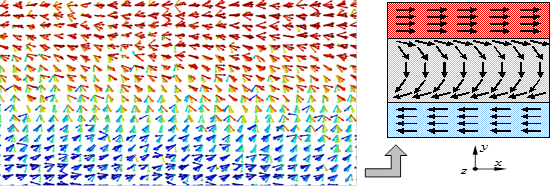
- thin films and the formation of Neel domain walls. Keywords: ferromagnetic properties; LAMMPS; mathematical modeling; MEAM; molecular dynamics; spin dynamics; Introduction Thin film structures [1][2] are increasingly employed each year in a wide range of applications, serving as functional [3][4
- . Due to active experimental and theoretical research on thin films, significant progress has been made in recent years. Since the information in the field of thin film technologies is updated quite rapidly, there is a need for a thorough study and optimization of the main technological processes that
- are currently used, as well as fundamental features of the thin film formation processes with new composition and coatings of various types. These types of nanomaterials are very promising (in terms of computational performance and energy dissipation efficiency) for use in superconducting digital


Transient electronics for sustainability: Emerging technologies and future directions
Beilstein J. Nanotechnol. 2025, 16, 1545–1556, doi:10.3762/bjnano.16.109

- subsequently degrading harmlessly within the body. Collectively, these trends reflect a transition in materials science from an emphasis on durability to a growing emphasis on controllable disappearance tailored to specific clinical needs. Concurrently, the rapid advancement of soft and stretchable thin-film
- , opportunities exist to broaden the spectrum of bioresorbable metal materials. Research on Mg- and Zn-based bulk alloys, traditionally used as structural materials, has been extended to thin-film formats suitable for electronic applications. This transition enables fine-tuning of not only degradation profiles
- electronic devices on a large-area substrate, such as a silicon wafer, followed by backside etching to remove the handle or box layers, thereby isolating the functional thin film for transfer onto a biodegradable substrate. This wafer-level technique offers a promising route to large-area, high-resolution


Laser processing in liquids: insights into nanocolloid generation and thin film integration for energy, photonic, and sensing applications
Beilstein J. Nanotechnol. 2025, 16, 1428–1498, doi:10.3762/bjnano.16.104
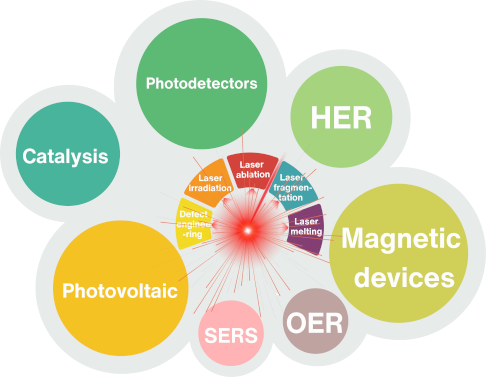
- Raman spectroscopy (SERS) substrates, and solar cells. In this review article, we describe different methods of nanocolloidal synthesis using laser-assisted processes and corresponding thin film fabrication methods, particularly those utilized for device fabrication and characterization. The four
- sections start with an introduction to the common laser-assisted synthesis for nanocolloids and different methods of thin film fabrication using these nanocolloids followed by devices fabricated and characterized for applications including photovoltaics, photodetectors, catalysis, photocatalysis
- comprehensive understanding of the process flow, from the laser-induced ejection of material into the gas phase, through its processing and movement in the plume, to its eventual deposition onto a substrate. Figure 1 shows key developments in thin film synthesis and laser-based processing from 1909 to 2025






Synthesis and antibacterial properties of nanosilver-modified cellulose triacetate membranes for seawater desalination
Beilstein J. Nanotechnol. 2025, 16, 1380–1391, doi:10.3762/bjnano.16.100
- PAN nanofibers, enhancing the hydrophilicity and antibacterial properties of the membrane [20]. Elimelech’s group introduced copper nanoparticles (Cu NPs) onto the surface of thin-film composite (TFC) polyamide RO membranes through a method involving electrostatic functionalization. The functionalized
- membranes exhibited outstanding antibacterial performance against Escherichia coli and Staphylococcus aureus [22]. Mayyahi introduced TiO2 nanoparticles into the polyamide layer of traditional TFC membranes by interfacial polymerization with m-phenylenediamine to create a thin film nanocomposite (TFN


Ferroptosis induction by engineered liposomes for enhanced tumor therapy
Beilstein J. Nanotechnol. 2025, 16, 1325–1349, doi:10.3762/bjnano.16.97
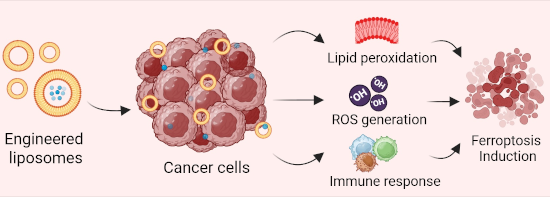
- efficiency (EE). These techniques can be categorized into conventional approaches such as thin film hydration, reverse phase evaporation, solvent injection, detergent removal, and newer innovations. Also, modern techniques are further developments or adaptations of conventional approaches. These methods
- method for clinical liposome formulations is the thin film hydration/Bangham technique [113]. DepoFoam liposome technology utilizes a proprietary liposome formulation that can be administered by injection and provides sustained release of the encapsulated drug over an extended period. DepoFoam liposomes
- traditional methods, such as thin film hydration, to produce liposomes and lipid nanoparticles [113][120]. Microfluidics offers exceptional control over particle size, lower variability, higher EE, and better scalability, making it the most advanced and practical approach for nanoparticle production [115][119


Mechanical stability of individual bacterial cells under different osmotic pressure conditions: a nanoindentation study of Pseudomonas aeruginosa
Beilstein J. Nanotechnol. 2025, 16, 1171–1183, doi:10.3762/bjnano.16.86
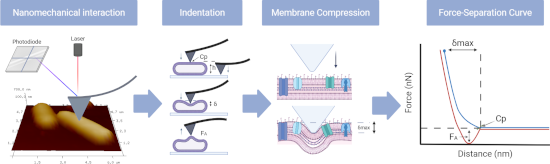
- regular adhesive tape, and coated with 5 μL of the cationic polymer poly-ʟ-lysine (PLL, MW 40 kDa, Sigma-Aldrich). The drop of PLL was not allowed to dry but incubated for 10 min, and then the surfaces were repeatedly rinsed with Milli-Q water to allow the formation of a thin film. This coating promotes


Transfer function of an asymmetric superconducting Gauss neuron
Beilstein J. Nanotechnol. 2025, 16, 1160–1170, doi:10.3762/bjnano.16.85
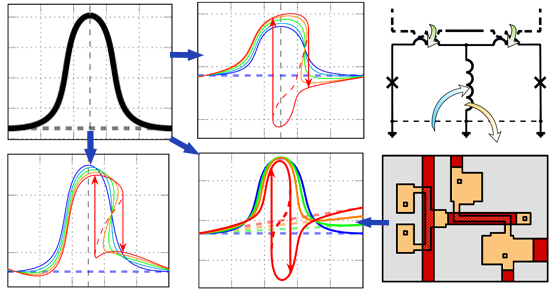
- due to, for example, defects in the thin-film structure. The third type of asymmetry may be associated with unequal signal supply into the input arms of the neuron. Below, we analyze the transformation of the TF in each of these cases and compare it with experimental results [18]. Symmetric Gauss



Influence of ion beam current on the structural, optical, and mechanical properties of TiO2 coatings: ion beam-assisted vs conventional electron beam evaporation
Beilstein J. Nanotechnol. 2025, 16, 1097–1112, doi:10.3762/bjnano.16.81
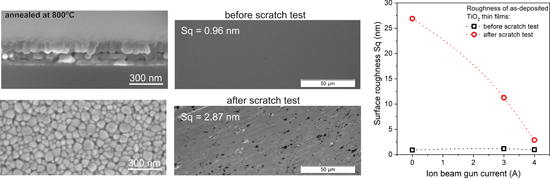
- ; Introduction One of the commonly used methods for the deposition of various materials for thin film optical coatings, is electron beam evaporation (EBE) [1][2][3][4][5]. Today, in many applications, including medicine, telecommunications, optoelectronics, photovoltaics, the requirements for optical coatings
- -assisted deposition (IBAD), which is the bombardment of a thin film with a beam of energetic particles during deposition, is an excellent technique for modifying the microstructure and optical, mechanical, and tribological properties of thin film coatings [8][9][10][11]. This energetic process offers many
- become one of the methods for producing high-quality optical thin film coatings. According to [13][14], IBAD support of the electron beam evaporation process affects the properties thin films like formation of new phases, modification of residual stress, elimination of the columnar-like character of the