


Search results
Search for "transport properties" in Full Text gives 171 result(s) in Beilstein Journal of Nanotechnology.
Synthesis and characterization of RF-sputtered ZnTe/Cu2−xTe thin films for solar cell applications
Beilstein J. Nanotechnol. 2026, 17, 1016–1027, doi:10.3762/bjnano.17.69
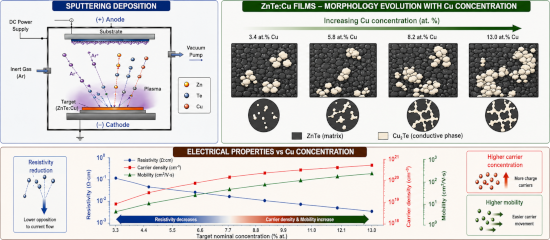
- contribution to the optical response could not be independently identified under the present experimental conditions. Electrical properties The electrical transport properties of CuZnTeO thin films were evaluated by Hall effect measurements at room temperature. Silver and carbon contacts were deposited and
- verified to exhibit ohmic behavior prior to measurement. Film thickness was determined by profilometry and used for resistivity calculations. Since the electrical transport properties of RF-sputtered undoped ZnTe are well established in the literature, they are not repeated here [42][43]. Figure 7 focuses
- on Cu-containing films (3–13 atom %), for which the influence of Cu incorporation and Cu2−xTe secondary-phase formation on the electrical transport properties can be directly evaluated. The figure presents the resistivity, carrier concentration, and mobility as a function of nominal Cu and O



Materials challenges in solid-state sensors for continuous monitoring of ions in water
Beilstein J. Nanotechnol. 2026, 17, 935–973, doi:10.3762/bjnano.17.66


Fractional shot noise of an SU(N) Kondo system
Beilstein J. Nanotechnol. 2026, 17, 515–540, doi:10.3762/bjnano.17.34
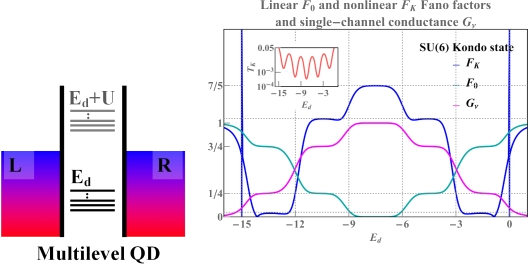
- transport control because, in the Kondo regime, transport characteristics remain narrow with respect to the gate voltage. In this work, we limit ourselves to a discussion of thermodynamic and transport properties of the basic unitary symmetries SU(N) N = 2, 3, 4, 5, 6 that one encounters in nanoscopic
- nonlinear transport properties of the system. Let us now give an overview of the most important topics of this article. The paper comprehensively analyzes the linear and nonlinear transport and thermodynamic properties of Kondo systems with SU(N) symmetries up to N = 6 with emphasis on the discussions of
- coefficients and are given in Appendix A. Thermodynamic and transport properties: SBMFA and Fermi liquid approach In the following, we present, based on the Fermi liquid concept, formulas for basic thermodynamic and transport quantities of the N-QD. Fermi liquid theory is used to describe the behavior of


![[Graphic 127]](/bjnano/content/inline/2190-4286-17-34-i187.svg?max-width=637&scale=1.18182)

Fast vortex dynamics and relaxation times in NbRe-based heterostructures
Beilstein J. Nanotechnol. 2026, 17, 292–302, doi:10.3762/bjnano.17.20
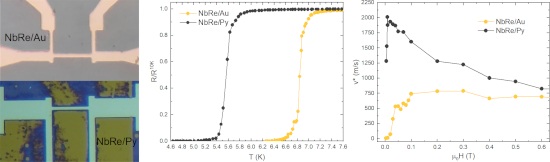
- that NbRe thin films are polycrystalline with oriented grains of nanometric size, of the order of a few nanometers [20][21]. Furthermore, earlier investigations have demonstrated that the superconducting and transport properties of NbRe are robust against moderate thickness variations [19]. These
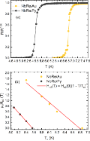
- work, we systematically investigate vortex dynamics and flux-flow instability phenomena in micrometer-wide bilayers in which NbRe is brought into contact with either thin N or F materials. In particular, we measure transport properties in the presence of a magnetic field in NbRe/Au and NbRe/Py


Advancing nanolithography: a comprehensive review of materials for local anodic oxidation with AFM
Beilstein J. Nanotechnol. 2026, 17, 275–291, doi:10.3762/bjnano.17.19
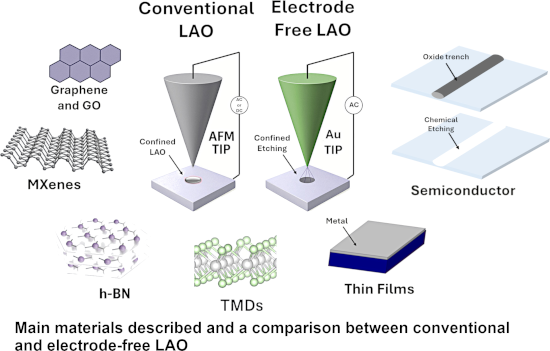
- features. Different materials exhibit varying oxidation kinetics, conductivity, and susceptibility to environmental conditions. For example, TMDs such as MoS2 and WSe2 are especially sensitive to phonon scattering, which significantly influences their thermal conductivity, electrical transport properties


Reduced graphene oxide paper electrode for lithium-ion cells – towards optimized thermal reduction
Beilstein J. Nanotechnol. 2026, 17, 24–37, doi:10.3762/bjnano.17.3
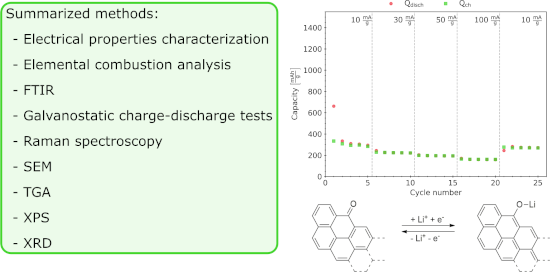
- specific surface area, and low bulk density [3][4]. The role of rGO in electrode materials can be considered in two ways. It can be applied as a conductive additive, improving transport properties and, as a result, enhancing capacity [5]. It can also be the active material itself [6][7]. To mention just a



Electron transport through nanoscale multilayer graphene and hexagonal boron nitride junctions
Beilstein J. Nanotechnol. 2025, 16, 2132–2143, doi:10.3762/bjnano.16.147
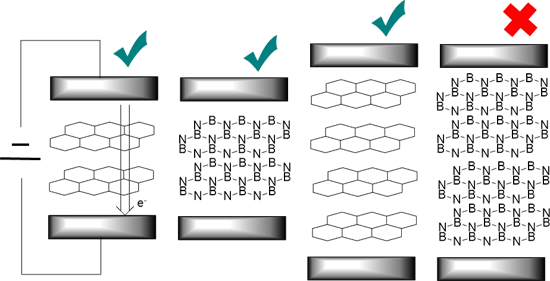
- graphene has focused on in-plane conductivity, and only very few studies have reported data on the electron transport properties between the adjacent planes [9][10][11][12][13]. Defects in graphene can alter its electronic states and lead to deviations from its intrinsic properties. We look at two common
- can be as long as 100 nm [26][27]. For nanoscale devices shorter than the free path of the electrons, Ohm’s law is not applicable, and the specific conductivity of the material is irrelevant to the transport properties. The conductance is provided by the Landauer formula of quantum conductance, with
- reported using experimental and theoretical studies for the interaction of azupyrene and pyrene with a Cu surface [16]. The metal electrode/graphene binding has strong influence on the electron transport properties. In Equations 6 and 7, the self-energies of the electrodes depend on the interaction


Stereodiscrimination of guests in chiral organosilica aerogels studied by ESR spectroscopy
Beilstein J. Nanotechnol. 2025, 16, 2034–2054, doi:10.3762/bjnano.16.140
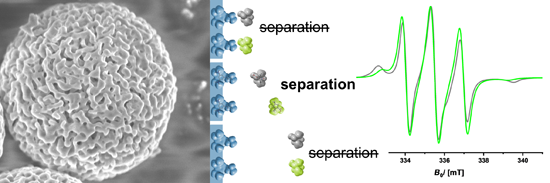
- or derivatizing agents, enabling the separation of enantiomers based on their interactions with these chiral entities. It is obvious that the transport properties of the two enantiomers must be different for them to be separated successfully. Transport in porous media is a topic with much broader and
- ), quantitative evaluation of the spectra allowed for investigating various confinement effects. Our focus was on understanding how a particular functionalization of the surfaces in combination with 3CP and the solvent influences transport properties, and novel ESR imaging techniques were used to determine




Further insights into the thermodynamics of linear carbon chains for temperatures ranging from 13 to 300 K
Beilstein J. Nanotechnol. 2025, 16, 1818–1825, doi:10.3762/bjnano.16.125
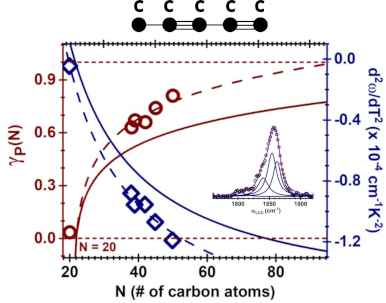
- gradients), and mechanical (e.g., pressure variations) stimuli [1][2][3][4][5][6][7][8][9][10][11][12][13][14][15][16][17][18][19][20][21][22][23]. These responses are directly connected with electronic and transport properties, which in turn depend on the equilibrium between emission and absorption of


![[Graphic 23]](/bjnano/content/inline/2190-4286-16-125-i25.svg?max-width=637&scale=1.18182)
Laser processing in liquids: insights into nanocolloid generation and thin film integration for energy, photonic, and sensing applications
Beilstein J. Nanotechnol. 2025, 16, 1428–1498, doi:10.3762/bjnano.16.104






Synthesis and antibacterial properties of nanosilver-modified cellulose triacetate membranes for seawater desalination
Beilstein J. Nanotechnol. 2025, 16, 1380–1391, doi:10.3762/bjnano.16.100
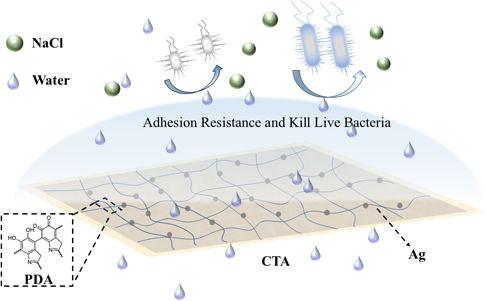
- unchanged, leading to no significant differences in the transport properties of the membranes. The consistent pore size and structure ensure that the water flux and salt rejection rates remain similar across the modified and unmodified membranes. The combined effects of these factors result in minimal


Soft materials nanoarchitectonics: liquid crystals, polymers, gels, biomaterials, and others
Beilstein J. Nanotechnol. 2025, 16, 1025–1067, doi:10.3762/bjnano.16.77
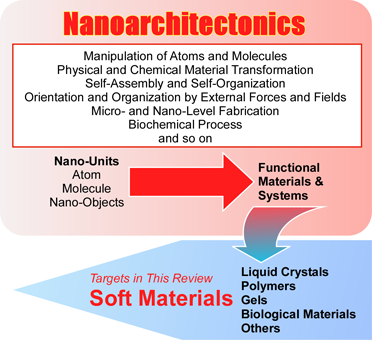
- compounds, including oligoacenes and oligothiophenes, exhibit excellent carrier transport properties in the aggregated state, rendering them promising candidates for use as organic semiconductors. It can be posited that liquid crystal compounds incorporating extended π-conjugated cores may be considered as
- and polar moieties can exhibit ferroelectric behavior and electronic carrier transport properties. The corresponding materials have been the subject of investigation for potential applications in electroluminescent devices, field-effect transistors, and solar cells [228][229][230][231][232]. To
- performance may be attained by means of improvements in electron transport properties and optimization of the loading of the MOF within the LbL nanostructures. The creation of well-defined soft multilayer structures comprising a variety of components represents a crucial strategy in the field of soft






Insights into the electronic and atomic structures of cerium oxide-based ultrathin films and nanostructures using high-brilliance light sources
Beilstein J. Nanotechnol. 2025, 16, 860–871, doi:10.3762/bjnano.16.65

- transport properties in the presence of specific gases, due to the redox reactions that take place on the surface [12][13]. An atomic level understanding of the structure–function relationship in this oxide is essential for guiding the design of efficient materials to optimize the performance of the
- , was hypothesized based on optical pump–probe spectroscopy experiments [60]. These quasi-particles, which originate from the coupling between photoexcited charge and lattice distortions induced by the extra charges themselves, largely influence the transport properties of the material. A study by


The impact of tris(pentafluorophenyl)borane hole transport layer doping on interfacial charge extraction and recombination
Beilstein J. Nanotechnol. 2025, 16, 678–689, doi:10.3762/bjnano.16.52
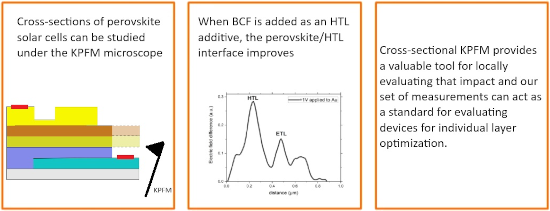
- ). This result is associated with improved charge transport properties and a reduction in the number of trap states at that interface. We propose that BCF, as a Lewis acid electron acceptor, efficiently coordinates with under-coordinated iodide defects and passivates them, increasing junction quality


Vortex lattices of layered HTSCs at different vortex–vortex interaction potentials
Beilstein J. Nanotechnol. 2025, 16, 362–370, doi:10.3762/bjnano.16.27
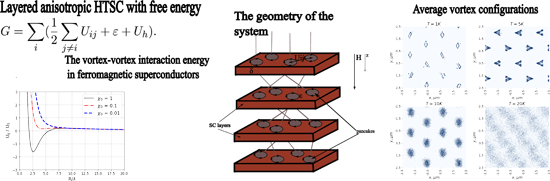
- transport properties. Therefore, it is of interest to study the magnetization reversal processes in a sample under conditions that allow for vortex clustering. Additionally, the process becomes more complicated in the presence of pinning centers. An effective method for research is the Monte Carlo method


Tailoring of physical properties of RF-sputtered ZnTe films: role of substrate temperature
Beilstein J. Nanotechnol. 2025, 16, 333–348, doi:10.3762/bjnano.16.25
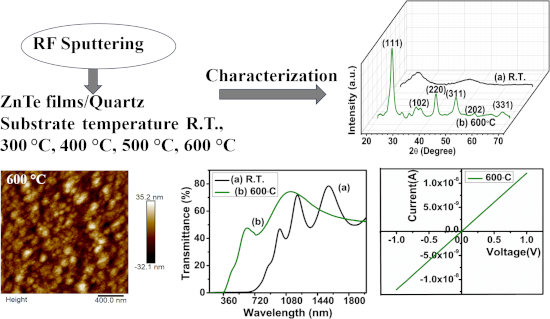
- of films with substrate temperature [42]. Grain boundaries have a significant effect on the electric transport properties in polycrystalline films. Grain boundaries are growth process-dependent phenomena and have a large number of charge-trapping centres. Thus, grain boundaries reduce the mobility of




Heterogeneous reactions in a HFCVD reactor: simulation using a 2D model
Beilstein J. Nanotechnol. 2024, 15, 1627–1638, doi:10.3762/bjnano.15.128
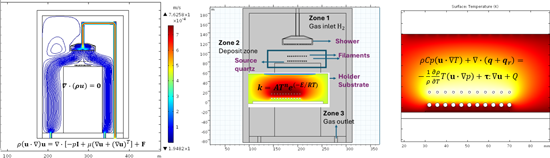
- properties of the system in the gas phase in a dimensionless and temporal model. The thermodynamic and transport properties of the mixture will permit a study in the steady state considering the dimensions of the HFCVD reactor and the deposition parameters through numerically solving the equations of
- FactSage. We obtained the thermodynamic and transport properties to set up a 2D model. Through 2D simulation with COMSOL Multiphysics® software, it was possible to obtain the concentration profiles of the main species H°, O2, OH, and SiO, which contribute to the growth of SRO films. In addition, the
- parameters of the heterogeneous reaction between H° in the gas phase and quartz to describe its behavior as a function of temperature at constant pressure. The thermodynamic data obtained and those taken from the bibliography will be used in the Arrhenius equation to calculate the thermodynamic and transport


Integrating high-performance computing, machine learning, data management workflows, and infrastructures for multiscale simulations and nanomaterials technologies
Beilstein J. Nanotechnol. 2024, 15, 1498–1521, doi:10.3762/bjnano.15.119



Quantum-to-classical modeling of monolayer Ge2Se2 and its application in photovoltaic devices
Beilstein J. Nanotechnol. 2024, 15, 1153–1169, doi:10.3762/bjnano.15.94
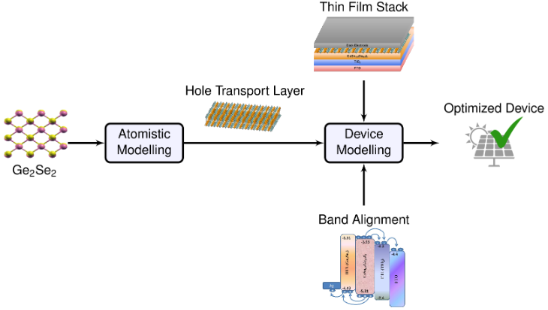
- the investigated structure’s dynamic stability. Electronic and transport properties The electronic properties of materials play a crucial role in predicting the material behavior and transport parameters and, hence, its prospective applications. We investigated the electronic properties of monolayer




Graphene removal by water-assisted focused electron-beam-induced etching – unveiling the dose and dwell time impact on the etch profile and topographical changes in SiO2 substrates
Beilstein J. Nanotechnol. 2024, 15, 190–198, doi:10.3762/bjnano.15.18
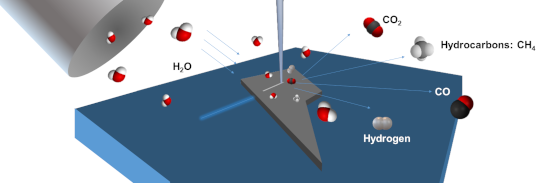
- shape control are very limited in those cases. Conventional electron beam lithography (EBL) reaches the resolution of a few nanometers. However, it leaves residual resists on the surface [9], which strongly affects electrical transport properties [10]. A similar high resolution can be achieved with e


Experimental investigation of usage of POE lubricants with Al2O3, graphene or CNT nanoparticles in a refrigeration compressor
Beilstein J. Nanotechnol. 2023, 14, 1041–1058, doi:10.3762/bjnano.14.86
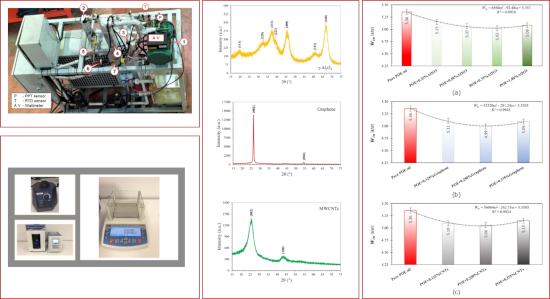
- interface between particles and the liquid in a solid–liquid suspension, enhancing the interfacial area can result in more effective thermal transport properties. Smaller particle sizes result in higher surface-to-volume ratios, consequently raising the thermal conductivity of the liquid. This is attributed
- heat transport properties of graphene, when compared to those of Al2O3 and CNTs, is believed to be the reason for the effectiveness of a nanolubricant containing graphene nanoplatelets in the optimum mass fraction. The thermal conductivity coefficient of Al2O3 and CNTs are around 40 [38] and 3500 W





Atmospheric water harvesting using functionalized carbon nanocones
Beilstein J. Nanotechnol. 2023, 14, 1–10, doi:10.3762/bjnano.14.1
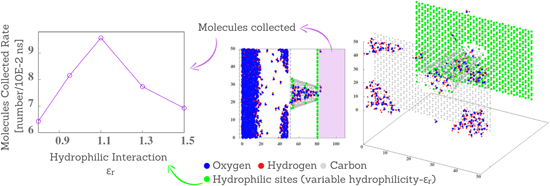
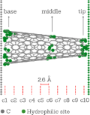
- hydrophilic ring in the middle of the nanocone. The increase in flux as the radius decreases is a behavior also observed in carbon nanotubes [55]. The increase in flux, followed by a decrease, with increase in hydrophobicity was also observed regarding the transport properties of nanotubes with tunable




Observation of collective excitation of surface plasmon resonances in large Josephson junction arrays
Beilstein J. Nanotechnol. 2022, 13, 1578–1588, doi:10.3762/bjnano.13.132
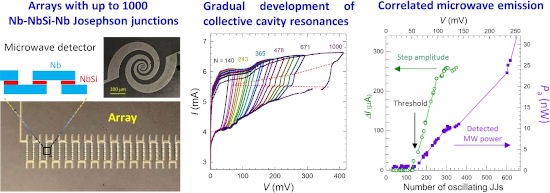
- found in [36]. Figure 1a and Figure 1c show layouts of the two studied arrays, which we refer to as (a) “meander” and (c) “linear”, respectively. The arrays are similar to those studied in [9][34][37], but have smaller JJ areas. Additional information about transport properties of such arrays can be




Induced electric conductivity in organic polymers
Beilstein J. Nanotechnol. 2022, 13, 1551–1557, doi:10.3762/bjnano.13.128
- mechanical stress is applied. In this work, the transport properties of thin-film layered lead–PDP–lead structures were experimentally studied in a wide temperature range. At sufficiently high temperatures, the current voltage characteristics are satisfactorily described in terms of the injection model of



Photoelectrochemical water oxidation over TiO2 nanotubes modified with MoS2 and g-C3N4
Beilstein J. Nanotechnol. 2022, 13, 1541–1550, doi:10.3762/bjnano.13.127
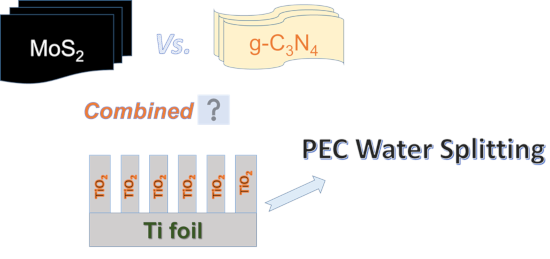
- chemical, thermal, and charge transport properties, which can shift the light absorption of TiO2 to the visible region [29][30][31][32]. An emerging new material in optoelectronics is g-C3N4 (bandgap of 2.65–2.7 eV) because it has an appropriate band structure with suitable energy levels regarding TiO2





