


Search results
Search for "wound healing" in Full Text gives 53 result(s) in Beilstein Journal of Nanotechnology.
Restorative potential of laser-synthesized silver nanoparticles with Salvia officinalis for periodontal disease treatment: an in vitro study
Beilstein J. Nanotechnol. 2026, 17, 781–795, doi:10.3762/bjnano.17.55
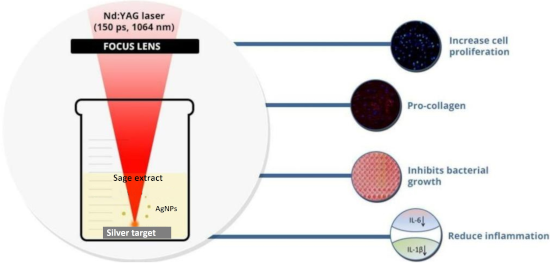
- . In contrast, Mostafavi and colleagues [10], investigated the wound-healing potential of combined AgNP and sage extract treatment in an in vivo mouse skin model, indicating possible synergistic effects between silver and sage. Nevertheless, the antibacterial activity was not evaluated, and sage was
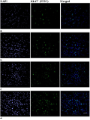
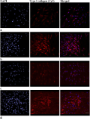
- crucial stages in tissue restoration and regeneration [57]. Besides the reported role of AgNPs in improved collagen deposition during wound healing [58][59], using plant extracts during nanoparticles synthesis was found to promote wound healing and collagen modeling in vivo [60]; but, to the best of our



Nanocarrier-integrated multilayer films produced by 3D printing for improved skin adhesion and curcumin photostability
Beilstein J. Nanotechnol. 2026, 17, 440–453, doi:10.3762/bjnano.17.30
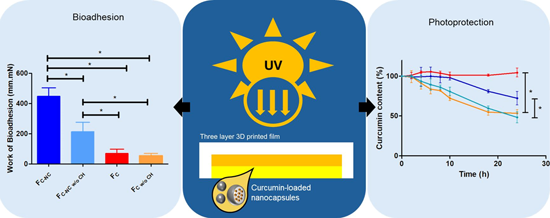
- tailored to the requirements of specific applications, such as the production of films intended to promote skin healing [7][8]. Although topical films can be an effective option for facilitating skin repair and wound healing, they must be carefully manufactured to maintain optimal moisture levels, which
- the development of specialised dressings using materials such as alginate and carboxymethylcellulose as alternatives to traditional gauze [13][14]. Bioactive molecules such as curcumin have shown promise for use in the promotion of skin repair and wound healing. Curcumin is a photosensitive polyphenol
- as antioxidant activity through reactions with free radicals or reactive oxygen species (ROS) and inhibition of lipid peroxidation and DNA damage. These mechanisms contribute to reduced oxidative stress and enhanced wound-healing processes [17]. Consequently, curcumin is currently under investigation


Quality by design optimization of microemulsions for topical delivery of Passiflora setacea seed oil
Beilstein J. Nanotechnol. 2025, 16, 2116–2131, doi:10.3762/bjnano.16.146
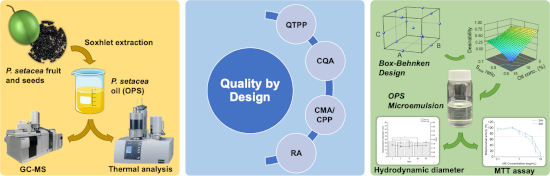
- lines relevant to wound healing and topical application: murine macrophages (RAW 264.7) and human umbilical vein endothelial cells (HUVECs) (Figure 11). According to ISO 10993-13 guidelines, the base ME was considered cytocompatible up to concentrations of 2 mg/mL for RAW cells and 0.5 mg/mL for HUVECs
- , potentially offsetting the proliferative effects typically observed in keratinocytes such as HaCaT cells [2][52][53]. To gain a more comprehensive understanding of the therapeutic potential of OPS and its ME formulation in wound healing and topical applications, it is crucial to extend cytocompatibility
- the complex biological processes involved in wound healing. Specifically, it does not evaluate critical mechanisms such as cell migration, proliferation, extracellular matrix remodeling, or the modulation of inflammatory mediators. Therefore, future investigations should incorporate complementary


Beyond the shell: exploring polymer–lipid interfaces in core–shell nanofibers to carry hyaluronic acid and β-caryophyllene
Beilstein J. Nanotechnol. 2025, 16, 2015–2033, doi:10.3762/bjnano.16.139
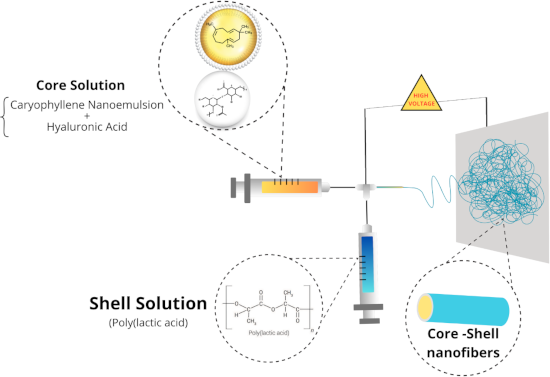
- interest in biopolymers such as PLA is, in part, driven by environmental concerns, climate change, and the depletion of fossil fuel resources, as PLA is derived from renewable sources and is both readily and completely biodegradable. Hyaluronic acid (HA) is an extensively used component in wound healing
- inflammatory response during wound healing [32][33]. Chemically, βCp is characterized as a natural bicyclic sesquiterpene found in several plants and essential oils, and as expected for compounds of this class, it exhibits characteristic volatility and low solubility in water [34]. To address these limitations
- administration via dressings made of biocompatible polymers containing lipid nanosystems [41][42][43]. Numerous researchers have successfully encapsulated nanoemulsions into nanofibers for diverse applications, including studies by Kaur et al. (2024) showing superior wound healing with bakuchiol nanoemulsion




Exploring the potential of polymers: advancements in oral nanocarrier technology
Beilstein J. Nanotechnol. 2025, 16, 1751–1793, doi:10.3762/bjnano.16.122
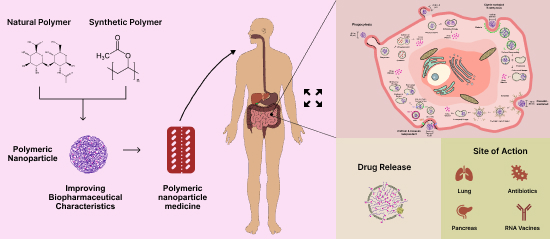


Nanomaterials for biomedical applications
Beilstein J. Nanotechnol. 2025, 16, 1499–1503, doi:10.3762/bjnano.16.105

- to spread, stay attached, and turn into different cell types. Electrospun polymers could produce these nanofibers, which are widely applied for nerve treatment, bone growth, and wound healing [26]. A second approach is the utilization of nano-patterned surfaces. These surfaces have carefully designed
Enhancing the therapeutical potential of metalloantibiotics using nano-based delivery systems
Beilstein J. Nanotechnol. 2025, 16, 1350–1366, doi:10.3762/bjnano.16.98
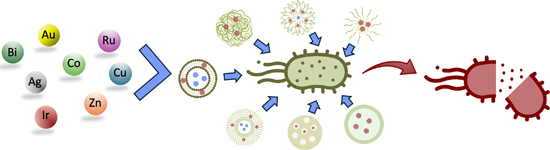
- cellulose-based dressings. The resulting formulation displayed improved antimicrobial activity and enhanced wound healing properties [105]. Additionally, in vitro assays revealed that encapsulating silver sulfadiazine in SLNs protected fibroblasts and keratinocytes from metal-induced toxicity. Finally, the


Ferroptosis induction by engineered liposomes for enhanced tumor therapy
Beilstein J. Nanotechnol. 2025, 16, 1325–1349, doi:10.3762/bjnano.16.97
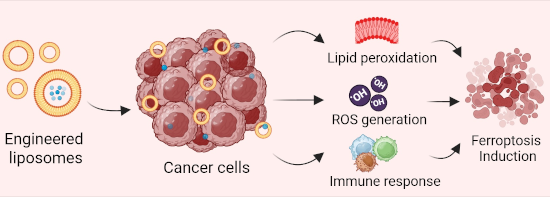
- diseases such as non-alcoholic fatty liver disease, cardiovascular diseases like atherosclerosis, neurological disorders, and chronic wound healing [11][12][13]. Ferroptosis is a unique approach for the simultaneous treatment of cancer cells with chemotherapy, radiotherapy, and immunotherapy to increase


Better together: biomimetic nanomedicines for high performance tumor therapy
Beilstein J. Nanotechnol. 2025, 16, 1246–1276, doi:10.3762/bjnano.16.92
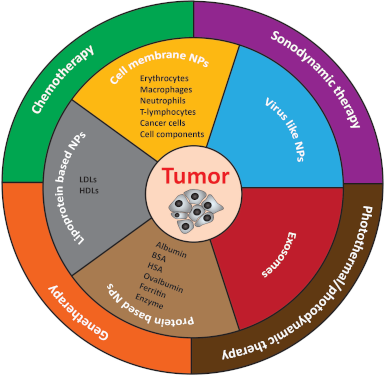
- tumor models, 231M-ARS@PLGA reduced the SWE stiffness and tumor hypoxia, which potently enhanced the antitumor effects of OTX and PD1 inhibitor. Importantly, single-cell sequencing demonstrated two main CAFs (extracellular matrix and wound-healing CAFs) that produce extracellular matrix could influence





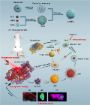

Hydrogels and nanogels: effectiveness in dermal applications
Beilstein J. Nanotechnol. 2025, 16, 1216–1233, doi:10.3762/bjnano.16.90
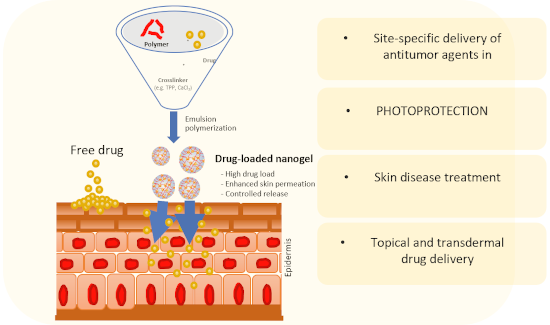
- . On the other hand, hydrogels and nanogels have arrived on the market as materials that resemble skin tissue, offering a hygroscopic and favorable environment for wound healing, for example. They can be combined with active ingredients that accelerate the primary goal of healing injured skin, helping
- by electronic beam irradiation. Polyvinyl alcohol hydrogels can be used for wound healing. Suhaeri et al. (2018) manufactured an adhesive hydrogel with PVA and a derivative of human pulmonary fibroblasts, in addition to ciprofloxacin, for treating infected wounds [95]. For the preparation of the
- mechanical strength [53], high drug upload [40], controlled drug release [100], and site-specific drug delivery [184] for both topical [48] and transdermal administration [116]. Some examples of the dermal application of hydrogels as drug carriers include cutaneous wound healing [40][41][42] and autoimmune


Mechanical stability of individual bacterial cells under different osmotic pressure conditions: a nanoindentation study of Pseudomonas aeruginosa
Beilstein J. Nanotechnol. 2025, 16, 1171–1183, doi:10.3762/bjnano.16.86
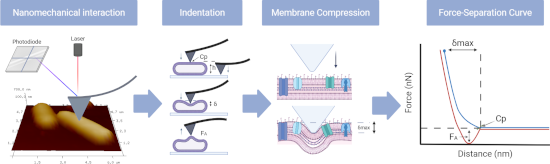
- medical devices [1][2][3][4][5]. Although PA is part of the normal microbiota of the skin and mucous membranes of many healthy individuals, it can cause serious opportunistic infections in the respiratory and urinary tracts and during wound healing in people with weakened immune systems or in hospitalized


Piezoelectricity of hexagonal boron nitrides improves bone tissue generation as tested on osteoblasts
Beilstein J. Nanotechnol. 2025, 16, 1068–1081, doi:10.3762/bjnano.16.78
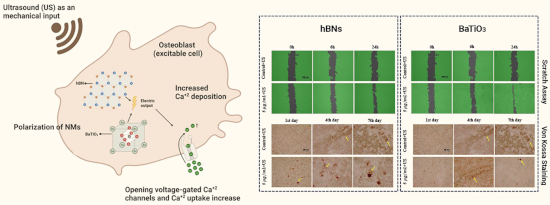
- inverted light microscope to observe the scratch closure (cellular migration). These images were analyzed using the Wound Healing Image Analysis Platform (Wimasis) and the ImageJ software, and the percent scratch closure was calculated. Von Kossa staining assay To estimate the influence of NMs and US


Polyurethane/silk fibroin-based electrospun membranes for wound healing and skin substitute applications
Beilstein J. Nanotechnol. 2025, 16, 591–612, doi:10.3762/bjnano.16.46
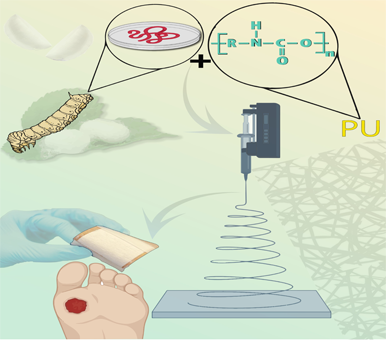
- 37610, Pakistan 10.3762/bjnano.16.46 Abstract The importance of electrospun membranes for biomedical applications has increased, especially when it comes to skin regeneration and wound healing. This review presents the production and applications of electrospun membranes based on polyurethane (PU) and
- offers a number of enhanced properties. The study offers a comprehensive overview of the advanced developments and applications of PU/SF composites, highlighting their significant potential in wound healing. These composite membranes present promising advancements in wound healing and skin regeneration
- by combining the unique properties of silk and PU, opening up the possibilities for innovative treatments. Keywords: electrospinning; nanofibers; polyurethane; silk fibroin; skin regeneration; wound healing; Introduction The biomedical field is a revolutionary sector in healthcare and research



Enhancing mechanical properties of chitosan/PVA electrospun nanofibers: a comprehensive review
Beilstein J. Nanotechnol. 2025, 16, 286–307, doi:10.3762/bjnano.16.22

- uses, and wound healing [4][5][6]. However, a drawback of electrospun nanofibers is their mechanical properties [7][8]. Electrospun nanofibers typically exhibit poor mechanical properties due to their high porosity, random fiber arrangement, and weak interactions at the cross-points of the nanofibers
- in two studies [114][115]. The gel-like suspensions were prepared by mixing the aqueous chitosan/PVA solution and oil phase solutions including PCL and poly-ʟ-lactic acid for the use in wound healing applications. Instead of using nozzle-based methods, the emulsions were electrospun using a
- unique properties such as biodegradability, biocompatibility, and antibacterial activity, which are considered effective in promoting wound healing. The presence of chemical structures like glycosaminoglycans in chitosan mimics the ECM and provides a hemostatic effect, thereby accelerating the healing


Recent advances in photothermal nanomaterials for ophthalmic applications
Beilstein J. Nanotechnol. 2025, 16, 195–215, doi:10.3762/bjnano.16.16
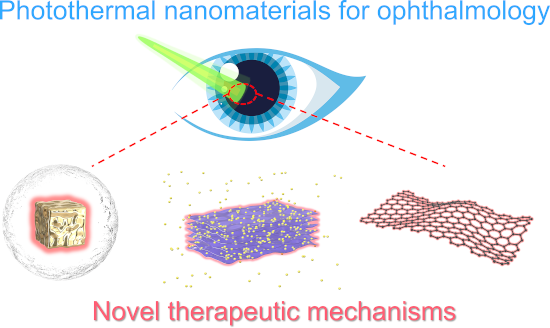
- the AuAg core, work synergistically to eradicate multidrug-resistant bacteria. Additionally, the release of Cu+ ions from the Cu2O shell aids in accelerating endothelial cell angiogenesis and fibroblast migration, thereby enhancing the wound healing process. Clinical assessments, including ophthalmic


Nanocarriers and macrophage interaction: from a potential hurdle to an alternative therapeutic strategy
Beilstein J. Nanotechnol. 2025, 16, 97–118, doi:10.3762/bjnano.16.10
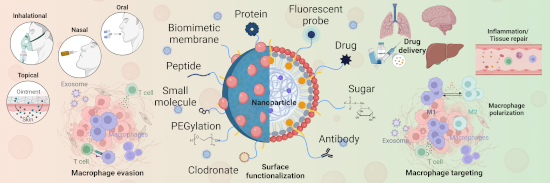
- be considered a therapeutic target, exploiting their natural ability to phagocyte external agents such as NCs. Both monocytes and macrophages perpetuate tissue damage during chronic inflammatory disorders. They are implicated in preventing and resolving inflammation and wound-healing response [8
- ], as well as vascular endothelial growth factor (VEGF) and platelet-derived growth factor (PDGF), which promote extracellular matrix (ECM) deposition and angiogenesis, playing a key role in conditions like fibrosis and wound healing [14][17]. The M2 activation state is mediated by the STAT6 pathway via


Polymer lipid hybrid nanoparticles for phytochemical delivery: challenges, progress, and future prospects
Beilstein J. Nanotechnol. 2024, 15, 1473–1497, doi:10.3762/bjnano.15.118
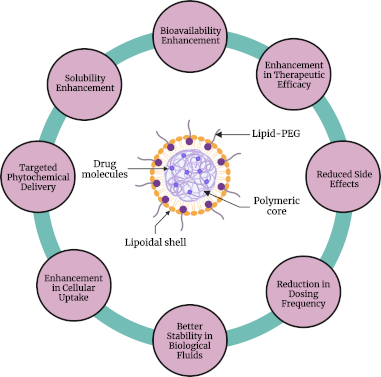
- PLHNPs for topical treatment of wound healing [165]. The developed HPN-cPLHNPs exhibited excellent stability at refrigerator temperatures and rheological characteristics. The HPN-cPLHNPs showed significantly higher skin permeation with a 2.12 ± 0.52 times higher enhancement ratio than that of the pure
- HPN dispersion. The developed HPN-cPLHNPs gels showed much better wound healing activity with a significantly higher reduction in wound size after topical application for 14 days in comparison with the conventional HPN gel. Emodin Emodin (EDN) is a natural anthraquinone compound found in various


Unveiling the potential of alginate-based nanomaterials in sensing technology and smart delivery applications
Beilstein J. Nanotechnol. 2024, 15, 1077–1104, doi:10.3762/bjnano.15.88
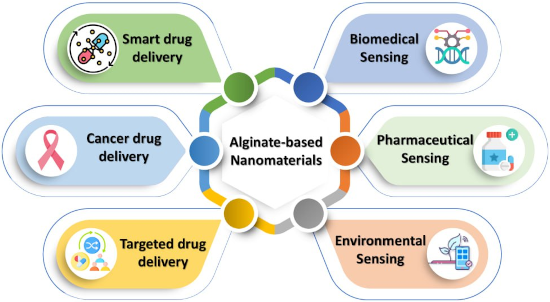
- homeostatic dressing agent for wound healing. In addition, it can be utilized as an emulsifier and thickener in cosmetics, dentistry, and tissue engineering [29]. Furthermore, alginate decreases stomach inflammation and helps the healing of the gastric mucosa. Consequently, it can both protect the stomach and
- have also emphasized alginate-based nanoparticles for drug delivery, wound healing, and controlled release of drugs [35][36][37]. There are few studies that reviewed alginate-based materials for sensing, pharmacy, and biomedicine. Therefore, this review article is based on recent research on alginate


Electrospun polysuccinimide scaffolds containing different salts as potential wound dressing material
Beilstein J. Nanotechnol. 2024, 15, 781–796, doi:10.3762/bjnano.15.65
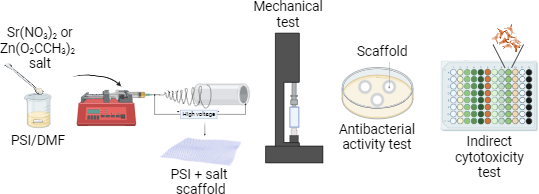
- has several functions in the human body, including wound healing [15][16]. Nanofibers produced by electrospinning have beneficial structural attributes, such as elevated porosity, high specific surface area, and nanoscale fiber dimensions; thus, adequately mimicking the ECM and promoting cellular



Classification and application of metal-based nanoantioxidants in medicine and healthcare
Beilstein J. Nanotechnol. 2024, 15, 396–415, doi:10.3762/bjnano.15.36
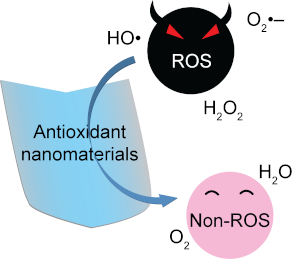
- delivery but also enhances stability and biocompatibility. Recently, Shang et al. used a Au/Cu1.6O/P–C3N5/Arg@HA nanocomposite hydrogel spray coupled with ultrasound for diabetic wound healing (Figure 4) [162]. This nanocomposite spray exhibited five types of enzyme-like activities, that is, CAT-, SOD
- -, peroxidase (POD)-, glucose oxidase (GOx)-, and nitric oxide synthase (NOS)-like activities. More interestingly, both in vitro and in vivo experiments demonstrated that the nanocomposite spray can be activated by the diabetic foot ulcer microenvironment to accelerate diabetic wound healing through decreasing


Berberine-loaded polylactic acid nanofiber scaffold as a drug delivery system: The relationship between chemical characteristics, drug-release behavior, and antibacterial efficiency
Beilstein J. Nanotechnol. 2024, 15, 71–82, doi:10.3762/bjnano.15.7
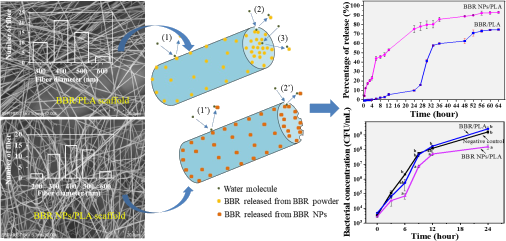
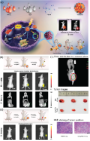
- , nanofiber scaffolds can act as a multifunctional tool in medical treatments, combining drug release for disease therapy, cell proliferation, wound healing, and antimicrobial effect [21][22][23][24][25]. Nanofibers of PLA functionalized with laponite (LAP)/amoxicillin (AMX) prolonged the drug release up to


Quercetin- and caffeic acid-functionalized chitosan-capped colloidal silver nanoparticles: one-pot synthesis, characterization, and anticancer and antibacterial activities
Beilstein J. Nanotechnol. 2023, 14, 362–376, doi:10.3762/bjnano.14.31
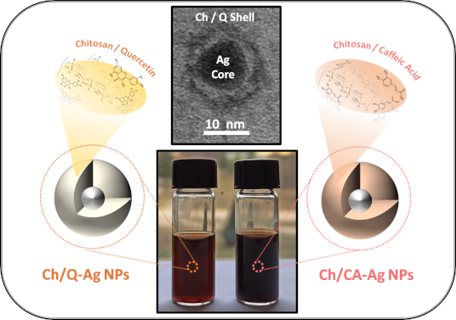
- , anti-inflammatory, antidiabetic, antitumor, antioxidant, lipid-lowering, and wound healing properties [19][20][21][22][23]. Although many studies have been conducted in recent years regarding the synthesis of new structures with quercetin and their biological properties [24][25][26][27][28], there is


Structural, optical, and bioimaging characterization of carbon quantum dots solvothermally synthesized from o-phenylenediamine
Beilstein J. Nanotechnol. 2023, 14, 165–174, doi:10.3762/bjnano.14.17
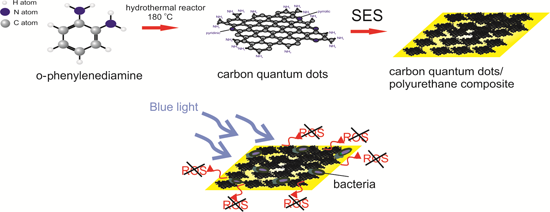
- activity including the usage in wound healing [24]. Different authors prepared CQDs by using various precursors and reported on their excellent antibacterial activity and good biocompatibility [25][26][27][28][29]. In this study o-phenylenediamine dissolved in toluene was used as precursor for CQDs


Frequency-dependent nanomechanical profiling for medical diagnosis
Beilstein J. Nanotechnol. 2022, 13, 1483–1489, doi:10.3762/bjnano.13.122
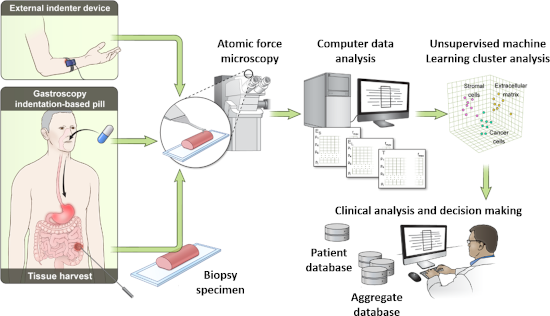
- . Similar considerations exist for the development of soft wearable sensors or hydrogels for wound healing or drug delivery, among others. In all cases, it is of prime importance to create project teams with the appropriate make-up of expertise and within a well-designed strategy, such that ideas can be


Biomimetic chitosan with biocomposite nanomaterials for bone tissue repair and regeneration
Beilstein J. Nanotechnol. 2022, 13, 1051–1067, doi:10.3762/bjnano.13.92
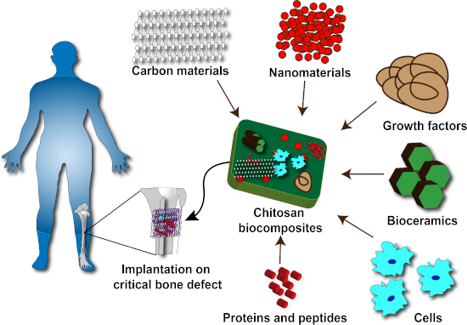
- wettability and protein adsorption which can facilitate osteogenesis [129]. Biomaterials such as chitosan and its composites containing bioactive metals draw much attention in tissue engineering and regenerative applications. Chitosan-based composites are now being studied in wound healing, bone and cartilage



