


Search results
Search for "3D printing" in Full Text gives 29 result(s) in Beilstein Journal of Nanotechnology.
Nano- and microstructured materials for in vitro studies of the physiology of vascular cells
Beilstein J. Nanotechnol. 2016, 7, 1620–1641, doi:10.3762/bjnano.7.155
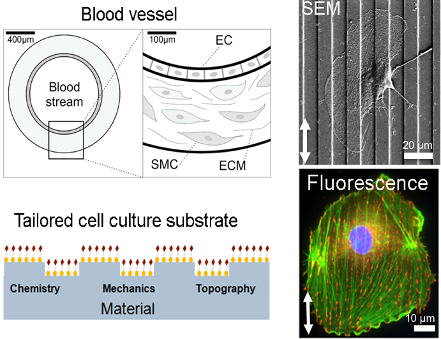
- specific fabrication system that can be grouped in either laser-based system, 3D printing setups, and nozzle-based settings [46][47][48]. We group these fabrication techniques by the size and spatial resolution of the surface features that can be achieved. Not every method is suitable for the production of



Focused particle beam-induced processing
Beilstein J. Nanotechnol. 2015, 6, 1883–1885, doi:10.3762/bjnano.6.191

- Michael Huth Armin Golzhauser Goethe Universität, Physikalisches Institut, Max-von-Laue-Str. 1, D-60438 Frankfurt am Main, Germany Universität Bielefeld, Fakultät für Physik, Universitätsstr. 25, D-33615 Bielefeld, Germany 10.3762/bjnano.6.191 In light of the success of 3D printing using fused
- nanoscale. However, in contrast with large-scale 3D printing of plastic or metallic structures, FPBID provides nanomaterials with a wealth of interesting electronic, optical and magnetic properties. Due to this, focused electron beam-induced deposition (FEBID) has experienced a rapid expansion in the
Biocalcite, a multifunctional inorganic polymer: Building block for calcareous sponge spicules and bioseed for the synthesis of calcium phosphate-based bone
Beilstein J. Nanotechnol. 2014, 5, 610–621, doi:10.3762/bjnano.5.72
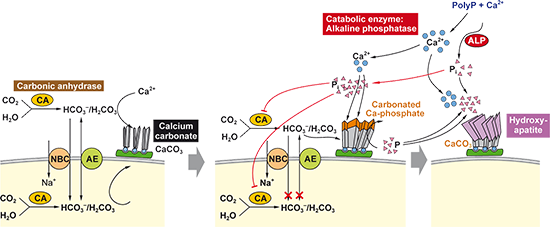
- CA (Figure 5). Future direction: 3D printing In the repair of critical-size bone defects, autogenous bone grafts are considered to be the gold standard [67]. This technique has, however, several limitations which cannot be solved by using allogenous bone grafts, which have additional disadvantages
- vascularization and tissue supply with oxygen. Much progress has been achieved in rapid prototyping/3D printing techiques in the last years. 3D printing is a computer-controlled layer-by-layer technology. Thereby a binder (binding solution) is printed into each layer of powder, a step-wise process that finally
- results, after blowing-away the unbound powder, in a 3D printed copy of the sliced virtual model [70][71]. 3D printing has turned out to be of promising technique for the fabrication of implants used as bone substitution materials [72]. The advantage of this method is that the implants can be customized



Continuous parallel ESI-MS analysis of reactions carried out in a bespoke 3D printed device
Beilstein J. Nanotechnol. 2013, 4, 285–291, doi:10.3762/bjnano.4.31
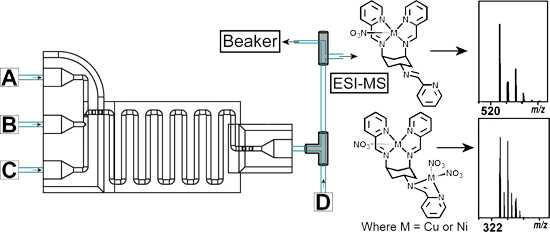
- using three-dimensional (3D) printing, which can be directly linked to a high-resolution electrospray ionisation mass spectrometer (ESI-MS) for real-time, in-line observations. To highlight the potential of the setup, supramolecular coordination chemistry was carried out in the device, with the product
- parallel analysis; ESI-MS; 3D printing; reactionware; supramolecular chemistry; Introduction Flow chemistry is a growing field that can increase productivity and control, ensure reproducibility and reduce manual handling [1]. There is currently a huge interest in directly interfacing milli- and
- /outcome. Traditionally, when interfacing flow devices with ESI-MS analysis complicated and expensive microscale fluidic devices have been required. Herein, we present an approach interfacing ESI-MS with a 3D-printed milliscale device, or tailored “reactionware” [4]. The use of 3D printing bypasses


Other Beilstein-Institut Open Science Activities



