


Search results
Search for "HSA" in Full Text gives 30 result(s) in Beilstein Journal of Nanotechnology.
Coating with luminal gut-constituents alters adherence of nanoparticles to intestinal epithelial cells
Beilstein J. Nanotechnol. 2014, 5, 2308–2315, doi:10.3762/bjnano.5.239
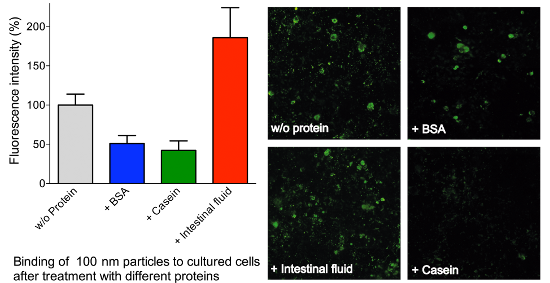
- ], and possible implications for the particle–cell interactions are considered. For example, it was shown that human serum albumin (HSA), BSA and fetal bovine serum can build a protein corona around NPs whereby the particles are stabilized against agglomeration and the colloid stability of the particle



Nanoencapsulation of ultra-small superparamagnetic particles of iron oxide into human serum albumin nanoparticles
Beilstein J. Nanotechnol. 2014, 5, 2259–2266, doi:10.3762/bjnano.5.235
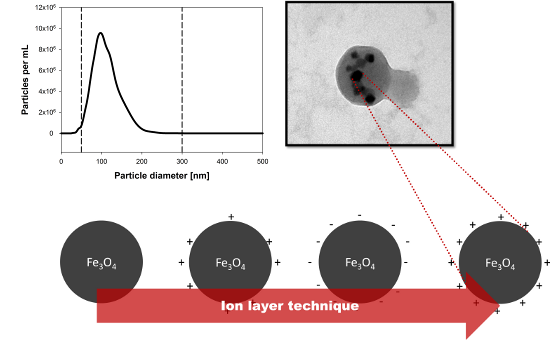
- with the surface modification and nanoencapsulation of USPIO into an albumin matrix by using ethanolic desolvation. Particles of narrow size distribution and with a defined particle structure have been achieved. Keywords: diagnostics; HSA; nanoencapsulation; nanoparticles; USPIO; Introduction Over
- systemic exposition of patients with the carrier [6]. Human serum albumin (HSA) represents a promising candidate that binds a wide range of compounds with different physicochemical characteristics. In 2007, with Abraxane®, a first polymeric nanoparticle formulation consisting of this material has been
- the present study, nanoparticles consisting of HSA were formed by ethanolic desolvation [9]. These nanocarriers were used matrix system for the encapsulation of USPIO. USPIO have been efficiently applied as contrast agents for magnetic resonance imaging and allow the tracking of nanoparticles in vivo


Effects of surface functionalization on the adsorption of human serum albumin onto nanoparticles – a fluorescence correlation spectroscopy study
Beilstein J. Nanotechnol. 2014, 5, 2036–2047, doi:10.3762/bjnano.5.212
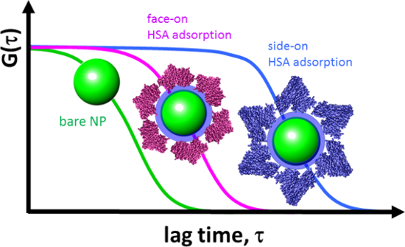
- Marburg, Renthof 7, 35037 Marburg, Germany, Department of Physics, University of Illinois at Urbana-Champaign, 1110 West Green Street, Urbana, IL 61801, USA 10.3762/bjnano.5.212 Abstract By using fluorescence correlation spectroscopy (FCS), we have studied the adsorption of human serum albumin (HSA) onto
- , independent of their surface charge. The differences in the thickness of the protein corona were rationalized in terms of the different orientations in which HSA adsorbs onto the NPs. The midpoints of the binding transition, which quantifies the affinity of HSA toward the NP, were observed to differ by almost
- reliable in our hands. In our original FCS study [45], we investigated the adsorption of human serum albumin (HSA) onto carboxyl-functionalized, polymer-encased iron platinum nanoparticles (Fe–Pt NPs) with a hydrodynamic radius, RH, of 5–6 nm. We prepared HSA solutions of different concentrations in




Design criteria for stable Pt/C fuel cell catalysts
Beilstein J. Nanotechnol. 2014, 5, 44–67, doi:10.3762/bjnano.5.5
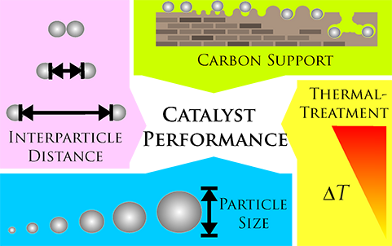
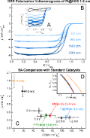
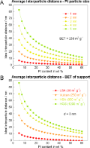
- ), Vulcan (BET ≈ 250 m2·g−1) or high-surface-area carbon black (hereafter denoted as HSA, BET ≈ 800 m2·g−1) in the case of commercial catalysts. Furthermore, the used catalysts have varying platinum contents as well as different platinum particle sizes and thus provide an overview of the impact of various




Characterization of protein adsorption onto FePt nanoparticles using dual-focus fluorescence correlation spectroscopy
Beilstein J. Nanotechnol. 2011, 2, 374–383, doi:10.3762/bjnano.2.43
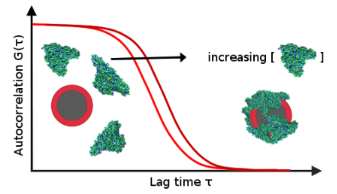
- understand the structural and dynamic properties of the protein corona at the molecular level. Recently, we have used quantitative fluorescence microscopy, especially fluorescence correlation spectroscopy (FCS), to study protein adsorption of human serum albumin (HSA) on polymer-coated FePt NPs with an
- overall diameter of 11 nm [11]. HSA is the major soluble constituent of human blood plasma. It serves primarily as a carrier protein for steroids, fatty acids, and thyroid hormones [18]. We found that, at concentrations typically found in blood serum, ~20 HSA molecules adsorb as a monolayer of ~3.3 nm
- equilibrium binding of three abundant blood plasma proteins to FePt NPs, HSA (which was included to ensure that our previously reported data [11] can be reproduced with our new technique) and the apolipoproteins apoA-I and apoE4. These two proteins function as transporters for lipid molecules in the blood by



Other Beilstein-Institut Open Science Activities



