Search results
Search for "PEGylation" in Full Text gives 35 result(s) in Beilstein Journal of Nanotechnology.
Atomic-level characterization and cilostazol affinity of poly(lactic acid) nanoparticles conjugated with differentially charged hydrophilic molecules
Beilstein J. Nanotechnol. 2018, 9, 1328–1338, doi:10.3762/bjnano.9.126
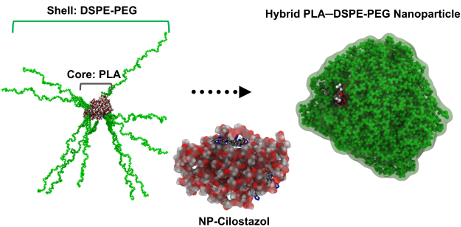
- have shown that PEGylation of NPs allows improved blood circulation, clearance, biocompatibility and less cytotoxicity [15][16][17][18][19]. Hydrophilic polymer chains at the surface of NPs act as a steric barrier, reducing the opsonization and the subsequent phagocytosis [20][21][22]. This amphiphilic
- distributed at the nanoparticle surface. Ensuring a correct PEGylation process is crucial. The surface design of NPs requires that the charged groups must surround the surface region for an optimal functionalization/charge distribution, which is a key factor in determining physicochemical interactions with


Surface characterization of nanoparticles using near-field light scattering
Beilstein J. Nanotechnol. 2018, 9, 1228–1238, doi:10.3762/bjnano.9.114
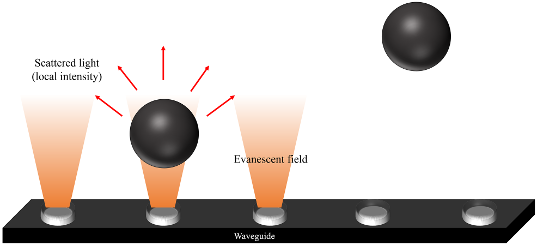
- and colleagues established that near-field light scattering using the nanophotonic force microscope can be used to measure the size of bare silica and PEG-coated silica nanoparticles very accurately [24]. PEGylation of the nanoparticle slightly altered the particle’s surface chemistry and increased
- the attraction between the nanoparticle and waveguide. Researchers attributed the increased diffusion of PEGylated particles towards the waveguide to the slight reduction in particle surface charge (zeta potential) after PEGylation [24]. This study provided evidence that the nanophotonic force
- nanoparticles Transmission electron microscopy (TEM) was used to image uncoated SPIOs and PEG-SPIOs; the results are shown in Figure 3. Although the particles were aggregated as a result of the drying process, uncoated SPIOs exhibited spherical morphology (Figure 3A). After PEGylation, PEG-SPIOs showed a gray




Photothermal effect of gold nanostar patterns inkjet-printed on coated paper substrates with different permeability
Beilstein J. Nanotechnol. 2016, 7, 1480–1485, doi:10.3762/bjnano.7.140
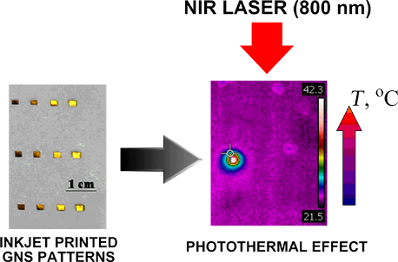
- inkjet-printed with varying drop density and number of layers onto the substrates. Detailed information about the synthesis, characterization, and PEGylation of the GNS, the preparation of the paper substrates and the characterization of their porosity, and the inkjet printing process is provided in


Single pyrimidine discrimination during voltage-driven translocation of osmylated oligodeoxynucleotides via the α-hemolysin nanopore
Beilstein J. Nanotechnol. 2016, 7, 91–101, doi:10.3762/bjnano.7.11
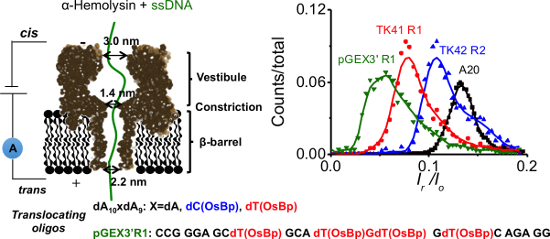
- bases by amino acids or by PEGylation [33][34][35], assessing the specific current level sensed by the pore for each possible sequence in order to create a complete data set of current signatures [36], and the use of improved bioinformatic tools [37][38]. Incorporation of a processing enzyme, phi29 DNA



Mechanical properties of MDCK II cells exposed to gold nanorods
Beilstein J. Nanotechnol. 2015, 6, 223–231, doi:10.3762/bjnano.6.21
- ), respectively. The following day, excess PEG in solution was removed by centrifugation of the suspension and PEGylation was confirmed by gel electrophoresis [10][13][25]. Concentration of particles is given as concentration of gold in μg/mL or particle number per mL. Fluorescence and dark field imaging


The fate of a designed protein corona on nanoparticles in vitro and in vivo
Beilstein J. Nanotechnol. 2015, 6, 36–46, doi:10.3762/bjnano.6.5
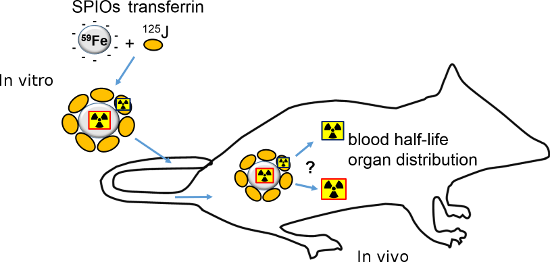
- surface was modified by PEGylation with mono- or bifunctional poly(ethylene oxide)amines (PEG). Using 125I-labeled test proteins (transferrin, albumin), the binding and exchange of corona proteins was studied first in vitro. Incubation with 125I-transferrin showed that with increasing grade of PEGylation
- reported to play significant roles [1][2][3][4][5][6][7]. A small size, neutral or negative zeta potential, and extended PEGylation of the surface material are correlated with increased circulation time in blood after intravenous (i.v.) injection [4][6]. One important implication is that NP upon contact
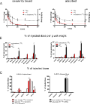
- proteins was diminished with the grade of PEGylation with no observable differences between adsorbed and covalently bound transferrin. After addition of a 3 fold excess of unlabeled bovine albumin, the same procedure of ultrafiltration and SEC-FPLC was performed (Figure 2). Again, a leakage of the adsorbed


Mammalian cell growth on gold nanoparticle-decorated substrates is influenced by the nanoparticle coating
Beilstein J. Nanotechnol. 2014, 5, 2479–2488, doi:10.3762/bjnano.5.257
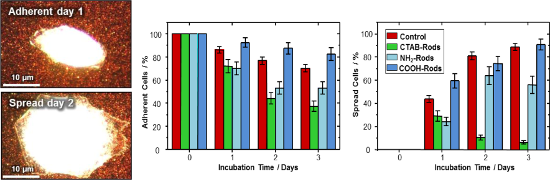
- –PEG particles) or 75% COOH–PEG–SH and 25% CH3O–PEG–SH (COOH–PEG particles), respectively. The next day, excess PEG was removed by centrifugation. The success of the PEGylation was tested by gel electrophoresis, which also reveals the surface charge of the particles (Supporting Information of [20


The surface properties of nanoparticles determine the agglomeration state and the size of the particles under physiological conditions
Beilstein J. Nanotechnol. 2014, 5, 1774–1786, doi:10.3762/bjnano.5.188
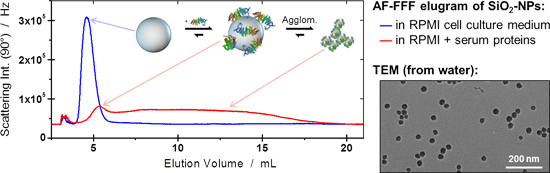
- verified under physiological conditions for the PEGylated samples, as described below. After PEGylation, the zeta potential drops from +30 mV to ca. +15 mV. The explanation for this observation is that the additional PEG layer leads to a shielding of the underlying positive charges. Characterization under


PEGylated versus non-PEGylated magnetic nanoparticles as camptothecin delivery system
Beilstein J. Nanotechnol. 2014, 5, 1312–1319, doi:10.3762/bjnano.5.144
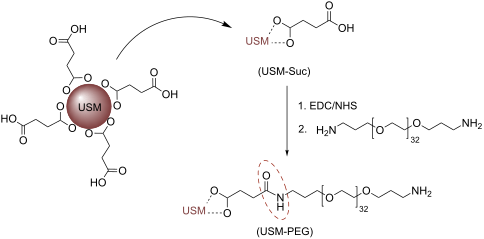
- strategy depicted in Scheme 1. In a typical PEGylation procedure the surface of USM nanoparticles was first coated with succinic acid, in order to allow for the subsequent covalent linkage of bis(3-aminopropyl)-terminated poly(ethylene glycol) through carbodiimide chemistry. It is known that the use of


Sensing surface PEGylation with microcantilevers
Beilstein J. Nanotechnol. 2010, 1, 3–13, doi:10.3762/bjnano.1.2
- biotechnology on account of its good solubility in water and low toxicity. Polypeptide drugs and nanoparticles designed for drug delivery exhibit enhanced biocompatibility and proteolytic resistance (e.g., “stealth” particles) when modified with PEG (i.e., PEGylation) [1][2]. PEG-functionalized surfaces are
- conformation of a surface-grafted PEG layer, and how this might influence its interfacial properties may prove beneficial towards optimizing the PEGylation process. Although techniques such as X-ray photoelectron spectroscopy (XPS) [6][7] and ellipsometry [8] have been proven powerful in terms of studying
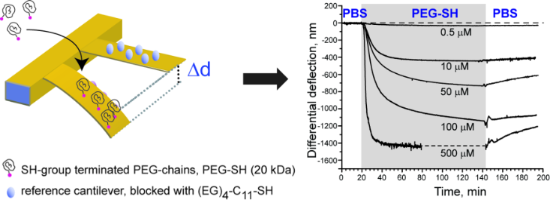
- surface PEGylation, and (2) conformational changes in the PEG layer over a timescale of tens of minutes in situ. Specifically, thiol-terminated PEG (mPEG–SH, 20 kDa) chains have been covalently tethered onto Au-coated microcantilever surfaces by the “grafting to” approach. When switching between good