


Search results
Search for "Pseudomonas aeruginosa" in Full Text gives 34 result(s) in Beilstein Journal of Nanotechnology.
Silver-decorated gel-shell nanobeads: physicochemical characterization and evaluation of antibacterial properties
Beilstein J. Nanotechnol. 2020, 11, 620–630, doi:10.3762/bjnano.11.49
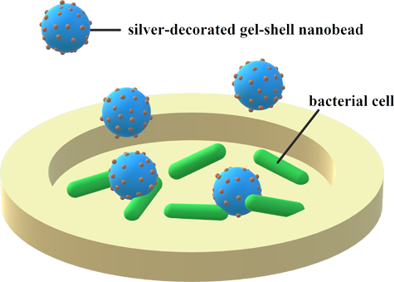
- whole structure. The silver-decorated nanobeads appear to be a promising material with considerable antimicrobial activity and were tested against Escherichia coli, Pseudomonas aeruginosa, Staphylococcus aureus and Staphylococcus epidermidis. The determined minimum inhibitory (MIC) and minimum biofilm
- inhibitory (MBIC) concentrations are comparable to those of non-incorporated silver nanoparticles. Keywords: Escherichia coli; gel-shell particles; minimum biofilm inhibitory concentration (MBIC); minimum inhibitory concentration (MIC); nanocomposites; Pseudomonas aeruginosa; silver nanoparticles


Luminescent gold nanoclusters for bioimaging applications
Beilstein J. Nanotechnol. 2020, 11, 533–546, doi:10.3762/bjnano.11.42
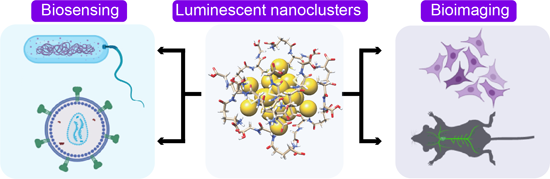
- systematic study used several other pathogenic bacteria, including Streptococcus pyogenes, vancomycin-resistant Enterococcus faecalis (VRE), E. Coli J96, Pseudomonas aeruginosa, pandrug-resistant Acinetobacter baumannii and Enterobacter cloacae in phosphate-buffered saline (PBS) at pH 6 (Figure 2A


Facile biogenic fabrication of hydroxyapatite nanorods using cuttlefish bone and their bactericidal and biocompatibility study
Beilstein J. Nanotechnol. 2020, 11, 285–295, doi:10.3762/bjnano.11.21
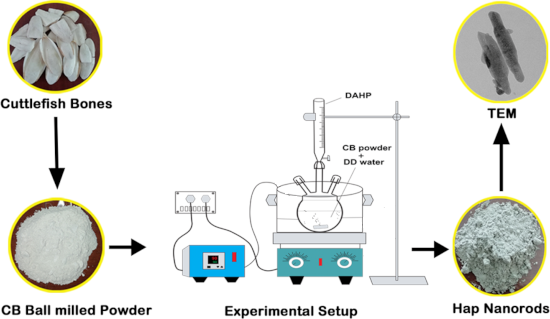
- approach against gram positive S. aureus, Bacillus cereus, Micrococcus luteus, gram-negative Pseudomonas aeruginosa and Shigella flexnari. The study revealed that both pure and zinc-doped Hap have a needle-like morphology [58] and exhibited significant antibacterial activity against M. luteus and S. aureus


Nanocellulose: Recent advances and its prospects in environmental remediation
Beilstein J. Nanotechnol. 2018, 9, 2479–2498, doi:10.3762/bjnano.9.232
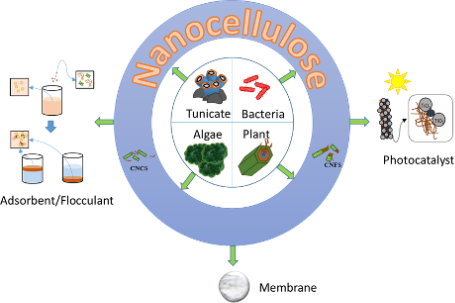
- properties. For instance, Sun et al. [144] reported the effectiveness of applying CNCs to flocculate Gram negative bacteria (Pseudomonas aeruginosa PAO1). The study found that the flocculation efficiency based on the depletion of bacteria depended on the shape of the cellulose colloidal particles. In this


Hemolysin coregulated protein 1 as a molecular gluing unit for the assembly of nanoparticle hybrid structures
Beilstein J. Nanotechnol. 2016, 7, 351–363, doi:10.3762/bjnano.7.32
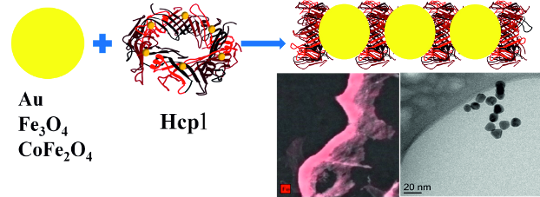
- inorganic material. Here, we use hemolysin coregulated protein 1 (Hcp1) from Pseudomonas aeruginosa as a building and gluing unit for the formation of biohybrid structures by implementing cysteine anchoring points at defined positions on the protein rim (Hcp1_cys3). We successfully apply the Hcp1_cys3
- potential in the design of 1D NP hybrid structures with advanced properties. However, examples for NP assembly using proteins are still limited [15][16][17][18]. Here, we apply the hemolysin coregulated protein 1 (Hcp1) homohexameric protein from Pseudomonas aeruginosa with its toroidal structure as a




NanoE-Tox: New and in-depth database concerning ecotoxicity of nanomaterials
Beilstein J. Nanotechnol. 2015, 6, 1788–1804, doi:10.3762/bjnano.6.183
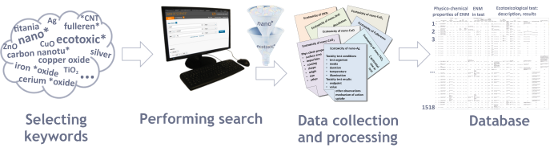
- , Pseudomonas aeruginosa, Staphylococcus aureus (Table S5, Supporting Information File 1), which is likely driven by the important application area of some types of ENMs (TiO2, ZnO, CuO, Ag) as antimicrobials [4][53]. About 16% of the entries in the database regard test organisms other than crustaceans, algae


Mimicking exposures to acute and lifetime concentrations of inhaled silver nanoparticles by two different in vitro approaches
Beilstein J. Nanotechnol. 2014, 5, 1357–1370, doi:10.3762/bjnano.5.149
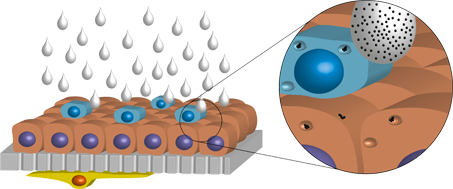
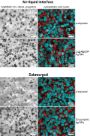
- ) (Pseudomonas aeruginosa, Sigma-Aldrich Chemie GmbH, Buchs, Switzerland) into the medium of the lower transwell chamber 2 h before exposure [42][44]. Exposure conditions Cells were exposed under submerged conditions by applying in the upper transwell chamber 1 mL of the appropriate NP suspension in RPMI



Antimicrobial nanospheres thin coatings prepared by advanced pulsed laser technique
Beilstein J. Nanotechnol. 2014, 5, 872–880, doi:10.3762/bjnano.5.99
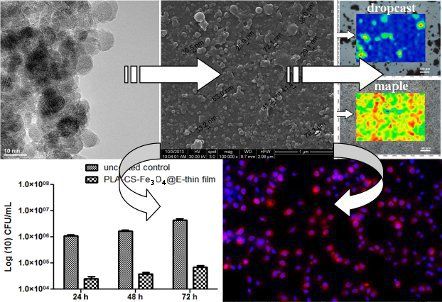
- -CS-Fe3O4@EUG nanospheres diameter sizes range between 20 and 80 nm. These MAPLE-deposited coatings acted as bioactive nanosystems and exhibited a great antimicrobial effect by impairing the adherence and biofilm formation of Staphylococcus aureus (S. aureus) and Pseudomonas aeruginosa (P. aeruginosa
- driven by the Axio-Vision 4.6 (Carl Zeiss, Germany) software. In vitro microbial biofilm development Staphylococcus aureus ATCC 25923 and Pseudomonas aeruginosa ATCC 27853 strains were purchased from American Type Cell Collection (ATCC, USA). For the biofilm assays, fresh bacteria cultures were obtained




Photocatalytic antibacterial performance of TiO2 and Ag-doped TiO2 against S. aureus. P. aeruginosa and E. coli
Beilstein J. Nanotechnol. 2013, 4, 345–351, doi:10.3762/bjnano.4.40
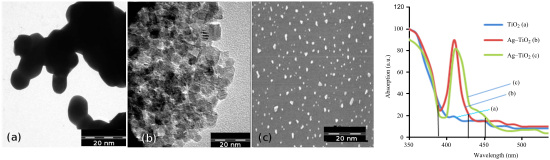
- investigated against Gram-positive Staphylococcus aureus (S. aureus), and Gram-negative Pseudomonas aeruginosa (P. aeruginosa) and Escherichia coli (E. coli) bacteria under visible light. Results and Discussion XRD of TiO2 and Ag-doped TiO2 The samples were annealed at 450 °C to achieve crystallization in TiO2
- and transfer behaviour of the photoexcited electron–hole pairs in the semiconductors was recorded by photoluminescence. The antimicrobial activity of TiO2 and Ag-doped TiO2 nanoparticles (3% and 7%) was investigated against both gram positive (Staphylococcus aureus) and gram negative (Pseudomonas
- aeruginosa, Escherichia coli) bacteria. As a result, the viability of all three microorganisms was reduced to zero at 60 mg/30 mL culture in the case of both (3% and 7% doping) concentrations of Ag-doped TiO2 nanoparticles. Annealed TiO2 showed zero viability at 80 mg/30 mL whereas doped Ag-TiO2 7% showed


Other Beilstein-Institut Open Science Activities



