Search results
Search for "S. aureus" in Full Text gives 49 result(s) in Beilstein Journal of Nanotechnology.
Self-assembly of amino acids toward functional biomaterials
Beilstein J. Nanotechnol. 2021, 12, 1140–1150, doi:10.3762/bjnano.12.85
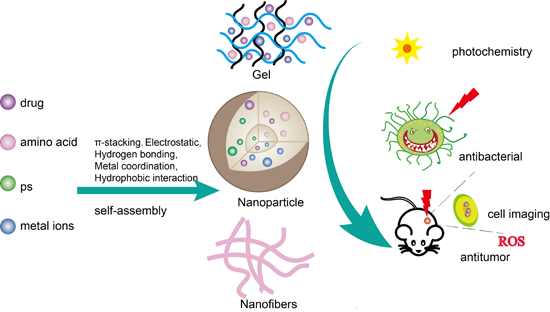
- effectively capturing model bacteria methicillin-resistant S. aureus and Escherichia coli. When Fmoc-ʟ-Phe/OTE-ᴅ-Phe is coated on the surface, it also exhibits a strong ability to specifically kill methicillin-resistant S. aureus. In addition, Chakraborty et al. [43] designed a gelling agent containing two

The role of deep eutectic solvents and carrageenan in synthesizing biocompatible anisotropic metal nanoparticles
Beilstein J. Nanotechnol. 2021, 12, 924–938, doi:10.3762/bjnano.12.69
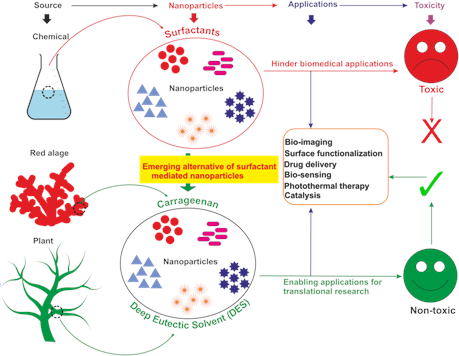
- International Licence, http://creativecommons.org/licenses/by/4.0/. (A) A κ-carrageenan-stabilized hydroxyapatite rod-shaped nanocomposite. (B) Antibacterial study using E. coli, S. aureus, B. subtilis, P. aeruginosa showing the bactericidal properties of the nanocomposite. (C) The nanocomposite shows


Silver nanoparticles nucleated in NaOH-treated halloysite: a potential antimicrobial material
Beilstein J. Nanotechnol. 2021, 12, 798–807, doi:10.3762/bjnano.12.63
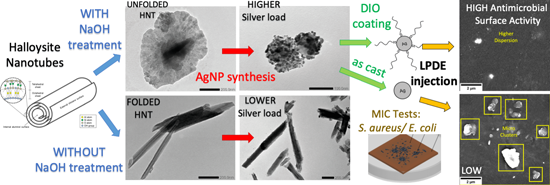
- analysis and differential scanning calorimetry. The antimicrobial properties of the Ag-NPs were investigated against E. coli and S. aureus. The potential of the Ag-NPs for industrial application was tested by dispersing them into low-density polyethylene. The importance of the chemical affinity between
- 25922) and Staphylococcus aureus (ATCC 29213). This was achieved by inoculating the bacteria in selective culture media (rapid coliform broth agar for E. coli and salted manitol agar for S. aureus), followed by 24 h of incubation at 37 °C. After incubation, five colonies of each bacterial species were
- , antimicrobial surface activity tests were performed for LDPE samples doped with Ag/HNT-8 and Ag/HNT-8/DIO. The tests were performed following the guidelines specified in the JIS Z2801 standard, and consist of preparing E. coli and S. aureus suspensions (analogous to the ones produced in the MIC analysis) and




A review on the biological effects of nanomaterials on silkworm (Bombyx mori)
Beilstein J. Nanotechnol. 2021, 12, 190–202, doi:10.3762/bjnano.12.15
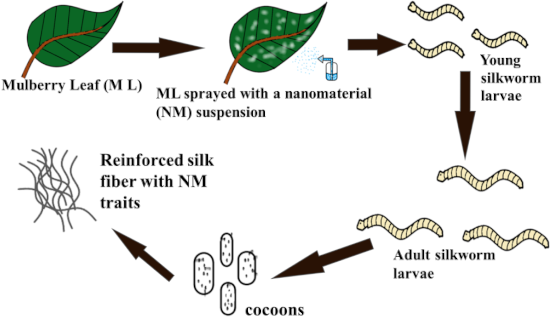
- silkworms their hemocyte density was increased, which accounted for their bactericidal activity against S. aureus. Additionally, bacterial growth was significantly higher in control groups in comparison to groups treated with biosynthesized FLV-Ag NPs, which inhibited bacterial growth. Ag NPs are known for


A review on the green and sustainable synthesis of silver nanoparticles and one-dimensional silver nanostructures
Beilstein J. Nanotechnol. 2021, 12, 102–136, doi:10.3762/bjnano.12.9


Antimicrobial metal-based nanoparticles: a review on their synthesis, types and antimicrobial action
Beilstein J. Nanotechnol. 2020, 11, 1450–1469, doi:10.3762/bjnano.11.129
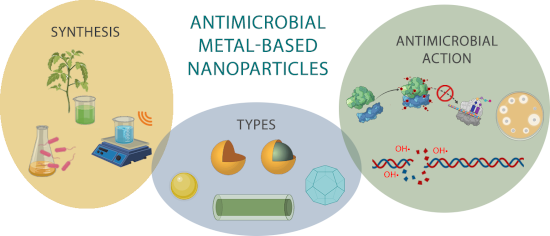
- antibacterial activity against S. aureus was followed by B. subtilis, E. coli and P. aeruginosa. By using latex extracted from an immature Papaya carica fruit and silver nitrate, spherical and highly stable Ag NPs were also obtained. The reduction in Gram-positive bacteria, such as E. faecalis and B. subtilis
- microorganisms, showing larger inhibition zones against Gram-negative bacteria (E. coli and P. aeruginosa) when compared to Gram-positive bacteria (B. subtilis and S. aureus) [94]. Types of metal-based antimicrobial nanoparticles Metallic and metal-oxide nanoparticles Since ancient times, metal-based materials
- ]. Chen et al. (2019) also developed an antimicrobial-based biocomposite containing Ag NPs with good antibacterial properties against E. coli and S. aureus, as shown by the disk diffusion method [102]. Copper nanoparticles are nanomaterials with good chemical stability, heat resistance, and excellent


Photothermally active nanoparticles as a promising tool for eliminating bacteria and biofilms
Beilstein J. Nanotechnol. 2020, 11, 1134–1146, doi:10.3762/bjnano.11.98
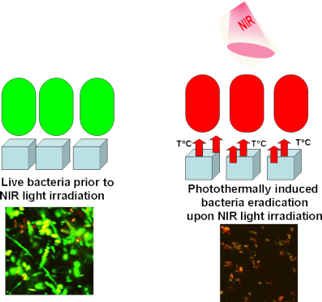
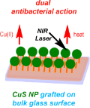
- eliminated the pathogenic P. aeruginosa upon NIR irradiation [49]. Gold nanorods were also applied to efficiently ablate (up to 97%) S. aureus upon NIR laser irradiation [50]. In these studies, the results suggested that the thermal damage of the bacterial membranes led to bacterial death. In 2013, the first
- biofilm viable count was ≈2.5–6.0 log cycle upon laser excitation with different gold nanoparticle concentrations. Previously, the same research group studied the photothermal bactericidal activity of hydrophilic and hydrophobic functionalized gold nanorods against S. aureus and Propionibacterium acnes by
- acidic biofilm microenvironment and an enhanced photothermal ablation of methicillin-resistant S. aureus biofilm under NIR light irradiation (laser intensity 0.91 W/cm2), were previously reported [57]. The gold nanoparticles were modified by pH-responsive mixed-charged zwitterionic self-assembled


Gram-scale synthesis of splat-shaped Ag–TiO2 nanocomposites for enhanced antimicrobial properties
Beilstein J. Nanotechnol. 2020, 11, 1119–1125, doi:10.3762/bjnano.11.96
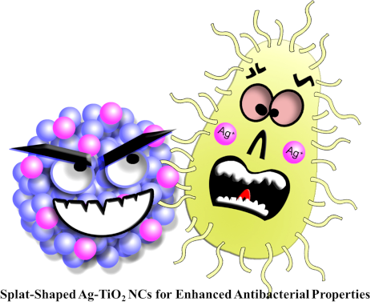
- –TiO2 NCs was tested against the Gram-positive Staphylococcus aureus (S. aureus) and Gram-negative Escherichia coli (E. coli) bacterial strains. The Ag–TiO2 NCs exhibited promising and superior antibacterial properties compared to TiO2 nanospheres as confirmed by the bacterial growth and inhibition zone
- activity of the as-prepared nanocomposites was investigated against Gram-positive S. aureus and Gram-negative E. coli. Experimental Synthesis of the Ag–TiO2 nanocomposite A hydrothermal method was used to prepare the Ag–TiO2 nanocomposite on a gram-scale. 1.25 mol/L of a 16.0 mL titanium sulfate solution
- Gram-positive Staphylococcus aureus (S. aureus) (ATCC 6538) and Gram-negative Escherichia coli (E. coli) (ATCC 8099) were obtained from the Shanghai Amoy Strain Biotechnology Co. (Shanghai, China). The disc diffusion method was applied to check the antibacterial activity of the prepared pure TiO2 NPs


Silver-decorated gel-shell nanobeads: physicochemical characterization and evaluation of antibacterial properties
Beilstein J. Nanotechnol. 2020, 11, 620–630, doi:10.3762/bjnano.11.49
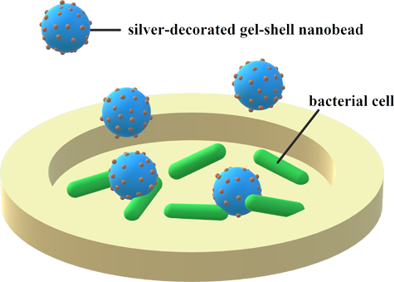
- number of studies has been devoted to non-supported silver nanoparticles and their antimicrobial properties. For example, Martínez-Castañón and co-workers showed that spherical silver nanoparticles of 7 nm in size inhibit the growth of E. coli and S. aureus in concentrations of 6.25 and 7.5 μg/mL
- , respectively [25]. In another study, citrate-stabilized nanoparticles (average diameter of 9 nm) inhibited the growth of E. coli and S. aureus at 10 and 5 μg/mL, respectively [26]. We report herein on the synthesis of nanocomposites with antibacterial properties. The polystyrene nanobeads were modified with
- antimicrobial activity. The MIC values for all of the tested bacterial strains are in the range from 0.76 to 1.14 µg/mL. The least susceptible bacterial strain was gram-positive S. aureus, for which the growth was inhibited at the concentration of 1.14 µg/mL. This result is consistent with previous reports on


Correction: Photocatalytic antibacterial performance of TiO2 and Ag-doped TiO2 against S. aureus. P. aeruginosa and E. coli
Beilstein J. Nanotechnol. 2020, 11, 547–549, doi:10.3762/bjnano.11.43

Luminescent gold nanoclusters for bioimaging applications
Beilstein J. Nanotechnol. 2020, 11, 533–546, doi:10.3762/bjnano.11.42
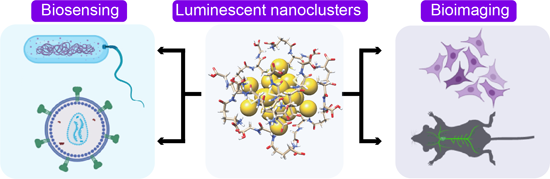
- interact with S. aureus, DVFLGRGGGC (Pep10) and RHPDYSVVLLLRGGGC (Pep16), containing the sequences no. 348 to 352 and no. 361 to 372, were synthesized and used for the synthesis of Au-Pep10 and Au-pep16 NCs. Interestingly, both Au-pep10 and Au-pep16 NCs yielded similar results suggesting that these
- representation of Au-MTU/Prot NC synthesis. D) Microscopy images of S. aureus after treatment with Au-MTU/Prot NCs, Au-MTU/Prot NCs, and control. The red channel was excited at 405 nm. The images were 40 μm × 40 μm. E) A cross-sectional schematic view of a bacterium treated with Au-MTU/Prot. Figure panel 2A is


Facile biogenic fabrication of hydroxyapatite nanorods using cuttlefish bone and their bactericidal and biocompatibility study
Beilstein J. Nanotechnol. 2020, 11, 285–295, doi:10.3762/bjnano.11.21
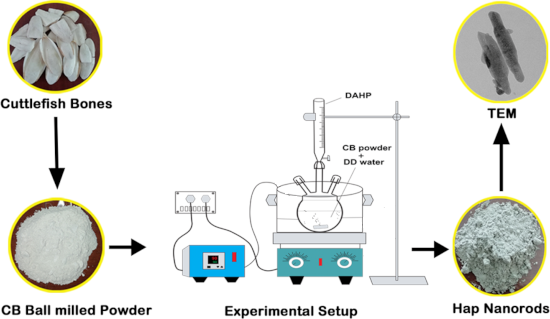
- the TGA data revealed the thermal stability of Hap NRs. In addition, the antibacterial study showed a significant inhibitory effect of CB-Hap NRs against S. aureus (zone of inhibition – 14.5 ± 0.5 mm) and E. coli (13 ± 0.5 mm), whereas the blood compatibility test showed that the CB-Hap NRs exhibited
- can be noted from the literature that nanometer-sized Hap can effectively inhibit antibacterial activity but only when doped or cationic-substituted [55][56]. In contrast, the CB-derived Hap nanorods in the present study show optimum bactericidal effect on E. coli and S. aureus due to the size (>50 nm
- ) and morphology of the material. However, no such activity was observed for CB alone. The obtained results are displayed in Figure 6 and the zone of inhibition in Table 1 shows a better bactericidal effect of Hap NRs towards S. aureus as compared with E. coli. This is due to the variations in cell


Novel hollow titanium dioxide nanospheres with antimicrobial activity against resistant bacteria
Beilstein J. Nanotechnol. 2019, 10, 1716–1725, doi:10.3762/bjnano.10.167
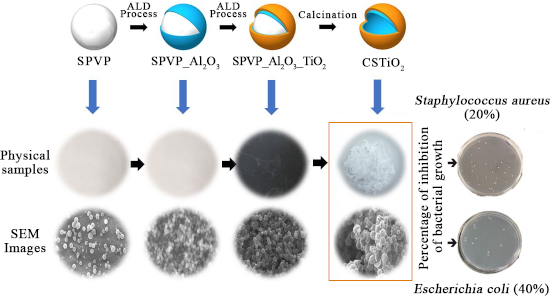
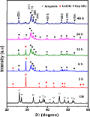
- bacteria, including resistant E. coli and S. aureus strains, and when compared to commercial TiO2 nanoparticles, CSTiO2 nanospheres exhibited superior performance. In addition, the positive effect of UV irradiation on the antimicrobial activity was demonstrated. Keywords: antimicrobial nanoparticles
- 622-4) and Escherichia coli (control strain ATCC®25922TM and resistant strain E. coli 33.1). When the analysis was done using control strains, the results in Table 1 indicate that CSTiO2 presented an improved antibacterial activity against S. aureus and a similar activity against E. coli in comparison
- bacteria, such as control and resistant E. coli strains, than Gram-positive bacteria, such as S. aureus ATCC 6538, MRSA 97-7 and MRSA 622-4. Different mechanisms of antimicrobial activity can be exerted by NPs. Specifically, in the case of TiO2 NPs, previous works have declared bactericidal activity via


Preparation of alginate–chitosan–cyclodextrin micro- and nanoparticles loaded with anti-tuberculosis compounds
Beilstein J. Nanotechnol. 2016, 7, 1208–1218, doi:10.3762/bjnano.7.112
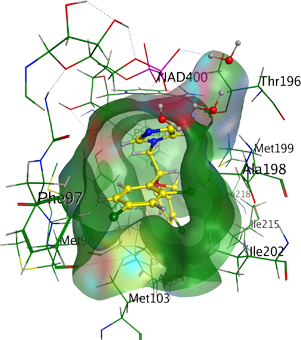
- addition to this, ISN has an antibacterial effect against gram-positive bacteria (B. cereus, C. tuberculostearicum, S. aureus MR, S. haemolyticus, S. hominis, and S. salivarius) confirmed by numerous reports on its antibacterial activity [21][22][23][24][25]. The antibacterial activity of ISN has been



Ultrastructural changes in methicillin-resistant Staphylococcus aureus induced by positively charged silver nanoparticles
Beilstein J. Nanotechnol. 2015, 6, 2396–2405, doi:10.3762/bjnano.6.246
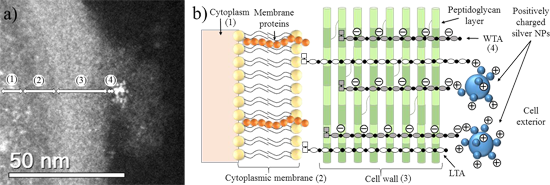
- ; Staphylococcus aureus; wall teichoic acids; Introduction Bacterial infections are a major reason of morbidity and mortality globally [1], and most infections can be attributed to species of the genus Staphylococcus [2]. Staphylococcus aureus (S. aureus) is well known for its ability to acquire genetic
- resistance against almost all antibiotics [3]. As penicillin and other β-lactams were previously very efficient antibiotics in treating staphylococcal infections, the prevalent resistance of methicillin-resistant Staphylococcus aureus (MRSA) has made therapy continuously more complex [4]. S. aureus has also
- pressure. MRSA is resistant to all ß-lactam antibiotics due to its production of an extra penicillin-binding protein (PBP2a) [8]. With scarce management options for MRSA, there is a pressing necessity for the development of novel bactericides [9]. S. aureus is capable of causing chronic bone and joint


Synthesis, characterization and in vitro effects of 7 nm alloyed silver–gold nanoparticles
Beilstein J. Nanotechnol. 2015, 6, 1212–1220, doi:10.3762/bjnano.6.124
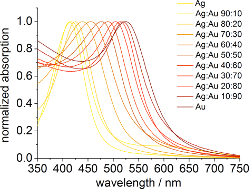
- complexes and spermatozoa, the nanoparticles showed toxic effects when the molar silver content was higher than 50%. Still, the effect was lower than the expected toxicity based on the silver content [38]. Similar results were found for human gingival fibroblasts and S. aureus [25]. For our investigations


Fulleropeptide esters as potential self-assembled antioxidants
Beilstein J. Nanotechnol. 2015, 6, 1065–1071, doi:10.3762/bjnano.6.107
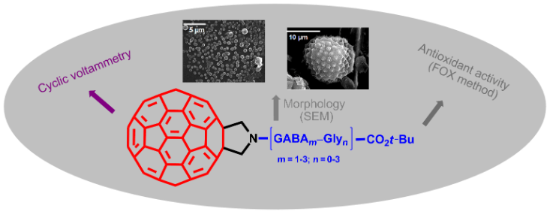
- wide range of activities of fullerene–peptide conjugates has been studied [3][7][16]. Fulleropeptides synthesized by Prato's research group [17] showed a good bacteriostatic activity against Gram-positive bacterium S. aureus making it interesting for potential antimicrobial chemotherapeutics. Recently


Hydrophobic interaction governs unspecific adhesion of staphylococci: a single cell force spectroscopy study
Beilstein J. Nanotechnol. 2014, 5, 1501–1512, doi:10.3762/bjnano.5.163
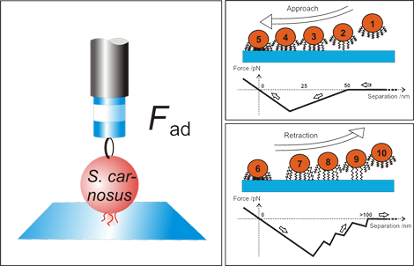
- catalase and superoxide dismutase [3]. Only recently, the genome of S. carnosus strain TM300 has been decoded [4][5]. In contrast to pathogenic staphylococcal species, such as S. aureus and S. epidermidis, the genome of S. carnosus lacks significant amounts of mobile genetic elements, and is poor in
- repetitive DNA sequences that are thought to facilitate the plasticity of genomes by allowing for enhanced genomic diversification due to recombinational events [5]. Although the S. carnosus genome encodes some homologues of adhesion factors found in S. aureus, it lacks the majority of adhesive molecules of
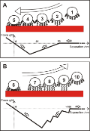
- other hydrophobic macromolecules may contribute to adhesion. For S. aureus for example, teichoic acids are reported to be strongly hydrophilic [40]. Our model of bacterial adhesion, which will be proposed in the following, however, is not depending on the exact type of adhesive mediator. Figure 8A


Antimicrobial nanospheres thin coatings prepared by advanced pulsed laser technique
Beilstein J. Nanotechnol. 2014, 5, 872–880, doi:10.3762/bjnano.5.99
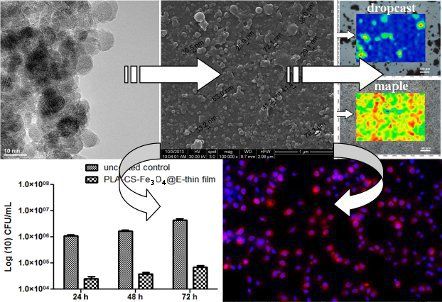
- -CS-Fe3O4@EUG nanospheres diameter sizes range between 20 and 80 nm. These MAPLE-deposited coatings acted as bioactive nanosystems and exhibited a great antimicrobial effect by impairing the adherence and biofilm formation of Staphylococcus aureus (S. aureus) and Pseudomonas aeruginosa (P. aeruginosa
- nanoparticles; nanospheres; P. aeruginosa; polylactic acid; S. aureus; Introduction Driven by more and more microbial antibiotic resistance, alternative therapeutic approaches are emerging [1][2][3][4]. Polar and nonpolar, functionalized and non-functionalized magnetite nanostructures have proven successfully
- biocompatibility with human cells, the newly synthesized nano-active thin coating exhibited a great antimicrobial activity. The surface inhibited both S. aureus and P. aeruginosa attachment and also the formation of non-specific biofilms. MAPLE deposited thin films interfere with biofilm formation both in the




Antimicrobial properties of CuO nanorods and multi-armed nanoparticles against B. anthracis vegetative cells and endospores
Beilstein J. Nanotechnol. 2014, 5, 789–800, doi:10.3762/bjnano.5.91
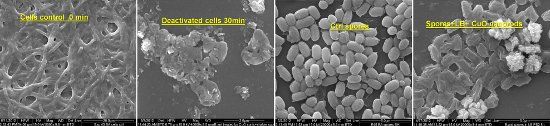
- , generated on copper foil as effective antibacterial against E. coli bacteria when the bacterial suspension drop was tested on these surfaces. Perelshtein et al. [19] have reported antibacterial CuO-cotton textile against E. coli and S. aureus. Gao et al. [20] reported strong antibacterial activity of CuO


Atomic force microscopy recognition of protein A on Staphylococcus aureus cell surfaces by labelling with IgG–Au conjugates
Beilstein J. Nanotechnol. 2013, 4, 743–749, doi:10.3762/bjnano.4.84
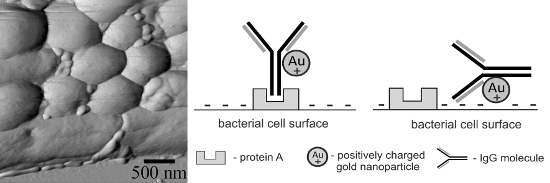
- cell-surface markers for atomic force microscopy (AFM). The use of 30-nm size Au nanoparticles conjugated with immunoglobulin G (IgG) allowed the visualization, localization and distribution of protein A–IgG complexes on the surface of S. aureus. The selectivity of the labelling method was confirmed in
- mixtures of S. aureus with Bacillus licheniformis cells, which differed by size and shape and had no IgG receptors on the surface. A preferential binding of the IgG–Au conjugates to S. aureus was obtained. Thus, this novel approach allows the identification of protein A and other IgG receptor-bearing
- aggregation of conjugates as indicated in [13]. These results were used as background for the following labelling and recognition of IgG–Au conjugates on the bacterial surfaces. As visualized in the second step of the study, intact S. aureus cells appeared on the mica surface as grape-like clusters of round


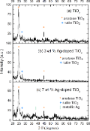
Photocatalytic antibacterial performance of TiO2 and Ag-doped TiO2 against S. aureus. P. aeruginosa and E. coli
Beilstein J. Nanotechnol. 2013, 4, 345–351, doi:10.3762/bjnano.4.40
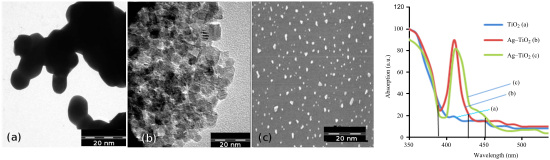
- investigated against Gram-positive Staphylococcus aureus (S. aureus), and Gram-negative Pseudomonas aeruginosa (P. aeruginosa) and Escherichia coli (E. coli) bacteria under visible light. Results and Discussion XRD of TiO2 and Ag-doped TiO2 The samples were annealed at 450 °C to achieve crystallization in TiO2
- both concentrations (3% and 7%) were toxic to all the bacteria tested. However, application of 7% doped Ag–TiO2 nanoparticles killed 100% P. aeruginosa cells at 40 mg/30 mL concentration, while 5% and 4% viabilities of S. aureus and E. coli were obtained, respectively. It is also clear from Figure 6
- nanoparticles at 60 mg/30 mL of culture, 0% viability in the case of P. aeruginosa was recorded, while in the case of S. aureus and E. coli 7% and 3% viabilities were recorded. Therefore 7% doped silver nanoparticles at 60 mg/30 mL of bacterial culture (0.2 O.D. at 660 nm) is the optimum concentration for the


Paper modified with ZnO nanorods – antimicrobial studies
Beilstein J. Nanotechnol. 2012, 3, 684–691, doi:10.3762/bjnano.3.78
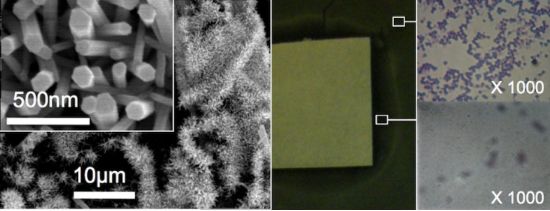
- in cellular internalization of ZnO nanoparticles has also been observed by Appierot et al. [6] in a study of their antibacterial effect on E. coli and S. aureus. This work reports on an antimicrobial paper containing zinc oxide (ZnO) nanorods grown by a hydrothermal process, and which can be used for
- environment leading to the rupture of the bacterial cell wall [23]. S. aureus, being a Gram-positive bacterium, has a thicker cell wall [24], and consequently its immobilization by using the ZnO-coated antimicrobial paper is comparatively lower than that of E. coli. The highest antimicrobial activity was
- , 48 and 72 h with maximum inhibition of 2.8 cm after 72 h under halogen-light illumination. For S. aureus, the maximum zone of inhibition noted was 2.1 cm for 72 h incubation under 1 klx halogen light. The minimum zones of inhibition were noted for dark conditions confirming the enhancement of the


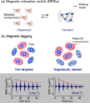
Magnetic nanoparticles for biomedical NMR-based diagnostics
Beilstein J. Nanotechnol. 2010, 1, 142–154, doi:10.3762/bjnano.1.17
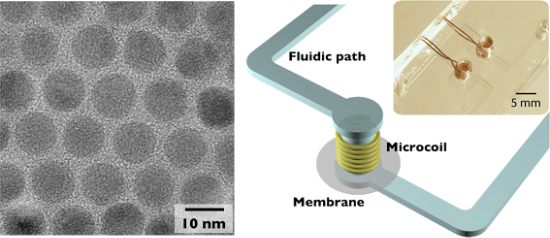
- targets. For example, detection of the bacterium Staphylococcus aureus was recently reported with the μNMR device. S. aureus were initially incubated with MNPs derivatized with vancomycin, a drug which binds to D-alanyl–D-alanine moieties in the bacterial cell wall to form dense clusters (Figure 6a) [14
- T2 relaxation time. (Reproduced with permission from [13][14]. Copyright 2002, 2008 Nature Publishing Group.) DMR detection of bacteria by tagging the bacterial samples with MNPs. (a) Scanning electron micrograph of S. aureus. Inset shows TEM of S. aureus targeted by CLIO conjugated with vancomycin
- . MNPs formed dense clusters on the bacterial wall. Elemental analysis by energy dispersive X-ray spectrometry further confirmed the binding of nanoparticles to the bacteria. (b) Changes to T2 with varying number of S. aureus. The DMR system had a detection sensitivity of a few colony-forming units (CFUs