


Search results
Search for "antibacterial properties" in Full Text gives 45 result(s) in Beilstein Journal of Nanotechnology.
Photothermally active nanoparticles as a promising tool for eliminating bacteria and biofilms
Beilstein J. Nanotechnol. 2020, 11, 1134–1146, doi:10.3762/bjnano.11.98
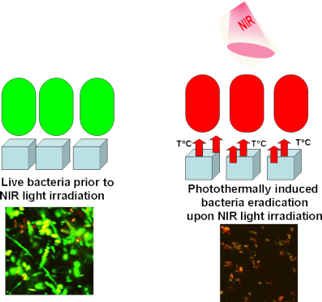
- results regarding antibacterial activity. The advances in the field of nanomaterials exhibiting antibacterial activity are well summarized in recent reviews [1][7][8][9]. In particular, the antibacterial properties of silver nanoparticles (Ag NPs) and Ag-NP-based polymeric materials are the most
- formation are controversial as the Ag nanoparticles seem to be effective against the Gram-negative but not so much against the Gram-positive strains [6]. The antibacterial properties of a wide range of nanoparticles and their corresponding nanocomposites, such as ZnO [17][18], TiO2 [19][20], Fe3O4 [21][22
- studied. The state-of-the art in antimicrobial polymeric nanoparticles, with an emphasis on the relationship between their structure and activity, is well presented in a recent review [29]. The antibacterial properties of solid lipid nanoparticles are also a subject of specific research interest as they


Gram-scale synthesis of splat-shaped Ag–TiO2 nanocomposites for enhanced antimicrobial properties
Beilstein J. Nanotechnol. 2020, 11, 1119–1125, doi:10.3762/bjnano.11.96
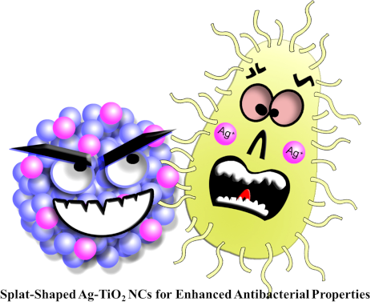
- antibacterial properties of TiO2 in the presence of silver were examined. The formation of Ag–TiO2 NCs was analyzed through various characterization techniques. The cell viability experimental results demonstrated that the Ag–TiO2 NCs have good biocompatibility. The antibacterial activity of the prepared Ag
- –TiO2 NCs was tested against the Gram-positive Staphylococcus aureus (S. aureus) and Gram-negative Escherichia coli (E. coli) bacterial strains. The Ag–TiO2 NCs exhibited promising and superior antibacterial properties compared to TiO2 nanospheres as confirmed by the bacterial growth and inhibition zone
- antibiotics, leading to environmental toxicity and damage of target organs in the human body [1]. Also, these materials rapidly dissolve in the human body creating numerous clinical risks [2][3]. In spite of the desirable antibacterial properties, the traditional quaternary ammonium salts (QASs) and the


Wet-spinning of magneto-responsive helical chitosan microfibers
Beilstein J. Nanotechnol. 2020, 11, 991–999, doi:10.3762/bjnano.11.83
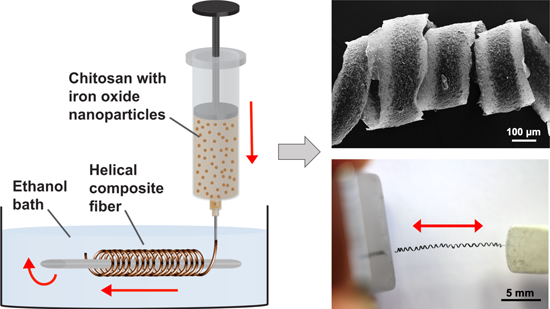
- polysaccharides such as alginate, hyaluronic acid or chitosan, are widely used as biocompatible materials since they are biochemically similar to the native extracellular matrix (ECM) [16]. Chitosan is a biopolymer that combines excellent biocompatibility, low toxicity and antibacterial properties with a low


Silver-decorated gel-shell nanobeads: physicochemical characterization and evaluation of antibacterial properties
Beilstein J. Nanotechnol. 2020, 11, 620–630, doi:10.3762/bjnano.11.49
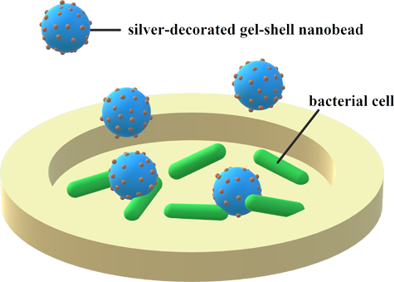
- of composite nanobeads with antibacterial properties. The particles consist of polystyrene cores that are surrounded by sulfonic gel shells with embedded silver nanoparticles. The nanocomposite beads are prepared by sulfonation of polystyrene particles followed by accumulation of silver ions in the
- , respectively [25]. In another study, citrate-stabilized nanoparticles (average diameter of 9 nm) inhibited the growth of E. coli and S. aureus at 10 and 5 μg/mL, respectively [26]. We report herein on the synthesis of nanocomposites with antibacterial properties. The polystyrene nanobeads were modified with
- nanobeads, which likely stabilizes these structures. The hybrid particles reveal considerable antibacterial properties. This has been evaluated based on the determination of MIC and MBIC values and an estimation of bacterial viability through fluorescence staining. Experimental Chemicals All chemicals were


Luminescent gold nanoclusters for bioimaging applications
Beilstein J. Nanotechnol. 2020, 11, 533–546, doi:10.3762/bjnano.11.42
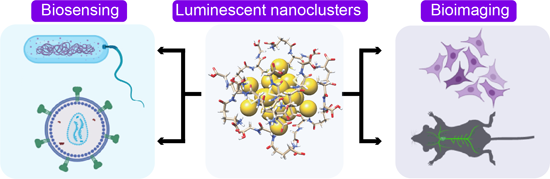
- rigidify the surface resulting in a 28-fold increase in the PL of Au-MTU/Prot NCs compared to that of Au-MTU NCs. The resulting Au-MTU/Prot NCs displayed antibacterial properties with abilities to kill both Gram-positive and Gram-negative bacteria, which was shown using E. coli and SA strains. The addition


Novel hollow titanium dioxide nanospheres with antimicrobial activity against resistant bacteria
Beilstein J. Nanotechnol. 2019, 10, 1716–1725, doi:10.3762/bjnano.10.167
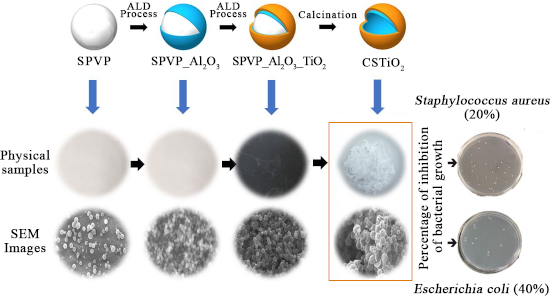
- the S. aureus strain. Antimicrobial tests also revealed that hollow TiO2 nanospheres present promising activity when irradiated with UV light. In addition to the antibacterial properties, these hollow nanospheres could be used for photocatalytic purposes. This represents a first work that opens up


Tailoring the stability/aggregation of one-dimensional TiO2(B)/titanate nanowires using surfactants
Beilstein J. Nanotechnol. 2019, 10, 1024–1037, doi:10.3762/bjnano.10.103
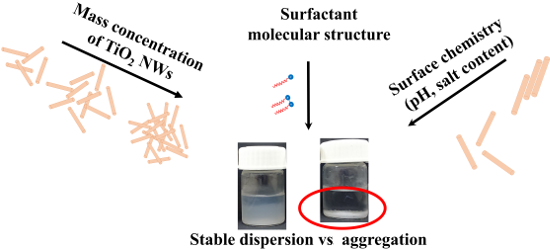
- biomedical. On the other hand, quaternary ammonium surfactants are the most commonly encountered cationic surfactants due to their high surface activity, good antibacterial properties as well as availability due to the ease of synthesis. In addition, comparing the effects of monomeric and corresponding


Mechanism of silica–lysozyme composite formation unravelled by in situ fast SAXS
Beilstein J. Nanotechnol. 2019, 10, 182–197, doi:10.3762/bjnano.10.17
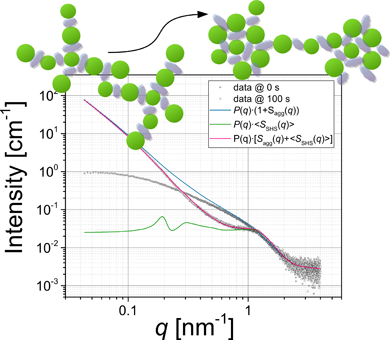
- silica NPs [16][17][18], while at the same time preserving its enzymatic activity, most notably antibacterial properties [19]. Over a wide range of pH values (2 to ca. 10), the surface of silica NPs is negatively charged, whereas the LZM molecule is positively charged [20][21]. This way LZM can act as a



New micro/mesoporous nanocomposite material from low-cost sources for the efficient removal of aromatic and pathogenic pollutants from water
Beilstein J. Nanotechnol. 2019, 10, 119–131, doi:10.3762/bjnano.10.11
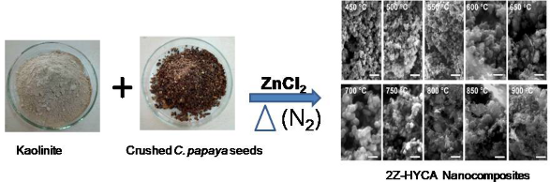
- with a much lower efficiency. This finding suggests that the presence of Zn2+ in the composite material directly affects E. coli removal from solution, likely because zinc has antibacterial properties. Although the precise functional mechanism is unknown, it has been suggested that Zn-doped materials




Fabrication of photothermally active poly(vinyl alcohol) films with gold nanostars for antibacterial applications
Beilstein J. Nanotechnol. 2018, 9, 2040–2048, doi:10.3762/bjnano.9.193
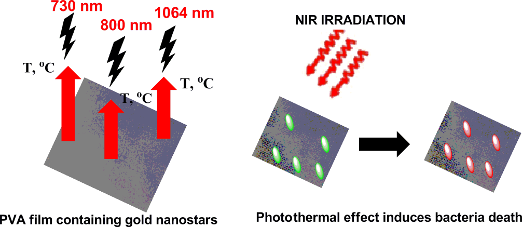
- antibacterial films and coatings. Keywords: antibacterial properties; gold nanostars; photothermal effect; poly(vinyl alcohol) films; Introduction The photothermal properties of non-spherical gold nanoparticles possessing localized surface plasmon resonance (LSPR) located in NIR range has already been
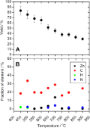
- solid lines).The slopes (b) of the fitting curves (y = a + bx) are: b = 0.19 ± 0.01 °C/mW (1064 nm); b = 0.3 ± 0.1 °C/mW (800 nm); b = 0.3 ± 0.1 °C/mW (730 nm). Irradiation area ≈ 0.4 cm2. Workflow scheme of the antibacterial properties study. (a) Temperature increase of PVA and PVA-GNS films upon


Comparative study of antibacterial properties of polystyrene films with TiOx and Cu nanoparticles fabricated using cluster beam technique
Beilstein J. Nanotechnol. 2018, 9, 861–869, doi:10.3762/bjnano.9.80
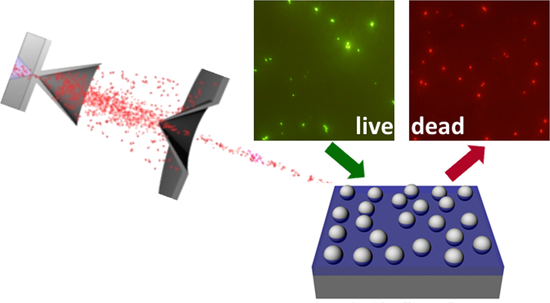
- same composite films making the suggested approach attractive for the cases requiring reusable polymer-based antibacterial media. Keywords: antibacterial properties; cluster beam technique; nanoparticles; polymers; Introduction Certain metals, when present in excess, become destructive or lethal to
- resistant against washing out in procedures. It has recently been shown that the deposition of metal NPs using the cluster beam technique is an efficient approach in the formation of polymer composite films with antibacterial properties. The composites can be formed by either incorporation of particles
- tested in [20], because such experiments were not carried out. However, we would like to stress that despite the considerable reduction of the activity already after the 3rd cycle in our case the particles still exhibit antibacterial properties, which are slowly degrading up to the 7th cycle. Conclusion




Noble metal-modified titania with visible-light activity for the decomposition of microorganisms
Beilstein J. Nanotechnol. 2018, 9, 829–841, doi:10.3762/bjnano.9.77
- , clothes and dental treatment). For example, slowly released nanosilver has been used in a variety of domestic appliances, such as washing machines (e.g., Samsung SilverNanoHealth technology). Moreover, antibacterial properties of noble metals have been applied for medical purposes, including healing of
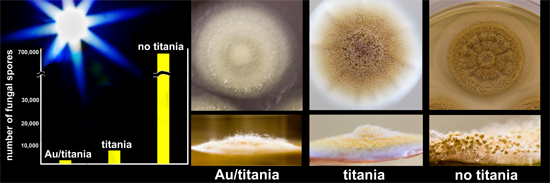
- gold and silver [58]. Antibacterial activities of plasmonic photocatalysts At first, the antibacterial properties of bare titania samples were investigated, and data are presented in Supporting Information File 1 (Table S1). In the dark, antibacterial properties of bare titania samples were very low
- reaching 15.4%, 16.4% and 23.7% of mortality after 45 min of treatment with TiO2(ST01), TiO2(ST41) and TiO2(TIO6) samples, respectively. Under irradiation with visible light, an increase in antibacterial properties was noticed reaching 23.2%, 25.8% and 27.9%, respectively. Under UV irradiation, significant


Antibacterial activity of silver nanoparticles obtained by pulsed laser ablation in pure water and in chloride solution
Beilstein J. Nanotechnol. 2016, 7, 465–473, doi:10.3762/bjnano.7.40
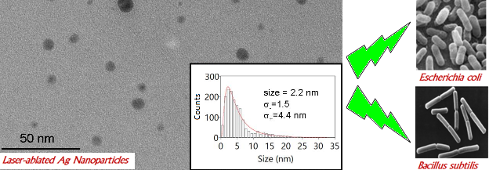
- ][29][30][39]. Only a few studies on the antibacterial properties of PLAL-produced AgNPs are available. Among these, the only data (to the best of our knowledge) on bacterial growth inhibition by the broth dilution method are reported by Pandey et al. [31], who found MIC values of 2 µg/mL against E


Sonochemical co-deposition of antibacterial nanoparticles and dyes on textiles
Beilstein J. Nanotechnol. 2016, 7, 1–8, doi:10.3762/bjnano.7.1
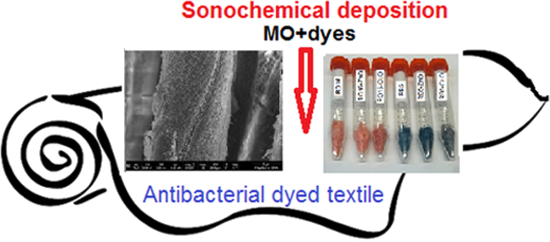
- antibacterial properties. The color fastness was evaluated by immersing the coated/dyed cotton in water and monitoring the absorbance of the colored fabric. Two major issues were solved in this research: i) the antibacterial activity of the metal oxide (MO) NPs was maintained while deposited simultaneously with
- the sonochemical vs conventional dip (exhaustion) dyeing. Morphology of the coating The sonochemical technique appears as an efficient method for coating of substrates and textiles in particular [6][10]. This is reflected in the retention of the antibacterial properties of the coated fabrics even
- of the NMR measurement. Antibacterial activity The antibacterial properties of sonochemically produced MO NPs synthesized from ethanol/water solution were previously evaluated and reported [6][10]. In the current paper, the antibacterial properties of entirely water-based synthesized MO NPs complexed




Ultrastructural changes in methicillin-resistant Staphylococcus aureus induced by positively charged silver nanoparticles
Beilstein J. Nanotechnol. 2015, 6, 2396–2405, doi:10.3762/bjnano.6.246
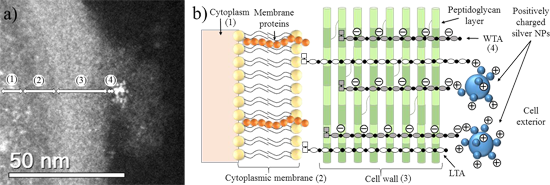
- Abstract Silver nanoparticles offer a possible means of fighting antibacterial resistance. Most of their antibacterial properties are attributed to their silver ions. In the present work, we study the actions of positively charged silver nanoparticles against both methicillin-sensitive Staphylococcus
- , leading to structural strain in and permeability of the bacterial cell wall. This finding provides a major mechanism to explain the antibacterial properties of silver nanoparticles on Staphylococcus aureus. Results and Discussion Characterization of AgNPs TEM images of silver nanoparticles (Figure 1a


Novel ZnO:Ag nanocomposites induce significant oxidative stress in human fibroblast malignant melanoma (Ht144) cells
Beilstein J. Nanotechnol. 2015, 6, 570–582, doi:10.3762/bjnano.6.59
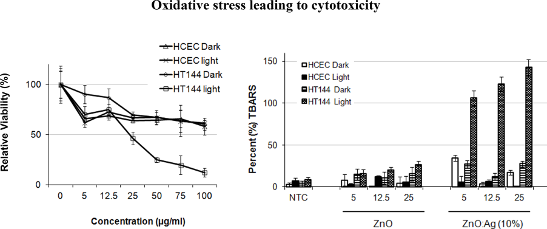
- antibacterial properties [12][13], are used in the cosmetics industry [14][15], and are used as nanoscale biosensors [11] and as drug carriers [16][17]. These NPs are being increasingly recognized due to their differential activity against tumor cells while being non-toxic to normal cells [18][19][20][21][22




PVP-coated, negatively charged silver nanoparticles: A multi-center study of their physicochemical characteristics, cell culture and in vivo experiments
Beilstein J. Nanotechnol. 2014, 5, 1944–1965, doi:10.3762/bjnano.5.205

- production and the manufacture of nanoparticle-containing materials. However, since the antibacterial properties of silver nanoparticles and silver salts promote an increased use in personal care products, aerosolized silver nanoparticles and silver salts in spray products such as deodorants or


An ultrasonic technology for production of antibacterial nanomaterials and their coating on textiles
Beilstein J. Nanotechnol. 2014, 5, 532–536, doi:10.3762/bjnano.5.62
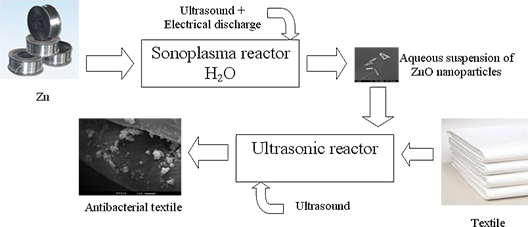
- electrodes. This leads to the possibility to create a spatial electrical discharge in water. Creation of such discharge leads to the depletion of the electrodes and the formation of ZnO nanoparticles, which demonstrate antibacterial properties. At the end of this reaction the suspension of ZnO nanoparticles
- significant source of infection. To ameliorate the problem one could replace reusable textiles with disposable items. But this is quite expensive. Another more promising approach is to use antibacterial textiles. In this case it is very important to ensure the preservation of the antibacterial properties
- after washing. Antimicrobial textiles can be produced by coating textiles with antibacterial nanoparticles (NPs). NPs such as zinc oxide NPs are known to have antibacterial properties due to OH• radicals, which result from defects in their crystal structure [2]. In the case of power ultrasound


Electrospinning preparation and electrical and biological properties of ferrocene/poly(vinylpyrrolidone) composite nanofibers
Beilstein J. Nanotechnol. 2013, 4, 189–197, doi:10.3762/bjnano.4.19

- sample containing 45 wt % Fc was selected as the final product for testing the electrochemical and antibacterial properties. The Fc has antibacterial activity. But Fc molecules remain insoluble in aqueous medium and cannot diffuse through the medium, which limits the application of Fc as a bacteriostatic


Paper modified with ZnO nanorods – antimicrobial studies
Beilstein J. Nanotechnol. 2012, 3, 684–691, doi:10.3762/bjnano.3.78
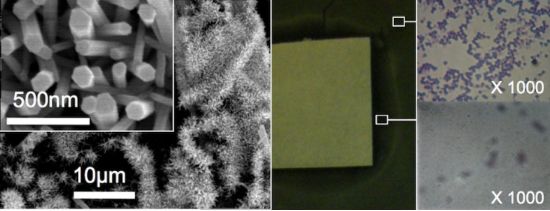
- ) nanoparticles embedded into a paper matrix have been reported as exhibiting antibacterial properties [4]. Wallpaper prepared by using zinc oxide nanoparticle (~20 nm) coatings has been reported to render antibacterial surfaces that inhibit growth of bacteria such as Escherichia coli (E. coli) [5]. An increase





