Search results
Search for "anticancer drugs" in Full Text gives 40 result(s) in Beilstein Journal of Nanotechnology.
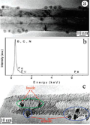
Polydopamine-coated Au nanorods for targeted fluorescent cell imaging and photothermal therapy
Beilstein J. Nanotechnol. 2019, 10, 794–803, doi:10.3762/bjnano.10.79
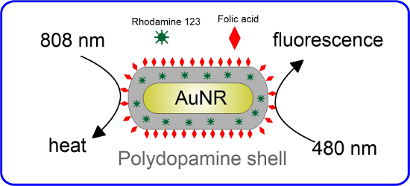
- . Meanwhile different imaging and therapeutic agents can be loaded into the shell of multifunctional nanocomposites. Various AuNR-based nanocomposites loaded with anticancer drugs [17][18][19], photodynamic dyes [20][21], MRI contrast agents [22] and many others ligands [23][24] have already been reported for


Cytotoxicity of doxorubicin-conjugated poly[N-(2-hydroxypropyl)methacrylamide]-modified γ-Fe2O3 nanoparticles towards human tumor cells
Beilstein J. Nanotechnol. 2018, 9, 2533–2545, doi:10.3762/bjnano.9.236
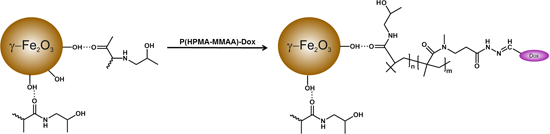
- side effects are considered to be the main drawback of conventional anticancer drugs. The drug dosage is significantly limited and thus complete elimination of tumor cells in cancer patients is not guaranteed. Among antitumor drugs, special attention has been paid to the anthracycline antibiotic


Nanoparticle delivery to metastatic breast cancer cells by nanoengineered mesenchymal stem cells
Beilstein J. Nanotechnol. 2018, 9, 321–332, doi:10.3762/bjnano.9.32
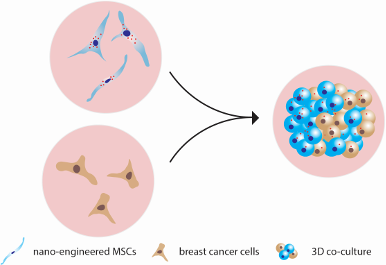
- drug efflux transporter P-glycoprotein, which ensures rapid excretion of toxic substances from MSCs. Thus, MSCs are an excellent vector for low cytotoxicity anticancer drugs [4]. Sadhukha et al. demonstrated that nanoengineered MSCs home to A549 lung cancer in vivo and remain there for at least 3 h
- , which could be sufficient time to release drugs into the tumour. The encapsulation of NP-linked anticancer drugs could ensure metered drug release in tumours [2]. QD linkage to photosensitisers, such as chlorin e6, causes damage to MiaPaCa2 cancer cells via light-induced cytotoxicity, demonstrating a



Development of polycationic amphiphilic cyclodextrin nanoparticles for anticancer drug delivery
Beilstein J. Nanotechnol. 2017, 8, 1457–1468, doi:10.3762/bjnano.8.145
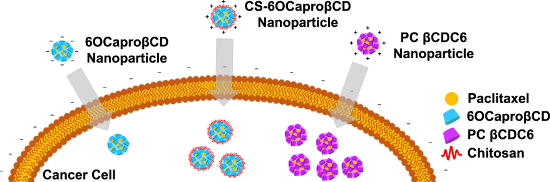
- during chemotherapy. Amphiphilic cyclodextrins are favored oligosaccharides as drug delivery systems for anticancer drugs, having the ability to spontaneously form nanoparticles without surfactant or co-solvents. In the past few years, polycationic, amphiphilic cyclodextrins were introduced as effective
- as well as other lipophilic anticancer drugs for cancer therapy. In addition, by formulating with anionic and cationic amphiphilic CDs, it will be possible to enhance anticancer activity of drugs, overcoming the problem of surfactant-induced toxicity. Finally, it can be said that polycationic


Cationic PEGylated polycaprolactone nanoparticles carrying post-operation docetaxel for glioma treatment
Beilstein J. Nanotechnol. 2017, 8, 1446–1456, doi:10.3762/bjnano.8.144
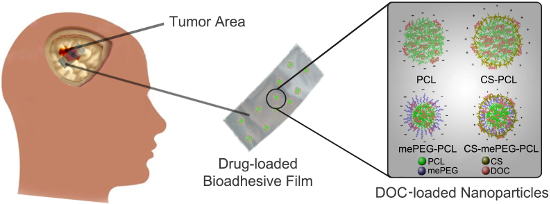
- , facilitating chemotherapy administration to prevent recurrence of the tumor at the time of tumor tissue removal by surgical operation. Among the anticancer drugs that are used in clinics, the taxane family of drugs such as paclitaxel and docetaxel are known to be highly effective against a variety of cancer
- often cause serious side effects. Thus, the necessity of a safe and effective formulation and drug delivery approach emerges for these potent anticancer drugs from the taxane family [10][11][12][13]. Successful treatment of brain cancer is dependent on the efficient and safe delivery of chemotherapeutic




Nanoscale isoindigo-carriers: self-assembly and tunable properties
Beilstein J. Nanotechnol. 2017, 8, 313–324, doi:10.3762/bjnano.8.34
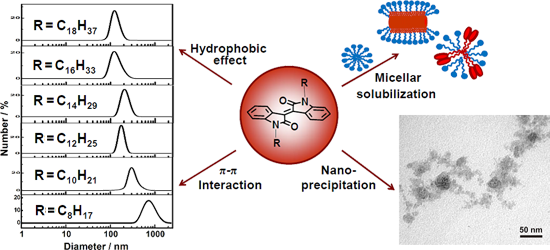
- toxicity as well as to minimize drug degradation and to provide a controllable drug release [51][52][53]. The modification of nanostructures with conjugated π–π fragments leads to the absorption of anticancer drugs via π–π stacking interaction and increases the drug-loading capacity of nanoscale soft




Chitosan-based nanoparticles for improved anticancer efficacy and bioavailability of mifepristone
Beilstein J. Nanotechnol. 2016, 7, 1861–1870, doi:10.3762/bjnano.7.178
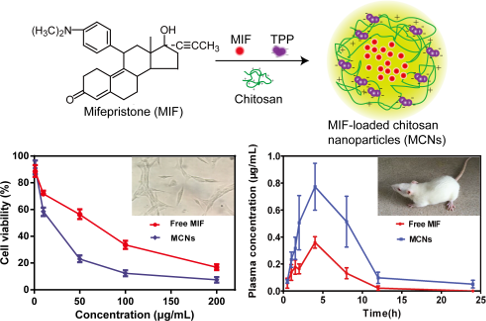
- effects of MCNs could be due to the synergistic effects of Cs and MIF. Previous studies using other cancer cell lines and other anticancer drugs also found the anticancer effects of Cs and the synergistic interplay of CNs and anticancer drugs [35][36]. Besides, the sustained release of MIF from the CNs


Green and energy-efficient methods for the production of metallic nanoparticles
Beilstein J. Nanotechnol. 2015, 6, 2354–2376, doi:10.3762/bjnano.6.243
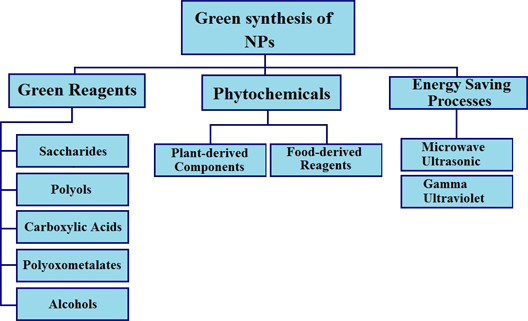
- delivery of anticancer drugs have been demonstrated [24][25][26][27][28][29][30][31][32][33][34]. In Table 1, the application of different metallic NPs is summarized. Green Chemistry metrics Green Chemistry is gradually integrated into new scientific and industrial developments to be aligned with the


Natural and artificial binders of polyriboadenylic acid and their effect on RNA structure
Beilstein J. Nanotechnol. 2015, 6, 1338–1347, doi:10.3762/bjnano.6.138
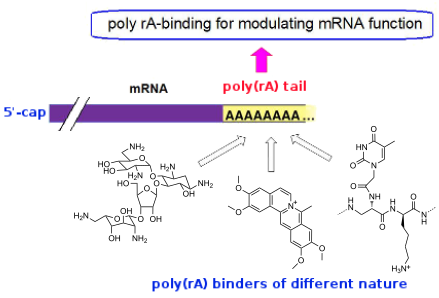
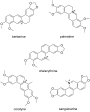
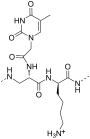
- in the field of the development of novel anticancer drugs, we report a description of different classes of molecules characterized by their ability to interact with poly(rA). Some of them are of natural origin, as in the case of neomycin, palmatine, berberine, chelerythrine and other alkaloids and





Synthesis of boron nitride nanotubes and their applications
Beilstein J. Nanotechnol. 2015, 6, 84–102, doi:10.3762/bjnano.6.9
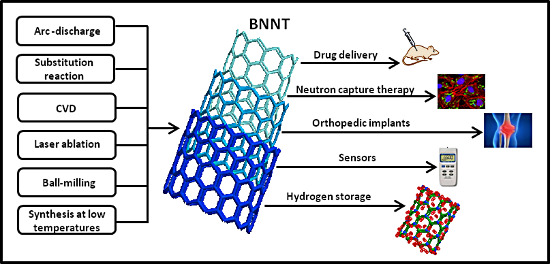
- study revealed that platinum-based anticancer drugs preferentially interacted with Al-doped BNNTs as compared to pristine, zigzag and armchair BNNTs [88]. Cisplatin (cis-Pt) and nedaplatin (neda-Pt) molecules were used as platinum-based anticancer drugs. An aluminum (Al) atom is substituted for a boron




Anticancer efficacy of a supramolecular complex of a 2-diethylaminoethyl–dextran–MMA graft copolymer and paclitaxel used as an artificial enzyme
Beilstein J. Nanotechnol. 2014, 5, 2293–2307, doi:10.3762/bjnano.5.238
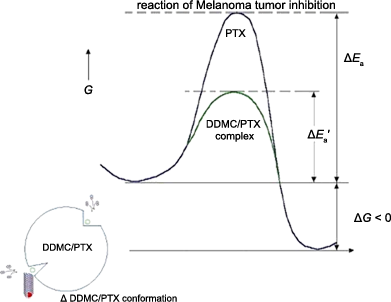
- revealed the activation of several genes downstream of EGR1 and TXNIP. Six hours after administration, CYR61, which is involved in resistance to PTX in breast cancer, became more active and continued to be influenced by EGR1. In this way, cancer cells exposed to anticancer drugs acquire resistance to the


Carbon-based smart nanomaterials in biomedicine and neuroengineering
Beilstein J. Nanotechnol. 2014, 5, 1849–1863, doi:10.3762/bjnano.5.196
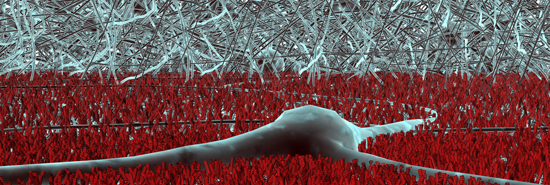
- anticancer drugs and preserving their activity under biological conditions [81][82][83][84]. The affinity of NDs for protein adsorption has been finally utilised to separate recombinant proteins from Escherichia coli [85], resulting not only in a radically faster process than the commonly used purification
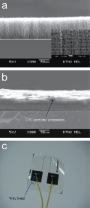


Protein-coated pH-responsive gold nanoparticles: Microwave-assisted synthesis and surface charge-dependent anticancer activity
Beilstein J. Nanotechnol. 2014, 5, 1452–1462, doi:10.3762/bjnano.5.158
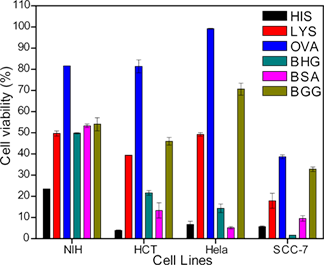
- deaths in the modern world. Although significant advances in science and technology have given us a more comprehensive understanding of cancer, the diagnosis and treatment of cancer remain challenging. The inability of many anticancer drugs to reach the specific target sites and their common systemic


Nanodiamond-DGEA peptide conjugates for enhanced delivery of doxorubicin to prostate cancer
Beilstein J. Nanotechnol. 2014, 5, 937–945, doi:10.3762/bjnano.5.107
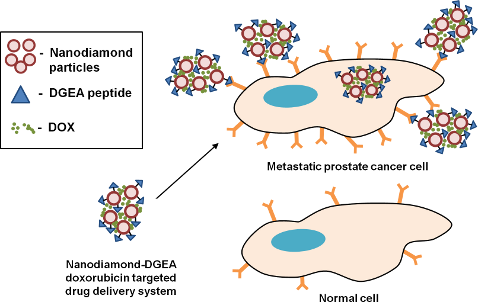
- current standard of care is chemotherapy, which involves the use of toxic anticancer drugs, like doxorubicin (DOX), to treat cancers by inducing apoptosis. DOX has had high success rates with treating prostate cancer [2]. However, it can cause major side effects such as hair loss, nausea [2][3], and


Extracellular biosynthesis of gadolinium oxide (Gd2O3) nanoparticles, their biodistribution and bioconjugation with the chemically modified anticancer drug taxol
Beilstein J. Nanotechnol. 2014, 5, 249–257, doi:10.3762/bjnano.5.27

- extended the work of biosynthesis of Gd2O3 nanoparticles to bioconjugation with taxol. Bioconjugation of taxol with gold and iron oxide nanoparticles has also been reported [15][16]. Taxol is one of the most important anticancer drugs used for breast, ovarian and lung cancers [17][18]. The potent