


Search results
Search for "buckling" in Full Text gives 46 result(s) in Beilstein Journal of Nanotechnology.
Biomechanics of selected arborescent and shrubby monocotyledons
Beilstein J. Nanotechnol. 2016, 7, 1602–1619, doi:10.3762/bjnano.7.154
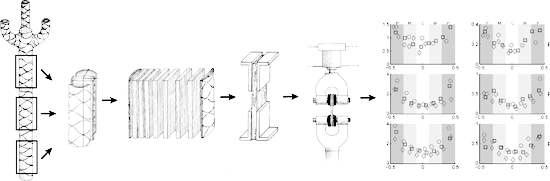
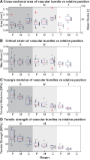
- two rationales. First, the stems of the tested specimen of D. reflexa and D. surculosa were very long and slender. These plants showed a much higher length-to-diameter (L/D) ratio (personal observation) than the investigated (other) tree-like monocots. At high L/D, the risk for Euler buckling



Functional diversity of resilin in Arthropoda
Beilstein J. Nanotechnol. 2016, 7, 1241–1259, doi:10.3762/bjnano.7.115
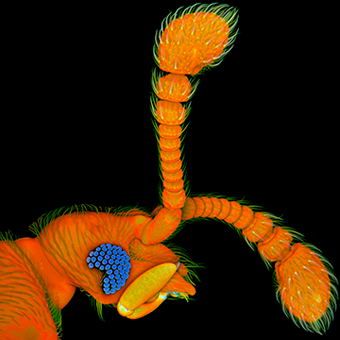
- , including those of fleas, feature composite architectures comparable to those described above. The ability of resilin to store energy within jumping systems was shown to be also involved in an energy absorption function of a specific structure, called buckling region, that is present in each tibia of locust
- hind legs [76]. The buckling region is located in an area where the bending moment during jumping and kicking is high. When a hindleg slips during jumping or misses a target during kicking, this structure can buckle and thereby act as a shock absorber by dissipating energy that would otherwise have to
- be absorbed by other suctures such as the leg joints. The buckling region exhibits parts with large proportions of resilin that are assumed to contribute to the energy absorption and to the restoration of the original shape of the leg after buckling [76]. Flight systems: folds, tendons and


Reasons and remedies for the agglomeration of multilayered graphene and carbon nanotubes in polymers
Beilstein J. Nanotechnol. 2016, 7, 1174–1196, doi:10.3762/bjnano.7.109
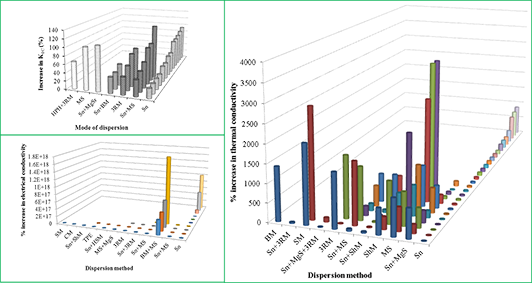
- causing a shortening and producing surface defects which deleteriously affect the electrical properties and ordering of SWNTs in films and fibers [36][57]. Also, chemical functionalization can reduce the maximum nanotube buckling force by up to about 15% thereby deteriorating the mechanical properties of


Photocurrent generation in carbon nanotube/cubic-phase HfO2 nanoparticle hybrid nanocomposites
Beilstein J. Nanotechnol. 2016, 7, 1075–1085, doi:10.3762/bjnano.7.101
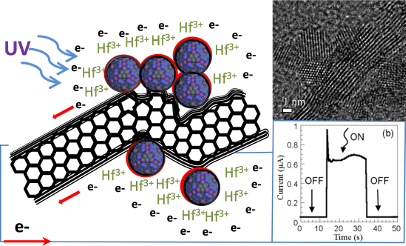
- their own show a tendency to agglomerate [20]. The MWCNTs used in this study exhibited kinks, coils and buckling. In Figure 1a, an overview of the hybrid material shows successful attachment of the nanoparticles to the CNT. The cubic HfO2 nanoparticles exhibit an average diameter of 2.6 nm [20]. In the
- explanation to this selective anchoring is provided below and also in the EELS section. In Figure 1c, a HAADF-HRSTEM image exhibits small agglomerates of these nanoparticles on the MWCNT, where the diameter of the MWCNT has reduced due to buckling. The nanoparticles remain crystalline as displayed by the
- of symmetry. This implies a local change of the electronic structure [36] along with an increase in π mismatch. This in turn accentuates the reactivity of these MWCNTs and converts these defects into receptors for functional groups on the surface of the nanoparticles. Buckling and kinking of the


Assembling semiconducting molecules by covalent attachment to a lamellar crystalline polymer substrate
Beilstein J. Nanotechnol. 2016, 7, 784–798, doi:10.3762/bjnano.7.70
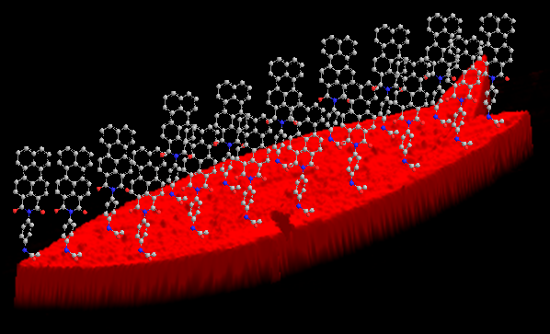
- impede rearrangements. Further compression may not be possible without expelling of nanocrystals from the monolayer [18] or without buckling of the film [19]. Chemical attachment of semiconducting molecules to the surfaces of CPE45 nanocrystals We have produced rather close packed monolayers of CPE45


Facile synthesis of water-soluble carbon nano-onions under alkaline conditions
Beilstein J. Nanotechnol. 2016, 7, 758–766, doi:10.3762/bjnano.7.67
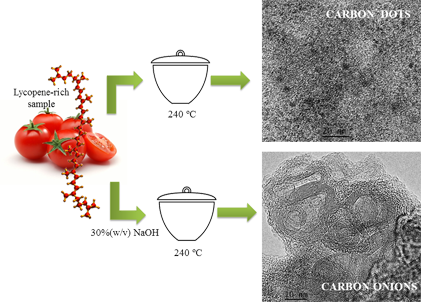
- buckling patterns of C-onions [23]. To the best of our knowledge, the results shown here, demonstrate for the first time, the possibility of obtaining C-onions from green C-sources just by modifying the carbonization conditions using sodium hydroxide as catalyst. Figure 4 represents the XRD pattern of the


Comparative kinematical analyses of Venus flytrap (Dionaea muscipula) snap traps
Beilstein J. Nanotechnol. 2016, 7, 664–674, doi:10.3762/bjnano.7.59

- submersed states and, hence, is potentially able to gain nutrients from fast aquatic prey during seasonal inundation. We reveal three snapping modes of adult traps, all incorporating snap buckling, and show that millimeter-sized, much slower seedling traps do not yet incorporate such elastic instabilities
- . Moreover, opening kinematics of young and adult Dionaea snap traps reveal that reverse snap buckling is not performed, corroborating the assumption that growth takes place on certain trap lobe regions. Our findings are discussed in an evolutionary, biomechanical, functional–morphological and biomimetic
- could also play a supporting role [6][7]. The concave lobes (as seen from the outside) store elastic energy during the initial motion, which is suddenly released when they flip to a convex curvature [8]. This second motion step, the snap-buckling process, greatly enhances the overall movement speed of


Free vibration of functionally graded carbon-nanotube-reinforced composite plates with cutout
Beilstein J. Nanotechnol. 2016, 7, 511–523, doi:10.3762/bjnano.7.45
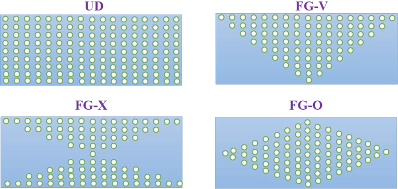
- plates subjected to sudden lateral pressure. For more investigations on vibration, buckling, postbuckling, stress analysis, and nonlinear bending of FG-CNTRC plates, one may refer to [17][18][19][20][21][22][23][24][25]. The present research aims to investigate the free vibration characteristics of an FG


Calculations of helium separation via uniform pores of stanene-based membranes
Beilstein J. Nanotechnol. 2015, 6, 2470–2476, doi:10.3762/bjnano.6.256
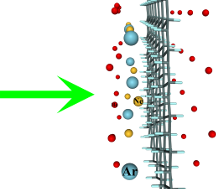
- He separation due to a lower buckling and larger lattice constant. The lattice constant of 2D SnF is much larger than that of 2D Sn, which is expected to significantly facilitate the gas penetration. The minimum pathways for noble gases (He, Ne and Ar) passing through the 2D SnF under different


Nanoscale rippling on polymer surfaces induced by AFM manipulation
Beilstein J. Nanotechnol. 2015, 6, 2278–2289, doi:10.3762/bjnano.6.234
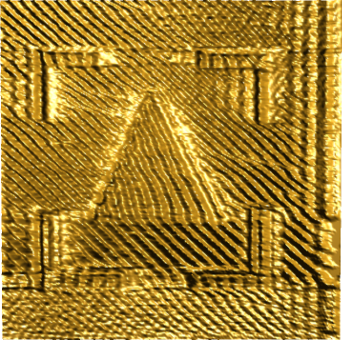
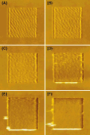
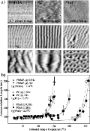
- compressive loads. It is attributed to buckling, i.e., waves of detachment driven by a tangential stress gradient along the contact zone of the sliding interface due to the breaking of adhesive bonds between the two surfaces [28]. On the nanoscale, however, ripples do not relax to their initial smooth shape




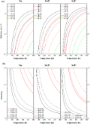
Simulation of thermal stress and buckling instability in Si/Ge and Ge/Si core/shell nanowires
Beilstein J. Nanotechnol. 2015, 6, 1970–1977, doi:10.3762/bjnano.6.201
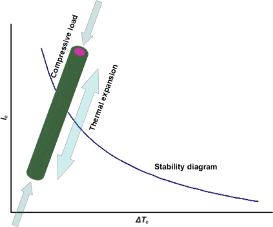
- . These two material parameters are combined to obtain the thermal stress on the nanowires. In addition, the thermally induced stress is perceived in the context of buckling instability. The analysis provides a trade-off between the geometrical and operational parameters of the nanostructures. The
- proposed methodology can be extended to other materials and structures and helps with the prediction of the conditions under which a nanowire-based device might possibly fail due to elastic instability. Keywords: atomistic simulation; buckling; core–shell nanowire; thermal stress; Introduction In recent
- significant on account of the large piezo resistance at the nanoscale [14]. In addition, the axial compressive stress at elevated temperature can cause elastic instability and buckling of a slender one-dimensional nanostructure [15], thereby jeopardizing the structural integrity of the system. This is


Enhanced fullerene–Au(111) coupling in (2√3 × 2√3)R30° superstructures with intermolecular interactions
Beilstein J. Nanotechnol. 2015, 6, 1421–1431, doi:10.3762/bjnano.6.147
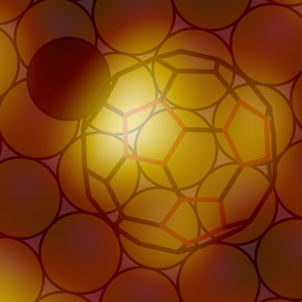
- this position is obviously less stable than the hex-vac position. Here, advantageous entropy effects [26] or an adlayer buckling in order to minimize the lattice mismatch to the underlying substrate are given as possible explanations. However, solely entropy effects should result in completely random


Boosting the local anodic oxidation of silicon through carbon nanofiber atomic force microscopy probes
Beilstein J. Nanotechnol. 2015, 6, 215–222, doi:10.3762/bjnano.6.20
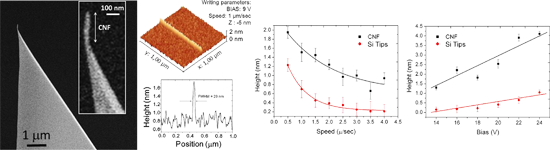
- control upon making CNT probes, as well as characteristic tip-to-tip differences, such as length, diameter, and operational complications, such as CNT buckling [15][16]. In this work, we explore the use of a carbon nanofiber (CNF) as the tip apex of AFM probes for the application of LAO-AFM on silicon
- occurs in spite of the relative weakness of the mechanical clamping of the CNF onto the Si apex. The bending elasticity of the CNF-Si probe upon mechanical contact above a few nanonewtons can be compromised to permanent bending (buckling), particularly for longer CNFs, or rupture [22]. Nevertheless, CNF


Model systems for studying cell adhesion and biomimetic actin networks
Beilstein J. Nanotechnol. 2014, 5, 1193–1202, doi:10.3762/bjnano.5.131
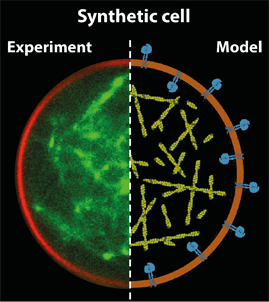
- were also found to account for these changes [56]. In a subsequent study, self-assembly of thin actin shells beneath the lipid membranes of GUVs was accomplished. Buckling and blister formation of the composite actin–lipid shells were observed, which are typical shape changes in natural cell membranes


Static analysis of rectangular nanoplates using trigonometric shear deformation theory based on nonlocal elasticity theory
Beilstein J. Nanotechnol. 2013, 4, 968–973, doi:10.3762/bjnano.4.109
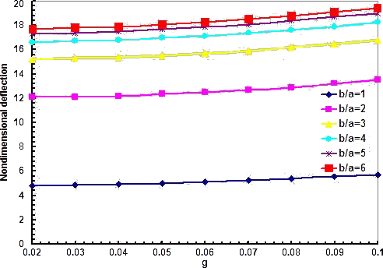
- shear correction factors unnecessary. Thai and Vo [11] proposed a new sinusoidal shear deformation theory for bending, buckling, and vibration of functionally graded plates. The theory accounted for sinusoidal distribution of transverse shear stress. Unlike the conventional sinusoidal shear deformation
- buckling and free vibration analysis of thick functionally graded sandwich plates. Unlike any other theory, this theory needs only four governing equations. The authors assumed that the variation of the plate properties was a consequence of plate thickness following a simple power law distribution in terms


Structural development and energy dissipation in simulated silicon apices
Beilstein J. Nanotechnol. 2013, 4, 941–948, doi:10.3762/bjnano.4.106
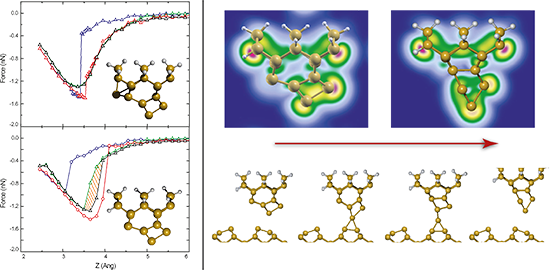
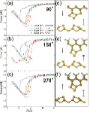
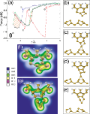
- , switching the dimer buckling angle. The tip–dimer interaction for the D2 tip, therefore, is not sufficient to pull the down atom high enough to instigate manipulation [39][42][43]. Particularly interesting observations are made when the D2 tip is positioned above the structurally rigid up atom of the Si(100


Size-dependent characteristics of electrostatically actuated fluid-conveying carbon nanotubes based on modified couple stress theory
Beilstein J. Nanotechnol. 2013, 4, 771–780, doi:10.3762/bjnano.4.88
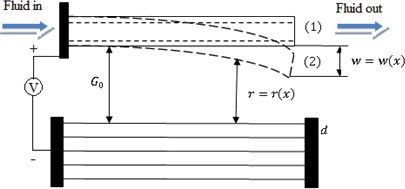
- exceeded a maximum limit, bending and buckling would occur, and the fluid stream that passes through the nanotube would be blocked. In another research, Grujicic et al. applied this concept to boron nitride nanotubes as nanovalves [28]. Chen et al. designed a one-way nanovalve based on a CNT junction and a
- viscosity, velocity, pressure and mass ratio (fluid mass/CNT mass) are scrutinized. A brief discussion on the buckling loads, vibrational behaviors and natural frequencies of the CNTs is presented. Description of the system As shown in Figure 1, it is supposed that a CNT is suspended over graphene sheets
- boundary conditions, the axial force is a compressive force because the clamped ends transform the axial force into a compression. According to the concepts of elasticity and vibration of continuous systems, the tensile force increases the natural frequency and buckling loads of the nanobeam, here the CNT


Directed deposition of silicon nanowires using neopentasilane as precursor and gold as catalyst
Beilstein J. Nanotechnol. 2012, 3, 535–545, doi:10.3762/bjnano.3.62
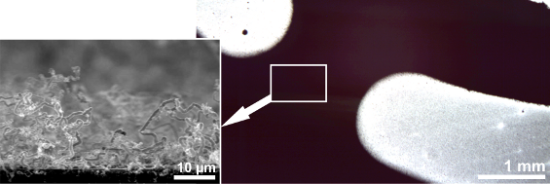
- substrates. The buckling of the NWs even when growing far apart demonstrates that the buckling does not arise from contact/steric hindrance within the more densely packed NW layers. While the images of the two different methods look quite similar at first sight, it should be mentioned that the pretreatment


Graphite, graphene on SiC, and graphene nanoribbons: Calculated images with a numerical FM-AFM
Beilstein J. Nanotechnol. 2012, 3, 301–311, doi:10.3762/bjnano.3.34
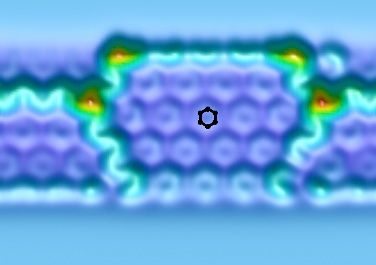
- the substrate. By performing a full energy minimization of the system with DL_POLY-4 using periodic boundary conditions and with a Tersoff potential to connect the graphene and the SiC substrate, we found a buckling of the graphene sheet that is due to the incommensurability between the graphene and


Effect of the tip state during qPlus noncontact atomic force microscopy of Si(100) at 5 K: Probing the probe
Beilstein J. Nanotechnol. 2012, 3, 25–32, doi:10.3762/bjnano.3.3
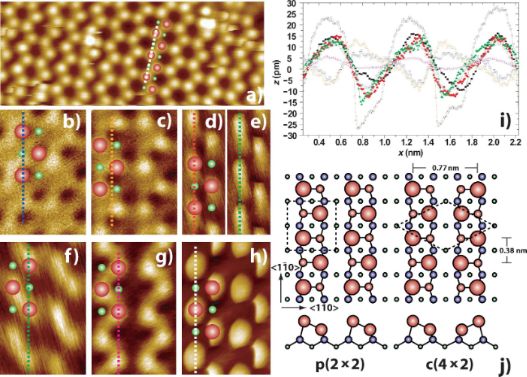
- been shown that the structure of the rows may be locally manipulated by controlled tunnel-current injection [18], and we recently demonstrated that the buckling of the dimers can be toggled with atomic precision by direct application of mechanical force during NC-AFM [19][20]. In this paper we present
- the depressions as “up” atoms was performed by identifying characteristic structures and cross-comparing between the inverted image and the subsequent high setpoint image. This is demonstrated in Figure 2 in which we use a phason buckling defect (2 dimers in a row in the same buckling configuration
- ) “Crescent” (empty green squares), (g) “Wormlike” (empty pink triangles), (h) “Discuslike” (empty black circles), (j) Ball and stick model of the Si(100) surface reconstruction showing in-phase (p(2 × 2)) and out-of-phase (c(4 × 2)) dimer buckling. Larger scans of (a) inverted and (b) high-setpoint inverted


Intermolecular vs molecule–substrate interactions: A combined STM and theoretical study of supramolecular phases on graphene/Ru(0001)
Beilstein J. Nanotechnol. 2011, 2, 365–373, doi:10.3762/bjnano.2.42
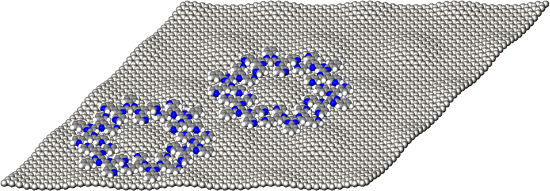
- , it is known from LEED structure analysis and theory that the lattice mismatch between the graphene layer and the underlying metal substrate results in a buckling of the graphene layer and therefore in a distinct height corrugation of 1.5 Å [15][16]. The graphene/Ru(0001) surface is also known to





