Search results
Search for "current" in Full Text gives 1463 result(s) in Beilstein Journal of Nanotechnology. Showing first 200.
Nanoinformatics: spanning scales, systems and solutions
Beilstein J. Nanotechnol. 2026, 17, 423–427, doi:10.3762/bjnano.17.28

- nanomaterials, thus helping to fill the current gap in the toxicity data for zebrafish [8]. A major driver of the development of nanomaterials, nanoinformatics and ML/AI is the potential for solutions to real-world issues, whether in nanomedicine, nano-enabled agriculture, or environmental remediation

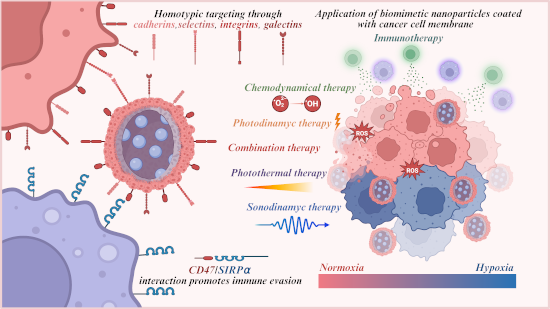
Biomimetic nanoparticles in cancer photodynamic therapy: a review of targeted delivery systems and therapeutic outcomes
Beilstein J. Nanotechnol. 2026, 17, 396–422, doi:10.3762/bjnano.17.27


Ferroelectric nanodot reservoir for neuromorphic computing
Beilstein J. Nanotechnol. 2026, 17, 352–364, doi:10.3762/bjnano.17.24
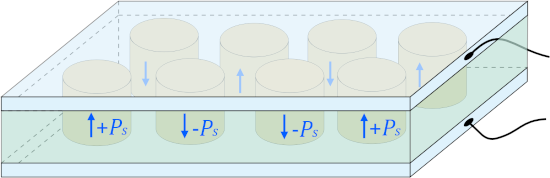
- collective nature of switching, the system explores a high-dimensional space of metastable configurations. The response depends not only on the current field but also on the sequence of past stimuli, a hallmark of temporal memory. Each time the system returns to a balanced state with an equal number of +1
- changes in the input sequence (field trajectory) can cause large and qualitatively different polarization responses. This sensitivity enables powerful separation of input classes in the reservoir state space. (ii) Short-term memory. The system retains a history of past field variations through its current
- , the incoming data pulses are injected as electrical signals (e.g., current or voltage spikes) and dynamically reconfigure the reservoir state by switching local polarizations. The readout layer, responsible for interpreting the reservoir’s final polarization state, may be connected to synaptic


Beam shaping techniques for pulsed laser ablation in liquids: Unlocking tunable control of nanoparticle synthesis in liquids
Beilstein J. Nanotechnol. 2026, 17, 309–342, doi:10.3762/bjnano.17.22
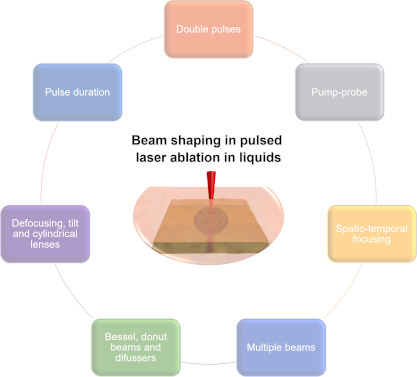
- –material interaction and temporal modification to optimise pulse duration and energy delivery. The current advancements in beam shaping techniques, their impact on the nanoparticle characteristics, and their broader implications for scaling pulsed laser ablation in liquids to meet industrial demands are







Fast vortex dynamics and relaxation times in NbRe-based heterostructures
Beilstein J. Nanotechnol. 2026, 17, 292–302, doi:10.3762/bjnano.17.20
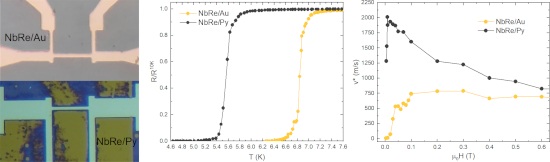
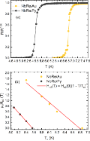
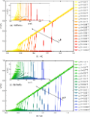
- that trap vortices. As a result, a finite current density is required to initiate vortex motion. When the value of the external current density, jex, applied to the superconductor exceeds the value of the critical current density, jc, vortices begin to move, giving rise to a viscous flow regime known
- as flux flow, which is associated with energy dissipation [2]. As the current increases further, jex ≫ jc, and as the vortex velocity approaches a maximum critical value, this regime may become unstable. A sudden voltage jump is observed in the I–V characteristic, attributed to the collapse of
- the flux-flow instability is strongly influenced by the quality of the sample edges, the estimation of an intrinsic quasiparticle relaxation time from Equation 1 is justified only when the field dependence of the critical current evidences a dominant edge-barrier pinning mechanism. In this regime, the


Advancing nanolithography: a comprehensive review of materials for local anodic oxidation with AFM
Beilstein J. Nanotechnol. 2026, 17, 275–291, doi:10.3762/bjnano.17.19
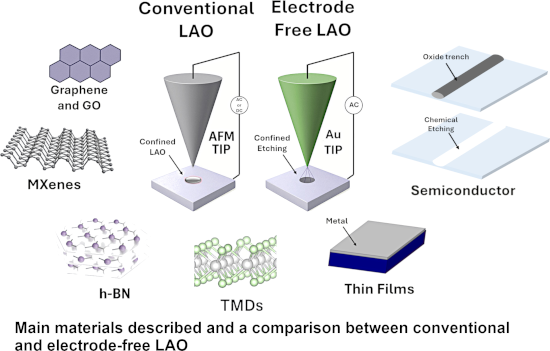
- implemented through a dual-pass technique or by controlling the electronic and ionic contributions to the total current [17][18]. While dynamic mode LAO does not eliminate tip wear [19], it significantly reduces its impact. As new materials continue to emerge in the field of nanotechnology, this review also
- authors agree with an oxidation kinetic consistent with the Cabrera–Mott model [44][45]. As an electrochemical process, LAO is inherently current-dependent. Early studies showed that oxide growth evolves from an initial electronic tunneling regime to ionic transport as the film develops [46]. Dagata and
- patterns over large areas. Unfortunately, the current state of the art for oxidation scanning probe lithography in terms of subsequent of resolution and throughput has not changed significantly in the last years [53]. The lateral resolution of modified features is usually set around tens on nanometers


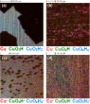
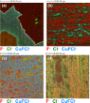
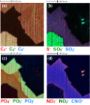
Time of flight secondary ion mass spectrometry imaging of contaminant species in chemical vapour deposited graphene on copper
Beilstein J. Nanotechnol. 2026, 17, 200–213, doi:10.3762/bjnano.17.13
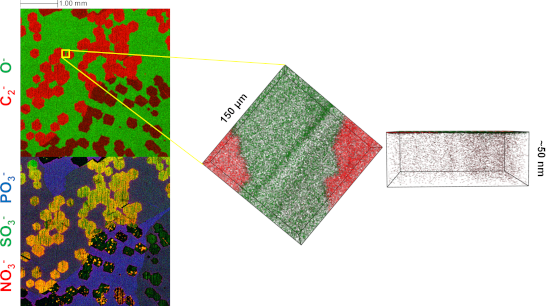
- . For 3D imaging, each depth profile was acquired by cyclically analysing a 150 µm × 150 µm area (with a pixel density of 128 × 128) from the centre of a 400 µm × 400 µm sputtered region during depth profiling, to mitigate crater edge effects on the generated spectra. 10 keV Cs+ ions with an ion current
- of 30 nA were used for sputtering cycles. The interleaved image spectra were acquired using 25 keV Bi3+ ions from a liquid metal ion gun, orientated at 45° to the sample surface. This was operated at an ion current of 0.1 pA, in an interlaced mode with a cycle time of 100 µs, in spectroscopy mode to






Structure-dependent thermochromism of PAZO thin films: theory and experiment
Beilstein J. Nanotechnol. 2026, 17, 186–199, doi:10.3762/bjnano.17.12
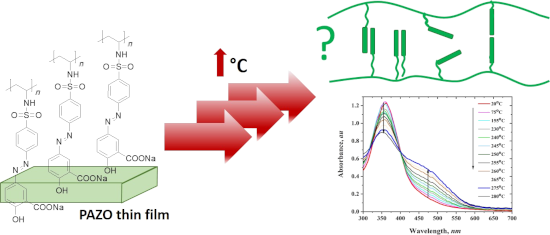
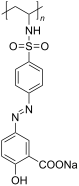
- . Computational details of DFT calculations Molecular modeling tools were used in the current study to shed some light on the molecular structure and interactions (including photoinduced cooperative molecular reorientation) of PAZO that determine its distinct properties. PAZO is a polymer and its molecular weight


Safe and sustainable by design with ML/AI: A transformative approach to advancing nanotechnology
Beilstein J. Nanotechnol. 2026, 17, 176–185, doi:10.3762/bjnano.17.11
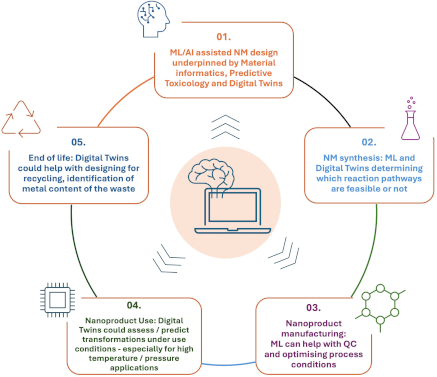
- materials before producing them. This perspective article highlights how ML and AI are driving the evolution of SSbD in nanotechnology, focussing on predictive toxicology, materials informatics, lifecycle analysis, and the pivotal role of digital twins. It also explores current challenges, emerging
- significant challenges and opportunities, particularly as the field moves from conceptual demonstrations to large-scale industrial implementation and regulatory adoption. One of the most pressing issues is the availability and quality of data, as many current nanomaterial datasets are fragmented
- -generation nanomaterials [68]. Similarly, advances in XAI approaches will strengthen regulatory acceptance by providing transparent, well-justified predictions that can be validated against experimental data or well-established mechanistic models. It has been suggested that the current regulatory approach


From shield to spear: Charge-reversible nanocarriers in overcoming cancer therapy barriers
Beilstein J. Nanotechnol. 2026, 17, 159–175, doi:10.3762/bjnano.17.10
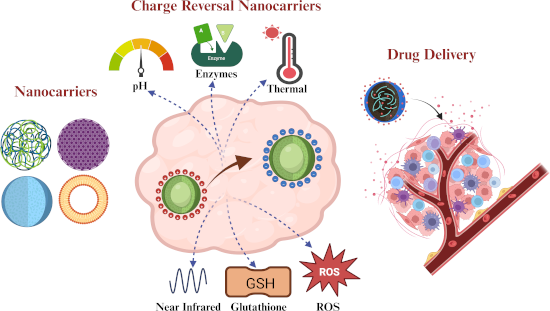
- and clinical evaluation processes. Ethical and environmental considerations further complicate their translation, as the degradation of by-products and long-term accumulation of synthetic nanomaterials in ecosystems necessitate thorough investigation [101]. To address these limitations, current


Influence of surface characteristics on the in vitro stability and cell uptake of nanoliposomes for brain delivery
Beilstein J. Nanotechnol. 2026, 17, 139–158, doi:10.3762/bjnano.17.9
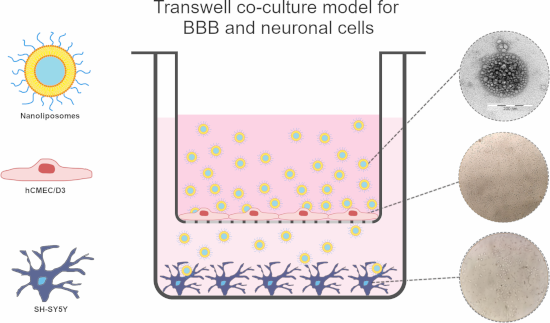
- therapeutic outcomes [3][5]. Namely, current research on NLs predominantly focuses on their physicochemical characteristics and efficiency, but minimal attention has been given to understanding the nano–bio interactions at organ and cellular levels. When exposed to biological fluids, nanodelivery systems like




Capabilities of the 3D-MLSI software tool in superconducting neuron design
Beilstein J. Nanotechnol. 2026, 17, 122–138, doi:10.3762/bjnano.17.8

- capable of extracting a three-dimensional magnetic field distribution and a planar current distribution by solving a system of integro-differential equations on a 2D grid. Recently, VoxHenry [12] and SuperVoxHenry [13] simulators were developed, which use voxel-based discretization as well as advanced
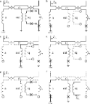
- deposited (see parameters in [28]). The Josephson junctions (JJs) had a circular shape with 4 μm diameter (see [28] for details) and represented Nb–Al–AlOx–Nb tunnel junctions at about 100 A/cm2 critical current density. JJs incorporated into SQUID loops were shunted with 1 Ω molybdenum resistors to
- the size of superconducting ground plane. In fact, the screen-mediated interaction is determined by the ring currents circulating in the screen to close the return current caused by the magnetic field of the control line. Obviously, the forced truncation of the ground plane in simulations (see lower



Functional surface engineering for cultural heritage protection: the role of superhydrophobic and superoleophobic coatings – a comprehensive review
Beilstein J. Nanotechnol. 2026, 17, 63–96, doi:10.3762/bjnano.17.6

- textile) and their relative weaknesses and then discusses the threats, which depend on the environment in which the artwork is located (outdoor or indoor). This review article also aims to provide scholars and conservators with a comprehensive overview of current solutions, serving as a foundation for
- importantly, electrochemical tests showed an impedance significantly higher than other coatings, and a corrosion current (icorr) value two orders of magnitude lower than that of control coatings, confirming excellent anticorrosion performance. In addition, in UV aging tests, the coating maintained stability




Microscopic study of the intermediate mixed state in intertype superconductors
Beilstein J. Nanotechnol. 2026, 17, 57–62, doi:10.3762/bjnano.17.5
- . The current density j, defined on the links between neighboring sites i and j, is given by where the Peierls phase in tij ensures coupling to the magnetic field. The coupled system of Equation 3–Equation 6 is solved self-consistently using an iterative algorithm developed in [28][30]. The calculations


Subdigital integumentary microstructure in Cyrtodactylus (Squamata: Gekkota): do those lineages with incipiently expressed toepads exclusively exhibit adhesive setae?
Beilstein J. Nanotechnol. 2026, 17, 38–56, doi:10.3762/bjnano.17.4


Reduced graphene oxide paper electrode for lithium-ion cells – towards optimized thermal reduction
Beilstein J. Nanotechnol. 2026, 17, 24–37, doi:10.3762/bjnano.17.3
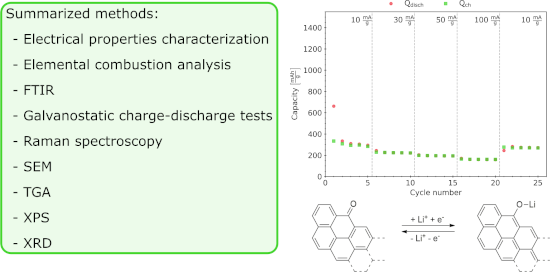
- and thickness were determined with scanning electron microscopy imaging. This paper also reveals electrical and electrochemical properties of the material. The conductivity of the material obtained at 800 °C reached ≈70 S/cm, and the discharge capacity reached ≈160 mAh/g at 100 mA/g current density
- , that is, rGO as conductive support, was presented by Thangappan et al. for nanostructured MoS2 in supercapacitor electrodes [12]. Another application of graphene materials is current collectors for both anode and cathode based on CVD-grown graphene foam, as described by Li et al., who reported lithium
- -ion batteries with Li4T5O12 and LiFePO4 active materials for the electrodes [13]. Chen et al. described current collectors based on rGO films [14]. Reduced graphene oxide finds further use in sodium-ion composite cathode materials as a conduction-improving agent with Prussian white as the active



Competitive helical bands and highly efficient diode effect in F/S/TI/S/F hybrid structures
Beilstein J. Nanotechnol. 2026, 17, 15–23, doi:10.3762/bjnano.17.2
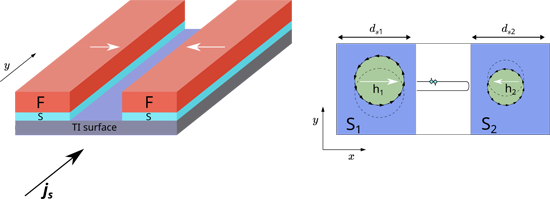
- employed as a way to detect the spin–orbital coupling (SOC) type of the material [72]. Typically, such devices require three ingredients for achieving the nonreciprocity of the critical current, including lack of inversion and time-reversal symmetries and the presence of the superconducting order parameter
- ferromagnetic exchange fields of the two F/S regions are oriented in opposite directions. Misalignment of the exchange fields leads to the competition of the two separate helical bands in the superconducting regions in their contribution to the critical current nonreciprocity (Figure 1). Quasiclassical Theory
- the same in the whole system. Obviously, this is not the case if L ≫ ξ because, in this case, the Josephson coupling between the S1 and S2 leads is absent, and they do not “feel” each other. In each lead, a distinct phase gradient q1,2 = −2hi/α is established to satisfy the zero spontaneous current


![[Graphic 16]](/bjnano/content/inline/2190-4286-17-2-i31.svg?max-width=637&scale=1.18182)
![[Graphic 17]](/bjnano/content/inline/2190-4286-17-2-i32.svg?max-width=637&scale=1.18182)


Quantitative estimation of nanoparticle/substrate adhesion by atomic force microscopy
Beilstein J. Nanotechnol. 2026, 17, 1–14, doi:10.3762/bjnano.17.1

- × 10−7 mbar. Ar was introduced as a sputtering gas, keeping a constant flow rate of 40 sccm. Sputtering was carried out at a constant current of 200 mA (≈70 W) applied to the target. The sputtered atoms start to form NPs and to grow in the aggregation zone, where the aggregation length was adjusted to



Terahertz-range on-chip local oscillator based on Josephson junction arrays for superconducting quantum-limited receivers
Beilstein J. Nanotechnol. 2025, 16, 2296–2305, doi:10.3762/bjnano.16.158
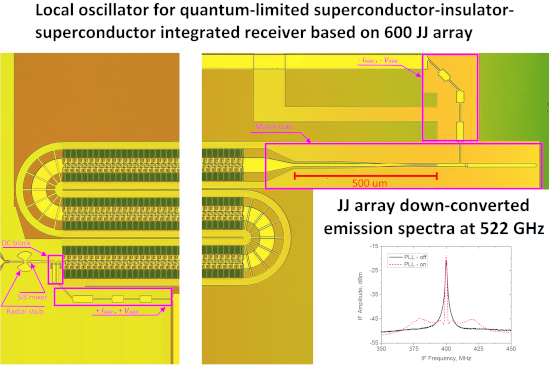
- influence of array geometry, the presence of a matched load at the nonradiating edge, and the magnitude of the tunneling current density of Josephson junctions on such oscillator characteristics as radiation power, linewidth, and operating range are discussed. Various options are suggested for further
- junctions have ultimate characteristics unreachable to devices based on other principles [1][2][3]. The unique nonlinearity of the current–voltage characteristic (IVC) near the gap voltage of the junction enables the gain of the intermediate frequency (IF) signal after mixing with the radiation from the
- ]. Nontheless, the use of Nb alloys will only partially solve the problem of high-frequency generation due to high surface losses in NbN and NbTiN [18][25][26]. Note that the use of Nb–Al/AlN–NbN allows for the fabrication of tunnel junctions with a tunnel current density of up to 100 kA/cm2 with a quality


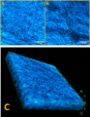
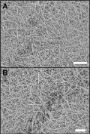
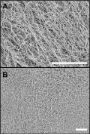
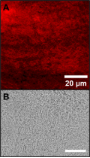
Visualizing nanostructures in supramolecular hydrogels: a correlative study using confocal and cryogenic scanning electron microscopy
Beilstein J. Nanotechnol. 2025, 16, 2274–2284, doi:10.3762/bjnano.16.156
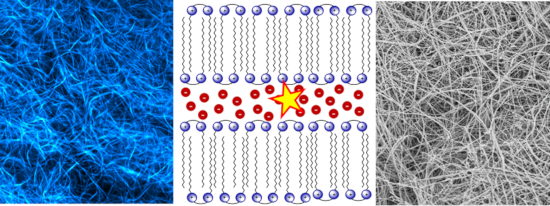
- PP3010. The gel sample underwent 5 min of etching via sublimation at −100 °C followed by sputtering in an argon environment using platinum for 60 s at a current of 10 mA. Once coated, the shuttle was transferred to the cryo-stage in the SEM chamber and maintained at −170 °C. Finally, the microstructure



Geometry-controlled engineering of the low-temperature proximity effect in normal metal–superconductor junctions
Beilstein J. Nanotechnol. 2025, 16, 2265–2273, doi:10.3762/bjnano.16.155
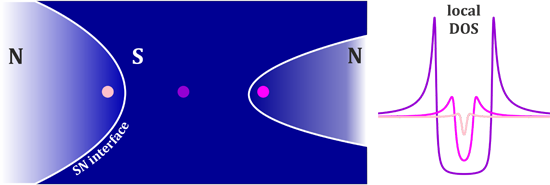
- a decay characterized by a power law with a dimensionality-dependent exponent. Here, we extend the current understanding of the proximity effect by exploring the role of normal metal–superconductor (NS) junction geometry in altering the spatial propagation of the superconducting order. Specifically


Chiral plasmonic nanostructures fabricated with circularly polarized light
Beilstein J. Nanotechnol. 2025, 16, 2245–2264, doi:10.3762/bjnano.16.154
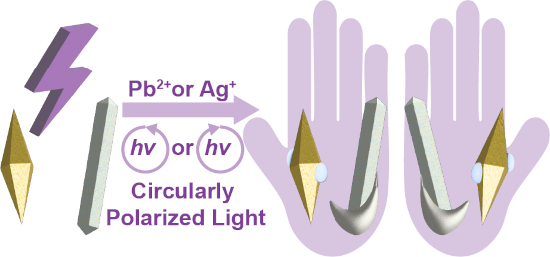
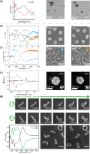
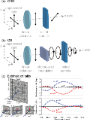
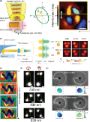
- Tian Qiao Ming Lee Tang Department of Chemistry, University of Utah, Salt Lake City, UT 84112, United States current address: Department of Chemistry and Biochemistry, University of Nevada, Las Vegas, 4505 S. Maryland Parkway, Las Vegas, NV 89154-4003, United States 10.3762/bjnano.16.154 Abstract





Optical bio/chemical sensors for vitamin B12 analysis in food and pharmaceuticals: state of the art, challenges, and future outlooks
Beilstein J. Nanotechnol. 2025, 16, 2207–2244, doi:10.3762/bjnano.16.153
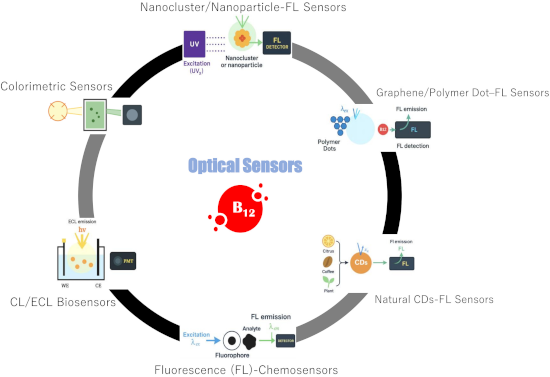
- significant health implications of VB12 deficiency. Traditional methods for VB12 analysis, such as high-performance liquid chromatography and enzyme-linked immunosorbent assay, are often troublesome and time-consuming, and require high-tech laboratory setups. The current overview highlights the latest optical
- use, affordability, and enhanced performance [29][30]. The current study critically reviews the newest findings on the mechanisms and designing principles of different optical sensing systems for sensitive and selective detection of VB12 in various media and real-world samples. Present limitations and


Electromagnetic study of a split-ring resonator metamaterial with cold-electron bolometers
Beilstein J. Nanotechnol. 2025, 16, 2199–2206, doi:10.3762/bjnano.16.152
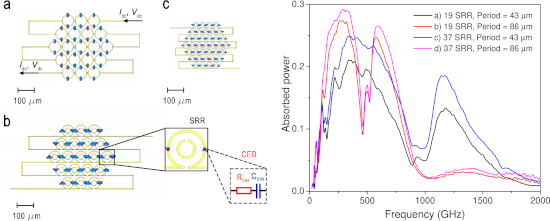
- -established magnetic metamaterial element whose resonant properties are governed by its internal inductance and capacitance, allowing for a strong magnetic response and associated current loops at the designed resonance frequency. The simulations of the metamaterial arrays were performed in the time-domain
- resistance of the structure at the operating point and increases the current noise contribution of the readout amplifier [17][22]. Furthermore, a larger number of elements increases the fabrication complexity. Crucially, nearly doubling the number of elements (from 19 to 37) does not produce a proportional


Ultrathin water layers on mannosylated gold nanoparticles
Beilstein J. Nanotechnol. 2025, 16, 2183–2198, doi:10.3762/bjnano.16.151
- obtained in a Helios NanoLab 450S dual beam microscope (FEI NL/Thermo Fisher Scientific). SEM images were obtained of dimanno-AuNPs and PEG AuNPs at 5 kV with 50 pA current in high-vacuum mode. The core diameter of single particles was manually counted with ImageJ (NIH, https://imagej.nih.gov/ij/). The
- number of particles was expressed as n, and the data were displayed as the mean ± SD. Totals of 378 particles for the dimanno-AuNPs and of 491 for the PEG AuNPs were counted. STEM acquisition was achieved in high vacuum at 30 keV and 50 pA current on negatively stained dimanno-AuNPs samples. For the