Search results
Search for "electrical conductivity" in Full Text gives 253 result(s) in Beilstein Journal of Nanotechnology. Showing first 200.
Synthesis and the impact of hydroxyapatite nanoparticles on the viability and activity of rhizobacteria
Beilstein J. Nanotechnol. 2025, 16, 216–228, doi:10.3762/bjnano.16.17
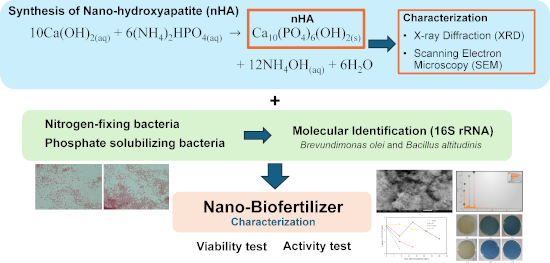
- sustaining rhizobacterial viability with pH 8.95 and an electrical conductivity of 55.4 μS/cm. Rhizobacteria loaded onto the nHA carrier maintained comparable viability to those without carriers. The highest viability of the rhizobacterial strains Pd and Tb loaded onto the nHA carrier was observed on the
- microscope JSM-6510LA JEOL SEM, followed by in-depth analysis using ImageJ and OriginLab 8.5.1 software tools. Additionally, the physical parameters of nHA utilized as a carrier material, including pH and electrical conductivity (EC), were determined using a digital pH meter (Mettler Toledo, MP220 pH meter
- ) and precise digital measurement of electrical conductivity (Mettler Toledo, MC 226 conductivity meter). Preparation of inoculum and formulation of rhizobacteria-nHA nHA was carefully placed into 2 mL EP tubes and underwent sterilization through autoclaving. The rhizobacteria were introduced into


Modeling and simulation of carbon-nanocomposite-based gas sensors
Beilstein J. Nanotechnol. 2025, 16, 90–96, doi:10.3762/bjnano.16.9
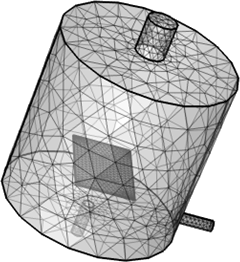
- nanocomposites, like high surface area, excellent electrical conductivity, and chemical stability, make them ideal candidates for the development of high-performance CO gas sensors. Carbon-nanocomposite gas sensors find their application in detecting pollutants such as nitrogen dioxide (NO2), sulfur dioxide (SO2
- , mathematical models to predict the behavior of these sensors have been developed using numerical analysis software [1]. The polymer PEDOT: PSS aligns the surface of the CNT film by filling most of the gaps in the CNT network. The effective electrical conductivity at tube-to-tube junctions within the CNT



A nanocarrier containing carboxylic and histamine groups with dual action: acetylcholine hydrolysis and antidote atropine delivery
Beilstein J. Nanotechnol. 2025, 16, 11–24, doi:10.3762/bjnano.16.2

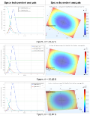
- degradation products, and hydrolysis products of phenylboronate esters. Resorcinarenes are known for their self-assembly properties [18]. The electrical conductivity plotted against RA concentration shows a nonlinear relationship for free Hist-RA, CA-RA, and their mixture in water, indicating a critical
- association constant (CAC) at the break point. The CACs for Hist-RA, CA-RA, and the Hist-RA + CA-RA mixture are 0.34, 0.26, and 0.32 mM, respectively (Figure 5a). In contrast, p(Hist-CA) post-dialysis shows a direct relationship between electrical conductivity and RA fragment concentration, despite its
- aggregation tendency (Figure 5b). Adding ACh to the p(Hist-CA) solution enhances the electrical conductivity and establishes a break point in the conductivity–concentration curve, with a CAC around 0.2 mM. These results suggest that ACh destabilizes p(Hist-CA), resulting in ensembles of Hist-RA, CA-RA, TO


Heterogeneous reactions in a HFCVD reactor: simulation using a 2D model
Beilstein J. Nanotechnol. 2024, 15, 1627–1638, doi:10.3762/bjnano.15.128
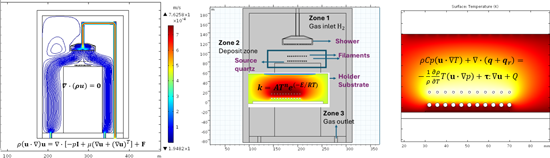
- ratio x = [O]/[Si], which is determined by controlling key parameters in the deposition process [2]. This ratio determines optical and electrical properties such as bandgap energy, absorption coefficient, photoluminescence, refractive index, and electrical conductivity [3]. SiOx cannot only be obtained


Strain-induced bandgap engineering in 2D ψ-graphene materials: a first-principles study
Beilstein J. Nanotechnol. 2024, 15, 1440–1452, doi:10.3762/bjnano.15.116
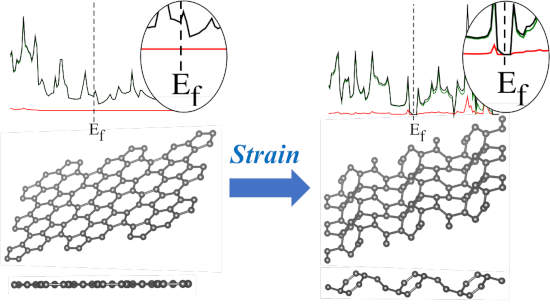
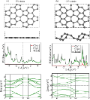
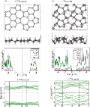
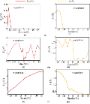
- Interdisciplinary Nanostructure Science and Technology, University of Kassel, Heinrich-Plett-Straße 40, 34132 Kassel, Germany 10.3762/bjnano.15.116 Abstract High mechanical strength, excellent thermal and electrical conductivity, and tunable properties make two-dimensional (2D) materials attractive for various


Unveiling the potential of alginate-based nanomaterials in sensing technology and smart delivery applications
Beilstein J. Nanotechnol. 2024, 15, 1077–1104, doi:10.3762/bjnano.15.88
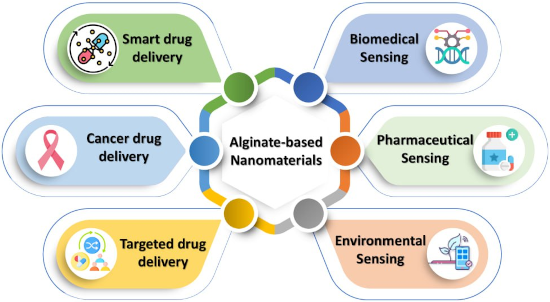
- several hours for results. The development of compact and portable miniaturized sensors has enabled the detection of different biomarkers for continuous, real-time human health monitoring [1][2]. Temperature, heart rate, electrical conductivity, dehydration, and glucose are some of the indicators that


Interface properties of nanostructured carbon-coated biological implants: an overview
Beilstein J. Nanotechnol. 2024, 15, 1041–1053, doi:10.3762/bjnano.15.85
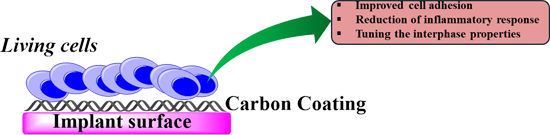
- temperature because the higher number of phonons increases the efficiency of thermal transport [75]. NDs show also exceptional mechanical strength and low chemical reactivity, making them sound candidates for thin film coatings [76]. These properties are counterbalanced by a low electrical conductivity due to
- adhesion of sulfate-reducing bacteria. Furthermore, graphene coatings can also exhibit antibacterial activity through electron transfer phenomena as reported by Yang et al. [114] for graphene coatings on titania. The authors reported that the increased electrical conductivity was due to the unpaired



Bolometric IR photoresponse based on a 3D micro-nano integrated CNT architecture
Beilstein J. Nanotechnol. 2024, 15, 1030–1040, doi:10.3762/bjnano.15.84
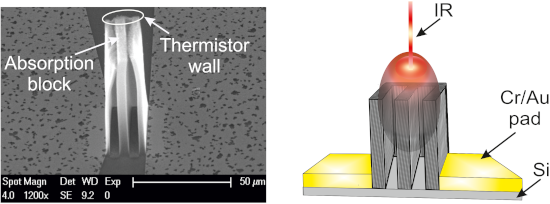
- material. The electrical conductivity of a vertically aligned CNT structure is defined by the intrinsic conductivity along the CNTs and the tunneling at the CNT junctions. The vertical electrical conduction is based on long conduction paths along the CNTs and few junction contacts, while the lateral


Electrospun nanofibers: building blocks for the repair of bone tissue
Beilstein J. Nanotechnol. 2024, 15, 941–953, doi:10.3762/bjnano.15.77
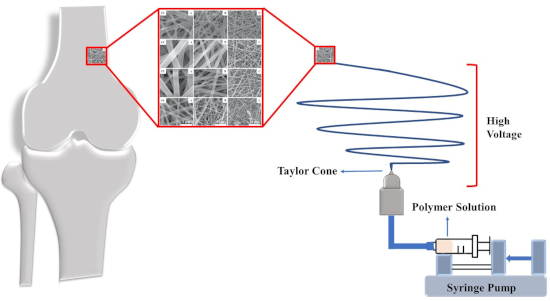
- and causes a change in viscosity, surface tension, and electrical conductivity of the polymer liquid [54][65]. The evaporation rate of the solvent is an extremely important parameter. In an ideal production process, the solvent must be completely evaporated before the jet reaches the collector of the


Intermixing of MoS2 and WS2 photocatalysts toward methylene blue photodegradation
Beilstein J. Nanotechnol. 2024, 15, 817–829, doi:10.3762/bjnano.15.68
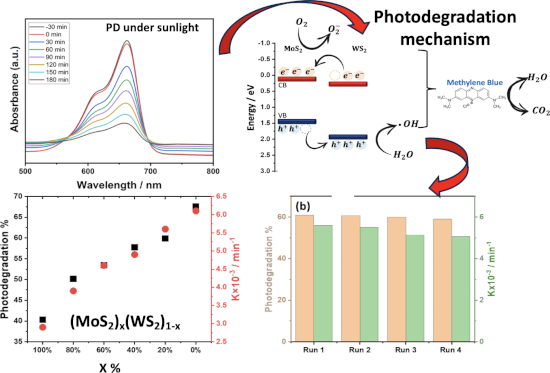
- electrical conductivity, which allows them to serve as sites for trapping photogenerated charges. This, in turn, facilitates the collection of charge carriers [18] leading to interesting photodegradation properties [19][20]. During the photochemical reaction process, the light excitation induces the


Exploring surface charge dynamics: implications for AFM height measurements in 2D materials
Beilstein J. Nanotechnol. 2024, 15, 767–780, doi:10.3762/bjnano.15.64
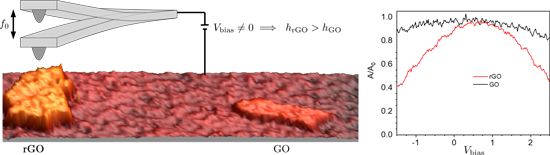
- generate a time-dependent electric field, which needs to be considered consistently. We think that our findings align well with this explanation, as a key difference between GO and rGO is their electrical conductivity. Moreover, the conduction mechanism in GO and rGO flakes is variable-range hopping [75


Effect of repeating hydrothermal growth processes and rapid thermal annealing on CuO thin film properties
Beilstein J. Nanotechnol. 2024, 15, 743–754, doi:10.3762/bjnano.15.62
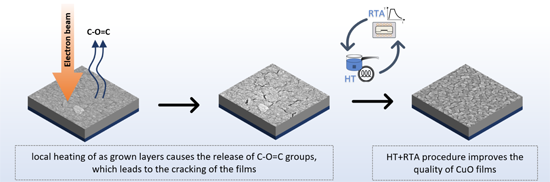
- properties of these layers and to attain the desired parameters in the final product. Controlled thermal treatment serves various purposes, such as enabling crystal structure relaxation, defect reduction, and enhancement of the films’ crystalline arrangement. Furthermore, it can lead to improved electrical
- conductivity and changes in optical attributes. The CuO films that are the subject of this work were grown using a novel approach to the hydrothermal method. They are produced from aqueous copper(II) acetate solutions heated to approximately 95 °C. Notably, a key distinction of these growth processes is their




Simultaneous electrochemical determination of uric acid and hypoxanthine at a TiO2/graphene quantum dot-modified electrode
Beilstein J. Nanotechnol. 2024, 15, 719–732, doi:10.3762/bjnano.15.60
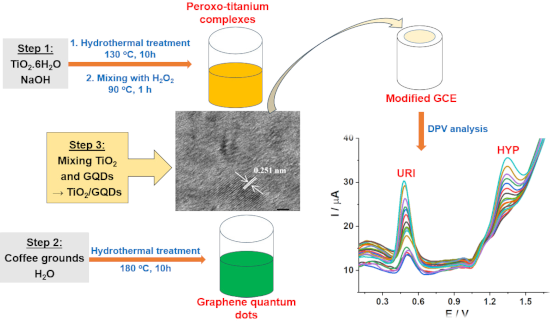
- , cost-effectiveness, and reliability. The use of modified electrodes has shown to improve significantly electrocatalytic activity and electrical conductivity of electrodes. Graphene, with sp2-hybridized carbon atoms in a single layer, has gained much attention because of its unique physicochemical


Exfoliation of titanium nitride using a non-thermal plasma process
Beilstein J. Nanotechnol. 2024, 15, 631–637, doi:10.3762/bjnano.15.53
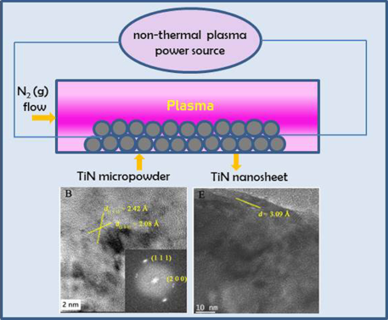
- ferromagnetic properties and demonstrated high visible-light photocatalytic activity when loaded onto titania nanotube arrays. Titanium nitride (TiN) has gained recognition as an advanced engineering material because of its outstanding chemical and thermal stability, extreme hardness, and electrical
- conductivity [10][11][12]. On the nanoscale, TiN finds applications as additive in titanium alloys, as catalyst support material, as supercapacitor component, and as nanocoating for medical implants [13][14][15][16]. Furthermore, ultra-small TiN nanodots have been successfully obtained through liquid



Heat-induced morphological changes in silver nanowires deposited on a patterned silicon substrate
Beilstein J. Nanotechnol. 2024, 15, 435–446, doi:10.3762/bjnano.15.39
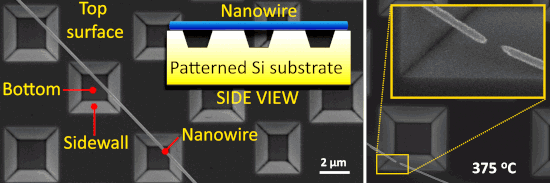
- nanoscale devices [8]. When deposited on a transparent substrate in the form of a low-density mesh, metal NWs can provide electrical conductivity while retaining sufficient transparency. The growing demand for transparent conductive materials has stimulated numerous studies aimed at the design, preparation
- 125–200 °C within minutes [27][28]. This effect enhances the electrical conductivity of the NW network by improving electrical contacts between individual NWs [28][29][30]. However, further temperature increases may cause NWs to split into shorter fragments – a process often attributed to Rayleigh


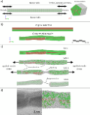
Controllable physicochemical properties of WOx thin films grown under glancing angle
Beilstein J. Nanotechnol. 2024, 15, 350–359, doi:10.3762/bjnano.15.31
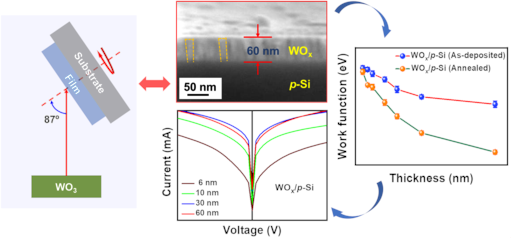
- , bandgap, and electrical conductivity, to a large extent by controlling the cationic oxidation state and the film stoichiometry [2]. As a matter of fact, adjustments in the film stoichiometry and microstructure are experimentally viable by the choice of a suitable growth technique [9][10][11]. As a result


Graphene removal by water-assisted focused electron-beam-induced etching – unveiling the dose and dwell time impact on the etch profile and topographical changes in SiO2 substrates
Beilstein J. Nanotechnol. 2024, 15, 190–198, doi:10.3762/bjnano.15.18
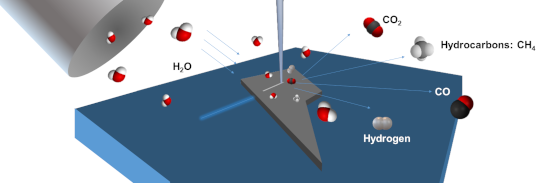
- : direct writing; dwell time; electron dose; etching; graphene; maskless lithography; nanopatterning; Introduction The discovery of extraordinary and controllable electrical conductivity in graphene back in 2004 made it the most recognized 2D material [1]. The newly discovered phenomena, such as


Influence of conductive carbon and MnCo2O4 on morphological and electrical properties of hydrogels for electrochemical energy conversion
Beilstein J. Nanotechnol. 2024, 15, 57–70, doi:10.3762/bjnano.15.6
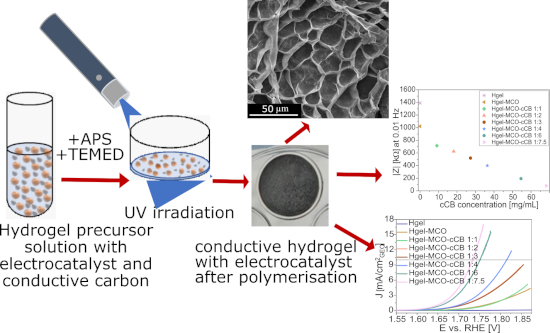
- appropriate electrical conductivity [22]. Suspension of conductive fillers in the hydrogel structure, such as metallic particles (gold nanoparticles, silver nanoparticles) [23][24][25], carbon-based materials (GO graphene oxide, CNT carbon nanotubes) [26][27][28], and conductive polymers (polyaniline
- composite with significant electrical conductivity resulting from the presence of conductive carbon particles in a process that is much faster and easier to perform. It is also inexpensive as it does not require electricity consumption in long mixing and/or heating processes. The produced hydrogel


Nanoarchitectonics of photothermal materials to enhance the sensitivity of lateral flow assays
Beilstein J. Nanotechnol. 2023, 14, 988–1003, doi:10.3762/bjnano.14.82
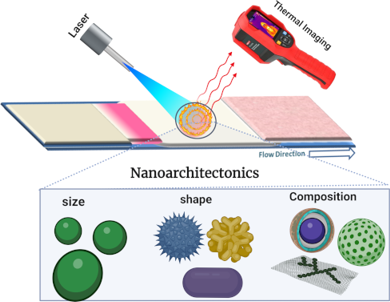
- highest photothermal conversion efficiency. In addition, these materials also possess high thermal and electrical conductivity, high aspect ratio, light weight, and high mechanical strength, because of which these materials are used for photothermal applications [36]. Polyhydroxylated fullerenes were


A wearable nanoscale heart sound sensor based on P(VDF-TrFE)/ZnO/GR and its application in cardiac disease detection
Beilstein J. Nanotechnol. 2023, 14, 819–833, doi:10.3762/bjnano.14.67
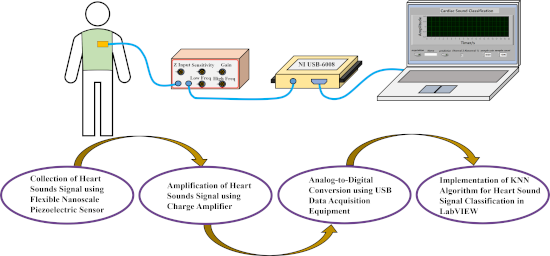
- -TrFE). Graphene (GR) exhibits outstanding electrical conductivity and strong adsorption capabilities. When combined with ZnO, it forms a more homogeneous and compact structure, thereby enhancing the alignment and arrangement of ZnO crystals. Furthermore, the layered structure of GR enables it to enwrap
- voltage and to a reduced filament diameter. Moreover, since GR has a sheet-like structure with good electrical conductivity, adding a trace amount of GR material can further enhance the solution's conductivity and promote the dispersion of ZnO particles, resulting in finer and smoother nanofiber filaments


In situ magnesiothermic reduction synthesis of a Ge@C composite for high-performance lithium-ion batterie anodes
Beilstein J. Nanotechnol. 2023, 14, 751–761, doi:10.3762/bjnano.14.62
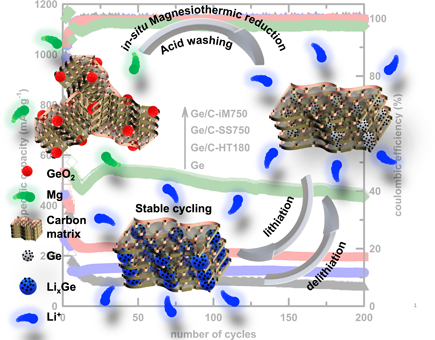
- the low-frequency region. The former component is characteristic of charge transfer resistance, while the latter presents the diffusion of ions in the solid phase. Compared to the pure Ge electrode, the diameters of the semicircle are smaller in the Ge@C electrodes because of the higher electrical
- conductivity of the additional carbon matrix, indicating the decrease in charge transfer resistance of the composite electrodes. The EIS results were fitted using an equivalent circuit model, including an internal or electrolyte resistance (Re), a charge transfer resistance (Rct), and two constant phase


A graphene quantum dots–glassy carbon electrode-based electrochemical sensor for monitoring malathion
Beilstein J. Nanotechnol. 2023, 14, 701–710, doi:10.3762/bjnano.14.56
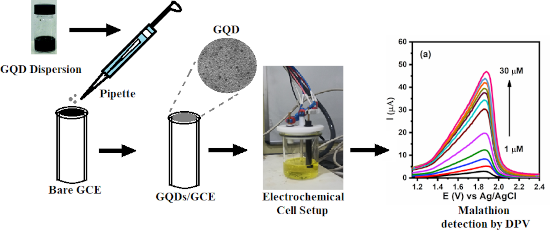
- application of electrochemical methods in detection of pesticides has already been extensively studied [9][10][11][12][13]. Nanomaterials are ideal for electrochemical sensing because of their unique properties such as high chemical stability, thermal conductivity, electrical conductivity, and large surface


Humidity-dependent electrical performance of CuO nanowire networks studied by electrochemical impedance spectroscopy
Beilstein J. Nanotechnol. 2023, 14, 683–691, doi:10.3762/bjnano.14.54
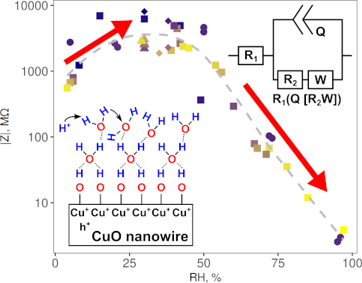
- nanowires in combination with good electrical conductivity and thermoelectric power reaching 500 µV/K enables their application as p-type components for environmentally friendly thermoelectric devices [3][4]. Investigating the influence of relative humidity (RH) and understanding conductivity mechanisms in
- chemisorption on the surface of a p-type nanowire can have a dual effect on the electrical conductivity, this may explain the scatter of impedances measured at the RH below 50% (Figure 3a). This hypothesis on the processes on the surfaces of the CuO nanowires is supported by the Bode plot data. The linear


Metal-organic framework-based nanomaterials as opto-electrochemical sensors for the detection of antibiotics and hormones: A review
Beilstein J. Nanotechnol. 2023, 14, 631–673, doi:10.3762/bjnano.14.52
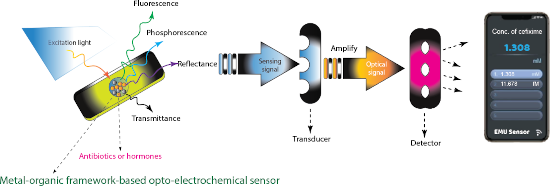
- biomolecules via electrostatic forces, stacking, and/or hydrogen bonding, which lead to high accumulation of the target analyte, are another factor that supports the development of electrochemical sensors. However, because of the high proportion of organic ligands, most MOFs have poor electrical conductivity
- electrical properties. Because of the typically insulating properties of the organic linkers and low levels of π–π-orbital conjugation, significant electrical conductivity is uncommon in MOFs. Even though MOFs’ electronic characteristics have not received much attention, their potential as electrically


Molecular nanoarchitectonics: unification of nanotechnology and molecular/materials science
Beilstein J. Nanotechnol. 2023, 14, 434–453, doi:10.3762/bjnano.14.35
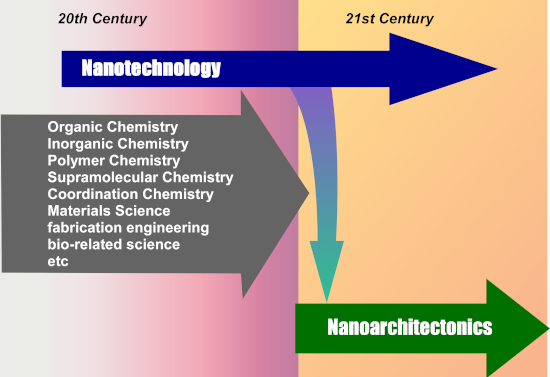
- both metallic and semiconducting properties. These networks have been applied to thermoelectric materials and have been found to exhibit low interplane thermal conductivity, which is not typical of carbon materials, while maintaining the interplane electrical conductivity. Müllen, Fuchs, Chi, and co