Search results
Search for "fibers" in Full Text gives 199 result(s) in Beilstein Journal of Nanotechnology.
TiO2 immobilized on 2D mordenite: effect of hydrolysis conditions on structural, textural, and optical characteristics of the nanocomposites
Beilstein J. Nanotechnol. 2025, 16, 128–140, doi:10.3762/bjnano.16.12
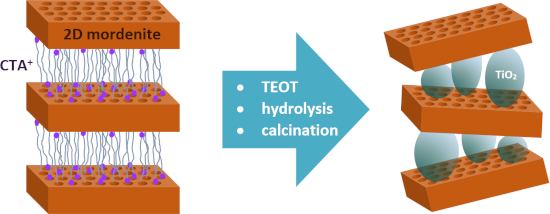
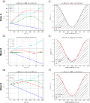
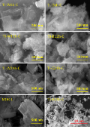
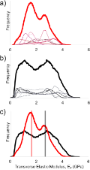
- treatment. For Ti-E24h-C, the lower TiO2 content compared to TI-E12h-C can be attributed to the formation of 3D mordenite fibers, clearly visible in the SEM images (see below in Figure 3). From the comparison of the surface (XPS) and volume (EDX) content of TiO2, we can not only deduce a fairly uniform
- formation of thin single-crystalline fibers of mordenite. Al 2p, Ti 2p, and O 1s XPS studies The XPS spectra of Al 2p, Ti 2p, and O 1s for the composites are shown in Figure 4. Figure 4a and Figure 4c also show the Al 2p and O 1s spectra of the starting MOR-L compound. No perturbation is observed in the Si
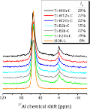
- associated with extra-framework Al species, which according to 27Al NMR amount to a total of about 20% (Figure 2). For Ti-E24h-C, a low intensity peak appears at 72.7 eV. This peak can be related to framework Al in the 3D mordenite fibers, which are clearly seen in the SEM image (Figure 3). It should be



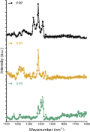
Ultrablack color in velvet ant cuticle
Beilstein J. Nanotechnol. 2024, 15, 1554–1565, doi:10.3762/bjnano.15.122

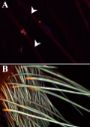
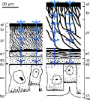
- on top of each other (E and F). There are also dark transverse bands that interconnect two consecutive longitudinal bands of the same lamellae (arrow), or of two separate lamellae (A and B). Legend: L = lamellae; P = pillars; R = rugosity of chitin fibers embedded in a protein matrix. Scale bars: 100



A biomimetic approach towards a universal slippery liquid infused surface coating
Beilstein J. Nanotechnol. 2024, 15, 1376–1389, doi:10.3762/bjnano.15.111
- times a fiber crosses the line [36]. The diameter of ten fibers per spot per sample were measured. Three lines of 4 μm in length were drawn per spot per sample. Two samples per sample group were analyzed and the experiment was repeated twice. Platelet adhesion and activation 108 platelets/mL in Tyrode’s
- fibers (n = 60). (Right) Clot density, defined as the number of times a fiber crosses a line of fixed length. Three lines were drawn per spot (n = 18). PDA–FDT–PFD yielded significantly higher fiber diameter and lower clot density than glass, COC and BSA (α = 0.05). Representative SEM micrographs of




Hymenoptera and biomimetic surfaces: insights and innovations
Beilstein J. Nanotechnol. 2024, 15, 1333–1352, doi:10.3762/bjnano.15.107
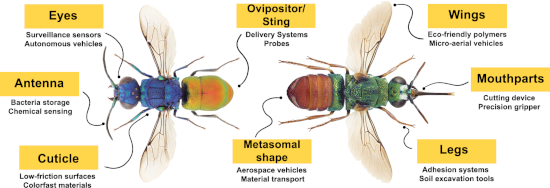
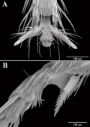
- by numerous branched internal fibers [129]. Moreover, the pads in Hymenoptera exhibit self-cleaning capabilities [130]. The precise control of adhesive strength and contact area can inspire the development of new bioinspired surfaces that significantly reduce switching times between attachment and




A low-kiloelectronvolt focused ion beam strategy for processing low-thermal-conductance materials with nanoampere currents
Beilstein J. Nanotechnol. 2024, 15, 1197–1207, doi:10.3762/bjnano.15.97

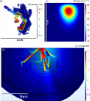
- unfeasibly large area. To further verify that no heat damage occurs, a TEM lamella was prepared using the lower-ion-energy approach (5 keV, nanoampere beam currents). The result is shown in Figure 6. Collagen fibers can be observed for the lower-energy approach, indicating that heat damage was minimized. The
- ions. The collagen fibers are visible in the TEM lamella prepared with currents in the nanoampere range. SRIM calculation parameters showing the total energy loss to phonons and ionization per incident gallium ion in skin. Summary and comparison of ion beam parameters, the predicted increase in



Unveiling the potential of alginate-based nanomaterials in sensing technology and smart delivery applications
Beilstein J. Nanotechnol. 2024, 15, 1077–1104, doi:10.3762/bjnano.15.88

- , leading to superior functionality and enhanced metal sensing capabilities [111]. He et al. developed fluorescent fibers from alginate reinforced with gold (Au) nanoclusters by using a wet-spinning technique [112]. The fluorescent fibers exhibited good selectivity and sensitivity towards Cu2+ and Hg2
- +. Based on the quenching effect, a design for a “turn-off” fluorescent sensor for Cu2+ and Hg2+ detection with detection limits of 187.99 and 82.14 nM, respectively, was developed. Furthermore, the Au-loaded alginate-based fibers outperformed the pristine Ca-ALG fibers in terms of mechanical properties


Effect of wavelength and liquid on formation of Ag, Au, Ag/Au nanoparticles via picosecond laser ablation and SERS-based detection of DMMP
Beilstein J. Nanotechnol. 2024, 15, 1054–1069, doi:10.3762/bjnano.15.86

- affordable and accessible fabrication methods which guarantee stability and reproducibility along with accessible sample collection of SERS substrates. There has been significant interest in utilizing flexible materials such as paper, nitrocellulose, polymer film, cotton fabrics, adhesive tape, glass fibers


Beyond biomimicry – next generation applications of bioinspired adhesives from microfluidics to composites
Beilstein J. Nanotechnol. 2024, 15, 965–976, doi:10.3762/bjnano.15.79
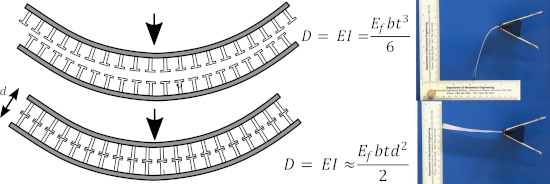
- review articles have already been published on this topic [2][4]. However, for high normal strength and peel strength where directionality or easy off–on performance is not needed, this particular version of the biomimetic fibers tends to perform best. Our unique contributions to these general types of
- developed the adhesion circle test system, which has been instrumental in characterizing how these fibers with the deliberate defect function, demonstrating that the same geometry with different structural materials can exhibit vastly different adhesion properties [28]. Generally, structural materials for
- surface roughness and are far more cost-effective. The significant influence of mechanical properties on identical fiber designs has also been extensively studied by our group and others, including work on shape memory polymers (SMPs) for biomimetic pillars [29]. These uniformly mushroom-shaped SMP fibers


Electrospun nanofibers: building blocks for the repair of bone tissue
Beilstein J. Nanotechnol. 2024, 15, 941–953, doi:10.3762/bjnano.15.77
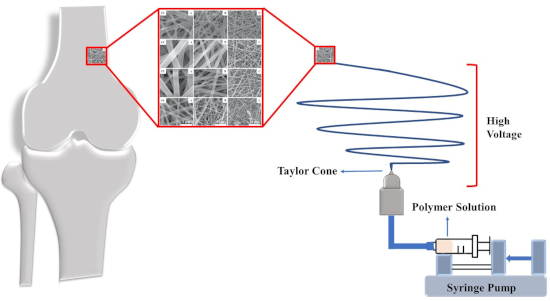
- . Electrospinning is an easy and fast method to produce non-woven structures consisting of continuous ultrafine fibers with diameters ranging from micrometers down to nanometers. The simplicity and cost-effectiveness of the electrospinning technique, its ability to use a wide variety of synthetic, natural, and
- mixed polymers, and the formation of highly porous and continuous fibers are the remarkable features of this method. The importance of nanofiber-based scaffolds in bone tissue regeneration is increasing because of suitable pore size, high porosity, osteoinduction, induction of bone growth with
- of calcium and phosphate and the protection of bone marrow are among the characteristics of bone tissue [9][10]. Bone tissue, which is a special form of connective tissue, consists of cells, fibers, and extracellular matrix; histologically, it can be divided into two bone types, namely, woven bone


The effect of age on the attachment ability of stick insects (Phasmatodea)
Beilstein J. Nanotechnol. 2024, 15, 867–883, doi:10.3762/bjnano.15.72

- individuals were more active, whereas the old animals took longer to recover from anesthesia (not quantified). Ridgel and Ritzmann [5] also detected a decrease of around 50% in walking speed of aged cockroaches. This matches the proposed loss of muscle fibers with age, leading to muscle atrophy [16


Electrospun polysuccinimide scaffolds containing different salts as potential wound dressing material
Beilstein J. Nanotechnol. 2024, 15, 781–796, doi:10.3762/bjnano.15.65
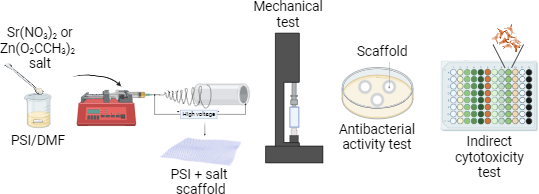
- , and fibers can be produced with uniform diameters in a controlled way [13][14]. Electrospun fibers are similar to macromolecule networks (e.g., collagen, fibrinogen, elastin) around the cells, which are called extracellular matrix (ECM). The ECM has fiber diameters in the size range of 50–500 nm and
- adhesion, growth, proliferation, and differentiation. The electrospinning technique offers the possibility of using the formed scaffold as a wound dressing with fibers of proper size and morphology. The porous nature of the scaffold enables the drainage of wound fluids and facilitates the entry of oxygen
- scaffolds [18][19][20][21]. The antibacterial effectiveness of the fibrous structure is significantly influenced by incorporating salts or nanoparticles. When electrospun fibers are combined with inorganic nanoparticles [22], they can become resistant to bacteria. However, their ability to enhance



Functional fibrillar interfaces: Biological hair as inspiration across scales
Beilstein J. Nanotechnol. 2024, 15, 664–677, doi:10.3762/bjnano.15.55
- length scales. Keywords: adhesion; fibers; fluid–structure interactions; mastigonemes; mechanosensing; setae; wettability; Introduction Given the bottom-up approach that biology uses to create materials, fibrous structures formed by molecular chains are found everywhere. For example, internally in the
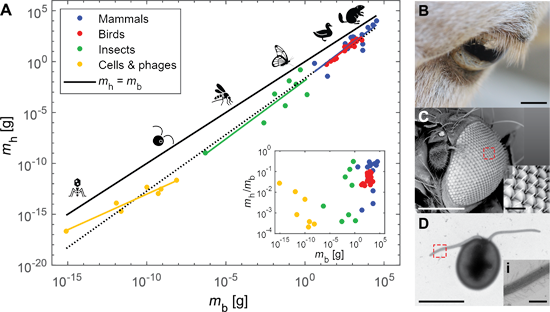
- biological hairs, or fibrillar structures, contribute to those functions across 20 orders of magnitude in organism mass and six orders of magnitude in hair thickness, from the nanometer-thick fibers on bacteriophages to the millimeter-thick hair and fur on mammals. Review Protection Plants and animals often
- spider (Argyroneta aquatica), and insects, such as aquatic bugs and beetles, use hydrophobic hairs to trap air and form an air bubble that encompasses their body [49][50]. Insects, such as the green dock beetle (Gastrophysa viridula), trap air between the adhesive fibers on their footpads when walking


Comparative analysis of the ultrastructure and adhesive secretion pathways of different smooth attachment pads of the stick insect Medauroidea extradentata (Phasmatodea)
Beilstein J. Nanotechnol. 2024, 15, 612–630, doi:10.3762/bjnano.15.52
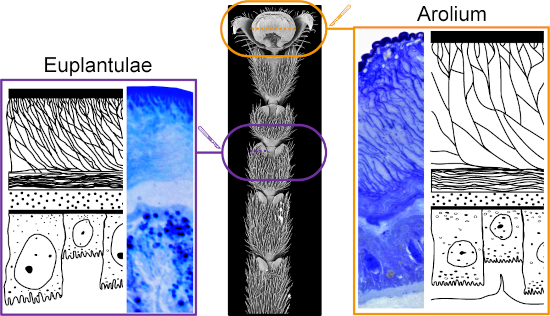
- , possibly attributed to residual adhesive secretions within the cuticle layers, or to underlying epidermal cells (Figure 5C). The finer fibers of the branching rod layer ultimately terminate in the superficial layer (Figure 5A,B,D). The thin superficial layer is the outermost layer of the euplantulae






Berberine-loaded polylactic acid nanofiber scaffold as a drug delivery system: The relationship between chemical characteristics, drug-release behavior, and antibacterial efficiency
Beilstein J. Nanotechnol. 2024, 15, 71–82, doi:10.3762/bjnano.15.7
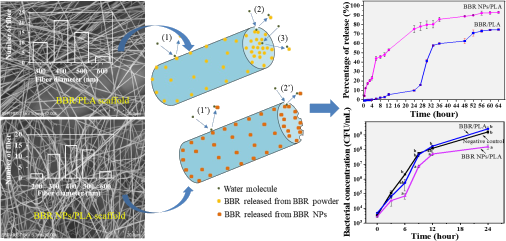
- the surface of the fibers. In addition, the reduction in the hydrophobicity of the nanofiber network also caused a faster release of the drug. Meanwhile, the hydrophobic PLA nanofiber carrier showed a sustained release behavior of the Dox-base. This was because hydrophobic Dox-base significantly
- positively charged quaternary ammonium groups of BBR, increasing the charge density of the blend solution. As the higher charged solution jet, the elongation force imposed on the jet was higher, forming smaller fibers [3][34]. Interestingly, although the same amount of BBR drug was incorporated in the BBR


Hierarchically patterned polyurethane microgrooves featuring nanopillars or nanoholes for neurite elongation and alignment
Beilstein J. Nanotechnol. 2023, 14, 1157–1168, doi:10.3762/bjnano.14.96
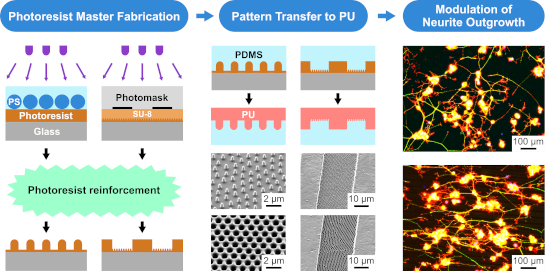
- as fibers and grooves, in nerve guidance conduits facilitate axonal elongation and guidance and accelerate functional recovery [4]. Aside from continuous structures, different types of discrete micro- and nanostructures in the form of pillars, wires, tubes, holes, and cones have also been shown to


A visible-light photodetector based on heterojunctions between CuO nanoparticles and ZnO nanorods
Beilstein J. Nanotechnol. 2023, 14, 1018–1027, doi:10.3762/bjnano.14.84
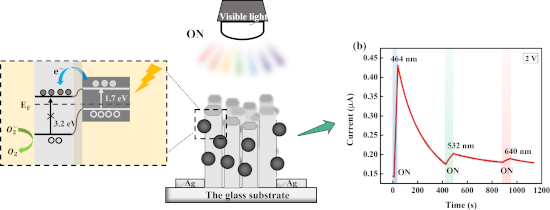
- development of many technologies in the future, such as solar cells [1][2], light-emitting diodes (LEDs) [3][4], laser diodes [5], and optical fibers [6]. Optoelectronics devices contribute to meeting requirements in telecommunications, medical equipment, sensors, and military services. Among those


Exploring internal structures and properties of terpolymer fibers via real-space characterizations
Beilstein J. Nanotechnol. 2023, 14, 1004–1017, doi:10.3762/bjnano.14.83
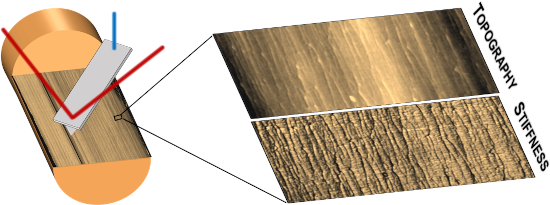
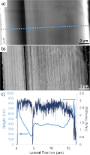
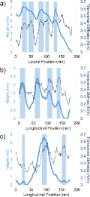
- investigated the processing and properties of high-performance terpolymer fibers, much remains to be understood about the internal nano- and microstructures of these fibers, and how these morphologies relate to fiber properties. Here we use a focused ion beam notch technique and multifrequency atomic force
- microscope mapping to characterize the internal structure and local mechanical properties within Technora® fibers. We find a highly fibrillated structure that appears to connect with both the fiber’s molecular chemistry and full-fiber mechanical properties. In addition, through detailed comparisons with
- Kevlar® K29 fibers, we find remarkable differences between the internal structures of the two fibers, and posit connections between our measurements and multifunctional performance studies from the literature. Keywords: atomic force microscopy; correlative characterization; high-performance fibers






A wearable nanoscale heart sound sensor based on P(VDF-TrFE)/ZnO/GR and its application in cardiac disease detection
Beilstein J. Nanotechnol. 2023, 14, 819–833, doi:10.3762/bjnano.14.67
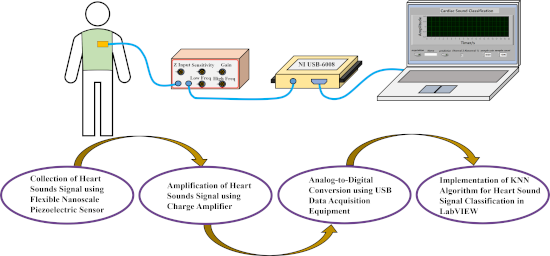
- . Composition and β-phase content of the piezoelectric composite films were analyzed using X-ray diffraction. The morphology of the composite film fibers was observed through scanning electron microscopy. Finally, the P(VDF-TrFE)/ZnO/graphene composite film was encapsulated in a sandwich-structure heart sound
- . SEM images of a pure PVDF film in Figure 8a and Figure 8b exhibit filamentous fibers with a relatively smooth surface. In contrast, Figure 8c and Figure 8d show that the addition of ZnO to the P(VDF-TrFE) filaments leads to a rough and granular surface, caused by the aggregation of ZnO particles that
- 2016 database] which is made available under the Open Data Commons Attribution License v1.0, https://opendatacommons.org/licenses/by/1-0/. Wavelet packet decomposition and optimal basis selection diagram. Validation confusion matrix of heart sound classification model (fine KNN). Diameter of fibers for


Silver-based SERS substrates fabricated using a 3D printed microfluidic device
Beilstein J. Nanotechnol. 2023, 14, 793–803, doi:10.3762/bjnano.14.65
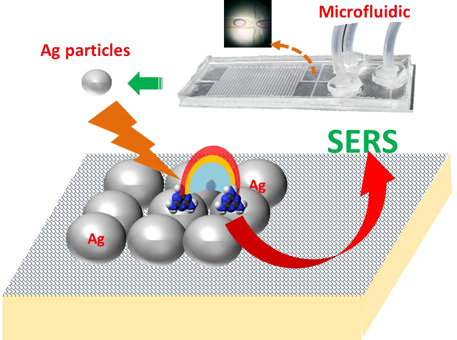
- and the type of resin [31]. With particular resins, SLA can fabricate features with lateral dimensions of 100 µm and a mold-printed resolution of 50 µm. Over the past decade, numerous SERS substrates based on various materials, including paper [32][33], polymers [34][35], fibers [36], dielectrics [37



Carbon nanotube-cellulose ink for rapid solvent identification
Beilstein J. Nanotechnol. 2023, 14, 535–543, doi:10.3762/bjnano.14.44
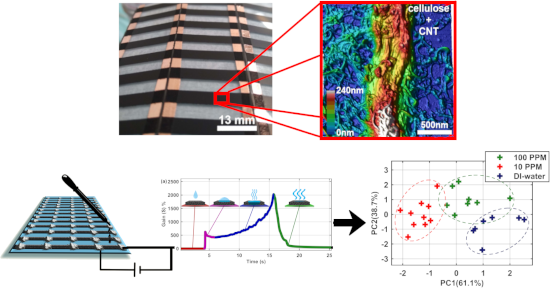
- and MFC are distributed within the ink, AFM measurements were performed on the isolated materials (MFC and MWCNTs) and on the MFC/MWCNT composite (see Figure 1d–f). Pure MFC fibers form bundles (ca. 250 nm thick), and the functionalized tubes also form small bundles. Interestingly, Figure 1f shows
- that the carbon nanotubes tend to twine around the MFC fiber when mixed. Thus, one can visualize that the composite ink is composed of an insulating matrix of MFC fibers intertwined by a conductive CNT network. To analyze the data, principal components analysis (PCA) was performed. PCA is a


Conjugated photothermal materials and structure design for solar steam generation
Beilstein J. Nanotechnol. 2023, 14, 454–466, doi:10.3762/bjnano.14.36
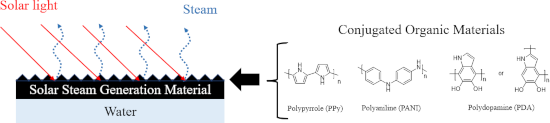
- on conjugated organic materials. Conjugated organic materials are processed into fibers, membranes, and porous structures. Therefore, nanostructure design based on the concept of nanoarchitectonics is crucial to achieve high SSG efficiency. We discuss the considerations for designing SSG absorbers
- films. Optical microscopy was employed to observe the surface structure of the films (Figure 10a–d). Figure 10a shows the filter paper. In the photothermal films, the filter paper is the supporting layer. The filter paper is indeed suitable for this purpose because the cellulose fibers are randomly


Batch preparation of nanofibers containing nanoparticles by an electrospinning device with multiple air inlets
Beilstein J. Nanotechnol. 2023, 14, 141–150, doi:10.3762/bjnano.14.15
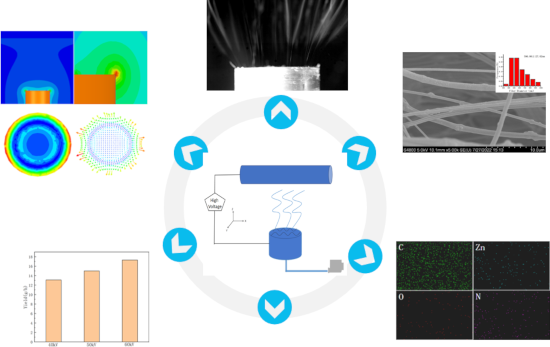
- promising materials, such as conductive fibers [6], phase change fibers [7], antistatic fibers [8], and antibacterial fibers [9]. Therefore, the batch preparation of high-performance functional nanofibers by electrospinning has become a current research hotpot [10]. The properties of spinning solutions used
- easily sink down, resulting in an uneven distribution of nanoparticles in the obtained fibers [17]. Due to their stable physical and chemical properties, good biocompatibility, excellent photoelectric properties, non-toxicity, strong antibacterial activity and low price, ZnO nanoparticles can be used in
- . It was found that, when the applied voltage was 40 kV (Figure 2e), less jet formation and low spinning efficiency were achieved. When the voltage was 60 kV (Figure 2f), more but unstable jets were formed due to too high electric field intensity, which would result in coarser fibers and fiber bundles


Antimicrobial and mechanical properties of functionalized textile by nanoarchitectured photoinduced Ag@polymer coating
Beilstein J. Nanotechnol. 2023, 14, 95–109, doi:10.3762/bjnano.14.11
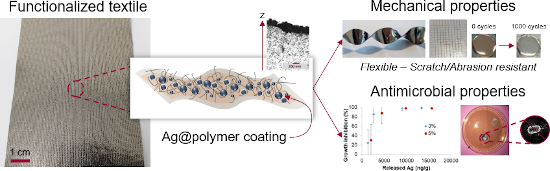
- forces, which ultimately extends the lifetime of the functionalized textile. The antimicrobial properties of MNP-polymer composites have been extensively investigated [42][43][44] and research has gone into functionalizing textile fibers with the nanocomposites in situ [45][46]. Few studies seem to have



Structural studies and selected physical investigations of LiCoO2 obtained by combustion synthesis
Beilstein J. Nanotechnol. 2022, 13, 1473–1482, doi:10.3762/bjnano.13.121
- produced in the form of powders, fibers, and films by using various processing techniques including wet chemical synthesis, such as the sol–gel method [33][34][35], precipitation [36], hydrothermal [37][38][39] and spray pyrolysis [40][41]. Also, solid-state synthesis methods, such as mechanical synthesis




Laser-processed antiadhesive bionic combs for handling nanofibers inspired by nanostructures on the legs of cribellate spiders
Beilstein J. Nanotechnol. 2022, 13, 1268–1283, doi:10.3762/bjnano.13.105
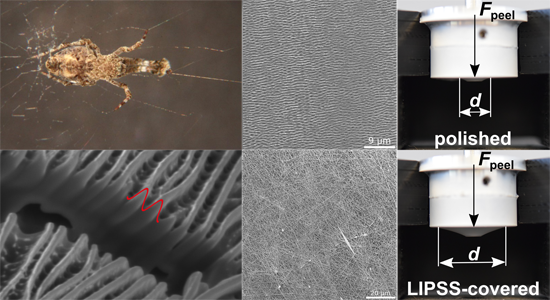
- product in the form of a random network of fibers, referred to as nonwoven fabric, the stickiness of the freshly produced and thus fragile nanofiber nonwoven remains a problem. This is mainly because nanofibers strongly adhere to any surface because of van der Waals forces. In nature, there are animals
- ; nanostructures; Introduction Nanofibers have a diameter of approximately 10 to 800 nm, whereas their length is much greater than their diameter, which is why the term fiber or thread is used. These fibers are constantly drawing the attention of engineers because their surface-to-volume ratio is favorable for
- by the area moment of inertia J, is proportional to the fourth power of the radius, J ∼ R4. Hence, the fiber gains more contact area much faster than the force decreases. (2) With a smaller radius, more fibers can attach simultaneously to the surface, which leads to a further increase in the total