Search results
Search for "gain" in Full Text gives 466 result(s) in Beilstein Journal of Nanotechnology. Showing first 200.
Electronic and optical properties of chloropicrin adsorbed ZnS nanotubes: first principle analysis
Beilstein J. Nanotechnol. 2025, 16, 1184–1196, doi:10.3762/bjnano.16.87
- comparison to the oxygen atoms of CP, which may be attributed to the availability of three lone pairs with each chlorine atom in comparison to the two lone pairs with each oxygen atoms. To gain deeper insight into these interactions, a Mulliken population analysis was performed, revealing the extent of


Changes of structural, magnetic and spectroscopic properties of microencapsulated iron sucrose nanoparticles in saline
Beilstein J. Nanotechnol. 2025, 16, 762–784, doi:10.3762/bjnano.16.59
- obstacle to the analysis of the physical properties of iron sucrose. The results from such in-depth analysis of the physical properties are important to elucidate the following issues: (i) the precise description of the interior structure of AB-Fortis iron, (ii) to gain knowledge about the magnetic




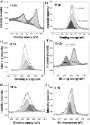

Efficiency of single-pulse laser fragmentation of organic nutraceutical dispersions in a circular jet flow-through reactor
Beilstein J. Nanotechnol. 2025, 16, 711–727, doi:10.3762/bjnano.16.55
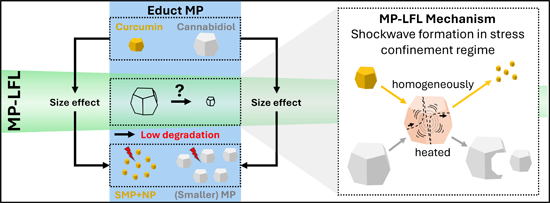
- of the laser fluence and more precise PPV adjustment, allowing for the use of significantly higher concentrations (because of the low liquid layer thickness) [81]. Also, to gain deeper insights into the fragmentation mechanisms of organic MPs, pump–probe microscopy imaging, as already performed for


ReactorAFM/STM – dynamic reactions on surfaces at elevated temperature and atmospheric pressure
Beilstein J. Nanotechnol. 2025, 16, 397–406, doi:10.3762/bjnano.16.30
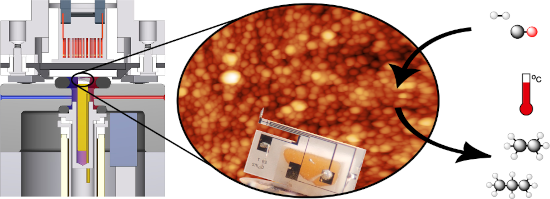
- , Germany) with the bias applied to the sample. The tuning fork is driven by an AC voltage, and its deflection is measured by the resultant current. The qPlus signal preamplification is provided by a Femto HQA-15M-10T high-frequency charge amplifier with a high gain of 10 V/pC, before it is fed to the


Preferential enrichment and extraction of laser-synthesized nanoparticles in organic phases
Beilstein J. Nanotechnol. 2025, 16, 254–263, doi:10.3762/bjnano.16.20
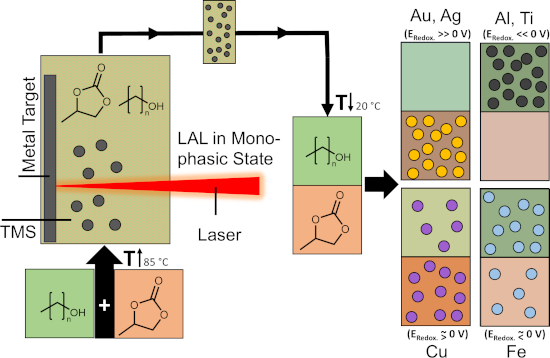
- propylene carbonate and 1-nonanol TMS and observed their phase preference to gain insights if the nanoparticle material has an impact on the preferred phase. We further narrowed down the influence of the TMS composition by varying the alkyl chain length of the alcohol from C6 to C11 and, consequently
- phase transfer process. Finally, the nanoparticles were analyzed to gain insights into the physical and chemical properties that determine the nanoparticle’s phase preference. Results and Discussion Influence of standard electrochemical reduction potential on phase preference Laser ablation of metals




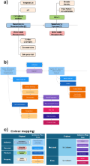
Instance maps as an organising concept for complex experimental workflows as demonstrated for (nano)material safety research
Beilstein J. Nanotechnol. 2025, 16, 57–77, doi:10.3762/bjnano.16.7

- characteristics, thus representing both intrinsic and extrinsic properties of the studied material [20]. Mesocosm studies are generally complexly layered with multiple assays and characterisation methods occurring sequentially or concurrently, often within a larger encompassing study in order to gain a more


Mechanistic insights into endosomal escape by sodium oleate-modified liposomes
Beilstein J. Nanotechnol. 2024, 15, 1667–1685, doi:10.3762/bjnano.15.131
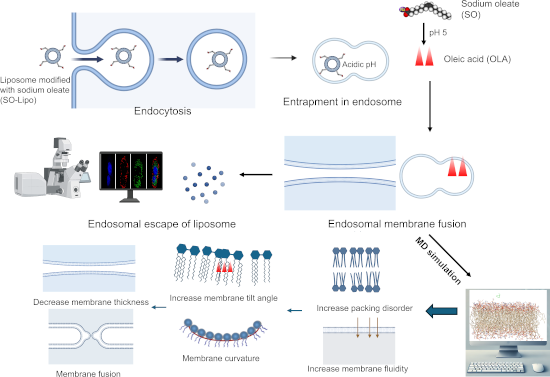
- complexes with liposomal components, enhancing both liposome stability and drug encapsulation. To gain deeper insight into the mechanisms underpinning SO’s potential as an endosomal escape agent, molecular dynamics (MD) simulations have emerged as an indispensable computational tool. These simulations




Integrating high-performance computing, machine learning, data management workflows, and infrastructures for multiscale simulations and nanomaterials technologies
Beilstein J. Nanotechnol. 2024, 15, 1498–1521, doi:10.3762/bjnano.15.119
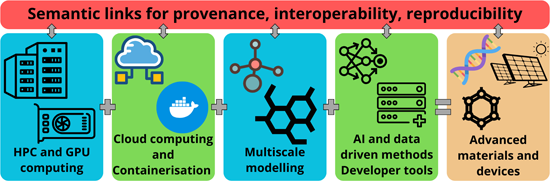
- gain deeper insights and make informed decisions. Through the integration of simulation data with experimental measurements, researchers can validate and refine computational models, improving their accuracy and reliability. Advanced data analysis techniques, such as statistical analysis, machine


Effect of radiation-induced vacancy saturation on the first-order phase transformation in nanoparticles: insights from a model
Beilstein J. Nanotechnol. 2024, 15, 1453–1472, doi:10.3762/bjnano.15.117

- and final states increases. Therefore, phase transitions with higher energy barriers are less likely to occur at a given temperature. From this, one can consider the different configurations of α→β phase change and calculate the energies and the probabilities. Hence, one can gain insights into the


Investigation of Hf/Ti bilayers for the development of transition-edge sensor microcalorimeters
Beilstein J. Nanotechnol. 2024, 15, 1353–1361, doi:10.3762/bjnano.15.108

- estimate the TES ampere–watt sensitivity, spectral density of various noise components, and energy resolution. The ampere–watt sensitivity of TES is represented as Here, LI is the DC gain, τ is the time constant in the absence of electrothermal feedback, τI is the time constant in the limit when the


Interaction of graphene oxide with tannic acid: computational modeling and toxicity mitigation in C. elegans
Beilstein J. Nanotechnol. 2024, 15, 1297–1311, doi:10.3762/bjnano.15.105
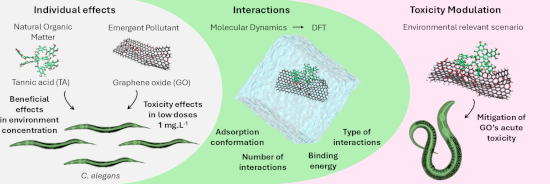
- is well known that in more diluted suspensions, nanomaterials tend to present better dispersibility, and it is expected that GO remains stable in EPA medium for a longer time. Computational simulation of GO–TA interactions To analyze the surface modification of GO by TA and gain insights into the
- provide information regarding how the loss or gain of electrons affects the spatial electronic density of the atoms [49][50], revealing the most reactive sites of the system. We applied Fukui functions to assess the most reactive sites of GO in its initial configuration and after evolution of the sheet


Dual-functionalized architecture enables stable and tumor cell-specific SiO2NPs in complex biological fluids
Beilstein J. Nanotechnol. 2024, 15, 1238–1252, doi:10.3762/bjnano.15.100
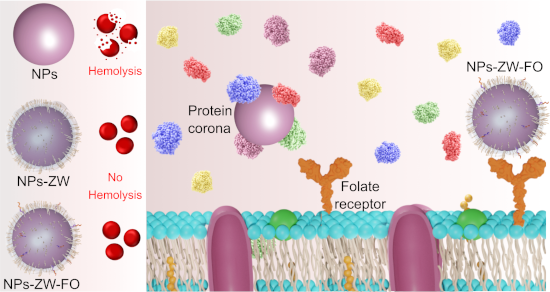
- Microplate Reader equipment). The excitation wavelength was set at 524 nm and the emission spectra were generated in the spectral window from 560 to 700 nm with a constant gain value of 120. The analytical curve was obtained from the determination of several dilutions of non-functionalized SiO2NPs (0.1 to


Introducing third-generation periodic table descriptors for nano-qRASTR modeling of zebrafish toxicity of metal oxide nanoparticles
Beilstein J. Nanotechnol. 2024, 15, 1142–1152, doi:10.3762/bjnano.15.93
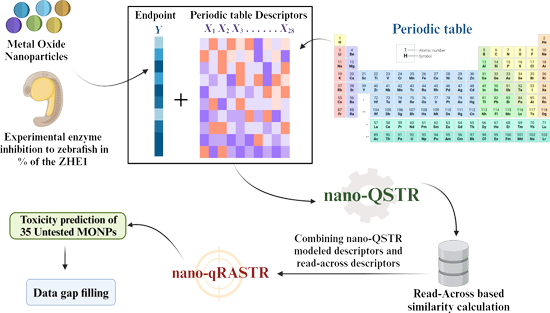
- a neutral atom, reflecting the tendency of the metal to gain electrons. The first ionization energy is the energy required to remove the outermost electron from a neutral atom, which is a critical factor in determining the metal’s reactivity and stability. For the present study, descriptors of all


Bolometric IR photoresponse based on a 3D micro-nano integrated CNT architecture
Beilstein J. Nanotechnol. 2024, 15, 1030–1040, doi:10.3762/bjnano.15.84
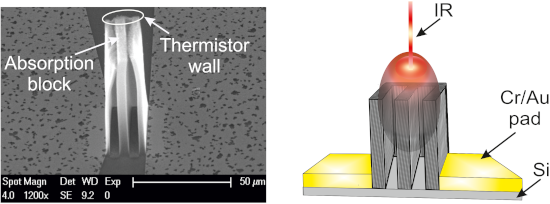
- setup, as shown in Figure 4c, is a low-noise TIA with a gain of 105 V/A [12]. Its output was connected to the oscilloscope. The responsivity was measured at chopper frequencies between 90 and 1100 Hz. To determine the noise floor, we redesigned the post-detection electronics by replacing the low-noise


Electrospun nanofibers: building blocks for the repair of bone tissue
Beilstein J. Nanotechnol. 2024, 15, 941–953, doi:10.3762/bjnano.15.77
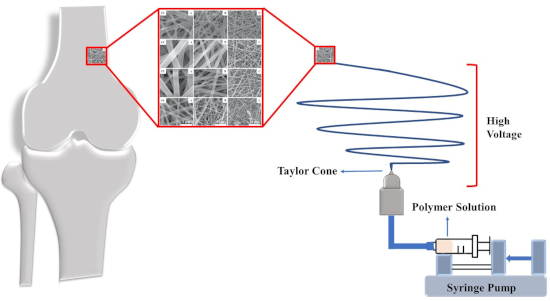
- area, and an increase in local tissue volume is observed. The purpose of hematoma formation is to gain temporary mechanical stability and to protect the area during the following healing phases. At the same time, an immediate pro-inflammatory cytokine release occurs to create an inflammatory reaction


Identification of structural features of surface modifiers in engineered nanostructured metal oxides regarding cell uptake through ML-based classification
Beilstein J. Nanotechnol. 2024, 15, 909–924, doi:10.3762/bjnano.15.75
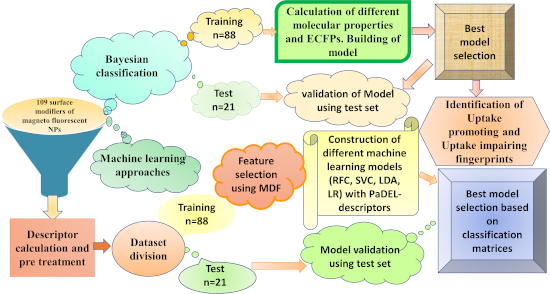
- analysis of experimentally obtained cellular uptake data for ENMOs provides a systematic approach to gain insights for modifying them for specific purposes. In recent times, these computational methods have gained popularity as they are more cost-effective and independent alternatives to experimental


The effect of age on the attachment ability of stick insects (Phasmatodea)
Beilstein J. Nanotechnol. 2024, 15, 867–883, doi:10.3762/bjnano.15.72

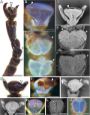
- experiments could explore more ageing-related effects to gain insights into the processes of attachment ability decay in insects and, thus, potentially improve sustainability of artificial biologically inspired engineering gripping systems. Such studies could include the role of hemolymph pressure for


Exploring surface charge dynamics: implications for AFM height measurements in 2D materials
Beilstein J. Nanotechnol. 2024, 15, 767–780, doi:10.3762/bjnano.15.64
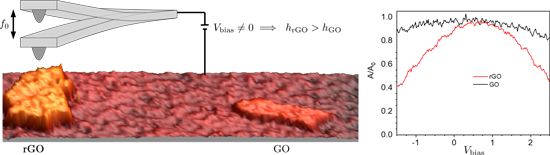
- the local properties of the material. To gain a deeper understanding of this voltage-dependent dissipative interaction, we conducted 3D spectroscopy measurements on rGO. The amplitude vs Vbias as a function of tip–sample distance images (A(Vbias, z)) for two different free oscillation amplitudes (A0


Effect of repeating hydrothermal growth processes and rapid thermal annealing on CuO thin film properties
Beilstein J. Nanotechnol. 2024, 15, 743–754, doi:10.3762/bjnano.15.62
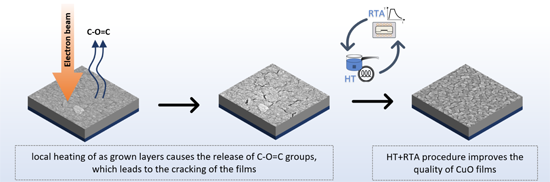
- concentration at grain boundaries and surfaces of individual grains. Further research is required to gain insight into the phenomena at grain boundaries, aiming to provide a precise explanation of the factors contributing to such a rapid change in the distribution of carriers in CuO films. SEM images of the




Level set simulation of focused ion beam sputtering of a multilayer substrate
Beilstein J. Nanotechnol. 2024, 15, 733–742, doi:10.3762/bjnano.15.61
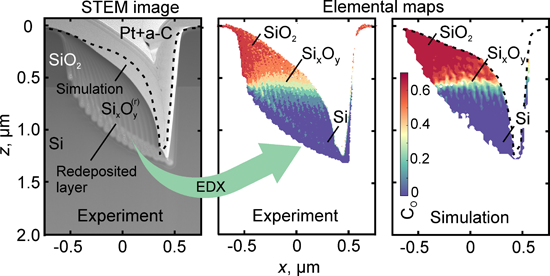
- cross section, the simulation can accurately predict the depth and shape of the structures, but there is some inaccuracy in reproducing the form of the left sidewall of the structure with a large amount of the redeposited material. To further validate the developed simulation approach and gain a better

![[Graphic 55]](/bjnano/content/inline/2190-4286-15-61-i68.svg?max-width=637&scale=1.18182)


Elastic modulus of β-Ga2O3 nanowires measured by resonance and three-point bending techniques
Beilstein J. Nanotechnol. 2024, 15, 704–712, doi:10.3762/bjnano.15.58
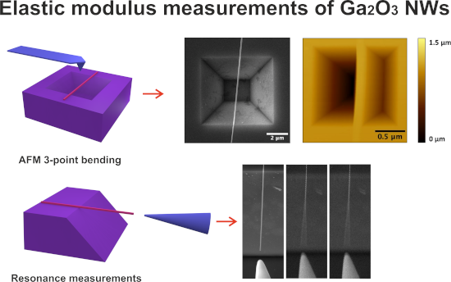
- a high concentration of oxygen vacancies, which could partially be responsible for the lower elastic modulus values. The TEM studies performed on a few selected NWs did not indicate the presence of stacking faults, which could contribute to higher elasticity. However, in order to gain full insight


Laser synthesis of nanoparticles in organic solvents – products, reactions, and perspectives
Beilstein J. Nanotechnol. 2024, 15, 638–663, doi:10.3762/bjnano.15.54
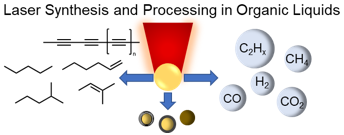
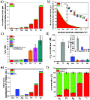
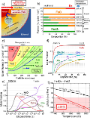
- the ablation of Pb, Zn, and Cu was performed by Niu et al. in thiols to gain the respective sulfides [157]. In contrast to the change of the nanoparticle core, Choi et al. elegantly obtained N-doped carbon shells or nitrides when they ablated in acetonitrile [104][105]. A change of solvent to





Stiffness calibration of qPlus sensors at low temperature through thermal noise measurements
Beilstein J. Nanotechnol. 2024, 15, 580–602, doi:10.3762/bjnano.15.50
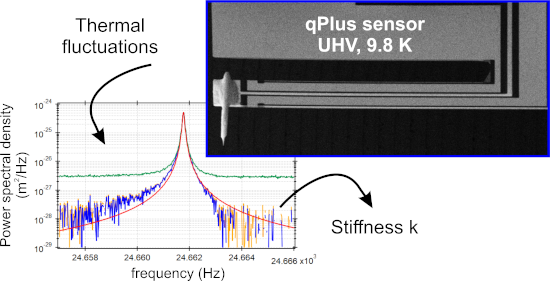
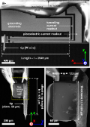
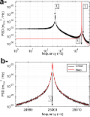
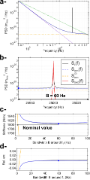
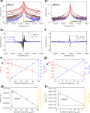
- SHOs. With our computational means however, it is unrealistic to describe a too large number of eigenmodes presenting high-Q factors. To gain computational time, we restrict the numerical analysis to the first three eigenmodes of the qPlus sensor (n = 1–3). Furthermore, we do not account for the

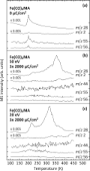
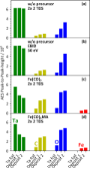
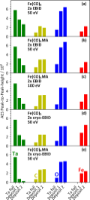
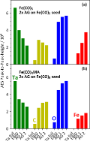
Electron-induced deposition using Fe(CO)4MA and Fe(CO)5 – effect of MA ligand and process conditions
Beilstein J. Nanotechnol. 2024, 15, 500–516, doi:10.3762/bjnano.15.45
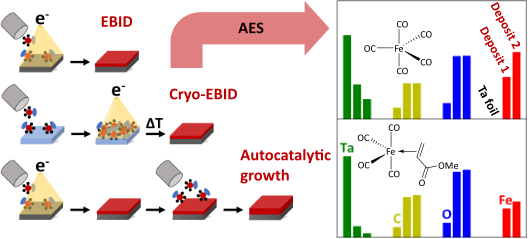
- surface [52][60]. While the initial surface decomposition must be driven by the energy gain upon binding of the CO ligands and the Fe(CO)x fragment to the Fe surface, AG is sustained at temperatures that are high enough to enable desorption of CO [52][60]. We propose that these reactions are energetically



Classification and application of metal-based nanoantioxidants in medicine and healthcare
Beilstein J. Nanotechnol. 2024, 15, 396–415, doi:10.3762/bjnano.15.36
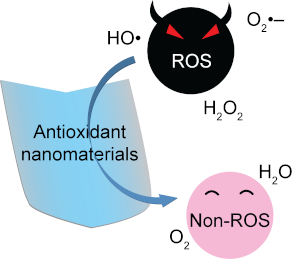
- , researchers have explored innovative approaches for the treatment of atherosclerosis, with a particular focus on the use of metal-based nanomaterials. The advancement of nanomedicines in CVD treatments will gain from the comprehensive understanding of the rate and extent of nanoparticles (NPs) inside the