


Search results
Search for "hydrophobic" in Full Text gives 438 result(s) in Beilstein Journal of Nanotechnology. Showing first 200.
Exploring the potential of polymers: advancements in oral nanocarrier technology
Beilstein J. Nanotechnol. 2025, 16, 1751–1793, doi:10.3762/bjnano.16.122
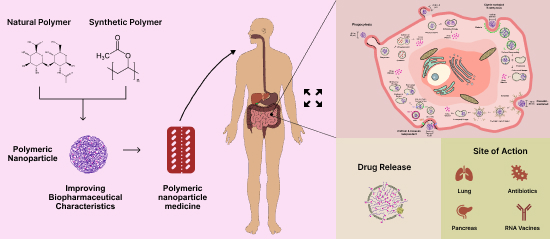
- , secreted or cell-bound, which form a viscoelastic gel through entanglement and cross-linking. These properties contribute to the protective and lubricating functions of mucus. These functions are performed through steric, electrostatic, and hydrophobic interactions with various substances [6]. Mucin is an
- , nanocapsules are particularly effective in encapsulating hydrophobic and lipophilic drugs due to the affinity of these compounds for the oily core. Drug release occurs through controlled diffusion across the polymeric layer and interaction with the core material. Conversely, nanospheres are capable of
- encapsulating either hydrophilic or hydrophobic drugs, depending on the physicochemical compatibility between the drug and the polymeric matrix. The distribution of the drug within the matrix is influenced by drug–polymer interactions, as well as by the type of polymer and the manufacturing method employed


Advances of aptamers in esophageal cancer diagnosis, treatment and drug delivery
Beilstein J. Nanotechnol. 2025, 16, 1734–1750, doi:10.3762/bjnano.16.121
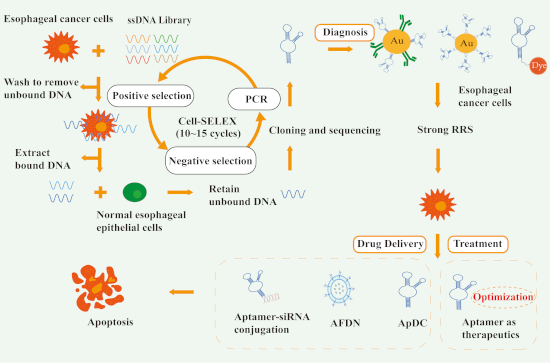
- delivery of gene-silencing therapeutics; (2) direct intercalation of aptamers with small-molecule chemotherapeutic drugs (e.g., DOX), forming stable complexes; (3) co-encapsulation of aptamers and hydrophobic drugs into nanoparticles (e.g., liposomes or polymeric micelles) to improve drug solubility and


Multifunctional anionic nanoemulsion with linseed oil and lecithin: a preliminary approach for dry eye disease
Beilstein J. Nanotechnol. 2025, 16, 1711–1733, doi:10.3762/bjnano.16.120
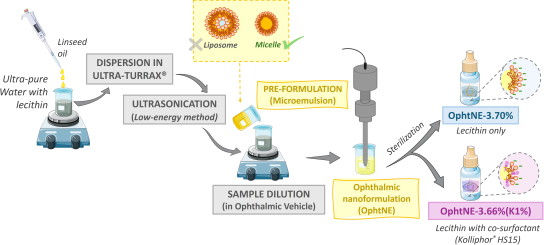
- addition to PFAs, phospholipids are notable for their structure, which includes a hydrophilic part (phosphate groups) and a hydrophobic part (fatty acid chains). This unique configuration allows phospholipids to interact at the interface between the lipid and aqueous layers of the tear film, increasing its
- micelles (single-layered lipid structures) [43]. The hydrophilic portion of lecithin consists of phospholipids, while the presence of unsaturated and/or saturated fatty acids determines its hydrophobic characteristics, thereby influencing its hydrophilic–lipophilic balance (HLB) values [44]. However
- its polar portions, and the length of its hydrophobic chain [49]. PPC values below 0.5 indicate the formation of monolayer micelles, whereas values between 0.5 and 1.0 favor liposome formation [49][50]. A value of p ≥ 0.5 has been reported for phosphatidylcholine, indicating that lecithin can form



Prospects of nanotechnology and natural products for cancer and immunotherapy
Beilstein J. Nanotechnol. 2025, 16, 1644–1667, doi:10.3762/bjnano.16.116
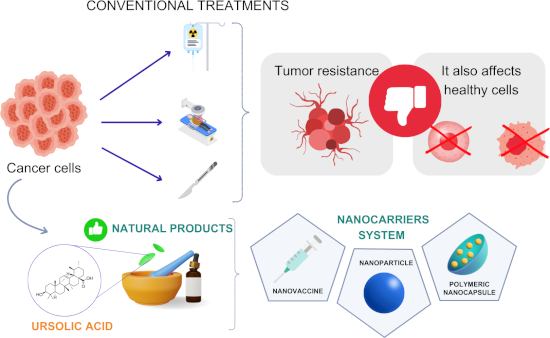
- spontaneously from the organization of active or natural compounds, without the presence of a carrier material or excipients. Their stability is due to the presence of intermolecular interactions, such as electrostatic forces, hydrogen bonding, π–π stacking, and hydrophobic interactions [104][105]. Among the
- ) complex that targets the PD-L1 gene, a cell-penetrating peptide, and a tumor cell membrane derived from HepG2 cells. Characterization of the nanoparticles showed that the nanocomplex was stabilized by hydrogen bonds, van der Waals forces, and hydrophobic forces. In addition, confocal microscopy, gene


Nanotechnology-based approaches for the removal of microplastics from wastewater: a comprehensive review
Beilstein J. Nanotechnol. 2025, 16, 1607–1632, doi:10.3762/bjnano.16.114
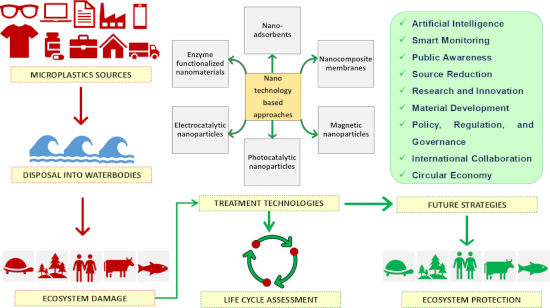
- the process. The removal of MPs by adsorbents primarily relies on hydrophobic interactions, electrostatic attraction and hydrogen bonding, which are influenced by their surface characteristics. Among various adsorbents, activated carbon and biochar have gained wide attention for treating water
- hydrophobic nature make them highly effective in capturing various organic pollutants, including methylene blue, neutral red, and polycyclic aromatic hydrocarbons. Notably, the unique hexagonal honeycomb crystal structure imparts exceptional stability, allowing them to perform efficiently under challenging


The role of biochar in combating microplastic pollution: a bibliometric analysis in environmental contexts
Beilstein J. Nanotechnol. 2025, 16, 1401–1416, doi:10.3762/bjnano.16.102
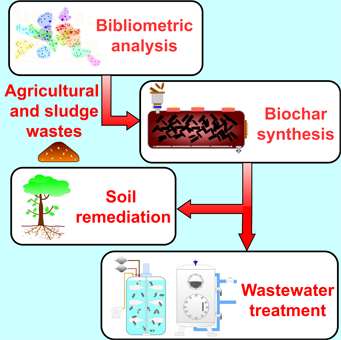
- utilizing silica sand and corn straw biochar for 10 µm PS particles [38]. For particles larger than 75 µm, mechanisms such as hydrogen bonding and hydrophobic interactions dominate, while smaller particles (<75 µm) are removed through π–π interactions between the benzene rings of PS and biochar surfaces
- of these two models are based on different mechanisms, as described in Figure 6. MP removal by BC filter columns is primarily facilitated by the fixation of particles through filtration effects, entanglement due to surface roughness and hydrophobic interactions [47]. The negatively charged surfaces



Enhancing the therapeutical potential of metalloantibiotics using nano-based delivery systems
Beilstein J. Nanotechnol. 2025, 16, 1350–1366, doi:10.3762/bjnano.16.98
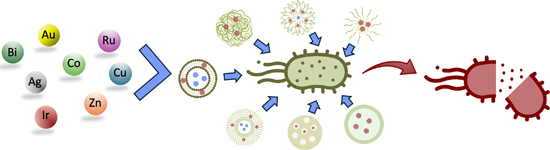
- ability to carry both hydrophilic and hydrophobic drugs. These self-assembled vesicles consist of phospholipid bilayers that encapsulate an aqueous core, allowing for the entrapment of various therapeutic agents [57]. Liposomes can be designed to carry multiple types of drugs within the same system
- encapsulate a wide variety of therapeutic agents, from hydrophilic to hydrophobic compounds. Due to their biocompatibility and easy formulation, polymeric NPs can be engineered to offer precise control over drug release, stability, and targeting, making them ideal candidates in the treatment of infections [77
- copolymers, exhibit good stability and cargo-retention efficiency, making them ideal for cytosolic drug delivery [79]. Polymeric micelles, with a hydrophilic core and hydrophobic outer shell, protect aqueous drug cargo and improve circulation time, often being used for the delivery of cancer therapeutics [80


Ferroptosis induction by engineered liposomes for enhanced tumor therapy
Beilstein J. Nanotechnol. 2025, 16, 1325–1349, doi:10.3762/bjnano.16.97
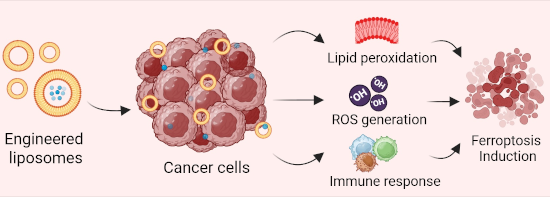
- hydrophobic phospholipid bilayer and a hydrophilic core. Depending on the physicochemical properties of the drug, this type of structure allows the entrapment of both hydrophilic and hydrophobic drugs [1]. Liposomes, like other nanosystems, have many benefits, such as prolonged systemic blood circulation
- hydrophilic and hydrophobic therapeutic agents, they improve the solubility and efficacy of drugs, especially those with poor aqueous solubility. Liposomes reduce the impact on healthy tissue while delivering strong drug concentrations directly to the tumor, minimizing the harmful side effects of chemotherapy
- hydrophobic substances and offer additional advantages such as biocompatibility, biodegradability, low toxicity, lack of immunogenicity, and flexibility for chemical and structural modifications [142][143]. Recent developments in liposomes focus on modifying their chemical and structural properties to target


Better together: biomimetic nanomedicines for high performance tumor therapy
Beilstein J. Nanotechnol. 2025, 16, 1246–1276, doi:10.3762/bjnano.16.92
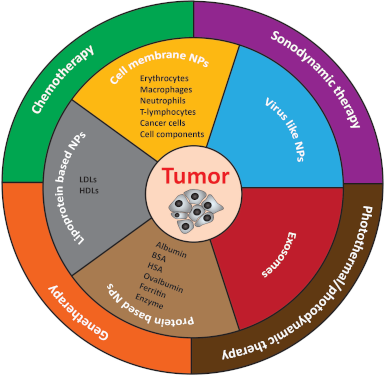
- physicochemical and biological properties, and incredible potential of being therapeutic agent carriers for biomedical applications [10][11]. They are capable to deliver a range of therapeutics including genes, vaccines, biological macromolecules, hydrophobic/hydrophilic drugs, and proteins to certain organs such
- phospholipids and apolipoproteins [55]. Lipoproteins include, among others, low-density lipoprotein (LDL) and high-density lipoprotein (HDL). Due to the hydrophobic core and prolonged circulation, they have been used in drug delivery. The lipid core of the lipoprotein tend to load a variety of lipophilic drug
- cholesterol uptake, and induce ferroptosis of the cancer cells [67]. HDL presents many features that make it ideal for drug delivery applications including biocompatibility and biodegradability, long circulation, hydrophobic core, and small size. The main lipoprotein of HDL is alpha apolipoprotein (apo A-I






Functional bio-packaging enhanced with nanocellulose from rice straw and cinnamon essential oil Pickering emulsion for fruit preservation
Beilstein J. Nanotechnol. 2025, 16, 1234–1245, doi:10.3762/bjnano.16.91
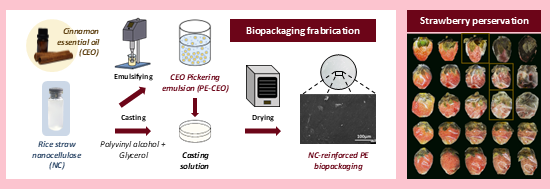
- of persimmons was maintained up to 63 days in cold storage [35]. The major challenge of using CEO is its hydrophobic nature, which prevents it from blending with the biopackaging casting solution, and its volatile and unstable structure, which can lead to significant loss of efficacy over time [36



Hydrogels and nanogels: effectiveness in dermal applications
Beilstein J. Nanotechnol. 2025, 16, 1216–1233, doi:10.3762/bjnano.16.90
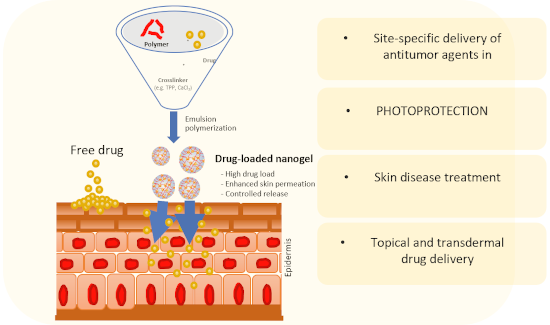
- barriers and deliver therapeutic agents with high precision and efficiency [141][142][143]. Among the ultrasmall systems, cyclodextrin-based nanogels have attracted considerable attention. Cyclodextrins are oligosaccharides with a hydrophobic core and a hydrophilic external surface, facilitating the
- as drug carriers to deliver hydrophobic [153] and hydrophilic [154] molecules as well as biomolecules, including proteins [155] and nucleic acids [156]. These nanocarriers can be obtained from biodegradable and biocompatible materials [157], showing singular properties, such as stimuli-responsiveness


Investigation of the solubility of protoporphyrin IX in aqueous and hydroalcoholic solvent systems
Beilstein J. Nanotechnol. 2025, 16, 1209–1215, doi:10.3762/bjnano.16.89
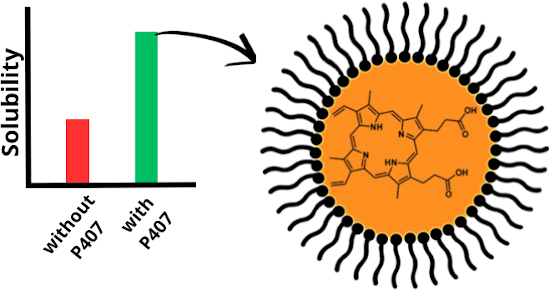
- self-assembly of monomers into micelles with a hydrophobic core of polypropylene oxide (PPO) and a hydrophilic corona of polyethylene oxide (PEO), creating an environment suitable for the encapsulation of hydrophobic drugs such as PpIX [15]. These micelles enhance drug solubility, protect against
- solubility and stability for hydrophobic compounds. In systems containing 10% (w/w) P407 with 0.4 mg/mL PpIX (EtOH50, EtOH77, and water), the complete solubilization was achieved regardless of the solvent used. Figure 4 shows the solubilization kinetics in the polymeric systems. The average concentrations
- after 8 h were 0.593 ± 0.063 mg/mL for water-based systems, 0.503 ± 0.043 mg/mL for EtOH50, and 0.507 ± 0.104 mg/mL for EtOH77, which is consistent with previous reports on micellar stabilization of hydrophobic drugs [16]. These systems remained clear and free of precipitates for up to 96 h, suggesting


Mechanical stability of individual bacterial cells under different osmotic pressure conditions: a nanoindentation study of Pseudomonas aeruginosa
Beilstein J. Nanotechnol. 2025, 16, 1171–1183, doi:10.3762/bjnano.16.86
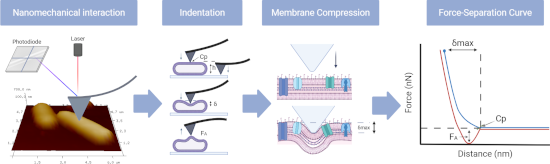
- bacterial adhesion through short-range electrostatic and hydrophobic interactions. Before deposition on the PLL-coated substrate, the bacterial suspension was centrifuged at 2500 rpm for 3 min, and the resulting supernatant was removed. The bacteria were then resuspended in 150 μL of PBS to increase their


Fabrication of metal complex phthalocyanine and porphyrin nanoparticle aqueous colloids by pulsed laser fragmentation in liquid and their potential application to a photosensitizer for photodynamic therapy
Beilstein J. Nanotechnol. 2025, 16, 1088–1096, doi:10.3762/bjnano.16.80
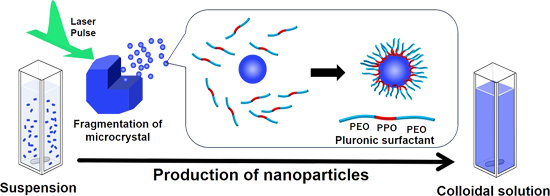
- biological optical window (wavelengths from 650 to 1000 nm) and have recently attracted attention for applications in biomedical research such as photoacoustic imaging of tissues and PDT of tumors [2][3]. Porphyrins and Pcs are hydrophobic hydrocarbons that are insoluble in water. Hence, polymer composite
- the activity of the target substance in general. An alternative and promising method for dispersing hydrophobic organic compounds as colloids is pulsed laser fragmentation in liquids (PLFL) [9][10]. This relatively new fabrication method has advantages because a microcrystalline sample powder
- suspended in a poor solvent is fragmented into nanoparticles by intense pulsed laser irradiation, and the sample suspension is directly converted in to a colloidal dispersion without any chemical additives in one step. It has been demonstrated that several hydrophobic dyes such as metal complex Pcs (MPcs


Soft materials nanoarchitectonics: liquid crystals, polymers, gels, biomaterials, and others
Beilstein J. Nanotechnol. 2025, 16, 1025–1067, doi:10.3762/bjnano.16.77
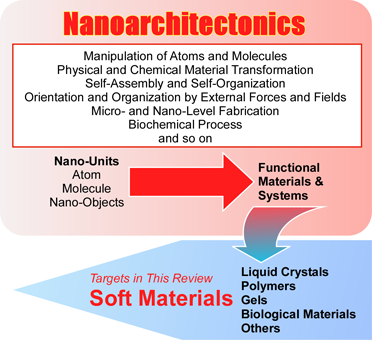
- formation of more ordered, hydrophobic coatings, while the incorporated polymers retain their electroactive properties. Ion transport through the film is still possible. Nanoarchitectonics polymer composite films can incorporate bioelectroactive proteins such as glucose oxidase. The high hydrophobicity
- materials nanoarchitectonics. Cornez, Azzaroni, and colleagues describe the preparation and functionalization of highly organized layered multilayer structures by layer-by-layer organization of lipid-like surfactants and polyelectrolytes (Figure 15) [276]. In this study, hydrophobic lamellar domains were
- achieved through the synergistic reaction of the proton coupling electron transfer reaction and the insertion of hydrophobic ions. This process has enabled the efficient doping of crystalline organic semiconductor thin films at room temperature. By examining the conditions, it is possible to achieve strong




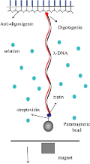


A calix[4]arene-based supramolecular nanoassembly targeting cancer cells and triggering the release of nitric oxide with green light
Beilstein J. Nanotechnol. 2025, 16, 1003–1013, doi:10.3762/bjnano.16.75
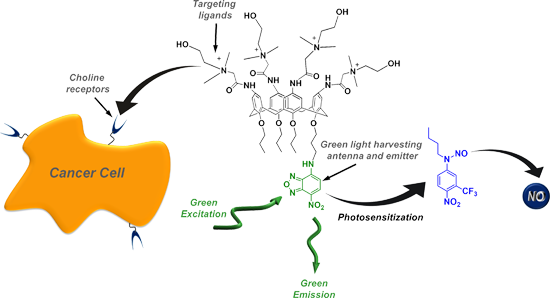
- cancer cells that overexpress the choline transporters, and it can be visualized thanks to the fluorescent tag. The fluorogenic unit also acts as a green light harvesting center, making the nanoassembly a photo-nanoreactor able to encapsulate a hydrophobic nitric oxide (NO) photodonor, otherwise
- antenna to trigger the NO release from the hydrophobic NOPD 2. Compound 1 was prepared by a two-step synthesis according to Scheme 2 (see Supporting Information File 1 for details) starting from the known calix[4]arene derivative 1a [60]. In brief, compound 1a treated with chloroacetic acid provided
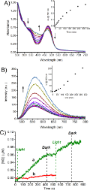
- with a PI of ca. 0.3 (inset Figure 4A). The supramolecular construct 1·2 was stable for days, and its formation and stability can be reasonably attributed to both hydrophobic and stacking interactions between the aliphatic chains and the aromatic regions of the host and guest components. Encapsulation


Supramolecular hydration structure of graphene-based hydrogels: density functional theory, green chemistry and interface application
Beilstein J. Nanotechnol. 2025, 16, 806–822, doi:10.3762/bjnano.16.61
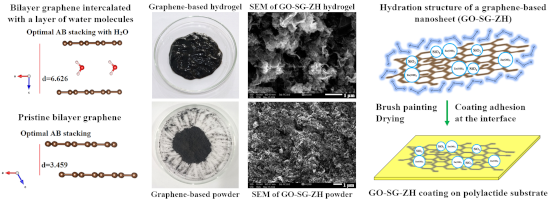
- supramolecular hydration structures that preserve graphene nanosheets from the restacking through hydrophobic force, van der Waals force, and π–π interaction. In this manuscript, density functional theory and high-performance computing (HPC) are used for modeling and calculating van der Waals force between
- interactions, a type of van der Waals force, for supramolecular attraction [9]. Particularly, graphene sheets with a large surface area and π-conjugated network are likely to stack together through hydrophobic agglomeration and π–π interaction. Although π–π interactions are generally weaker than hydrogen


Efficiency of single-pulse laser fragmentation of organic nutraceutical dispersions in a circular jet flow-through reactor
Beilstein J. Nanotechnol. 2025, 16, 711–727, doi:10.3762/bjnano.16.55
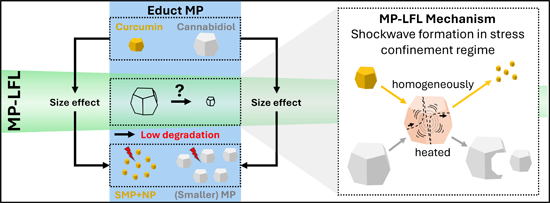
- often are hydrophobic, is their increased solubilization or aqueous dispersion, relevant for pharmacological, photochemical, and photomedical applications. For example, metal complex phthalocyanines (Pc) [18] such as vanadium (VOPc) [19][20][21][22], copper (CuPc) [23][24], aluminum (AlPc) [24], and
- . Moreover, the created surface area is also a descriptor highly relevant for application (as the solubility of hydrophobic particle dispersions in water is proportional to the surface [67][68]). For simplified calculations of the total surface created by LFL, we assumed all particles to be ideal spheres


The impact of tris(pentafluorophenyl)borane hole transport layer doping on interfacial charge extraction and recombination
Beilstein J. Nanotechnol. 2025, 16, 678–689, doi:10.3762/bjnano.16.52
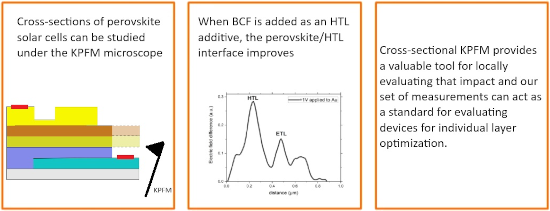
- ], thus leading to an improved morphology and uniformity of the resulting layer. However, its unfavorable long-term impact on stability indicates that new doping strategies might be required in the future [35][36]. For this, there have been efforts for finding cheap hydrophobic acidic substances with good


Aprepitant-loaded solid lipid nanoparticles: a novel approach to enhance oral bioavailability
Beilstein J. Nanotechnol. 2025, 16, 652–663, doi:10.3762/bjnano.16.50
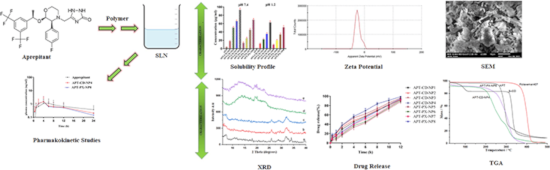
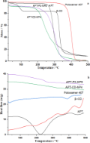
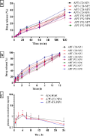
- poly(ethylene oxide) (PEO). The PPO segments are hydrophobic, while the PEO segments are hydrophilic [15]. Comparing APT-CD-NPs and APT-PX-NPs, the solubility in APT-CD-NPs was higher because β-CD is more hydrophilic than poloxamer 407. Poloxamer 407 shows thermoreversible properties. Drug content and
- SLN formulations in distilled water exhibited a homogeneous white color. The encapsulation efficacy of the SLNs formulations was in the range of 25.33% ± 0.89% to 80.55% ± 0.15%. A higher content of β-CD in the formulation enhanced the encapsulated amount of APT. The hydrophobic structure of β-CD



A formulation containing Cymbopogon flexuosus essential oil: improvement of biochemical parameters and oxidative stress in diabetic rats
Beilstein J. Nanotechnol. 2025, 16, 617–636, doi:10.3762/bjnano.16.48
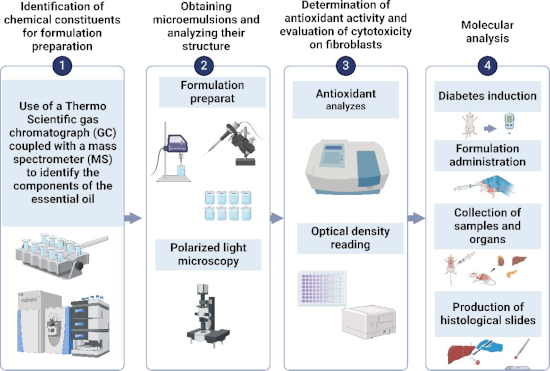
- known that microemulsions promote greater bioavailability of hydrophobic molecules orally due to the nanometric size of the droplets. Additionally, nonionic surfactants such as Tween® and Cremophor® inhibit CYP3A metabolism or P-glycoprotein drug efflux, thus improving intestinal drug absorption. Thus




Polyurethane/silk fibroin-based electrospun membranes for wound healing and skin substitute applications
Beilstein J. Nanotechnol. 2025, 16, 591–612, doi:10.3762/bjnano.16.46
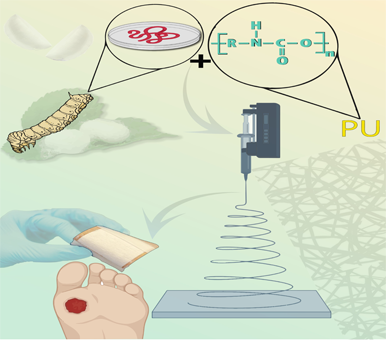
- were used just as they were provided [155]. Because of its excellent barrier qualities and oxygen permeability, PU is commonly utilized in wound dressings [156]. Since PU is soft and hydrophobic, using it as a dressing material on its own would be unsuitable because the dressing might be too soft for
- use in the medical field. Also, its hydrophobic property might prevent fluid from seeping from the wound surface [157]. To investigate PU composites for the possible use in wound dressings, researchers have carried out a considerable amount of research. To obtain desired features like higher cell



Nanomaterials in targeting amyloid-β oligomers: current advances and future directions for Alzheimer's disease diagnosis and therapy
Beilstein J. Nanotechnol. 2025, 16, 561–580, doi:10.3762/bjnano.16.44
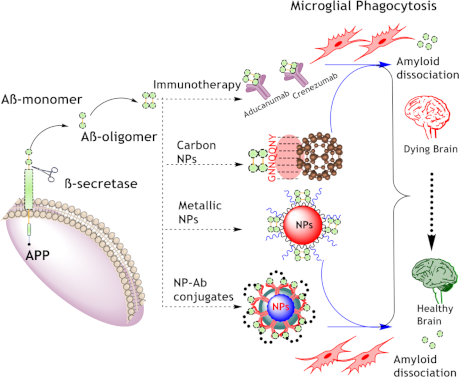
- physicochemical properties, diverse structural forms, and potential applications in combating NDs. The unique characteristics of CNMs, including their hydrophobic surfaces and variable dimensions, enable them to interact effectively with biomolecules, making them valuable tools in biomedical research and
- , particularly those associated with NDs like AD. Research has demonstrated the ability of fullerenes to prevent the aggregation of Aβ peptides. For instance, molecular dynamics simulations have shown that fullerenes inhibit the fibrillation of the hydrophobic KLVFFAE peptide by disrupting the formation of β
- . These studies reveal that SWCNTs interact with the hydrophobic residues of Aβ peptides, particularly through π-stacking interactions with aromatic amino acids such as phenylalanine. This interaction destabilizes the prefibrillar β-sheet structures, preventing the formation of toxic oligomers and


Functionalized gold nanoflowers on carbon screen-printed electrodes: an electrochemical platform for biosensing hemagglutinin protein of influenza A H1N1 virus
Beilstein J. Nanotechnol. 2025, 16, 540–550, doi:10.3762/bjnano.16.42
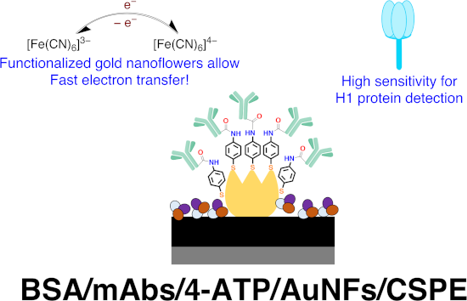
- , followed by blocking with bovine serum albumin to minimize nonspecific hydrophobic binding. The electrodes were characterized by cyclic voltammetry and electrochemical impedance spectroscopy experiments in the presence of [Fe(CN)6]3−/4−. Differential pulse voltammetry was used to measure the change in


Synthetic-polymer-assisted antisense oligonucleotide delivery: targeted approaches for precision disease treatment
Beilstein J. Nanotechnol. 2025, 16, 435–463, doi:10.3762/bjnano.16.34

- . Additionally, the attachment of hydrophobic moieties, amino acids, and small peptides to linear and branched PEI has been explored as an alternative to improve the biostability and bioavailability of cationic polyplexes while offering a targeted delivery with reduced cytotoxicity that is frequently associated
- conjugated carriers demonstrated greater transfection activity and protein silencing while keeping low levels of cytotoxicity compared to naked and oligonucleotide–PEI complexes. This improvement was attributed to the unsaturated nature of the hydrophobic moieties in the conjugates. In another study, Cheng
- and coworkers synthesised a library of bPEI polyplexes grafted with hydrophobic ligands including aliphatic alkanes, fluoroalkanes, and cycloalkanes of varying lengths and analysed the structure–activity relationship of these compounds to deliver anti-luciferase siRNA oligonucleotides [119]. All PEI





