Search results
Search for "legs" in Full Text gives 36 result(s) in Beilstein Journal of Nanotechnology.
When the going gets rough – studying the effect of surface roughness on the adhesive abilities of tree frogs
Beilstein J. Nanotechnol. 2016, 7, 2116–2131, doi:10.3762/bjnano.7.201
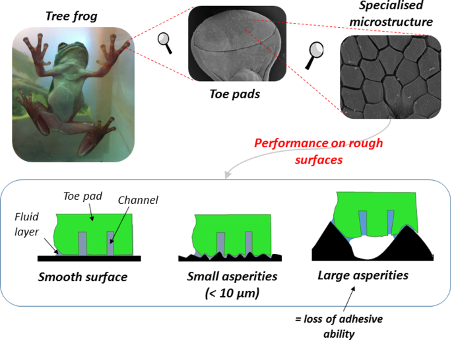
- climbing tree frogs The frogs’ climbing abilities were tested on different rough surfaces using the tilting board apparatus described in the Experimental section (n = 60 for all surfaces tested). At the beginning of the test, frogs usually exhibited a relaxed and crouched posture with all legs tucked under




Influence of ambient humidity on the attachment ability of ladybird beetles (Coccinella septempunctata)
Beilstein J. Nanotechnol. 2016, 7, 1322–1329, doi:10.3762/bjnano.7.123
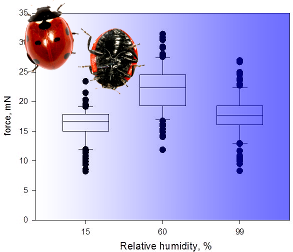
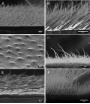
- show the first three types only. Setae terminated with discoidal terminal elements were found in the centre of the first two tarsomeres (T1 and T2 in Figure 1) for all legs in males (Figure 1H–J), except for the first tarsomer (T1) of the hindleg (Figure 1J). Force measurements in a controlled


Functional diversity of resilin in Arthropoda
Beilstein J. Nanotechnol. 2016, 7, 1241–1259, doi:10.3762/bjnano.7.115
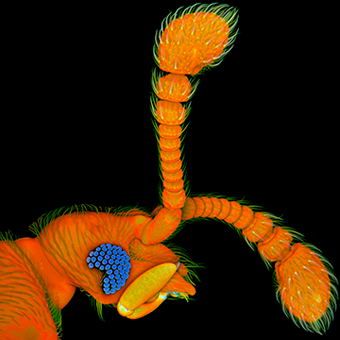
- movable and thereby enables them to efficiently adapt to the substrate. In general, joints in legs typically feature membranes, which often contain large proportions of resilin and allow the relative movement of the joint elements (Figure 3D). The neck membrane of dragonflies is another example. This
- ][18][74]. The respective catapult-like devices have often evolved to enhance the acceleration in relatively short legs [75]. They usually contain specific types of joints that are typically supplemented with active power or latch muscles producing tractive force and trigger muscles that are
- the legs involved in jumping, and these pads are similar to those of fleas with respect to their locations at the legs and their function [19]. For the jumping mechanism of fleas it was proposed that the whole energy required is stored in the resilin-containing pads [15]. However, the results of


Multiwalled carbon nanotube hybrids as MRI contrast agents
Beilstein J. Nanotechnol. 2016, 7, 1086–1103, doi:10.3762/bjnano.7.102
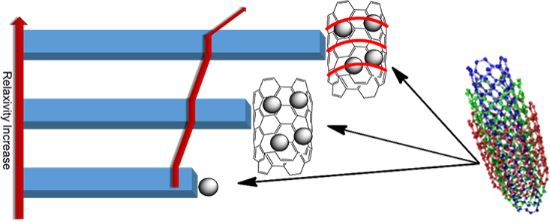
- routes. Signal intensity enhancement is calculated as the ratio of intensity growth before and after injection. Intramuscular injection into one of the legs of the mice gave a negative



Rigid multipodal platforms for metal surfaces
Beilstein J. Nanotechnol. 2016, 7, 374–405, doi:10.3762/bjnano.7.34
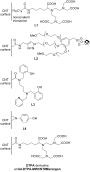
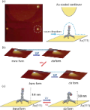
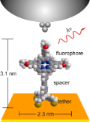
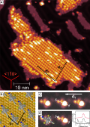
- the tetrahedral core should be as rigid as possible to form a stable contact to the surface. Consequently, these legs usually contain rigid aromatic units or phenylene ethylene species if greater length is desired. So far, a number of C3-symmetric tripods incorporate a carbon atom (e.g
- easy functionalization at three of the bridgehead carbons, which allows for the attachment of the legs, have proven to be useful attributes for the surface application of 1,3,5,7-tetrasubstituted adamantane as one of the first rigid molecular platforms. Firstly Keana and co-workers synthetized a tower
- between neighboring sulfur atoms of about 5 Å, which closely matched the distance between sulfur atoms in the SAMs of alkanethiols on gold. This behavior ensures the concept of a rigid and well-defined arrangement of tripodal molecules with all three legs connected to the gold surface. The chemisorption










Exploiting the hierarchical morphology of single-walled and multi-walled carbon nanotube films for highly hydrophobic coatings
Beilstein J. Nanotechnol. 2015, 6, 353–360, doi:10.3762/bjnano.6.34
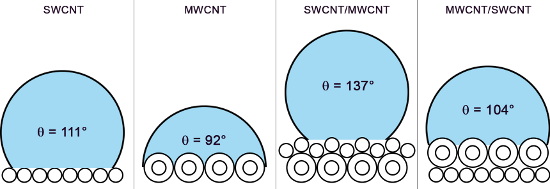
- of water [9]. In particular, hierarchical surface morphologies are a recent concept introduced to explain the wetting properties of surfaces such as plant leaves [2][3], bird feathers [10], and insect legs [11]. These surfaces are made of a hierarchical micro- and nanomorphology which improves their


Review of nanostructured devices for thermoelectric applications
Beilstein J. Nanotechnol. 2014, 5, 1268–1284, doi:10.3762/bjnano.5.141
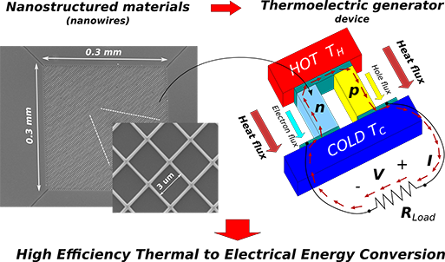
- order to obtain a potential drop in a circuit in which a temperature gradient is maintained. The basic cell of a thermoelectric generator is made of two semiconducting legs with opposite doping, placed thermally in parallel and electrically in series as schematically shown in Figure 2. Both the heat
- flux and the charge carrier flux have the same direction, i.e., from TH to TC. The electrical series of the legs, that have opposite Seebeck coefficients (Sp > 0, Sn < 0), results in a potential drop proportional to the temperature difference: An eventual load, applied to this generator (schematically
- represented by a resistor RL in Figure 2a), can benefit of the carrier flux (electrical current) induced and sustained by the temperature gradient. Conversely, if an electrical current is forced through the legs by means of an external generator (Figure 2b), heat is transferred from the cold side to the hot


Surface assembly and nanofabrication of 1,1,1-tris(mercaptomethyl)heptadecane on Au(111) studied with time-lapse atomic force microscopy
Beilstein J. Nanotechnol. 2014, 5, 26–35, doi:10.3762/bjnano.5.3
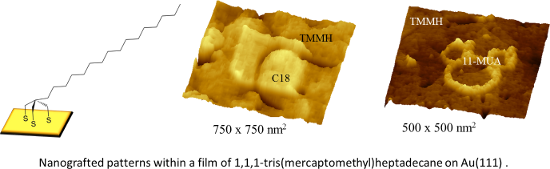
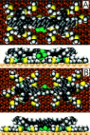
- molecule and the surface [2][23]. Several new classes of multidentate alkanethiols have been synthesized that have two or three legs and a binding moiety at each end of the legs [3][4][5][6][23]. By appropriate design of the anchoring point, multidentate alkanethiols can be engineered to bind to multiple


Characterization of the mechanical properties of qPlus sensors
Beilstein J. Nanotechnol. 2013, 4, 1–9, doi:10.3762/bjnano.4.1
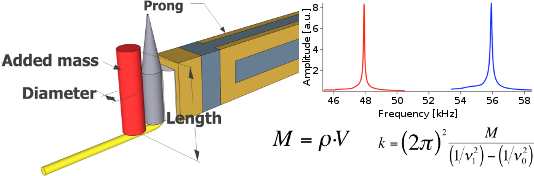
- sensor: the lengths of the connecting wires were about 1 cm only. Furthermore, the SMD-packed feedback resistor was mounted directly between the input and the output legs minimizing the length of wiring to a few millimetres. By this construction the input and the parasitic capacitance of the feedback
- the differential stage. This procedure can be applied to minimize coupling from other sources, e.g., bias modulation used for Kelvin probe measurements. A piezo tube is used for mechanical excitation. Apart from the rubber legs of this small instrument there is no additional vibration isolation


Septipyridines as conformationally controlled substitutes for inaccessible bis(terpyridine)-derived oligopyridines in two-dimensional self-assembly
Beilstein J. Nanotechnol. 2011, 2, 405–415, doi:10.3762/bjnano.2.46
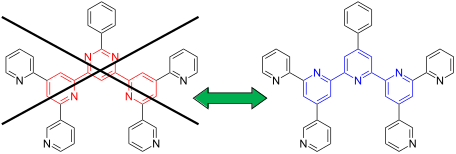
- ], bithiophene–fluorenone conjugated oligomers [20], a 2,6-di(acetylamino)pyridine substituted conjugated module [21], and a molecular hexapod having a benzene core and six oligo(p-phenylene vinylene) legs [22]. The conformers can have an impact on the expression or suppression of chirality of the supramolecular
- = 1.5 ± 0.1 nm, a,b = 93 ± 2°), where the bright lamellae are clearly separated by slightly elongated dark spots (Figure 9 and Figure S1). In the bright areas, a substructure can be observed, which leads to a tentative model with pairs of PhSpPy molecules pointing with their “legs” to each other and


Superhydrophobic surfaces of the water bug Notonecta glauca: a model for friction reduction and air retention
Beilstein J. Nanotechnol. 2011, 2, 137–144, doi:10.3762/bjnano.2.17
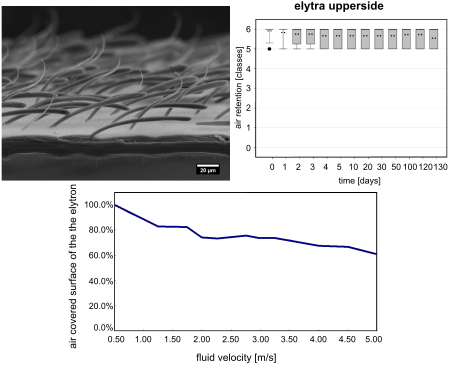
- through water, but most of the time it supports itself from underneath against the water surface with both pairs of fore legs and the tip of the abdomen [26]. The surface of the elytra is covered by a hierarchical structure of larger setae and very small microtrichia. Balmert et al. hypothesized that the
- covered with hairy structures over almost all its body with exception of head, pronotum and legs. The body parts show a large variety of surface structures, but in general two types of surface protuberances occur: Large and sparse setae as well as small and dense microtrichia. Setae have a socket