Search results
Search for "liposome" in Full Text gives 37 result(s) in Beilstein Journal of Nanotechnology.
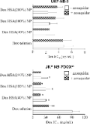
Doxorubicin-loaded human serum albumin nanoparticles overcome transporter-mediated drug resistance in drug-adapted cancer cells
Beilstein J. Nanotechnol. 2019, 10, 1707–1715, doi:10.3762/bjnano.10.166
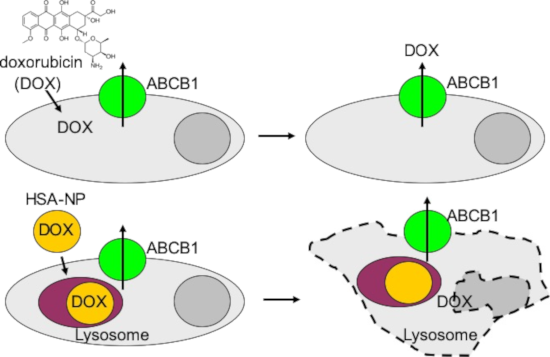
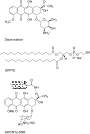
- resistance [6]. This includes various nanoparticle and liposome formulations of the ABCB1 substrate doxorubicin [7][8][9][10][11][12]. Here, we here investigated the effects of doxorubicin-loaded human serum albumin (HSA) nanoparticles in ABCB1-expressing neuroblastoma cells. HSA nanoparticles are easy to


Cationic PEGylated polycaprolactone nanoparticles carrying post-operation docetaxel for glioma treatment
Beilstein J. Nanotechnol. 2017, 8, 1446–1456, doi:10.3762/bjnano.8.144
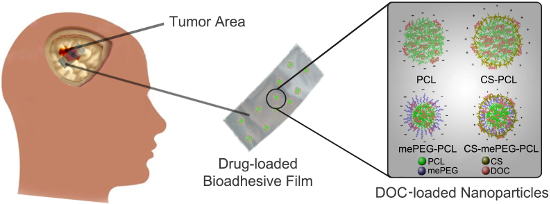
- suppressor gene delivery. Their results showed that the prepared nanoparticles enhanced the delivery of tumor suppressor genes on U87 and U251 glioma cells [24]. Wang et al. used core–shell nanoparticles for drug and gene co-delivery. They prepared magnetic PLGA/polymeric liposome carriers to achieve




Comparison of the interactions of daunorubicin in a free form and attached to single-walled carbon nanotubes with model lipid membranes
Beilstein J. Nanotechnol. 2016, 7, 524–532, doi:10.3762/bjnano.7.46
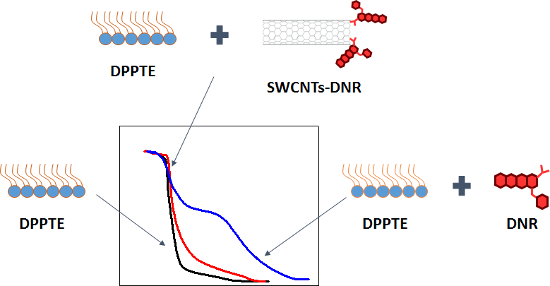
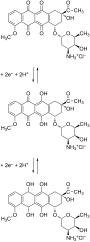
- between targeting agents and their receptors, such as for example folates and transferrin [7][8]. Additionally, liposomes are also prepared in such a way that simultaneous loading of two drugs into a liposome in order to improve the efficiency of the treatment is possible [9]. Dual drug loading is also




Experiences in supporting the structured collection of cancer nanotechnology data using caNanoLab
Beilstein J. Nanotechnol. 2015, 6, 1580–1593, doi:10.3762/bjnano.6.161
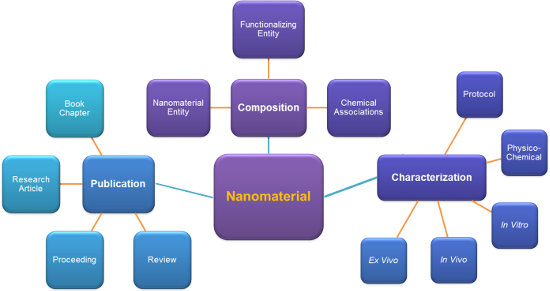
- . Submitters can enter nanomaterial composition information (Figure 9) including: nanomaterial entities (e.g., dendrimer), functionalizing entities (e.g., small molecule), and chemical associations (e.g., covalent bond). This composition model supports the submission of complex particles (e.g., liposome






Using natural language processing techniques to inform research on nanotechnology
Beilstein J. Nanotechnol. 2015, 6, 1439–1449, doi:10.3762/bjnano.6.149
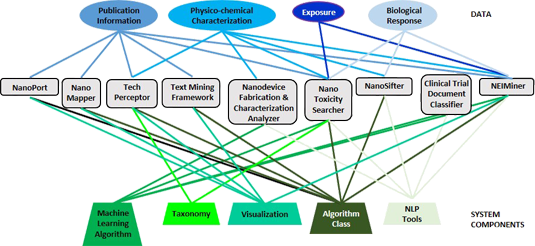
- trials investigating nano versus non-nano drugs. These include facilitating comparisons between clinical trials testing nano and non-nano drug formulations involving the same active ingredient (e.g., Doxil = pegylated liposome [nano] encapsulated doxorubicin compared to Adriamycin = doxorubicin). In
Fulleropeptide esters as potential self-assembled antioxidants
Beilstein J. Nanotechnol. 2015, 6, 1065–1071, doi:10.3762/bjnano.6.107
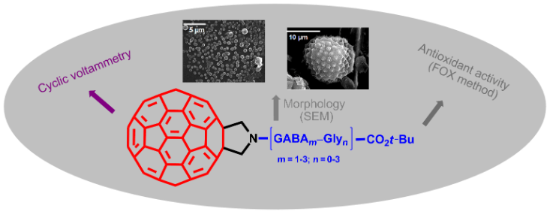
- antioxidant capacity. The antioxidant activity of 12 fullerene esters (as water soluble fullerosomes, obtained by liposome formation with soybean lecithin [31]) was determined by FOX antioxidant assay [32], using vitamin C and fullerene C60 as reference compounds. The FOX assay is based on the oxidation of


Nanobioarchitectures based on chlorophyll photopigment, artificial lipid bilayers and carbon nanotubes
Beilstein J. Nanotechnol. 2014, 5, 2316–2325, doi:10.3762/bjnano.5.240
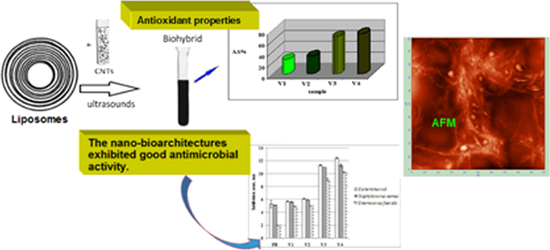
- -amino-2,3-dihydro-1,4-phthalazinedione), KH2PO4, Na2HPO4, Tris (tris(hydroxymethyl)aminomethane), HCl, and H2O2were purchased from Merck (Germany). Methanol (99.9%), SWCNTs and the lipids used for the liposome preparation (dipalmitoylphosphatidylcholine, DPPC and cholesterol, Chol) were supplied from
- composition: peptone (Merck, 10 g/L), yeast extract (Biolife, 5 g/L), NaCl (Sigma-Aldrich, 5 g/L) and agar (Fluka, 20 g/L). Synthesis Liposome preparation The hydration method [22] of a thin DPPC film was used to obtain two kinds of multilamellar lipid vesicles (MLVs, 0.5 mM) with and without cholesterol in
- abbreviations used in this work are presented in Table 1. Preparation of the liposome/SWCNT biocomposites Small aliquots of a previously sonicated SWCNT stock suspension (0.9 mg/mL, in PB pH 7.4) were added to a liposome suspension and the resulting mixture was subjected to ultrasound treatment (Hielser


The cell-type specific uptake of polymer-coated or micelle-embedded QDs and SPIOs does not provoke an acute pro-inflammatory response in the liver
Beilstein J. Nanotechnol. 2014, 5, 1432–1440, doi:10.3762/bjnano.5.155
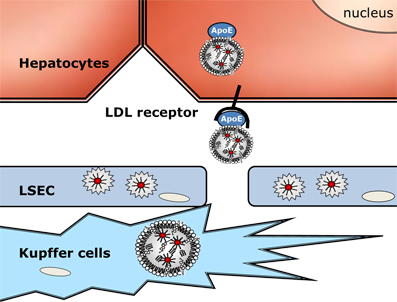
- , mice were injected intravenously in the tail vein with 200 µL Clodronate liposome solution (ClodronateLiposomes.org, Amsterdam, Netherland) or empty liposomes as control two days prior to the experiments. Gene expression analysis Gene expression analysis was performed as described [39]. Briefly, total


Model systems for studying cell adhesion and biomimetic actin networks
Beilstein J. Nanotechnol. 2014, 5, 1193–1202, doi:10.3762/bjnano.5.131
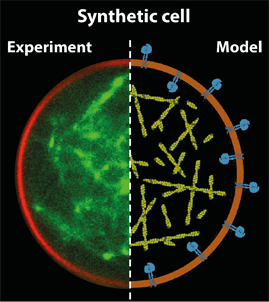
- cytoskeletal assembly and membrane targeting. Further research on the influence of talin on lipid membranes was carried out by Takiguchi and co-workers, who studied the effects of adding talin to liposome solutions. They discovered a membrane-breaking function of talin: Lipid membranes were found to open
- , talin can also be a useful tool for controlled manipulation of liposome morphology, which can play an important role in the development of synthetic cells. Since the early 2000’s, research on talin reconstituted in lipid bilayers has not been pursued anymore although many fundamental results on cellular
- ) Nature Publishing Group.) Confocal fluorescence micrographs of giant actin-filled liposomes. Lipid membranes are labelled with rhodamine (red); actin is labelled with AlexaFluor 488 (green). Insets indicate the nature of the actin-membrane interaction. (A) The actin filament solution inside a liposome


Nanoscopic surfactant behavior of the porin MspA in aqueous media
Beilstein J. Nanotechnol. 2013, 4, 278–284, doi:10.3762/bjnano.4.30
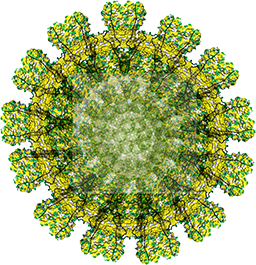
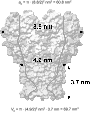
- ; hydrophobic interaction; liposome-type cluster; protein cluster; supramolecular; temperature influence; zeta potential; Introduction The homo-octameric porin MspA from Mycobacterium smegmatis is one of the most stable proteins known to date [1]. Due to its size and unique structure [2], its resistance to
- microscopy (TEM). The TEM were prepared by immersing carbon-coated 200-mesh copper grids in aqueous liposome-containing solutions, followed by counter-staining by 2% aqueous uranyl acetate solution, and overnight drying in a desiccator. The dried grids were analyzed by using a HRTEM FEI Tecnai F20 XT Field




Magnetic-Fe/Fe3O4-nanoparticle-bound SN38 as carboxylesterase-cleavable prodrug for the delivery to tumors within monocytes/macrophages
Beilstein J. Nanotechnol. 2012, 3, 444–455, doi:10.3762/bjnano.3.51
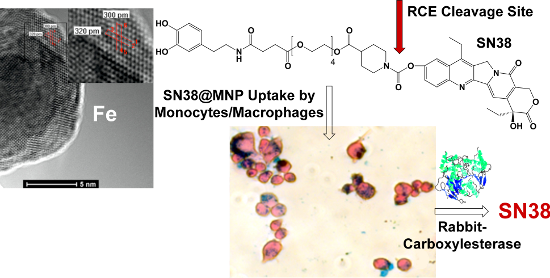
- tissue have been observed [22]. Liposome encapsulation of SN38 (LE-SN38) enhances the solubility of SN38 and provides protection from rapid drug degradation. Increased cytotoxicity against various tumor cell lines and better therapeutic efficacy in xenograft mouse models, as compared to CPT-11, have been


Microfluidic anodization of aluminum films for the fabrication of nanoporous lipid bilayer support structures
Beilstein J. Nanotechnol. 2011, 2, 104–109, doi:10.3762/bjnano.2.12
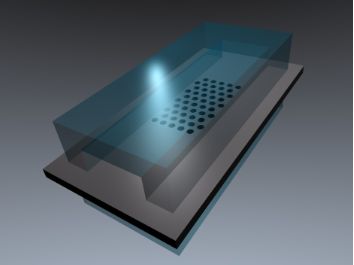
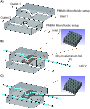
- setup for performing biological experiments without the need to transfer the brittle nanoporous material. We demonstrate this technique by using the same microfluidic system for membrane fabrication and subsequent liposome fusion onto the nanoporous support structure. The resulting bilayer formation is