


Search results
Search for "microemulsion" in Full Text gives 40 result(s) in Beilstein Journal of Nanotechnology.
Calcium fluoride based multifunctional nanoparticles for multimodal imaging
Beilstein J. Nanotechnol. 2017, 8, 1484–1493, doi:10.3762/bjnano.8.148
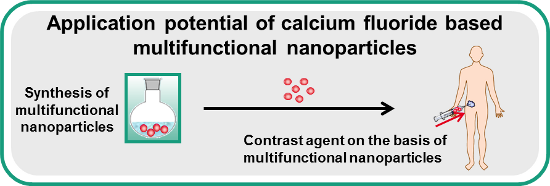
- ionic substitutions can also be integrated in the CaF2 lattice [24]. Various methods have been reported for the preparation of rare-earth doped CaF2 NPs such as co-precipitation [14][15][24][25][26], hydrothermal methods [27][28][29], flame synthesis [30], microemulsion methods [31][32] and a


Fabrication of hierarchically porous TiO2 nanofibers by microemulsion electrospinning and their application as anode material for lithium-ion batteries
Beilstein J. Nanotechnol. 2017, 8, 1297–1306, doi:10.3762/bjnano.8.131
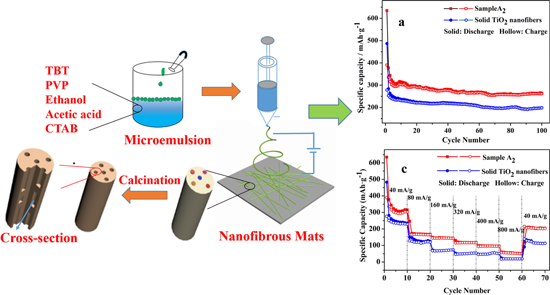
- -nozzle microemulsion electrospinning (ME-ES) method followed by calcining. The experimental results indicated that TiO2 nanofibers with the higher TBT/paraffin oil ratio demonstrated more axially aligned channels and a larger specific surface area. Furthermore, they presented superior lithium-ion storage
- batteries; microemulsion electrospinning (ME-ES); multichannel; Introduction The increasing demand for energy has heightened the need for the development of renewable resources because fossil fuels, which are currently the most common energy resources, are a finite resource [1][2][3][4]. Battery industry
- without the need of a complex spinneret. It is a simple and versatile way to prepare nanofibers with hollow or multichannel structures [26]. More importantly, various inorganic nanofibers can be fabricated easily by ME-ES including TiO2, SiO2, ZrO2, SnO2, V2O5, GeO2 and Al2O3. A microemulsion system was




Bright fluorescent silica-nanoparticle probes for high-resolution STED and confocal microscopy
Beilstein J. Nanotechnol. 2017, 8, 1283–1296, doi:10.3762/bjnano.8.130
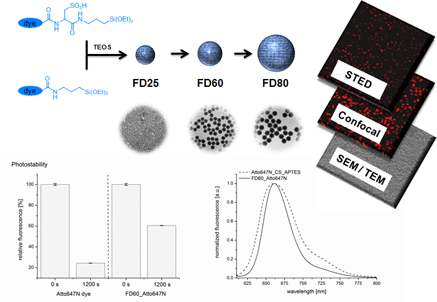
- or reverse microemulsion synthesis [34]. Using the traditional sol–gel synthesis of silica particles described by Stöber et al. [35], particles are available in the size range of a few tens of nanometres up to the micrometre range. Although the Stöber method can be utilised to obtain particles with a
- this work, we report on the detailed synthesis and characterisation of NIR dye-labelled silica nanoparticles with sizes of 15 to 80 nm. Since most of the syntheses in this size-regime, which are based on the Stöber method or the microemulsion method, require harsh conditions and yield only particles


The longstanding challenge of the nanocrystallization of 1,3,5-trinitroperhydro-1,3,5-triazine (RDX)
Beilstein J. Nanotechnol. 2017, 8, 452–466, doi:10.3762/bjnano.8.49
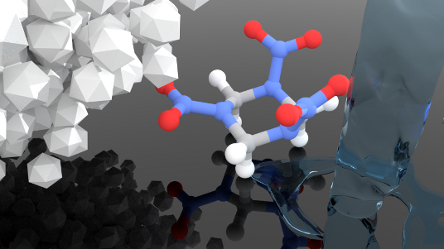
- colloid. This technique was also applied on HMX [17] with a particle size around 30 nm and the same conclusions were drawn. Bayat et al. [18], through an optimization of the microemulsion process, crystallized 80 nm plate-like β-CL-20 particles. The severe agglomeration and plate-like morphology could be
- due to the freeze drying and washing of the microemulsion. Gao et al. [19] recrystallized 1,1-diamino-2,2-dinitroethene (FOX7) in ethyl alcohol down to the sub-micrometer range. SEM pictures show an irregular plate-like morphology and therefore highlight the inconsistency of the unique mean particle


Nanocrystalline ZrO2 and Pt-doped ZrO2 catalysts for low-temperature CO oxidation
Beilstein J. Nanotechnol. 2017, 8, 264–271, doi:10.3762/bjnano.8.29
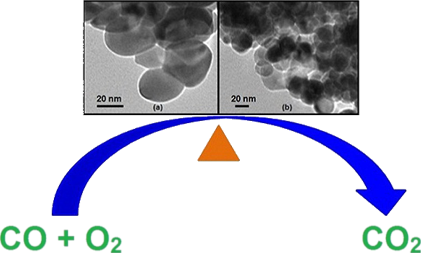
- method. Tartaj et al. [31] prepared nanospherical ZrO2 particles using a microemulsion-mediated process. Among these preparation methods, solution combustion method is useful because it is an easy process, requiring less time and producing high purity products. It is therefore quite promising for


Silica-coated upconversion lanthanide nanoparticles: The effect of crystal design on morphology, structure and optical properties
Beilstein J. Nanotechnol. 2015, 6, 2290–2299, doi:10.3762/bjnano.6.235
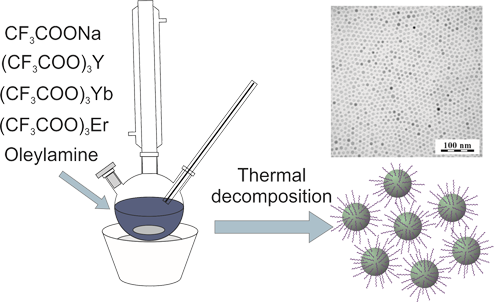
- + nanoparticles were separated by centrifugation, washed three times with hexane and deionized water and transferred in hexane. Synthesis of silica-coated upconversion nanoparticles The surfaces of the OM–NaYF4:Yb3+/Er3+ nanoparticles were coated with silica using a reverse microemulsion method [28] with slight
- . However, the nanoparticles must disperse in aqueous media for biological applications. To disperse the no. 4 NaYF4:Yb3+/Er3+ nanoparticles in water, they were coated with a thin silica shell using a microemulsion technique. TMOS and Igepal CO-520 were used as a precursor and an emulsifier, respectively
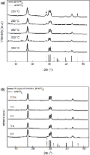
- successfully coated with a silica shell using the reverse microemulsion method, making them dispersible in water and promising candidates for applications in biology and medicine. TEM micrographs of OM-NaYF4:Yb3+/Er3+ nanoparticles prepared at (a) 250, (b) 300 and (c) 350 °C for 1 h. Particle size distribution






Silica micro/nanospheres for theranostics: from bimodal MRI and fluorescent imaging probes to cancer therapy
Beilstein J. Nanotechnol. 2015, 6, 546–558, doi:10.3762/bjnano.6.57
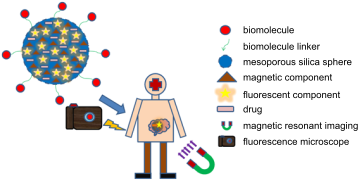
- magnetically active and, thus, were used extensively for designing multimodal imaging probes. Wu et al. [14] reported a simple reverse microemulsion method and coating process to synthesize silica-coated Gd2(CO3)3:Tb NPs. The synthesis was accomplished by using GdCl3 as a source of the Gd-complex and cetyl
- microemulsion methods. Cerium–fluoride-doped terbium(III) NPs represented the luminescent part and Fe3O4 NPs were used as magnetic core. Both these nanostructures were trapped inside a silica shell, which acted as inert oxide. The synthesis involved simultaneous addition of luminescent NPs (CeF3:Tb3+) and
- (organic chromphore)–DTPA (chelate), through an water-in-oil microemulsion method. The average diameter of the prepared NPs was found to be 71 ± 4 nm with a silica core of 49 ± 3 nm as observed by TEM studies. The emission spectra of the nanocomposites displayed two peaks with Pas–DTPA at 545 and Ru(bpy


Tailoring the ligand shell for the control of cellular uptake and optical properties of nanocrystals
Beilstein J. Nanotechnol. 2015, 6, 232–242, doi:10.3762/bjnano.6.22
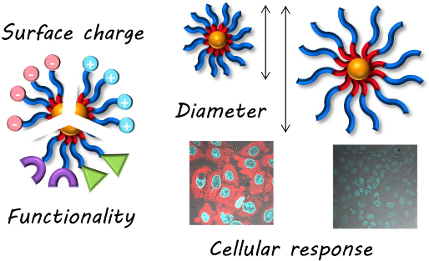
- -assembled vesicles and micelles in water, depending on the chosen block length ratio [19]. The high amount of present double bonds in the micelle core offers the possibility of radically initiated cross-linking of the structures or even microemulsion polymerizations to produce very dense capsules. Review






Inorganic Janus particles for biomedical applications
Beilstein J. Nanotechnol. 2014, 5, 2346–2362, doi:10.3762/bjnano.5.244
- prohibits the diffusion of water or solvent molecules to the surface of the underlying particle [103]. The hydrophobic particles are encapsulated using the reverse-microemulsion technique, which can be applied to a large variety of core materials [101][104][105][106][107][108]. Consequently, this method can
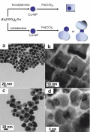
- easily be transferred to Janus particles: Independently, which metal oxide was grown on gold seeds, the metal oxide domain could be encapsulated selectively by SiO2 using a reverse microemulsion technique (Scheme 1) [38][39]. Due to the different chemical wetting behavior of gold and the metal oxide






Electrostatic interplay: The interaction triangle of polyamines, silicic acid, and phosphate studied through turbidity measurements, silicomolybdic acid test, and 29Si NMR spectroscopy
Beilstein J. Nanotechnol. 2014, 5, 2026–2035, doi:10.3762/bjnano.5.211
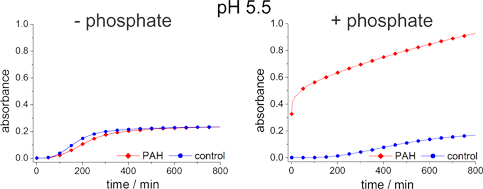
- processes give rise to the formation of a microemulsion finally leading to macroscopic phase separation. It was concluded that the phosphate-driven self-assembly processes are accelerating the silica-precipitation processes. However, the self-assembly processes going on in LCPA/silicic acid/phosphate


The impact of the confinement of reactants on the metal distribution in bimetallic nanoparticles synthesized in reverse micelles
Beilstein J. Nanotechnol. 2014, 5, 1966–1979, doi:10.3762/bjnano.5.206
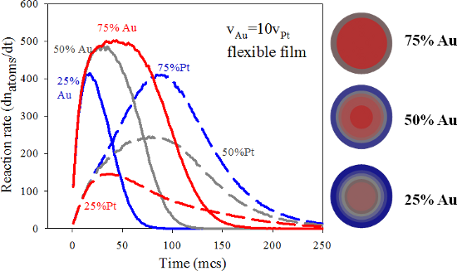
- nanostructure can be manipulated. Keywords: bimetallic nanoparticles; intermicellar exchange rate; microemulsion simulation; Introduction The advancement in the field of nanotechnology relies on the improvement in nanoparticle preparation techniques. Thus, research has been targeted at the development of
- synthesize nanoparticles by this method, one reactant is solved inside the droplets of a microemulsion, and another reactant is solved inside the droplets of a second microemulsion. After mixing, the microemulsions reactants can cross intermicellar channels and come into contact when they are located inside
- segregation depends on the microemulsion dynamics. With the exception of the existing studies relating nanoparticle properties to microemulsion composition [2][3][30][31][32][33], there is a gap regarding the impact of microemulsion dynamics on metal segregation in bimetallic nanoparticles. The synthesis of


Physical principles of fluid-mediated insect attachment - Shouldn’t insects slip?
Beilstein J. Nanotechnol. 2014, 5, 1160–1166, doi:10.3762/bjnano.5.127
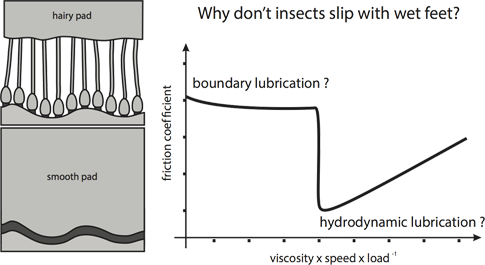
- , cockroaches and ants it has been shown that this adhesive fluid is a two-phasic microemulsion consisting of a hydrophilic, volatile dispersive phase within a hydrophobic, persistent continuous phase [30][35]. In hairy pads, with notably smaller contact points of each seta (and thus an even more complicated


Nanostructure sensitization of transition metal oxides for visible-light photocatalysis
Beilstein J. Nanotechnol. 2014, 5, 696–710, doi:10.3762/bjnano.5.82
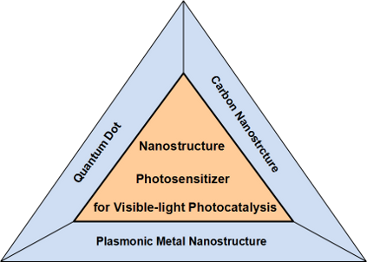
- charge separation, decreased electron–hole recombination and enhanced photocatalytic efficiency of such photosensitized transition metal oxides attracted increasing development of CdS–metal oxide composite systems [20][21][22][23][24][25][26]. For example, Yu and co-workers reported a microemulsion




Effects of the preparation method on the structure and the visible-light photocatalytic activity of Ag2CrO4
Beilstein J. Nanotechnol. 2014, 5, 658–666, doi:10.3762/bjnano.5.77
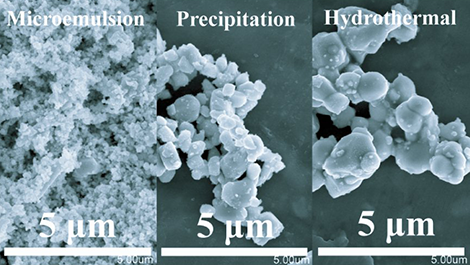
- 10.3762/bjnano.5.77 Abstract Silver chromate (Ag2CrO4) photocatalysts are prepared by microemulsion, precipitation, and hydrothermal methods, in order to investigate the effect of preparation methods on the structure and the visible-light photocatalytic activity. It is found that the photocatalytic
- activity of the prepared Ag2CrO4was highly dependent on the preparation methods. The sample prepared by microemulsion method exhibits the highest photocatalytic efficiency on the degradation of methylene blue (MB) under visible-light irradiation. The enhanced photocatalytic activity could be ascribed to
- . Considering the universalities of microemulsion, precipitation, and hydrothermal methods, this work may also provide a prototype for the comparative study of semiconductor based photocatalysis for water purification and environmental remediation. Keywords: microemulsion method; nanoparticles; photocatalysis


A facile synthesis of a carbon-encapsulated Fe3O4 nanocomposite and its performance as anode in lithium-ion batteries
Beilstein J. Nanotechnol. 2013, 4, 699–704, doi:10.3762/bjnano.4.79
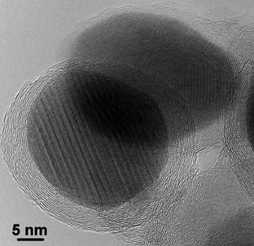
- strategies, such as carbon coatings [7], carbon core–shells [8], nanocomposites [9], nanostructures [10], or nano-encapsulation [11], have recently been explored to circumvent this problem. These strategies apply various synthetic methods [12] such as hydrothermal, coprecipitation, microemulsion, sol–gel





