


Search results
Search for "microscopy" in Full Text gives 1878 result(s) in Beilstein Journal of Nanotechnology. Showing first 200.
Eco-efficient materials for agricultural crops based on a mineral rich in MOR- and HEU-type zeolites
Beilstein J. Nanotechnol. 2026, 17, 381–395, doi:10.3762/bjnano.17.26
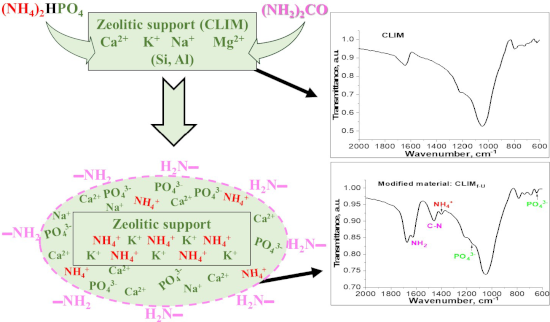
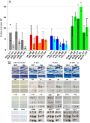
- urea arranged on the surface so that it covers the material and interacts with the zeolitic frameworks, was evidenced by Fourier-transform IR spectroscopy, adsorption measurements, scanning electron microscopy, scanning transmission electron microscopy, and other methods, as well as through culture
- microscopy (SEM), scanning transmission electron microscopy (STEM), N2 physisorption, and other research methods. Results and Discussion Characterization of DAP-modified zeolite CLIM The chemical compositions of natural zeolite (CLIM) from the San Andrés deposit and its modified forms (CLIMf) with ammonium
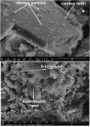
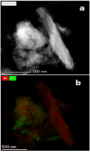
- consequence of the ion exchange processes (Equation 1) occurring during treatment of CLIM with DAP solution, which is in agreement with the data reported in [16][21][42]. Scanning electron microscopy and scanning transmission electron microscopy Microphotography (Figure 5) of natural zeolite (CLIM) revealed




Ferroelectric nanodot reservoir for neuromorphic computing
Beilstein J. Nanotechnol. 2026, 17, 352–364, doi:10.3762/bjnano.17.24
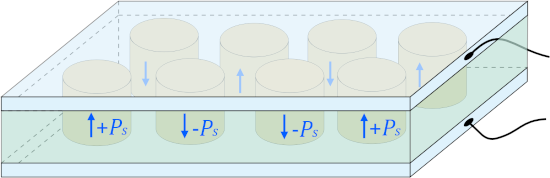
- interfaces. An alternative configuration is shown in Figure 7b, where atomic force microscopy or piezoresponse force microscopy are used for both input and output operations. Here, the localized tip of the microscope is used to inject or sense charges at specific positions in the ferroelectric array
- and readout realized via atomic or piezoresponse force microscopy. Funding This research was funded by the European Union HORIZON action MSCA-SE-3D-TOPO (project number 101236483). A.R. acknowledges the Slovenian Research Agency support (P1-0125). The work of V.V. was supported by Terra Quantum AG.


Interconnection morphology effects on the radio frequency response of carbon nanotube sponges
Beilstein J. Nanotechnol. 2026, 17, 343–351, doi:10.3762/bjnano.17.23
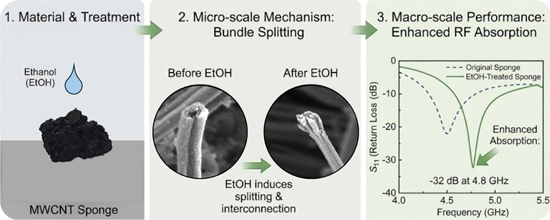
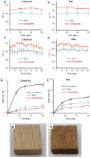
- . In particular, we observed that the response of S11 = −22.6 dB around 4.8 GHz from the CNS antenna improved after a mild treatment with ethanol, reaching S11 = −32.6 dB measured after 10 min of waiting. This observed effect is studied in detail with scanning electron microscopy and Raman spectroscopy
- findings point to a different interpretation related to the morphological effect of ethanol on the CNT mesh [27][29]. A scanning electron microscopy (SEM) study provided insights into the microstructure of the CNT film (Supporting Information File 1, Figure S1) and the sponges (Figure 3). The study



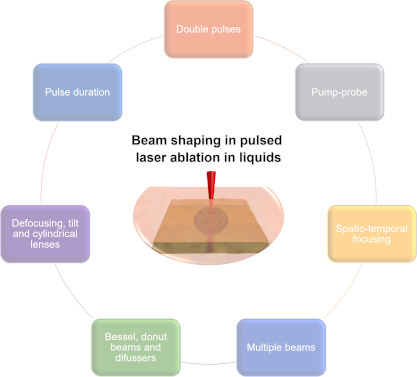
Beam shaping techniques for pulsed laser ablation in liquids: Unlocking tunable control of nanoparticle synthesis in liquids
Beilstein J. Nanotechnol. 2026, 17, 309–342, doi:10.3762/bjnano.17.22







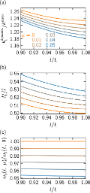
Calculation of the dynamic stiffness of a cantilever under torsional oscillation
Beilstein J. Nanotechnol. 2026, 17, 303–308, doi:10.3762/bjnano.17.21
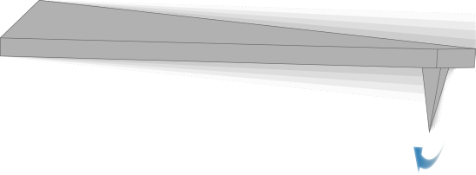
- Keita Nishida Yuuki Yasui Yoshiaki Sugimoto Department of Advanced Materials Science, The University of Tokyo, Chiba 277-8561, Japan 10.3762/bjnano.17.21 Abstract Atomic force microscopy using Si cantilevers provides an effective means for investigating both conservative and dissipative
- : atomic force microscopy; dynamic stiffness; energy dissipation; friction; torsional oscillation mode; Introduction Friction serves as a fundamental mechanism of energy dissipation [1]. While friction typically arises from direct mechanical contact between surfaces, energy dissipation can also occur even
- detailed mechanisms remain not fully understood [5]. Non-contact atomic force microscopy (nc-AFM) is widely employed to investigate non-contact friction through its dissipation channel. Common techniques include pendulum AFM, bimodal AFM, and quartz tuning fork AFM [6][7][8]. Pendulum AFM uses cantilevers

Advancing nanolithography: a comprehensive review of materials for local anodic oxidation with AFM
Beilstein J. Nanotechnol. 2026, 17, 275–291, doi:10.3762/bjnano.17.19
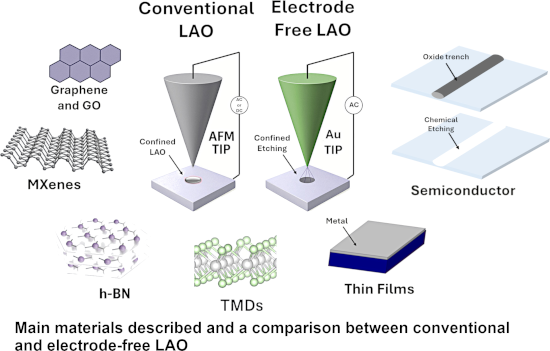
- technique for nanoscale patterning, leveraging the precision of scanning probe microscopy, relying specifically on atomic force microscopy. This review explores the materials utilized in LAO experiments, including semiconductors, metals, insulators, two-dimensional (2D) materials, and emerging
- oxide growth on a silicon surface during LAO, illustrating the formation of a protruding oxide feature and the corresponding buried oxide volume. Reproduced from [8], M. Lorenzoni and F. Pérez-Murano, “Conductive Atomic Force Microscopy for Nanolithography Based on Local Anodic Oxidation,” in Conductive
- Atomic Force Microscopy: Applications in Nanomaterials, with permission from John Wiley and Sons. Copyright © 2017 Wiley-VCH GmbH. This content is not subject to CC BY 4.0. (c) AFM images of square oxide patterns fabricated by LAO on SiC before and after wet etching. (d) Height profile of the top left


Durable antimicrobial activity of fabrics functionalized with zeolite ion-exchanged nanomaterials against Staphylococcus aureus and Escherichia coli
Beilstein J. Nanotechnol. 2026, 17, 262–274, doi:10.3762/bjnano.17.18
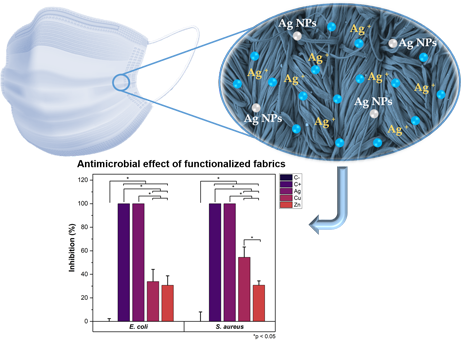
- atom % are evaluated regarding their antimicrobial activity against Staphylococcus aureus (Gram-positive) and Escherichia coli (Gram-negative), as well as regarding their physicochemical and mechanical properties. Scanning electron microscopy confirms the uniform distribution and successful
- ). Scanning electron microscopy confirmed the effective incorporation and uniform distribution of the nanomaterials on the fabric surface, facilitated by a 10% w/w acrylic resin binder. Among the tested materials, silver-based fabrics displayed the highest antibacterial efficacy, followed by copper and zinc
- , transmission electron microscopy (TEM) images were obtained using a JEOL JEM-2200FS (200 kV), and elemental analysis was performed using EDS. The crystalline structure of the modified fabrics was determined by X-ray diffraction (XRD) in a Panalytical AERIS diffractometer using Cu Kα (λ = 1.54184 Å). The




Multilayered hyperbolic Au/TiO2 nanostructures for enhancing the nonlinear response around the epsilon-near-zero point
Beilstein J. Nanotechnol. 2026, 17, 251–261, doi:10.3762/bjnano.17.17
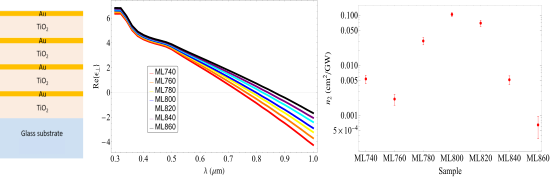
- actually was not at 800 nm, but rather at 600 nm. We tried to find the reason of this shift with our available resources. Transmission electron microscopy showed that there was no significant change in the geometry, which could have resulted in the ENZ shift. We could not study the composition of the
- oscillator as a starting material for Au, and with TiO2 with Cody–Lorentz oscillators as starting material for TiO2. Scanning electron microscopy (Hitachi SU8030) was used to obtain the cross-sectional image (below in Figure 4a), with the sample oriented to expose the ENZ material edge to the electron beam
- the deposited layers. In Table 1, we can see that we have widths for every stack that are different from the ones proposed for the simulated ENZ points. This change in thickness was also seen in scanning electron microscopy (SEM). In Figure 4a we present a SEM image of the ML800 structure; we see that


Comparative study on 3D morphologies of delignified, single tracheids and fibers of five wood species
Beilstein J. Nanotechnol. 2026, 17, 239–250, doi:10.3762/bjnano.17.16
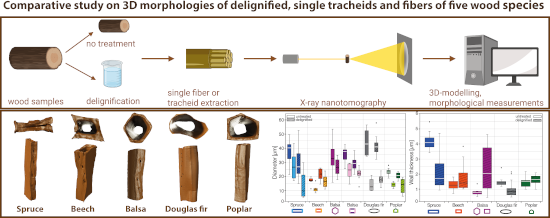
- . Scanning electron microscopy was used to compare the morphology between untreated and delignified fibers and tracheids. X-ray tomography enabled us to reconstruct high-resolution 3D models of delignified single tracheids or fibers, providing information on the pit arrangements. Moreover, delignification
- largely absent from scientific literature. Although previous studies have examined wood anatomy using various imaging techniques, such as X-ray micro-computed tomography in addition to scanning and transmission electron microscopy [22][23][24][25][26][27], high-resolution 3D reconstructions of single
- species in this study by observation of the structural differences after delignification. Using X-ray tomography, we were able to build 3D models of single fibers and tracheids. Additionally, we imaged untreated and delignified samples using scanning electron microscopy for measuring fiber and tracheid


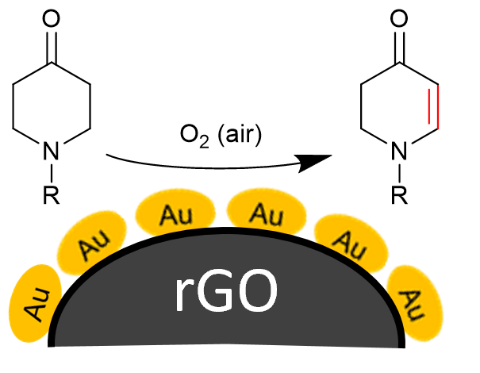
Gold nanoparticle-decorated reduced graphene oxide as a highly effective catalyst for the selective α,β-dehydrogenation of N-alkyl-4-piperidones
Beilstein J. Nanotechnol. 2026, 17, 218–238, doi:10.3762/bjnano.17.15
- , scanning electron microscopy (SEM) and nitrogen gas sorption surface area analysis using the Brunauer–Emmett–Teller (BET) theory were employed to evaluate the surface structure, porosity, and overall texture of the materials. The SEM image in Figure 2a reveals the typical structure of AC, characterized by
- scattering (DLS) measurements was 12 nm (Figure 4b). Transmission electron microscopy (TEM) analysis showed spherical and well-dispersed nanoparticles and their particle size distribution (Figure 4c), based on the measurements of approximately 200 nanoparticles, yielded an average diameter of 12 nm with a


Micro- and nanoscale effects in biological and bioinspired materials and surfaces
Beilstein J. Nanotechnol. 2026, 17, 214–217, doi:10.3762/bjnano.17.14

- ” consists of 15 articles representing all facets of research on biological and bioinspired surfaces, ranging from experimental and microscopy studies on biological objects, translational approaches with characterization of artificial replicas, bioinspired prototypes to theoretical studies including modeling
- nanostructures aiding in efficient cleaning of the eyes and antennae of this insect to maintain sensory functions. Another insect study by Lopez et al. [13] investigated the ultrablack cuticle of a velvet ant using a range of microscopy methods and optical spectrometry providing structural and spectrometric
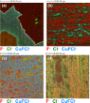
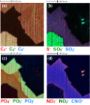
Time of flight secondary ion mass spectrometry imaging of contaminant species in chemical vapour deposited graphene on copper
Beilstein J. Nanotechnol. 2026, 17, 200–213, doi:10.3762/bjnano.17.13
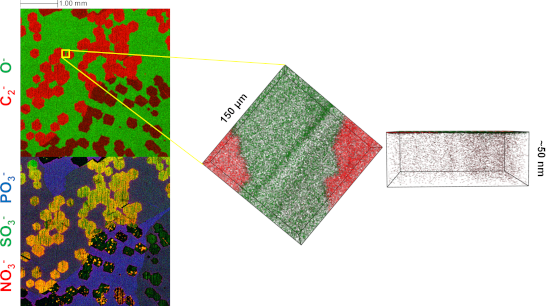
- a Wyko NT1100 White Light Optical Profiling System using a 20× magnification in vertical scanning interferometry (VSI) mode. Scanning electron microscopy (SEM) was carried out with a Carl Zeiss SIGMA VP at an acceleration voltage of 2 kV to ensure sample consistency. Four separate Cu foil samples





Influence of surface characteristics on the in vitro stability and cell uptake of nanoliposomes for brain delivery
Beilstein J. Nanotechnol. 2026, 17, 139–158, doi:10.3762/bjnano.17.9
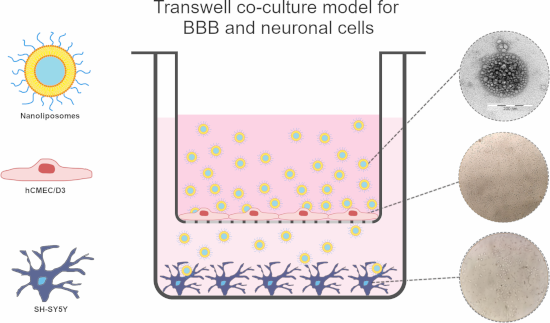
- neurons (ranging from 25.17% to 27.54%). Fluorescence and confocal microscopy micrographs revealed that, once internalized, NLs were concentrated in the perinuclear cell regions. Keywords: blood–brain barrier; cell co-culture; cell uptake; internalization; nanoliposomes; stability; surface
- fluorescence microscopy In order to obtain a deeper insight of the internalization and co-localization of the prepared NLs samples in living cells, hCMEC/D3 and SH-SY5Y cells were first seeded onto 35 mm glass dishes at a density of 2 × 10⁵ cells per well (μ-Dish 35 mm, WillCo Glass Bottom Dishes, Netherlands
- incubation (37 °C, 5% CO2), the cells were washed twice with PBS, followed by subsequent fluorescence microscopy analysis at 37 °C (Zeiss Axio Observer Z1 inverted microscope, Zeiss, Jena, Germany), equipped with an epifluorescence illuminator and a plate heating chamber. The resulting images were processed




Development and in vitro evaluation of liposomes and immunoliposomes containing 5-fluorouracil and R-phycoerythrin as a potential phototheranostic system for colorectal cancer
Beilstein J. Nanotechnol. 2026, 17, 97–121, doi:10.3762/bjnano.17.7
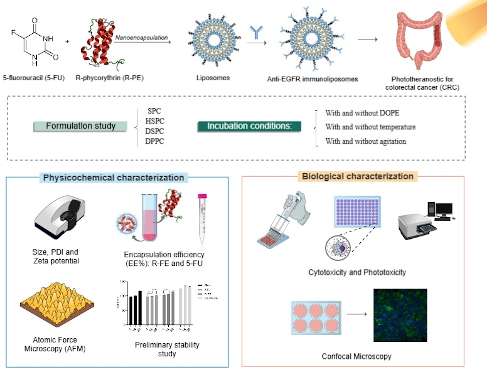
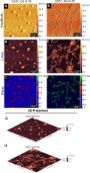
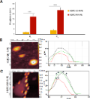
- force microscopy The topographical characterization of liposomal formulations was performed by using atomic force microscopy (AFM) with a Nanosurf® FlexAFM system. The samples analyzed included liposomes and immunoliposomes containing R-PE. Briefly, to avoid vesicle deformation or disruption, liposomes
- images were captured using the Nanosurf C3000i software and subsequently processed and analyzed with the Gwyddion v 2.66 software, which was used for image leveling, coloring, 3D visualization of the specimens, and roughness analysis [26]. 2.3.5.1 Atomic force microscopy roughness calculation. Roughness
- ™ 488. 2.7 Cellular uptake Cellular internalization was assessed by confocal microscopy. For confocal microscopy, 1 × 10⁶ cells were seeded onto 6-well plates containing sterile cover slides and 1 mL of culture medium per well. After allowing cell adhesion overnight, the culture medium was removed and 1



Functional surface engineering for cultural heritage protection: the role of superhydrophobic and superoleophobic coatings – a comprehensive review
Beilstein J. Nanotechnol. 2026, 17, 63–96, doi:10.3762/bjnano.17.6




Subdigital integumentary microstructure in Cyrtodactylus (Squamata: Gekkota): do those lineages with incipiently expressed toepads exclusively exhibit adhesive setae?
Beilstein J. Nanotechnol. 2026, 17, 38–56, doi:10.3762/bjnano.17.4
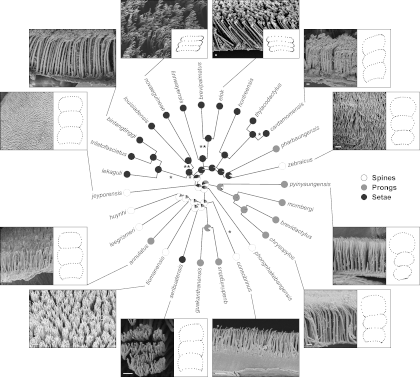
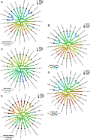
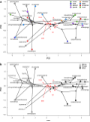
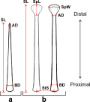
- variation of digital form within this genus, from species with ancestrally small, round subdigital scales to macroscopically defined incipient toepads (broadened lamella-like subdigital scales). We employed scanning electron microscopy (SEM) and phylogenetic comparative methods to (a) explore the
- examined under a ZEISS Stemi 508 stereoscopic microscope (Carl Zeiss Microscopy GmbH, Göttingen, Germany) at magnifications between ×5 and ×100. Skin samples were taken exclusively from the fourth digit of the left or right pes, depending on which was in better condition. Ventral epidermal samples were


Reduced graphene oxide paper electrode for lithium-ion cells – towards optimized thermal reduction
Beilstein J. Nanotechnol. 2026, 17, 24–37, doi:10.3762/bjnano.17.3
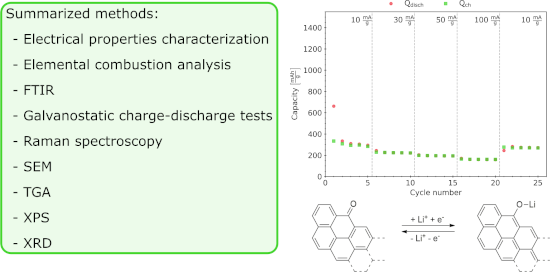
- and thickness were determined with scanning electron microscopy imaging. This paper also reveals electrical and electrochemical properties of the material. The conductivity of the material obtained at 800 °C reached ≈70 S/cm, and the discharge capacity reached ≈160 mAh/g at 100 mA/g current density



Quantitative estimation of nanoparticle/substrate adhesion by atomic force microscopy
Beilstein J. Nanotechnol. 2026, 17, 1–14, doi:10.3762/bjnano.17.1

- of copper nanoparticles to silicon substrates deposited under varying conditions using DC magnetron sputter inert gas condensation. Atomic force microscopy was utilized as a tool for the manipulation of the nanoparticles and to measure lateral forces for their displacement, with cantilever
- particles between 6 and 12 nm. In addition, an applied positive substrate bias voltage led to more energetic landing conditions and thus to increased adhesion forces. This study underscores the suitability of atomic force microscopy in characterizing adhesion on the nanoscale and offers insights into future
- strategies for tailoring nanoparticle/substrate interactions. Keywords: adhesion; atomic force microscopy; magnetron sputtering; nanomanipulation; nanoparticles; Introduction Nanoparticles (NPs) are at the forefront of basic research and technological innovation, captivating researchers and engineers from



Internal 3D temperature mapping in biological systems using ratiometric light-sheet imaging and lipid-coated upconversion nanothermometers
Beilstein J. Nanotechnol. 2025, 16, 2306–2316, doi:10.3762/bjnano.16.159
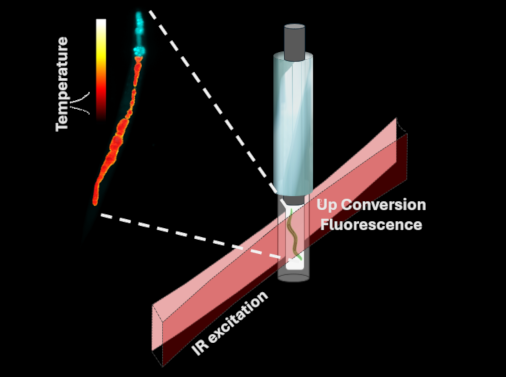
- estimate temperature through ratiometric imaging of two thermally coupled fluorescence bands. This work demonstrates the feasibility of volumetric temperature mapping in internal biological systems using light-sheet fluorescence microscopy and lipid-coated UCNPs as nanothermometry markers. This approach
- -sheet microscopy; temperature mapping; upconversion fluorescent nanoparticles; Introduction Biological processes involving energy exchange often manifest as temperature fluctuations. Materials sought to measure such changes should exhibit high sensitivity, accuracy, high spatiotemporal resolution, good
- [44]. These features make FIR-based thermometry appealing for remote optical measurements in biological applications. Indeed, upon imaging the thermally coupled fluorescent bands emitted by UCNPs with microscopy techniques, precise temperature measurements within biological systems can be readily


Improving magnetic properties of Mn- and Zn-doped core–shell iron oxide nanoparticles by tuning their size
Beilstein J. Nanotechnol. 2025, 16, 2285–2295, doi:10.3762/bjnano.16.157
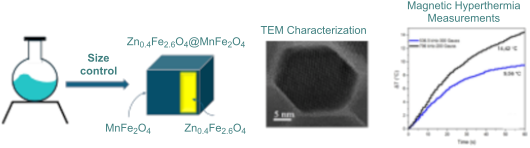
- least tenfold). The designed core NPs are composed of a Zn0.4Fe2.6O4 core and a MnFe2O4 shell. Their size and morphology were determined by transmission electron microscopy, Fourier-transform infrared spectroscopy was used to investigate their chemical composition. The iron oxide phase was confirmed by
- microscopy (HRTEM) provides a comprehensive understanding of the material’s composition and properties. This work paves the way for the development of next-generation biocompatible magnetic nanoparticles for cancer therapy and other biomedical applications. Materials and Methods Materials Iron
- evaluation of the Mössbauer spectra was performed by least-square fitting of lines using the Winnormos (Wissel) program. The error on all Fe Mössbauer spectra was ±0.1 mm·s−1. High-resolution transmission electron microscopy (HRTEM) and scanning transmission electron microscopy (STEM) images were performed



Visualizing nanostructures in supramolecular hydrogels: a correlative study using confocal and cryogenic scanning electron microscopy
Beilstein J. Nanotechnol. 2025, 16, 2274–2284, doi:10.3762/bjnano.16.156
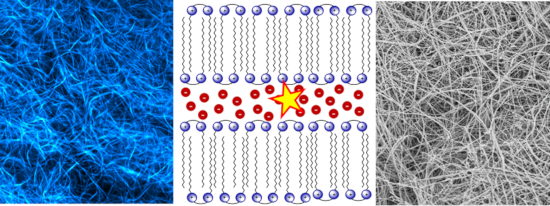
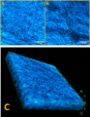
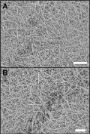
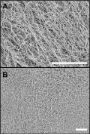
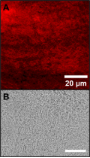
- ) fluorophores were imaged using confocal laser scanning microscopy (CLSM) of fully solvated gels and cryogenic scanning electron microscopy (cryo-SEM) was used to observe the corresponding xerogels. The DPP@Gel systems exhibit strong fluorescence and are effectively imaged using CLSM, with fibre morphologies
- ideal for mimicking biological environments, yet these same properties pose major challenges for morphological characterization [6][7]. In particular, conventional electron microscopy often requires dehydration, which risks collapsing the delicate network, while optical methods are typically diffraction
- -limited, preventing direct visualization of nanoscale features [6][8]. Confocal fluorescence microscopy addresses some of these limitations by allowing hydrogels to be imaged in situ, fully hydrated, and often in real time when a fluorophore is incorporated into the colloidal network [2][9]. Through



Chiral plasmonic nanostructures fabricated with circularly polarized light
Beilstein J. Nanotechnol. 2025, 16, 2245–2264, doi:10.3762/bjnano.16.154
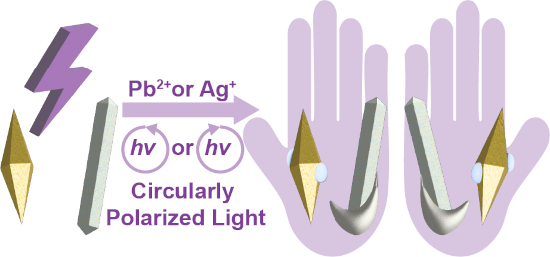
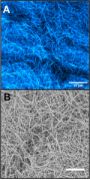
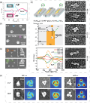
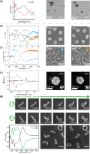
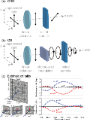
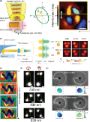
- . Synthesizing chiral metallic NCs using plasmon-mediated synthesis is challenging due to reactions with nonlocalized warm electrons. Even though metallic nanostructures display optical dissymmetry in their CD spectra, electron microscopy images of the nanostructures obtained do not demonstrate clear structural
- can lead to a significant displacement of the polymer backbone, with the degree of displacement being dependent on the strength of the electric field under CPL. Chiral topographic changes due to the polymer displacement were observed using atomic force microscopy (AFM). Similar observations were made
- field. This section will cover the experimental methods for observing the near fields of cPNSs. Advanced techniques, such as near-field scanning optical microscopy (NSOM), cathodoluminescence (CL), electron energy loss spectroscopy (EELS), and photoemission electron microscopy (PEEM), offer spatial





Optical bio/chemical sensors for vitamin B12 analysis in food and pharmaceuticals: state of the art, challenges, and future outlooks
Beilstein J. Nanotechnol. 2025, 16, 2207–2244, doi:10.3762/bjnano.16.153


Ultrathin water layers on mannosylated gold nanoparticles
Beilstein J. Nanotechnol. 2025, 16, 2183–2198, doi:10.3762/bjnano.16.151
- nanoparticle systems, one functionalized with an oligo(ethylene glycol) ligand, and one functionalized with a mixture of the same with a dimannoside ligand. The dimannoside ligand was chosen to mimic the surface chemistry of viral spike proteins. We characterized the particles by electron microscopy, dynamic
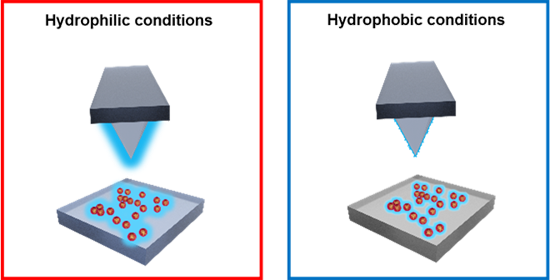
- light scattering, and infrared spectroscopy. We probed particles adsorbed on hydrophilic and hydrophobic surfaces with atomic force microscopy (AFM) and vibrational sum frequency generation (VSFG) spectroscopy, both operated under variable air humidity. For AFM, we additionally tested hydrophilic and
- short oligo(ethylene glycol) chains. The particles were first characterized by dynamic light scattering (DLS) and zeta potential (ZP) measurements in solution, and by scanning electron microscopy (SEM) and scanning transmission electron microscopy (STEM) in vacuum. Samples were adsorbed on flat



Microplastic pollution in Himalayan lakes: assessment, risks, and sustainable remediation strategies
Beilstein J. Nanotechnol. 2025, 16, 2144–2167, doi:10.3762/bjnano.16.148
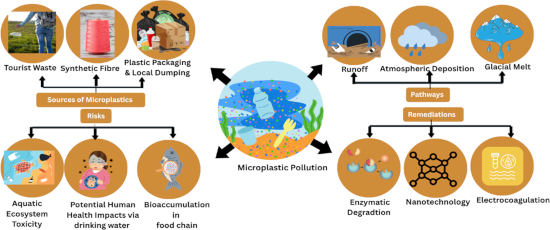
- isolated locations is, however, limited by factors such as harsh climatic conditions, logistical challenges, and the need for expert analytical techniques like microscopy and spectroscopy. The present review considers sources, pathways, and ecological impacts of microplastics in Himalayan lakes compared to
- polymers that result from local tourist waste and those transported by atmospheric deposition in Himalayan lakes of high elevation [37]. 4.2.2 Microscopy. Microscopic techniques remain crucial for the initial description of MPs, particularly when assessing their physical properties. Scanning electron
- microscopy (SEM) produces high-resolution images of particle shapes. It also indicates surface wear and tear patterns that reflect how old the MP is and how long it has been in the environment [38]. Ease of operation and minimal cost of optical microscopy make it widely used, despite being less sophisticated





