


Search results
Search for "nanoformulations" in Full Text gives 28 result(s) in Beilstein Journal of Nanotechnology.
Targeting strategies for improving the efficacy of nanomedicine in oncology
Beilstein J. Nanotechnol. 2019, 10, 168–181, doi:10.3762/bjnano.10.16
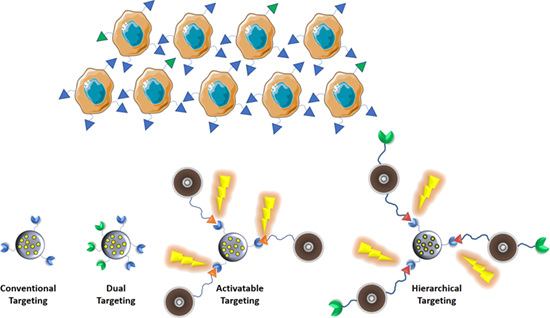
- solutions, a real alternative? Active targeting is already one of the most used strategies for bringing nanoformulations into tumoral cells. Although usually great results were achieved in vitro, the in vivo assays have shown smaller effects regarding cell internalization. There has been no real enhancement


Enhanced antineoplastic/therapeutic efficacy using 5-fluorouracil-loaded calcium phosphate nanoparticles
Beilstein J. Nanotechnol. 2018, 9, 2499–2515, doi:10.3762/bjnano.9.233
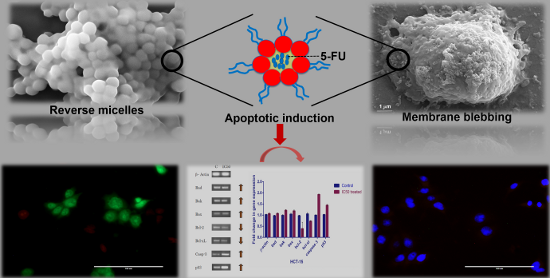
- immediately on improving the efficacy. This need could possibly be met by a nanoscale-carrier-facilitated drug delivery system. This rapidly growing field of research has gained interest all over the world with its effective and targeted drug delivery application [3]. Polymer-based nanoformulations have
- nanomaterial was found to be toxic in some metal-based NPs (e.g., gold, silver, iron, and copper), while the bulk counterparts showed less toxicity [9]. The metal ions present at the surface of the particles were found to interact with biomolecules at a comparatively higher rate in nanoformulations compared to


Near-infrared dye loaded polymeric nanoparticles for cancer imaging and therapy and cellular response after laser-induced heating
Beilstein J. Nanotechnol. 2014, 5, 313–322, doi:10.3762/bjnano.5.35
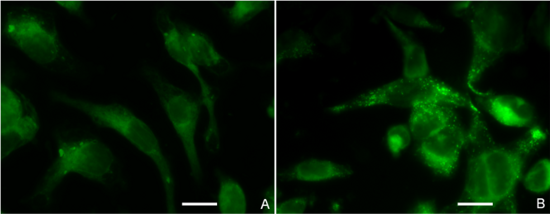
- NPs do not have any cytotoxicity effect at this concentration. Optical imaging of cancer cells and mice showed that the use of the NP formulation resulted in a stronger fluorescence signal 24 h after injection. This is consistent with the literature reporting that nanoformulations can result in


Other Beilstein-Institut Open Science Activities



