


Search results
Search for "nanomedicines" in Full Text gives 38 result(s) in Beilstein Journal of Nanotechnology.
Cyclodextrins as eminent constituents in nanoarchitectonics for drug delivery systems
Beilstein J. Nanotechnol. 2023, 14, 218–232, doi:10.3762/bjnano.14.21
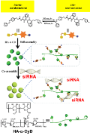
- compounds. Because of the decomposition of nanomedicines through these two pathways, the siRNA was efficiently released in target cells and silenced the pathogenic gene. 3.3 Simultaneous delivery of multiple types of therapeutic drugs When two types of therapeutic DNA (or RNA) drugs are simultaneously
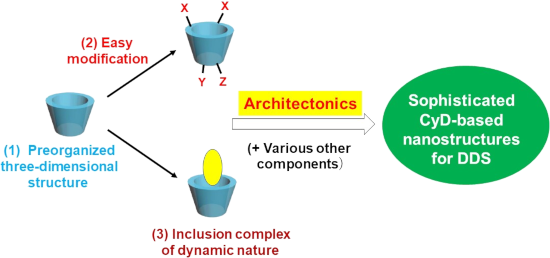
- , various functional groups are introducible to desired positions in the nanoarchitectures through chemical modifications of CyDs, facilitating a precise design for predetermined DDSs. Inclusion complexes of CyDs are sufficiently dynamic so that the drugs encapsulated in CyD-based nanomedicines are released




Engineered titania nanomaterials in advanced clinical applications
Beilstein J. Nanotechnol. 2022, 13, 201–218, doi:10.3762/bjnano.13.15
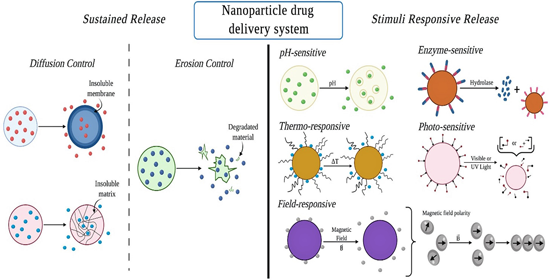
- therapeutic molecules) in the gastrointestinal tract. These inherent limitations led to the development of nanomedicines as potent drug delivery vehicles approved for medicinal use and treatment of life-threatening diseases. Several types of nps, such as liposomal, polymer-based, terpenoid-based, and


Comprehensive review on ultrasound-responsive theranostic nanomaterials: mechanisms, structures and medical applications
Beilstein J. Nanotechnol. 2021, 12, 808–862, doi:10.3762/bjnano.12.64
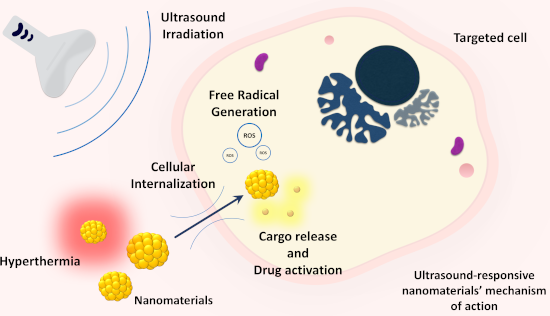
- MBs can be loaded with cargo and also modified with specific ligands for targeting [178]. The use of MBs in combination with other types of NPs could also provide additional possibilities. These hybrids could enhance the accumulation, penetration, and uptake of nanomedicines [179][180][181]. These


The impact of molecular tumor profiling on the design strategies for targeting myeloid leukemia and EGFR/CD44-positive solid tumors
Beilstein J. Nanotechnol. 2021, 12, 375–401, doi:10.3762/bjnano.12.31
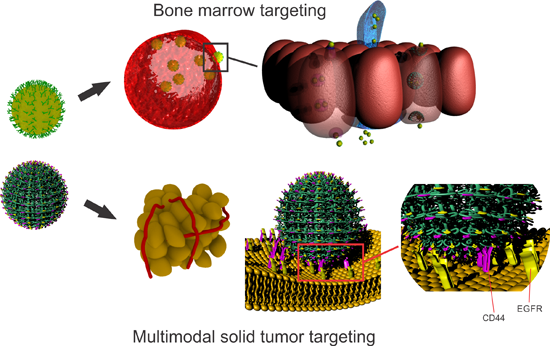
- discoveries regarding the surface-expressed receptors and their intracellular molecular pathways have been made during the last decade, which improved the design of targeted anticancer nanomedicines and the targeting of specific tumor types. No doubt that the advances will further progress to the application
- of individualized tumor signatures for a personalized therapy against cancers. The greatest interest regarding the development of targeted nanoscale drug delivery systems is related to solid tumors. However, liquid tumor targeting can greatly benefit from the application of nanomedicines during
- alternatives using NDDSs [1]. Literature data points to combinatorial therapy, coadministration, and codelivery of agents by nanomedicines as a successful approach to bypass signaling inhibition, combat anticancer drug resistance, and increase the efficacy of the clinical treatment. Further advances in


Interactions at the cell membrane and pathways of internalization of nano-sized materials for nanomedicine
Beilstein J. Nanotechnol. 2020, 11, 338–353, doi:10.3762/bjnano.11.25
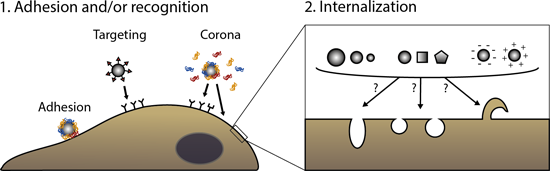
- size, charge, and shape, affect the mechanisms cells use for their internalization. Technical difficulties in characterizing these mechanisms are presented. A better understanding of the first interactions of nano-sized materials with cells will help to design nanomedicines with improved targeting
- , engineered nano-sized materials can exploit the cellular machinery to be internalized by cells. In fact, since the cell membrane blocks diffusion of complexes larger than ca. 1 kDa, nano-sized materials, such as nanomedicines, are transported into cells using energy-dependent mechanisms, unlike many small
- drugs currently present on the market [5]. This enables nanomedicines to potentially overcome problems associated with the passive diffusion of small molecular drugs through cell membranes, such as their indiscriminate internalization in different cell types and organs, which is often associated with


Bombesin receptor-targeted liposomes for enhanced delivery to lung cancer cells
Beilstein J. Nanotechnol. 2019, 10, 2553–2562, doi:10.3762/bjnano.10.246
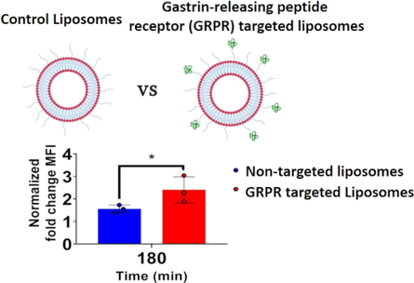
- ., pinocytosis), resulting in membrane internalisation, endosome formation and trafficking through the endo-lysosomal system. Nanomedicines to improve cancer therapy have been widely studied and have resulted in a number of approved therapies such as Doxil® in the 1990s and the recent approval of Onivyde® [12
- than the 50 nm pore diameter of the terminal extrusion membrane. This is likely due to the deformation of the vesicles under pressure during extrusion and subsequent expansion after emergence from the pore. Commercial realisation of targeted nanomedicines is contingent upon the development of platforms

Frontiers in pharmaceutical nanotechnology
Beilstein J. Nanotechnol. 2019, 10, 2538–2540, doi:10.3762/bjnano.10.244

- Matthias G. Wacker National University of Singapore, Faculty of Science, Department of Pharmacy, 6 Science Drive 2, 117546 Singapore 10.3762/bjnano.10.244 Keywords: drug delivery; nanocarriers; nanomedicines; nanotheranostics; pharmaceutical nanotechnology; Today, pharmaceutical nanotechnology
- , although the use of nanomaterials has generally increased, the number of approved nanomedicines is still very limited when compared to the tremendous research activity in this area [1]. Because nothing is older than yesterday’s newspaper, this editorial will take a look into the crystal ball. Nanomedicine
Targeting strategies for improving the efficacy of nanomedicine in oncology
Beilstein J. Nanotechnol. 2019, 10, 168–181, doi:10.3762/bjnano.10.16
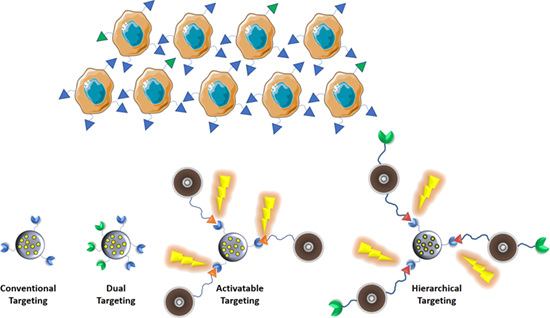
- organelles, or tissues and cells, as well as the employ of hierarchical targeting will also be described to provide an insight about the great potency of targeted nanomedicines in antitumoral therapy. Review Passive targeting based on the EPR effect As mentioned above, the use of nanoparticles in oncology
- into the tumour [12]. Another strong barrier that hampers the efficacy of nanomedicines is the dense extracellular matrix (ECM), which is usually present in many solid tumours. ECM is commonly denser in solid tumours than in healthy tissues due to a higher content in collagen and other structural
- another mechanism for inducing endosomal escape of nanomedicines [55]. Finally, the incorporation of photosensitizers able to produce radical oxidative species (ROS) upon exposure to certain wavelengths of light induces the controlled endosomal disruption under light exposure [56]. Double targeting


Development of polycationic amphiphilic cyclodextrin nanoparticles for anticancer drug delivery
Beilstein J. Nanotechnol. 2017, 8, 1457–1468, doi:10.3762/bjnano.8.145
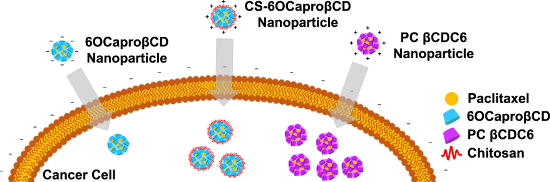
- prepared with ethanol and without any surfactant (PF68). Delivering the therapeutic load to the target site and maintaining therapeutic blood levels for the drug in an effective dose is the most important objective for targeted nanomedicines. Drug encapsulation efficiency is highly affected by the nature


Cationic PEGylated polycaprolactone nanoparticles carrying post-operation docetaxel for glioma treatment
Beilstein J. Nanotechnol. 2017, 8, 1446–1456, doi:10.3762/bjnano.8.144
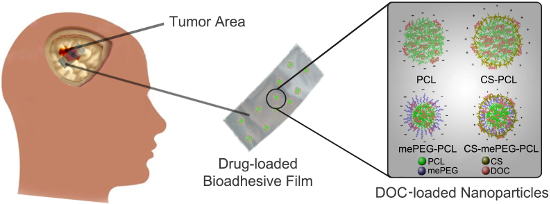
- [42], which contribute to the potential of this biopolymer for drug delivery and formulation. Although systemic application is frequently preferred for nanomedicines, local administration is a major opportunity when on-site therapy is possible and intended for. In fact, local or implantable




Low uptake of silica nanoparticles in Caco-2 intestinal epithelial barriers
Beilstein J. Nanotechnol. 2017, 8, 1396–1406, doi:10.3762/bjnano.8.141
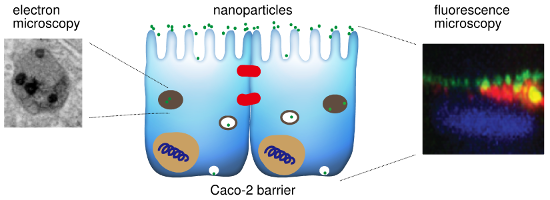
- Deusinglaan 1, 9713 AV Groningen, The Netherlands 10.3762/bjnano.8.141 Abstract Cellular barriers, such as the skin, the lung epithelium or the intestinal epithelium, constitute one of the first obstacles facing nanomedicines or other nanoparticles entering organisms. It is thus important to assess the
- exposure routes, cellular barriers, such as the skin, the lung epithelium, the intestinal epithelium or the endothelium (including the blood-brain barrier), constitute one of the first sites of interactions of nanoparticles, whether intended as nanomedicines or not, with organisms. Thus in addressing the



Experiences in supporting the structured collection of cancer nanotechnology data using caNanoLab
Beilstein J. Nanotechnol. 2015, 6, 1580–1593, doi:10.3762/bjnano.6.161
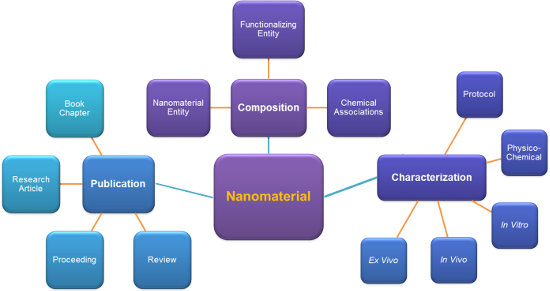
- ]. caNanoLab was originally designed to capture information about the nanomaterial sample and its composition, associated in vitro characterizations, experimental protocols, and relevant publications. The ultimate goal being to accelerate the clinical use of cancer nanomedicines by providing efficacy and
- nanomedicines to the clinical environment. To aid this process, caNanoLab will continue to evolve as a valuable resource to the biomedical nanotechnology community through portal enhancements and through integration with other community-identified resources. Plans are underway for a caNanoLab 2.1 release, which




Using natural language processing techniques to inform research on nanotechnology
Beilstein J. Nanotechnol. 2015, 6, 1439–1449, doi:10.3762/bjnano.6.149
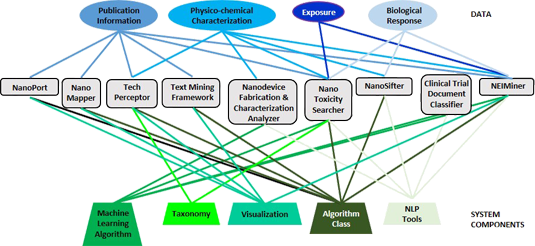
- field. However, its impact is already realized with engineered nanomaterials (ENMs) incorporated in over 1800 consumer products, included in over 100 clinical trials, and contained in 40 FDA approved nanomedicines [1][2][3]. At the onset of the U.S. National Nanotechnology Initiative, researchers
- nanomedicines have successfully advanced from the bench to the clinic. For both developing and marketed nanomedicines, there still remain questions on the long-term safety. Two groups have developed NLP-based systems to annotate and classify nanomedicine articles or clinical trials. Nanotoxicity Searcher The
- 500 were nanomedicine-focused (nano) and 500 were not involving any nanomedicines or nanodevices (non-nano). The author evaluated their system using the leave-one-out and 10-fold cross validation evaluation methodology and report the overall: (1) precision, (2) recall, (3) F-measure, (3) true-positive



