Search results
Search for "nanosystems" in Full Text gives 95 result(s) in Beilstein Journal of Nanotechnology.
Nanoarchitectonics of photothermal materials to enhance the sensitivity of lateral flow assays
Beilstein J. Nanotechnol. 2023, 14, 988–1003, doi:10.3762/bjnano.14.82
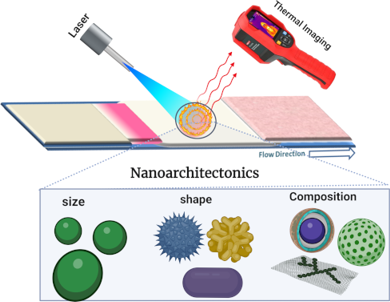
- sensing and photothermal therapy. The high refractive index of Fe3O4 can be used to achieve strong NIR absorption. The addition of a magnetic part to nanosystems enables multifunctionality. Qiu et al. developed a plasmonic gold core with a MgFe2O4 shell to combine the magnetic and photothermal properties


Antibody-conjugated nanoparticles for target-specific drug delivery of chemotherapeutics
Beilstein J. Nanotechnol. 2023, 14, 912–926, doi:10.3762/bjnano.14.75
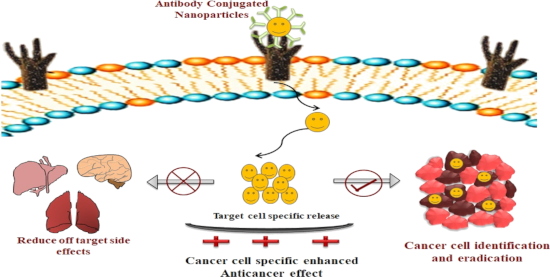
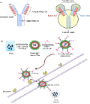
- ability to accumulate at tumor sites. More importantly, surface modification and functionalization of NPs to increase their therapeutic efficacy can be achieved very easily. The recent advancement in targeted delivery introduces the development of surface-modified nanosystems that can be used in screening



Nanostructured lipid carriers containing benznidazole: physicochemical, biopharmaceutical and cellular in vitro studies
Beilstein J. Nanotechnol. 2023, 14, 804–818, doi:10.3762/bjnano.14.66
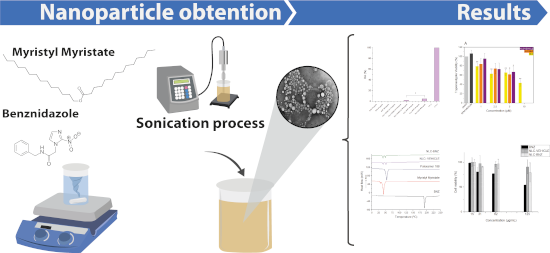
- trypanocidal activity against trypomastigotes compared to that of the free drug [18]. Among the aforementioned nanosystems, SLNs have recently gained special attention owing to their biocompatibility properties, biodegradability, relatively easy surface and composition modification, and efficacy in loading and


Thermal transport in kinked nanowires through simulation
Beilstein J. Nanotechnol. 2023, 14, 586–602, doi:10.3762/bjnano.14.49
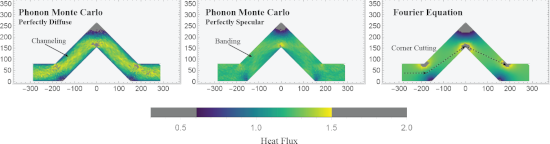
- investigations of kinked, serpentine, or chicaned nanowires, that is, wires with one or more right angles preventing a straight path along the wire between two temperature-controlled areas. While there are studies devoted to simulation [15][16], several examples of synthesis for these nanowires and nanosystems
- , anisotropic heat transport has been found in silicon nanosystems [38], where the thermal conductivity can vary based on the lattice orientation along the direction of transport. It is possible that this effect is related to how lattice orientation can affect surface scattering. Zhou, Chen and Hu showed that a
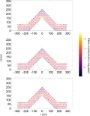
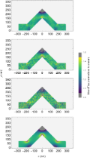
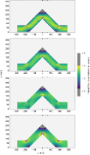
- insight into applications where lattice orientation is less of a concern, such as in larger nanosystems. 2D nanowire systems constructed with a similar geometry to those in the MD simulations were simulated with PMC to examine thermal transport. The segment length l is set to 120 nm and the wire radius is





Nanotechnology – a robust tool for fighting the challenges of drug resistance in non-small cell lung cancer
Beilstein J. Nanotechnol. 2023, 14, 240–261, doi:10.3762/bjnano.14.23
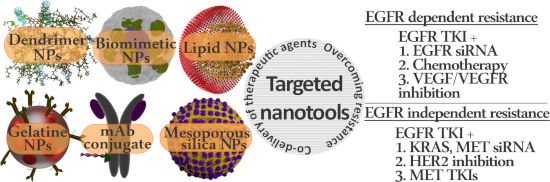
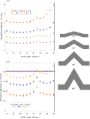
- mitigating the risk of therapeutic failure due to the non-coordinated co-delivery of therapeutic agents and off-target side effects. However, despite substantial progress, a precise control of the in vivo trajectories of the nanosystems is still beyond our reach. Some of the promising approaches and design
- homing potential and decreasing off-site targets, which is one of the major issues in targeted system design. Experimental options are endless, but experience from clinical studies is still insufficient when it comes to the clinical development of nanosystems with high homing potential and acceptable
- the issue of resistance. Some of the recent approaches in the design of nanocarriers for overcoming the challenges of siRNA delivery and therapeutic nanosystems for combined RNAi treatments of resistant NSCLC will be discussed below. The delivery of siRNA therapy to its targets in vivo is a demanding


The influence of structure and local structural defects on the magnetic properties of cobalt nanofilms
Beilstein J. Nanotechnol. 2023, 14, 23–33, doi:10.3762/bjnano.14.3
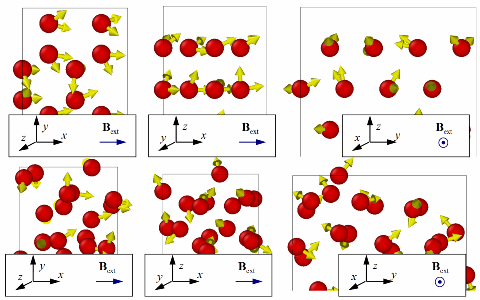
- responsible for the magnetic energy fluxes. A graph of spin temperature variations for the two versions of ideal and real nanosystems under consideration is shown in Figure 5. As it can be seen from Figure 5, at initial time intervals (0–3 ps) the spin temperature for both simulation variants is subject to


Supramolecular assembly of pentamidine and polymeric cyclodextrin bimetallic core–shell nanoarchitectures
Beilstein J. Nanotechnol. 2022, 13, 1361–1369, doi:10.3762/bjnano.13.112
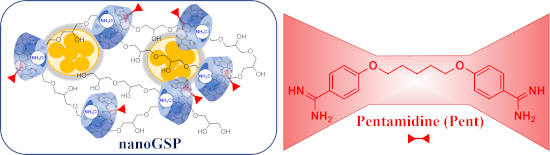
- ) with pentamidine (Pent), an antimicrobial agent used against leishmaniasis [16], to investigate the antimicrobial activity of novel nanosystems (i.e., nanoGSP; Figure 1). Leishmaniasis is an infectious disease caused by protozoan parasites transmitted to humans and animals by the bite of tiny (2–3 mm
- Pent (Supporting Information File 1, Table S1), in line with previously reported data [19][21]. Cytotoxicity assays were also performed to assess the selectivity of the nanosystems (see hereinafter). The inactivity of nanoG and nanoGS emerged in our work suggested that leishmanicidal effects described


Irradiation-driven molecular dynamics simulation of the FEBID process for Pt(PF3)4
Beilstein J. Nanotechnol. 2021, 12, 1151–1172, doi:10.3762/bjnano.12.86
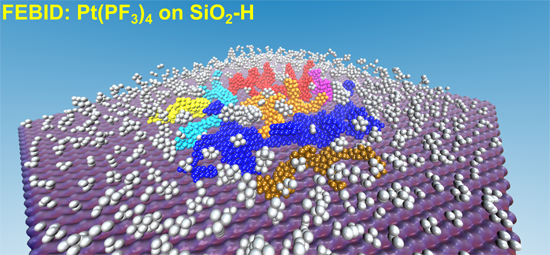
- , novel techniques exploiting the irradiation of nanosystems with collimated electron and ion beams have been developed [2][3]. One of these techniques is electron beam lithography (EBL), which is similar to conventional optical lithography but relies on the change of solubility after electron exposure of








Use of nanosystems to improve the anticancer effects of curcumin
Beilstein J. Nanotechnol. 2021, 12, 1047–1062, doi:10.3762/bjnano.12.78
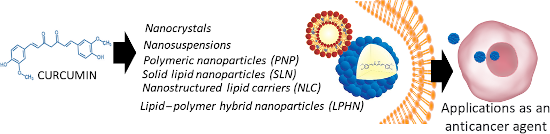
- metabolism, low bioavailability, and fast elimination of the molecule. Considering this, the present work reviews the use of CUR-based nanosystems as anticancer agents, including conventional nanosystems (i.e., liposomes, nanoemulsions, nanocrystals, nanosuspensions, polymeric nanoparticles) and nanosystems
- that respond to external stimuli (i.e., magnetic nanoparticles and photodynamic therapy). Previous studies showed that the effects of CUR were improved when loaded into nanosystems as compared to the free compound, as well as synergist effects when it is co-administrated alongside with other molecules
- materials for nanomedical applications. Imaging-guided drug delivery of CUR-based nanosystems may also directly target specific cells, thereby increasing the therapeutic and chemopreventive efficacy of this versatile compound. Keywords: nanocarrier; nanoformulations; nanosized delivery systems; phenolic


Comprehensive review on ultrasound-responsive theranostic nanomaterials: mechanisms, structures and medical applications
Beilstein J. Nanotechnol. 2021, 12, 808–862, doi:10.3762/bjnano.12.64
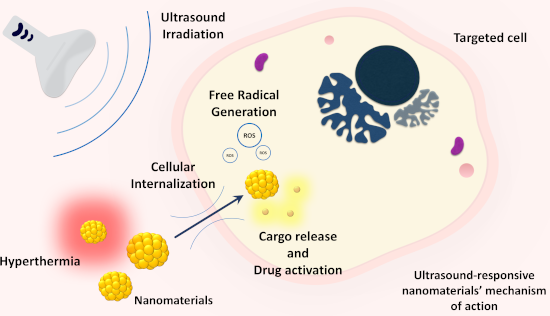
- decreasing pain [124][125]. Additionally, these nanosystems offer a more stable solution for sonoporation agents in combination with MBs and they have the capacity for drug conjugation and high specificity for localized vaporization [126]. Nanoemulsions are capable of being converted into MBs after ADV and


Nanogenerator-based self-powered sensors for data collection
Beilstein J. Nanotechnol. 2021, 12, 680–693, doi:10.3762/bjnano.12.54
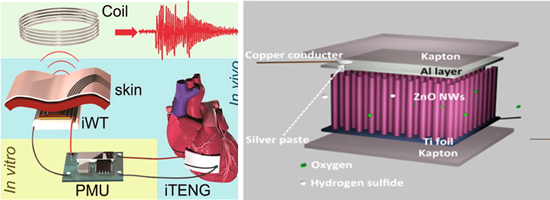
- University, Nanning 530004, China Beijing Institute of Nanoenergy and Nanosystems, Chinese Academy of Sciences, Beijing 100083, China College of Nanoscience and Technology, University of Chinese Academy of Sciences, Beijing 100049, China Multidisciplinary Nanotechnology Centre, College of Engineering



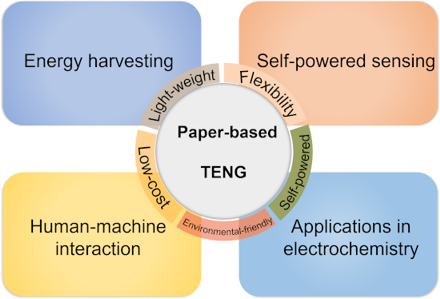
Paper-based triboelectric nanogenerators and their applications: a review
Beilstein J. Nanotechnol. 2021, 12, 151–171, doi:10.3762/bjnano.12.12
- Jing Han Nuo Xu Yuchen Liang Mei Ding Junyi Zhai Qijun Sun Zhong Lin Wang Beijing Institute of Nanoenergy and Nanosystems, Chinese Academy of Sciences, Beijing, 101400, P. R. China School of Nanoscience and Technology, University of Chinese Academy of Sciences, Beijing, 100049, P. R. China Center






The role of gold atom concentration in the formation of Cu–Au nanoparticles from the gas phase
Beilstein J. Nanotechnol. 2021, 12, 72–81, doi:10.3762/bjnano.12.6
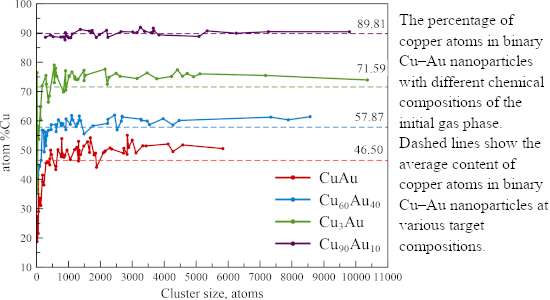
- recent years, a wide range of chemical methods have been successfully implemented for the synthesis of Cu–Au nanosystems of various percentages, the use of which led to the production of Cu–Au nanoparticles with spherical [4], pentagonal [5], rod-like [6][7], and cubic [8] shapes. Nanocrystals of a gold
- specified target composition. Conclusion In recent years, the study of nanomaterials is one of the fastest growing areas of scientific knowledge. In scientific and technological fields, there is a special interest in studying metal binary nanoparticles among a wide range of nanosystems. These particles


Molecular dynamics modeling of the influence forming process parameters on the structure and morphology of a superconducting spin valve
Beilstein J. Nanotechnol. 2020, 11, 1776–1788, doi:10.3762/bjnano.11.160
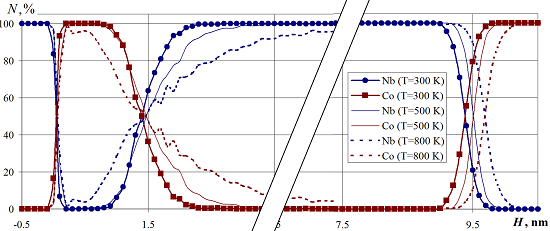
- This work is a study of the formation processes and the effect of related process parameters of multilayer nanosystems and devices for spintronics. The model system is a superconducting spin valve, which is a multilayer structure consisting of ferromagnetic cobalt nanolayers separated by niobium
- extraordinarily complex process. Figure 1 and Figure 2 show actual spin-valve multilayer nanosystems formed from various materials [9]. As demonstrated in the figures, the structure of real nanosystems is far from ideal. In particular, it can be noted that the surface separating the various nanolayers of the
- cobalt with an increase in the substrate temperature will decrease the transparency parameter TF and worsen the functional parameters of the layered S/F heterostructure. The implementation of optimal technological processes is required to minimize these defects and imperfections of layered nanosystems


Photothermally active nanoparticles as a promising tool for eliminating bacteria and biofilms
Beilstein J. Nanotechnol. 2020, 11, 1134–1146, doi:10.3762/bjnano.11.98
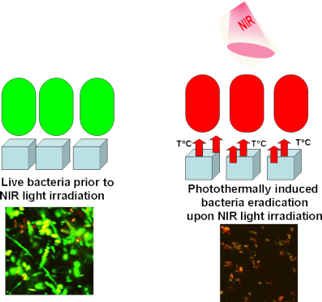
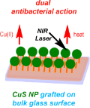
- chronic wounds [84]. The photothermal effect of such nanosystems (laser irradiation at 808 nm and 2.5 W/cm2) induced a strong in vitro and in vivo effect against drug-resistant pathogens, including methicillin-resistant S. aureus and extended-spectrum β-lactamase-resistant E. coli. Another study


Rational design of block copolymer self-assemblies in photodynamic therapy
Beilstein J. Nanotechnol. 2020, 11, 180–212, doi:10.3762/bjnano.11.15
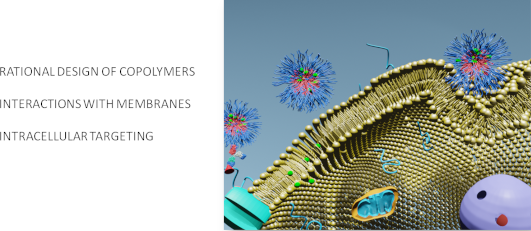
- porphyrins in the cavities of cyclodextrin was also proposed as driving force of amphiphilic self-assemblies [52][53][54]. A main drawback of this kind of nanosystems in which the photosensitizer is simply dissolved in the hydrophobic environment is the possible premature leakage during body circulation
- dedicated section. In the following, we will focus on responsive photosensitizer-loaded nanosystems. In such nanosystems, characteristic properties of the tumor microenvironment (endogenous trigger) or an external trigger can act as a stimulus and bring a structural modification of the block copolymer
- quenching, is typical in nanosystems where the presence of the photosensitizer is the main driving force of the self-assembly. The photosensitizer is then concentrated in the hydrophobic core in a dormant state, due to the formation of π−π-stacked aggregates, that is not phototoxic under illumination. In




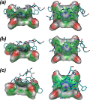


Molecular architectonics of DNA for functional nanoarchitectures
Beilstein J. Nanotechnol. 2020, 11, 124–140, doi:10.3762/bjnano.11.11
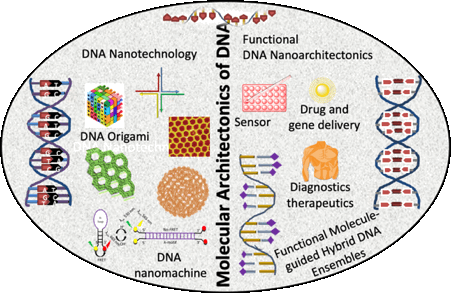
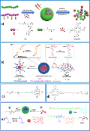
- . 40–50 nm. Moreover, ssDNA sequences can be used as molecular glue to construct diverse and well-defined nanoarchitectures. In this context, Seeman and co-workers introduced the disruptive idea of using DNA as a molecular building block to design and construct nanosystems and materials, which paved


Bombesin receptor-targeted liposomes for enhanced delivery to lung cancer cells
Beilstein J. Nanotechnol. 2019, 10, 2553–2562, doi:10.3762/bjnano.10.246
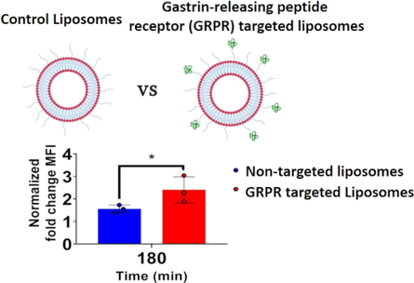
- corona presents a new biomolecular interface that underpins the dynamic interactions of nanosystems and their biological targets. The presentation of a high affinity GRPR antagonist peptide on the liposomal surface is expected to maintain liposomal cell-binding affinity by virtue of its high affinity for
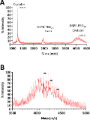

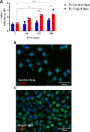
Nanostructured and oriented metal–organic framework films enabling extreme surface wetting properties
Beilstein J. Nanotechnol. 2019, 10, 1994–2003, doi:10.3762/bjnano.10.196
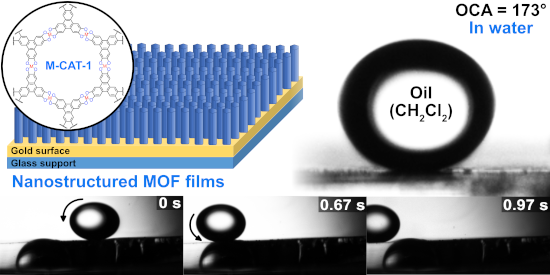
- Andre Mahringer Julian M. Rotter Dana D. Medina Department of Chemistry, Ludwig-Maximilians-Universität (LMU), Butenandtstr. 11, 81377 Munich, Germany Nanosystems Initiative Munich (NIM) and Center for NanoScience (CeNS), Schellingstr. 4, 80799 Munich, Germany 10.3762/bjnano.10.196 Abstract We


Microfluidic manufacturing of different niosomes nanoparticles for curcumin encapsulation: Physical characteristics, encapsulation efficacy, and drug release
Beilstein J. Nanotechnol. 2019, 10, 1826–1832, doi:10.3762/bjnano.10.177
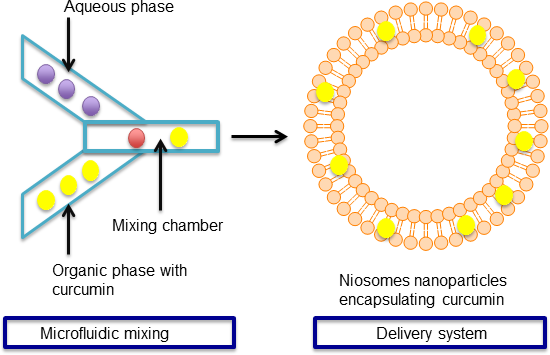
- a surfactant with Chol were prepared using microfluidic mixing on a NanoAssemblrTM (Benchtop, Precision NanoSystems Inc., Vancouver, Canada) as described previously [12]. The mixing process takes place in a microfluidic cartridge with staggered herringbone structures, which has two inlets, one for


Toxicity and safety study of silver and gold nanoparticles functionalized with cysteine and glutathione
Beilstein J. Nanotechnol. 2019, 10, 1802–1817, doi:10.3762/bjnano.10.175
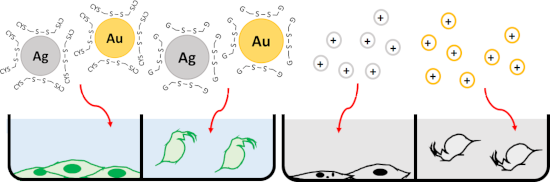
- , the need emerges for the development of safe, surface-modified nanosystems. For the first time, safety profiling of AgNPs and AuNPs prepared by using cysteine and glutathione as stabilizing agents was performed. A careful and comprehensive evaluation of physico-chemical properties and surface


Advanced scanning probe lithography using anatase-to-rutile transition to create localized TiO2 nanorods
Beilstein J. Nanotechnol. 2019, 10, 412–418, doi:10.3762/bjnano.10.40
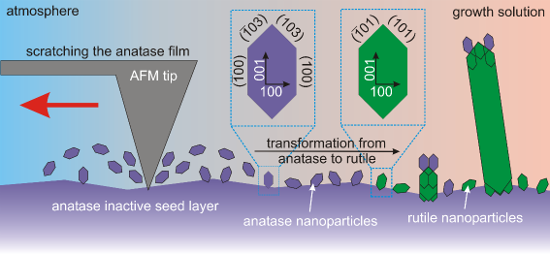
- deposition on a polished (100) silicon wafer with a native thin SiOx layer. Sputter deposition was performed at room temperature with a Gamma 1000C sputter system (Surrey NanoSystems Ltd) and a TiO2 sputter target (99.99% purity, Testbourne Ltd). The deposition rate was set to 0.2 Å/s and the process was


Study of silica-based intrinsically emitting nanoparticles produced by an excimer laser
Beilstein J. Nanotechnol. 2019, 10, 211–221, doi:10.3762/bjnano.10.19
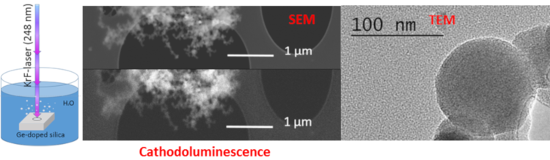
- their production and characterization has received considerable attention [1][2][3][4]. In the wide world of nanotechnology, silica-based nanosystems have attracted significant interest as proved by the various proposed applications in many domains [5][6][7][8][9][10][11][12][13]. The production of



Targeting strategies for improving the efficacy of nanomedicine in oncology
Beilstein J. Nanotechnol. 2019, 10, 168–181, doi:10.3762/bjnano.10.16
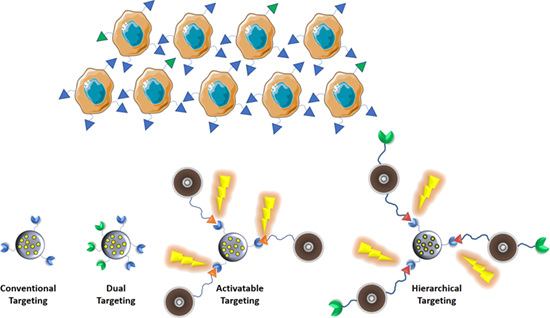
- 4). Another commonly employed strategy to improve the transportation efficiency of nanosystems is the combination of an unspecific cell penetrating peptide (CPP) with a selective targeting ligand. With this strategy, the nanocarrier combines the selectivity of the receptor–ligand interaction with
- administered nanocarriers. In any case, we are at the beginning of nanomedicine. The excellent results obtained until now paved the way for the development of novel and more functional targeted nanocarriers that would eradicate devastating diseases in the coming future. Highly penetrating nanosystems based on


Metal–dielectric hybrid nanoantennas for efficient frequency conversion at the anapole mode
Beilstein J. Nanotechnol. 2018, 9, 2306–2314, doi:10.3762/bjnano.9.215
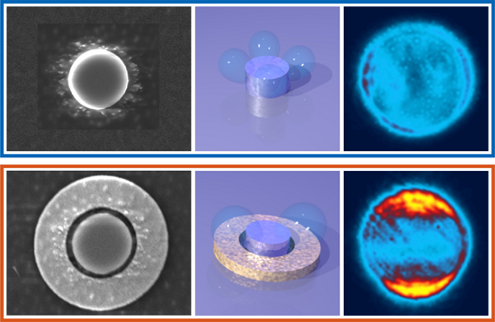
- orders of magnitude higher than in optimized plasmonic nanoantennas pumped at similar intensities [12]. Concurrently, promising studies on enhanced SHG at the nanoscale have also been performed on perovskite nanoparticles [31][32]. Several strategies that involve coupled nanosystems have been employed to
- enhance both second and third harmonic nonlinearities. For example, we recently reported enhanced SHG by closely coupling two AlGaAs nanopillars in a dimer configuration and by tuning the pump fundamental frequency to the anapole mode [33]. A further viable strategy involving coupled nanosystems, consists
- in placing a metal nanostructure in the proximity of the dielectric nanoantenna to manipulate the in- and out-coupling of light [34][35]. This hybrid integration was exploited to significantly boost the nonlinear conversion efficiency of nanosystems [32][36][37]. In particular, Maier and co-workers