Search results
Search for "neural networks" in Full Text gives 37 result(s) in Beilstein Journal of Nanotechnology.
Functional nanostructures for electronics, spintronics and sensors
Beilstein J. Nanotechnol. 2020, 11, 1704–1706, doi:10.3762/bjnano.11.152

- theoretical and experimental investigations of S/F superlattices. Such superlattices can be used as tunable kinetic inductivity synapses in artificial neural networks of a superconducting computer with non-von Neumann architecture. A further example by Novikov et al. [14] demonstrated the concept of “read-out
Atomic defect classification of the H–Si(100) surface through multi-mode scanning probe microscopy
Beilstein J. Nanotechnol. 2020, 11, 1346–1360, doi:10.3762/bjnano.11.119
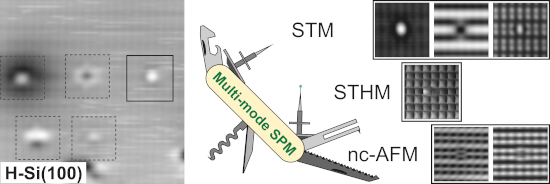
- optimizing sample preparation, quantifying how defects affect device operation [9], or by using convolutional neural networks to autonomously identify defects [10][11][12], a comprehensive understanding of the many varieties of defects is needed. Native silicon atoms at the unreconstructed (unterminated



Controlling the proximity effect in a Co/Nb multilayer: the properties of electronic transport
Beilstein J. Nanotechnol. 2020, 11, 1336–1345, doi:10.3762/bjnano.11.118
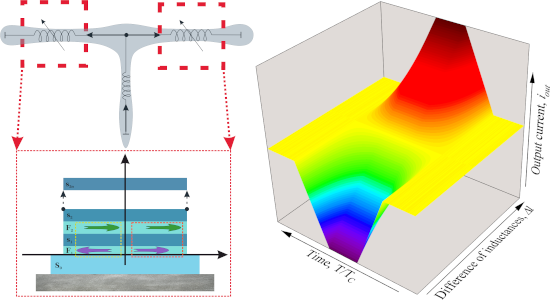
- superlattices can be used as tunable kinetic inductors designed for artificial neural networks representing the information in a “current domain”. Keywords: cryogenic computing; spin-valve; superconducting neural network; superconducting spintronics; Introduction Multilayer superconductor/ferromagnetic (S/F
- elements, including synapses. This new type of application will be discussed in more detail. The creation of artificial neural networks is one of the current trends in the development of superconductor electronics [10][11][12][13][14][15]. Such an artificial neural network contains layers of elements that
- nonlinearly transform the incoming signal (neurons), which is connected by linear tunable connections (synapses). There are more than 106 synapses in the neural networks that are used in these applications. The energy dissipation at these interconnects is a serious problem, which motivates the search for



Anomalous current–voltage characteristics of SFIFS Josephson junctions with weak ferromagnetic interlayers
Beilstein J. Nanotechnol. 2020, 11, 252–262, doi:10.3762/bjnano.11.19
- , e.g., single-flux quantum circuits [46][47], spintronic devices [48], memory elements [49][50][51][52][53][54][55][56][57][58] and spin-valves [59][60][61][62][63][64][65], magnetoelectronics [66][67][68], qubits [69], artificial neural networks [70], microrefrigerators [71][72], and low-temperature


A novel method to remove impulse noise from atomic force microscopy images based on Bayesian compressed sensing
Beilstein J. Nanotechnol. 2019, 10, 2346–2356, doi:10.3762/bjnano.10.225
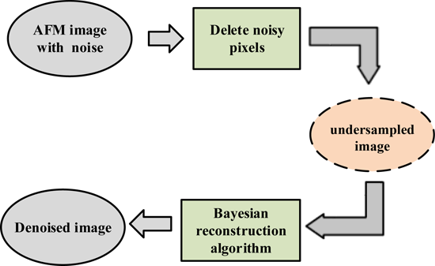
- further improve the denoising performance, machine learning [10] and neural networks [11][12] are introduced to help remove the impulse noise. First, machine learning or neural networks are used to improve the accuracy of the recognition of noisy pixels. Then, the noise pixels are replaced by the median
- density. In addition, impulse noise filtering methods using machine learning [10], support vector machines [38], or neural networks [12] encounter the same problem as the adaptive median filter. When the noise density is lower than 0.5, the values of PSNR and SSIM acquired by the proposed method remain


Nitrogen-vacancy centers in diamond for nanoscale magnetic resonance imaging applications
Beilstein J. Nanotechnol. 2019, 10, 2128–2151, doi:10.3762/bjnano.10.207
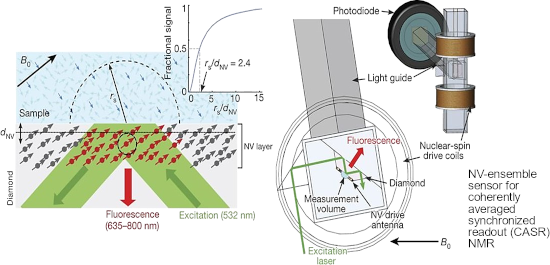
- was dispersed in cell media and then applied at a concentration of 6 μg/mL to the primary cultures while performing a routine change of cell media. ODMR from NVs within the NDs in the neural networks was used for sensing the temperature from thousands of NDs, which were probed simultaneously using a


Unipolar magnetic field pulses as an advantageous tool for ultrafast operations in superconducting Josephson “atoms”
Beilstein J. Nanotechnol. 2019, 10, 1548–1558, doi:10.3762/bjnano.10.152
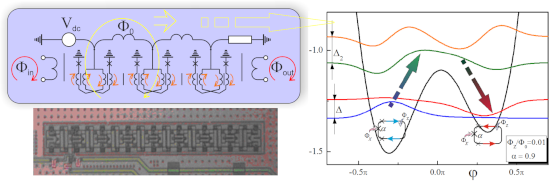
- of developments in algorithmic and adiabatic quantum computers, artificial metamaterials, and quantum neural networks. Hence, they seem to be very promising for studies of novel types of fast quantum-state control or initialization [1][2][3][4][5][6][7][8][9][10][11][12][13][14][15]. In this work, we
- ultrafast state initialization for algorithmic quantum computers and quantum neural networks as well as in the fast control of the magnetic properties of media from Josephson meta-atoms. (a) The potential energy and the eigenfunctions (with energies E1 ,E2, E3, E4) of the three-junction qubit (described in


Beyond Moore’s technologies: operation principles of a superconductor alternative
Beilstein J. Nanotechnol. 2017, 8, 2689–2710, doi:10.3762/bjnano.8.269

- mentioned localization of information and high non-linearity of Josephson junctions make superconductor circuits to be ideally suited for the implementation of unconventional computational paradigms like cellular automata [94][95], artificial neural networks [96][97][98] or quantum computing [99][100][101


Optical techniques for cervical neoplasia detection
Beilstein J. Nanotechnol. 2017, 8, 1844–1862, doi:10.3762/bjnano.8.186
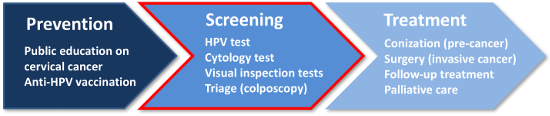
- watchful waiting accompanied by HPV/Pap tests or active treatment is further needed [34][35][36][37][38]. The use of spectra classification algorithms (e.g., Bayesian variable selection, neural networks, library approach, multivariate statistical analysis) may bring its own set of the problems: high



Adiabatic superconducting cells for ultra-low-power artificial neural networks
Beilstein J. Nanotechnol. 2016, 7, 1397–1403, doi:10.3762/bjnano.7.130
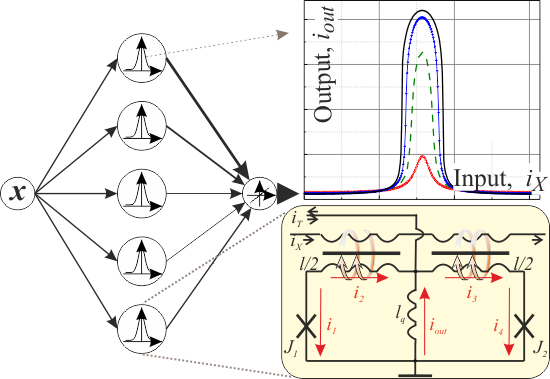
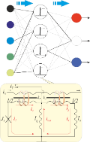
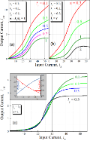
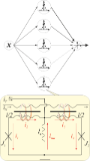
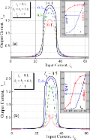
- . We optimize their parameters for application in three-layer perceptron and radial basis function networks. Keywords: adiabatic superconductor cells; artificial neural networks; energy efficiency; Josephson effect; superconductivity; Findings Artificial neural networks (ANNs) are famous for their


The eNanoMapper database for nanomaterial safety information
Beilstein J. Nanotechnol. 2015, 6, 1609–1634, doi:10.3762/bjnano.6.165


Growth and structural discrimination of cortical neurons on randomly oriented and vertically aligned dense carbon nanotube networks
Beilstein J. Nanotechnol. 2014, 5, 1575–1579, doi:10.3762/bjnano.5.169
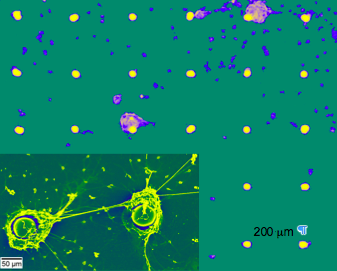
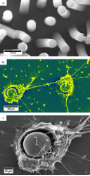
- between the aggregated networks. These results are in line with the results after using micro-stamped structures of carbon nanotubes, which led to the self-assembly of neural networks [28] and to the formation of neural networks on islands of unordered CNTs [12]. After 21 days in vitro the neural network