Search results
Search for "nucleation" in Full Text gives 382 result(s) in Beilstein Journal of Nanotechnology. Showing first 200.
Morphology and properties of pyrite nanoparticles obtained by pulsed laser ablation in liquid and thin films for photodetection
Beilstein J. Nanotechnol. 2025, 16, 785–805, doi:10.3762/bjnano.16.60
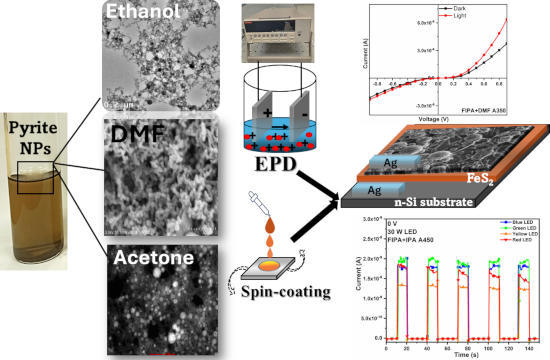
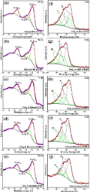
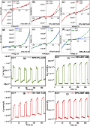
- interactions with the material (FeS2 in this case) play a significant role in morphology. From the results obtained, it can be concluded that high-polarity solvents (e.g., methanol, ethanol) tend to promote faster nucleation and growth, leading to larger NPs (≈26 nm), whereas low-viscosity and highly volatile
- . Solvents with better stabilization properties, such as moderate polarity and viscosity (e.g., IPA) help in the control of nucleation, growth, cooling rate, and aggregation of nanoparticles. The relatively narrow size distribution suggests that IPA provides a balanced environment for the formation and






Feasibility analysis of carbon nanofiber synthesis and morphology control using a LPG premixed flame
Beilstein J. Nanotechnol. 2025, 16, 581–590, doi:10.3762/bjnano.16.45
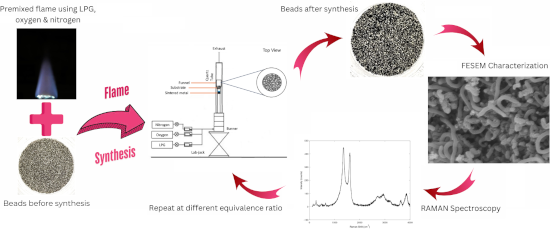
- nucleation rate, which in turn increases the catalyst particle size and the amount of free carbon atoms, producing CNFs with larger diameters and amorphous carbon. According to Raman analysis, the grown CNFs have a high number of defects, which may be good for applications where defective nanomaterials are
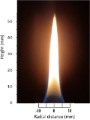
- understand the deposition temperature, which can provide sufficient energy for the nucleation to start. A LPG premixed flame with secondary diffusion flame is stable in the equivalence ratio range of 0.77 to 1.80, burning continuously with no flicker. The premixed flame front provides maximum growth



Nanomaterials in targeting amyloid-β oligomers: current advances and future directions for Alzheimer's disease diagnosis and therapy
Beilstein J. Nanotechnol. 2025, 16, 561–580, doi:10.3762/bjnano.16.44
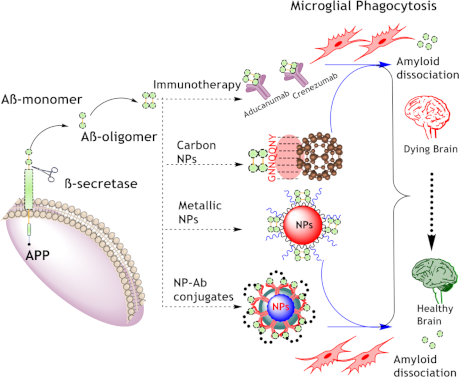
- formation. This review provides an in-depth analysis of various nanochaperones developed to target AβOs, detailing their mechanisms of action and therapeutic potential via focusing on two main strategies, namely, disruption of AβOs through direct interaction and the inhibition of AβO nucleation by binding


Functionalized gold nanoflowers on carbon screen-printed electrodes: an electrochemical platform for biosensing hemagglutinin protein of influenza A H1N1 virus
Beilstein J. Nanotechnol. 2025, 16, 540–550, doi:10.3762/bjnano.16.42
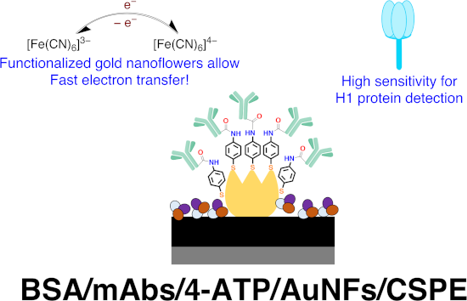
- , which implies that electron transfer at the electrode surface was enhanced, increasing the redox reversibility for the [Fe(CN)6]3−/4− pair. CSPEs are reported to possess a rough surface at the nanoscale [34]. The electrodeposition technique employed takes advantage of this to control the nucleation


Impact of adsorbate–substrate interaction on nanostructured thin films growth during low-pressure condensation
Beilstein J. Nanotechnol. 2025, 16, 473–483, doi:10.3762/bjnano.16.36

- –substrate interactions on scales shorter than the diffusion length. The strength of adsorbate–substrate interaction is defined by both substrate and adsorbed material. Adsorbate–substrate interactions encompass a broad spectrum of physical and chemical phenomena that dictate the initial nucleation
- , subsequent growth kinetics, and final structural properties of thin films. These interactions are influenced by factors such as surface energetics, lattice matching, van der Waals forces, and chemical bonding configurations [20][21]. Strong interactions can lead to ordered nucleation and the formation of
- nucleation of surface structures. For the case of a small adsorption rate α = 0.04, an increase in δ induces these processes at δ = δc corresponding well to results obtained in the stability analysis (see Figure 3), verifying the accuracy of the numerical simulations. Moreover, the critical value δc does not


Effect of additives on the synthesis efficiency of nanoparticles by laser-induced reduction
Beilstein J. Nanotechnol. 2025, 16, 464–472, doi:10.3762/bjnano.16.35
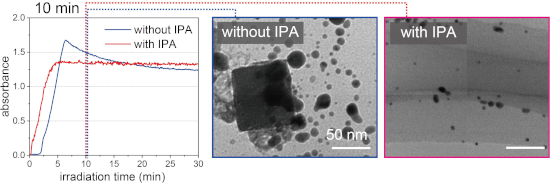
- 2 min after laser irradiation, reaches a maximum after 6 min, and then decreases to a constant value at 26 min. This is assumed to be based on the following mechanism. 1) From the start of laser irradiation to 2 min: equilibrium between nucleation due to ion reduction and atom re-dissolution due to
- addition of IPA converted the hydroxyl radicals produced by laser irradiation into reducing species, and the reduction reaction proceeded efficiently. Furthermore, this reaction is particularly pronounced in the initial stage of nucleation. In the case without IPA, there was no increase in absorbance due


Size control of nanoparticles synthesized by pulsed laser ablation in liquids using donut-shaped beams
Beilstein J. Nanotechnol. 2025, 16, 407–417, doi:10.3762/bjnano.16.31
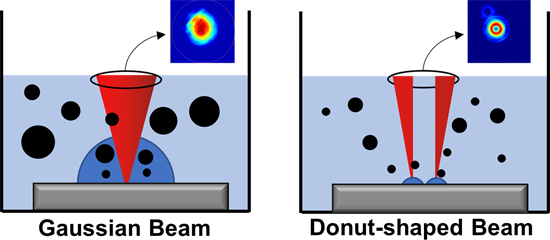
- ). The plasma temperature and pressure determine the cavitation bubble and NP formation [40][41]. The plasma plume that heats up the liquid causes liquid vaporization and subsequent bubble nucleation. The initial pressure of the bubble is very high (higher than 1 GPa) allowing it to expand until it


Engineered PEG–PCL nanoparticles enable sensitive and selective detection of sodium dodecyl sulfate: a qualitative and quantitative analysis
Beilstein J. Nanotechnol. 2025, 16, 385–396, doi:10.3762/bjnano.16.29
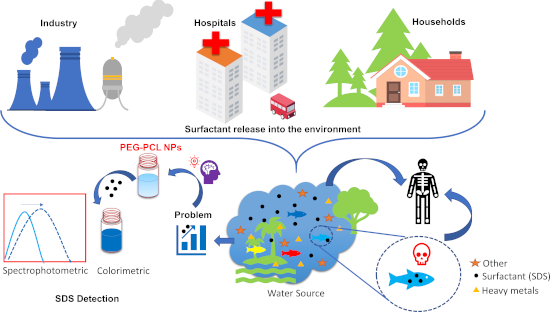
- alternating addition is crucial for creating the amphiphilic structure, where PEG provides the hydrophilic domains, and PCL forms the hydrophobic domains. The copolymerization reaction can proceed for approximately 24 hours, during which nucleation and growth of the nanoparticles occur. The reaction duration


Pulsed laser in liquid grafting of gold nanoparticle–carbon support composites
Beilstein J. Nanotechnol. 2025, 16, 349–361, doi:10.3762/bjnano.16.26
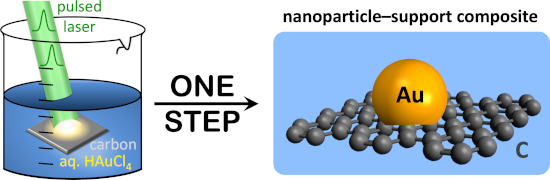
- composites as cathodes in electrocatalytic aqueous bicarbonate reduction and compared their performance and electrical impedance to analogous electrodes that were conventionally prepared by electrostatically attaching commercial nucleation grown and citrate-capped gold nanoparticles to carbon fiber paper
- ns, 532 nm, and 87 mJ·cm−2 pulses. We employed 532 nm pulses because gold nanoparticle generation works well at that wavelength, as nanoparticle nucleation and growth take advantage of this laser wavelength being resonant with the surface plasmon resonance in gold nanoparticles [25]. For 532 nm
- that our laser fluence did not enable carbon sublimation. Stable gold colloids have been produced by reactive nanosecond laser irradiation of aqueous [AuCl4]– solutions [29][30]. Colloidal gold nanoparticle formation occurred by nucleation of reduced (metallic) gold atoms [25][31][32]. As in pulsed


Tailoring of physical properties of RF-sputtered ZnTe films: role of substrate temperature
Beilstein J. Nanotechnol. 2025, 16, 333–348, doi:10.3762/bjnano.16.25
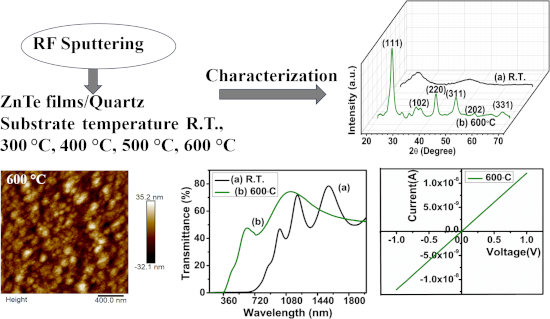
- steps, namely, condensation, nucleation, and crystallization on the substrate surface. The mobility of atoms on the substrate surface is very much affected by the substrate temperature. At low substrate temperatures, because of the low diffusion rate and low mobility of atoms, columnar microstructures




Radiosensitizing properties of dual-functionalized carbon nanostructures loaded with temozolomide
Beilstein J. Nanotechnol. 2025, 16, 229–251, doi:10.3762/bjnano.16.18
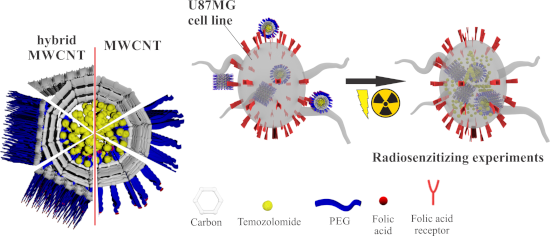
- the ectopic (acentrosomal) microtubule nucleation was observed, with disassembly of the centrosome and a cytoskeletal reorganization that trigger the generation of ineffective biomechanical forces, which leads to migration defects, and ultimately to spindle-assembly checkpoint blockage and apoptosis




A review of metal-organic frameworks and polymers in mixed matrix membranes for CO2 capture
Beilstein J. Nanotechnol. 2025, 16, 155–186, doi:10.3762/bjnano.16.14
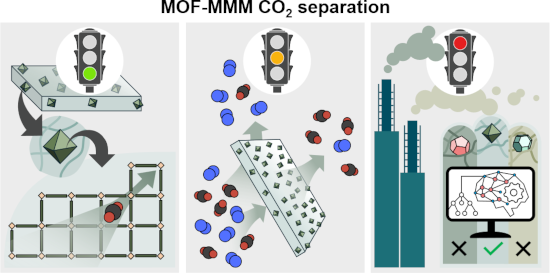
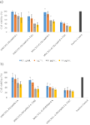
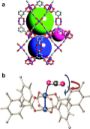
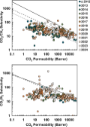
- another polymer solution with 2-methylimidazole. Nucleation and MOF growth occurred in situ within the polymer matrix upon combining the two precursor solutions. This approach resulted in nearly perfect MOF–polymer interfaces in an 8 wt % ZIF-8 MMM. For evaluating the gas separation performance, the




Bioinspired nanofilament coatings for scale reduction on steel
Beilstein J. Nanotechnol. 2025, 16, 25–34, doi:10.3762/bjnano.16.3

- . This reduction is attributed to altered flow dynamics near the super-hydrophobic surface, inhibiting nucleation and growth of scale. Our findings highlight the potential of bioinspired SNF coatings to enhance the performance and longevity of steel surfaces in industrial environments. Keywords
- in the bulk solution or heterogeneously on material surface [25]. Once nucleation occurs, calcium carbonate crystals start to grow. The growth process involves the continuous deposition of Ca2+ and CO32− ions onto the surface-bound nuclei. Over time, these crystals increase in size and adhere more
- interfaces, the flow velocity is assumed to be zero when modeling viscous drag, on super-hydrophobic surfaces the shear is reduced, leading to slip of the liquid across the surfaces and a non-zero flow velocity [26]. Flow at the material interface can hinder or prevent settling, nucleation, and growth of


Fabrication of hafnium-based nanoparticles and nanostructures using picosecond laser ablation
Beilstein J. Nanotechnol. 2024, 15, 1639–1653, doi:10.3762/bjnano.15.129
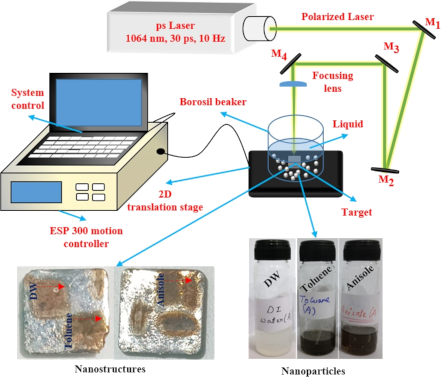
- is due to the suppression of nucleation [43][49]. Thus, a mix of amorphous and polycrystalline structures in NPs obtained in DW is seen. The formation of these HfO2 NPs and nanofibres is responsible for the turbid white colour observed after ablation in DW. Earlier reports on Hf ablation in toluene




Heterogeneous reactions in a HFCVD reactor: simulation using a 2D model
Beilstein J. Nanotechnol. 2024, 15, 1627–1638, doi:10.3762/bjnano.15.128
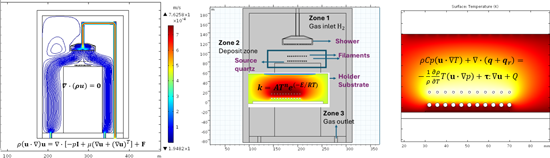
- regarding the filaments (2300 K), compared with other CVD reactors like low-pressure CVD (800 K). Hence, diffusion is expected to dominate the reactions for the formation of the precursor species. The growth of SiOx films is controlled by nucleation effects. According to results for high temperatures over
- 700 K, the supersaturation is high and the nucleation is homogeneous in the process, leading to the precipitation of solid particles on the substrate and powder formation [23]. SiOx powders are obtained in the HFCVD reactor when the distance between the filaments and the source is less than 6 mm
- . According to what was discussed above, the distance decreases the temperature, increases the size of the clusters, and decreases the diffusion of the species, resulting in powder formation. Heterogeneous nucleation on the substrate promotes the growth of SiOx films. The distance between the filaments and


Effect of radiation-induced vacancy saturation on the first-order phase transformation in nanoparticles: insights from a model
Beilstein J. Nanotechnol. 2024, 15, 1453–1472, doi:10.3762/bjnano.15.117

- incorporate nucleation through the appearance and growth of the nucleus of a new phase, resulting in the formation of a two-phase α+β system, and we highlight the importance of accounting for nucleation. Our model study reveals that very small α-phase particles are unstable (while very small β-phase particles
- cannot occur regardless of irradiation because of bulk driving forces; initially, α-phase particles are stable, whereas the β-phase particles are unstable. In some cases, nucleation requires a large additional energy change, resulting in a low probability of phase change fluctuations. This behavior is
- materials. Keywords: α-phase; β-phase; chemical rate theory; Fe; nanoparticle; nucleation; phase stability diagram; polymorphic phase transision; radiation stability; thermodynamics; vacancy saturation; Introduction Solid metal or ceramic nanoparticles with a diameter in the range of 1–100 nm, when placed


Nanoarchitectonics with cetrimonium bromide on metal nanoparticles for linker-free detection of toxic metal ions and catalytic degradation of 4-nitrophenol
Beilstein J. Nanotechnol. 2024, 15, 1312–1332, doi:10.3762/bjnano.15.106
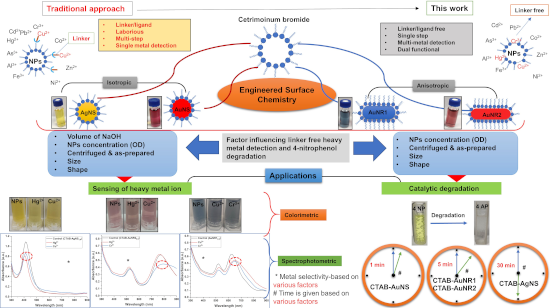
- synthesized using wet chemical reduction, as shown in Figure 1a. A unique feature of CTAB is its robust and selective binding to certain crystal facets of metal surfaces that define the growth and nucleation of nanoparticles. CTAB on metal surfaces plays a key role in nanoparticle stabilization but hinders




Mn-doped ZnO nanopowders prepared by sol–gel and microwave-assisted sol–gel methods and their photocatalytic properties
Beilstein J. Nanotechnol. 2024, 15, 1283–1296, doi:10.3762/bjnano.15.104
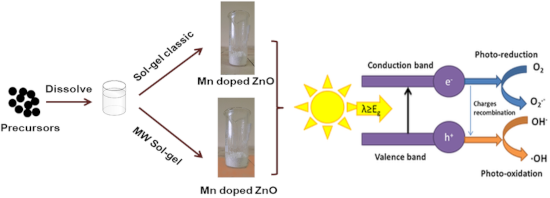
- nucleation in a supersaturated solution) can be experimentally identified [18] and correlated with specific parameters of the systems exposed to microwaves [18][19][20]. For instance, the use of microwaves in nanoparticle production may increase the reaction rate, also contributing to a narrow particle size


Enhanced catalytic reduction through in situ synthesized gold nanoparticles embedded in glucosamine/alginate nanocomposites
Beilstein J. Nanotechnol. 2024, 15, 1227–1237, doi:10.3762/bjnano.15.99
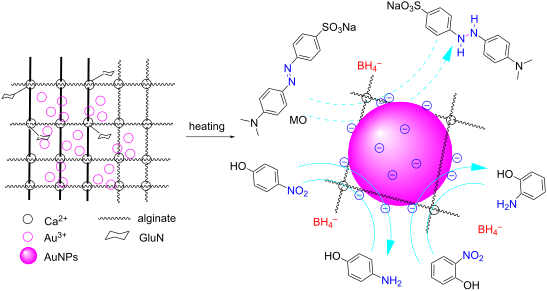
- particular, have demonstrated significant control over the nucleation and growth of metallic nanoparticles. Utilizing polysaccharide-mediated procedures for AuNP synthesis offers several advantages over conventional methods, including cost-effectiveness, energy efficiency, low toxicity, and eco-friendliness



Effect of wavelength and liquid on formation of Ag, Au, Ag/Au nanoparticles via picosecond laser ablation and SERS-based detection of DMMP
Beilstein J. Nanotechnol. 2024, 15, 1054–1069, doi:10.3762/bjnano.15.86

- with water. The expanding metal/water mixture promotes rapid nucleation and growth of small metal NPs and contributes to forming a cavitation bubble. The hot metal layer also breaks into larger droplets due to instabilities, creating NPs of different sizes within a few nanoseconds of laser exposure [6
- solution than in those fabricated in DW. The size reduction effect observed during ablation in aqueous NaCl solution can be attributed to Cl− ions [55][57]. When a laser ablation process is conducted in the presence of NaCl, the ions in the solution can strongly influence nucleation processes and growth in
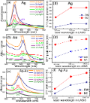


Atomistic insights into the morphological dynamics of gold and platinum nanoparticles: MD simulations in vacuum and aqueous media
Beilstein J. Nanotechnol. 2024, 15, 995–1009, doi:10.3762/bjnano.15.81
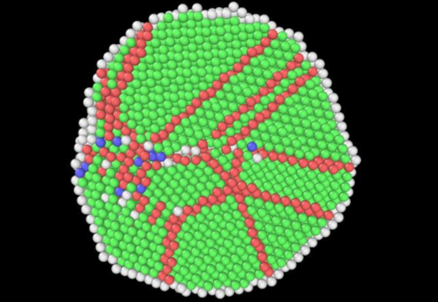
- scattering [23], and optical microscopy [24], have provided accurate estimates of nucleation rates and critical nucleation sizes, but little data have been produced for the sub-micrometer size regime regarding crystal facet formation and the mechanism of crystal growth. Moreover, a fundamental prerequisite
- adapting theories suitable for bulk materials to NPs; examples include the classical nucleation theory [33], phenomenological models [34][35][36], as well as molecular simulations [37][38][39][40]. A molecular dynamics (MD) study of shape transformation and melting of tetrahexahedral Pt NPs has been
- clusters consisting of 1157 atoms [51]. Some light on the microscopic origin of the anisotropic growth of gold NPs has been cast via molecular dynamics simulations [52]. In a similar way, Lümmen and Kraska investigated the homogeneous nucleation and cluster growth of Pt clusters from supersaturated vapour


Synthesis of silver–palladium Janus nanoparticles using co-sputtering of independent sources: experimental and theorical study
Beilstein J. Nanotechnol. 2024, 15, 808–816, doi:10.3762/bjnano.15.67
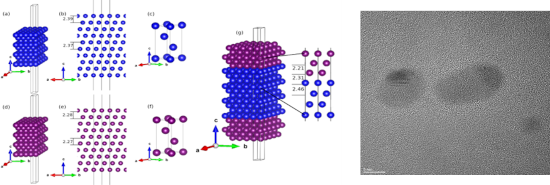
- addition, Pd–Ag alloys form during the Pd nucleation in an environment with Ag atoms. Therefore, other Janus nanoparticles can be composed of Ag/AgPd or Ag/AgPd/Pd, where the AgPd alloy could be on one side of the particle (labeled as Ag/AgPd) or between Ag and Pd (labeled as Ag/AgPd/Pd). Considering such




Effect of repeating hydrothermal growth processes and rapid thermal annealing on CuO thin film properties
Beilstein J. Nanotechnol. 2024, 15, 743–754, doi:10.3762/bjnano.15.62
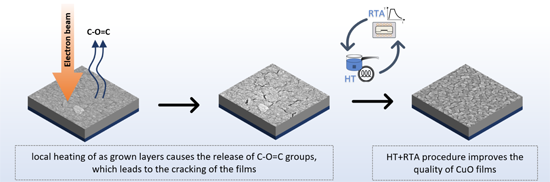
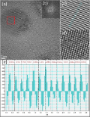
- silicon (100) substrates (Siegert Wafer). These substrates were covered with a nucleation layer in the form of gold nanoislands sputtered using a turbomolecular-pumped coater Quorum Q150T ES. CuO films were obtained according to the following procedure. First, an aqueous solution of copper(II) acetate
- procedure are denoted as “1×”, “2×”, and “3×”, depending on the number of HT+RTA cycles. It is worth highlighting that re-executing the hydrothermal processes does not necessitate any supplementary preparation of samples, for example, surface re-nucleation. Measurement equipment CuO thin films were




Laser synthesis of nanoparticles in organic solvents – products, reactions, and perspectives
Beilstein J. Nanotechnol. 2024, 15, 638–663, doi:10.3762/bjnano.15.54
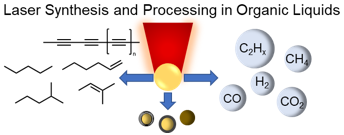
- % for gold [68][69] to a completely oxidized bulk volume, for example, for nickel [70]. In contrast, laser reduction in water leads to the reduction of metal salts and, thus, to the nucleation of metallic nanoparticles [36][71]. Hence, water acts as an oxidizing agent in the context of LAL, LFL, and LML
- enhanced by the Au nanoparticles resulting from LRL, producing the previously mentioned C1–C5 products. In addition to this, the authors found a difference regarding the nucleation of Ag nanoparticles depending on the used solvent. For the formation of Ag nanoparticles during LRL in isopropyl alcohol, they





Directed growth of quinacridone chains on the vicinal Ag(35 1 1) surface
Beilstein J. Nanotechnol. 2024, 15, 556–568, doi:10.3762/bjnano.15.48
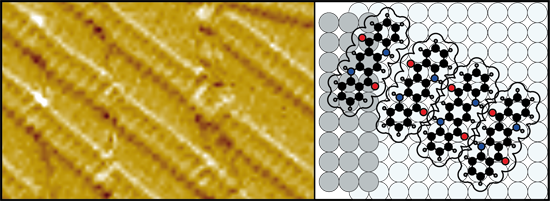
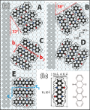
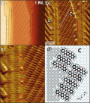
- with the (100) surface. At 300 K, the chains grow across the Ag steps, which do not break the azimuthal chain orientations. In contrast, during the deposition at sample temperatures of 400 and 500 K, the nucleation of the chains takes place at the Ag step edges. Hence, these have a strong influence on
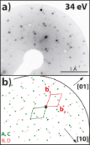
- structures after deposition at 300 K is the absence of the orientations B and D, which confirms above LEED results. This symmetry break can only be explained by the step edges and is a strong indication that, at 400 K, the nucleation of the chains proceeds now from the Ag step edges. The molecules in chains