


Search results
Search for "pesticides" in Full Text gives 35 result(s) in Beilstein Journal of Nanotechnology.
Biomimetic synthesis of Ag-coated glasswing butterfly arrays as ultra-sensitive SERS substrates for efficient trace detection of pesticides
Beilstein J. Nanotechnol. 2019, 10, 578–588, doi:10.3762/bjnano.10.59
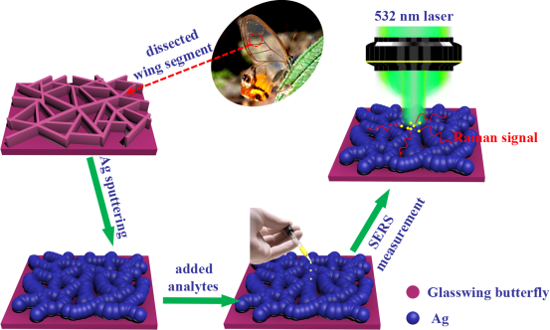
- [29][30]. Application of the Ag-G.b.-20 SERS substrates for acephate detection The residues of organophosphorus pesticides pose a serious threat to public health and food safety. Hence, the sensitive detection of organophosphorus pesticides in vegetables and fruits has attracted wide attention. Among


SERS active Ag–SiO2 nanoparticles obtained by laser ablation of silver in colloidal silica
Beilstein J. Nanotechnol. 2018, 9, 2396–2404, doi:10.3762/bjnano.9.224
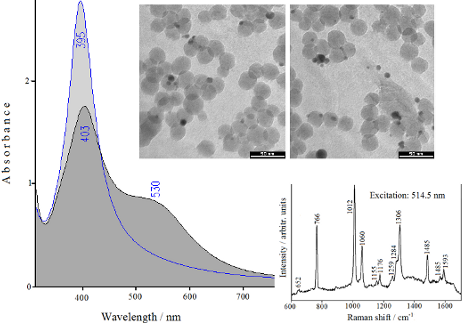
- , solvents as acetonitrile and benzene, and contaminants as polycyclic aromatic hydrocarbons (PAHs), polychlorinated biphenyls (PCBs), organochlorine pesticides, dioxins, nitroaromatic derivatives, and many others. All these compounds are inadequate to interact strongly with silver, but could be captured by
- polycyclic aromatic hydrocarbons, polychlorinated biphenyls, organochlorine pesticides, dioxins, nitroaromatic derivatives, and many others. These molecules, which normally do not interact with silver, could be effectively adsorbed on silica nanoparticles. UV–visible absorption spectra of colloidal silica (A


Modeling adsorption of brominated, chlorinated and mixed bromo/chloro-dibenzo-p-dioxins on C60 fullerene using Nano-QSPR
Beilstein J. Nanotechnol. 2017, 8, 752–761, doi:10.3762/bjnano.8.78
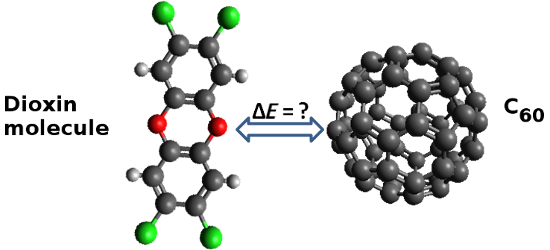
- interactions for organic compounds like pesticides or halogenated persistent organic pollutants [55][57][58][59]. All calculations were performed with the Gaussian 09 program [60]. Nano-QSPR modeling The Nano-QSPR method is based on the assumption that the variance in the physicochemical properties of


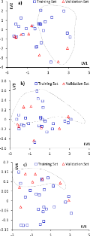

Photocatalysis applications of some hybrid polymeric composites incorporating TiO2 nanoparticles and their combinations with SiO2/Fe2O3
Beilstein J. Nanotechnol. 2017, 8, 272–286, doi:10.3762/bjnano.8.30
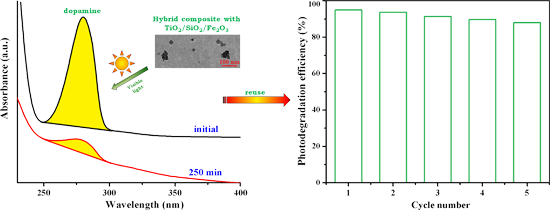
- drugs, pesticides, dyes, and plastics. On the basis of this information, we tried to prepare stable photocatalytic materials with good activity against phenolic pollutants under UV–visible light starting from TiO2 NPs with and without Si–O–Si sequences and/or Fe2O3 NPs immobilized in a polymer network


Comparison of four functionalization methods of gold nanoparticles for enhancing the enzyme-linked immunosorbent assay (ELISA)
Beilstein J. Nanotechnol. 2017, 8, 244–253, doi:10.3762/bjnano.8.27
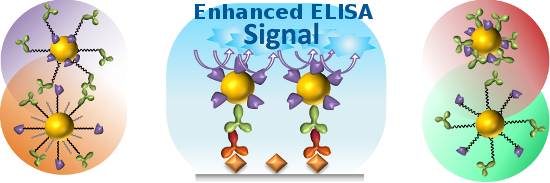
- . With this methodology, it is possible to diagnose illness, allergies, alimentary fraud, and even to detect small molecules such as toxins, pesticides, heavy metals, etc. For this reason, any procedures that improve the detection limit, sensitivity or reduce the analysis time could have an important


Optimized design of a nanostructured SPCE-based multipurpose biosensing platform formed by ferrocene-tethered electrochemically-deposited cauliflower-shaped gold nanoparticles
Beilstein J. Nanotechnol. 2015, 6, 1840–1852, doi:10.3762/bjnano.6.187
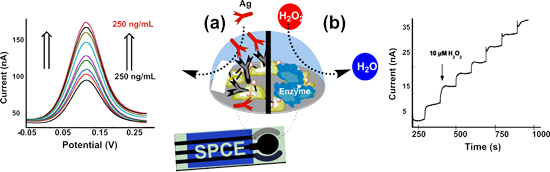
- ]. Rapid diagnostics in war zones, remote areas or on-field monitoring of warfare agents, explosives, pesticides and herbicides are few among many applications of such a technology. The elaboration of sensors to satisfy these needs is highly regarded [4][5]. Screen-printed electrodes on polymeric
- oxidoreductase family of enzymes is an important class of enzymes that catalyze redox reactions. They are well-adapted for the construction of electrochemical enzyme-based biosensors for many applications such as blood sugar level measurement, phenol oxidation, and the detection of pesticides and herbicides [36


Nanotechnology in the real world: Redeveloping the nanomaterial consumer products inventory
Beilstein J. Nanotechnol. 2015, 6, 1769–1780, doi:10.3762/bjnano.6.181

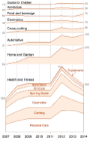
- needed to ensure safe and responsible use of those products. Nanomaterials are regulated without specific provisions in the U.S. as hazardous chemical substances and pesticides, under the EPA’s Toxic Substances Control Act (TSCA) [13] and the Federal Insecticide, Fungicide, and Rodenticide Act (FIFRA



Green preparation and spectroscopic characterization of plasmonic silver nanoparticles using fruits as reducing agents
Beilstein J. Nanotechnol. 2015, 6, 293–299, doi:10.3762/bjnano.6.27
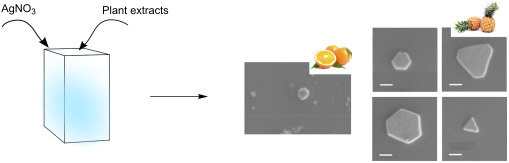
- material were taken from only the white part of the orange peel. All fruits were bought from the local supermarket. The pineapple came from South America. The oranges, sort “Valencia”, came from Italy, where they were grown without the use of pesticides. Time evolvement of UV–vis spectra of ≈1:10 orange


Glassy carbon electrodes modified with multiwalled carbon nanotubes for the determination of ascorbic acid by square-wave voltammetry
Beilstein J. Nanotechnol. 2012, 3, 388–396, doi:10.3762/bjnano.3.45
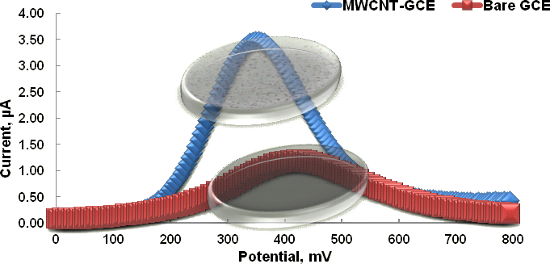
- in the presence of AA [17]. Jacobs et al. [19] reviewed the use of MWCNTs to obtain enhanced signals in the detection of substances such as carbohydrates, nucleic acids, glucose, pesticides, and serotonin, with similar reports relating to trace metals [20] and nitroaromatic compounds [21]. This study


Twofold role of calcined hydrotalcites in the degradation of methyl parathion pesticide
Beilstein J. Nanotechnol. 2011, 2, 99–103, doi:10.3762/bjnano.2.11
- concentrations. The symptoms of MP poisoning include, i.a., reduction of body weight, anemia and decreased brain acetylcholinesterase activity [2][3]. Although the Basel, Rotterdam and Stockholm Conventions [4] have forbidden hazardous pesticides including MP, this pesticide is still used for many corps. MP and
- organic anions to give hybrid materials, which have been recently studied as materials for drug delivery [22] or green pesticides [23]. As the basic properties of HTs depend on the metal composition and the M3+/(M3+ + M2+) ratio, [24][25][26], in this work we prepared HTs with different M2+ composition
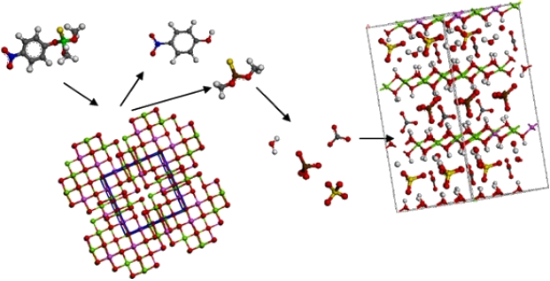
- are promising nanolayer materials for the effective cleansing of water contaminated by organic pesticides. UV–vis spectra of MP solution after being in contact with Mg–Al (a), Zn–Al (b) and Ni–Al. (c) hydrotalcite oxides, MP: methyl parathion, p-NP = p-nitrophenol. Conversion of MP to p-NP from waste





