Search results
Search for "photosensitizer" in Full Text gives 43 result(s) in Beilstein Journal of Nanotechnology.
Cr(VI) remediation from aqueous environment through modified-TiO2-mediated photocatalytic reduction
Beilstein J. Nanotechnol. 2018, 9, 1448–1470, doi:10.3762/bjnano.9.137
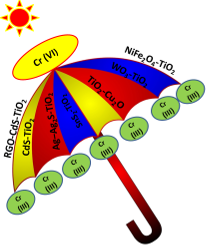
- the later prevents the former from photocorroding [197]. In addition, CdS acts as a photosensitizer to absorb visible radiation and transfers eCB− to the CB of TiO2 by retaining hVB+ at its VB. As a result, the recombination of photoinduced species is appreciably inhibited [70]. Therefore, it is often


Sugarcane juice derived carbon dot–graphitic carbon nitride composites for bisphenol A degradation under sunlight irradiation
Beilstein J. Nanotechnol. 2018, 9, 353–363, doi:10.3762/bjnano.9.35
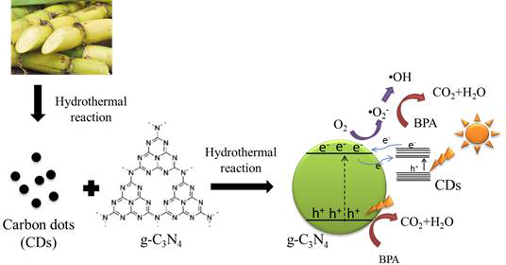
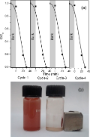
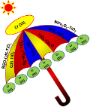
- diffuse reflectance spectra (UV–vis DRS) results. Although the CDs did not display upconversion photoluminescence (UCPL) properties, the π-conjugated CDs served as a photosensitizer (like organic dyes) to sensitize g-C3N4 and injected electrons to the conduction band (CB) of g-C3N4, resulting in the
- was attributed to the dual functionality of CDs as electron trapper and photosensitizer. Although some works have been carried out in this field, several insights have yet to be explored to fill the gaps of previous works, including (i) the utilization of harmless solar energy as a resource to
- irradiate photocatalytic degradation of organic pollutant (since CDs could act as a photosensitizer over the entire solar spectrum) and (ii) acknowledgement that the most reported bioprecursor-derived CDs and g-C3N4 composite are limited to the photocatalytic generation of H2 (instead limited attempts have


Application of visible-light photosensitization to form alkyl-radical-derived thin films on gold
Beilstein J. Nanotechnol. 2017, 8, 1863–1877, doi:10.3762/bjnano.8.187
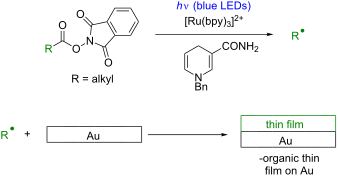
- Dallas, 800 W. Campbell Rd., Richardson, TX, 75080, USA Department of Materials Science, University of Texas at Dallas, 800 W. Campbell Rd., Richardson, TX, 75080, USA 10.3762/bjnano.8.187 Abstract Visible-light irradiation of phthalimide esters in the presence of the photosensitizer [Ru(bpy)3]2+ and
- ), species that are synthesized in one step from carboxylic acids [33][34][35][36][37][38][39][40] and which have been used to address a number of difficult problems in organic synthesis [36][37][38][39][40]. Therefore (Scheme 1), visible-light irradiation (e.g., with blue LEDs) of the photosensitizer [Ru
- turns over the photosensitizer (Equation 2) [39]. The fate of 7 is protonation, possibly by BNAH∙+ (4), to generate phthalimide [39]. Alkyl radical R∙ would then be subject to processes including reduction to alkane RH with generation of benzyl nicotinamide radical (BNA∙, 8, Equation 3) or fully



Three-in-one approach towards efficient organic dye-sensitized solar cells: aggregation suppression, panchromatic absorption and resonance energy transfer
Beilstein J. Nanotechnol. 2017, 8, 1705–1713, doi:10.3762/bjnano.8.171
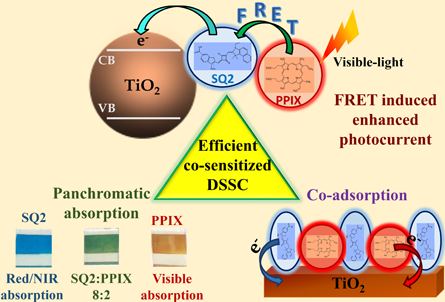
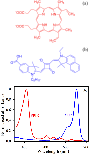
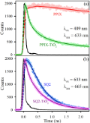
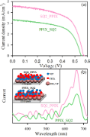
- being used to sensitize the photoanodes [13]. Organic dyes are attractive as a photosensitizer because of their high molar extinction coefficient, tunable absorption wavelength, and easy design and synthesis strategies. Still, the efficiency of organic dye-sensitized solar cells is not comparable to



Two-dimensional carbon-based nanocomposites for photocatalytic energy generation and environmental remediation applications
Beilstein J. Nanotechnol. 2017, 8, 1571–1600, doi:10.3762/bjnano.8.159
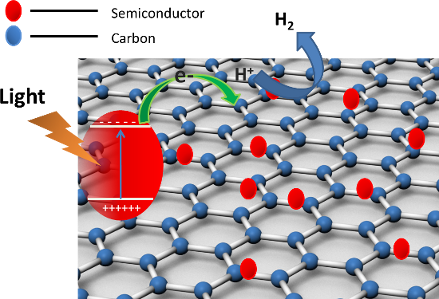
- nanocomposites. Then, the development of various graphene-based nanocomposites for the above-mentioned applications is presented, wherein graphene plays different roles, including electron acceptor/transporter, cocatalyst, photocatalyst and photosensitizer. Subsequently, the development of different graphitic
- water splitting reaction, the graphene in the nanocomposite plays different roles, such as photocatalyst, cocatalyst, electron acceptor/transporter and photosensitizer. These roles are described in detail in the following sections. Graphene as a photocatalyst A photocatalyst is a substance which
- graphene sheets, wherein H2 is produced from H+ ions. Graphene as a photosensitizer Apart from the photocatalytic and cocatalytic role of graphene, it is worth to discuss the photosensitizer role played by graphene in many nanocomposite materials. A photosensitizer is a light-absorbing substance which


Nano-engineered skin mesenchymal stem cells: potential vehicles for tumour-targeted quantum-dot delivery
Beilstein J. Nanotechnol. 2017, 8, 1218–1230, doi:10.3762/bjnano.8.123
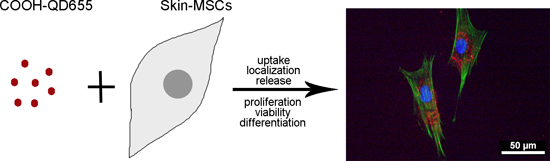
- NPs and act synergistically [13][14]. QDs were also chosen for their applicability as resonant energy donors in photodynamic therapy. For example, the second-generation photosensitizer chlorin e6 has the absorption band at 654 nm and carboxyl QD655 would be excellent energy donors in such complexes





ZnO nanoparticles sensitized by CuInZnxS2+x quantum dots as highly efficient solar light driven photocatalysts
Beilstein J. Nanotechnol. 2017, 8, 1080–1093, doi:10.3762/bjnano.8.110
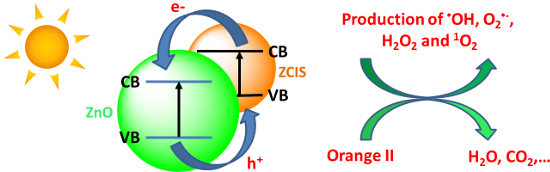
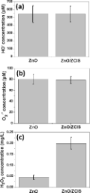
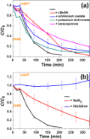
- both under solar and visible light illumination (light intensity = 5 mW/cm2) of all the ZnO/ZCIS composites prepared, we selected Orange II dye as a model contaminant because this dye is not a photosensitizer (in contrast to Methylene Blue or Rhodamine which promote photocatalytic degradation). Prior
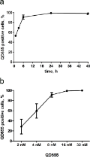
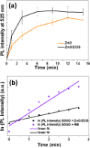
- photosensitizer (Ф1O2 (RB) = 75% in water) [58]. The plots ln(PL525) of SOSG-EP vs time for RB and for the ZnO/ZCIS composite show a good linear fit during the first 3.5 min of irradiation (Figure 10b). The Ф1O2 of the ZnO/ZCIS catalyst was estimated using the equation: Ф1O2 (ZnO/ZCIS) = Ф1O2 (RB) × (kZnO/ZCIS




Performance of natural-dye-sensitized solar cells by ZnO nanorod and nanowall enhanced photoelectrodes
Beilstein J. Nanotechnol. 2017, 8, 287–295, doi:10.3762/bjnano.8.31
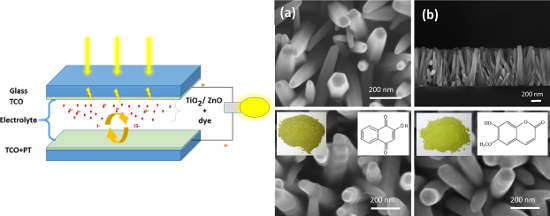
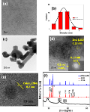
- to the nature of the photosensitizer used in the present investigation. Furthermore, the small thickness of the ZnO NRs and NWs can be a major reason for this degradation in the efficiency. However, the chemical reaction of the ZnO nanostructures when immersed in dye solution was carried out at the


Performance of colloidal CdS sensitized solar cells with ZnO nanorods/nanoparticles
Beilstein J. Nanotechnol. 2017, 8, 210–221, doi:10.3762/bjnano.8.23
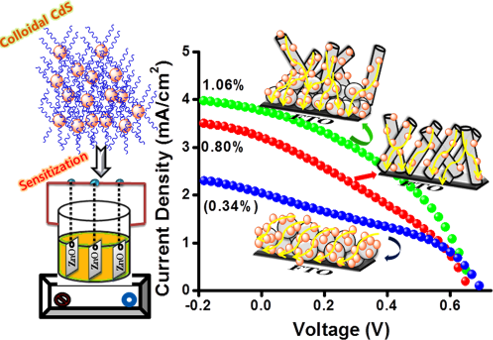
- Division, CSIR-National Chemical Laboratory, Pune 411 008, India 10.3762/bjnano.8.23 Abstract As an alternative photosensitizer in dye-sensitized solar cells, bovine serum albumin (BSA) (a nonhazardous protein) was used in the synthesis of colloidal CdS nanoparticles (NPs). This system has been employed
- , we have reported the advantages of using 1D ZnO nanorods compared to nanoparticles in DSSCs using N719 as a photosensitizer [31]. Due to the reduced grain boundaries and direct conjunction pathway, 1D nanorods can diffuse electrons faster than nanoparticles and other morphologies. However


The influence of phthalocyanine aggregation in complexes with CdSe/ZnS quantum dots on the photophysical properties of the complexes
Beilstein J. Nanotechnol. 2016, 7, 1018–1027, doi:10.3762/bjnano.7.94
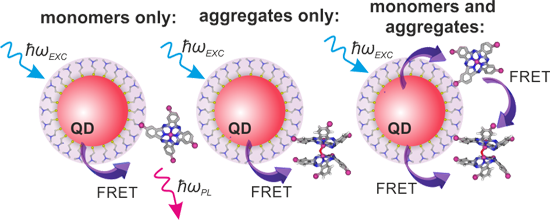
- ; Förster resonance energy transfer; photosensitizer; semiconductor nanocrystals; tetrapyrroles; Introduction Semiconductor quantum dots (QDs) and their complexes with organic molecules have been a subject of extensive research during the last couple of decades. In particular, complexes of QDs and
- . Experimental Materials The photosensitizer Photosens® was obtained from NIOPIK (Russia). At present, the Photosens® is used clinically for PDT [42]. Photosens® is a mixture of sulfonated hydroxyaluminium phthalocyanines (PcSz) with different numbers of sulfo groups per molecule, with z = 2, 3 or 4. So, in an



Hierarchical coassembly of DNA–triptycene hybrid molecular building blocks and zinc protoporphyrin IX
Beilstein J. Nanotechnol. 2016, 7, 697–707, doi:10.3762/bjnano.7.62
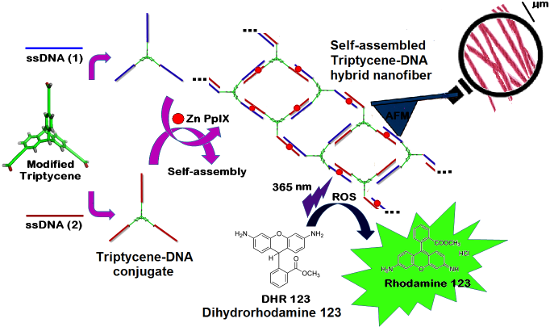
- desorption/ionization time-of-flight (MALDI-TOF). The biologically relevant photosensitizer Zn PpIX was used to direct the hybridization-mediated self-assembly of DNA–TPA molecular building blocks as well as a model guest molecule within the DNA–TPA supramolecular self-assembly. The formation of fiber-like


Silica-coated upconversion lanthanide nanoparticles: The effect of crystal design on morphology, structure and optical properties
Beilstein J. Nanotechnol. 2015, 6, 2290–2299, doi:10.3762/bjnano.6.235
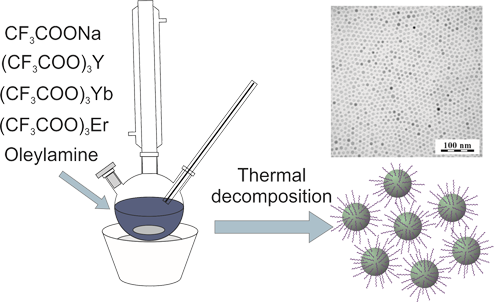
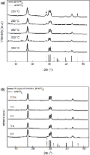
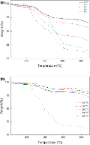
- photosensitizer [43]. Upconversion OM–NaYF4:Yb3+/Er3+ nanoparticles were excited by near-infrared light at 980 nm, i.e., at the Yb3+ absorption maximum. Photons were emitted at 520, 545 and 660 nm in the fluorescence spectra of the OM–NaYF4:Yb3+/Er3+ nanoparticles. The NaYF4:Yb3+/Er3+ nanoparticles were






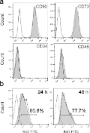
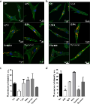
Novel ZnO:Ag nanocomposites induce significant oxidative stress in human fibroblast malignant melanoma (Ht144) cells
Beilstein J. Nanotechnol. 2015, 6, 570–582, doi:10.3762/bjnano.6.59
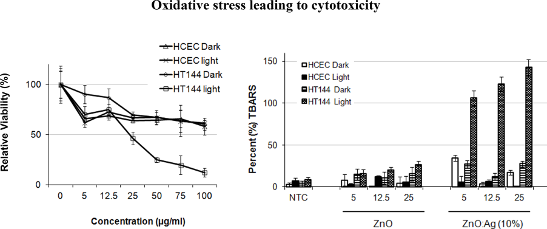
- thus exciting the photosensitizer to produce reactive oxygen species (ROS) such as singlet oxygen (1O2) and hydroxyl radicals (HO•) [6][7]. Photo-oxidation holds promises for the targeted treatment and controlled elimination of cancer cells [8]. ZnO NPs have also shown photo-oxidative anticancer




Enhanced photocatalytic hydrogen evolution by combining water soluble graphene with cobalt salts
Beilstein J. Nanotechnol. 2014, 5, 1167–1174, doi:10.3762/bjnano.5.128
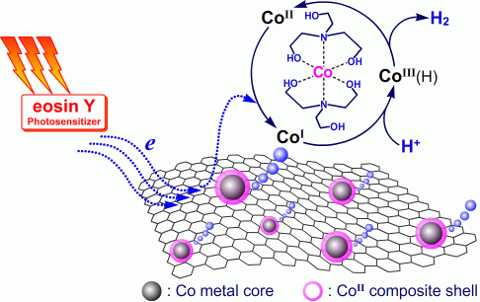
- graphene. The photocatalytic hydrogen evolution activity of the catalyst was tested by using triethanolamine (TEOA) as electron donor and eosin Y (EY) as the photosensitizer under LED irradiation at 525 nm. Hydrogen was produced constantly even after 20 h, and the turnover number (TON) reached 148 (H2/Co
- graphene in terms of the unique spectroscopic property of photosensitizer EY [51]. The result stimulated us to explore graphene-based hydrogen evolution systems with earth-abundant co-catalysts. In the present work, we report a new water-soluble graphene–cobalt-based hydrogen evolution system, showing a
- 5.6 times higher efficiency than that of the same system without graphene. Herein, sulfonated-graphene (G-SO3), being water-soluble and partially reduced [52][53], serves as a great platform [41][51] to support the catalysts. With TEOA (triethanolamine) as an electron donor, EY as a photosensitizer


Growth and characterization of CNT–TiO2 heterostructures
Beilstein J. Nanotechnol. 2014, 5, 946–955, doi:10.3762/bjnano.5.108
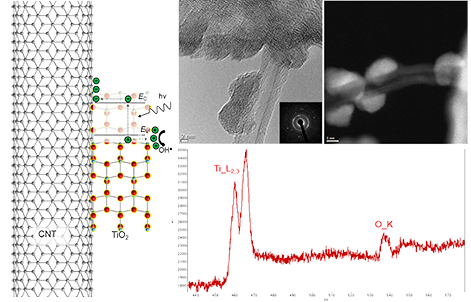
- instrumentations. Efficiency enhancement mechanisms for photocatalysis using CNT–TiO2 nanocomposites. (a) CNT scavenges electrons generated in TiO2, resulting in excessive holes on the surface for redox actions. (b) CNT acts as a photosensitizer and injects electrons and holes into TiO2 for redox actions. (c) CNT


Nanostructure sensitization of transition metal oxides for visible-light photocatalysis
Beilstein J. Nanotechnol. 2014, 5, 696–710, doi:10.3762/bjnano.5.82
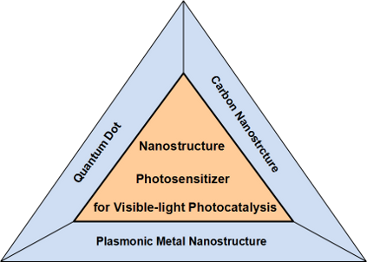
- oxides can realize visible-light photocatalysis by virtue of a narrow bandgap of photosensitizers, which is fundamentally different from the metal or non-metal doped ones. The photosensitizer can be an organic dye, an inorganic complex, and different nanostructures. Normally, photosensitizers have a
- bandgap, which is, narrower and has a higher CB minimum or lowest unoccupied molecular orbital (LUMO) in comparison with wide-bandgap transition metal oxides. Because a photosensitizer normally has a narrow bandgap, it can absorb the visible sunlight and even the infrared sunlight to generate electron
- –hole pairs. Then, if coupled with a transition metal oxide, the photogenerated electrons can be easily transferred from the CB minimum of the photosensitizer or LUMO to that of a transition metal oxide. Thus the efficient charge separation in the metal oxide-photosensitizer nanocomposites facilitates




Energy transfer in complexes of water-soluble quantum dots and chlorin e6 molecules in different environments
Beilstein J. Nanotechnol. 2013, 4, 895–902, doi:10.3762/bjnano.4.101
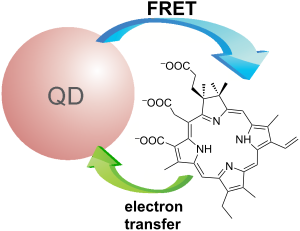
- example, the photoinduced reversible electron transfer between QD and molecule, and the formation of QD photoluminescence deactivation centers at the place where the molecule is attached to the QD. Chlorin e6 (Ce6) is one of the tetrapyrrole compounds widely used as a photosensitizer. Photophysical
- (ethylene terephthalate) track membranes that can be utilized as an element of microfluidic devices [8]. Experimental Chemicals Bis-N-methyl-D-glucamine salt of chlorin e6 (photosensitizer “Photoditazin”) was purchased from VETA Grand Ltd. Photoditazin has a QY of 9% in aqueous solution. Trioctylphosphine


Self-assembled monolayers and titanium dioxide: From surface patterning to potential applications
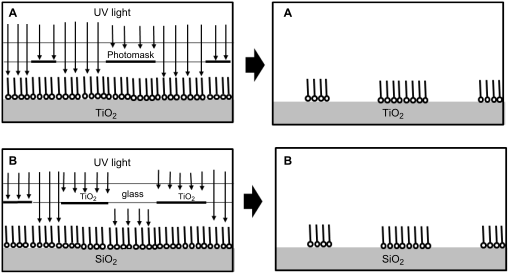
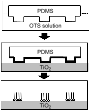
Beilstein J. Nanotechnol. 2011, 2, 845–861, doi:10.3762/bjnano.2.94