Search results
Search for "plants" in Full Text gives 159 result(s) in Beilstein Journal of Nanotechnology.
Natural nanofibers embedded in the seed mucilage envelope: composite hydrogels with specific adhesive and frictional properties
Beilstein J. Nanotechnol. 2024, 15, 1603–1618, doi:10.3762/bjnano.15.126
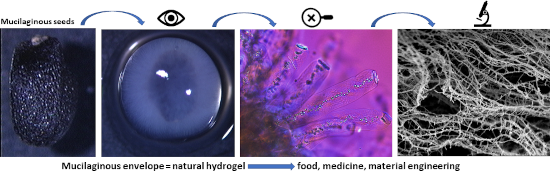
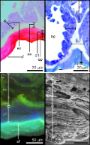
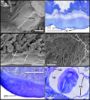
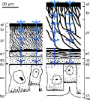
- The increasing interests in natural, biodegradable, non-toxic materials that can find application in diverse industry branches, for example, food, pharmacy, medicine, or materials engineering, has steered the attention of many scientists to plants, which are a known source of natural hydrogels
- of the mucilage – from pressed layers to a 3D network Substances with gel character (slime, mucus, and mucilage) are ubiquitous in nature and are produced by diverse organisms such as bacteria, plants representing diverse groups (algae, ferns, and higher plants), and animals (fishes, frogs, and
- diaspore (seeds and fruits) mucilage envelope produced by different plants (monocotyledons and dicotyledons) [2][4][6][16][22][36][37]. The mucilage envelope can be described as nanoscale 3D self-assembled fibrillar network, which is able to entrap water and to form a so-called molecular gel after


Liver-targeting iron oxide nanoparticles and their complexes with plant extracts for biocompatibility
Beilstein J. Nanotechnol. 2024, 15, 1593–1602, doi:10.3762/bjnano.15.125
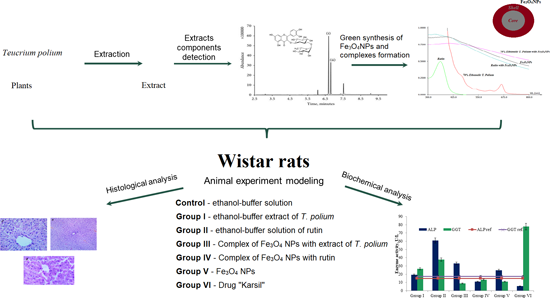
- wash and sterilization in 1% calcium hypochlorite solution (Sigma-Aldrich, Germany), plants were dried to 10% moisture level and ground in a mechanical homogenizer to obtain a homogeneous powder. The method for obtaining T. polium extracts is similar to the extraction method of Ocimum araratum


Green synthesis of silver nanoparticles derived from algae and their larvicidal properties to control Aedes aegypti
Beilstein J. Nanotechnol. 2024, 15, 1566–1575, doi:10.3762/bjnano.15.123
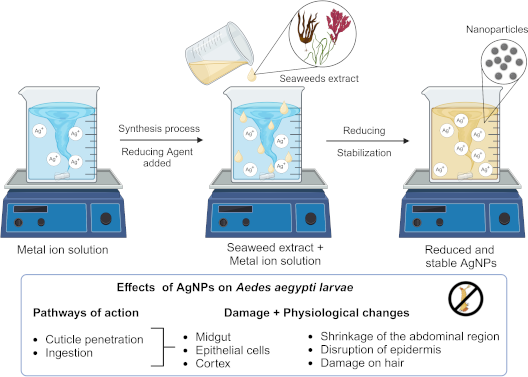
- of silver nanoparticles (yeasts, plants, fungi, algae, and bacteria), which are capable of reducing inorganic metal ions to metallic nanoparticles quickly [40][41]. Among these, algae have been highlighted because of their immense bioactive potential of compounds such as accessory pigments, proteins


Polymer lipid hybrid nanoparticles for phytochemical delivery: challenges, progress, and future prospects
Beilstein J. Nanotechnol. 2024, 15, 1473–1497, doi:10.3762/bjnano.15.118
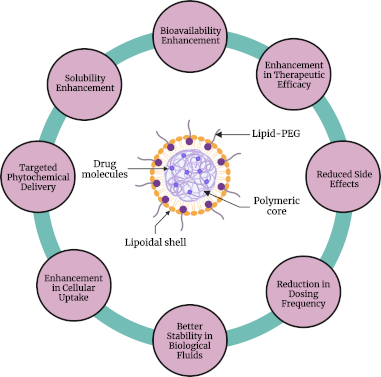
- Institute of Pharmaceutical Sciences and Research, Pimpri Pune-411018, Maharashtra, India Centre for Research Impact & Outcome, Chitkara College of Pharmacy, Chitkara University, Rajpura 140401, Punjab, India 10.3762/bjnano.15.118 Abstract Phytochemicals, naturally occurring compounds in plants, possess a
- diseases. Keywords: bioavailability; phytochemical; polymer lipid hybrid nanoparticles; solubility; stability; surface modification; Introduction Phytochemicals are naturally occurring compounds found in plants (from the Greek word “phyton” meaning plant) [1]. These bioactive compounds are responsible
- for the color, flavor, and aroma of plants, but more importantly, they contribute to the plant’s defense mechanisms against pathogens, pests, and environmental stresses. Beyond their role in plant biology, phytochemicals have gained significant attention for their potential health benefits in humans


A biomimetic approach towards a universal slippery liquid infused surface coating
Beilstein J. Nanotechnol. 2024, 15, 1376–1389, doi:10.3762/bjnano.15.111
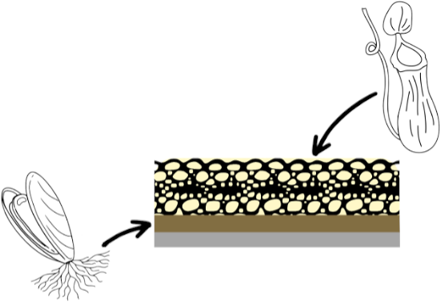
- surface coatings based on the slick surfaces of carnivorous pitcher plants (Nepenthes), termed slippery liquid-infused porous surfaces (SLIPS). This study introduces a simplified method to produce SLIPS using a polydopamine (PDA) anchor layer, inspired by mussel adhesion. SLIPS layers were formed on
- biomimetic approach to surface passivation involves a series of surface coatings based on the slick surfaces of carnivorous pitcher plants (Nepenthes), termed slippery liquid-infused porous surfaces (SLIPS) [4]. When wetted, the slippery surfaces on the plant cause prey to slide into the bottom of the


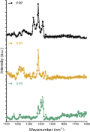


Green synthesis of carbon dot structures from Rheum Ribes and Schottky diode fabrication
Beilstein J. Nanotechnol. 2024, 15, 1369–1375, doi:10.3762/bjnano.15.110
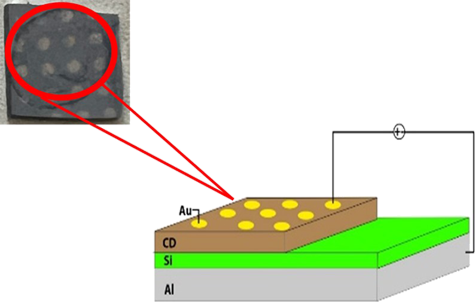
- synthesized using many different materials. Natural materials have been used widely in recent studies [6][7]. The use of many plants, fruits, and different organic materials as natural carbon sources, abundant in nature, in the synthesis of CDs both reduces cost and prevents environmental pollution. These

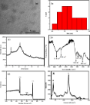

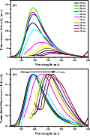

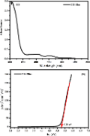

AI-assisted models to predict chemotherapy drugs modified with C60 fullerene derivatives
Beilstein J. Nanotechnol. 2024, 15, 1170–1188, doi:10.3762/bjnano.15.95
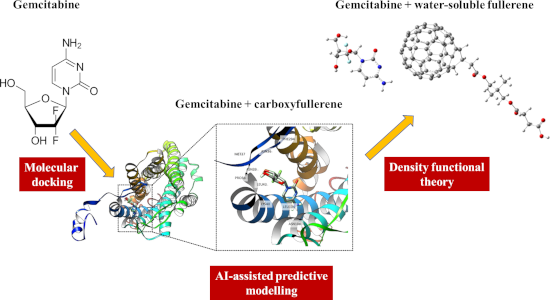
- high biological activity in plants [28] and within mitochondrial dynamics [29]. Since the evaluation of novel drugs is a task that requires significant human and material resources, innovative strategies have been formulated as alternatives. Quantitative structure–activity and quantitative structure


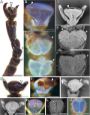
The effect of age on the attachment ability of stick insects (Phasmatodea)
Beilstein J. Nanotechnol. 2024, 15, 867–883, doi:10.3762/bjnano.15.72

- to attach to various surfaces is helpful for climbing animals [11][14], and adapting to the quality of the substrate is especially important for motile animals, which may come into contact with different surfaces, such as plants [9][11][15]. In ageing cockroaches, attachment pad discoloration and
- to fly, they adapted strongly to their local environment [11][19][22][23]. Phasmids have evolved considerably depending on plants since pre-angiosperm times [24]. As plants display a huge range of different surface characteristics [25][26][27][28], the diversity of microstructures on phasmatodean
- depend on plants for camouflage and nutrition, attachment to the plant surface is crucial for survival [11][14][21]. Their life history makes phasmids interesting study subjects for ageing research, as this lineage represents some of the largest insects known and species that have a prolonged life


Investigation on drag reduction on rotating blade surfaces with microtextures
Beilstein J. Nanotechnol. 2024, 15, 833–853, doi:10.3762/bjnano.15.70
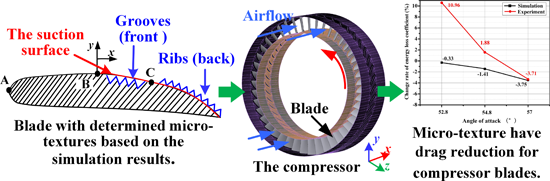
- moving animals, such as the “denticles” found on the surface of shark skin, which enable high-speed swimming [2], as well as the texture of bird feathers [3]. The phenomenon of drag reduction can also be observed on the surface of plants. For example, there is a superhydrophobic structure on the surface


Functional fibrillar interfaces: Biological hair as inspiration across scales
Beilstein J. Nanotechnol. 2024, 15, 664–677, doi:10.3762/bjnano.15.55
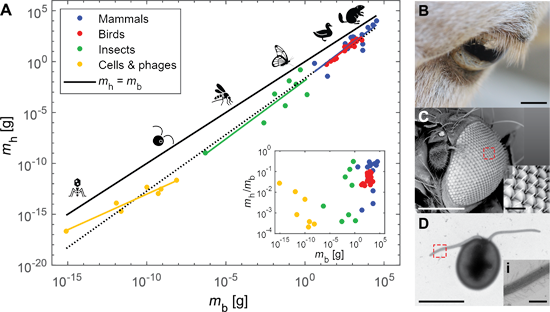
- bodies of mammals, over trichomes of plants, to the mastigonemes on the flagella of single-celled organisms. While these long and slender protuberances are passive, they are multifunctional and help to mediate interactions with the environment. They provide thermal insulation, sensory information
- review include the hair and fur of mammals, the feathers of birds, the trichomes of plants, the setae of arthropods, and the ultrastructures of single-celled organisms. Figure 1A shows how the total hair mass mh scales with body mass mb. For mh, a material density of 1 g·cm−3 was assumed. A relationship
- is exemplified by hair's resistance to heat transfer in humans [4][24], and the role of hair in sensing mates by male mosquitoes [25]. Additionally, plants may exhibit hair-like fibrillar structures, such as the nanometer-thick mastigonemes on the flagella of microalgae [26] and the high-aspect-ratio


Comparative analysis of the ultrastructure and adhesive secretion pathways of different smooth attachment pads of the stick insect Medauroidea extradentata (Phasmatodea)
Beilstein J. Nanotechnol. 2024, 15, 612–630, doi:10.3762/bjnano.15.52
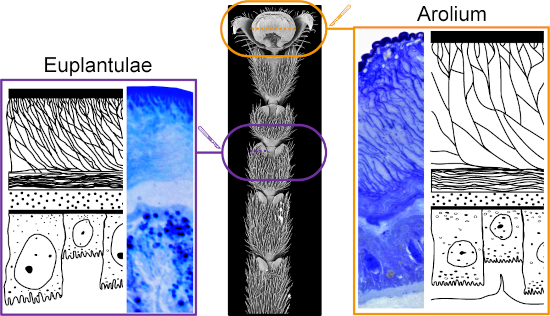
- , Figure 7B) [86]. The hemispherical pattern reduces the contact area between the cuticle and the substrate, thus decreasing contact forces. Similar surface structures were observed in the wax coverage of plants where they decreased the attachment performance of insects [84]. A reduction of the contact



Radiofrequency enhances drug release from responsive nanoflowers for hepatocellular carcinoma therapy
Beilstein J. Nanotechnol. 2024, 15, 569–579, doi:10.3762/bjnano.15.49
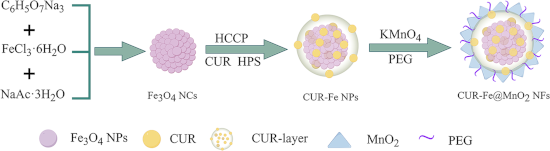
- leading cause of cancer death worldwide. Most patients are diagnosed at an advanced stage, and systemic chemotherapy is the preferred treatment modality for advanced HCC. Curcumin (CUR) is a polyphenolic antineoplastic drug with low toxicity obtained from plants. However, its low bioavailability and poor


Classification and application of metal-based nanoantioxidants in medicine and healthcare
Beilstein J. Nanotechnol. 2024, 15, 396–415, doi:10.3762/bjnano.15.36
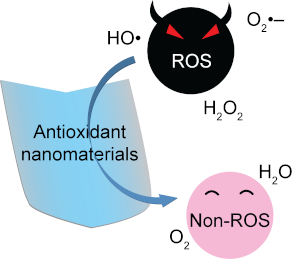
- normal metabolism or an effect of exposure to external factors [3][4]. However, the natural antioxidants in our body do not always work efficiently because ROS are so pervasive. Although antioxidant supplements from natural sources such as plants and animals are considered an effective strategy to combat
- resistance to severe environments than the antioxidants originating from plants and animals. More interestingly, through nanoencapsulation and nanodelivery, antioxidant nanomaterials improve the pharmacokinetics of natural antioxidants by preventing their degradation under stress conditions [9][10
- ]. Pharmacokinetic analysis of curcumin-loaded polymeric nanoparticles after oral delivery in mice demonstrated a 20-fold decrease in dose requirement compared to natural curcumin [140]. Both experimental and molecular dynamics simulation studies suggested an optimal ferulic acid (an antioxidant in plants


Insect attachment on waxy plant surfaces: the effect of pad contamination by different waxes
Beilstein J. Nanotechnol. 2024, 15, 385–395, doi:10.3762/bjnano.15.35
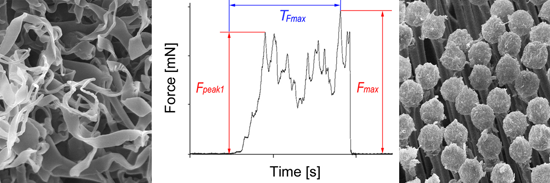
- used and positively correlated with each other [34]. The degree of pad contamination was higher in the tests with plants having larger dimensions and higher aspect ratios of the wax projections; however, the correlation between these two factors was non-significant in both cases (P = 0.068 for
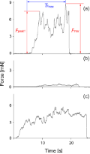
- insects needed significantly more time during the second experiment on glass gl2 compared with the first experiment on glass gl1 (paired t-test: t = 2.203, p = 0.033) (Figure 6c). Considering force data obtained in experiments with different plant species, we found that in all plants studied, the waxy
- needed to reach the maximum traction force TFmax in the first gl1 and second gl2 experiments on glass, only in the case of I. germanica, it was significantly shorter during the second experiment on glass gl2 (Figure 7d and Table 1); for all other plants, this time was not significantly longer. Thus, the




Comparative electron microscopy particle sizing of TiO2 pigments: sample preparation and measurement
Beilstein J. Nanotechnol. 2024, 15, 317–332, doi:10.3762/bjnano.15.29
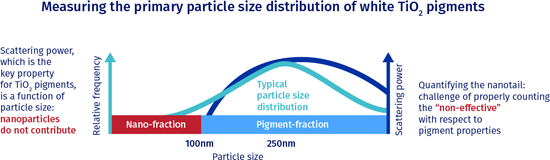
- for product quality assurance by three TiO2 manufacturing companies and present number-based primary particle size distributions (PSDs) obtained in a round-robin study performed on five anatase pigments fabricated by means of sulfate processes in different plants and commonly used worldwide in food


Assessing phytotoxicity and tolerance levels of ZnO nanoparticles on Raphanus sativus: implications for widespread adoptions
Beilstein J. Nanotechnol. 2024, 15, 115–125, doi:10.3762/bjnano.15.11
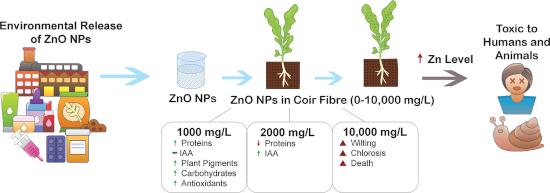
- (p < 0.05) in soluble protein content by 23.1%, accompanied by a notable increase in IAA by 31.1%, indicating potential toxicity. The use of atomic absorption spectroscopy confirmed the internalization of zinc in seedlings, with a statistically significant increase (p < 0.05). In control plants
- ]. High concentrations of Zn are implicated in the shifting of soil microbial communities and inhibition of microbial enzymes, thereby affecting soil fertility [1]. The excess levels of Zn, disrupting soil homeostasis, negatively affects plants and human health by inducing acute toxicity due to the
- elevated accumulation of Zn [1][3]. Long-term, high-dose Zn supplementation disrupts copper intake, induces brain cell death, contributes to prostate cancer, and also functions as a gliotoxin and a neurotoxin [3][4]. Conversely, the most common micronutrient deficiency of crop plants is Zn deficiency


Development and characterization of potential larvicidal nanoemulsions against Aedes aegypti
Beilstein J. Nanotechnol. 2024, 15, 104–114, doi:10.3762/bjnano.15.10
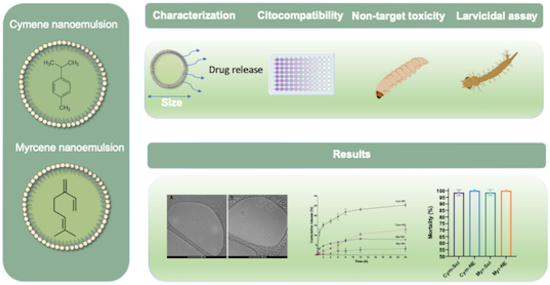
- naturally occurring in essential oils (EOs) of various aromatic plants, including the genera Artemisia, Protium, Origanum, and Thymus. Myrcene is an acyclic monoterpene found in hops, lemongrass, basil, and mangos [10]. Some intrinsic characteristics of monoterpenes, mainly poor water solubility and high


Berberine-loaded polylactic acid nanofiber scaffold as a drug delivery system: The relationship between chemical characteristics, drug-release behavior, and antibacterial efficiency
Beilstein J. Nanotechnol. 2024, 15, 71–82, doi:10.3762/bjnano.15.7
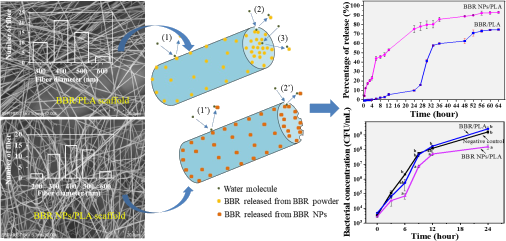
- systems, and tissue engineering, according to the requirement of BBR concentration for the desired therapeutic effects. Keywords: antibacterial activity; berberine; drug-release system; electrospun nanofiber; polylactic acid; Introduction Medicinal plants have various biologically active compounds, such
- as phenolic acids, alkaloids, saponins, coumarins, flavonoids, terpenoids, and carotenoids with great therapeutic effects [1]. Berberine (BBR) is a quaternary isoquinoline alkaloid, extracted from different medicinal plants, such as Coptis chinensis and Berberis vulgaris [2], and used in the


Nanotechnological approaches in the treatment of schistosomiasis: an overview
Beilstein J. Nanotechnol. 2024, 15, 13–25, doi:10.3762/bjnano.15.2
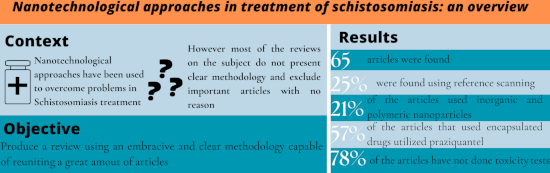
- drugs were able to cause alterations in parasite tegument [64]. Another work used carvacrol, a monoterpene present in essential oils derived from plants such as Origanum vulgare. Besides being commonly used as a flavoring agent in food and cosmetics, it shows antimicrobial activity. Xavier et al. [67


Prediction of cytotoxicity of heavy metals adsorbed on nano-TiO2 with periodic table descriptors using machine learning approaches
Beilstein J. Nanotechnol. 2023, 14, 939–950, doi:10.3762/bjnano.14.77
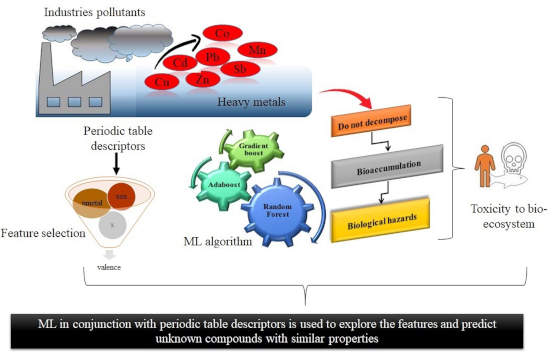
- , leading to bioaccumulation and biological hazards [13]. Heavy metals enter the human body through the consumption of fish and plants [14]. To date, heavy metals are removed through various methods. Among all methods available for removing heavy metals and toxic pollutants from waters, adsorption is the


Biomimetics on the micro- and nanoscale – The 25th anniversary of the lotus effect
Beilstein J. Nanotechnol. 2023, 14, 850–856, doi:10.3762/bjnano.14.69

- “Purity of the sacred lotus” [1] in which they described the superhydrophobic surfaces and the self-cleaning ability of some plants (the so-called “lotus effect”, see Figure 1). This paper led to a paradigm shift in surface sciences. It generated a lot of interest at the time and continues today to
- concept of “copying” nature or learning from it arose (e.g., the story of Daedalus and Icarus [4]). This and other examples show that often physical phenomena in animals and plants can be described; however, it is not possible to immediately understand the mechanisms behind them and to transfer those to
- and insect attachment on leaf surfaces of Schismatoglottis calyptrata (Araceae)” a study of the development of cuticular ridges on the adaxial leaf surfaces during leaf ontogeny of the tropical Araceae S. calyptrata. The structure of these microscopic ridges helps plants to defend themselves against


Carboxylic acids and light interact to affect nanoceria stability and dissolution in acidic aqueous environments
Beilstein J. Nanotechnol. 2023, 14, 762–780, doi:10.3762/bjnano.14.63
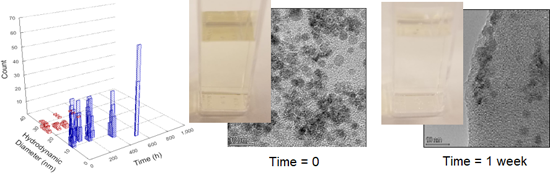
- dissolution and stabilization have been previously studied in vitro using acidic aqueous environments. Nanoceria agglomerated in the presence of some carboxylic acids over 30 weeks, and degraded in others, at pH 4.5 (i.e., the pH value in phagolysosomes). Plants release carboxylic acids, and cerium
- a second carboxylic acid group may optimally complex with nanoceria. The results provide mechanistic insight into the role of carboxylic acids in nanoceria dissolution and its fate in soils, plants, and biological systems. Keywords: acidic aqueous environments; carboxylic acids; electron microscopy
- , where it is known to dissolve and transform in the presence of chelating agents at low pH [15]. In cucumber plants, there is clear evidence of ceria uptake and transport throughout the plant. A fraction of the ceria formed cerium carboxyl complexes. No phytotoxicity was reported to the plant itself [16
A graphene quantum dots–glassy carbon electrode-based electrochemical sensor for monitoring malathion
Beilstein J. Nanotechnol. 2023, 14, 701–710, doi:10.3762/bjnano.14.56
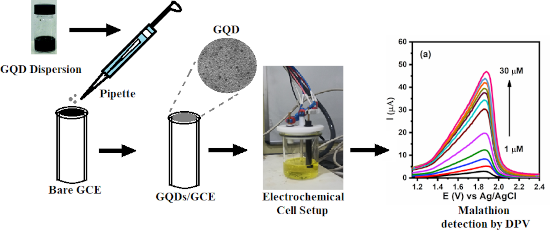
- insecticide is malathion, which kills insects such as fleas and ants that attack plants. Malathion has been detected so far using chromatography [4][5], colorimetry [6], and mass spectrometry [7], although these methods are complicated and time-consuming and require expensive equipment with specialized


Quercetin- and caffeic acid-functionalized chitosan-capped colloidal silver nanoparticles: one-pot synthesis, characterization, and anticancer and antibacterial activities
Beilstein J. Nanotechnol. 2023, 14, 362–376, doi:10.3762/bjnano.14.31
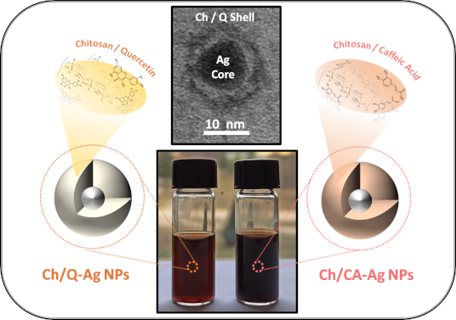
- present in plants such as onions, soybeans, lettuce, apples, red grapes, broccoli, and tomatoes [17]. It is also a naturally forming polar auxin transport inhibitor [18]. Various biological and pharmacological properties of quercetin have been reported, including antiviral, antibacterial, antimicrobial


Bismuth-based nanostructured photocatalysts for the remediation of antibiotics and organic dyes
Beilstein J. Nanotechnol. 2023, 14, 291–321, doi:10.3762/bjnano.14.26
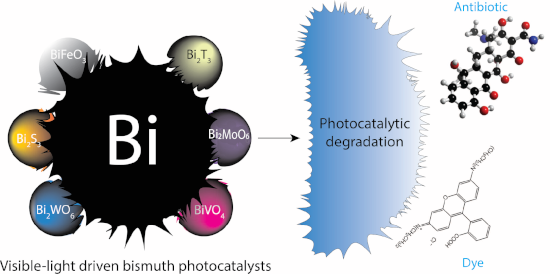
- the environment in low concentrations (micrograms per litre to nanograms per litre), are persistent and bioactive, potentially posing a threat to the food chain. Macrolides, fluoroquinolones, and tetracycline also have an impact on the synthesis of mitochondrial proteins and chloroplasts in plants [48
- ][66]. Fluoroquinolones have a detrimental impact on the morphology and photosynthesis of plants, as well as on the ability of eukaryotic cells to synthesise DNA and replicate plastids. Streptomycin prevents Hordeum vulgare from producing chlorophyll, while ciprofloxacin, enrofloxacin, and
- sulfadimethoxine considerably slow down plant growth. Additionally, tetracyclines have phytotoxic effects that may result in chromosomal abnormalities and the reduction of plant growth. Although β-lactams are thought to be less harmful, they also have an impact on the plastid division in lower plants [48][67]. The