


Search results
Search for "plasma" in Full Text gives 637 result(s) in Beilstein Journal of Nanotechnology. Showing first 200.
Programmable soliton dynamics in all-Josephson-junction logic cells and networks
Beilstein J. Nanotechnol. 2025, 16, 1883–1893, doi:10.3762/bjnano.16.131

- convenient to express this equation in a dimensionless form. We normalize the time to the inverse of a reference plasma frequency, , where , and normalize the current to a reference critical current . This yields: In this normalized equation, the dots above the phases indicate differentiation over time with


Phytol-loaded soybean oil nanoemulsion as a promising alternative against Leishmania amazonensis
Beilstein J. Nanotechnol. 2025, 16, 1826–1836, doi:10.3762/bjnano.16.126

- nanoscale size, lipid fusion with membrane components, or disruption of the plasma membrane structure [48][49]. However, several studies have also highlighted the remarkable potential of nanoemulsions against intracellular amastigote forms. In addition to enhancing cutaneous penetration, nanoemulsions also


Exploring the potential of polymers: advancements in oral nanocarrier technology
Beilstein J. Nanotechnol. 2025, 16, 1751–1793, doi:10.3762/bjnano.16.122
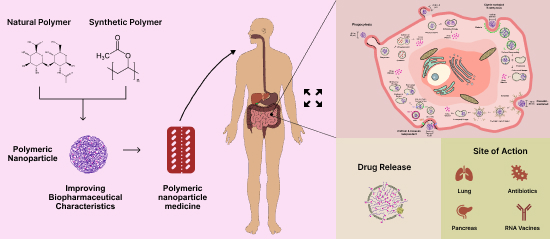
- scavenger receptors) on phagocytic cells. These particles are internalized through the plasma membrane, forming a cup-shaped invagination that develops into phagosomes. These phagosomes subsequently fuse with lysosomes, where the contents undergo acidic degradation [78][79]. Internalization of PNs by
- coated pits along the plasma membrane. These pits undergo disassembly via dynamin, leading to the formation of vesicles that are transported to endosomes for subsequent degradation. NPs smaller than 200 nm with a positive surface charge, as well as growth factors and transferrin, are internalized through
- . The pharmacokinetic profile revealed IFNα bioavailability in plasma similar to that observed with subcutaneous administration. This study was a continuation of the research by Cánepa et al. [134], which demonstrated the stability of these formulations in the gastrointestinal tract, showing that


Multifunctional anionic nanoemulsion with linseed oil and lecithin: a preliminary approach for dry eye disease
Beilstein J. Nanotechnol. 2025, 16, 1711–1733, doi:10.3762/bjnano.16.120



Prospects of nanotechnology and natural products for cancer and immunotherapy
Beilstein J. Nanotechnol. 2025, 16, 1644–1667, doi:10.3762/bjnano.16.116
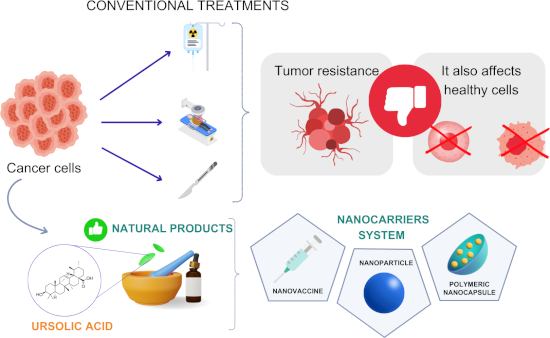
- characterized by two free functional groups responsible for drug binding, while a semiconductor shell helps reduce toxicity [106]. Quantum dot nanoparticle synthesis processes involve colloidal and plasma systems, which allow for the utilization of bioactive compounds such as fructose, chitosan, citric acid


Few-photon microwave fields for superconducting transmon-based qudit control
Beilstein J. Nanotechnol. 2025, 16, 1580–1591, doi:10.3762/bjnano.16.112
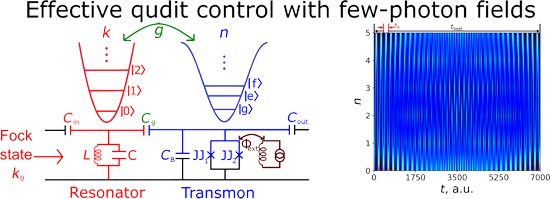
- ), or a pair of JJs forming an interferometer-like circuit, so the spectrum is no longer equidistant. In the case where the JJ pair is used, the characteristic (plasma) frequency of the transmon can be quickly adjusted in 10–20 ns in the range of 1 GHz by an external magnetic field [35]. In practice
- , taking into account the nonlinearity [6]: where -EC/12 is the nonlinearity parameter and is the plasma frequency of the transmon. The first term in the Hamiltonian describes a free linear evolution of the photon operators, characterized by their oscillations in time in the Heisenberg representation. The
- coupling strength can be estimated as: and it will vary depending on the external magnetic flux (EJ(Φext) and ωp/2π(Φext)). Here, Zvac ≈ 377 Ω and Z0 = 50 Ω. Taking this expression into account, at a typical plasma transmon frequency of ωp/2π = 5–6 GHz, the coupling strength will be g/2π ≈ 1.2 GHz, and


Transient electronics for sustainability: Emerging technologies and future directions
Beilstein J. Nanotechnol. 2025, 16, 1545–1556, doi:10.3762/bjnano.16.109

- such as repeated stacking of SiOx/SiNx layers via plasma-enhanced chemical vapor deposition or high-density conformal coatings using atomic layer deposition (ALD) (Figure 2e) [88]. Notably, both SiO2 and Si3N4 are bioresorbable materials [23][88][89][90], and efforts have been made to adopt these


Influence of laser beam profile on morphology and optical properties of silicon nanoparticles formed by laser ablation in liquid
Beilstein J. Nanotechnol. 2025, 16, 1533–1544, doi:10.3762/bjnano.16.108
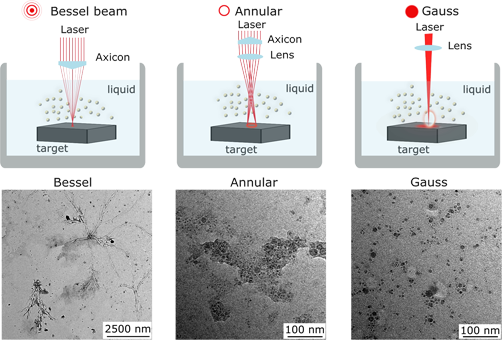
- -uniform energy distribution, which will affect plasma generation and confinement, the hydrodynamic trajectory of the ejected target material and pressure relaxation, as well as plasma and cavitation bubble propagation and temporal evolution. In the case of a Bessel beam, the focusing with an axicon
- provides longer depth of focus with a sharp central intensity, which is surrounded by concentric rings. In the case of annular beam ablation, the characteristic feature is the formation of a stagnation layer at the center of the plasma normal to the target, which results in a plasma jet near the target
- surface [27] with different plasma parameters than in the plasma generated by a Gaussian beam. A change of the incident beam pattern will change the temperature and pressure inside cavitation bubbles (CBs) and influence CB oscillations. Furthermore, pressure variations at the target interface would be


Laser processing in liquids: insights into nanocolloid generation and thin film integration for energy, photonic, and sensing applications
Beilstein J. Nanotechnol. 2025, 16, 1428–1498, doi:10.3762/bjnano.16.104
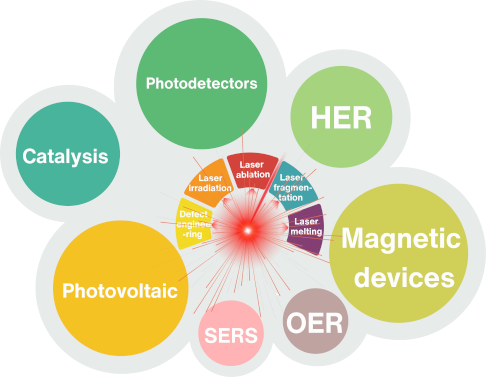
- temperature and normal atmospheric pressure [34]. A laser fragmentation mechanism was proposed, based on the interaction between the laser and the nanospheres, which generates plasma (Figure 7e). Most LIL processes can be classified as either fragmentation or melting, depending on the type of final product






Ferroptosis induction by engineered liposomes for enhanced tumor therapy
Beilstein J. Nanotechnol. 2025, 16, 1325–1349, doi:10.3762/bjnano.16.97
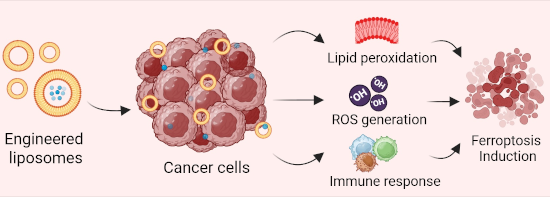
- plasma membrane by N-terminal myristoylation as an oxidoreductase. Then, it reduces ubiquinone (CoQ10), another byproduct of MVA metabolism, to the lipophilic free radical scavenger panthenol (CoQ10H2). This process helps to prevent the buildup of lipid ROS in the membrane in the absence of GPX4 because


Wavelength-dependent correlation of LIPSS periodicity and laser penetration depth in stainless steel
Beilstein J. Nanotechnol. 2025, 16, 1302–1315, doi:10.3762/bjnano.16.95
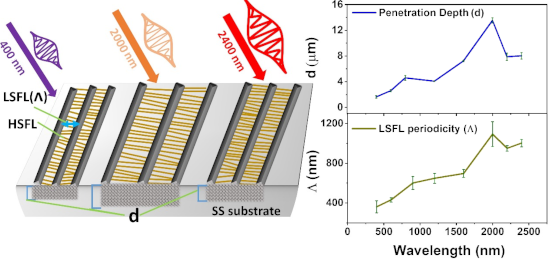
- 2000 nm, reaching a peak at approximately 13 µm, and subsequently decreases. This distinctive correlation underscores the role of plasma material reorganizational effects in LIPSS formation at higher wavelengths, presenting a new experimental observation to the existing literature. The findings enhance
- or understand the underlying mechanisms. In pursuit of this understanding, we monitored the formation of plasma and the depth of laser penetration inside the material for all wavelengths of femtosecond laser irradiations. According to the plasmonic model, when the radiation is incident at a normal
- plasma volume. However, under femtosecond laser processing, the material response depends on specific properties of the material, such as plasma formation, nonlinear absorption, and multiphoton ionization. In such a high-intensity regime, the optical constant of the material becomes dynamically dependent




Better together: biomimetic nanomedicines for high performance tumor therapy
Beilstein J. Nanotechnol. 2025, 16, 1246–1276, doi:10.3762/bjnano.16.92
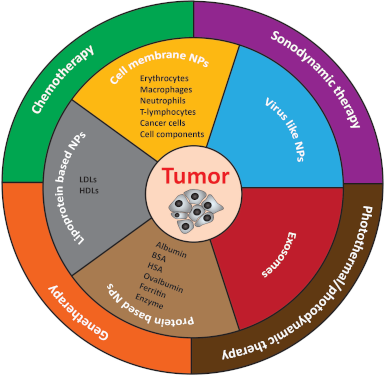
- specific inhibitors of 3-hydroxy-3-methylglutaryl coenzyme A reductase, the rate-limiting enzyme of the mevalonate metabolic pathway [58]. The use of statins, drugs that lower plasma lipoprotein levels, has been shown to reduce the risk of certain types of cancer [59][60]. 1.2.1 Low-density lipoprotein
- –protein binding in vivo, nanoparticles can adsorb plasma proteins at their surface in blood circulation and form a corona, which can alter their biodistribution, cell uptake, and intracellular degradation [90]. Thus, as the protein corona increases, albumin proteins affect nanoparticle fate in vivo. As
- albumin is the most abundant protein in the blood, precoating with albumin has been shown to prevent adsorption of other plasma proteins and degradation of nanoparticles in vivo [91][92]. 1.3.4 Ovalbumin. Ovalbumin (OVA) is a major component of egg white and a readily available protein for drug delivery






Crystalline and amorphous structure selectivity of ignoble high-entropy alloy nanoparticles during laser ablation in organic liquids is set by pulse duration
Beilstein J. Nanotechnol. 2025, 16, 1141–1159, doi:10.3762/bjnano.16.84
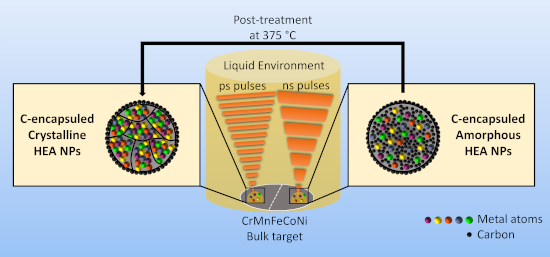
- lattice [20]. In addition, the synthesis of the CrMnFeCoNi system by arc-discharge plasma method also lead to the formation of fcc HEA NPs [7]. The addition of Al to the high-entropy alloy system was shown to stabilize a bcc-type structure in the synthesized HEA NPs [14][30], while amorphous FeCoNiCrMox


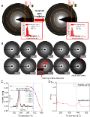


Time-resolved probing of laser-induced nanostructuring processes in liquids
Beilstein J. Nanotechnol. 2025, 16, 968–1002, doi:10.3762/bjnano.16.74
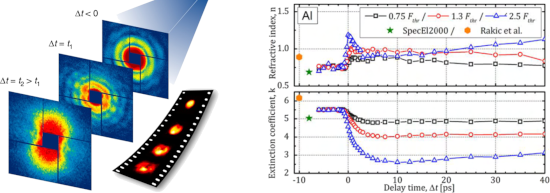
- experimental platform to explore strong light–matter interactions. Structural dynamics in liquids For laser-based materials processing in liquids, including techniques of LAL, LFL, and LML, a key challenge lies in managing the intricate interplay between laser energy deposition, plasma generation, and the


Characterization of ion track-etched conical nanopores in thermal and PECVD SiO2 using small angle X-ray scattering
Beilstein J. Nanotechnol. 2025, 16, 899–909, doi:10.3762/bjnano.16.68
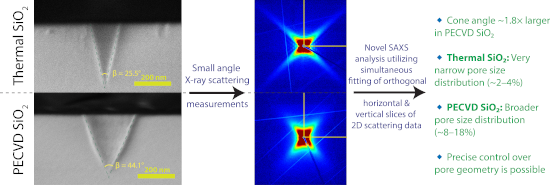
- nanopores in thermal and plasma-enhanced chemical vapor-deposited (PECVD) SiO2 using synchrotron-based small-angle X-ray scattering (SAXS). The nanopores were fabricated by irradiating the samples with 89 MeV, 185 MeV, and 1.6 GeV Au ions, followed by hydrofluoric acid etching. We present a new approach for
- -etched nanopores in two types of silicon dioxide, namely, one produced by wet thermal oxidation of Si (thermal SiO2) and another deposited by plasma-enhanced chemical vapor deposition (PECVD). Thermally grown SiO2 is of high quality and stoichiometric, however, requires high temperatures for growth, and


Heat-induced transformation of nickel-coated polycrystalline diamond film studied in situ by XPS and NEXAFS
Beilstein J. Nanotechnol. 2025, 16, 887–898, doi:10.3762/bjnano.16.67
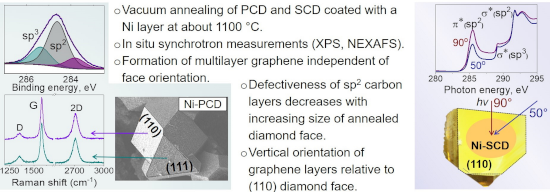
- transformation of bare and nickel-coated polycrystalline diamond films under high-vacuum annealing The PCD film was produced by plasma-enhanced chemical vapor deposition (PE CVD) using acetone (CH3)2CO, hydrogen, and air as the precursor gases for the plasma [37]. The film consists of crystallites with
- 1150 °C [27] and for the (111) face of SCD annealed at 1250 °C [15]. Conclusion Polycrystalline diamond films with mixed grain orientations were synthesized by the PE CVD method from hydrogen/acetone/air plasma and coated with a 40 nm thick nickel layer. In situ XPS and NEXAFS data revealed the


Synthesis and magnetic transitions of rare-earth-free Fe–Mn–Ni–Si-based compositionally complex alloys at bulk and nanoscale
Beilstein J. Nanotechnol. 2025, 16, 823–836, doi:10.3762/bjnano.16.62
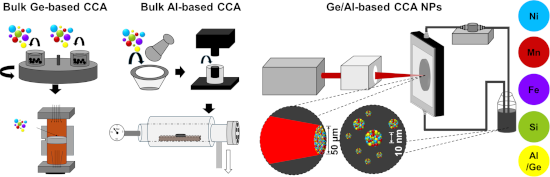
- are prepared by ball milling and spark plasma sintering or powder pressing and sintering. Nanoparticles (NPs) from the bulk materials are synthesized by pulsed laser ablation in liquid. Magnetization measurements confirm a ferromagnetic-to-paramagnetic phase transition in bulk alloys, with Tc = 179 K
- [50]. In the current work, we aim to develop NPs of bulk rare-earth-free MnTX-based CCAs via PLAL. We start with bulk Ge-based CCA synthesized by high energy ball milling (HEBM) followed by spark plasma sintering (SPS), and an Al-based CCA obtained by powder pressing and sintering. Our goal is not


Morphology and properties of pyrite nanoparticles obtained by pulsed laser ablation in liquid and thin films for photodetection
Beilstein J. Nanotechnol. 2025, 16, 785–805, doi:10.3762/bjnano.16.60
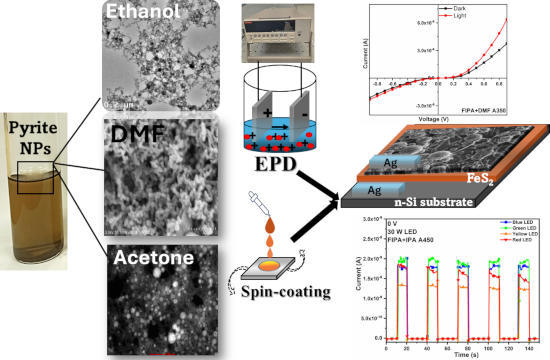
- target absorbing the laser pulse energy and forming a plasma plume that is confined by the liquid. This is followed by the expansion of the plasma plume carrying the ablated material into the surrounding liquid and the production of a shockwave. The breakdown-related expansion of plasma pushing the
- surrounding liquid results in a cavitation bubble which is a thin layer of vapor of the surrounding liquid, as well as some material evaporating from the target. Some of the crucial elements influencing the formation of the cavitation bubble are the liquid environment, a stronger confinement of the plasma
- , and rapid energy transfer from the plasma to the surrounding liquid. The target and liquid are heated during the shockwave propagation, which may aid in the separation of material from the crater. The plasma plume cools down and releases energy to the liquid solution as it expands. This event causes






Serum heat inactivation diminishes ApoE-mediated uptake of D-Lin-MC3-DMA lipid nanoparticles
Beilstein J. Nanotechnol. 2025, 16, 740–748, doi:10.3762/bjnano.16.57
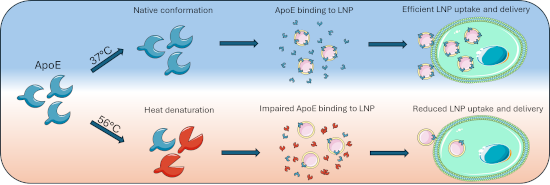
- intravenously after which they are dependent on the adsorption of the plasma protein apolipoprotein E (ApoE) to their surface to efficiently target LDL-receptor expressing cells in the liver and deliver the siRNA cargo [25][26]. As the protein corona seems to play a pivotal role in LNP tissue distribution and


The impact of tris(pentafluorophenyl)borane hole transport layer doping on interfacial charge extraction and recombination
Beilstein J. Nanotechnol. 2025, 16, 678–689, doi:10.3762/bjnano.16.52
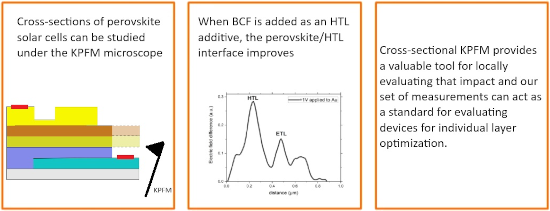
- fluorine-doped tin oxide (FTO) substrates on thin (1.1 mm) glass from Ossila (11–13 Ω/cm2) with Zn powder and a 2 M HCl solution. Then, we brushed it thoroughly using a liquid alkaline concentrate (Hellmanex), followed by a 30 min argon plasma cleaning (200-G TePla Plasma System, Technics Plasma GmbH, at


Aprepitant-loaded solid lipid nanoparticles: a novel approach to enhance oral bioavailability
Beilstein J. Nanotechnol. 2025, 16, 652–663, doi:10.3762/bjnano.16.50
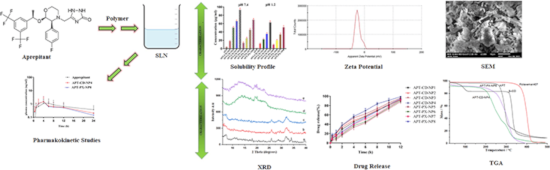
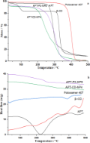
- release (98.89% ± 4.11%) in PBS (pH 7.4) and followed the Higuchi release model (with exponent n = 0.542), indicating non-Fickian diffusion (anomalous transport). The maximum concentration of drug in plasma and the bioavailability of optimal formulation APT-CD-NP4 were higher than those of pure APT
- plasma (Cmax) is reached after approx. 4 h, and the half-life is 9–13 h. An oral dose of 125 mg APT one hour before chemotherapy treatment (day 1), and 80 mg daily in the morning on days 2 and 3 are recommended [7]. APT is strongly bound to plasma protein (95%); it is absorbed slowly and crosses the
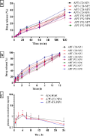
- humidity in the long-term stability study. In vivo pharmacokinetic studies Pharmacoikinetic studies showed a linear relationship between APT release and concentration in rabbit blood plasma (R2 = 0.9959). The pharmacokinetic parameters determined by measuring plasma concentration versus time are displayed



A formulation containing Cymbopogon flexuosus essential oil: improvement of biochemical parameters and oxidative stress in diabetic rats
Beilstein J. Nanotechnol. 2025, 16, 617–636, doi:10.3762/bjnano.16.48
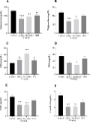
- Figure 7 shows that exposure of rats to STZ induced significant metabolic lipid disturbances. In the control group of diabetic rats, there was a considerable increase in plasma concentrations of total cholesterol (TC = 128.33 mg/dL), triglycerides (TG = 119.22 mg/dL), and low-density lipoprotein (LDL
- parameters. The EOCF group showed significant reductions in TC (83.56 mg/dL), TG (69.00 mg/dL), very-low-density lipoprotein (VLDL) cholesterol (13.89 mg/dL), and Castelli-2 index (1.13 ± 0.35 mg/dL). The M7-EOCF group showed reductions in plasma concentrations of TC (95.22 mg/dL), TG (80.44 mg/dL), LDL
- these levels in the groups treated with aqueous extract of lemongrass (100 and 200 mg/kg), ethanolic extract of lemongrass (125 and 250 mg/kg), and the essential oil of lemongrass (150 and 300 mg). Almdal and Vilstrup [47] and Mansour et al. [48] showed that induced diabetic hyperglycemia raised plasma




Feasibility analysis of carbon nanofiber synthesis and morphology control using a LPG premixed flame
Beilstein J. Nanotechnol. 2025, 16, 581–590, doi:10.3762/bjnano.16.45
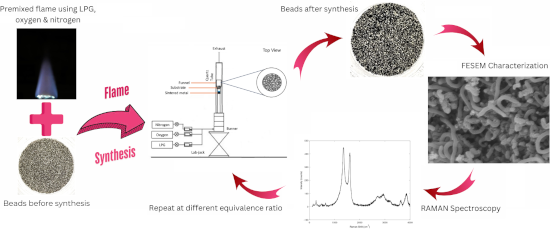
- three stainless steel inlet tubes for LPG, oxygen, and nitrogen was used to synthesize CNTs. TEM images revealed a 0.35 nm interplanar spacing, showing high crystallinity and a thin amorphous layer [11]. In a separate study, CNFs were synthesized using acetylene and plasma-enhanced chemical vapor
- deposition with nickel as the catalyst and hydrogen as the plasma source. SEM and TEM characterization showed vertically aligned CNFs. This method highlights the impact of plasma conditions and gas ratios on CNF morphology and alignment [12]. An experiment by Li et al. showed CNT growth at decomposition
- at 1607 cm−1 and a few broad peaks, indicating less graphitization [14]. In another work, a high-density inductively coupled plasma chemical vapor deposition method yielded vertically aligned CNFs using acetylene and hydrogen on a p-type Si wafer with a 10 nm Ni catalyst layer at 20 mTorr and 550 °C



Nanomaterials in targeting amyloid-β oligomers: current advances and future directions for Alzheimer's disease diagnosis and therapy
Beilstein J. Nanotechnol. 2025, 16, 561–580, doi:10.3762/bjnano.16.44
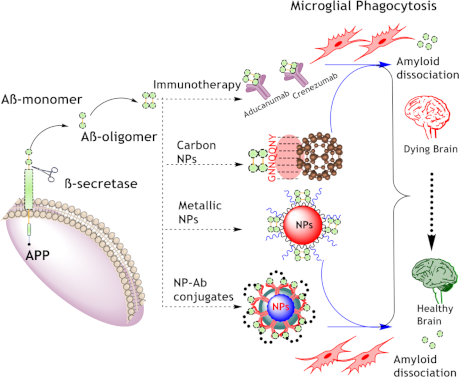
- detecting soluble AβOs in artificial cerebrospinal fluid (CSF) or blood plasma. It was capable of effectively distinguishing AβOs from Aβ monomers and fibrils, indicating its utility for accurate and selective detection of AβOs [53]. Another group of researchers utilized a similar approach of
- deficits, a substantial decrease in soluble Aβ and oligomer levels within the brain and a marked increase in Aβ levels in the plasma, indicating enhanced clearance from the body. These findings highlight the potential of antibody-functionalized NPs as a promising therapeutic strategy for AD [92]. While the


Retrieval of B1 phase from high-pressure B2 phase for CdO nanoparticles by electronic excitations in CdxZn1−xO composite thin films
Beilstein J. Nanotechnol. 2025, 16, 551–560, doi:10.3762/bjnano.16.43

- Arkaprava Das Marcin Zajac Carla Bittencourt Chimie des Interaction Plasma surface, Research Institute for Materials Science and Engineering, Université of Mons, 7000 Mons, Belgium SOLARIS National Synchrotron Radiation Centre, Jagiellonian University, 30-392 Krakow, Poland 10.3762/bjnano.16.43





