


Search results
Search for "plastic deformation" in Full Text gives 64 result(s) in Beilstein Journal of Nanotechnology.
Molecular dynamics simulations of nanoindentation and scratch in Cu grain boundaries
Beilstein J. Nanotechnol. 2017, 8, 2283–2295, doi:10.3762/bjnano.8.228
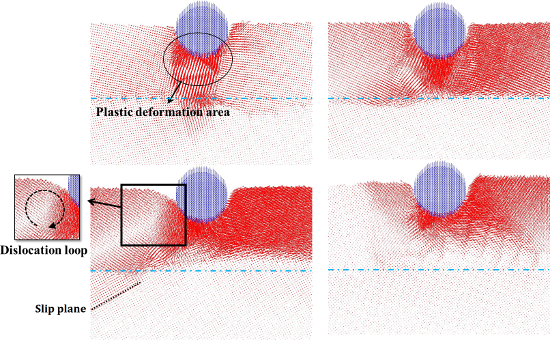
- transverse grain boundaries with different angles (θ = 10–40°, respectively) for an indentation of 2 nm. As shown in Figure 4a, the compressed atoms under the probe gave rise to the tight block of plastic deformation. Since the atoms in the upper layer of the grain boundary are blocked by the grain boundary
- atoms of the grain boundary compressed by the indenter moved to the left. The atoms continued to be compressed on the left side without resistance of the grain boundary, thereby leading to plastic deformation. This result was in agreement with the study of Chu et al. [14]. On the other hand, the atoms
- leading to plastic deformation of the material but with difficulty. In the case of the nanoindentation of the transverse grain boundaries at different angles, the structure of the grain boundary with a 20° angle was stronger, thereby limiting the force to the slip direction of the upper dislocation




Nanotribological behavior of deep cryogenically treated martensitic stainless steel
Beilstein J. Nanotechnol. 2017, 8, 1760–1768, doi:10.3762/bjnano.8.177
- operative mechanisms during the cryogenic treatment of steels discussed in the current state-of-the-art literature are: transformation of retained austenite [2][3][4], carbide refinement [5][6][7] and plastic deformation of virgin martensite [8][9]. Because of the high hardenability of low-carbon AISI 420
- stainless steel, both transformation of retained austenite and plastic deformation of virgin martensite do not seem to be operative during cryogenic cooling. The main effect observed in AISI 420 after cryogenic processing is a strong reduction in carbide size and a more even dispersion of them in the
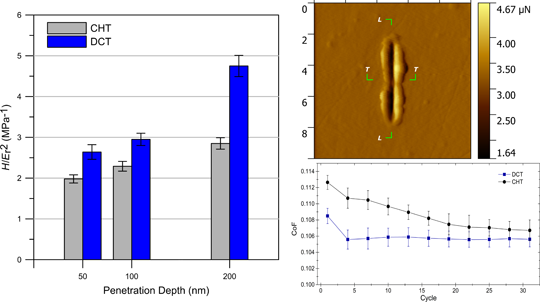
- samples. This smaller contact area can be accounted by a higher amount of elastic recovery (as evidenced by the residual height) and also by the formation of smaller pile-ups. In order to characterize the resistance of the material to plastic deformation, the parameter H/Er2 has been calculated by two


Atomic structure of Mg-based metallic glass investigated with neutron diffraction, reverse Monte Carlo modeling and electron microscopy
Beilstein J. Nanotechnol. 2017, 8, 1174–1182, doi:10.3762/bjnano.8.119
- amorphous materials can be also produced by other methods, including severe plastic deformation [19] or wet-chemistry deposition of thin films [20]. Severe plastic deformation leads to phase transitions and strong grain refinement in metallic alloys (e.g., Al–Zn, Al–Zn–Mg, Cu–Ni, Co–Cu, Ni–Y–Nb and Zr–Nb




Diffusion and surface alloying of gradient nanostructured metals
Beilstein J. Nanotechnol. 2017, 8, 547–560, doi:10.3762/bjnano.8.59
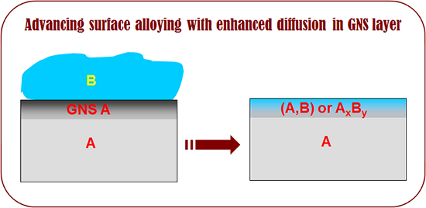
- a graded spatial variation of grain sizes offers a number of unique opportunities to enhance the properties of materials. It enables the delocalization of strains in the nano-grained structures, resulting in plastic deformation behavior fundamentally different from that of the free-standing
- interfaces in the nanostructured layer make it possible to study interfacial diffusion and relative characteristics, such as interfacial structure, precipitation, phase transformation, plastic deformation, and chemical reaction, at lower temperatures. In comparison, it is difficult to obtain enough
- engineering metallic materials. GNSs have been generated on various metals by methods with controlled surface plastic deformation [9][10][11]. In this paper, recent progress in the diffusion studies in GNS metals will be clarified to understand diffusion fundamentals and relationships between microstructure




Annealing-induced recovery of indents in thin Au(Fe) bilayer films
Beilstein J. Nanotechnol. 2016, 7, 2088–2099, doi:10.3762/bjnano.7.199
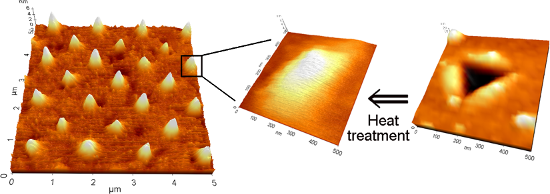
- by plastic deformation followed by heat treatments, i.e., thermo-mechanical treatment, is a technological cornerstone of human civilization and has been used for millennia to design microstructures and properties of materials. Yet, applying this approach to thin metal films is problematic because the
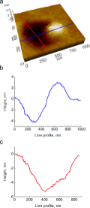
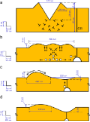
- introduced by nanoindentation with subsequent annealing, and (ii) to understand the effect of nanoindentation-induced localized plastic deformation on the thermal stability and solid-state dewetting of thin films. In what follows, we will give a short overview of what is known about the recovery of indents
- transformation [4]. Thermally activated strain recovery has been reported for thin Al and Au films [5]. It has been suggested that plastic deformation recovery is restricted to small grain sizes and driven by inhomogeneous residual internal stresses. The above short overview shows that the understanding of the





Ferromagnetic behaviour of ZnO: the role of grain boundaries
Beilstein J. Nanotechnol. 2016, 7, 1936–1947, doi:10.3762/bjnano.7.185
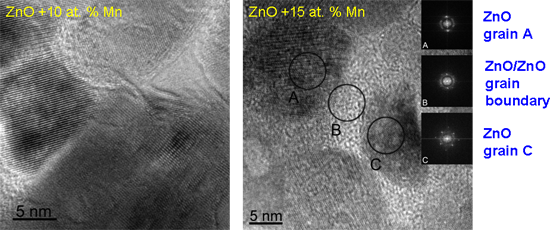
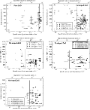
- nanograined alloys obtained by the severe plastic deformation [65][66]. Conclusion In summary, we observed that, contrary to the prediction of Dietl et al. [1], the doping of bulk ZnO with Mn, Co, Fe or Ni does not make it ferromagnetic. On the other hand, nanograined ZnO becomes ferromagnetic even without


A new approach to grain boundary engineering for nanocrystalline materials
Beilstein J. Nanotechnol. 2016, 7, 1829–1849, doi:10.3762/bjnano.7.176
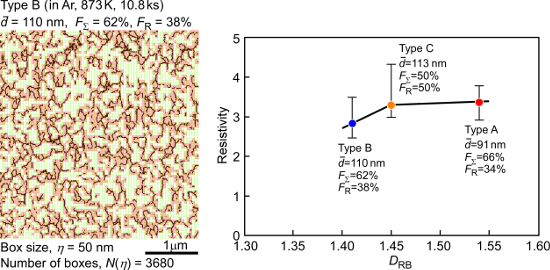
- grain boundaries and triple junctions. This is often associated with the nonequilibrium deformation of microstructures introduced by severe plastic deformation (SPD) with less thermal stability, excess structural defects and chemical composition by segregation to grain boundaries and interfaces [12][15
- grain boundaries are strongly affected by processing routes and conditions [53][54]. As for those bulk ultrafine-grained (UFG) materials produced by severe plastic deformation (SPD) (e.g., equal-channel angular pressing (ECAP) and high-pressure torsion (HPT) initiated by Valiev and Langdon [55][56







Effect of triple junctions on deformation twinning in a nanostructured Cu–Zn alloy: A statistical study using transmission Kikuchi diffraction
Beilstein J. Nanotechnol. 2016, 7, 1501–1506, doi:10.3762/bjnano.7.143
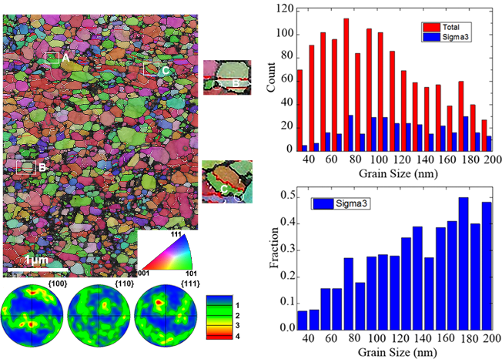
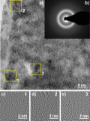
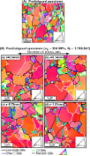
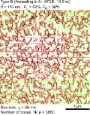
- dislocations produced by severe plastic deformation [32]. The inset shows a corresponding diffraction pattern. The presence of smeared and ring-like diffraction patterns implies lots of nanoscale grains and their low-angle misorientations. This result is consistent with previous reports of copper alloys


Deformation-driven catalysis of nanocrystallization in amorphous Al alloys
Beilstein J. Nanotechnol. 2016, 7, 1428–1433, doi:10.3762/bjnano.7.134
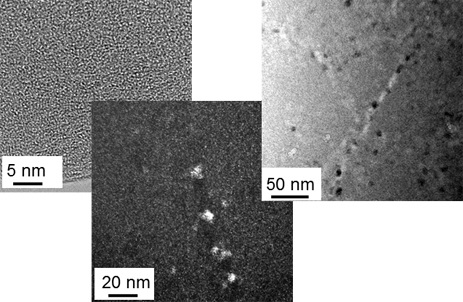
- structural rearrangements that occurred not only in shear bands, but also in the region between the shear bands [46]. Argon [47] and Steif [48] demonstrated that shear localization was preceded by homogeneous plastic flow. Cahn and co-workers concluded based on density changes that plastic deformation of a


The self-similarity theory of high pressure torsion
Beilstein J. Nanotechnol. 2016, 7, 1267–1277, doi:10.3762/bjnano.7.117
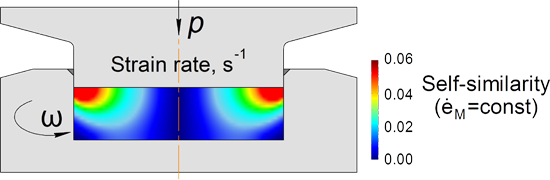
- -similarity; severe plastic deformation; Introduction High pressure torsion (HPT) is a severe plastic deformation process, which is widely used for producing nanocrystalline metals and alloys [1][2][3]. The generally accepted theory of HPT is based on the assumptions of uniformity of simple shear deformation


Functional diversity of resilin in Arthropoda
Beilstein J. Nanotechnol. 2016, 7, 1241–1259, doi:10.3762/bjnano.7.115
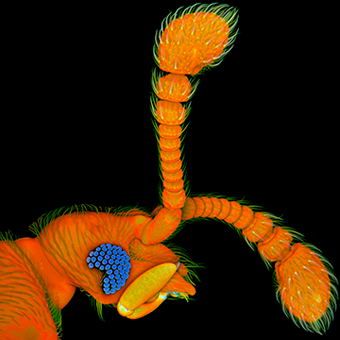
- fresh adhesive tarsal setae. While the material of the tip features only elastic deformation, both elastic and, to some extent, plastic deformation are observed in the material of the base [48]. This means that the purely elastic response of the tip is due to the presence of resilin, whereas the
- partially plastic deformation at the base is mainly due to the presence of stiffer tanned exoskeleton. It is very likely that effects similar to those observed in beetle adhesive tarsal setae exist in other exoskeleton structures with comparable gradients of the resilin proportion. Occurrence and functions


Reasons and remedies for the agglomeration of multilayered graphene and carbon nanotubes in polymers
Beilstein J. Nanotechnol. 2016, 7, 1174–1196, doi:10.3762/bjnano.7.109
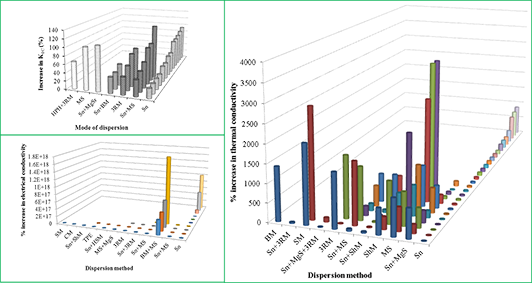
- graphene sheets due to their coiled structure [18][19]. When an external load is applied, the graphene sheets undergo plastic deformation and a large amount of energy is absorbed [20]. Bending and folding takes place in graphene sheets and van der Waals interactions help to compensate the bending energy at


In situ observation of deformation processes in nanocrystalline face-centered cubic metals
Beilstein J. Nanotechnol. 2016, 7, 572–580, doi:10.3762/bjnano.7.50
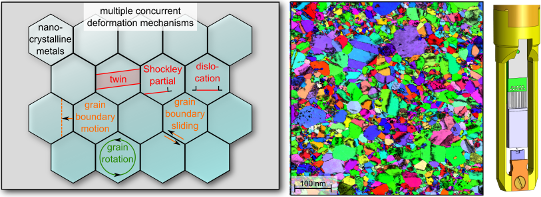
- -Helmholtz-Platz 1, 76344 Eggenstein-Leopoldshafen, Germany 10.3762/bjnano.7.50 Abstract The atomistic mechanisms active during plastic deformation of nanocrystalline metals are still a subject of controversy. The recently developed approach of combining automated crystal orientation mapping (ACOM) and in
- situ straining inside a transmission electron microscope was applied to study the deformation of nanocrystalline PdxAu1−x thin films. This combination enables direct imaging of simultaneously occurring plastic deformation processes in one experiment, such as grain boundary motion, twin activity and
- grain rotation. Large-angle grain rotations with ≈39° and ≈60° occur and can be related to twin formation, twin migration and twin–twin interaction as a result of partial dislocation activity. Furthermore, plastic deformation in nanocrystalline thin films was found to be partially reversible upon


Nanoscale rippling on polymer surfaces induced by AFM manipulation
Beilstein J. Nanotechnol. 2015, 6, 2278–2289, doi:10.3762/bjnano.6.234
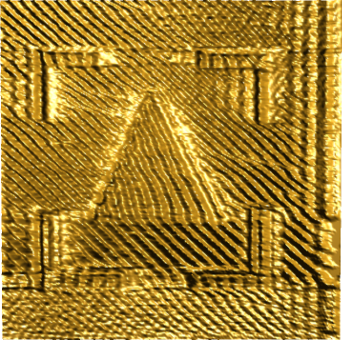
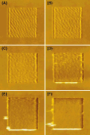
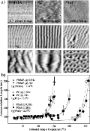
- how it can be exploited in order to deduce the molecular properties of polymer films [27]. In this review, we wish to specifically focus on the controlled formation of ‘nanoripples’. This phenomenon is related to plastic deformation, which in general does not lead to the formation of debris. In
- well known before the invention of the AFM methods. In particular, it was studied at a macroscopic level by sliding stiff objects, generally cones or spheres, over polymer samples. Plastic deformation and wear of polymer surfaces represented the subject of several experimental works carried out
- starting from the sixties of the last century. One of the most striking observations was the formation of macroscopic surface undulations, nowadays known as ‘Schallamach waves’ [28][29]. With the invention of AFM, the scientific interest moved to the investigation of plastic deformation and wear in polymer




A simple and efficient quasi 3-dimensional viscoelastic model and software for simulation of tapping-mode atomic force microscopy
Beilstein J. Nanotechnol. 2015, 6, 2233–2241, doi:10.3762/bjnano.6.229
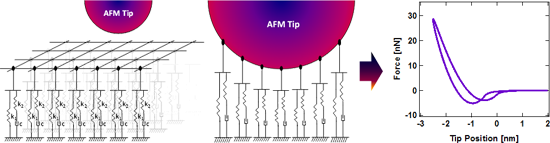
- interactions. A few examples of these processes include viscoelastic deformation, irreversible molecular structure changes (e.g., in biomolecules) and plastic deformation in crystals. These phenomena bring challenges into AFM characterization primarily in two ways. First, in delicate samples, such as



Development of a novel nanoindentation technique by utilizing a dual-probe AFM system
Beilstein J. Nanotechnol. 2015, 6, 2015–2027, doi:10.3762/bjnano.6.205
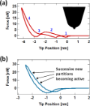
- –distance curves using the OP model. Figure 1a shows a typical force–distance curve when nanoindentation includes a plastic deformation. In this curve, the loading part includes both elastic and plastic deformation. However, during the unloading portion, it is assumed that only elastic deformation occurs


Lower nanometer-scale size limit for the deformation of a metallic glass by shear transformations revealed by quantitative AFM indentation
Beilstein J. Nanotechnol. 2015, 6, 1721–1732, doi:10.3762/bjnano.6.176
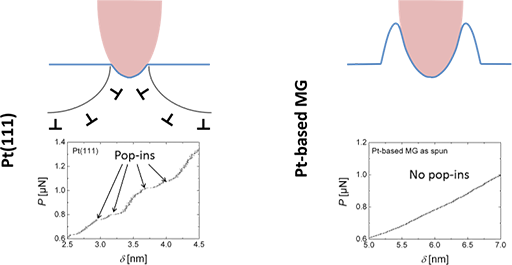
- plastic deformation mechanisms of crystalline Pt(111) are consistent with the discrete mechanisms established for larger scales: Plasticity is mediated by dislocation gliding and no rate dependence is observed. For the metallic glass we have discovered that plastic deformation at the nanometer scale is
- ability to apply larger strains than spherical indenters. Analysis of the curvature of load–displacement curves and of the occurrence of sharp pop-ins have further been used to study mechanisms of plastic deformation such as the generation and multiplication of dislocations in crystalline metals [3] or
- of 1 Å and less. These observations demonstrate the potential of AFM indentation to detect atomistic plasticity events. Here we present the results of AFM indentation in ultra-high vacuum to quantitatively determine hardness and the underlying fundamental mechanisms of plastic deformation of



Possibilities and limitations of advanced transmission electron microscopy for carbon-based nanomaterials
Beilstein J. Nanotechnol. 2015, 6, 1541–1557, doi:10.3762/bjnano.6.158
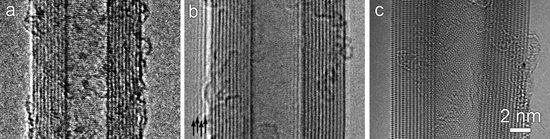
- instance, the evolution of defects (such as the shear strain present in CNTs as discussed in Section 3.1) along with the elastic/plastic deformation in CNT-reinforced composites under load can be well studied using similar techniques [109]. In contrast to the external stimuli, which are introduced through


Atomic force microscopy as analytical tool to study physico-mechanical properties of intestinal cells
Beilstein J. Nanotechnol. 2015, 6, 1457–1466, doi:10.3762/bjnano.6.151
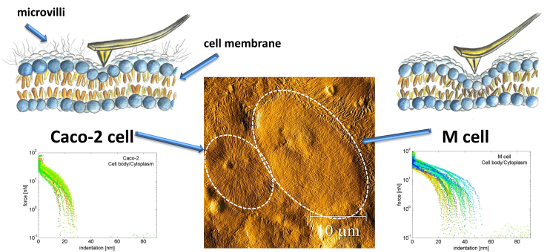
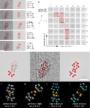
- that the cell integrity remains on the contact with the sharp cantilever (Figure 5). At very low indentations, both cell types show plastic deformation but this effect is more significant in M cells (see Figure 5C,D). This can be explained by higher indentation values obtained for M cells (50 nm


Magnetic properties of iron cluster/chromium matrix nanocomposites
Beilstein J. Nanotechnol. 2015, 6, 1158–1163, doi:10.3762/bjnano.6.117
- treatment steps, i.e., quenching, annealing combined with plastic deformation, in order to obtain the multicomponent multiphase structures optimized for advanced structural and functional applications [1]. Besides the pathways used during the preparation of the alloys, their final nano- and microstructure


Nanostructuring of GeTiO amorphous films by pulsed laser irradiation
Beilstein J. Nanotechnol. 2015, 6, 893–900, doi:10.3762/bjnano.6.92
- for plastic flow. Such a mechanism can be imagined based on the shear transformation-zone theory of plastic deformation near the glass transition [30]. The temperature due to the laser heating was estimated by using the Heat Flow software [24]. Figure 8 shows the temperature variation at different


Stiffness of sphere–plate contacts at MHz frequencies: dependence on normal load, oscillation amplitude, and ambient medium
Beilstein J. Nanotechnol. 2015, 6, 845–856, doi:10.3762/bjnano.6.87
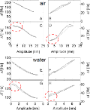
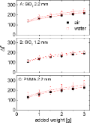
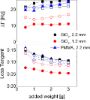
- forces, plastic deformation, and the effects of contamination. In particular, plastic deformation can lead to junction growth, which stiffens the contact rather than weakening it [12][13]. There is a particular shortcoming that is on the one hand widely observed, but also easily fixed on a heuristic




Influence of grain size and composition, topology and excess free volume on the deformation behavior of Cu–Zr nanoglasses
Beilstein J. Nanotechnol. 2015, 6, 537–545, doi:10.3762/bjnano.6.56
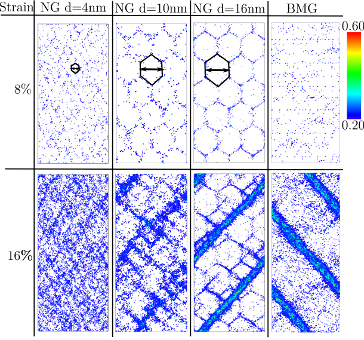
- from a homogeneous to an inhomogeneous plastic deformation, because the softer interfaces are promoting the formation shear transformation zones. In case of the Cu-rich system, shear localization at the interfaces is most pronounced, since both the topological order and free volume content of the
- -deformed metallic glasses [11]. Consequently, the NG exhibits a more homogeneous plastic deformation carried by a pattern of multiple shear bands [12] as compared to the bulk metallic glass (BMG), where plastic deformation is well localized in a few dominant shear bands. The influence of interfaces on the
- on the situation in bulk NGs. In this work, we study the influence of grain size and chemical composition on mechanical properties of Cu–Zr NGs by means of molecular dynamics simulations. First, we investigate whether by varying the grain size the plastic deformation of NGs changes. Second, we



Oxygen-plasma-modified biomimetic nanofibrous scaffolds for enhanced compatibility of cardiovascular implants
Beilstein J. Nanotechnol. 2015, 6, 254–262, doi:10.3762/bjnano.6.24
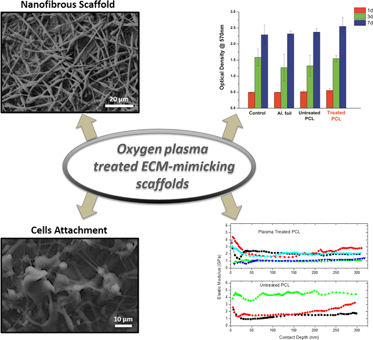
- performed to study the resistance of the plasma-treated scaffolds to plastic deformation. Lastly, the cell studies indicated that all scaffolds were cytocompatible, with the plasma-treated ones expressing a more pronounced cell viability and adhesion. All the above findings demonstrate the great potential


Mechanical properties of sol–gel derived SiO2 nanotubes
Beilstein J. Nanotechnol. 2014, 5, 1808–1814, doi:10.3762/bjnano.5.191
- structural peculiarities of the material itself. Silicon dioxide in the form of quartz as well as amorphous silica, is a compound with covalent bonds, which at room temperature is rather brittle and does not allow plastic deformation. In studies dedicated to the mechanical characterization of SiO2 NTs and
- NWs, the material was treated as purely elastic without any plastic yield. However, in recent years plastic deformation of nanomaterials with covalent bonds was demonstrated and investigated by several research teams [17][18][19]. For instance, when thermally produced silica NWs are irradiated by a
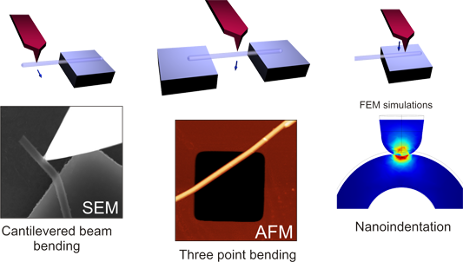
- to non-linearity and plastic deformation effect. Measurements were performed on five NTs and results are summarized below in Table 1. Nanoindentation experiments were performed on the same NTs that were used in the three-point bending experiments. A selected area of a NT on the substrate (3 × 3 and 1





