


Search results
Search for "polystyrene" in Full Text gives 234 result(s) in Beilstein Journal of Nanotechnology. Showing first 200.
Enhanced feedback performance in off-resonance AFM modes through pulse train sampling
Beilstein J. Nanotechnol. 2024, 15, 134–143, doi:10.3762/bjnano.15.13
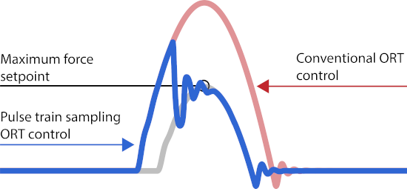
- imaged a blend of polystyrene and low-density polyethylene (PS/LDPE) sample (SPM LABS LLC., Tempe, USA), mounting a RTESPA-300 cantilever (Bruker) and using both methods with the same ORT parameters, that is, 50 nm peak-to-peak amplitude and 2 kHz ORT frequency. Figure 5 shows 250 × 250 pixels images


Hierarchically patterned polyurethane microgrooves featuring nanopillars or nanoholes for neurite elongation and alignment
Beilstein J. Nanotechnol. 2023, 14, 1157–1168, doi:10.3762/bjnano.14.96
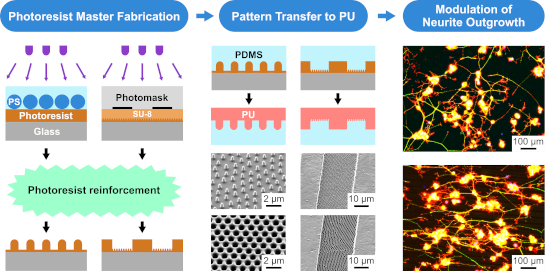
- guidance conduits. Experimental Materials Polystyrene nanospheres (ca. 1.1 µm diameter), laminin from Engelbreth–Holm–Swarm murine sarcoma, and nerve growth factor (2.5S, from murine submaxillary glands) were purchased from Sigma, Merck KGaA (Germany). SU-8 50 and SU-8 developer were obtained from Kayaku
- 1640 medium, sodium pyruvate, and HEPES buffer were purchased from Corning (NY, USA). The reusable polystyrene nanosphere lens array (1.1 µm) embedded in PDMS for UV-light focusing was prepared according to procedures described in our previous study [16]. Preparation of nano-/micropatterned SU-8 master
- . ratio 1:0.7) at 5000 rpm and soft-baked at 95 °C for 160 s. An array of polystyrene nanospheres (1.1 µm) embedded in PDMS was placed in conformal contact with the SU-8, and then exposure was performed at a dose of 35–42 mJ·cm−2 (Figure 1A(i)). (Older PS-NS/PDMS films seem to require slightly higher UV


Recognition mechanisms of hemoglobin particles by monocytes – CD163 may just be one
Beilstein J. Nanotechnol. 2023, 14, 1028–1040, doi:10.3762/bjnano.14.85
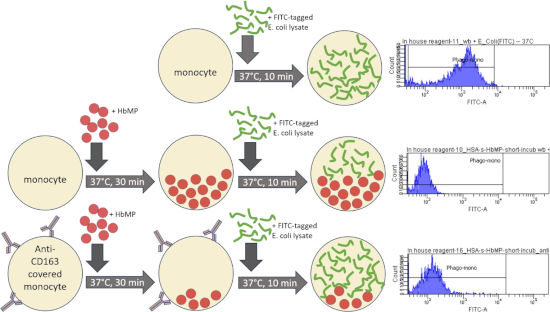
- ) with a diameter between 0.4 and 2.1 µm demonstrate this relationship, as Figure 6 and Figure 7 illustrate (incubation of heparin blood with 2 × 10⁸ MP/mL) [41]. Champion et al. researched this relationship in a model as well [42]. Test particles (polystyrene microspheres) with diameters in the range of




Exploring internal structures and properties of terpolymer fibers via real-space characterizations
Beilstein J. Nanotechnol. 2023, 14, 1004–1017, doi:10.3762/bjnano.14.83
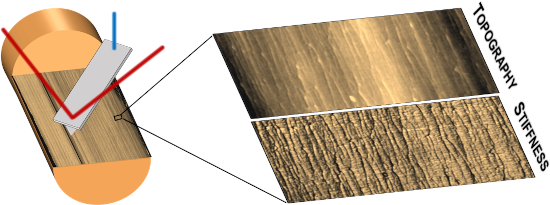
- AFM tip was taken to be a cylindrical punch, and the tip radius was calibrated by scanning on polystyrene (ET,PS = 2.7 GPa, Bruker) as a control substrate before and after each scan on a fiber surface. ET quantifications from fiber maps were only kept when mean ET,PS values varied by less than 10
- % between the pre- and post-scans on polystyrene. To ensure repeatability of measurements and observations, AFM maps and quantitative data were each obtained from at least one region in two separate Technora® and two separate Kevlar® fibers. The ET measurements were the most restrictive considering the need






Antibody-conjugated nanoparticles for target-specific drug delivery of chemotherapeutics
Beilstein J. Nanotechnol. 2023, 14, 912–926, doi:10.3762/bjnano.14.75
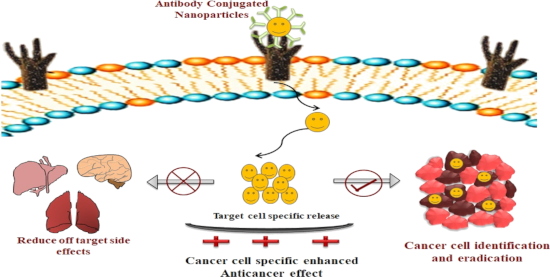
- smaller when proteins were bound to NPs [81]. Xiao et al. functionalized Tf onto the surface of PEGylated polystyrene NPs to evaluate the effect of the protein corona on blood–brain barrier transcytosis, endocytosis, and intracellular trafficking. They demonstrated that Tf-NPs completely lost their



Nanostructured lipid carriers containing benznidazole: physicochemical, biopharmaceutical and cellular in vitro studies
Beilstein J. Nanotechnol. 2023, 14, 804–818, doi:10.3762/bjnano.14.66
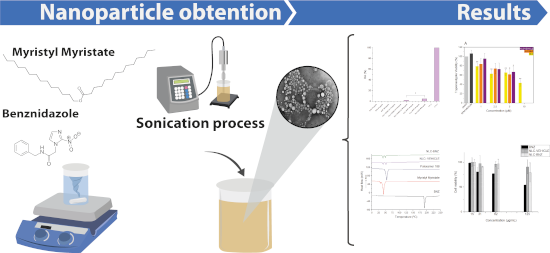
- polydispersion index Nano ZS Zetasizer (Malvern Instruments Corp, Worcestershire, UK) was used to measure particle size distribution and mean diameter by DLS at 25 °C in polystyrene cuvettes with a thickness of 10 mm. The zeta potential was determined by Doppler anemometry using the previously described
- to a formazan product (i.e., the MTT method). A 96-well polystyrene microplate containing 1 × 10⁴ cells per well of CHO cells (obtained from the American Type Culture Collection, Manassas, VA, USA) were cultured in Ham’s F12 medium (Gibco BRL, Grand Island, NY, USA) supplemented with 10% fetal bovine


Investigations on the optical forces from three mainstream optical resonances in all-dielectric nanostructure arrays
Beilstein J. Nanotechnol. 2023, 14, 674–682, doi:10.3762/bjnano.14.53
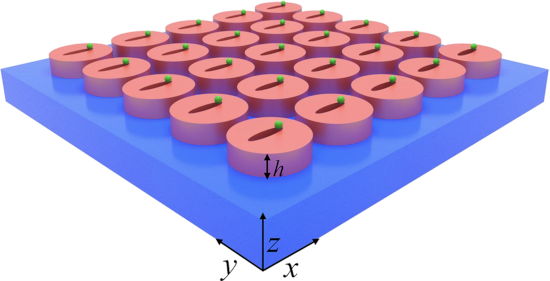
- object it encounters, and the resulting optical force can be used to manipulate particles at the micro- or nanoscale. In this work, we present a detailed comparison through numerical simulations of the optical forces that can be exerted on polystyrene spheres of the same diameter. The spheres are placed
- nanoscale polystyrene (PS) spheres in the slot of the all-dielectric nanostructures. All these spheres have their own response to the incident radiations (e.g., Mie resonances). However, we noted that due to the small size of the spheres and the relatively lower refractive index of the polymeric material


Conjugated photothermal materials and structure design for solar steam generation
Beilstein J. Nanotechnol. 2023, 14, 454–466, doi:10.3762/bjnano.14.36
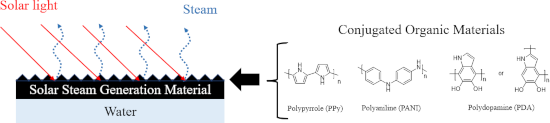
- coating method to obtain light-trapping coatings of nanofibers by the copolymerization of dopamine and pyrrole, which can be directly and rapidly synthesized on a polystyrene (PS) foam at room temperature (Figure 9). Due to its excellent wettability, the coating is water permeable and can be directly


Nanotechnology – a robust tool for fighting the challenges of drug resistance in non-small cell lung cancer
Beilstein J. Nanotechnol. 2023, 14, 240–261, doi:10.3762/bjnano.14.23
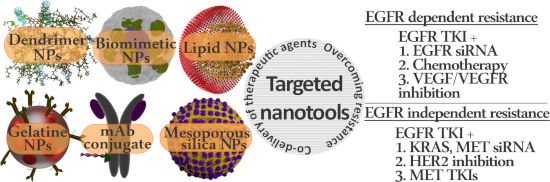
- cell–polystyrene NP (200 and 500 nm) complexes (RBCsNP complexes) [119]. Compared to the free NPs, the delivery of RBCsNP complexes to the lungs, that is, the first capillary bed downstream of the IV injection of the NPs, was five-fold increased, which makes RBCsNP complexes very useful for lung tissue
- , as in the case of RBCs anti-PECAM mAb-coated polystyrene NPs, the complex showed a 760-fold increase in the lung-to-liver distribution ratio compared to nonspecific NPs. Different studies envision RBCsNPs complexes as a highly performant platform for augmented NP localization, which can be easily


Solvent-induced assembly of mono- and divalent silica nanoparticles
Beilstein J. Nanotechnol. 2023, 14, 52–60, doi:10.3762/bjnano.14.6
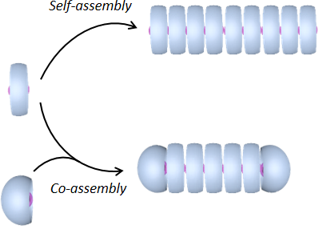
- patch made of grafted polystyrene chains. The multistage synthesis allows for a fine control of the patch-to-particle size ratio from 0.23 to 0.57. The assembly of the patchy nanoparticles can be triggered by reducing the solvent quality for the polystyrene chains. Dimers or trimers can be obtained by
- assembly of silica/polystyrene (PS) dumbbells [28] and silica nanoparticles with two PS patches (2-PSN) [29][30][31] into multipod-like clusters and colloidal chains, respectively. We have recently reported that the same strategy can be used to assemble one-patch silica nanoparticles (1-PSN) with a well


Recent advances in green carbon dots (2015–2022): synthesis, metal ion sensing, and biological applications
Beilstein J. Nanotechnol. 2022, 13, 1068–1107, doi:10.3762/bjnano.13.93




Recent advances in nanoarchitectures of monocrystalline coordination polymers through confined assembly
Beilstein J. Nanotechnol. 2022, 13, 763–777, doi:10.3762/bjnano.13.67
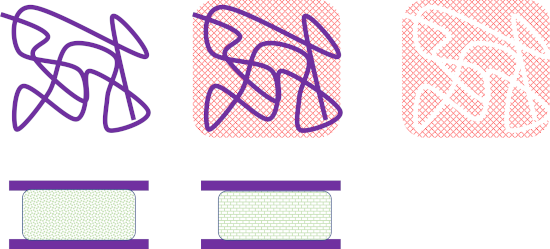
- networks were formed by densely packed monodispersed polystyrene spheres, ordered macropores could be created inside ZIF-8 single crystals or other coordination polymers (Figure 5) [117][118]. The inverse opal single crystals presented higher catalytic activity than microporous single crystals. These
- particles could be extended into more complex clusters. Each of exposed facets of the polyhedral coordination polymer crystals could be attached with one polystyrene sphere, forming clusters with various coordination numbers and geometries [136]. One problem regarding the assembly of monocrystalline




Fabrication and testing of polymer microneedles for transdermal drug delivery
Beilstein J. Nanotechnol. 2022, 13, 629–640, doi:10.3762/bjnano.13.55
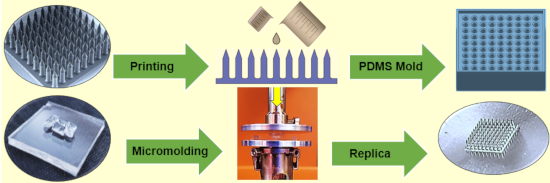
- their biocompatibility, biodegradability, and potential for mass production [12]. Polymers such as polylactic acid (PLA), poly(methyl methacrylate) (PMMA), poly(carbonate), cyclic olefin copolymer (COC) and cycloolefin polymers (COP), polystyrene, and SU-8 photoresists, have all been used for



Zinc oxide nanostructures for fluorescence and Raman signal enhancement: a review
Beilstein J. Nanotechnol. 2022, 13, 472–490, doi:10.3762/bjnano.13.40
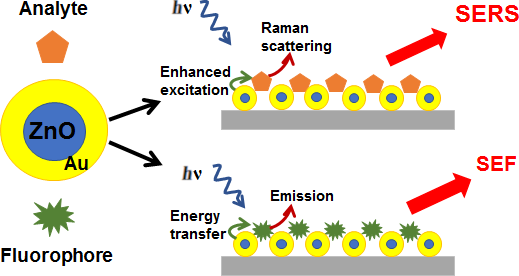
- substrate covered with polystyrene spheres by atomic layer deposition, followed by electrodeposition, which was used to grow ZnO nanowires onto the surface. The Au layer was deposited after burning off the polystyrene spheres by electron beam evaporation while monitoring its thickness. Considering the




Micro- and nanotechnology in biomedical engineering for cartilage tissue regeneration in osteoarthritis
Beilstein J. Nanotechnol. 2022, 13, 363–389, doi:10.3762/bjnano.13.31
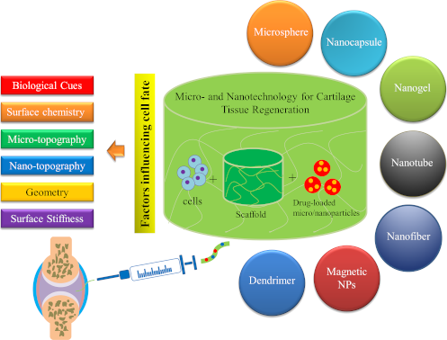
- stability compared to flat tissue culture polystyrene surface (TCPS) and PLLA scaffold. It is well-accepted that polysaccharides containing sulfate groups can mimic the physicochemical and biological properties of sulfated GAGs [113]. In this context, Irani et al. used sulfated alginate as a heparin
- microcarriers could be developed into microtissues enabling MSC differentiation, which could subsequently be used for in vivo cartilage repair. In addition, ECM derived from MSCs was used to coat polystyrene plastic tissue culture surfaces and led to dramatically increased MSC proliferation, migration, and


A comprehensive review on electrospun nanohybrid membranes for wastewater treatment
Beilstein J. Nanotechnol. 2022, 13, 137–159, doi:10.3762/bjnano.13.10
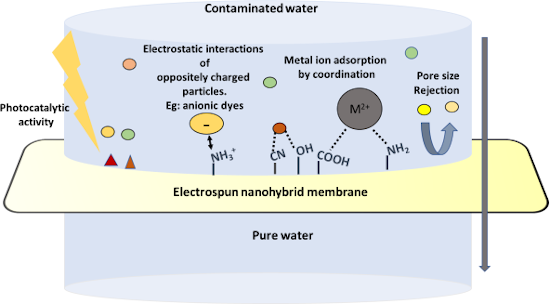
- common synthetic polymer membranes such as polycaprolactone (PCL), polyacrylonitrile (PAN), polyacrylic acid (PAA), polysulfones (PSF), polyimides (PI), polyvinyl alcohol (PVA), polystyrene (PS), polyethylene oxide (PEO), poly(vinylidene fluoride) (PVDF) and natural polymers such as gelatin, keratin




A photonic crystal material for the online detection of nonpolar hydrocarbon vapors
Beilstein J. Nanotechnol. 2022, 13, 127–136, doi:10.3762/bjnano.13.9
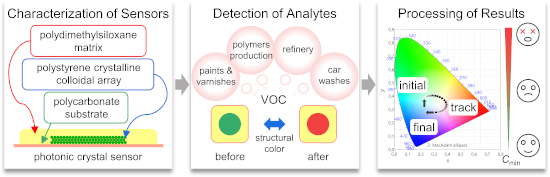
- ability to control selectivity in molecularly imprinted sensors and the simple visual response in photonic crystal sensors make it promising and even mandatory to combine these two approaches. In our previous study, the optimal parameters of polystyrene (PS) particles for sensor matrices for saturated
- are a CCA of polystyrene submicrometer particles embedded in a polydimethylsiloxane (PDMS) layer. The matrix interaction was responsible for the main mechanism, which was monitored by configuration changes of the photonic bandgap using diffuse reflectance spectroscopy. Results and Discussion
- effective refractive index of the photonic crystal can be obtained [37][38]. The effective refractive index of the structure without PDMS is 1.525, with PDMS it is 1.599, and the average diameter of the particles is 197.5 nm and 201.5 nm, respectively. The obtained average diameters of the polystyrene


Biocompatibility and cytotoxicity in vitro of surface-functionalized drug-loaded spinel ferrite nanoparticles
Beilstein J. Nanotechnol. 2021, 12, 1339–1364, doi:10.3762/bjnano.12.99
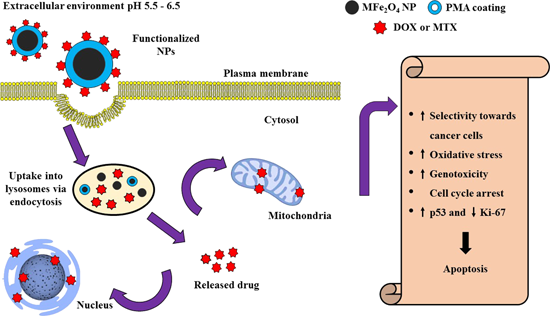
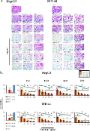
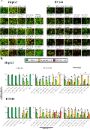
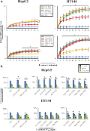
- (low-melting and normal) were purchased from Thermo Fischer Scientific and Hydra Gene Co., Ltd, respectively. Ethanol, trichloroacetic acid (TCA, 99%), trypan blue, fetal bovine serum (FBS, sterile filtered), orange G, sodium hydroxide (NaOH, 99%), and dibutylphthalate polystyrene xylene (DPX, research





Comprehensive review on ultrasound-responsive theranostic nanomaterials: mechanisms, structures and medical applications
Beilstein J. Nanotechnol. 2021, 12, 808–862, doi:10.3762/bjnano.12.64


Recent progress in actuation technologies of micro/nanorobots
Beilstein J. Nanotechnol. 2021, 12, 756–765, doi:10.3762/bjnano.12.59
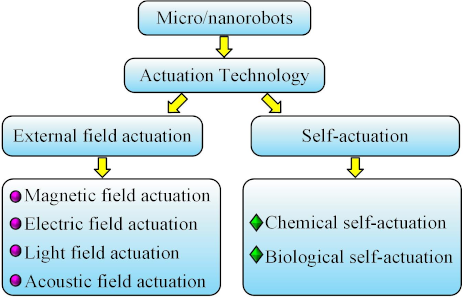
- /nanorobots, for example, the flagella or cilia of swimming microorganisms. Behkam and Sitti [45] suspended droplets of bacteria, such as E. coli, and polystyrene in a solution of water and glucose. After absorbing the glucose nutrient, the rotating flagella of the bacteria pushed the droplets forward, and


Nanoporous and nonporous conjugated donor–acceptor polymer semiconductors for photocatalytic hydrogen production
Beilstein J. Nanotechnol. 2021, 12, 607–623, doi:10.3762/bjnano.12.50
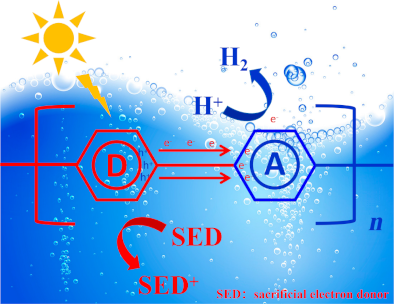
- also adsorb H+ in water to form the polymer/water interface. Tian et al. [70] prepared several BT-based polymer dots (Pdots) with functionalized polystyrene (PS-PEG-COOH) (Figure 5) to improve the wettability of polymers. In contrast to the pristine BT-based polymers (P49–P51) (Figure 5), the Pdots




The impact of molecular tumor profiling on the design strategies for targeting myeloid leukemia and EGFR/CD44-positive solid tumors
Beilstein J. Nanotechnol. 2021, 12, 375–401, doi:10.3762/bjnano.12.31
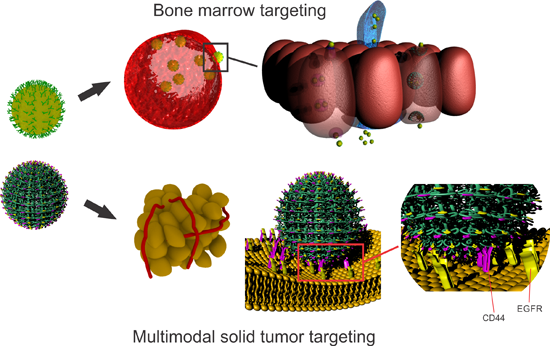
- circulation half-life of polystyrene colloidal particles [21][22]. In their experiments, besides the groundbreaking work on the steric barrier and the so-called “stealth” effect of the poloxamer, they have further noticed that the adsorbed poloxamer 338 and 407 shells directed the polystyrene beads to the
- sinusoidal endothelial cells of rabbit BM [23]. Even though the authors eliminated the possibility of a BM distribution mediated through macrophage phagocytosis, the exact mechanism of localization remained unknown. Moreover, the poloxamer-coated polystyrene beads circulated in the blood for up to eight days


Effect of different silica coatings on the toxicity of upconversion nanoparticles on RAW 264.7 macrophage cells
Beilstein J. Nanotechnol. 2021, 12, 35–48, doi:10.3762/bjnano.12.3
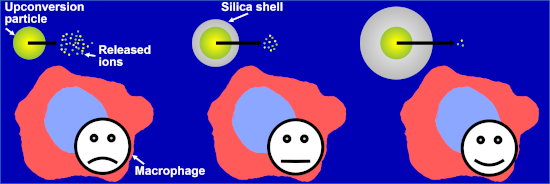
- particles [45]. Xia et al. investigated cell type-dependent cytotoxicity in RAW 264.7, epithelial (BEAS-2B), human microvascular endothelial (HMEC), hepatoma (HEPA-1), and pheochromocytoma (PC-12) cells after exposure to amine-functionalized polystyrene nanoparticles (NH2-PS) [64]. They observed that


Application of contact-resonance AFM methods to polymer samples
Beilstein J. Nanotechnol. 2020, 11, 1714–1727, doi:10.3762/bjnano.11.154
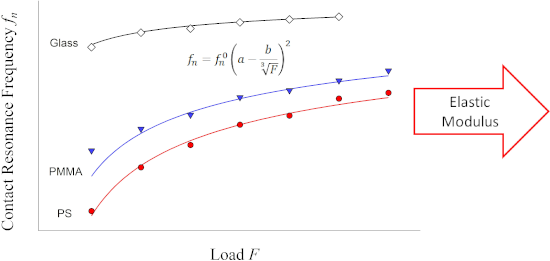
- modes including scanning under continuous contact wear and damage the sample and/or alter the surface roughness, the results of point CR measurements on bulk and thin films are presented. Though Young’s moduli of bulk polystyrene and poly(methyl methacrylate) could be determined through the presented
- on imprecise parameters such as the tip position on the cantilever. This article shows quantitative CR measurements on polymer films of polystyrene (PS), poly(methyl methacrylate) (PMMA), and poly(n-butyl methacrylate) (PnBMA), as well as glass. Current analysis methods are simplified to a point that
- moduli. Experimental Materials Contact-resonance measurements have been performed on films of polystyrene (PS, average Mw ≅ 280,000), poly(methyl methacrylate) (PMMA, average Mw ≅ 120,000), and poly(n-butyl methacrylate) (PnBMA, average Mw ≅ 337,000). All polymers have been purchased from Sigma-Aldrich


Design of V-shaped cantilevers for enhanced multifrequency AFM measurements
Beilstein J. Nanotechnol. 2020, 11, 1525–1541, doi:10.3762/bjnano.11.135
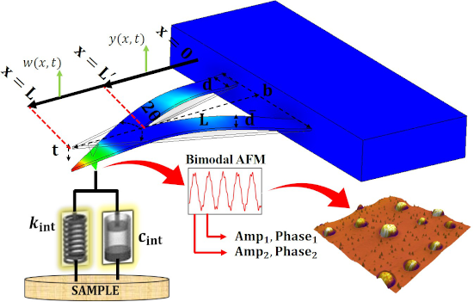
- dimensions, the optimum V-shaped cantilever that can provide the maximum phase contrast in bimodal AFM between gold (Au) and polystyrene (PS) is found. Based on this study, it is found that as the length of the cantilever increases the 2nd eigenmode phase contrast decreases. However, the base width exhibits
- an optimum rectangular cantilever. Two sets of bimodal AFM experiments are carried out on Au-PS and PS-LDPE (polystyrene and low-density polyethylene) samples to verify the simulation results. Keywords: bimodal AFM; optimization; soft matter; surface characterization; V-shaped cantilevers
- optimum dimensions, two different commercial V-shaped cantilevers are compared by performing bimodal AFM on a polymer blend of polystyrene and low-density polyethylene (PS-LDPE). Additionally, two V-shaped cantilevers are compared with an optimum rectangular cantilever [42] which is a common choice of


![[Graphic 4]](/bjnano/content/inline/2190-4286-11-135-i26.svg?max-width=637&scale=1.18182) = 15 µm, bref = 8...
= 15 µm, bref = 8...


![[Graphic 17]](/bjnano/content/inline/2190-4286-11-135-i39.svg?max-width=637&scale=1.18182) ) of V-shaped cantilevers for...
) of V-shaped cantilevers for...





