


Search results
Search for "reactivity" in Full Text gives 283 result(s) in Beilstein Journal of Nanotechnology. Showing first 200.
Nanotechnology-based approaches for the removal of microplastics from wastewater: a comprehensive review
Beilstein J. Nanotechnol. 2025, 16, 1607–1632, doi:10.3762/bjnano.16.114
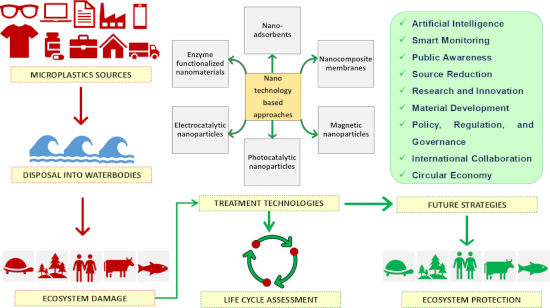
- , and advanced membrane materials, exhibit unique properties such as high surface area, enhanced reactivity, and tunable surface chemistry, which offer promising avenues for the selective and efficient removal of MPs from water. This paper also explores the mechanism, performance and limitations of
- key properties of nanoparticles include high surface area, extensive functionalization, high reactivity, and size-dependent characteristics. By leveraging these properties, water treatment methods can be refined at the nanoscale to selectively target pollutants [16][17]. This comprehensive review
- recognized for enhancing efficiency, affordability, effectiveness, and durability. These benefits stem from unique properties such as high specific surface area, increased reactivity, extensive functionalization, and size-dependent behaviour. By leveraging these characteristics, water treatment processes can


Cross-reactivities in conjugation reactions involving iron oxide nanoparticles
Beilstein J. Nanotechnol. 2025, 16, 1504–1521, doi:10.3762/bjnano.16.106
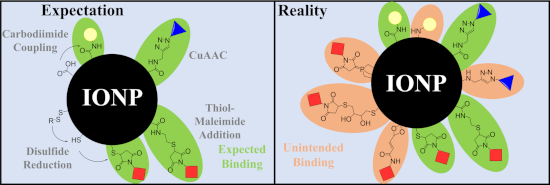
- surface chemistries, these considerations are especially important. The reactivity of the iron oxide surface itself is often neglected, but it should be noted that the use of thiols [43][44][45][46] and amines [47][48] as anchoring groups for IONP ligands has been reported in the literature, so it is
- clear that a binding affinity exists between these groups and surface Fe. From this standpoint, it is evident that proper controls are necessary to determine the cross-reactivity of these groups with IONPs. Herein, we report on the cross-reactivities of amines, thiols, maleimides, and common disulfide
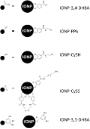
- surface [48], but can still bind through its carboxylate group. To rule out the possibility of cross-reactivity with quinones, in the case of 3,4-DHBA, we incorporate a set of controls using 3,5-DHBA ligands (Figure 1b), which cannot form stable quinones due to their meta hydroxy groups [56]. Few studies



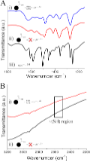


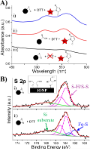


Laser processing in liquids: insights into nanocolloid generation and thin film integration for energy, photonic, and sensing applications
Beilstein J. Nanotechnol. 2025, 16, 1428–1498, doi:10.3762/bjnano.16.104
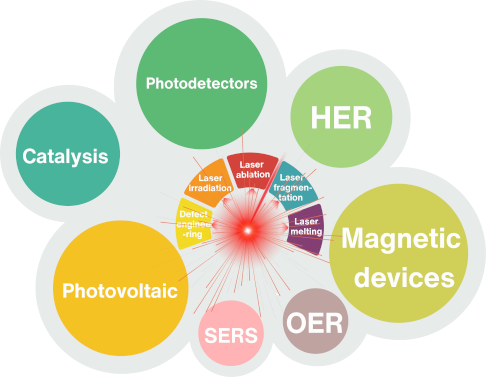


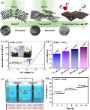




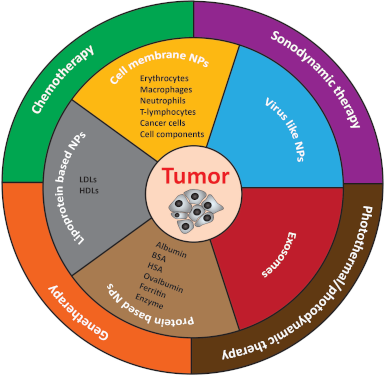
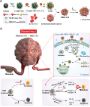
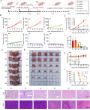
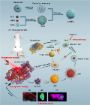
Better together: biomimetic nanomedicines for high performance tumor therapy
Beilstein J. Nanotechnol. 2025, 16, 1246–1276, doi:10.3762/bjnano.16.92


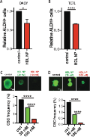
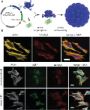




Hydrogels and nanogels: effectiveness in dermal applications
Beilstein J. Nanotechnol. 2025, 16, 1216–1233, doi:10.3762/bjnano.16.90
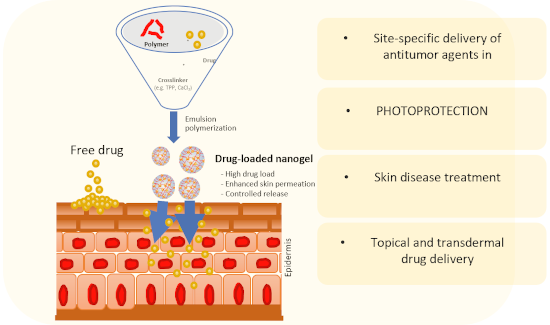
- may be required depending on the degree of reactivity between the polymer-cross-linker [47] and the desired characteristics of the hydrogel [14]. Various cross-linkers that cannot be categorized as conventional chemical cross-linkers have been utilized for the formation of hydrogels and nanogels [48


Electronic and optical properties of chloropicrin adsorbed ZnS nanotubes: first principle analysis
Beilstein J. Nanotechnol. 2025, 16, 1184–1196, doi:10.3762/bjnano.16.87
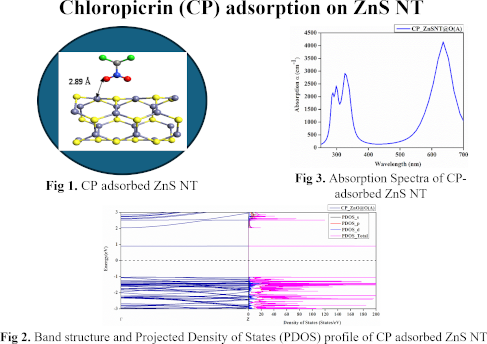
- is added to the molecule. The calculated IP and EA values for the target molecules are summarized in Table 3. Ionization potential is critical for assessing chemical reactivity; high IP values indicate chemical inertness and greater stability, whereas low IP values suggest higher molecular reactivity


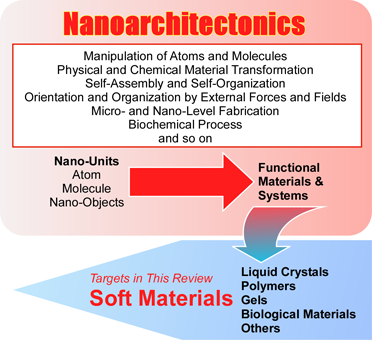
Soft materials nanoarchitectonics: liquid crystals, polymers, gels, biomaterials, and others
Beilstein J. Nanotechnol. 2025, 16, 1025–1067, doi:10.3762/bjnano.16.77






Insights into the electronic and atomic structures of cerium oxide-based ultrathin films and nanostructures using high-brilliance light sources
Beilstein J. Nanotechnol. 2025, 16, 860–871, doi:10.3762/bjnano.16.65

- that form the film, while the Pt ions in the 2+ oxidation state are confined at the outermost layers [29]. The interplay of ceria surfaces with adsorbed molecules, a crucial factor in understanding reactivity, has become a significant research focus, also thanks to synchrotron-radiation-based XPS
- on Pt NPs supported on ceria were compared with the ones observed on a Pt(111) surface [31]. The oxide-supported NPs were shown to have an enhanced reactivity and additional reaction pathways [31]. Regarding the same system, the efficient decomposition of methanol and the resistance to poisoning have
- associated to the formation of a Ce–Pt alloyed interfacial phase exhibiting a (2 × 2) periodicity [47]. The influence of the substrate on the stability and reactivity of supported ceria nanoislands has also been investigated by Ce M5 XANES in the case of Au(111) [48]. A loss of redox activity accompanied by


Morphology and properties of pyrite nanoparticles obtained by pulsed laser ablation in liquid and thin films for photodetection
Beilstein J. Nanotechnol. 2025, 16, 785–805, doi:10.3762/bjnano.16.60
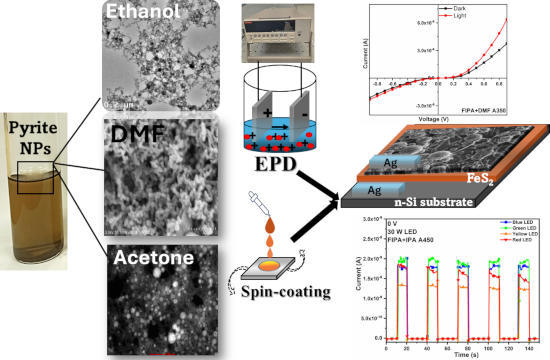
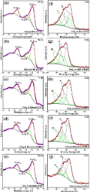
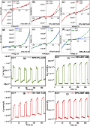
- likelihood of collisions and agglomeration if the repulsive forces are insufficient compared to other solvents, or the material-specific properties of FeS2, such as its semiconductor nature, weaker surface charge, and potential surface reactivity [73]. These factors reduce the effectiveness of electrostatic






High-temperature epitaxial growth of tantalum nitride thin films on MgO: structural evolution and potential for SQUID applications
Beilstein J. Nanotechnol. 2025, 16, 690–699, doi:10.3762/bjnano.16.53
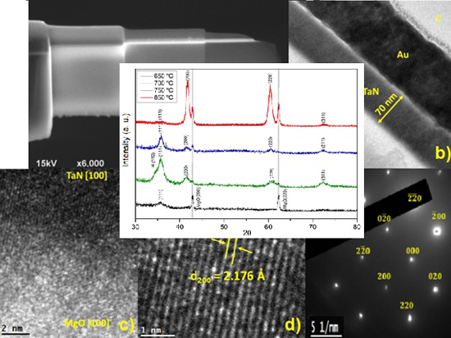
- -vacuum conditions, a small residual oxygen concentration inevitably remains within the deposition chamber. At elevated temperatures, the reactivity of these residual oxygen molecules increases, facilitating their adsorption onto the growing film surface. However, an increase in N2 pressure can lead to


N2+-implantation-induced tailoring of structural, morphological, optical, and electrical characteristics of sputtered molybdenum thin films
Beilstein J. Nanotechnol. 2025, 16, 495–509, doi:10.3762/bjnano.16.38
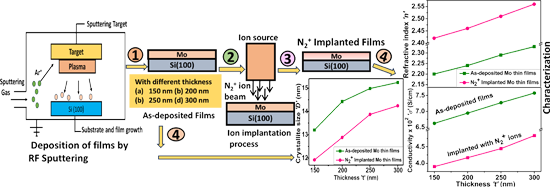
- , under incident helium ion energies of 50 to 100 eV. Nitrogen gas offers a fascinating opportunity for ion implantation in Mo thin films because of its high reactivity [22]. The incorporation of nitrogen ions alters the characteristics of Mo thin films, potentially improving their performance in a wide


ReactorAFM/STM – dynamic reactions on surfaces at elevated temperature and atmospheric pressure
Beilstein J. Nanotechnol. 2025, 16, 397–406, doi:10.3762/bjnano.16.30
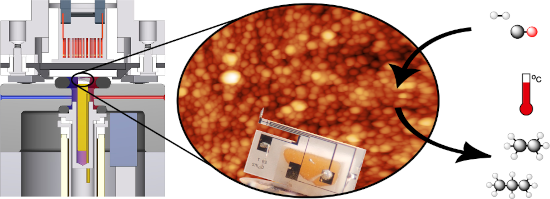
- AFM; model catalysts; nc-AFM; operando catalysis; qPlus tuning fork sensor; Introduction Operando catalysis is the field of research that monitors the structure, composition, and morphology of a catalyst while simultaneously investigating its activity, reactivity, and selectivity under industrially
- catalyst ceases its reactivity, the reaction stops. Furthermore, we observe maxima in masses of m/z 30, 44, and 86, representing ethane, propane, and hexane, respectively, in the same time frame as that for the observation of water formation. Conclusion The developments in the ReactorAFM/STM design prove


Emerging strategies in the sustainable removal of antibiotics using semiconductor-based photocatalysts
Beilstein J. Nanotechnol. 2025, 16, 264–285, doi:10.3762/bjnano.16.21
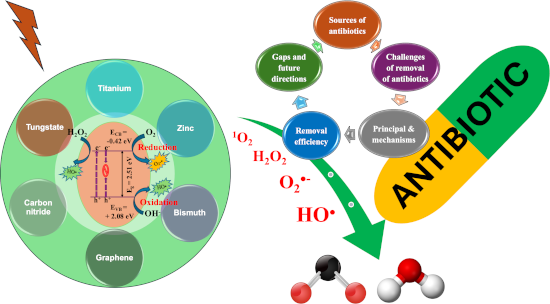
- exhibited 3.4 times higher reactivity than BiOCl when exposed to visible light. The degradation of TC using the BiOCl/CdS catalyst exhibited a similar tendency, with degradation rates 4.73 and 2.94 times higher than those of pure CdS and BOCl, respectively [95]. Some other heterostructures also exhibited



Preferential enrichment and extraction of laser-synthesized nanoparticles in organic phases
Beilstein J. Nanotechnol. 2025, 16, 254–263, doi:10.3762/bjnano.16.20
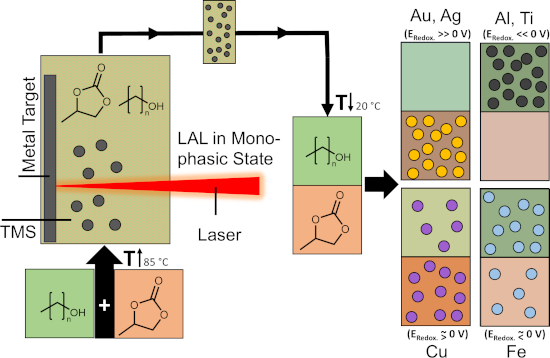
- parameters. As such, nanoparticle size [32][33], colloidal stability [33], gas formation [11][34], degree of oxidation [35][36][37], and nanoparticle productivity [11][32][33][34] can be influenced and tailored to specific needs. Although it may be expected that the particles’ reactivity with the solvent and
- rates also lead to different reactivity with the cooling solvent molecules that set the final surface chemistry of the particles and, thereby, affect their phase preference. Since the standard electrochemical reduction potential of Cu and Fe is close to 0 V, the different polarities of propylene




Instance maps as an organising concept for complex experimental workflows as demonstrated for (nano)material safety research
Beilstein J. Nanotechnol. 2025, 16, 57–77, doi:10.3762/bjnano.16.7

- cases from their high surface reactivity, which results from their small size and large surface area. They include applications in catalysis [3][4] (e.g., as catalytic converters in engines and for energy capture and storage) and as sensors [5][6] (e.g., for bioremediation and environmental monitoring


Advanced atomic force microscopy techniques V
Beilstein J. Nanotechnol. 2025, 16, 54–56, doi:10.3762/bjnano.16.6

- different origins. The authors assign one type of defects to a possible defect in the Ir surface. The other type is identified as four missing carbon atoms corroborated by a higher reactivity with the tip. We thank all authors who contributed to this thematic issue and we are grateful to all reviewers for
Theoretical study of the electronic and optical properties of a composite formed by the zeolite NaA and a magnetite cluster
Beilstein J. Nanotechnol. 2025, 16, 44–53, doi:10.3762/bjnano.16.5
- ], heavy metal removal [11][12], sensor technologies [13][14][15][16], and biomedical applications [17]. Nanoscale materials represent a thriving field of research with a wide range of potential applications. Today, it is generally recognized that properties like hardness, reactivity, toxicity, and optical


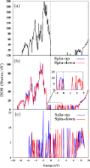


Ion-induced surface reactions and deposition from Pt(CO)2Cl2 and Pt(CO)2Br2
Beilstein J. Nanotechnol. 2024, 15, 1427–1439, doi:10.3762/bjnano.15.115

- from Pt(CO)2Br2/H2+ is proximate to the σ1 value that we have previously measured for the electron-induced CO desorption from Pt(CO)2Cl2 [57]. The relative proximity of these two σ1 values suggests that the reactivity of H2+ ions may contain a significant contribution from reactions involving the low
- conditions, representing the other type of charged particle used to effect deposition of metal-containing structures from organometallic precursors. Electron-induced Pt deposition from Pt(CO)2Cl2 was reported to follow an initial step similar to that in ion-induced reactivity with the desorption of CO and



Interaction of graphene oxide with tannic acid: computational modeling and toxicity mitigation in C. elegans
Beilstein J. Nanotechnol. 2024, 15, 1297–1311, doi:10.3762/bjnano.15.105
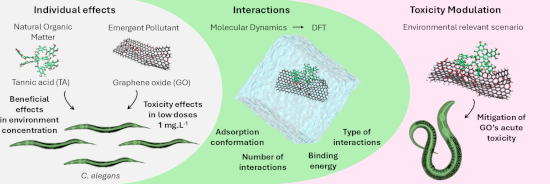
- surface, influencing GO’s colloidal stability, reactivity, and interactions with living organisms. As a consequence, these interactions can lead to diverse effects, ranging from the mitigation of toxicity [12][13][14] to the enhancement of its toxicity [15][16]. However, microscopic understanding of these
- in hydrogen bonding as well as hydrophobic and electrostatic interactions; also, they are responsible for TA’s high solubility, reactivity to metal cations, binding capacity to molecules and surfaces, and significant reducing and radical scavenging properties [19][21][22][23][24]. This range of
- indicates that TA mostly forms a single layer of stronger interacting molecules close to the surface. DFT calculations allowed us to evaluate the electronic and reactivity properties of the system TA and GO. Fukui functions are a concept used to study the local reactivity of molecules/materials. They


Mn-doped ZnO nanopowders prepared by sol–gel and microwave-assisted sol–gel methods and their photocatalytic properties
Beilstein J. Nanotechnol. 2024, 15, 1283–1296, doi:10.3762/bjnano.15.104
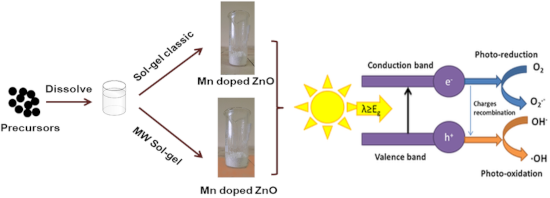
- and biological sensing [38][39][40]. The optical, thermal, and photocatalytic [40] reactivity of ZnO can also be improved with this method without changing its basic hexagonal structure. Consequently, the photodegradation of aqueous organic compounds triggered by manganese-doped ZnO still provides


AI-assisted models to predict chemotherapy drugs modified with C60 fullerene derivatives
Beilstein J. Nanotechnol. 2024, 15, 1170–1188, doi:10.3762/bjnano.15.95
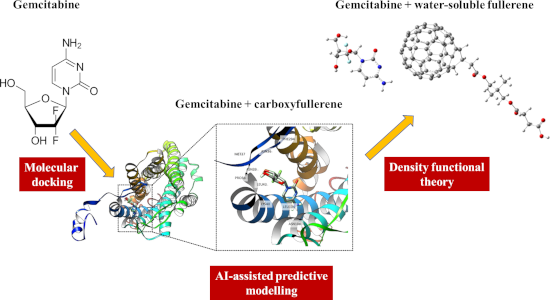
- enzyme topoisomerase II, leading to apoptosis of living tissues [71]; therefore, it is important to study its intrinsic chemical reactivity. At the B3PW91/6-31G level of DFT, it is possible to appreciate that the periphery of the doxorubicin molecule is saturated by organic substituents. Its oxy
- , Figure S2). In contrast, a high electrostatic potential (blue color in Supporting Information File 1, Figure S2) is found on the lateral substituted cycle. Both central rings, the aromatic one and the quinoid one, are the main regions for the reactivity, including all the substituent oxygen atoms. The


Introducing third-generation periodic table descriptors for nano-qRASTR modeling of zebrafish toxicity of metal oxide nanoparticles
Beilstein J. Nanotechnol. 2024, 15, 1142–1152, doi:10.3762/bjnano.15.93
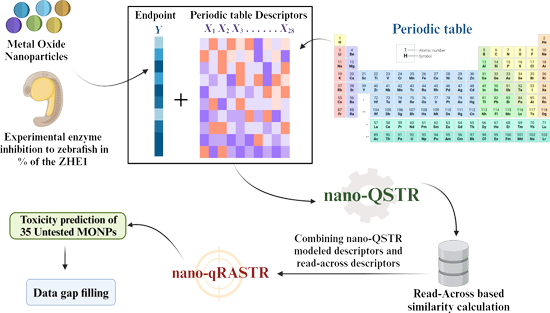
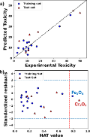
- of their unique properties. However, their size, surface area, and reactivity can cause toxicity, potentially leading to oxidative stress, inflammation, and cellular or DNA damage. In this study, a nano-quantitative structure–toxicity relationship (nano-QSTR) model was initially developed to assess
- of an element. In the context of nanoparticles, the size of the metal atoms directly affects the overall size and surface area of the nanoparticles, which are critical factors in their reactivity and interaction with other materials. The ionic radius is essential for understanding the metal’s
- a neutral atom, reflecting the tendency of the metal to gain electrons. The first ionization energy is the energy required to remove the outermost electron from a neutral atom, which is a critical factor in determining the metal’s reactivity and stability. For the present study, descriptors of all


Direct electron beam writing of silver using a β-diketonate precursor: first insights
Beilstein J. Nanotechnol. 2024, 15, 1117–1124, doi:10.3762/bjnano.15.90

- that was found in the deposit, despite the large number of carbon atoms in the ligands, was attributed to the thermodynamically favorable release of CO2 upon ligand cleavage [31]. All successfully tested silver carboxylates exhibit a generally high reactivity and sensitivity upon electron beam impact


Recent updates in applications of nanomedicine for the treatment of hepatic fibrosis
Beilstein J. Nanotechnol. 2024, 15, 1105–1116, doi:10.3762/bjnano.15.89
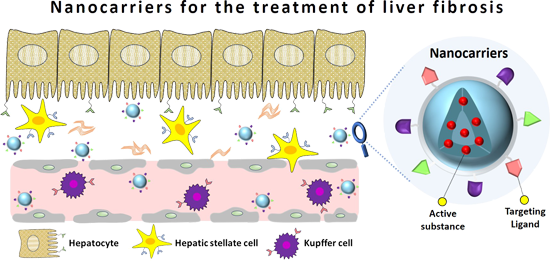
- application of nanoscale systems with unique physicochemical properties, including small size, large specific surface area, high reactivity, and quantum effects of the nanoparticles (NPs) [1][2]. Nanomedicine is specifically designated for therapeutics (drug delivery), diagnostics, and imaging, as well as for


Unveiling the potential of alginate-based nanomaterials in sensing technology and smart delivery applications
Beilstein J. Nanotechnol. 2024, 15, 1077–1104, doi:10.3762/bjnano.15.88
- , while TEM and SEM yield images of separated particles [61]. Surface area: The reactivity of nanoparticles and their ability to interact with ligands highly depend on their surface area. This property of the nanoparticles can be detected directly by adsorbing an inert gas under various pressures to form





