


Search results
Search for "resonance" in Full Text gives 843 result(s) in Beilstein Journal of Nanotechnology. Showing first 200.
Optical bio/chemical sensors for vitamin B12 analysis in food and pharmaceuticals: state of the art, challenges, and future outlooks
Beilstein J. Nanotechnol. 2025, 16, 2207–2244, doi:10.3762/bjnano.16.153
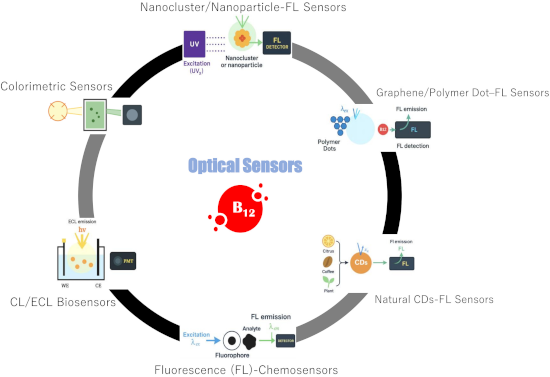
- biosensing platforms in detecting Co2+ ions and VB12 using RNA aptamer–gold nanoparticles colorimetric sensors, surface plasmon resonance sensors, chemiluminescence and electrochemiluminescence biosensors, and fluorescence biosensors (i.e., chemosensors, nanoclusters/nanoparticles-based sensors, and carbon
- (POC) diagnostics for different disorders and diseases. Resonance among the free electrons at the surface of colloidal AuNPs, induced by the interaction with light energy, causes the light to be absorbed in the blue-green and red parts of the visible spectrum. Consequently, the appearance of colors in
- distinct spectral absorption response. Specifically, the derived compound of 3-((2-hydroxynaphthalen-1-yl)diazenyl)-2-(styryl)quinazolin-4(3H)-one emerged as a rapid tool for the determination of Co2+ (λmax = 582 nm) and Fe2+ (λmax = 566 nm) in water. Surface plasmon resonance-based biosensors Surface


Electromagnetic study of a split-ring resonator metamaterial with cold-electron bolometers
Beilstein J. Nanotechnol. 2025, 16, 2199–2206, doi:10.3762/bjnano.16.152
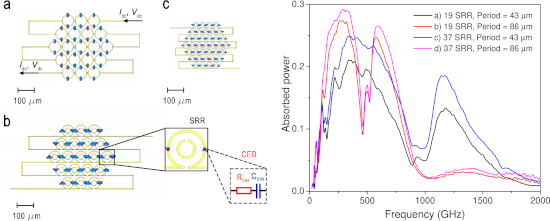
- -established magnetic metamaterial element whose resonant properties are governed by its internal inductance and capacitance, allowing for a strong magnetic response and associated current loops at the designed resonance frequency. The simulations of the metamaterial arrays were performed in the time-domain
- central frequency [20]. More importantly, it yielded a 1.5-fold increase in the total absorbed power. The amplitude–frequency characteristics (AFC) for the simulated single-ring and SRR designs are presented in Figure 2. For the single-ring array, the absorbed power in the first resonance maximum reached
- in the SRR dimensions and the array period by 20% led to a broadening of the absorption bandwidth and a small shift of the first resonance maximum towards higher frequencies. A further reduction of dimensions by 40% resulted in an even wider bandwidth; however, the peak absorbed power began


Ultrathin water layers on mannosylated gold nanoparticles
Beilstein J. Nanotechnol. 2025, 16, 2183–2198, doi:10.3762/bjnano.16.151
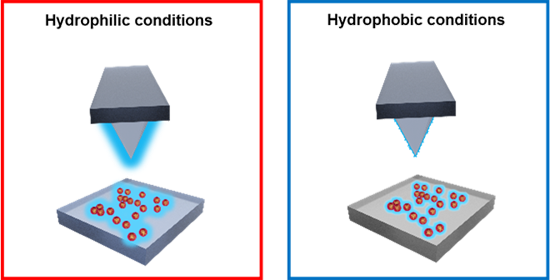
- = 3 N/m, a resonance frequency f = 75 kHz, and a nominal radius of less than 10 nm were used for the experiments on the hydrophilic surfaces. These conditions are referred to as “hydrophilic conditions”. The visualization of particles on hydrophobic surfaces was achieved by employing gold-coated



Electron transport through nanoscale multilayer graphene and hexagonal boron nitride junctions
Beilstein J. Nanotechnol. 2025, 16, 2132–2143, doi:10.3762/bjnano.16.147
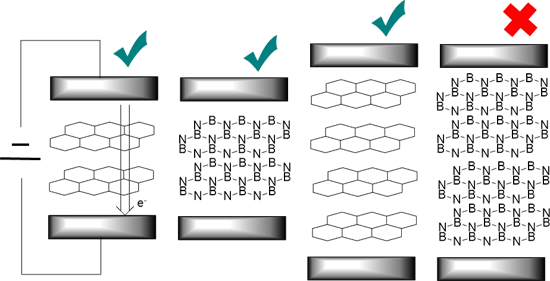
- /graphene with Stone–Wales defect/Pt junctions with six layers, which are shown in Figure 7A and Figure 7B, respectively. The transmission spectra are plotted for an applied bias of 0.8 V. The bias window is denoted with dashed lines. Figure 7A shows two distinct, sharp, resonance peaks in the bias window


Multifrequency AFM integrating PeakForce tapping and higher eigenmodes for heterogeneous surface characterization
Beilstein J. Nanotechnol. 2025, 16, 2077–2085, doi:10.3762/bjnano.16.142
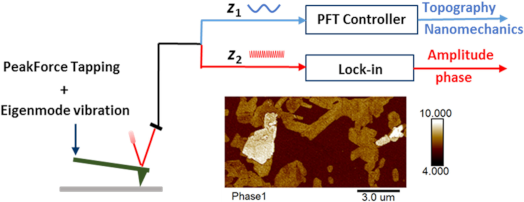
- nanoscale [1][2][3][4][5]. Among its various operating modes, tapping mode AFM is particularly prevalent due to lateral force minimization and its ability to give phase-contrast images of heterogeneous surfaces [6]. This mode involves oscillating the cantilever near its resonance frequency with the tip
- record its thermal vibration power spectral density. A fit to the fundamental resonance peak, based on the equipartition theorem, yielded the spring constant. Characterization of higher eigenmodes The resonant frequencies of the higher eigenmodes were characterized by performing a frequency sweep using
- excite the probe in our innovative multifrequency AFM mode. The efficacy of this approach relies on two synergistic mechanisms. First, when the probe contacts the sample surface, tip–sample interaction forces induce a rapid resonance frequency shift and amplitude attenuation in the higher eigenmodes


Stereodiscrimination of guests in chiral organosilica aerogels studied by ESR spectroscopy
Beilstein J. Nanotechnol. 2025, 16, 2034–2054, doi:10.3762/bjnano.16.140
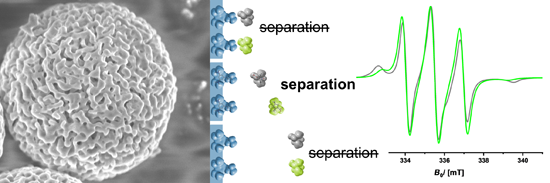
- surfaces has proven challenging. For the separation of the individual factors, researchers developed powerful nuclear magnetic resonance (NMR) techniques. Great success was reached using pulsed field gradient (PFG)-NMR [19][20][21]. PFG-NMR incorporates the application of magnetic field gradients in
- access the sub-10 nm domain and to obtain information about the dynamics of guests confined to the porous system on short timescales below milliseconds. Here, electron spin resonance (ESR) has some advantages. Because of the temporal dimension of these rotational dynamics at the microseconds timescale
- bands are seen at 1666 cm−1 (amide I) and 1557 cm−1 (amide II), and the bands at 1046 and 948 cm−1 originate from the siloxane network (Si–O–Si). The 13C magic angle spinning (MAS) nuclear magnetic resonance (NMR) spectrum (Figure 2e) displays signals for Ala-CH3 (δ = 16.0 ppm), Ala-CH (45.3 ppm




Mechanical property measurements enabled by short-term Fourier-transform of atomic force microscopy thermal deflection analysis
Beilstein J. Nanotechnol. 2025, 16, 1952–1962, doi:10.3762/bjnano.16.136
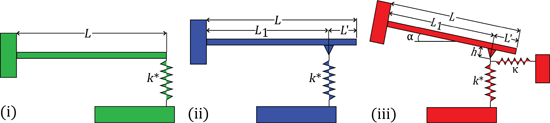
- Contact resonance atomic force microscopy (CR-AFM) has been used in many studies to characterize variations in the elastic and viscoelastic constants of materials along a heterogeneous surface. In almost all experimental work, the quantitative modulus of the surface is calculated in reference to a known
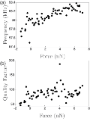
- transformations, it was possible to fit the thermal resonance peak of the normal displacement to track the frequency and Q-factor of the cantilever during an experiment, using a similar process to that used to calibrate the normal bending stiffness of cantilevers. With this quantitative data, we have used the
- model, improved matching the cantilever/sample stiffness to obtain a larger variation in contact stiffness with frequency, or investigating the use of higher-order modes that may achieve this improved match. Keywords: atomic force microscopy; contact resonance; highly oriented pyrolytic graphite (HOPG




Programmable soliton dynamics in all-Josephson-junction logic cells and networks
Beilstein J. Nanotechnol. 2025, 16, 1883–1893, doi:10.3762/bjnano.16.131

- kinetic inductance element is the linear behavior for weak signals, which excludes formation of parasitic processes in the transmission line. This permits to apply tunable kinetic inductance in the resonators with shifting resonance frequency [19][21][22], as well as in sensitive all-JJ digital circuits


Low-temperature AFM with a microwave cavity optomechanical transducer
Beilstein J. Nanotechnol. 2025, 16, 1873–1882, doi:10.3762/bjnano.16.130
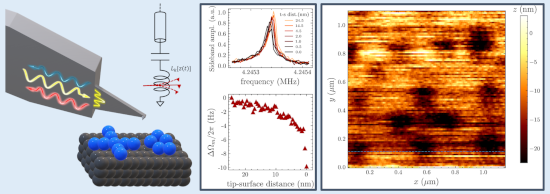
- superconducting microwave resonant circuit. Using the principles of cavity optomechanics [16], we detect the deflection of the cantilever from its equilibrium position as a shift of the microwave resonance. We briefly summarize the operating principle of the force sensor based on kinetic-inductive
- deflection ζ in response to a force F at the frequency Ω: where is the resonance frequency and Γ = η/meff the damping rate, with meff, k and η being, respectively, effective mass, stiffness, and damping coefficient of the eigenmode. A key figure of merit of a force transducer is its force sensitivity
- -independent added noise of the detection SVV [V2/Hz], which is converted to an equivalent deflection noise via the detector responsivity α [V/m]: Neglecting back action, the noise-equivalent force for a given measurement bandwidth Δf is given by This quantity is minimized at the mechanical resonance


On the road to sustainability – application of metallic nanoparticles obtained by green synthesis in dentistry: a scoping review
Beilstein J. Nanotechnol. 2025, 16, 1851–1862, doi:10.3762/bjnano.16.128
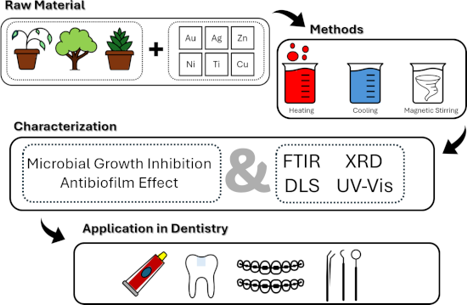
- nanoparticle formation in real time by detecting surface plasmon resonance bands, which provide insight into particle size and distribution [57]. XRD offers detailed information on the crystalline structure and phase composition of the nanoparticles, confirming successful synthesis and purity [53]. Together


Electrical, photocatalytic, and sensory properties of graphene oxide and polyimide implanted with low- and medium-energy silver ions
Beilstein J. Nanotechnol. 2025, 16, 1794–1811, doi:10.3762/bjnano.16.123
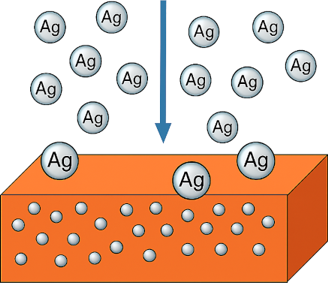
- catalytically active sites resulting from the carbonization of the polymer matrix, together with the silver clusters formed during ion implantation, provide suitable conditions for reactant adsorption and efficient charge transfer. Silver ions exhibit strong localized surface plasmon resonance in the visible


Advances of aptamers in esophageal cancer diagnosis, treatment and drug delivery
Beilstein J. Nanotechnol. 2025, 16, 1734–1750, doi:10.3762/bjnano.16.121
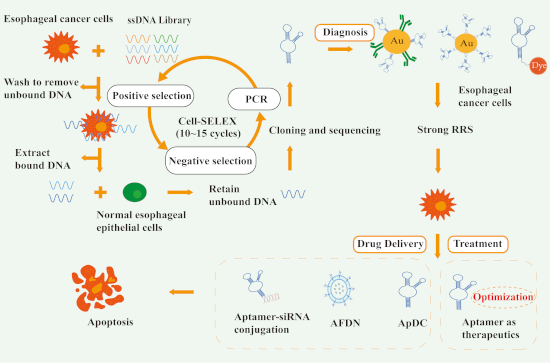
- serum samples. The capture probe is an EGFR aptamer with thiol modification, and the signal probe is an anti-EGFR antibody. This multifunctional cellular probe specifically recognizes and binds to EGFR on the cell surface, inducing the formation of probe aggregates that significantly enhance resonance
- this system, resulting in false positive diagnoses. Furthermore, the diagnostic accuracy achieved through resonance RRS analysis may be inferior to that of enzyme-linked immunosorbent assay methodologies. 3.2 Fluorescent aptasensors Chen et al. [56] screened and optimized the sequence by Cell-SELEX to


Few-photon microwave fields for superconducting transmon-based qudit control
Beilstein J. Nanotechnol. 2025, 16, 1580–1591, doi:10.3762/bjnano.16.112
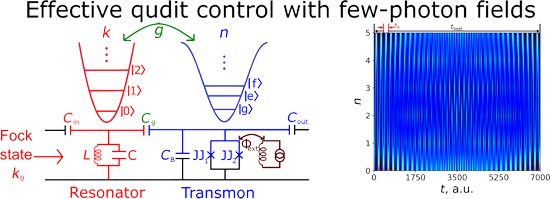
- -dependent populations of transmon levels at optimal points. The results are shown in Figure 4. In the resonance case (Figure 4a), the excitation of high-energy transmon states is strongly suppressed due to significant influence of the Kerr nonlinearity (K = 9.6). However, it is clearly seen that the
- was chosen to be ω0/2π = 5.348 GHz to provide simultaneously strong coupling with the quantum field and optimal detuning from the resonance. In addition, this frequency determines the total length of the system, that is, 2l = 11.101 mm. Let us discuss the limitations on the values of the physical


Cross-reactivities in conjugation reactions involving iron oxide nanoparticles
Beilstein J. Nanotechnol. 2025, 16, 1504–1521, doi:10.3762/bjnano.16.106
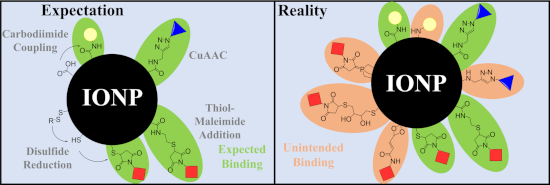
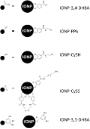
- [51][52]. In the context of magnetic resonance imaging, small molecule ligands also offer advantages over thicker, polymeric coatings as superior contrast agents [53][54][55]. To investigate amine cross-reactivities, we use propargylamine (PPA, Figure 1c) and a series of primary amine-containing dyes







Nanomaterials for biomedical applications
Beilstein J. Nanotechnol. 2025, 16, 1499–1503, doi:10.3762/bjnano.16.105

- contrast agents in magnetic resonance imaging (MRI) process [19]. There is more clarity in MRI images due to these nanoparticles, which help doctors to see even the smallest details in tissues and organs [20]. Apart from imaging, magnetic nanoparticles are now used in biosensors and lab-on-a-chip devices
Laser processing in liquids: insights into nanocolloid generation and thin film integration for energy, photonic, and sensing applications
Beilstein J. Nanotechnol. 2025, 16, 1428–1498, doi:10.3762/bjnano.16.104
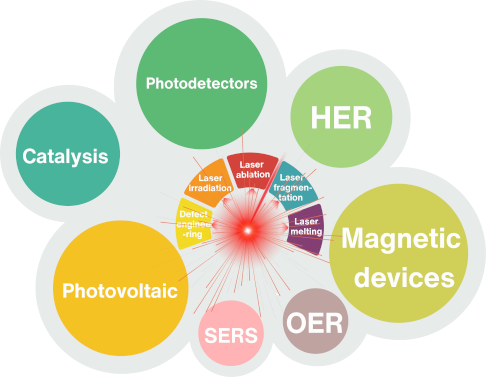
- approximately 15 to 40 nanoparticles per μm2. The hybrid materials exhibited plasmon resonance absorption of the Au NPs. Shorter EPD times maintained the properties of graphene, while longer deposition times resulted in the conversion of graphene to graphene oxide due to its electrochemical oxidation [132






Photochemical synthesis of silver nanoprisms via green LED irradiation and evaluation of SERS activity
Beilstein J. Nanotechnol. 2025, 16, 1417–1427, doi:10.3762/bjnano.16.103
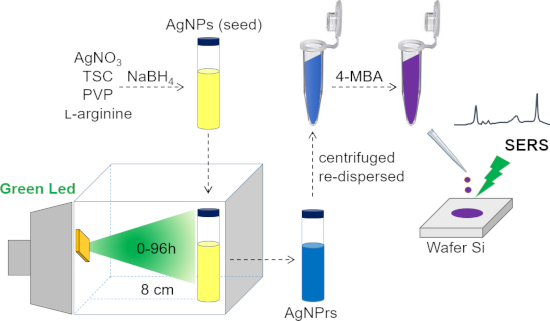
- candidates for surface-enhanced Raman scattering (SERS) due to their strong localized surface plasmon resonance and sharp tip geometry. In this study, AgNPrs were synthesized through a photochemical method by irradiating spherical silver nanoparticle seeds with 10 W green light-emitting diodes (LEDs; 520
- resonance (SPR) exhibited by AgNPrs significantly contributes to SERS enhancement by amplifying local electromagnetic fields. This makes AgNPrs ideal candidates for SERS-based sensing applications [1]. Numerous studies have focused on the fabrication of SERS-active substrates by depositing AgNPrs onto
- –vis spectrum exhibited a single absorption peak at 402 nm, characteristic of the in-plane dipole (IPD) resonance of spherical silver nanoparticles. The solution retained its yellow color, indicating that the seed morphology remained largely unchanged and that no formation of anisotropic silver


Synthesis and antibacterial properties of nanosilver-modified cellulose triacetate membranes for seawater desalination
Beilstein J. Nanotechnol. 2025, 16, 1380–1391, doi:10.3762/bjnano.16.100
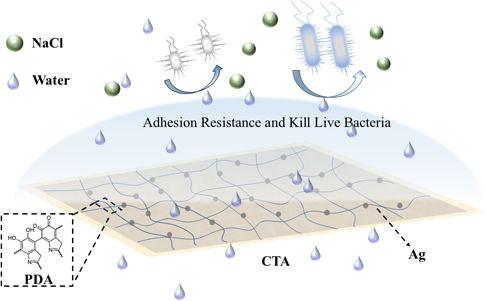
- nanomaterials can be engineered to optimize their antimicrobial activity, making them versatile tools in the development of advanced membrane technologies. Quantum effects, such as localized surface plasmon resonance in metallic nanoparticles, can further enhance antimicrobial properties by generating reactive
- and Discussion Structure of membrane material To verify the target structure of the synthesized material, Fourier-transform infrared spectroscopy (FTIR) and nuclear magnetic resonance spectroscopy (NMR) were conducted, with the spectra depicted in Figure 1 and Figure 2, respectively. The FTIR bands


Ferroptosis induction by engineered liposomes for enhanced tumor therapy
Beilstein J. Nanotechnol. 2025, 16, 1325–1349, doi:10.3762/bjnano.16.97
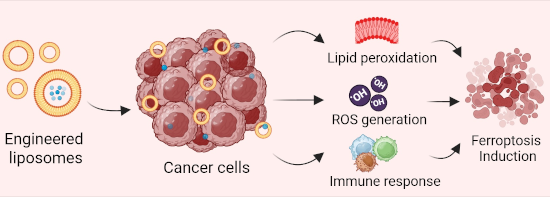
- . Other characterization techniques include nuclear magnetic resonance (NMR) spectroscopy to study membrane fluidity and phase transitions, fluorescence spectroscopy for investigating drug–liposome interactions, and capillary electrophoresis to analyze liposome–drug interactions and drug release [110][121


Wavelength-dependent correlation of LIPSS periodicity and laser penetration depth in stainless steel
Beilstein J. Nanotechnol. 2025, 16, 1302–1315, doi:10.3762/bjnano.16.95
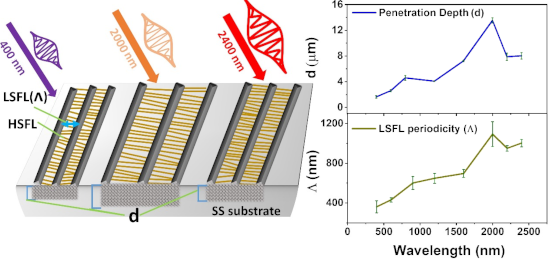
- medium) and εm = (n + ik)2, n is the real part of the refractive index of the metal, and k is the coefficient of extinction. According to this model, the periodicity should exhibit an increasing trend with wavelength when there is no resonance. However, the experiments presented in this work show some




Better together: biomimetic nanomedicines for high performance tumor therapy
Beilstein J. Nanotechnol. 2025, 16, 1246–1276, doi:10.3762/bjnano.16.92
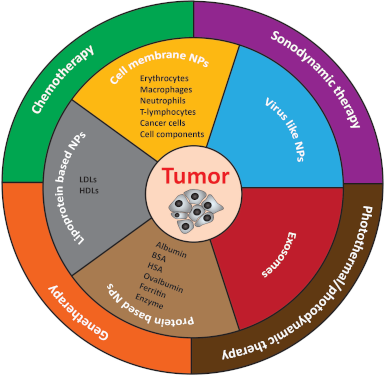
- , high efficiency, and better tissue penetration. They developed small Fe@Fe3O4-DHCA nanoparticles (≈14 nm) and coated them with macrophages (RAW267.4 cells) for magnetic resonance imaging (MRI) and MHT of solid tumors. The Fe@Fe3O4-DHCA NPs showed accumulation in tumor cells resulting in enhanced MRI






Deep learning for enhancement of low-resolution and noisy scanning probe microscopy images
Beilstein J. Nanotechnol. 2025, 16, 1129–1140, doi:10.3762/bjnano.16.83
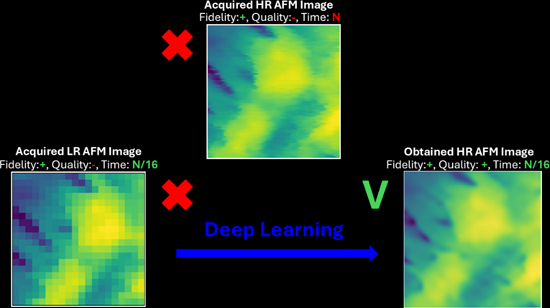
- scan direction (here, x). However, in some modes, such as peak force and photothermal off-resonance tapping as used here, unless the data is significantly oversampled, decreasing the number of pixels in both x and y scan directions will lower acquisition time proportionately. We therefore sample here
- 52 pairs of low- and high-resolution images of a Celgard® 2400 membrane (Celgard, LLC - North Carolina, USA). Images of 5 μm × 5 µm were captured at 8–10 Hz scanning speed, using a fast-scan AFM system, operated by using photothermal off-resonance (at 10 kHz) tapping [35] and small cantilevers, which


Piezoelectricity of hexagonal boron nitrides improves bone tissue generation as tested on osteoblasts
Beilstein J. Nanotechnol. 2025, 16, 1068–1081, doi:10.3762/bjnano.16.78
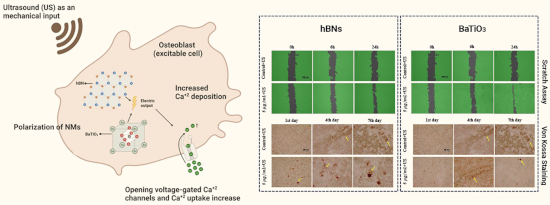
- microscopy (PFM, Nanomagnetic Instruments, UK) was applied to evaluate nanoscale piezoelectric behavior using self-aligned conducting EFM probes with a spring constant of 2.8 N/m and a resonance frequency of 75 kHz. In vitro analyses To investigate the influence of hBNs and BaTiO3 with US therapy on


Time-resolved probing of laser-induced nanostructuring processes in liquids
Beilstein J. Nanotechnol. 2025, 16, 968–1002, doi:10.3762/bjnano.16.74
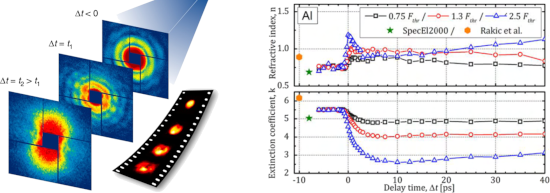
- other than purely thermal effects. Among these are electron emission [109], near-field forces of the plasmon resonance on the surface, pressure effects due to an expanding electron gas [25][27], or spatial spreading of fast electrons [110][111]. In general, with femtosecond excitation a large fraction
- approaches [115]. The subsequent pressure and temperature conditions emanate from the close interaction of the excited particles with the medium. The width of the SPR reflects the coherence time of this oscillation. This dephasing time amounts to a few femtoseconds, leading to a plasmon resonance width of
- -field ablation [26][52]. While electronic excitation is easily detected by TAS, the various structural responses of NPs are weaker and ambiguous in TAS. While elastic oscillations of NPs are identified in periodic modulations of the plasmon resonance due to the change of electron density, other


Synthesis of biowaste-derived carbon-dot-mediated silver nanoparticles and the evaluation of electrochemical properties for supercapacitor electrodes
Beilstein J. Nanotechnol. 2025, 16, 933–943, doi:10.3762/bjnano.16.71
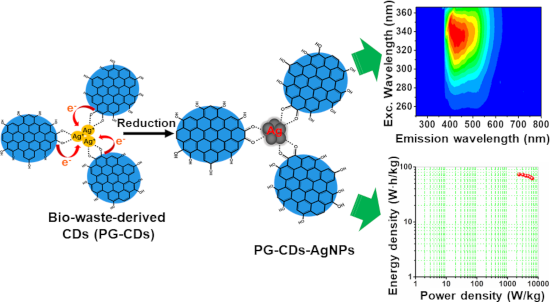
- evidenced from the progressive color change of the solution as shown by surface plasmon resonance (SPR). Structural and morphological analysis The optical properties of PG-CDs and PG-CDs-AgNPs were studied using UV–visible spectroscopy and photoluminescence (PL) spectroscopy. An absorption peak at 275 nm





