


Search results
Search for "seeds" in Full Text gives 98 result(s) in Beilstein Journal of Nanotechnology.
Recent advances in green carbon dots (2015–2022): synthesis, metal ion sensing, and biological applications
Beilstein J. Nanotechnol. 2022, 13, 1068–1107, doi:10.3762/bjnano.13.93
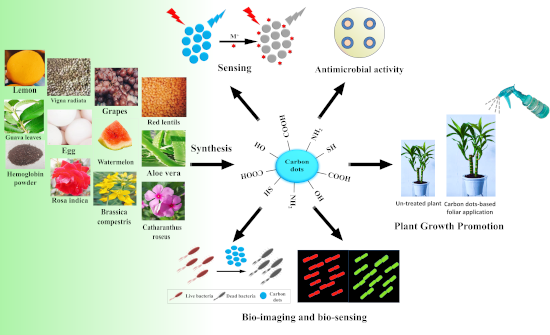
- availability. It is thus environmentally friendly and advantageous [51][52]. Plant parts such as roots, stem, leaves, fruits, flowers, and seeds have been used for the production of CDs. Several low-value plant materials can also be converted into functional materials with excellent biocompatibility by
- , and green synthesis strategy to prepare CDs by using whey (a major dairy waste). NMR analysis showed that during pyrolysis, polymerization of lactose, which is the main component of the green source used, takes place [69]. Sharma et al. reported Nigella sativa seeds for the preparation of CDs that act




A new method for obtaining the magnetic shape anisotropy directly from electron tomography images
Beilstein J. Nanotechnol. 2022, 13, 590–598, doi:10.3762/bjnano.13.51
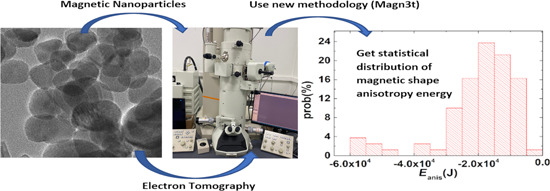
- image consisting only of the local maxima with a minimum height equal to the subtracted value. The local maxima are then labeled and used as seeds for the watershed algorithm [27]. Each particle is reconstructed filling the distance transform image from the voxel with the largest value down but


Zinc oxide nanostructures for fluorescence and Raman signal enhancement: a review
Beilstein J. Nanotechnol. 2022, 13, 472–490, doi:10.3762/bjnano.13.40
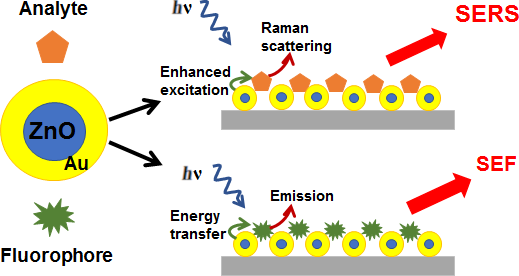
- nanorods (NRs) and Au seeds alone. The results showed a stronger SERS signal in the case of Au–ZnO NRs compared to Au nanoscale seeds. The SERS signal enhancement is due to the increased charge transfer effect of ZnO, which is greatly improved by the localized surface plasmon resonance of Au seeds. For the




A non-enzymatic electrochemical hydrogen peroxide sensor based on copper oxide nanostructures
Beilstein J. Nanotechnol. 2022, 13, 424–436, doi:10.3762/bjnano.13.35
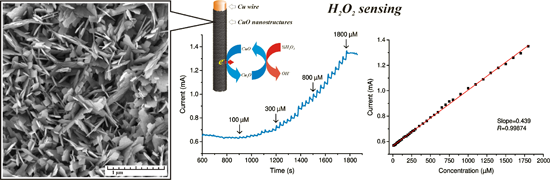
- short time. The particles begin to agglomerate in order to minimize the total surface energy, forming spherical seeds, which, according to the mechanism of dissolution–secondary precipitation [78][80], overgrow with CuO petals, thereby forming 3D structures in solution. Then, under the influence of




Interfacial nanoarchitectonics for ZIF-8 membranes with enhanced gas separation
Beilstein J. Nanotechnol. 2022, 13, 313–324, doi:10.3762/bjnano.13.26
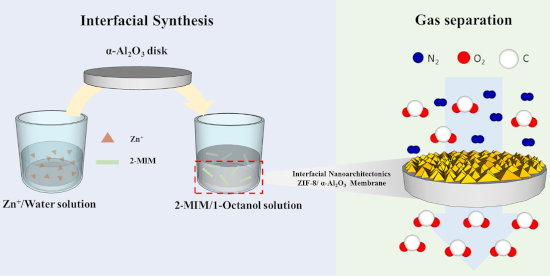
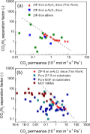
- ZIF-8 formation rate. As a result, the Zn ions inside the porous substrate were consumed for nanometer-sized ZIF-8 seeds during the initial growing stage, which limited further intergrowth between these seed particles to form continuous ZIF-8 membranes. In addition, thickness of the membranes also


Sputtering onto liquids: a critical review
Beilstein J. Nanotechnol. 2022, 13, 10–53, doi:10.3762/bjnano.13.2
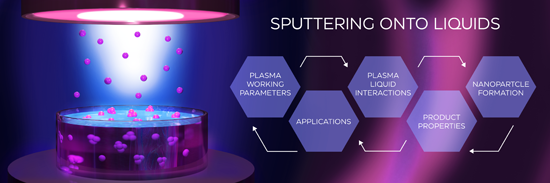
- , while a slow nucleation process yields a reduced amount of seeds, which finally leads to bigger particles. Separation of the nucleation and surface growth processes is the main condition for the production of monodisperse primary NPs [77]. The Finke–Watzky autocatalytic model was first proposed for






Identifying diverse metal oxide nanomaterials with lethal effects on embryonic zebrafish using machine learning
Beilstein J. Nanotechnol. 2021, 12, 1297–1325, doi:10.3762/bjnano.12.97


Revealing the formation mechanism and band gap tuning of Sb2S3 nanoparticles
Beilstein J. Nanotechnol. 2021, 12, 1021–1033, doi:10.3762/bjnano.12.76
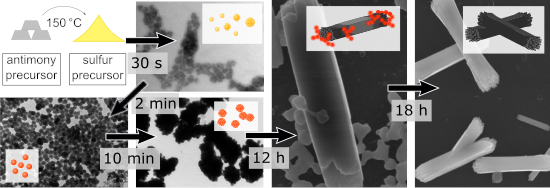
- . Based on morphological and structural analyses, it is suggested that seed particles (type 0) formed immediately after injecting the antimony precursor into the sulfur precursor. These seeds fused to form amorphous nanoparticles (type I) that contained a lower percentage of sulfur than that corresponding
- have a stoichiometric ratio corresponding to Sb2S3. The more particles assembled into clusters, the more turbid and orange the mixture became. When 2 min had passed, the mixture was completely turbid and changed to an orange color. The clustered type 0 seeds merged into type I nanoparticles of about 35
- at 150 °C was revealed. In this way, we could gain a more in-depth insight into the kinetics of particle formation, while earlier studies by Abulikemu et al. and Li et al. were focusing on the temperature-dependent evolution of Sb2S3 particles. The suggested mechanism assumes that seeds (type 0


The role of deep eutectic solvents and carrageenan in synthesizing biocompatible anisotropic metal nanoparticles
Beilstein J. Nanotechnol. 2021, 12, 924–938, doi:10.3762/bjnano.12.69
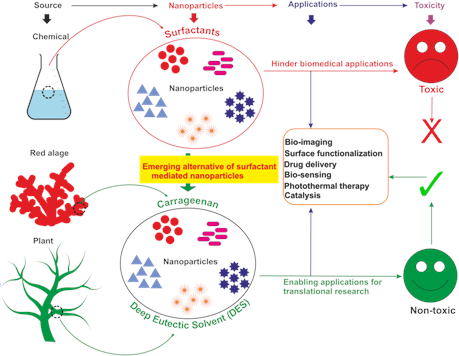
- reducing agent ascorbic acid and the DES. The result was remarkable as the synthesis involved no surfactant or seeds. The Sun group also synthesized platinum nanoflowers of ca. 200 nm size with high monodispersity using DESs [93]. The group also successfully synthesized triambic icosahedral (TIH) Pt


On the stability of microwave-fabricated SERS substrates – chemical and morphological considerations
Beilstein J. Nanotechnol. 2021, 12, 541–551, doi:10.3762/bjnano.12.44
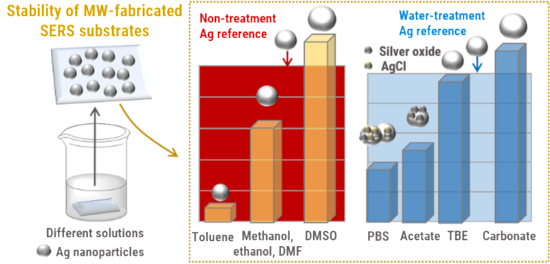
- typical heating process) which initiates the reduction of the silver salt by ethanol. This triggers a short burst of silver nanoparticle nucleation, which forms reaction seeds on the glass substrate. The strong affinity of the silver ions for the free hydroxyl groups of glass surfaces allows for the
- attachment of the nanoparticles to the substrate and the glass surface of the microwave reaction vial. An accompanied rapid growth phase, resulting from the high microwave absorption capabilities of the seeds, stimulates the further reduction of the available silver ions on the seed surface. For the
- represent the actual reaction temperature values inside the vial or on the substrate (i.e., near the Ag seeds or nanoparticles) during the processing time. Additionally, the filling level of the precursor reaction vial was kept below 3 mL to avoid excessive pressure buildup in the vial which could lead to


Rapid controlled synthesis of gold–platinum nanorods with excellent photothermal properties under 808 nm excitation
Beilstein J. Nanotechnol. 2021, 12, 462–472, doi:10.3762/bjnano.12.37
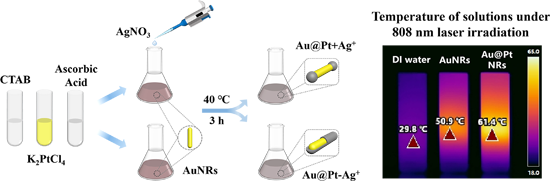
- deposition on AuNRs, it is impossible to determine the excessive unreacted Ag+ concentration in the freshly prepared AuNRs solution, which hinders the accurate control of the synthesis of Au@Pt NRs. Herein, we used AuNRs as seeds and re-added reagents in the reaction solution to study the influence of Ag


A review on nanostructured silver as a basic ingredient in medicine: physicochemical parameters and characterization
Beilstein J. Nanotechnol. 2021, 12, 440–461, doi:10.3762/bjnano.12.36
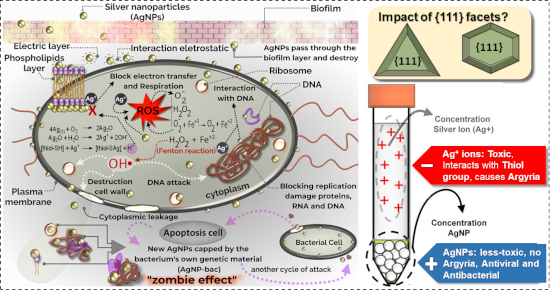
- silver seeds are formed through homogeneous nucleation. The as-formed AgNPs seeds are dissolved by HNO3 present at a fairly high concentration during the initial stages of the reaction, according to Equation 4. After HNO3 is gradually consumed, a second round of nucleation is triggered, which favors the


Spontaneous shape transition of MnxGe1−x islands to long nanowires
Beilstein J. Nanotechnol. 2021, 12, 366–374, doi:10.3762/bjnano.12.30
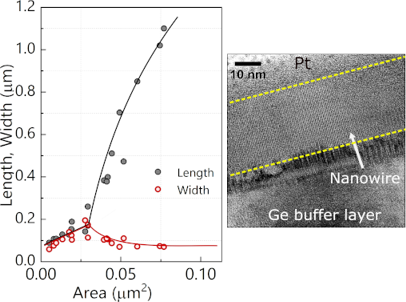
- seeds would have induced a Mn gradient with a higher concentration close to the Mn droplet, which in our case was not detected [7][30][31]. Second, the width of the NWs is remarkably constant with a very narrow size distribution. In addition, a cross-section HRTEM image along the [110] zone axis (Figure


A review on the biological effects of nanomaterials on silkworm (Bombyx mori)
Beilstein J. Nanotechnol. 2021, 12, 190–202, doi:10.3762/bjnano.12.15
- ] and antiviral properties [30]. TiO2 NPs improved the water and oxygen intake by spinach leaves [31], which led to an increase in the growth and germination rate of the spinach seeds. In addition, a higher percentage of dry weight and chlorophyll formation over the germination period of 30 days were
- observed [32]. TiO2 NPs have also been documented to increase the germination of lettuce seeds [33]. Recent reports indicate that multi-walled carbon nanotubes (MWCNTs) also increased the germination of tomato seeds by increasing the seed water uptake [34]. These reports of nanomaterials improving the
- germination of seeds prove that the incorporation of nanotechnology in agriculture can boost crop production and the use of nanoscale pesticides [35] can improve crop protection. Silica is an example of a nanomaterial used in the formulation of nanoscale pesticides, which are used to control pest incidence


A review on the green and sustainable synthesis of silver nanoparticles and one-dimensional silver nanostructures
Beilstein J. Nanotechnol. 2021, 12, 102–136, doi:10.3762/bjnano.12.9
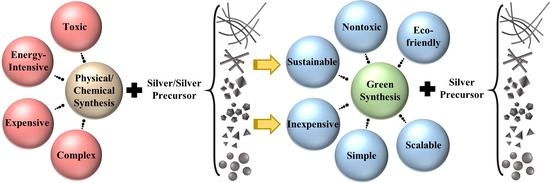
- the phytochemical compounds simplifies the process. Various parts of plants such as roots, fruits, seeds, needles, and aerial parts may be used for extraction of phytochemicals [321]. These extracts contain a substantial amount of polyphenols which are strong antioxidants [140][186] with significant


Straightforward synthesis of gold nanoparticles by adding water to an engineered small dendrimer
Beilstein J. Nanotechnol. 2020, 11, 1110–1118, doi:10.3762/bjnano.11.95
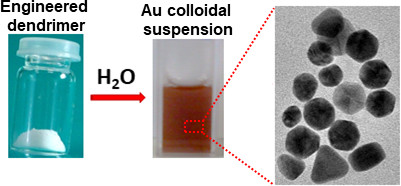
- controlled two-step process named “seed-mediated growth”. The first step of this process is the generation of very small spherical nanoparticles that serve as seeds when the conditions are modified by adding more gold and another reductant [64]. For this work a single component was used to obtain the shape


Plant growth regulation by seed coating with films of alginate and auxin-intercalated layered double hydroxides
Beilstein J. Nanotechnol. 2020, 11, 1082–1091, doi:10.3762/bjnano.11.93
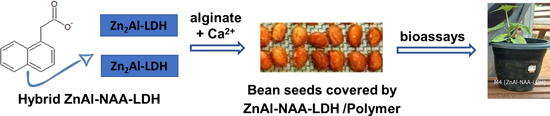
- auxin 1-naphthalenoacetic acid (ZnAl-NAA-LDH), (ii) the coating of bean seeds (Phaseolus vulgaris L.) with composite films produced from mixtures of alginate polymer and ZnAl-NAA-LDH, and (iii) the evaluation of the plant response by bioassays. The hybrid ZnAl-NAA-LDH was characterized by a set of
- analytical techniques, including powder X-ray diffraction, thermogravimetric analysis coupled to differential scanning calorimetry and mass spectrometry, specific surface area measurement, and scanning electron microscopy. Bioassays were performed with the seeds coated with the composite film to assess the
- germination rate and germination speed index of the seeds, as well as biometric analyses including measurements of root area, root fresh matter, and shoot length of the plants. The bioassay performed in soil pots showed that the alginate film containing ZnAl-NAA-LDH yields an enhancement regarding root area



Transition from freestanding SnO2 nanowires to laterally aligned nanowires with a simulation-based experimental design
Beilstein J. Nanotechnol. 2020, 11, 843–853, doi:10.3762/bjnano.11.69
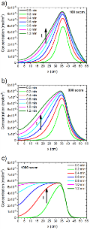
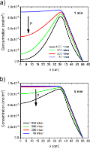
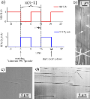
- substrates were prepared by two different preparation methods for the catalyst seeds, which are required for the VLS process. As a catalyst material, gold was chosen. First, a-plane sapphire substrates with structured gold thin films (thickness 5 nm) by metal evaporation, and second, a-plane sapphire





Preparation, characterization and photocatalytic performance of heterostructured CuO–ZnO-loaded composite nanofiber membranes
Beilstein J. Nanotechnol. 2020, 11, 631–650, doi:10.3762/bjnano.11.50
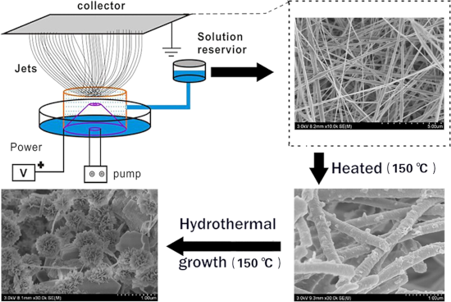
- . Hence, the temperature range from 120 to 140 °C yields CNFMs with CuO and ZnO seeds that can act good templates for the subsequent hydrothermal growth. FTIR and XRD analysis: CNFMs with and without heat treatment were analyzed by FTIR (Figure 11). The spectra of the CNFMs with and without heat treatment











Formation of nanoripples on ZnO flat substrates and nanorods by gas cluster ion bombardment
Beilstein J. Nanotechnol. 2020, 11, 383–390, doi:10.3762/bjnano.11.29
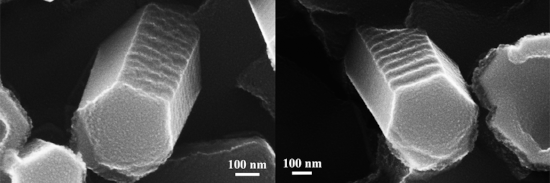
- mL of deionized (DI) water for 4 h at 60 °C. Then, the solution was heated in an oven for 20 h at 60 °C. Next, ZnO seeds were synthesized on the Si substrates through spin-coating. First, a drop of the seed solution was put onto the cleaned substrate at 700 rpm for 10 s and then at 2000 rpm for 60 s



Coating of upconversion nanoparticles with silica nanoshells of 5–250 nm thickness
Beilstein J. Nanotechnol. 2019, 10, 2410–2421, doi:10.3762/bjnano.10.231
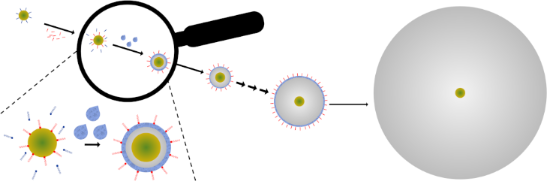
- shelling procedures is the precise control of the shell thickness while preventing or at least minimizing the formation of additional seeds from the shelling material. Numerous approaches have been investigated for the growth of silica shells on inorganic NPs like the Stöber synthesis and the reverse
- processes, in which TEOS is continuously added to seeds in a growth solution, allow for the growth of large, monodisperse NPs in a single step, provided the seed NPs are well dispersed in the growth solution [28][29]. A versatile approach for growing silica shells onto inorganic NPs that cannot be dispersed


The importance of design in nanoarchitectonics: multifractality in MACE silicon nanowires
Beilstein J. Nanotechnol. 2019, 10, 2094–2102, doi:10.3762/bjnano.10.204

- the cleaned surfaces by electron beam evaporation. These gold films do not coat the substrates uniformly. The uncovered parts of the Si surfaces become the seeds of the NWs in the subsequent etching step. For the etching step, the substrates are immersed in an aqueous solution of HF (5 M) and H2O2




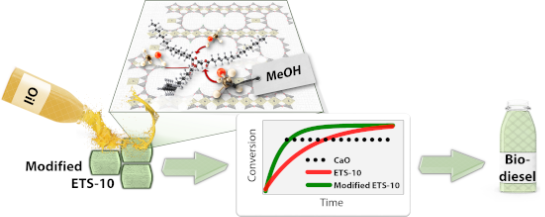
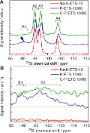
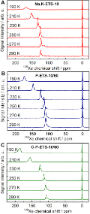
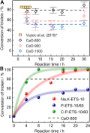
Synthesis of highly active ETS-10-based titanosilicate for heterogeneously catalyzed transesterification of triglycerides
Beilstein J. Nanotechnol. 2019, 10, 2039–2061, doi:10.3762/bjnano.10.200
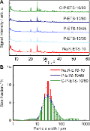
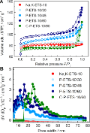
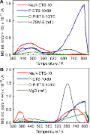
- polymerization to obtain –[–Ti–O–Ti–]–, –[–Si–O–Si–]–, and –[–Ti–O–Si–]– containing seeds. After aging, the 90 mL solution was divided into two 45 mL parts, each of which was placed into the 70 mL polytetrafluoroethylene (PTFE) reactor. The reactor was closed with a PTFE cap and inserted into a homemade








Gold-coated plant virus as computed tomography imaging contrast agent
Beilstein J. Nanotechnol. 2019, 10, 1983–1993, doi:10.3762/bjnano.10.195
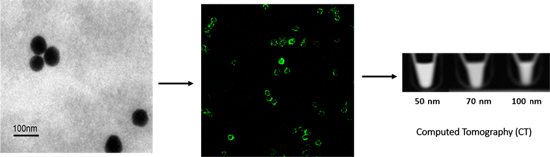
- , VA). Methods CPMV propagation CPMV propagation followed our previously published method [38]. Black-eyed peas plant (Vigna unguiculata) were grown from seeds, obtained locally, in a greenhouse for 10 days. Primary leaves were rubbed with carborundum (fine-grade silicon carbide abrasive) and treated




Porous silver-coated pNIPAM-co-AAc hydrogel nanocapsules
Beilstein J. Nanotechnol. 2019, 10, 1973–1982, doi:10.3762/bjnano.10.194
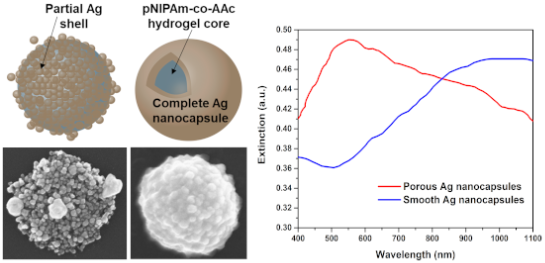
- vehicles for a variety of payloads. Results and Discussion Synthetic strategy. Scheme 1 depicts the strategy to prepare the silver nanocapsules with pNIPAM-co-AAc hydrogel cores. The steps include (i) synthesis of the pNIPAM-co-AAc hydrogel core, (ii) growth of THPC gold seeds around the hydrogel core, and
- (iii) growth of the silver nanocapsule around the hydrogel core by the reduction of silver nitrate onto the gold seeds, which act as templates. Note that the concentration of the sodium citrate during the galvanic replacement step determines whether the synthesized silver nanocapsule is porous or
- [78], we needed the hydrogel particle surfaces to be positively charged. For this modification, we chose poly(diallyldimethylammonium chloride) MW: 100,000 (pDADMAC), which has been previously used to attach noble metal seeds to hydrogel cores [79][80][81]. To verify the successful functionalization





