Search results
Search for "simulation" in Full Text gives 559 result(s) in Beilstein Journal of Nanotechnology. Showing first 200.
N2+-implantation-induced tailoring of structural, morphological, optical, and electrical characteristics of sputtered molybdenum thin films
Beilstein J. Nanotechnol. 2025, 16, 495–509, doi:10.3762/bjnano.16.38
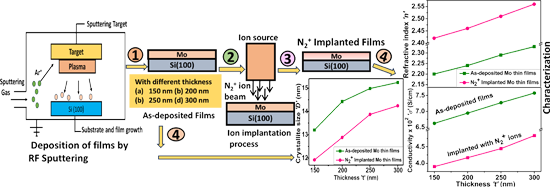
- University, Kurukshetra, ensuring comprehensive and accurate characterization of the properties of Mo thin films. Results and Discussion SRIM-TRIM simulation The “Stopping & Range of Ions in Matter and Transport of Ions in Matter” (SRIM-TRIM) simulation software was used to quantitatively estimate


Vortex lattices of layered HTSCs at different vortex–vortex interaction potentials
Beilstein J. Nanotechnol. 2025, 16, 362–370, doi:10.3762/bjnano.16.27
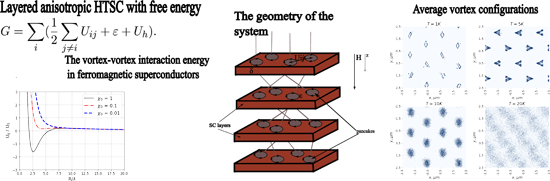
- molecular dynamics simulation of a vortex system in a superconductor with was performed, and a phase B–T diagram was obtained (B is the magnetic field and T is the temperature of the vortex system), which contains regions of a hexagonal vortex lattice, a striped structure, and a lattice of vortex clusters
- pancakes in the layer under consideration, is the vortex self-energy per superconducting layer with The simulation is performed for a vortex lattice in a sample whose size in the plane of the superconducting layer is 5 × 5 μm. To eliminate the influence of the boundary, the simulation region has periodic
- sample, and the clusters are replaced by regions with a higher average vortex distribution density. It should be noted that clusters in the form of stripes were observed in the numerical simulation in [19]. Conclusion Within the framework of a two-dimensional model of a layered HTSC, the configurations


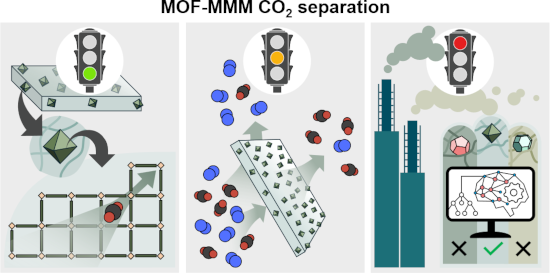
A review of metal-organic frameworks and polymers in mixed matrix membranes for CO2 capture
Beilstein J. Nanotechnol. 2025, 16, 155–186, doi:10.3762/bjnano.16.14




Comparison of organic and inorganic hole transport layers in double perovskite material-based solar cell
Beilstein J. Nanotechnol. 2025, 16, 119–127, doi:10.3762/bjnano.16.11
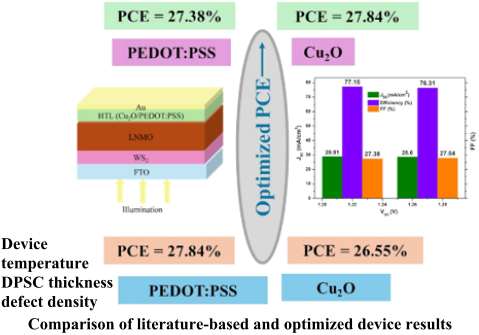
- performance. Keywords: double perovskite solar cell (DPSC); electron transport layer (ETL); hole transport layer (HTL); SCAPS-1D; simulation; Introduction The rapid growth of the world population has increased the global need for energy, which has become undoubtedly quite strong. To date, the energy
- for experimental work regarding better performance. Simulation Methodology and Device Structure SCAPS-1D (a solar cell capacitance simulator) is an application program in one-dimensional C code developed at the Electronics and Informative Systems Department of Gent University, Belgium. It facilitates
- behavior. The device simulation is performed at an air mass of AM1.5G at 300 K under illumination of 1000 W/m2. The absorber layer is optimized concerning different hole transport layers with the help of SCAPS-1D. The materials and the proposed parameters, taken from different publications, for this study


Modeling and simulation of carbon-nanocomposite-based gas sensors
Beilstein J. Nanotechnol. 2025, 16, 90–96, doi:10.3762/bjnano.16.9
- Roopa Hegde Punya Prabha V Shipra Upadhyay Krishna S B Electronics and Communication Engineering, Ramaiah Institute of Technology, MSRIT Post, M S Ramaiah Nagar, MSR Nagar, Bengaluru, Karnataka 560054, India 10.3762/bjnano.16.9 Abstract This paper reports simulation of a carbon monoxide gas
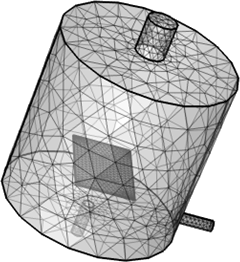
- development of these sensors, it becomes imperative to establish a mathematical model for economically predicting their behavior. The simulation using COMSOL Multiphysics is performed to obtain the surface coverage of the sensor by introducing carbon monoxide gas through a Gaussian pulse feed inlet at
- of 0.6 cm are built as shown in Figure 2. Meshing is a crucial step in the simulation process, dividing a large domain into smaller parts to apply boundary conditions. For this model, tetrahedral elements with an element size of 0.5 mm were used as the primary mesh element throughout the body



Advanced atomic force microscopy techniques V
Beilstein J. Nanotechnol. 2025, 16, 54–56, doi:10.3762/bjnano.16.6

- accurate knowledge of the quartz cantilever stiffness, the authors develop a method to quantify the stiffness based on thermal noise measurements and numerical simulation. Calibrated measurements of conductivity and resistivity are the focus of the contribution by Piquemal et al. [3]. A particular
Theoretical study of the electronic and optical properties of a composite formed by the zeolite NaA and a magnetite cluster
Beilstein J. Nanotechnol. 2025, 16, 44–53, doi:10.3762/bjnano.16.5
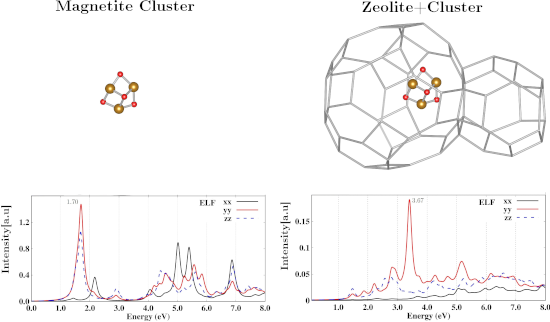
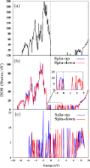
- , México Departamento de Matemáticas, Universidad de Sonora, Blvd. Luis Encinas y Rosales s/n, 83000, Hermosillo, Sonora, México Universidad Nacional Autónoma de México, Centro de Nanociencias y Nanotecnología, 22800 Ensenada, B. C., México Simulation in Materials Science Research Group, Science and




Precursor sticking coefficient determination from indented deposits fabricated by electron beam induced deposition
Beilstein J. Nanotechnol. 2025, 16, 35–43, doi:10.3762/bjnano.16.4

- Alexander Kuprava Michael Huth Physics Institute, Goethe University Frankfurt, Max-von-Laue-Str. 1, 60438 Frankfurt am Main, Germany 10.3762/bjnano.16.4 Abstract A fast simulation approach for focused electron beam induced deposition (FEBID) numerically solves the diffusion–reaction equation
- (continuum model) of the precursor surface on the growing nanostructure in conjunction with a Monte Carlo simulation for electron transport in the growing deposit. An important requirement in this regard is to have access to a methodology that can be used to systematically determine the values for the set of
- is needed and can be obtained based on a simulation of the FEBID process using the so-called continuum model that can be of great assistance for the nanofabrication process optimization [2][3]. Here again, sufficiently accurate knowledge of the values for the model-dependent set of precursor


Bioinspired nanofilament coatings for scale reduction on steel
Beilstein J. Nanotechnol. 2025, 16, 25–34, doi:10.3762/bjnano.16.3

- the plate corresponding to the flow of oil/water equivalent to 10,000 barrels per day in a 4-inch nominal steel pipe. Figure 2C shows a simulation of the fluid streamlines and shear stress on the samples matching the shear stress value in a 4-inch pipe at a flow rate of 10,000 barrels per day. The
- maximum pressure of 200 bar. The liquid phase is pressurized via an inert gas (e.g., Ar or N2). (B) Top view of the static plate where three samples are mounted; around half of the surface area for each sample is exposed at constant sheer stress. (C) Steady state simulation of the velocity profile


Orientation-dependent photonic bandgaps in gold-dust weevil scales and their titania bioreplicates
Beilstein J. Nanotechnol. 2025, 16, 1–10, doi:10.3762/bjnano.16.1
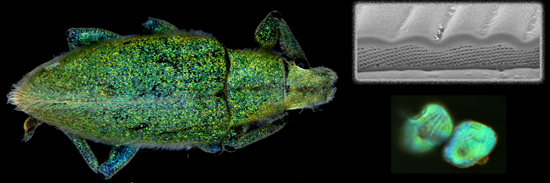
- geometries were set up in a rectangular simulation box with two lateral directions. While the in-plane boundaries had periodic boundary conditions, the boundary along the incident light directions had a perfectly matched layer (PML) boundary. The diamond geometry used to simulate the scale response had a
- in normal direction onto the structure that was oriented along the [100] direction. The angle-integrated reflectivity was obtained from a monitor placed above the light source spanning the entire simulation box area. The gold-dust weevil Hypomeces squamosus. (a) A macro photo of the weevil with


Mechanistic insights into endosomal escape by sodium oleate-modified liposomes
Beilstein J. Nanotechnol. 2024, 15, 1667–1685, doi:10.3762/bjnano.15.131
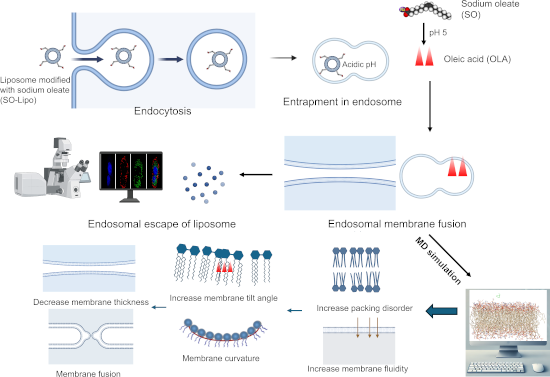
- mechanism, facilitating cytosolic delivery with reduced cytotoxicity. This approach offers a safer and more effective option for targeted drug delivery applications. Keywords: Aurein 1.2; endosomal escape; fusogenic effect; molecular dynamics simulation; sodium oleate; Introduction The quest for efficient
- . These findings confirm that SO is effective at promoting membrane fusion under acidic conditions to achieve targeted fusogenicity, making it a promising candidate for enhancing endosomal escape in drug delivery applications. MD simulation of OLA and AUR interaction with lipid bilayers The MD simulations
- bilayer. Notably, after 100 ns, OLA is significantly integrated within the membrane. At the end of the simulation (200 ns), OLA is thoroughly embedded, suggesting strong hydrophobic interactions that could potentially disrupt membrane integrity. This deep insertion is indicative of a substantial effect on




Heterogeneous reactions in a HFCVD reactor: simulation using a 2D model
Beilstein J. Nanotechnol. 2024, 15, 1627–1638, doi:10.3762/bjnano.15.128
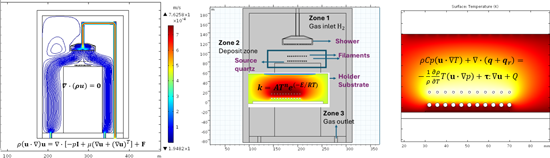
- 14 sur, Edif. IC5 y IC6. Puebla, Pue., 72507 México 10.3762/bjnano.15.128 Abstract In this study, a simulation of the elementary chemical reactions during SiOx film growth in a hot filament chemical vapor deposition (HFCVD) reactor was carried out using a 2D model. For the 2D simulation, the
- continuity, momentum, heat, and diffusion equations were solved numerically by the software COMSOL Multiphysics based on the finite element method. The model allowed for the simulation of the key parameters of the HFCVD reactor. Also, a thermochemical study of the heterogeneous reaction between the
- precursors quartz and hydrogen was carried out. The obtained equilibrium constants (Keq) were related to the temperature profile in the deposition zone and used in the proposed simulation. The validation of the model was carried out by measuring the temperature experimentally, where the temperature range on


Integrating high-performance computing, machine learning, data management workflows, and infrastructures for multiscale simulations and nanomaterials technologies
Beilstein J. Nanotechnol. 2024, 15, 1498–1521, doi:10.3762/bjnano.15.119
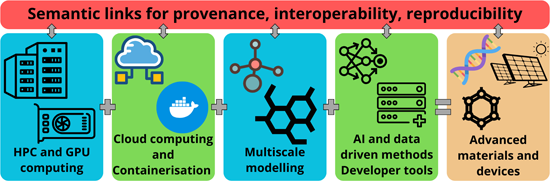
- unprecedented advancements in the design, characterization, and optimization of materials. By leveraging computational modelling and simulation, researchers can simulate and predict properties and behavior of materials with remarkable accuracy, explore a vast design space, and predict the properties and
- perform simulations more effectively [14]. The application of cloud computing to materials research include the use of materials data repositories (e.g., Materials Project [26] and NOMAD [27]), HPC clouds (including commercial providers), materials simulation platforms (Materials Cloud [28
- software packages has boosted the field of materials simulations. Advanced tools for the simulation of materials across a broad range of scales, such as Quantum ESPRESSO [33], LAMMPS [34], GROMACS [35], and OpenFOAM [36], implement complex simulation algorithms, making it easier for researchers to perform


Effect of radiation-induced vacancy saturation on the first-order phase transformation in nanoparticles: insights from a model
Beilstein J. Nanotechnol. 2024, 15, 1453–1472, doi:10.3762/bjnano.15.117

- simulations reveals that the critical irradiation dose for nanocrystallinity collapse varies among different simulation cells. Not only the size, but also the crystallographic orientation, shape of the grains, and structure of the grain boundaries have a strong impact on the stability of the nanocrystalline


Strain-induced bandgap engineering in 2D ψ-graphene materials: a first-principles study
Beilstein J. Nanotechnol. 2024, 15, 1440–1452, doi:10.3762/bjnano.15.116
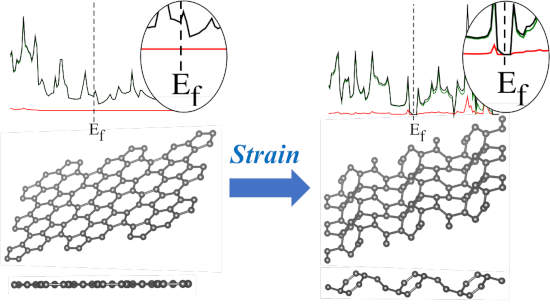
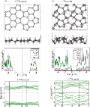
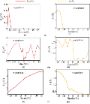
- converged 8 × 8 × 1 k-point mesh, and the electronic wave functions were expanded within a basis set of plane waves with a 600 eV cutoff energy. The unwanted interactions between the periodic images of 2D sheets have been mitigated by incorporating a generous vacuum space of 13 Å into our simulation cell


Lithium niobate on insulator: an emerging nanophotonic crystal for optimized light control
Beilstein J. Nanotechnol. 2024, 15, 1415–1426, doi:10.3762/bjnano.15.114
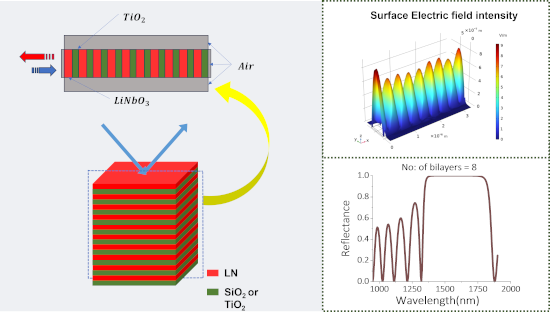
- electromagnetic simulation. The forbidden-frequency region indifferent from the bulk material has been observed around 1.55 µm. A high refractive index and non-linear optical and electro-optical properties enable LN to be used for more efficient manipulation of light. The highly reflective quarternary stack can
- were set as perfectly matched layers (PMLs) to absorb all secondary reflections and scatterings. The overall geometry can be seen in Figure S1 of Supporting Information File 1. COMSOL does the simulation by solving the Maxwell equation (or any PDEs) by finite elemental analysis (FEA) in which the
- constructed geometry/domains will be discretized into small elements (meshing) and solving the equations for each element. The accuracy of the simulation and the stability and convergence of solvers heavily depend on the mesh quality. The choice/refinement of mesh parameters (Figure S2 and Table S1 of


Interaction of graphene oxide with tannic acid: computational modeling and toxicity mitigation in C. elegans
Beilstein J. Nanotechnol. 2024, 15, 1297–1311, doi:10.3762/bjnano.15.105
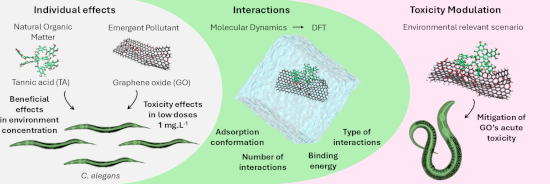
- is well known that in more diluted suspensions, nanomaterials tend to present better dispersibility, and it is expected that GO remains stable in EPA medium for a longer time. Computational simulation of GO–TA interactions To analyze the surface modification of GO by TA and gain insights into the
- configuration in water without TA. Figure 4a and Figure 4b show the charge density plot of the functions f+ and f− of GO before and after NPT MD simulation in an aqueous environment at 300 K. We observed an augmentation of sheet folding and the occurrence of broken bonds, which increased the reactivity of the


New design of operational MEMS bridges for measurements of properties of FEBID-based nanostructures
Beilstein J. Nanotechnol. 2024, 15, 1273–1282, doi:10.3762/bjnano.15.103
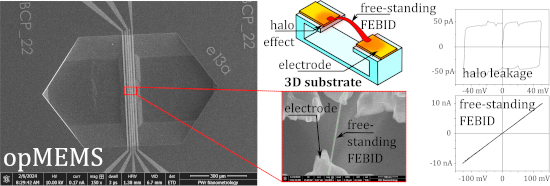
- simulation was to recreate the strain state in an attempt to fully understand it and to find countermeasures for the resulting spacing in the RoI. The opMEMS were designed and modelled using the FEM software Comsol Multiphysics 6.1 (licence no. 17078442). In the simulation, opMEMS bridges were modelled using
- strain in the top layer of the structure [47]. In the FEM simulation, the presence of the gallium irradiated layer was accounted for by replacing the top 15 nm of the platinum layer with a material of lower thermal expansion coefficient. In addition, the simulation showed that introducing slits along the
- stress relief. For the more complex opMEMS, FEM simulation should be used to solve the design problems. The experiment we conducted proves that it is possible to eliminate structurally induced eigenstrains in the RoI. Successful modification was achieved using an iterative approach. Only a single ion


A low-kiloelectronvolt focused ion beam strategy for processing low-thermal-conductance materials with nanoampere currents
Beilstein J. Nanotechnol. 2024, 15, 1197–1207, doi:10.3762/bjnano.15.97

- investigated using the Monte Carlo simulation program SRIM [20], the program COMSOL (finite element analysis platform), and a numerical analysis using the forward time–centered space method to solve the 3D heat equation. This approach is discussed in detail elsewhere [17]. The results are experimentally tested
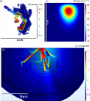
- simulations. Figure 2A,B shows the top view of a single 5 keV ion track. The simulation suggests that any irreversible sample damage that may occur around each ion track is contained well within 5 nm. The surface area around each ion track can be sputtered away during the milling process. Irreversible heat
- in the picoampere beam current range. The simulation results suggest that using lower ion energies such as 5 keV would allow one to FIB-process many biological as well as soft materials with beam currents from the picoampere to the nanoampere ion beam current range. Proposed model to estimate changes



Quantum-to-classical modeling of monolayer Ge2Se2 and its application in photovoltaic devices
Beilstein J. Nanotechnol. 2024, 15, 1153–1169, doi:10.3762/bjnano.15.94
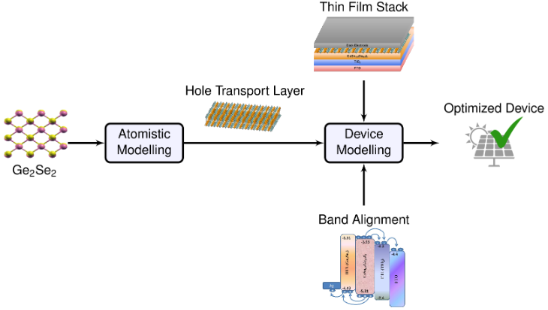
- by separating it into two subsections, namely (a) material simulation using DFT and (b) device simulation using a macroscopic approach, which will be discussed in section Computational Methods. Structural and stability analysis The schematic atomistic model for monolayer Ge2Se2 is shown in Figure 2
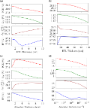
- structure calculation. Figure 3 shows that the calculated DOS is consistent with the electronic band structure and the bandgap values, further validating the results. Other properties that will be useful in the simulation of solar cells, such as the effective mass of charge carriers (electrons/holes
- as a conductor in this simulation. Regarding an absorber material corresponding to the proposed HTL, a minimum valence band offset between these two layers has been considered as a necessary condition for achieving optimum performance. In addition to this, environmental friendliness, stability, and




Local work function on graphene nanoribbons
Beilstein J. Nanotechnol. 2024, 15, 1125–1131, doi:10.3762/bjnano.15.91
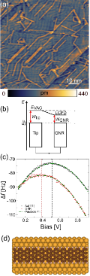
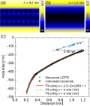
- were covered by Au from the sample surface because of tip–sample interactions as we have observed a tip–sample contact prior to taking the data used here. All calculations were done using the Vienna Ab initio Simulation Package [28][29] (vasp-5.4.4) with the PBE functional [30] and a projector

![[Graphic 1]](/bjnano/content/inline/2190-4286-15-91-i4.svg?max-width=637&scale=1.18182)
Direct electron beam writing of silver using a β-diketonate precursor: first insights
Beilstein J. Nanotechnol. 2024, 15, 1117–1124, doi:10.3762/bjnano.15.90

- irradiated with primary electrons, which is caused by the backscattered electrons generated by the interaction with the substrate [28]. Figure 1b shows the corresponding Monte-Carlo simulation of the secondary and backscattered electron (SE + BSE) distribution for a Gaussian beam of 250 nm FWHM impinging on


Atomistic insights into the morphological dynamics of gold and platinum nanoparticles: MD simulations in vacuum and aqueous media
Beilstein J. Nanotechnol. 2024, 15, 995–1009, doi:10.3762/bjnano.15.81
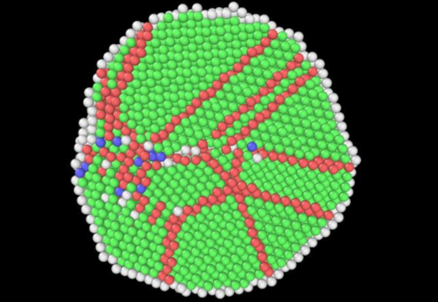
- placed in vacuum, and the systems are cooled down to 100 K following the single-step procedure of Martin et al. [49]. In each step, the temperature is decreased instantaneously by 100 K, and the systems are relaxed by performing a MD simulation of 20 ns in the NVT ensemble. In total, this procedure is
- 101.3 kPa and 300 K. The Nosè–Hoover thermostat and barostat are employed with coupling times of 0.1 and 1.0 ps, respectively. After equilibration, a subsequent simulation for 1 ns takes place in the NPT ensemble at 101.3 kPa and 300 K where configurations are sampled every 10 ps. All simulations are
- directly via molecular simulations by means of reactive force fields [88], the size of the systems and the number of contained molecules render such an approach almost computationally unattainable. Conclusion In the present simulation study, we focused on the thermal behaviour of Au and Pt NPs experiencing


Recent progress on field-effect transistor-based biosensors: device perspective
Beilstein J. Nanotechnol. 2024, 15, 977–994, doi:10.3762/bjnano.15.80
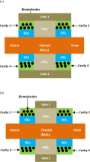
- biosensors, with a low limit of quantification and detection. A real-time simulation of a highly sensitive specific antigen biosensor was also performed by Gao et al. [87] using silicon NW FET-based CMOS technology. In this work, both P- and N-type NW arrays were designed and incorporated into one chip using




Effects of cutting tool geometry on material removal of a gradient nanograined CoCrNi medium entropy alloy
Beilstein J. Nanotechnol. 2024, 15, 925–940, doi:10.3762/bjnano.15.76
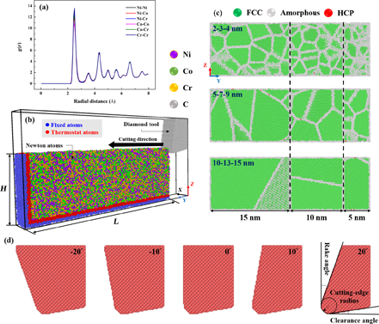
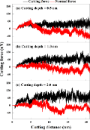
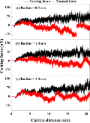
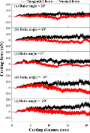
- investigates the effects of GNG structures, relative tool sharpness (RTS), and rake angle on the cutting behavior of a CoCrNi MEA using molecular dynamics simulations. Methods The cutting simulation model was established to explore the characteristics of plastic deformation and material removal of a GNG CoCrNi
- simulation, as shown in Figure 1b. Figure 1c shows polycrystalline CoCrNi MEAs with different grain size gradient sizes, including 2-3-4 nm, 5-7-9 nm, and 10-13-15 nm. Figure 1d shows the simulated diamond cutting tool, a rigid body with various rake angles consisting of 14,287–39,156 C atoms. Periodic
- boundary conditions are placed on the x axis, while the remaining axes are non-periodic. The temperature is 300 K. The canonical ensemble (NVT) is used in the equilibration process, and the microcanonical ensemble (NVE) is used to consider the thermal change during the cutting process. The simulation was