


Search results
Search for "sponge" in Full Text gives 43 result(s) in Beilstein Journal of Nanotechnology.
An advanced structural characterization of templated meso-macroporous carbon monoliths by small- and wide-angle scattering techniques
Beilstein J. Nanotechnol. 2020, 11, 310–322, doi:10.3762/bjnano.11.23
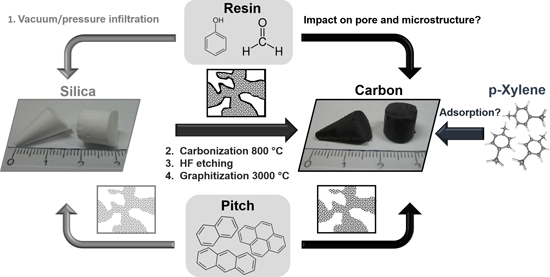
- as the pitch (red) and the resin (green) graphitized at 3000 °C. The sponge-like monolithic structure is retained even at high temperature. The resin-derived carbon monolith displays thicker macropore walls and a less homogenous macropore space, while the macroporosity of the pitch-based carbon




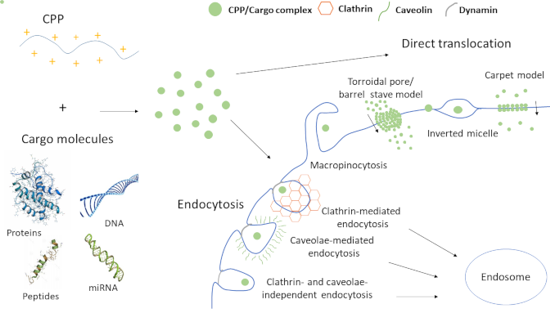
Internalization mechanisms of cell-penetrating peptides
Beilstein J. Nanotechnol. 2020, 11, 101–123, doi:10.3762/bjnano.11.10


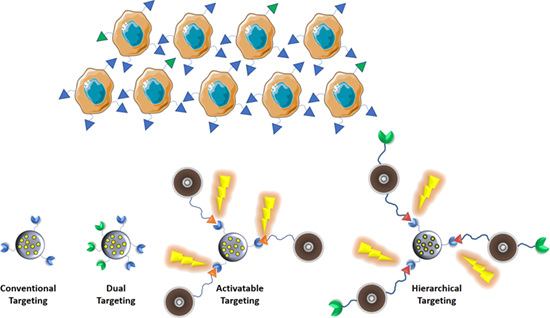
Targeting strategies for improving the efficacy of nanomedicine in oncology
Beilstein J. Nanotechnol. 2019, 10, 168–181, doi:10.3762/bjnano.10.16
- ]. Tertiary amino groups in these polymers bring protons into the endosomes producing osmotic alterations that provoke endosomal rupture (proton sponge effect) [54]. The incorporation of peptides such as the GALA peptide (WEAALAEALAEALAEHLAEALAEALEALAA) capable to fuse with the endosomal/liposomal membrane is


Comparative biological effects of spherical noble metal nanoparticles (Rh, Pd, Ag, Pt, Au) with 4–8 nm diameter
Beilstein J. Nanotechnol. 2018, 9, 2763–2774, doi:10.3762/bjnano.9.258
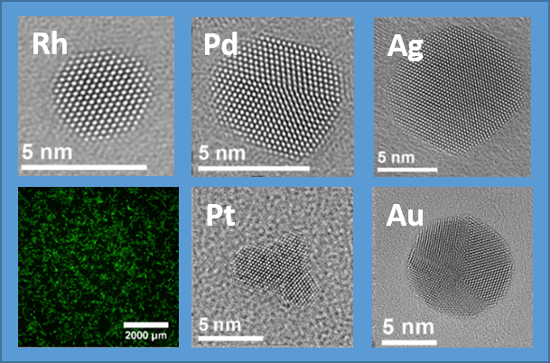
- of different size and shape [61][62]. A hydrogen-based reduction in alcohols like methanol, heptanol, and propanol leads to sponge-like rhodium nanostructures [63]. Palladium nanoparticles can be synthesized either by the polyol process or by sono-, electro- and wet-chemical methods [64]. The


The structural and chemical basis of temporary adhesion in the sea star Asterina gibbosa
Beilstein J. Nanotechnol. 2018, 9, 2071–2086, doi:10.3762/bjnano.9.196
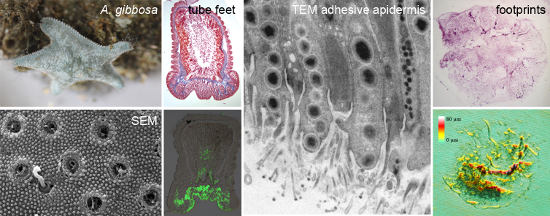
- thin homogeneous film covering the substrate with a sponge-like meshwork on top [11][12][25][26]. This topography is not altered by the release of the de-adhesive substance [26]. In the forcipulatid sea star Asterias rubens, adhesive secretions were investigated in greater detail. In this species, the


Preparation of micro/nanopatterned gelatins crosslinked with genipin for biocompatible dental implants
Beilstein J. Nanotechnol. 2018, 9, 1735–1754, doi:10.3762/bjnano.9.165
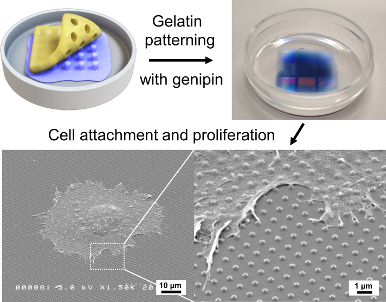
- implants [21][22]. It is also used as an absorbable hemostatic sponge to provide an occlusive matrix [23][24] and as a bone healing material in tissue engineering [25][26] in the field of dentistry. Recent studies have attempted to regenerate collagen fibers, lost as a result of periodontal disease, using








Facile chemical routes to mesoporous silver substrates for SERS analysis
Beilstein J. Nanotechnol. 2018, 9, 880–889, doi:10.3762/bjnano.9.82
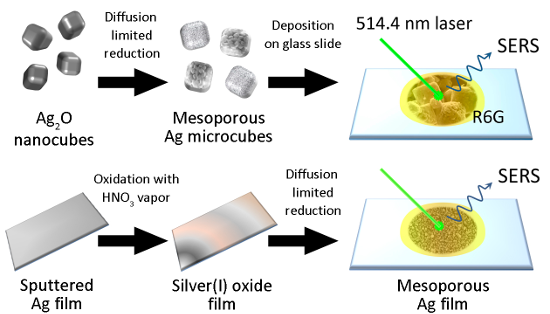
- )-active substrates. An analogous procedure was successfully performed for the production of mesoporous silver films by chemical reduction of oxidized silver films. The sponge-like silver blocks with high surface area and the in-situ-prepared mesoporous silver films are efficient as both analyte adsorbents
- silver prepared at a double excess of NaBH4 is of 230 ± 90 nm (Figure 1c) and the related pore size is about 100 nm. A ten-fold excess of NaBH4 led to full conversion of polycrystalline Ag2O to ≈1 μm sponge-like Ag grains (Figure 1d), which also contained numerous mesopores. As it was discussed elsewhere


Vapor deposition routes to conformal polymer thin films
Beilstein J. Nanotechnol. 2017, 8, 723–735, doi:10.3762/bjnano.8.76
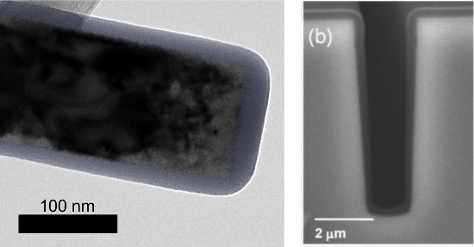
- ) on a commercial sponge using iCVD [46]. Figure 9b shows the iCVD coating conformally covering the sponge’s microstructure. Previously, Lau et al. demonstrated conformal coverage of iCVD grown fluoropolymers on vertically aligned carbon nanotube (CNT) forests to prevent capillary densification as seen
- -bead with conformal iCVD pHEMA coating, b) SEM image of commercial sponge with pHDFMA coating, c) SEM image of carbon nanotube forest with iCVD PTFE coating, d) TEM image of CNT bundle coated with MLD alucone coating, e) TEM image of lithium spinel oxide particle coated with iCVD pV4D4 coating, f) SEM


Effect of nanostructured carbon coatings on the electrochemical performance of Li1.4Ni0.5Mn0.5O2+x-based cathode materials
Beilstein J. Nanotechnol. 2016, 7, 1960–1970, doi:10.3762/bjnano.7.187
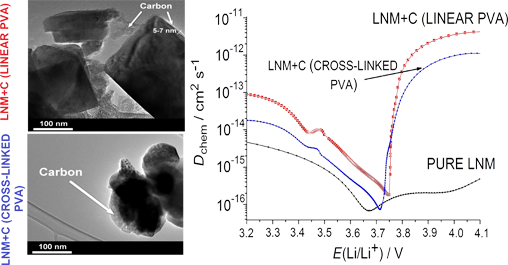
- carbon is localized as separate islands on the boundaries of Li1.4Ni0.5Mn0.5O2+x particles (Figure 1C). The carbon obtained from cross-linked PVA has a sponge-like microstructure with nanometer-sized mesopores (Figure 1D). Thermogravimetry (TG) curves of the linear and cross-linked PVA demonstrate the



Nanostructured TiO2-based gas sensors with enhanced sensitivity to reducing gases
Beilstein J. Nanotechnol. 2016, 7, 1718–1726, doi:10.3762/bjnano.7.164
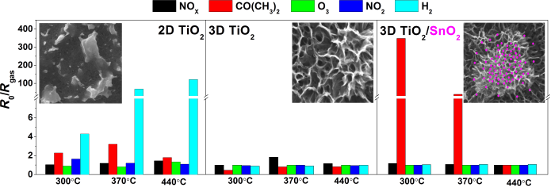
- TiO2-based nanostructures are presented in Figure 3. According to the side-view image (Figure 3b) and the previous analysis [27][28][39][40], the cross-section of flower-like TiO2 nanostructures reveals a compact layer, sponge-like form, and nanoflowers on top of the structure. The flower-like objects
- surface area. Moreover, the sponge-like walls (or petals) induce fast charge transport. However, lower sensitivity to various gases can be attributed to phase composition. Anatase and rutile are the most common titanium dioxide polymorphs, which exhibit different properties [43]. Anatase is a more


Antitumor magnetic hyperthermia induced by RGD-functionalized Fe3O4 nanoparticles, in an experimental model of colorectal liver metastases
Beilstein J. Nanotechnol. 2016, 7, 1532–1542, doi:10.3762/bjnano.7.147
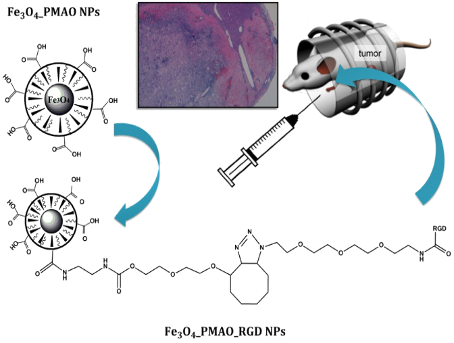
- (0.15 mL/min). Once the microcannula was removed, a haemostatic gelatin sponge was firmly applied on the puncture site for five minutes. Without removing the haemostatic agent, the laparotomy was closed, and meloxicam (2 mg/kg sc) plus buprenorphine (0.05 mg/kg sc) were administered. Heat induction


Multiwalled carbon nanotube hybrids as MRI contrast agents
Beilstein J. Nanotechnol. 2016, 7, 1086–1103, doi:10.3762/bjnano.7.102
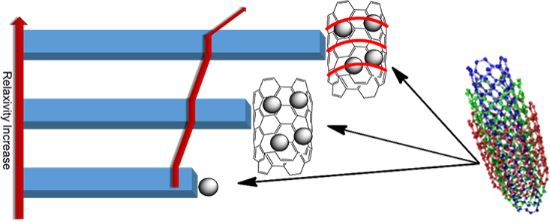
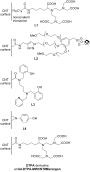
- + sponge, Fe-L3-oMWCNT#Kuźnik, able to absorb 14% iron over its entire mass [26]. We used the same acid chloride of the oMWCNT intermediate to covalently bond PEG–OH (PEG: poly(ethylene glycol)) chains and then to anchor the iron cations (Fe-PEG-oMWCNT#Kuźnik). Finally, the last group of oMWCNT



Applications of three-dimensional carbon nanotube networks
Beilstein J. Nanotechnol. 2015, 6, 792–798, doi:10.3762/bjnano.6.82
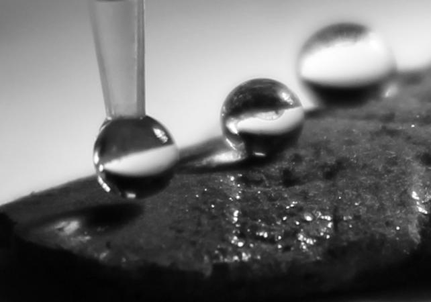
- respond to incident light in the visible and near-ultraviolet region and to generate a photocurrent. Keywords: carbon nanotube sponge; electrochemical; hydrophobicity; lipophilicity; Introduction In the last years, there has been growing interest in developing natural and synthetic three-dimensional
- incident light and generate a photocurrent, we cut a piece of the CNT-sponge, which has a self-sustainable structure, and used it as the working electrode in a standard electrochemical cell. In this manner, it was possible to register a good photo-response of the CNT-network in the visible and near
- the variation of the static contact angle as a function of the time at room temperature shows a reduction of the initial value of less than 2% after 100 min, due to water evaporation. This proves the stability of the super-hydrophobic state (Figure 5b). These findings indicate that the CNT-sponge


Functionalized polystyrene nanoparticles as a platform for studying bio–nano interactions
Beilstein J. Nanotechnol. 2014, 5, 2403–2412, doi:10.3762/bjnano.5.250
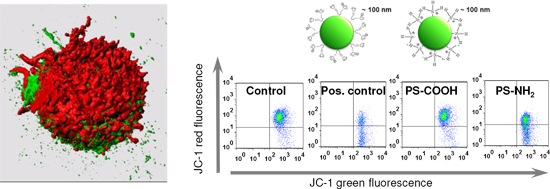
- show signs of apoptosis at this time point [41]. These data are in agreement with the previously proposed ‘‘proton-sponge’’ hypothesis, which refers to a continuous activation of the lysosomal proton pump, lysosomal swelling and rupture by particles carrying amino groups on their surface [20][41][50


Biocalcite, a multifunctional inorganic polymer: Building block for calcareous sponge spicules and bioseed for the synthesis of calcium phosphate-based bone
Beilstein J. Nanotechnol. 2014, 5, 610–621, doi:10.3762/bjnano.5.72
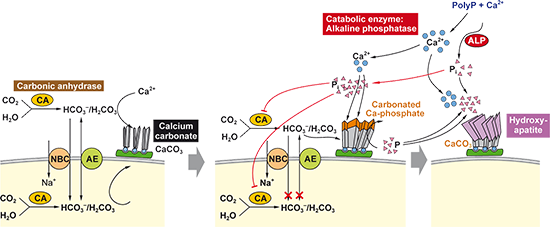
- consist of biosilica. The enzyme that mediates the calcium carbonate deposition has been identified as a carbonic anhydrase (CA) and has been cloned from the calcareous sponge species Sycon raphanus. Calcium carbonate deposits are also found in vertebrate bones besides the main constituent, calcium
- /glutamic acid-rich sponge-specific protein. The discovery that calcium carbonate crystals act as bioseeds in human bone formation may allow the development of novel biomimetic scaffolds for bone tissue engineering. Na-alginate hydrogels, enriched with biosilica, have recently been demonstrated as a
- suitable matrix to embed bone forming cells for rapid prototyping bioprinting/3D cell printing applications. Keywords: biocalcite; bioprinting; bone; bone formation; calcareous spicules; sponge; Introduction The size and complexity of a metazoan taxon is correlated with the dimensioning of its respective

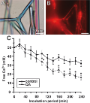


Exploring the complex mechanical properties of xanthan scaffolds by AFM-based force spectroscopy
Beilstein J. Nanotechnol. 2014, 5, 365–373, doi:10.3762/bjnano.5.42
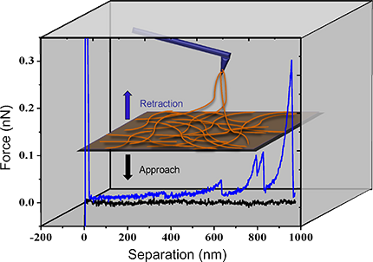
- ; Introduction In general, a scaffold is composed of small units including sheet-like, cylinder-like, tube-like, sphere-like and sponge-like structures. Scaffold structures formed by various biopolymers have attracted more and more attention due to their potential applications in tissue engineering [1], such as


Large-scale atomistic and quantum-mechanical simulations of a Nafion membrane: Morphology, proton solvation and charge transport
Beilstein J. Nanotechnol. 2013, 4, 567–587, doi:10.3762/bjnano.4.65
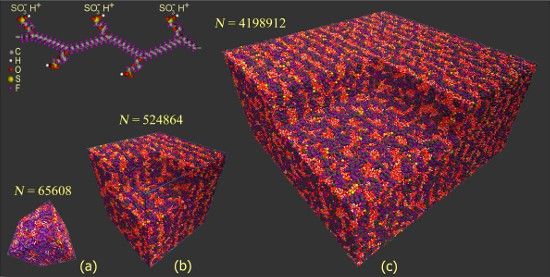
- formation of conductive channels and their topology was obtained from analysis of slices through the hydrophilic subphase (for more detail, see [27]). It was found that the hydrophilic subphase is organized like a sponge-like network and the global membrane morphology can be classified as bicontinuous: both


Digging gold: keV He+ ion interaction with Au
Beilstein J. Nanotechnol. 2013, 4, 453–460, doi:10.3762/bjnano.4.53
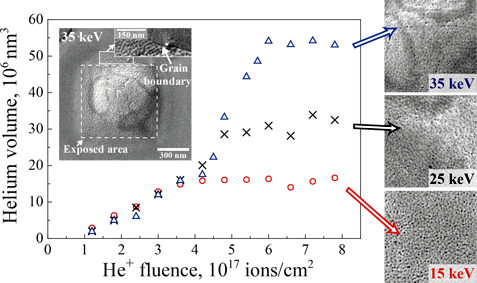
- formation of nanobubbles filled with helium in the gigapascal pressure range, different scenarios evolve. At low energies the bubbles quickly reach the surface and release the helium, and a sponge-like surface develops. At high energies, the initial nanobubbles form deeper in the material due to the greater





